

House M by Takehiko Suzuki: A Masterpiece of Compact Architecture in Japan
A 33m² micro home in Japan by Takehiko Suzuki, blending spiral circulation, minimal design, and spatial continuity masterfully.


In the heart of Japan, where space is a luxury and architectural innovation is essential, House M by Takehiko Suzukistands as a remarkable example of how minimal square footage can yield maximum spatial experience. This 33-square-meter micro home redefines compact living through ingenious spatial planning, elegant structural design, and functional minimalism.
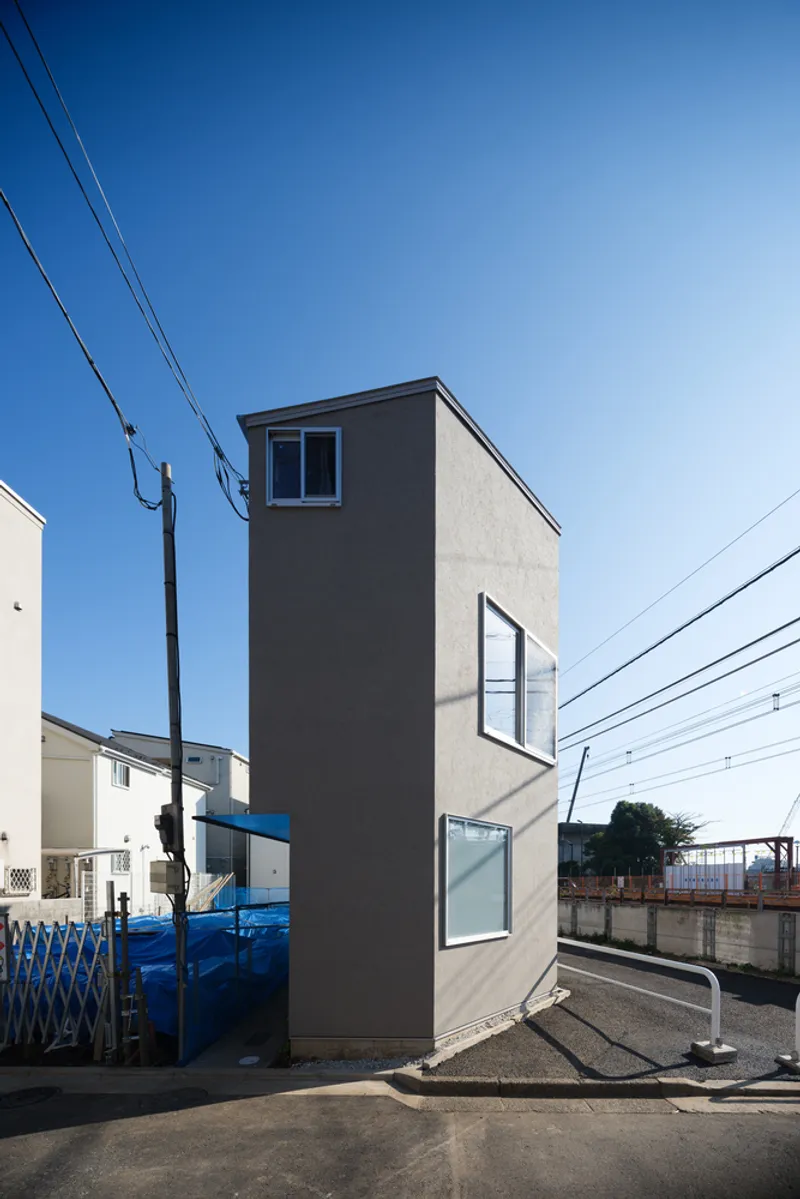
A Wedge-Shaped Site with a History
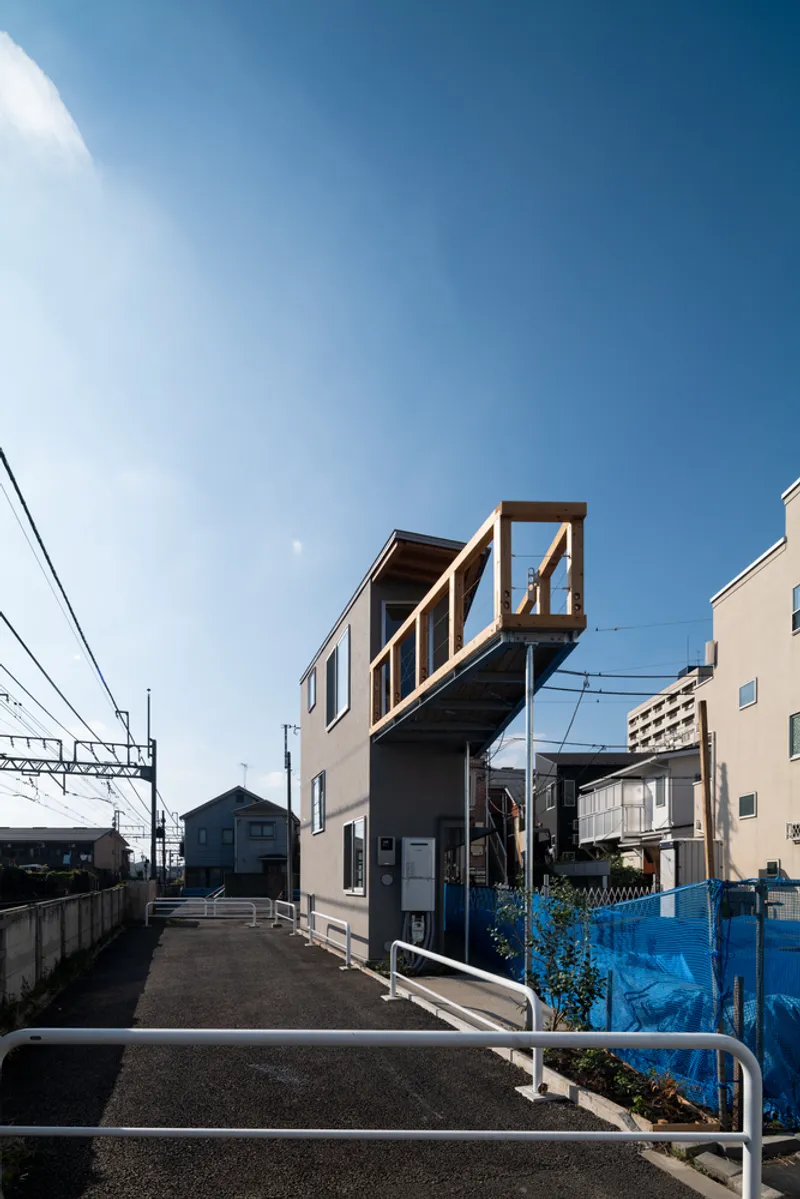
Situated on a leftover wedge-shaped plot—created by railway elevation works—House M occupies less than 30 m² of land. For over 30 years, the client had lived on the original, larger property. Determined to stay rooted in the familiar neighborhood, the client sold most of the land and commissioned a new, compact residence on the remaining slice.
Smart Circulation: The Spiral Staircase as the Spine
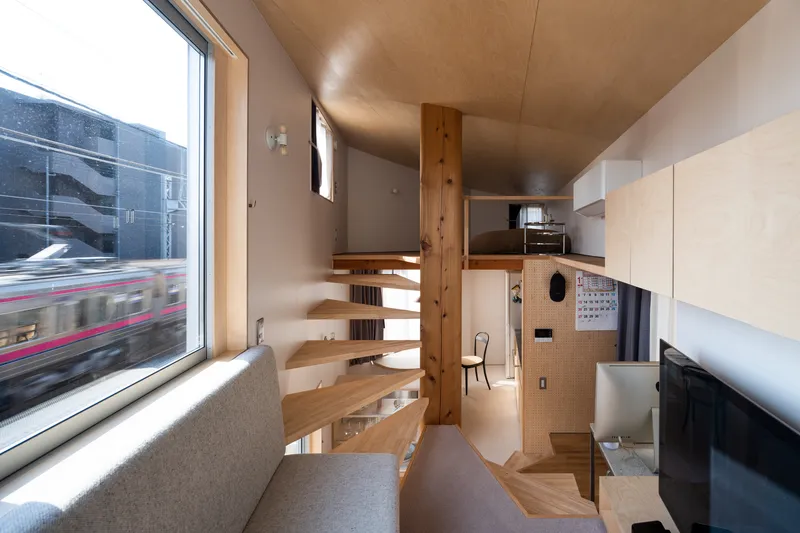
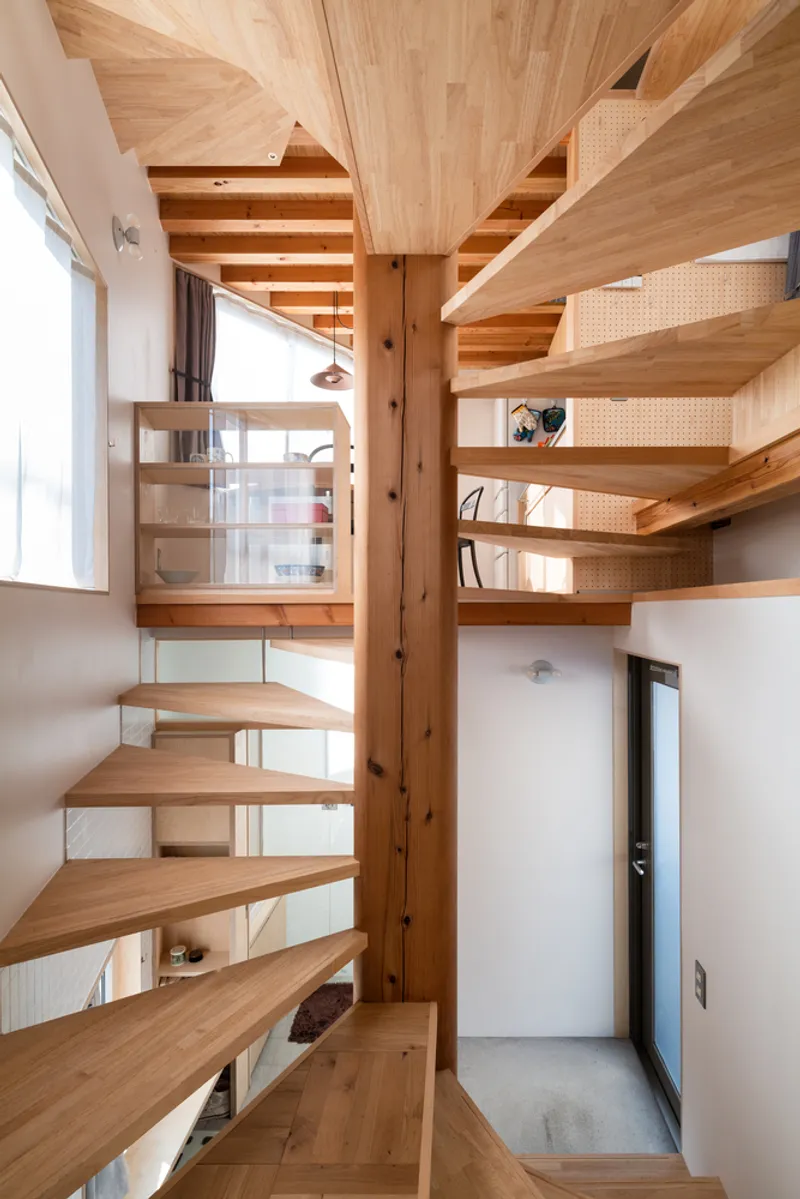
Due to construction constraints and local ordinances, the entrance couldn’t face the southern road and had to be placed on the north side. The building's core feature is a central spiral staircase, immediately encountered upon entry. It’s more than just a circulation element—it connects all spaces and doubles as storage, furniture, and architectural structure.
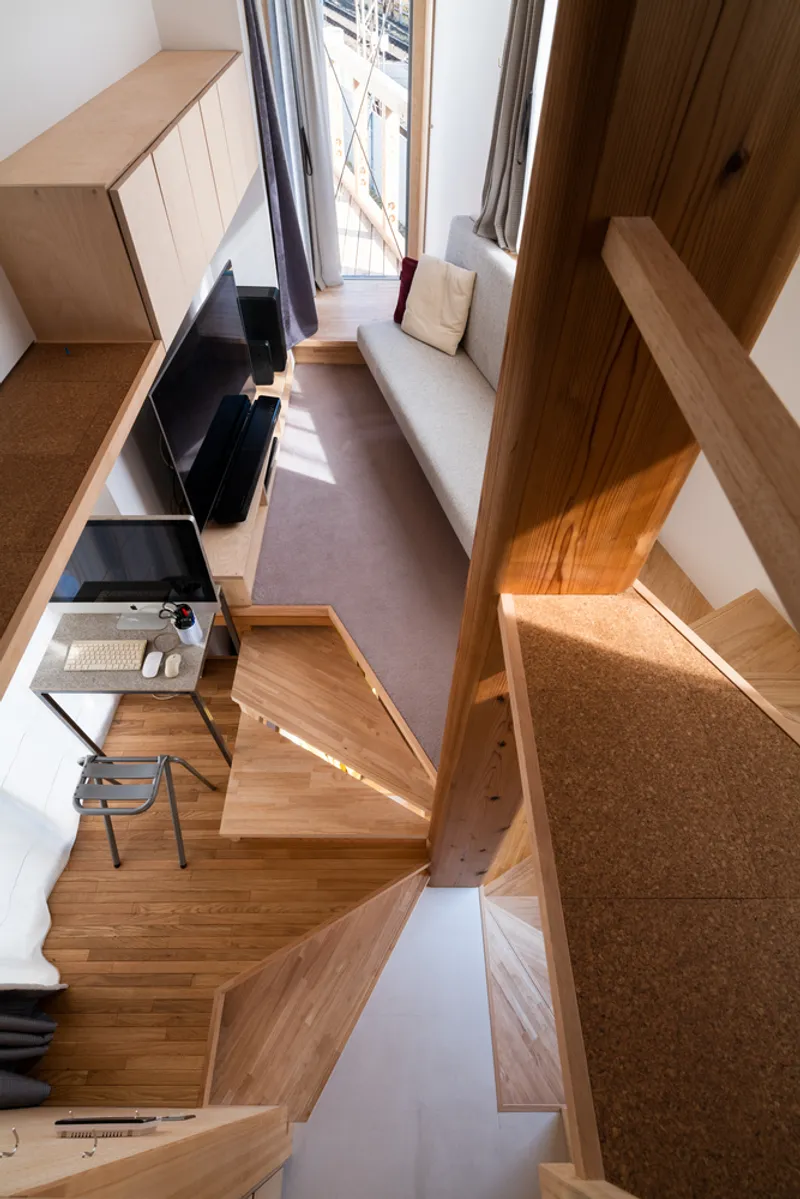
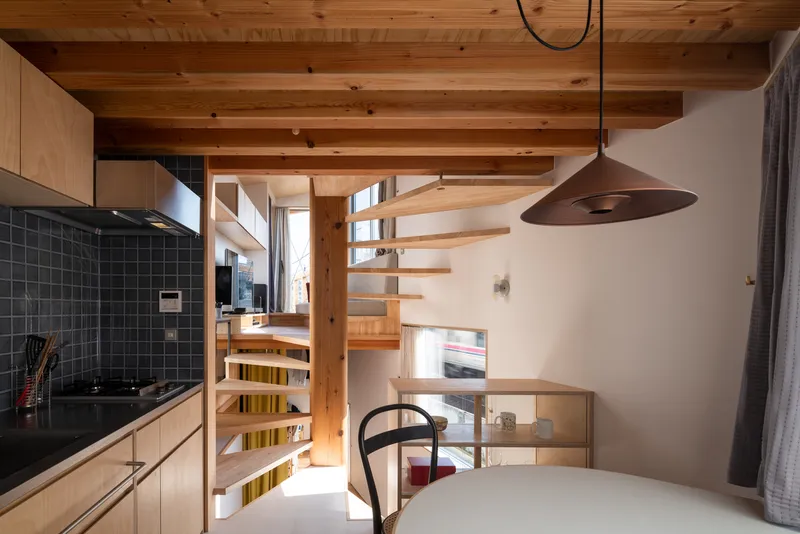
The staircase merges seamlessly with each room, blurring the boundaries between steps, floors, and furniture. Treads stretch into rooms to become benches or shelves, while floor finishes spill over into the stair area, establishing continuity between distinct spaces.
Reimagining Space: “Small Vastness”
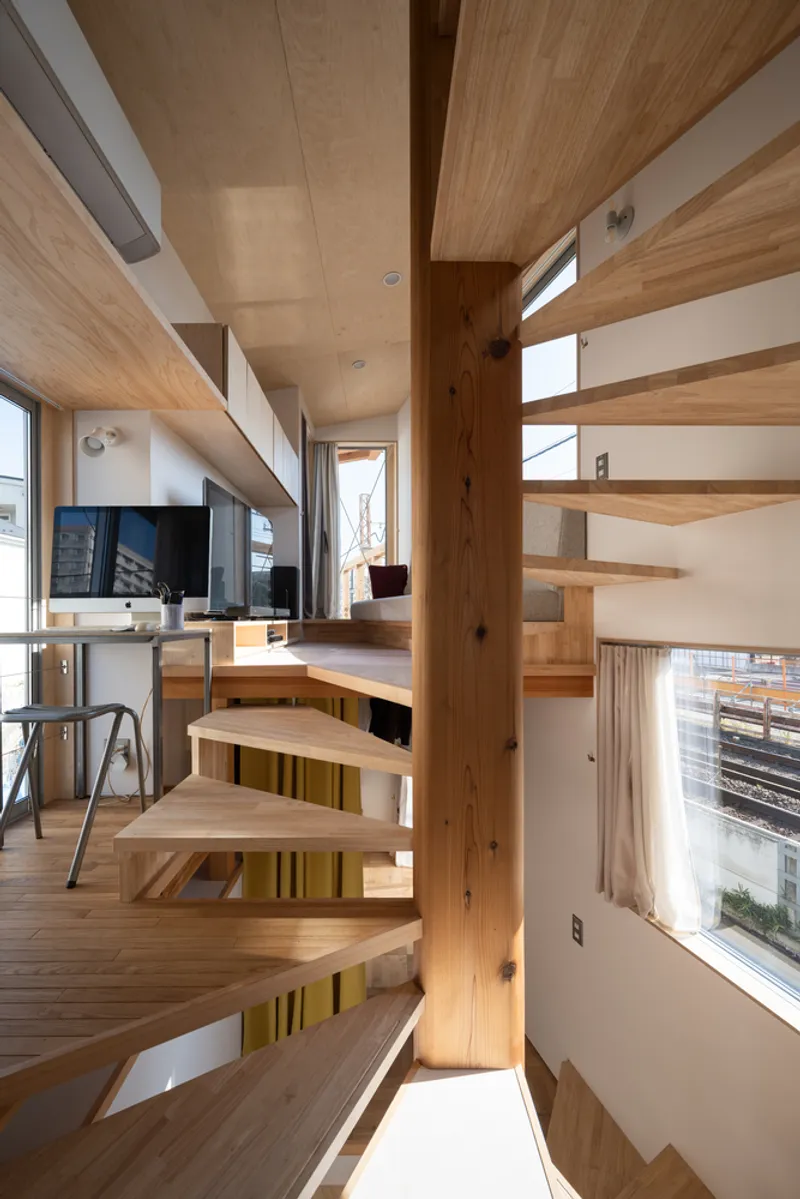
Despite its tiny footprint, House M plays with perception. The dining area measures only 7 m², the living space just 4 m², and yet the generous 4 m² staircase serves as a shared, flexible zone. The home’s layered visual composition and material transitions create a sense of "small vastness", where spatial boundaries dissolve and the home feels much larger than it is.
You’re never just in one room—you’re subtly engaged with the whole house. Each glance through or beyond the spiral reveals glimpses of other spaces, enriching the experience of movement and connection.
Minimalist Aesthetic with Functional Elegance
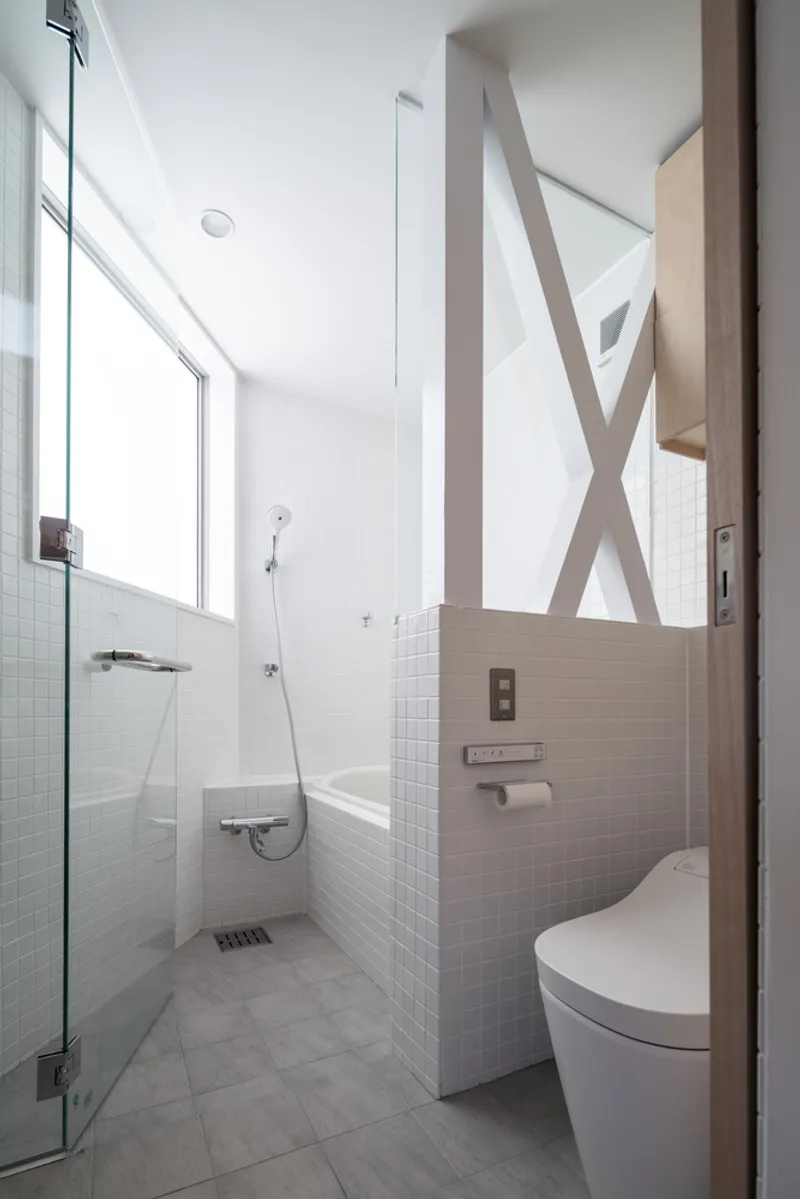
True to Japanese architectural values, House M embraces simplicity and restraint. Natural light filters through carefully positioned windows, illuminating the wood and neutral-toned interiors. The staircase serves as a sculptural centerpiece, combining form and utility.
Materials from manufacturers like LIXIL, Toto, and Aica Kogyo are used sparingly but effectively, reinforcing the minimalist ethos while ensuring durability and comfort.
House M demonstrates how a micro home can transcend physical limitations to offer profound spatial richness. Through thoughtful design, clever spatial integration, and architectural ingenuity, Takehiko Suzuki delivers a home that balances intimacy with openness, functionality with artistry.
All the photographs are works of Masao Nishikawa


Popular Articles
Popular articles from the community


graciastudio Turns a Viewless Tijuana Lot Inward Around a Courtyard of Concrete, Timber and Trees
In Tijuana, Jorge Gracia's GA2 House stacks a timber-clad private floor over exposed concrete and replaces a missing view with a planted interior patio.


Opera on the Sea: Driftwood Logic Shapes a Timber Opera House on Estonia's Coast
Trevor Orgill's opera house translates the entangled drift of floating timber into a civic building where wood, water, and music converge.

Cube Design Draws an Ecological Corridor Between Two Shenzhen Hills with the Nankai Building
Beside Shenzhen's container docks, the Nankai Building pairs stacked balconies with a climbing green screen to connect two hillsides across its height.

Manzana Morphosis: Stretching Barcelona's Grid into a Living Landscape for 2050
A radical reworking of the Eixample manzana turns density into a tool for generous public space, vertical ecology, and environmental performance.

Similar Reads
You might also enjoy these articles


Hodi-Mandai Geram
Project Function: Preservation and revitalization of the Intangible heritage and socio-spatial identity of the Hodi by Housing, Cultural Memory Center, Sacred Grove, landscape, local tourism economy


Olio Towers: A Mid-Rise for Performers That Fuses Housing, Rehearsal, and Stage
Located blocks from Houston's Theater District, this modular tower stacks living units around a central performance atrium.

Oasis: Modular Green Housing Carved into Dhaka's Urban Fabric
A shortlisted Plugin Housing entry reclaims unauthorized settlements in Dhaka with stepped concrete volumes, green roofs, and ventilation-driven design.

Black Hole: A Floating Megastructure for the Post-Physical Era
Emiliano Mazzarotto envisions a spherical, self-scaling arena where e-sports, digital hotels, and holographic stadiums replace traditional public space.

Explore Tiny House Competitions
Discover active competitions in this discipline

Challenge to reimagine the Iron Throne

Photograph architecture without architects

Illustrate the lost glory of Angkor Wat - Render Challenge

Design challenge to reuse E-waste
Comments (0)
Please login or sign up to add comments
No comments yet. Be the first to comment!