
House of Verdizela by Estúdio AMATAM – A Contemporary Courtyard Home Inspired by Mediterranean and Islamic Architecture
Mikiya Ryokan blends timeless Japanese craftsmanship with modern comfort, featuring wooden structures, serene gardens, and calming spaces that honor traditional hospitality.

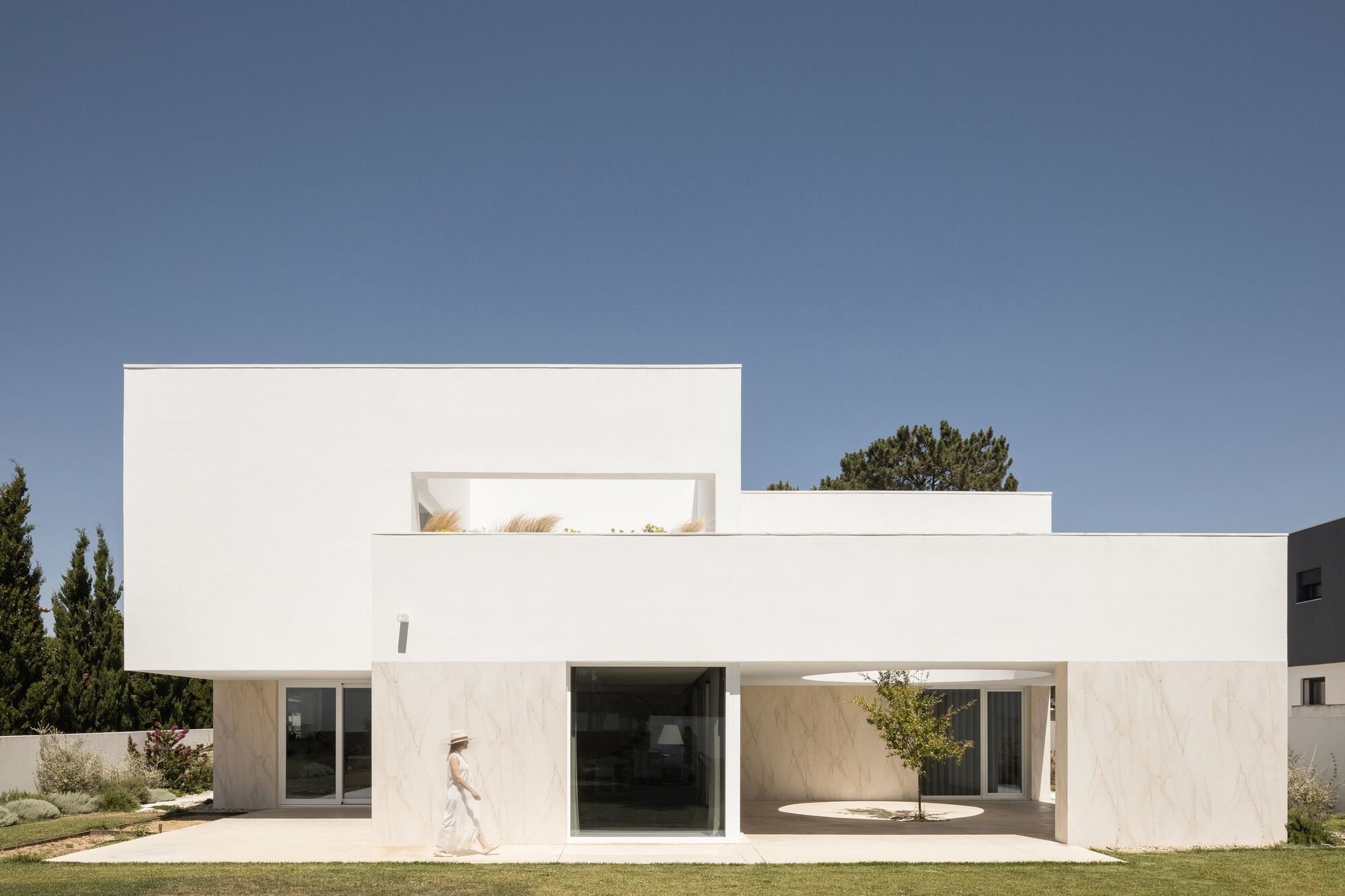
The House of Verdizela by Estúdio AMATAM is a serene, contemporary residence located near Aroeira in Corroios, Portugal. Designed in 2023, this 284 m² modern courtyard house reflects the clients’ desire for a private, calm, and minimalist retreat deeply connected to nature. Surrounded by pine forests and cooled by Atlantic breezes, the home creates an atmosphere of stillness and intimacy—an escape from urban noise.
A Modern Interpretation of Mediterranean & Islamic Courtyard Design
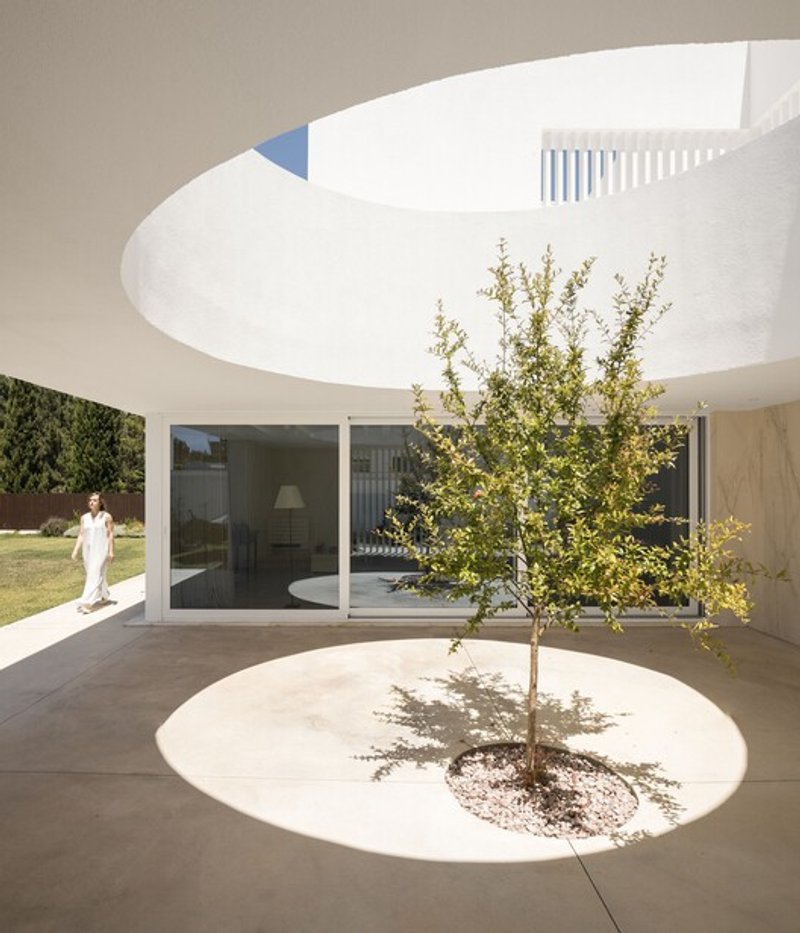
Estúdio AMATAM reimagines the traditional Mediterranean and Islamic courtyard house, crafting an introverted architectural composition centred around light-filled patios. Rather than displaying itself to the street, the home turns inward, where courtyards choreograph natural light, regulate temperature, and frame intimate outdoor spaces.
This inward-facing approach allows the home to remain discreet and private, while the interiors reveal a rich spatial life defined by texture, shadow, and natural illumination. Like a modern Riad, the house maintains a quiet, almost silent presence from the exterior, yet opens into a sequence of luminous, sheltered spaces within.
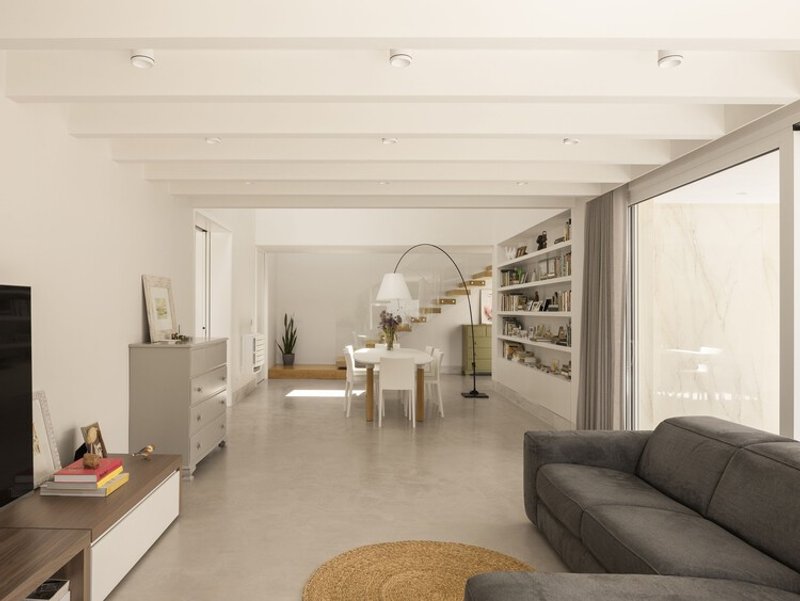
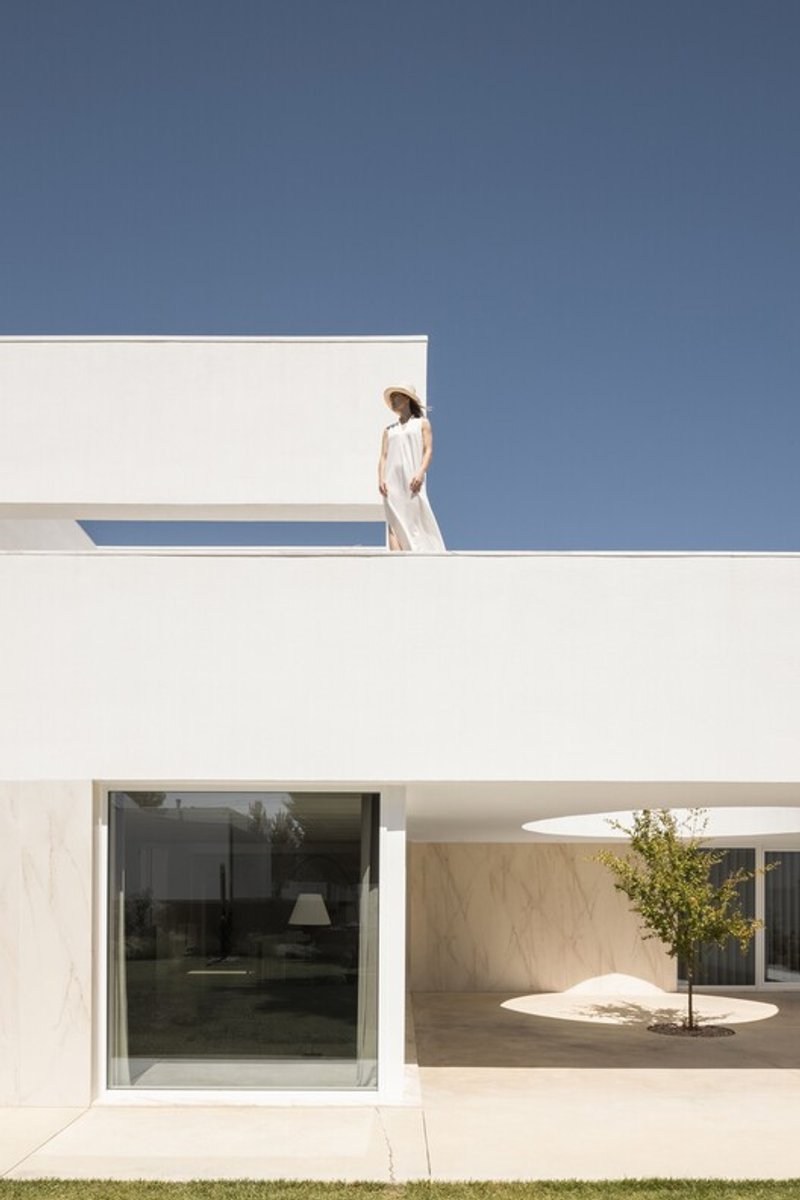
Architecture Rooted in Simplicity, Silence, and Precision
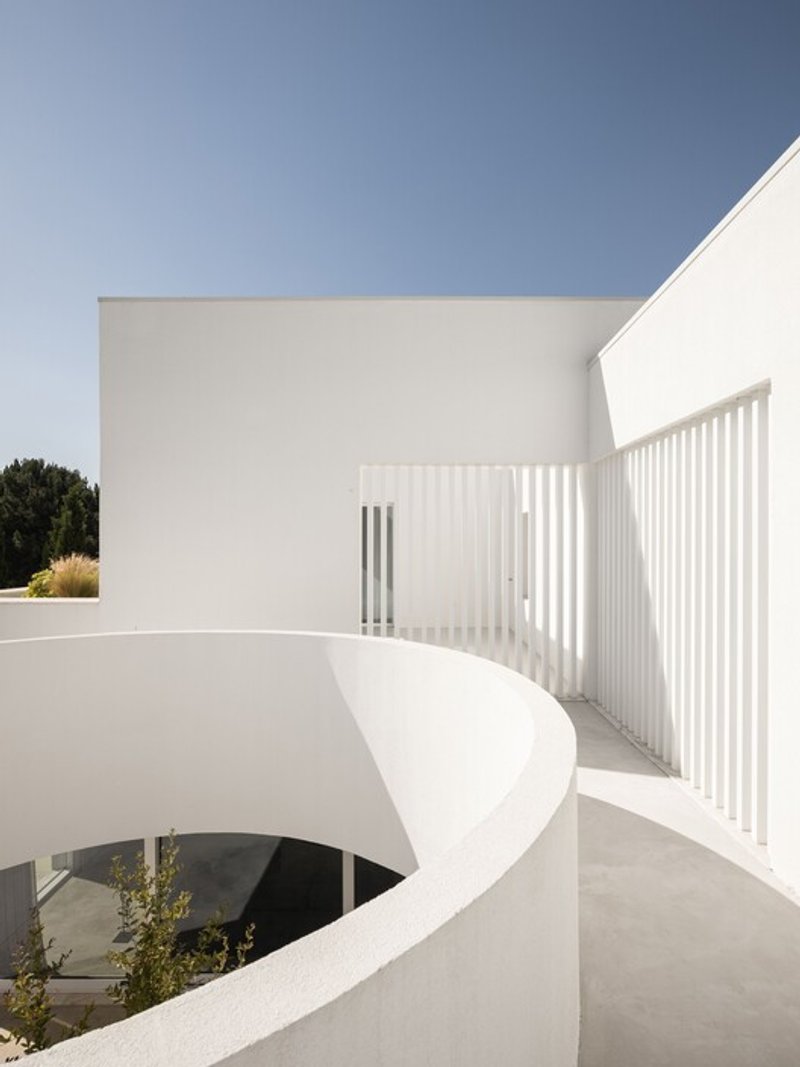
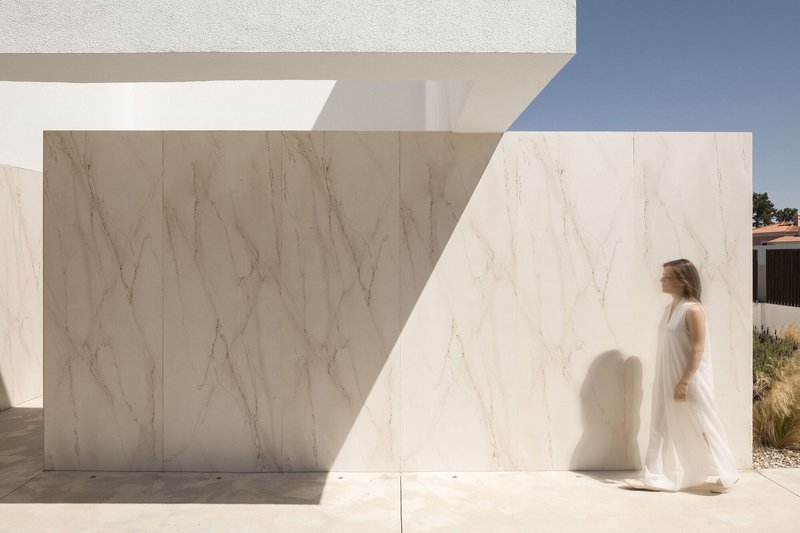
The House of Verdizela is built on a philosophy of architectural restraint. Clean volumes, subtractive forms, and precise detailing shape a home that prioritizes serenity over spectacle. The language of the house is minimal yet expressive—white surfaces, pure forms, and shadow play define a space where light becomes the primary sculptor.
The façade remains reserved, maintaining distance from the street. Inside, volumes unfold around patios that shift with the hours, creating a dynamic rhythm of brightness and shade. The home embraces slowness, quietness, and a tactile relationship with materiality.
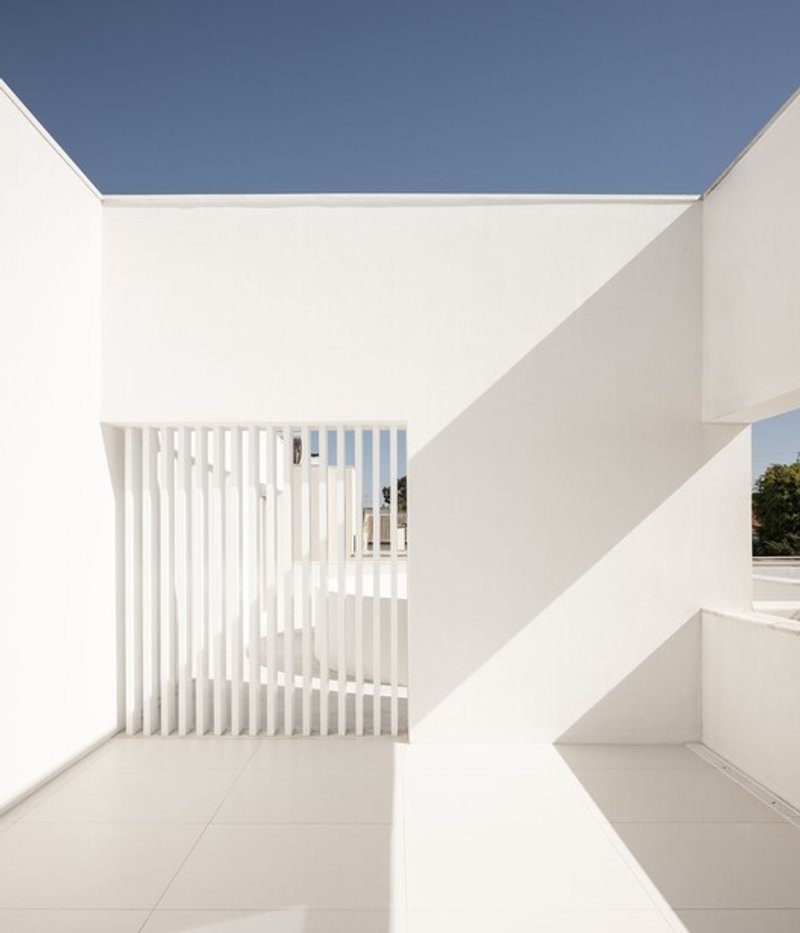
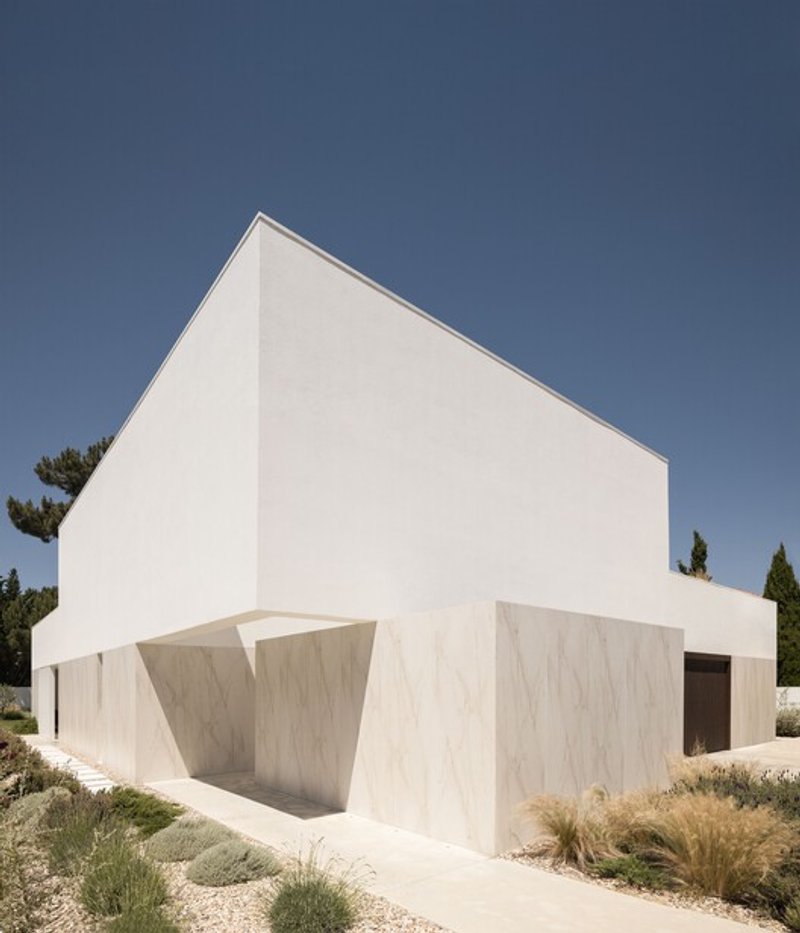
Two Complementary Materials: Stone and Timber
Materiality follows a logic of honesty, longevity, and environmental responsibility. The exterior blends:
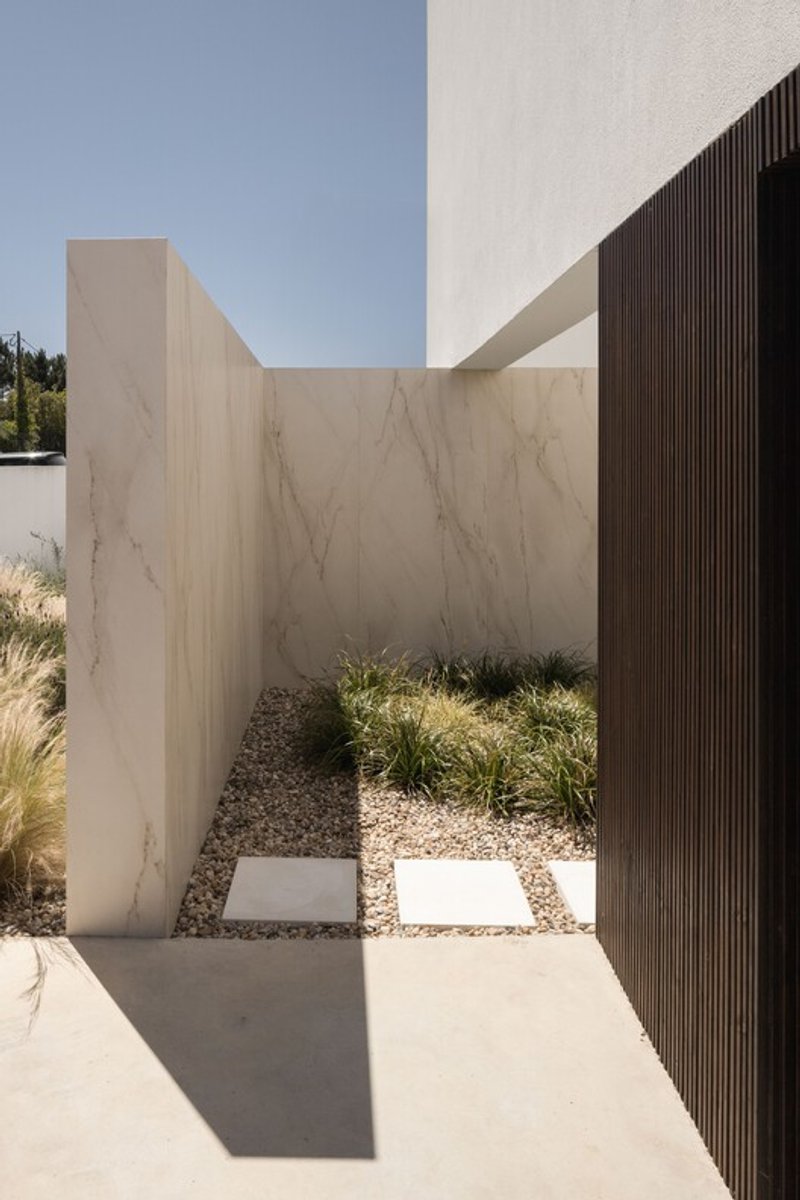
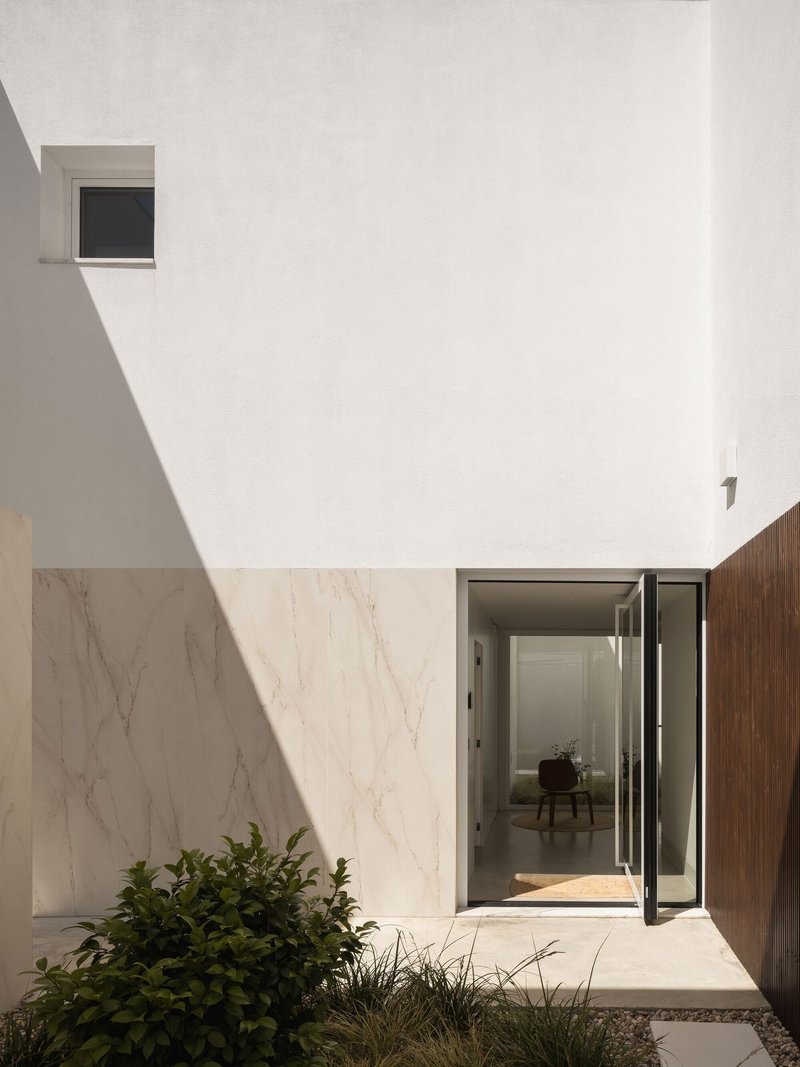
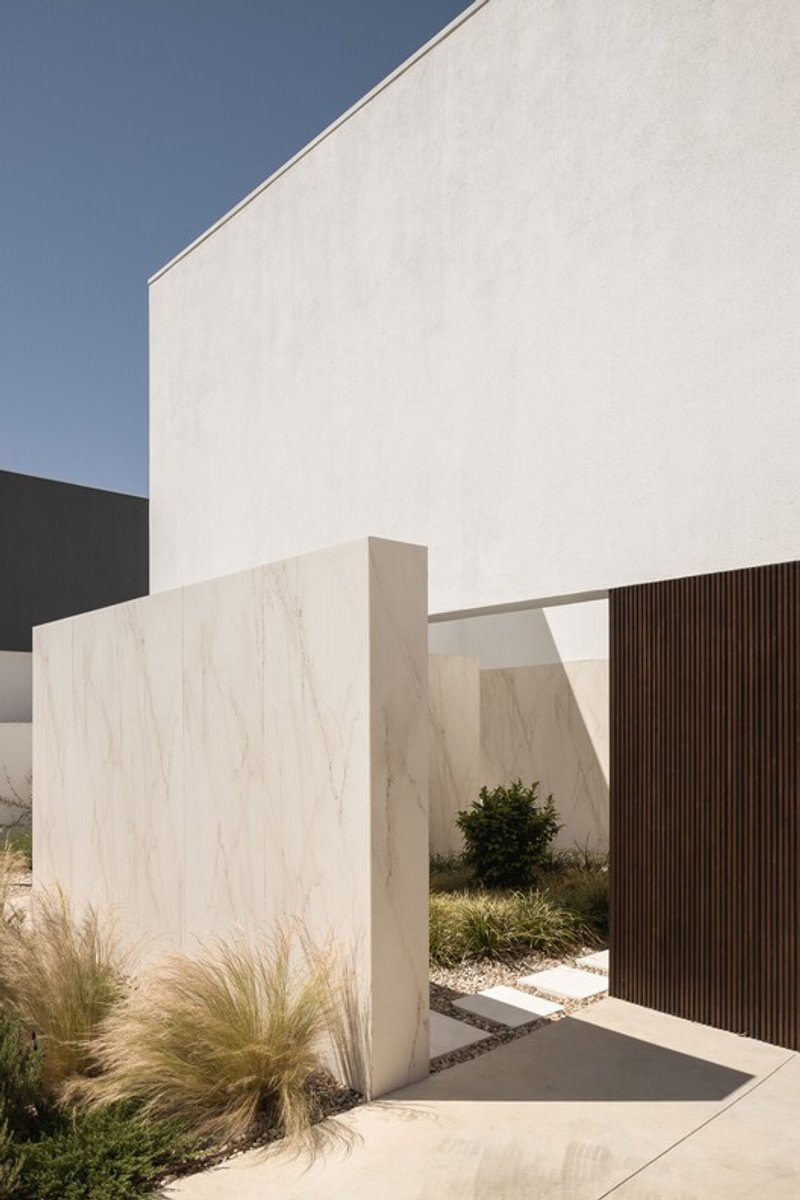
- Ultra-compact sintered stone cladding for durability and thermal performance
- Thermo-modified timber panels, adding natural texture and warmth
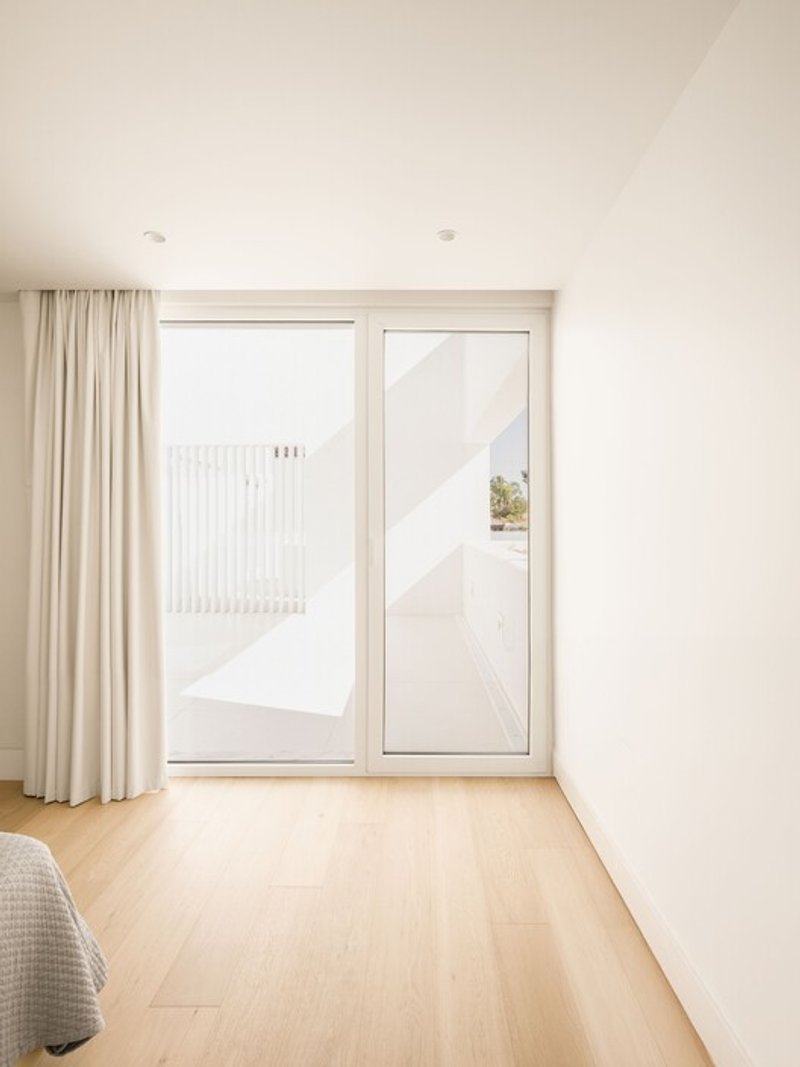
These materials work together to create an elegant and sustainable aesthetic, offering resilience while respecting ecological considerations. White slatted panels regulate light and privacy, enhancing the bioclimatic behaviour of the home.
Inside, the palette is calm and sensory:
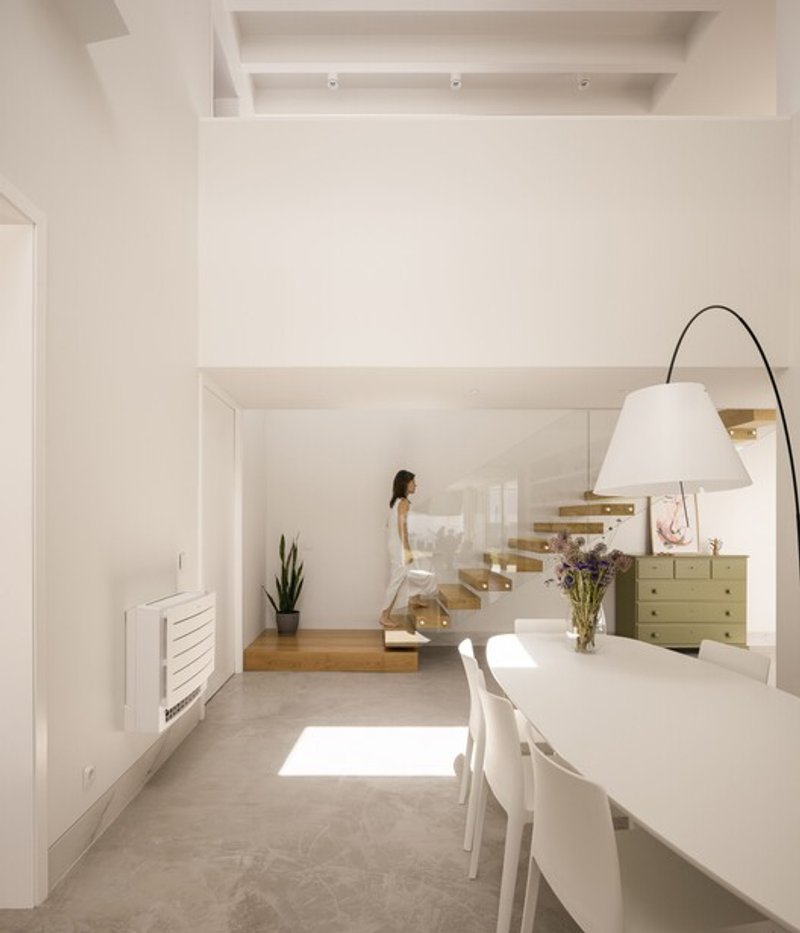
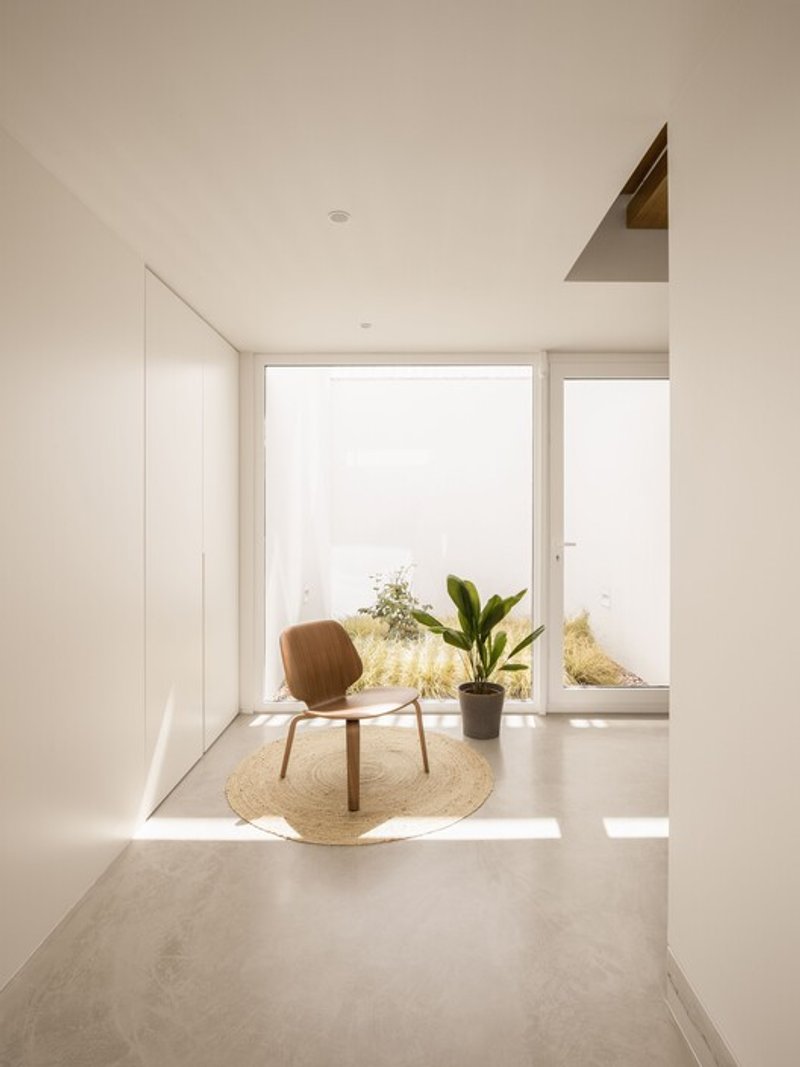
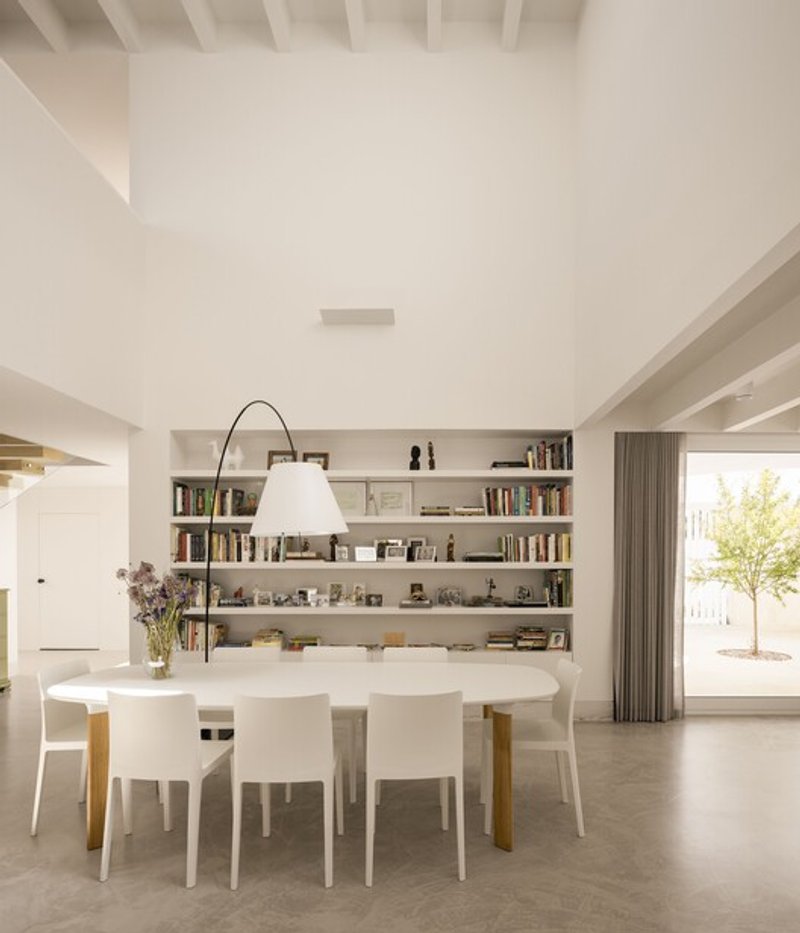
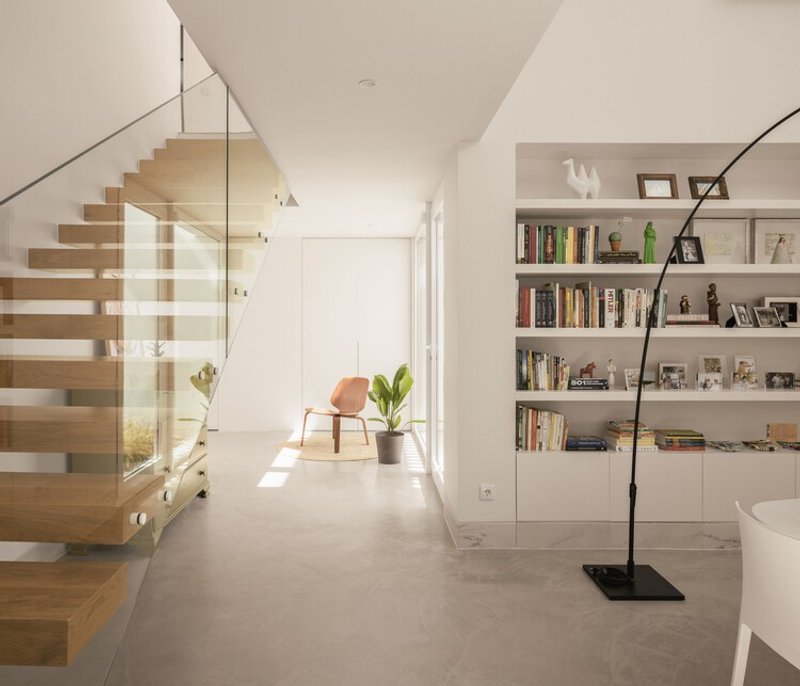
- Ground floor: warm-toned microcement flooring, continuous and seamless
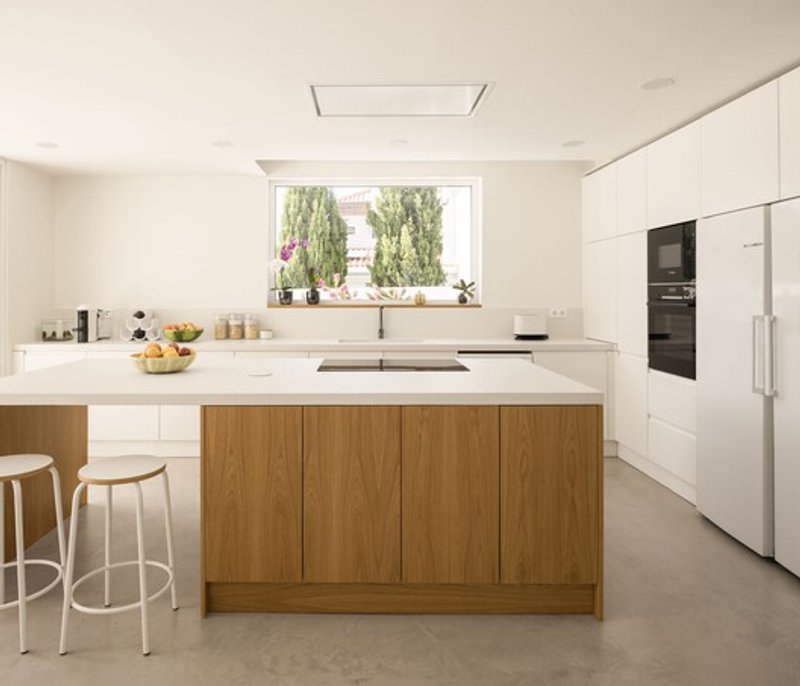
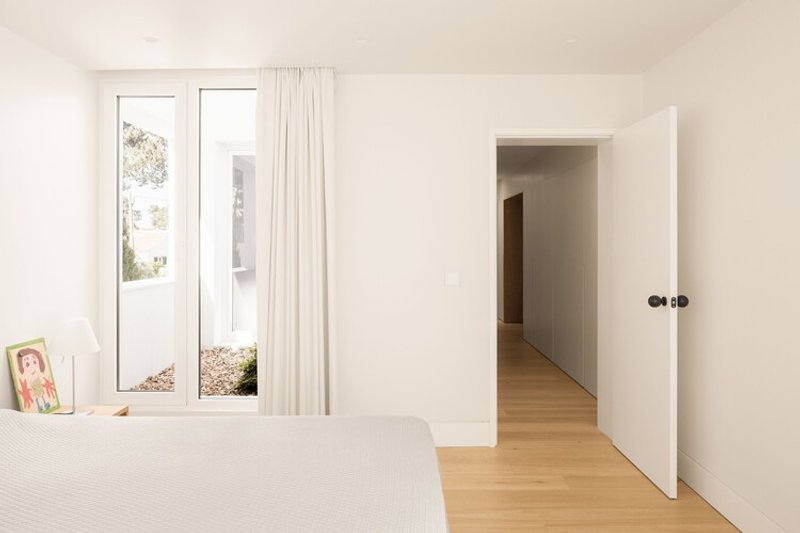
- Upper floor: natural oak wood, adding domestic warmth
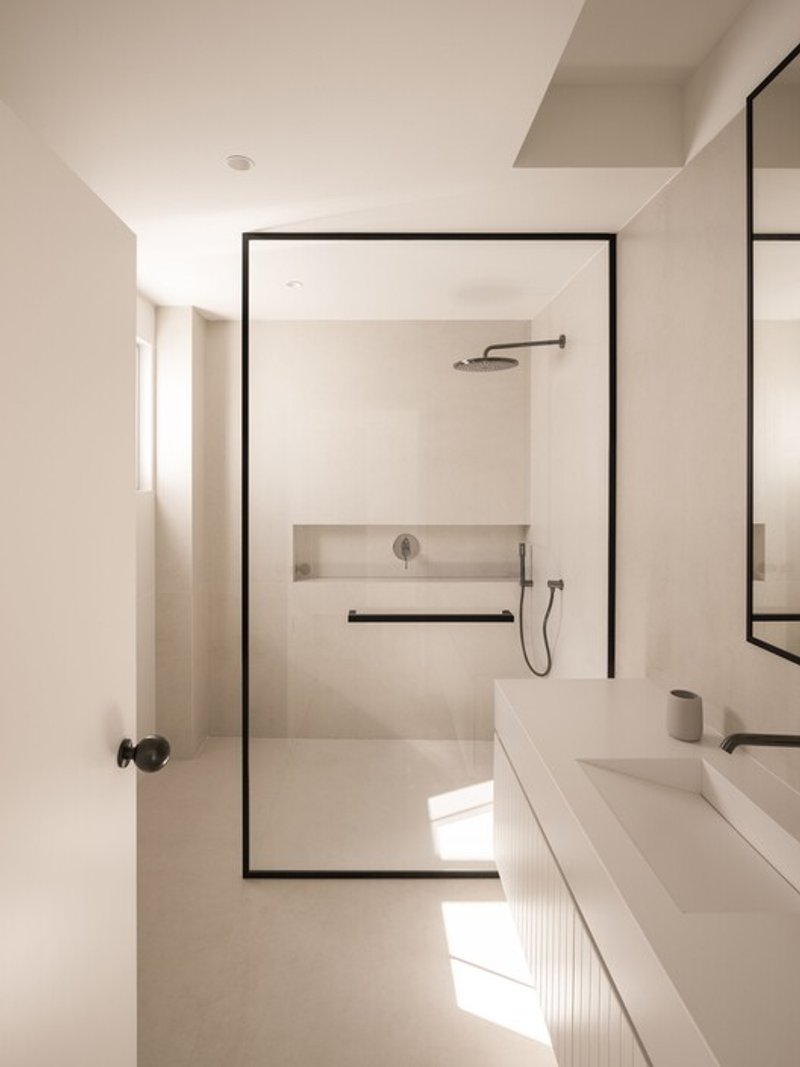
- Wet areas: sintered stone finishes for durability and minimal maintenance
- Black hardware accents: A touch of sophistication and contrast
Courtyards as Climatic & Emotional Anchors
Courtyards shape the house’s spatial experience:
1. Entrance Patio
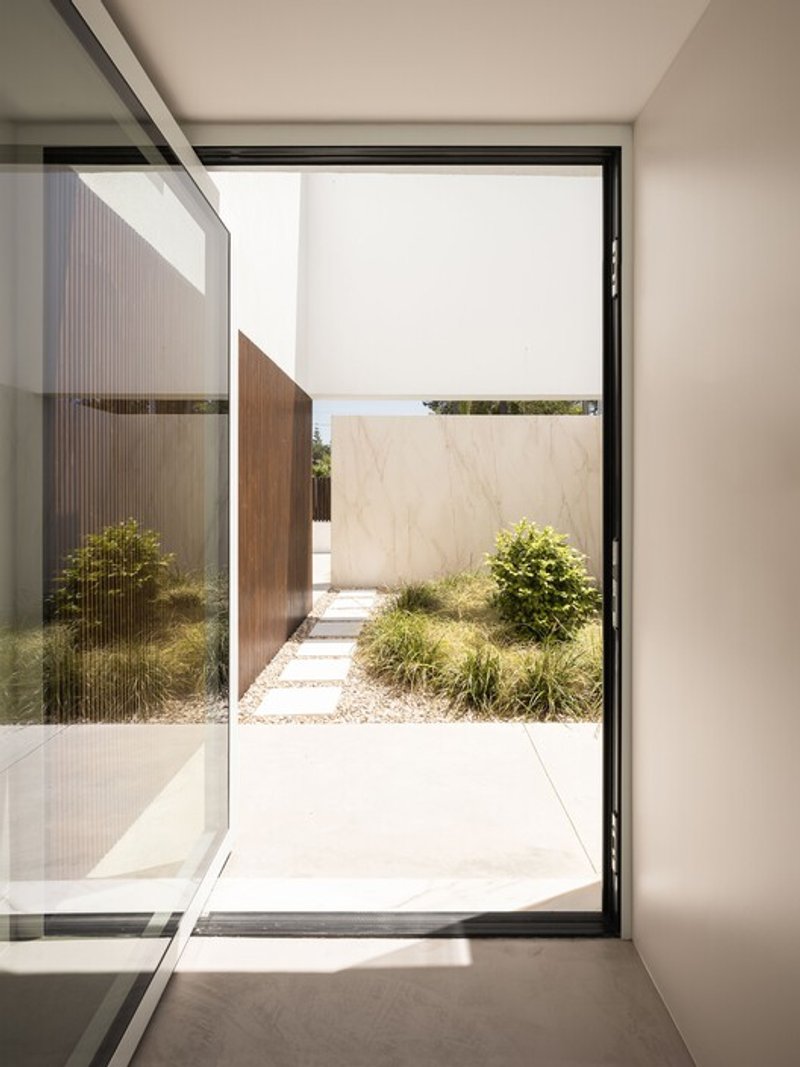
A dramatic stone-and-timber-walled patio with zenithal light. It functions as a slow, sensory transition between outside and inside.
2. Central Courtyard
The heart of the home. A solitary pomegranate tree becomes the protagonist of seasons, bridging indoor and outdoor living. It shades in summer, shelters in winter, and enriches daily rituals.
3. Internal Lightwell
Brings daylight and cross ventilation to circulation zones and both levels of the home.
4. Transitional Courtyards
Smaller pockets that introduce softness, light, and air to secondary spaces.
These courtyards enhance passive ventilation, thermal comfort, and emotional well-being, reaffirming the importance of bioclimatic design.
Spaces Designed for Fluid Living
The layout supports flexibility, privacy gradients, and seamless indoor-outdoor living:
- The living room opens directly to the central courtyard.
- The kitchen flows into the social areas and extends to an outdoor terrace.
- A double-height void visually connects both levels, enhancing transparency and spatial harmony.
Each space has been crafted to nurture a gentle, unhurried lifestyle while remaining adaptable to the clients’ needs.
A Home Built for Time, Light, and Tranquility
The House of Verdizela is an architecture of silence, contemplation, and restrained beauty. It is a home that interacts with time—its white surfaces responding to the movement of the sun, its courtyards shifting with seasons, its materials aging gracefully. It prioritizes comfort, intimacy, and authentic connection to place.
Rather than dictating how to live, House of Verdizela invites a fluid, serene way of inhabiting, one that harmonizes with nature and honours the rhythms of daily life.
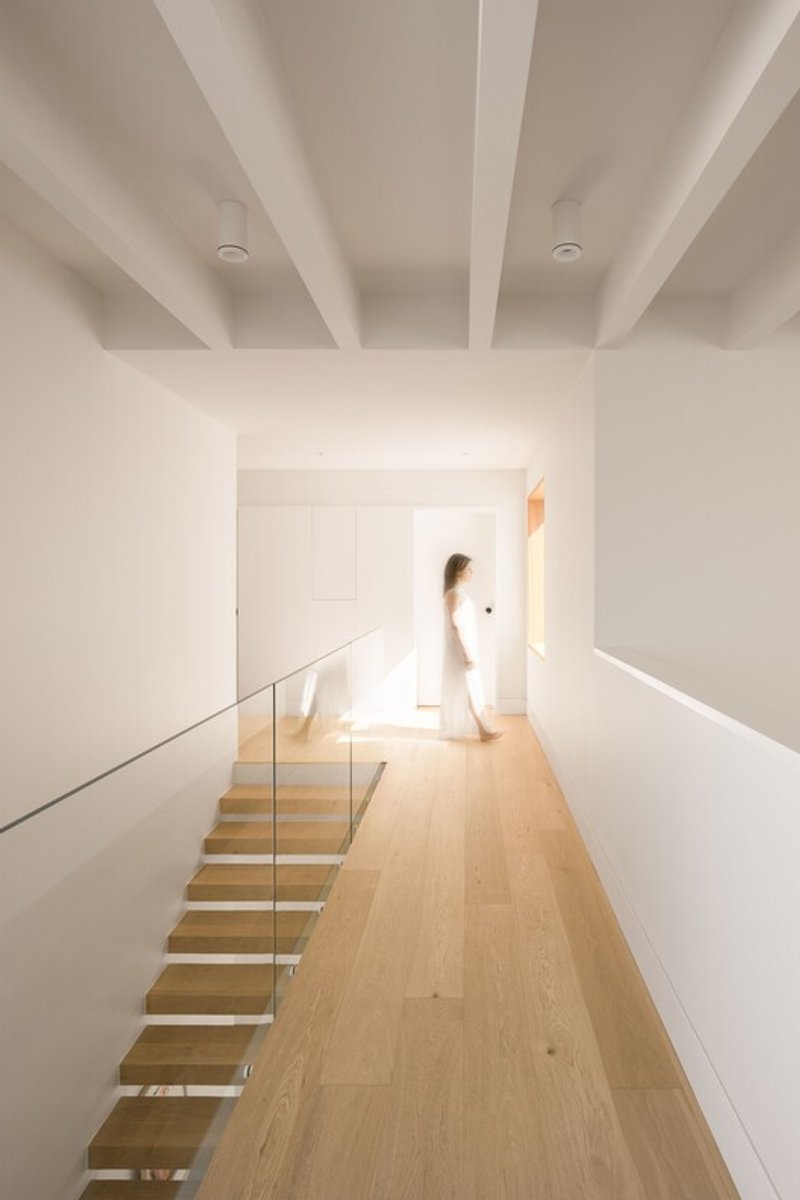
All the photographs are works of Garces




Popular Articles
Popular articles from the community


Solar Steam: A Climate-Responsive Architecture That Redefines the Monument
A climate-responsive memorial architecture that transforms heat, decay, and time into a living system reflecting humanity’s ecological impact.



Free Architecture Competitions You Can Enter Right Now
No entry fees, real prizes. Here are the best free architecture competitions open for submissions in 2026.
Gads Hill Early Learning Center by JGMA: Adaptive Reuse Shaping Community-Focused Educational Architecture
Adaptive reuse transforms fragmented structure into vibrant early learning center with playful façade, natural light, and community-focused sustainable design.


Similar Reads
You might also enjoy these articles


The Ken Roberts Memorial Delineation Competition (Krob)
As the most senior architectural drawing competition currently in operation anywhere in the world, it draws hundreds of entries each year, awarding the very best submissions in a series of medium-based categories.

Waterfront Redevelopment and Urban Revitalization in Mumbai: Forging a New Dawn for Darukhana
A transformative waterfront redevelopment project reimagining Darukhana’s shipbreaking heritage into an inclusive urban future.

OUT-OF-MAP: A Call for Postcards on Feminist Narratives of Public Space
Rhizoma Design and Research Lab invites artists, designers, architects, researchers, and students to reflect on how feminist perspectives can reshape public space. Selected works will be exhibited in Barcelona, October 2026. Submissions open until 15 April 2026.


Documentation Work on Buddhist Wooden Temple
Architectural syncretism and cultural hybridity: A comparative study of the Buddhist temples in Chattogram Hill tracks

Explore Architecture Competitions
Discover active competitions in this discipline




The International Standard for Design Portfolios


The Global Benchmark for Architecture Dissertation Awards


The Global Benchmark for Graduation Excellence


Challenge to reimagine the Iron Throne
Comments (0)
Please login or sign up to add comments
No comments yet. Be the first to comment!