

How Will Computational Design Transform Fashion and Jewelry? Discover with the BeeGraphy Design Awards
Explore the Intersection of Technology and Style in the BeeGraphy Design Awards Fashion & Jewelry Category


The fashion and jewelry industries are on the brink of a transformative era, driven by the advent of computational design and parametric techniques. The BeeGraphy Design Awards invites designers, textile engineers, and tech enthusiasts to redefine the boundaries of wearable art. In the Fashion & Jewelry category, participants have the unique opportunity to blend cutting-edge technology with timeless aesthetics, creating pieces that are as functional as they are fashionable.
The Power of Parametrization
Computational design allows for the parametrization of various elements, from garment structure and textile properties to color gradients and embellishment patterns. By controlling these parameters, designers can create pieces that are not only visually stunning but also adaptable and practical. BeeGraphy’s platform supports this creative process, enabling participants to explore and implement intricate geometric patterns, tessellations, and fractals.
How Will Computational Design Transform Fashion and Jewelry?
Computational design is revolutionizing the fashion and jewelry industries by fundamentally changing how pieces are conceptualized, designed, and produced. This innovative approach leverages algorithms and parametric design principles to create intricate, customizable designs that were previously unattainable or too labor-intensive to manufacture. By automating complex design processes, computational design offers unprecedented precision and creativity, enabling designers to seamlessly blend form and function in ways never before possible.
Incorporating computational design into fashion and jewelry allows for a new level of customization and adaptability. Designers can use algorithms to generate unique patterns, structures, and shapes that respond to various parameters such as body movement, environmental changes, and user preferences. This not only enhances the aesthetic appeal of the designs but also improves their functionality and wearability.
The use of computational design in fashion and jewelry is already producing remarkable results, as evidenced by several pioneering projects and collaborations:
Examples of Computational Design in Fashion & Jewelry
Generative Jewelry
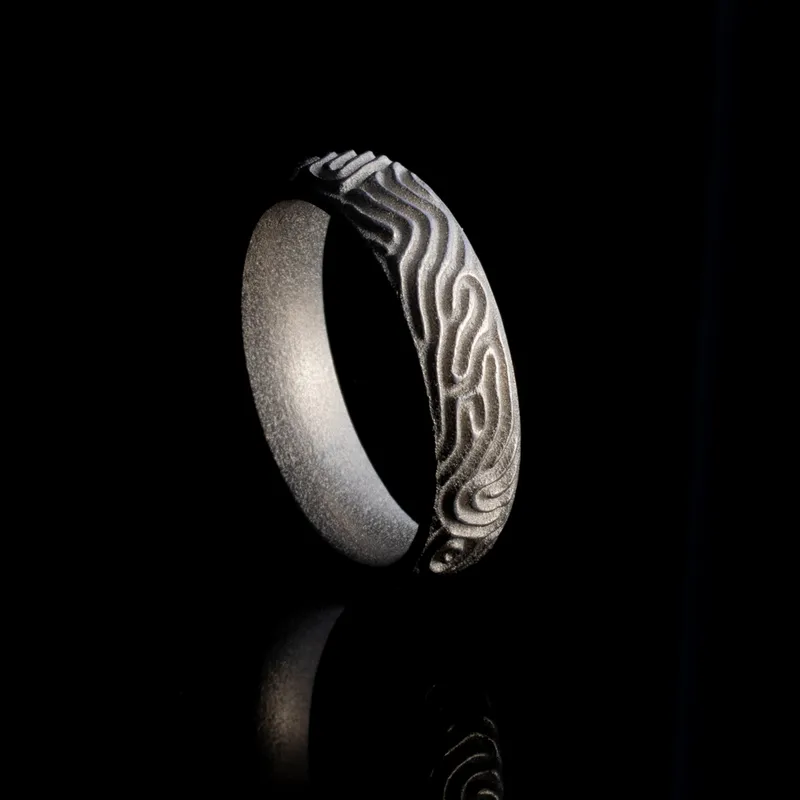
Nervous System, a design studio, employs generative algorithms to create intricate jewelry pieces inspired by natural patterns. Their Kinematics project features 3D-printed jewelry that is both aesthetically stunning and functionally adaptive, showcasing the potential of computational design to create complex, organic forms.
Algorithmic Fashion
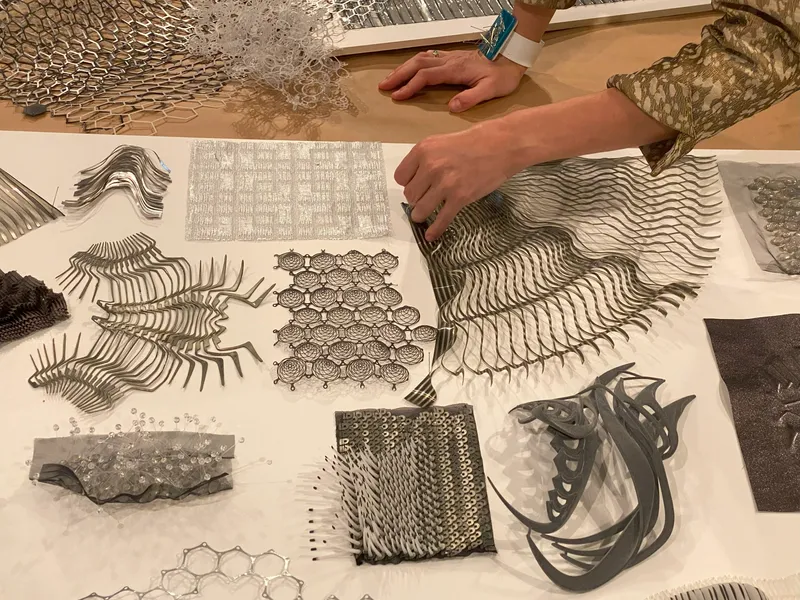
The collaboration between Iris van Herpen and Philip Beesley exemplifies how computational design can transform fashion. Their garments, created using algorithmic design processes and 3D printing, feature intricate structures and textures that move and change with the body, creating a dynamic interplay between fashion and technology.
Parametric Couture
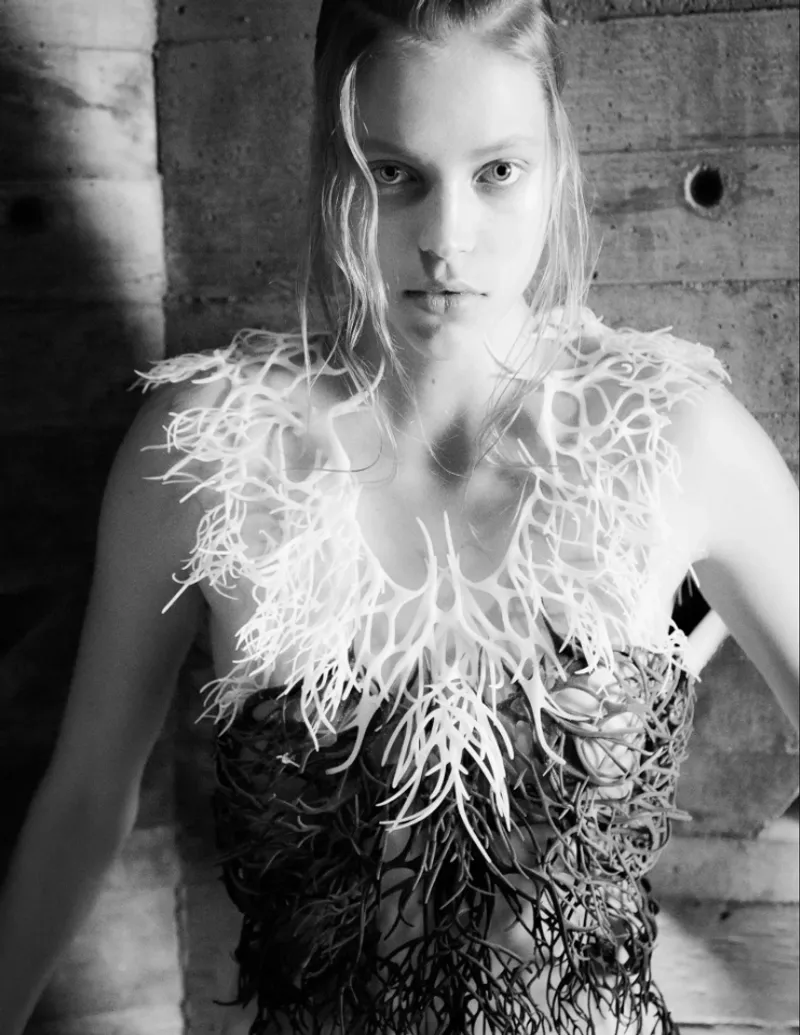
Julia Koerner, renowned for her work with 3D-printed fashion, uses parametric design to create avant-garde clothing pieces. Her designs, such as the 3D-printed Kelp Jacket, are visually striking and demonstrate the practical applications of computational design in producing wearable art.
Interactive Wearables
Anouk Wipprecht's designs integrate electronics and computational design to create interactive fashion pieces. Her Spider Dress, for example, uses proximity sensors to detect the environment and respond by moving its mechanical limbs, blending fashion with robotics.
Bio-Inspired Jewelry
Francis Bitonti's Hyphae Lamps and jewelry pieces use computational algorithms to mimic the growth patterns of plants and fungi. These bio-inspired designs are 3D-printed and highlight the potential of computational design to create intricate, nature-inspired forms.

BeeGraphy Design Awards: Fashion & Jewelry Category
Building on the transformative potential of computational design, the BeeGraphy Design Awards invites participants to explore the cutting-edge intersection of style and innovation in fashion and accessories. This competition challenges fashion designers, jewelry designers, textile engineers, and tech enthusiasts to blend advanced technology with timeless aesthetics, creating wearable pieces that are both functional and fashionable.
In the Fashion & Jewelry category, participants are encouraged to utilize BeeGraphy’s computational design features to create stunning pieces that push the boundaries of form, function, and wearability. Whether it’s smart clothing that responds to environmental changes or 3D-printed jewelry with intricate details, this is an opportunity to shape the future of fashion.
Design Criteria
Participants should aim to:
- Incorporate Advanced Technologies: Use wearable tech, sustainable fabrics, or novel textile manufacturing techniques.
- Blend Aesthetics & Sustainability: Ensure designs are stylish, elegant, and environmentally friendly.
- Prioritize Wearability & Functionality: Create designs that are practical, comfortable, and enhance the wearer's experience.
- Focus on Digital Fabrication Feasibility: Design with production in mind, ensuring pieces can be fabricated using CNC machining, laser cutting, or 3D printing techniques.
Submission Deadline (Stage 1): 30th September 2024
Meet the Jurors
The Fashion & Jewelry category will be judged by:
- Gediminas Kirdeikis: Co-founder of VGAC, Course-coordinator at Lund University, and Educational Content Creator on YouTube.
- Julia Koerner: Architectural Designer, Creative Director and Founder of JK3D, and Professor at UCLA AUD.

Showcase your creativity with the BeeGraphy Design Awards. By leveraging computational design, participants can create pieces that not only captivate the eye but also embody the future of wearable tech. Sign up for the upcoming workshop to learn more about how you can redefine fashion and jewelry with computational design. The future of wearable art awaits your innovation!


Popular Articles
Popular articles from the community


Cloaked Colonization: A Mobile Underwater Habitat That Moves Like a Fish
Micah Abaya's shortlisted EHC Pacific entry reimagines ocean settlement as a dispersed network of self-sustaining architectural organisms.

Extended Shell: Retrofitting Kolkata's Balconies as Living Urban Thresholds
A modular retrofit system recovers the social and environmental intelligence of Kolkata's historic verandas for contemporary Park Street residents.

The Amber Palace Opera: A Geological Fiction Surfaces on Tallinn's Baltic Waterfront
Pierre Brillard reimagines a Baltic legend as a public landscape, opera house, and waterfront promenade rooted in Tallinn's coastal identity.

Tsunami Convergenics: Turning Catastrophic Ocean Forces into Underwater Housing Infrastructure
A speculative underwater settlement off the coast of Onagawa, Japan, treats tsunamis and typhoons as energy sources rather than threats.

Similar Reads
You might also enjoy these articles

Shakur's House: Exposed Brick as an Interior Organiser in a 168 m² Mashhad Residence
Brick moves indoors in this Mashhad residence, where masonry walls, glass partitions and teal planes sequence a compact home without closing it off.

Day and Night Park: A Time-Based Urban Newsstand in Beijing
A temporary urban newsstand in Beijing blending travel, light, and reading through poetic colors, compact form, and community-focused design.

Modernist Patio Renovation in El Masnou, Barcelona by Oliver Segura Arquitectura + Cebrià Arquitectura
Modernist patio renovation blending tradition and innovation with a movable pool, leveled floors, and Catalan materials in El Masnou.

Alto Residencial Coop: Cooperative Housing Development in Santiago de Compostela by Carbajo Barrios Arquitectos
A linear cooperative housing complex blending white volumes and perforated metal façades, enhancing community living, natural light, privacy, and urban integration.


Comments (0)
Please login or sign up to add comments
No comments yet. Be the first to comment!