
Huashan Middle School, Boguqi Campus: Zhaohui Rong Studio
Huashan Middle School Boguqi Campus features resilient “Square City” design, desert-responsive architecture, layered courtyards, bright atriums, brick warmth, and iconic arches.

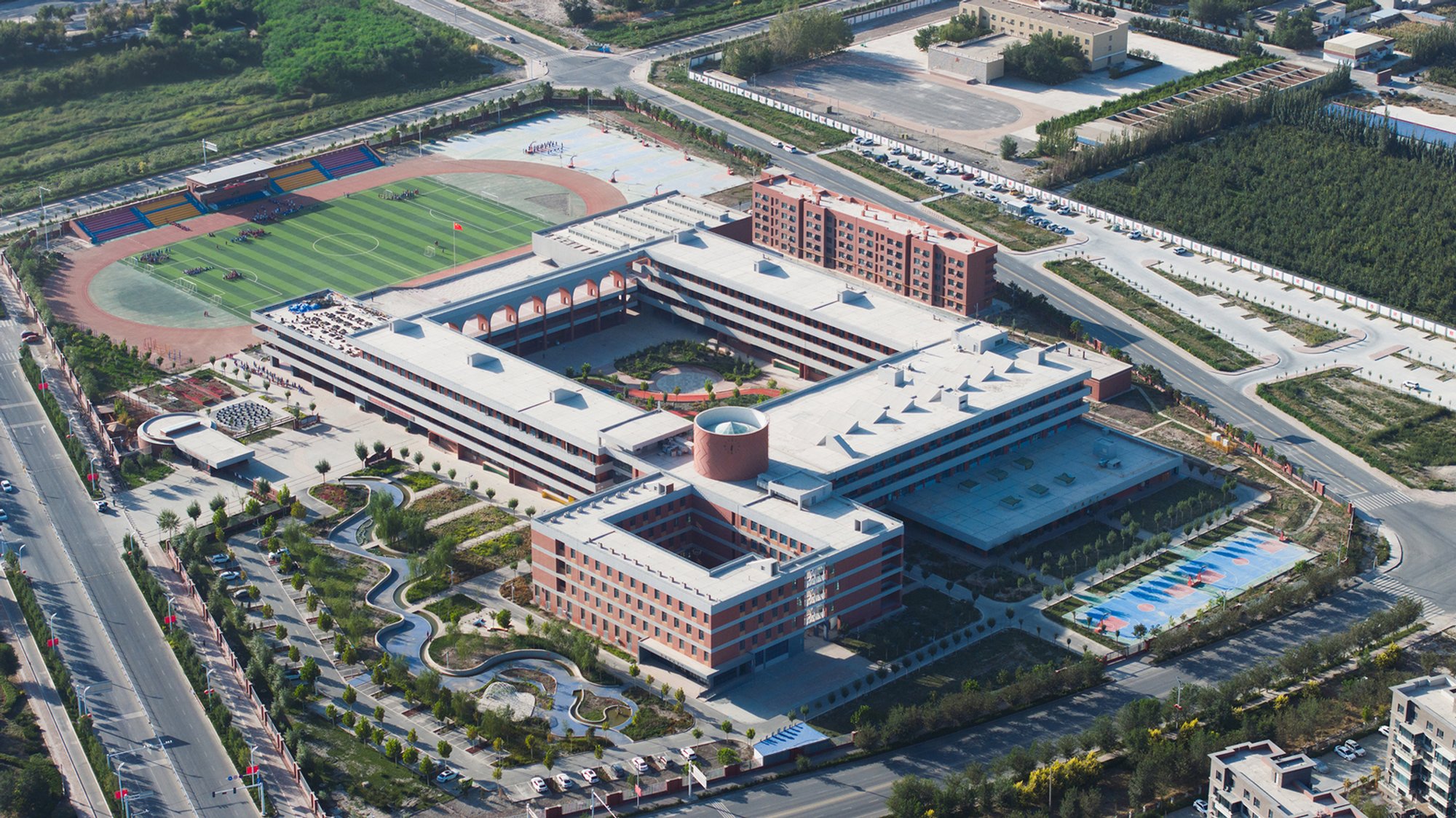
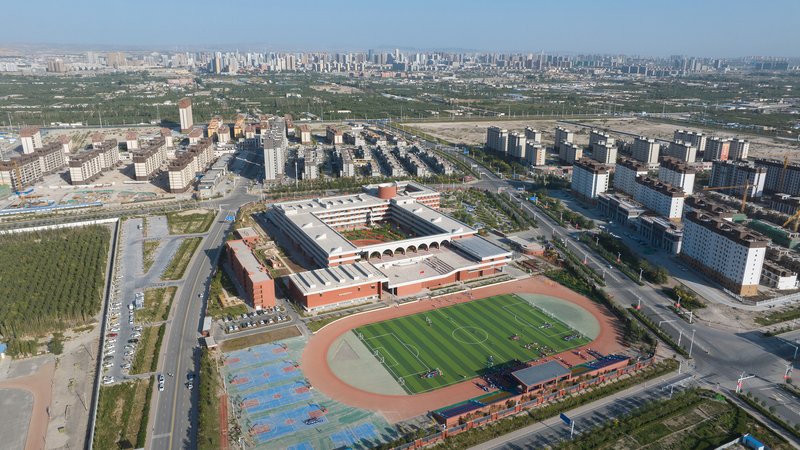
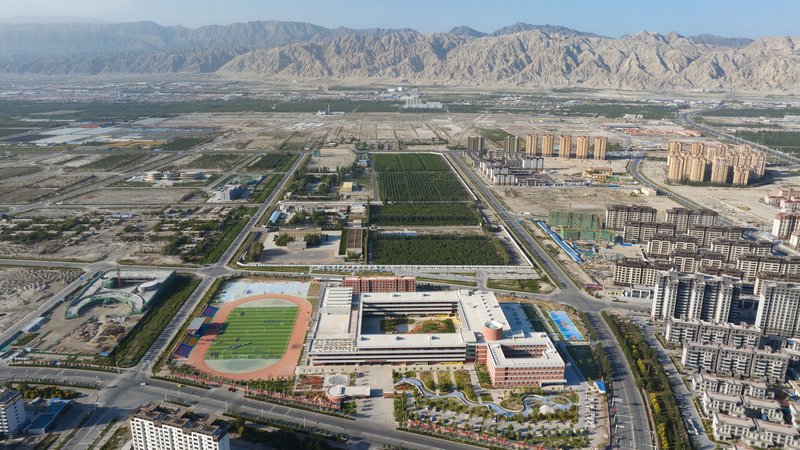
Huashan Middle School’s Boguqi Campus, designed by Zhaohui Rong Studio, is a landmark educational project spanning 45,800 m² in Tiemenguan City, China. Completed in 2022, the campus is strategically positioned on a narrow strip of land between the Tianshan Mountains and the Taklamakan Desert, an area characterized by extreme aridity and an annual precipitation of less than 20 mm. This challenging environment inspired a design that balances resilience, functionality, and human-scale comfort while integrating harmoniously with the surrounding Gobi landscape.
Square City, A Design Strategy for Desert Conditions
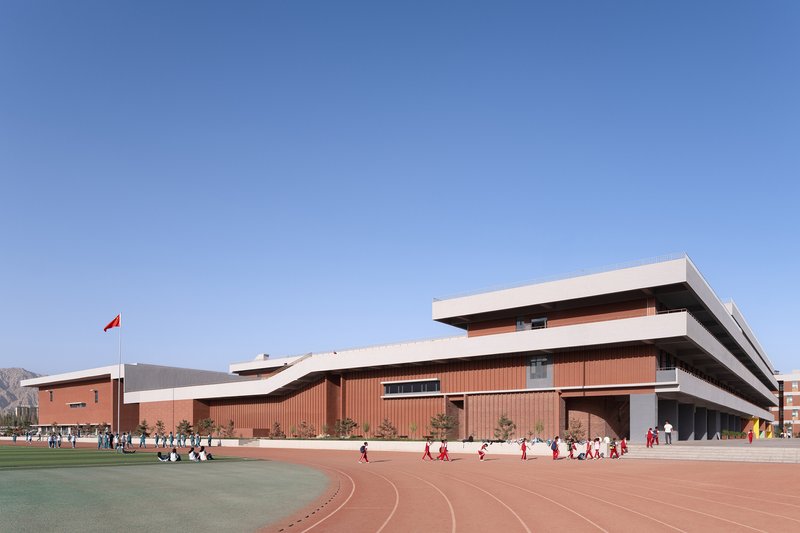
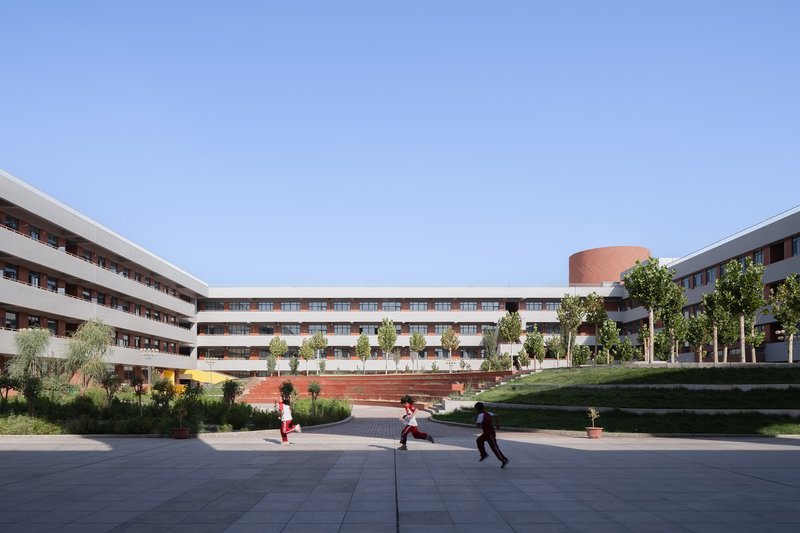
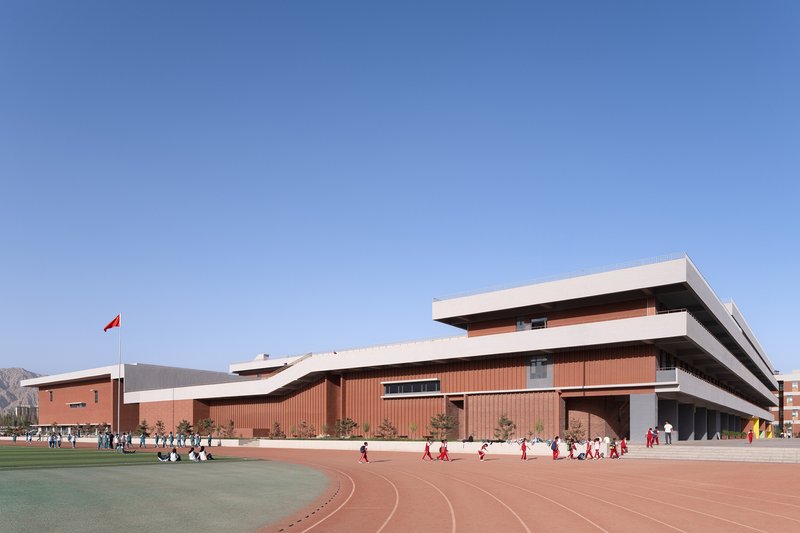
The core concept of the campus is “Square City,” a spatial strategy designed to protect students and staff from harsh desert conditions. The campus consists of two interlocking square rings: a larger square ring dedicated to educational facilities and a smaller ring for accommodation. These geometric forms create a localized artificial environment, shielding the interior from strong winds, sand, and extreme temperatures while symbolizing a human-scaled educational city carved into the Gobi Desert. The four-story horizontal structures, extending up to 140 meters, create a seamless connection between the campus and the expansive desert landscape, emphasizing clarity, simplicity, and architectural strength.
The Hundred Trees Garden, Courtyard and Micro-Topography
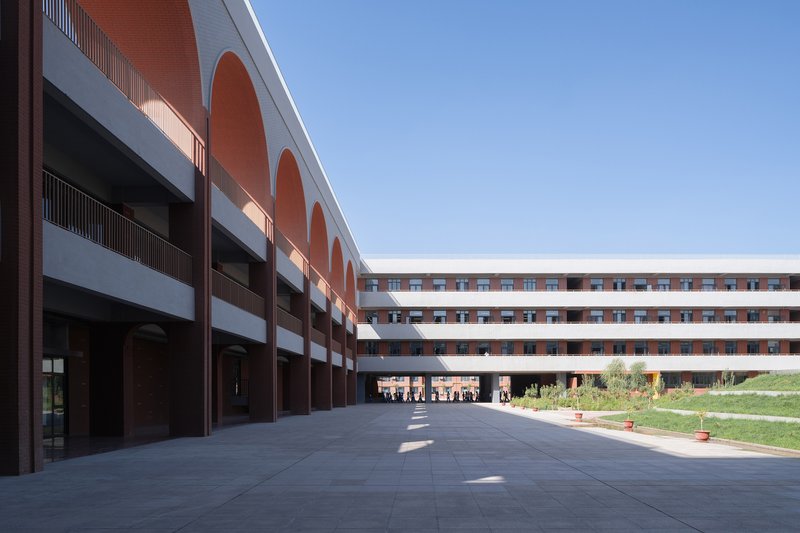
At the heart of Square City lies a 9,000 m² courtyard, referred to as the Hundred Trees Garden. The courtyard introduces artificial nature into the desert context, with carefully sculpted micro-topography featuring an elevation difference of nearly three meters. This layered design creates dynamic spaces for learning, outdoor activities, and social interaction. The northwest corner of the courtyard opens into an outdoor performance plaza, fostering collective experiences while connecting interior spaces with the desert environment. The courtyard embodies the vision of a serene oasis where students can enjoy shaded green spaces and reflective ponds, even in one of the harshest climates on Earth.
Architectural Expression: Power, Warmth, and Materiality
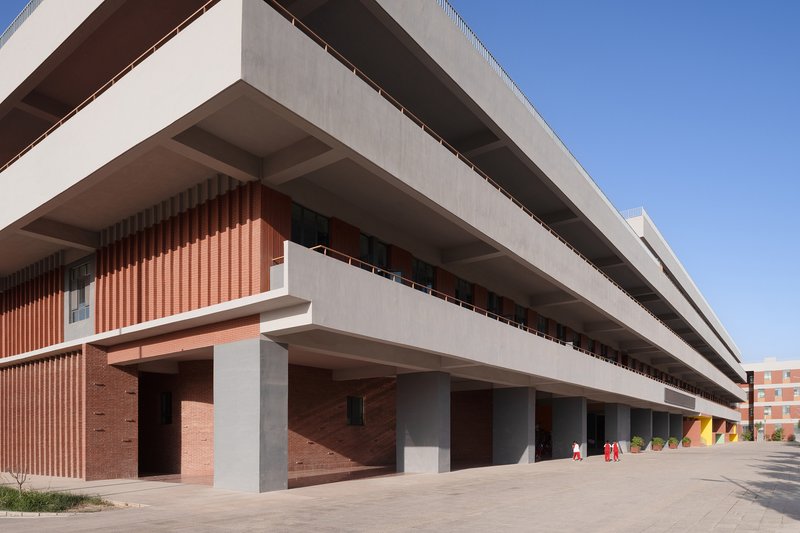
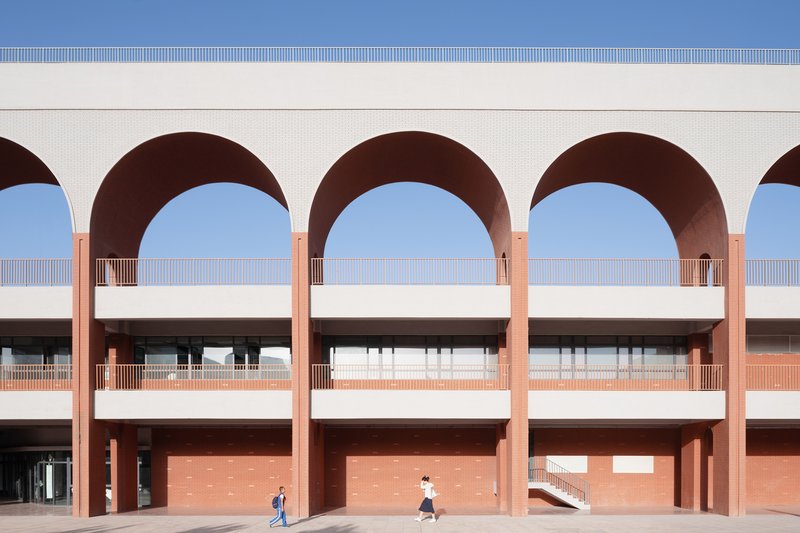
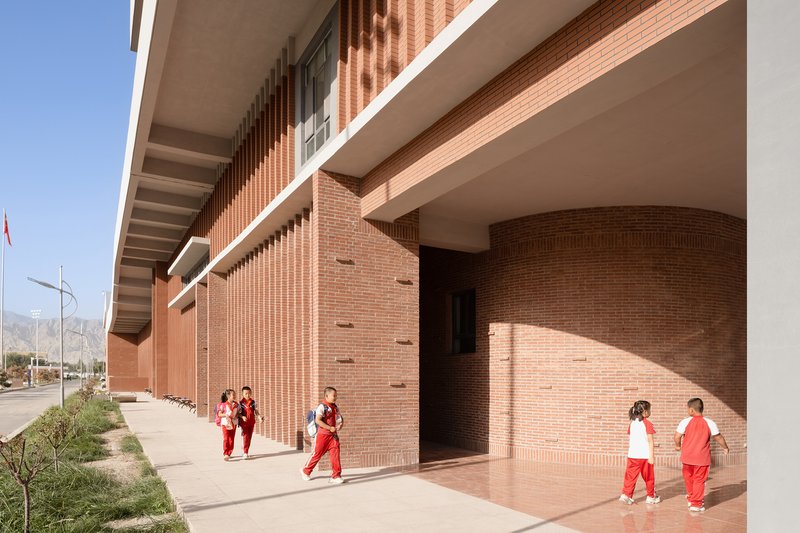
The architectural language of the campus emphasizes strength, clarity, and directness. Continuous horizontal lines and simple geometric forms evoke a sense of power, reflecting the rugged character of western China and aligning with local construction capabilities. Select areas feature brickwork, contrasting with large plastered walls to create a sense of warmth and craftsmanship within the otherwise monumental structures. This combination of robust forms and handcrafted detailing ensures both visual impact and human comfort.
Interior Spaces: Atriums, Library, and Student Gathering
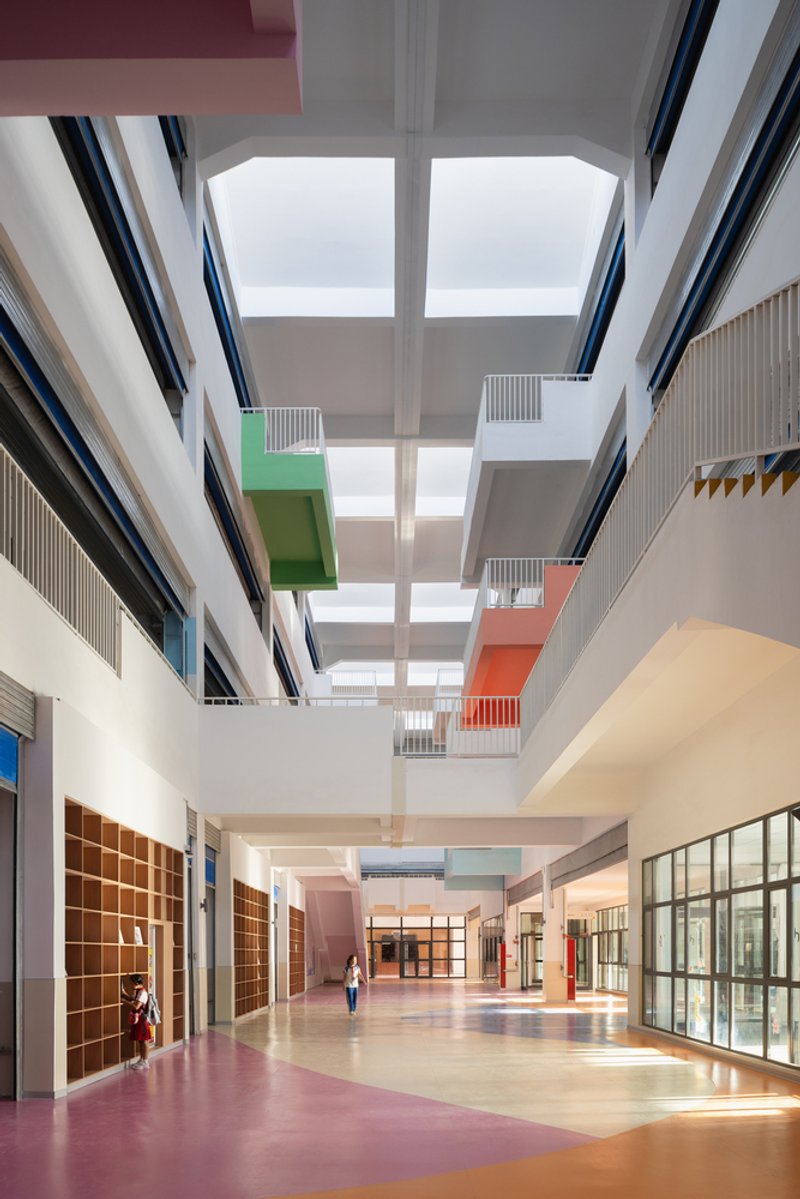
Internally, the four-story atrium within the learning center functions as a bright, open, and flexible space for a variety of educational activities. A homogeneous sawtooth skylight illuminates the interior, promoting interaction, gatherings, and future adaptability in teaching methods. The library, located at the intersection of the educational and accommodation rings, serves as the campus hub. A circular hollow atrium allows natural light to pour in from above, creating a serene environment for study, reflection, and social exchange. Over time, this space is expected to become one of the most memorable areas for students, combining knowledge with shared experience.
Sunlight, Arches, and Collective Memory
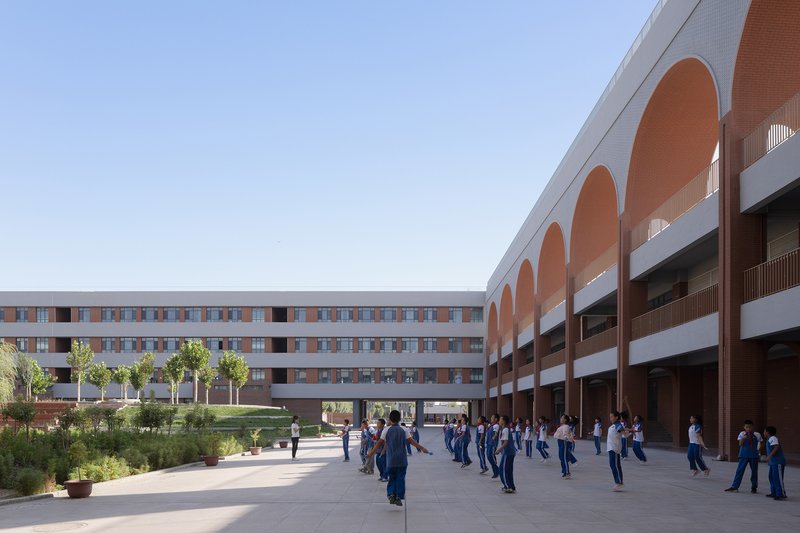
On the western side of the campus, seven massive arches frame the sunset and connect the interior courtyard to open spaces. These monumental structures reinforce the concept of the campus as a defensible city while establishing daily rituals for students. Observing the sun’s movement through the arches not only fosters learning about nature and astronomy but also contributes to forming collective memories on campus, creating a lasting emotional and cultural connection for generations of students.
Desert-Responsive Education Architecture
Huashan Middle School, Boguqi Campus, demonstrates how educational architecture can respond to extreme climates while fostering community, learning, and well-being. Through careful attention to form, materiality, and landscape integration, the campus creates a resilient, human-centric environment within one of the most challenging desert landscapes in the world. The project exemplifies innovative desert architecture, combining sustainability, cultural sensitivity, and educational purpose into a cohesive architectural vision.



Popular Articles
Popular articles from the community

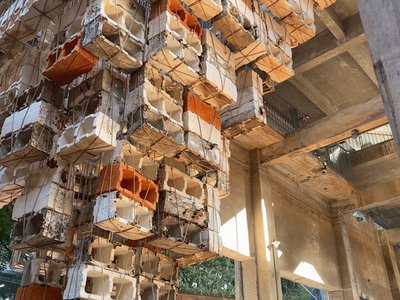
Inverted Architecture Installation by Studio Link-Arc: Exploring the Intersection of Architecture and Living Organisms
Inverted Architecture Installation by Studio Link-Arc blends mycelium, sustainability, inverted design, ecological cycles, and urban adaptive architecture in Shenzhen.
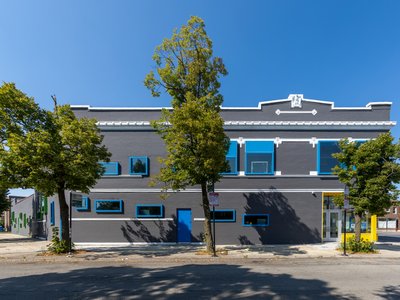
Gads Hill Early Learning Center by JGMA: Adaptive Reuse Shaping Community-Focused Educational Architecture
Adaptive reuse transforms fragmented structure into vibrant early learning center with playful façade, natural light, and community-focused sustainable design.

Solar Steam: A Climate-Responsive Architecture That Redefines the Monument
A climate-responsive memorial architecture that transforms heat, decay, and time into a living system reflecting humanity’s ecological impact.


The Ken Roberts Memorial Delineation Competition (Krob)
As the most senior architectural drawing competition currently in operation anywhere in the world, it draws hundreds of entries each year, awarding the very best submissions in a series of medium-based categories.


Similar Reads
You might also enjoy these articles

Free Architecture Competitions You Can Enter Right Now
No entry fees, real prizes. Here are the best free architecture competitions open for submissions in 2026.
Top 15 Architecture Competitions to Enter in 2026
From student-friendly idea competitions to prestigious international awards, here are the best architecture competitions open for entries in 2026. Updated regularly.

DIY & Engineering in Computational Design : Enter the BeeGraphy Design Awards
Showcase Your Creativity with Computational Design and Open Source Projects
Innovative Design Solutions: Award-Winning Projects from Recent Architecture Competitions
Exploring award-winning architectural projects shaping the future of design, sustainability, and community.


Explore Architecture Competitions
Discover active competitions in this discipline




The International Standard for Design Portfolios


The Global Benchmark for Architecture Dissertation Awards


The Global Benchmark for Graduation Excellence


Challenge to design public laboratory
Comments (0)
Please login or sign up to add comments
No comments yet. Be the first to comment!