
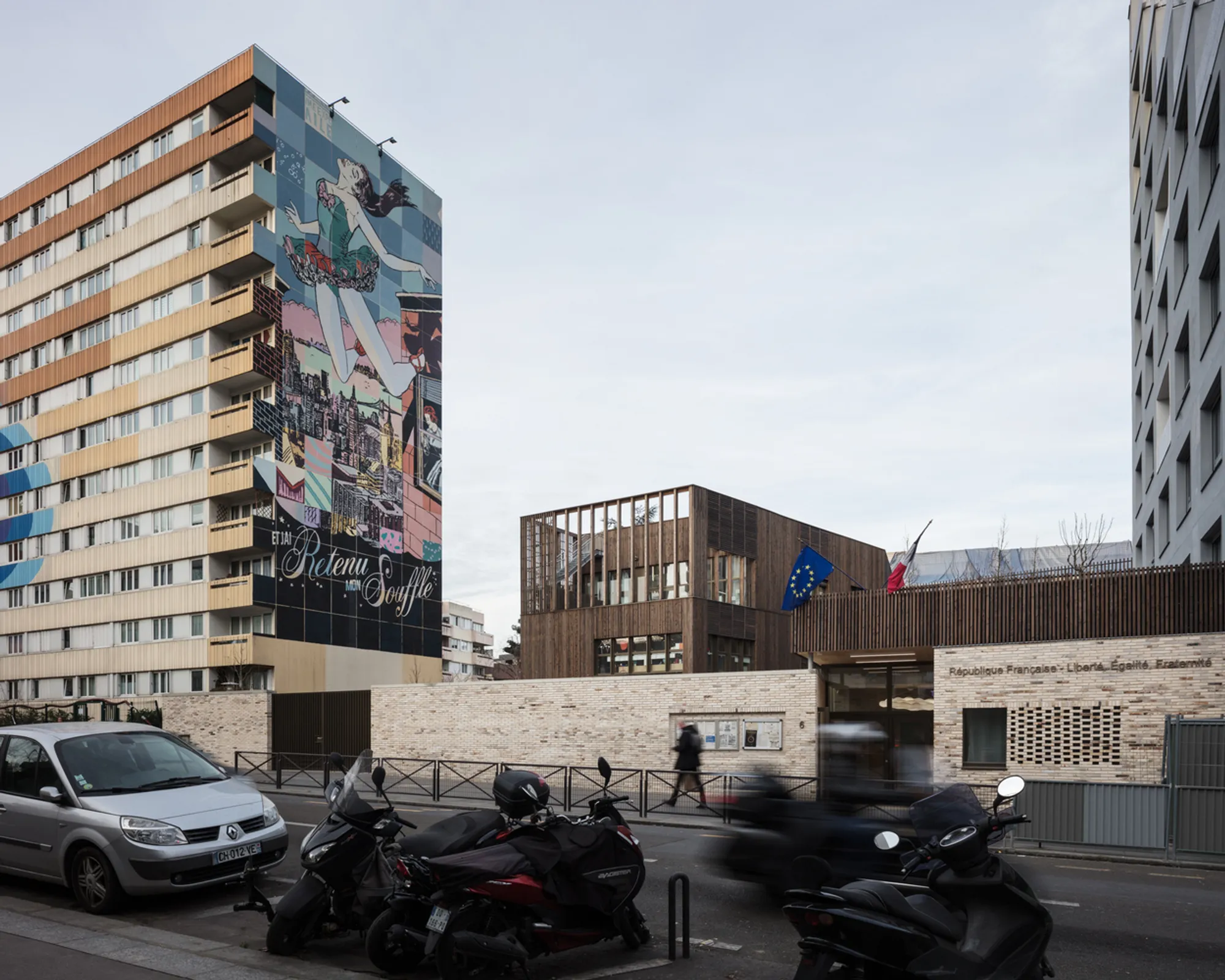
Jeanne d’Arc Nursery School – A Sustainable, Child-Centered Architectural Landmark in Paris
Jeanne d’Arc Nursery School in Paris blends sustainable materials, natural light, and child-centered design, creating an eco-friendly educational environment.


Designed by La Architectures in collaboration with Atelier Desmichelle Architecture, the Jeanne d’Arc Nursery School in Paris, France, redefines educational architecture through its innovative design, sustainable construction methods, and focus on child-centered spatial experiences. Completed in 2019, the 1,753 m² project integrates biobased materials, low-carbon strategies, and passive design principles, creating a space where learning, play, and environmental responsibility coexist seamlessly.
Architectural Concept – The Inner Street
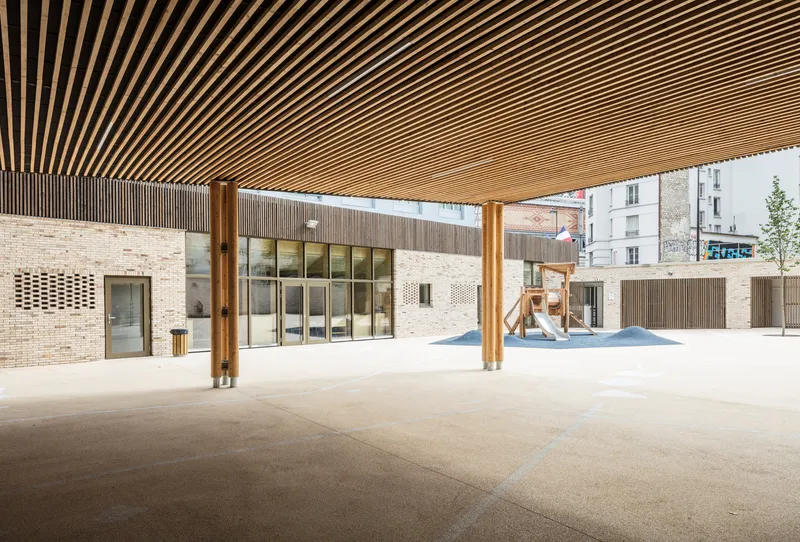
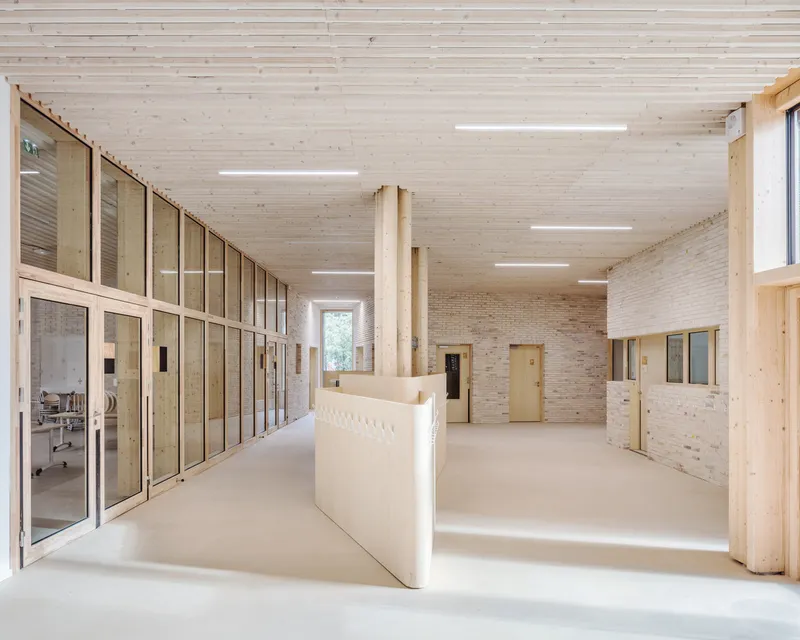
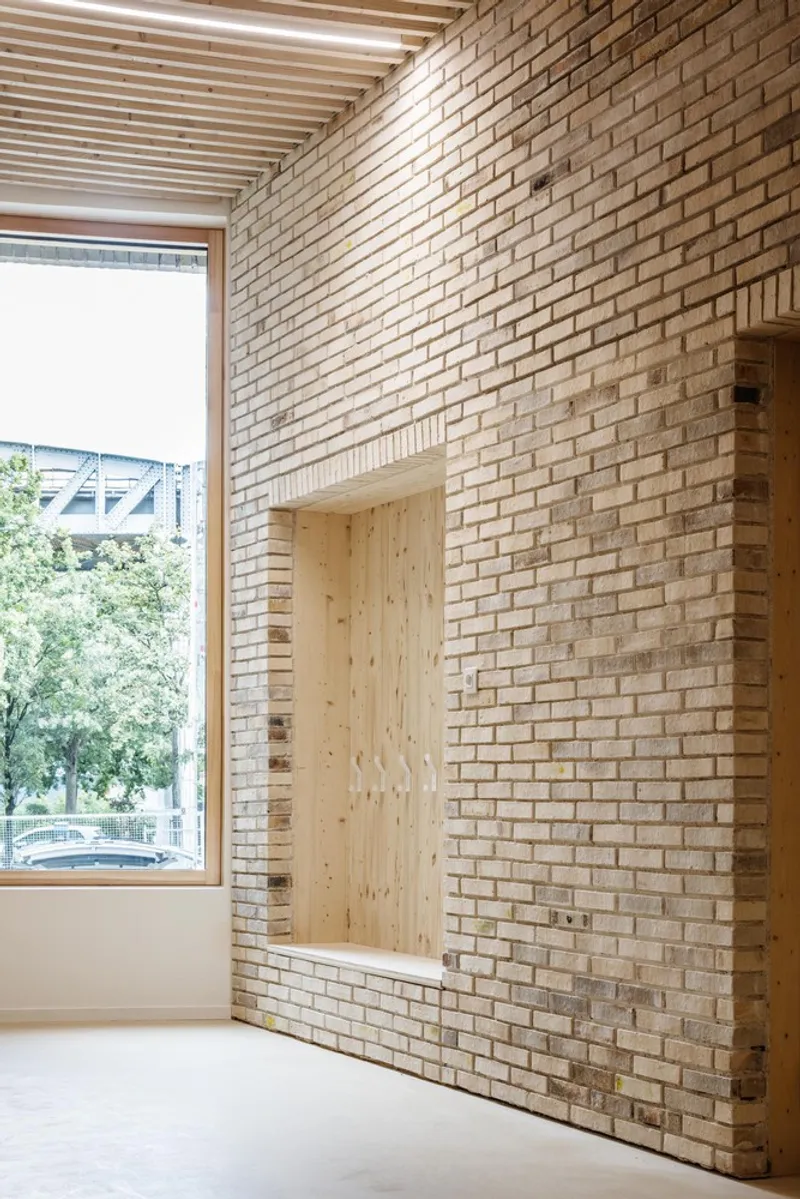
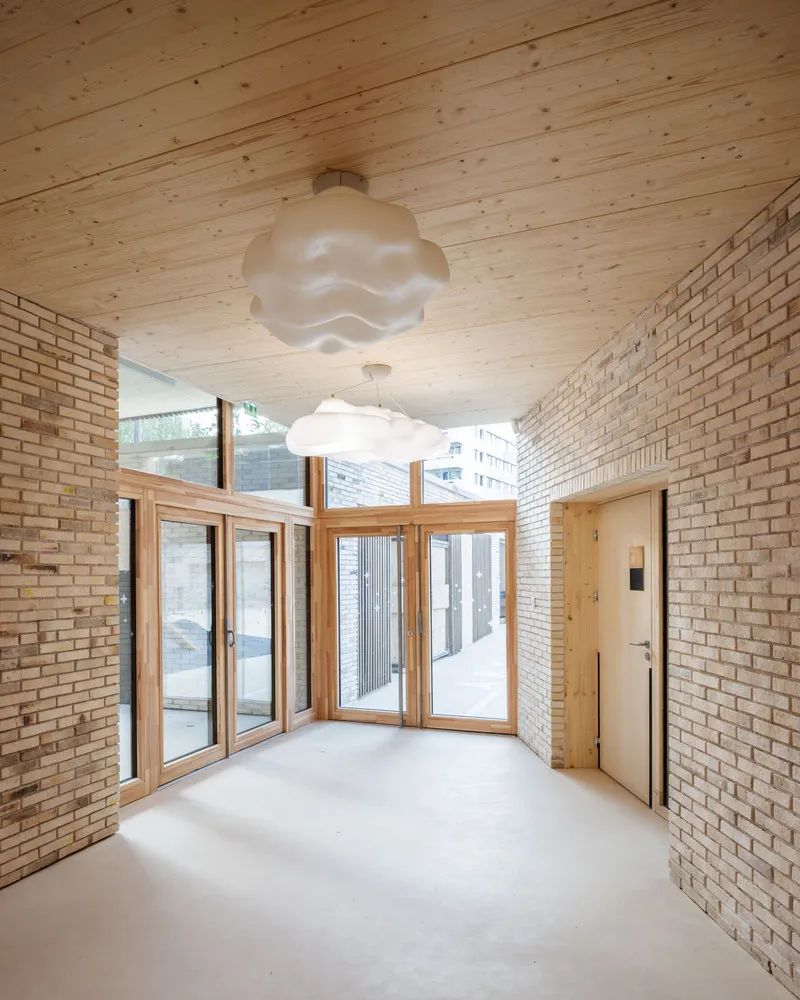
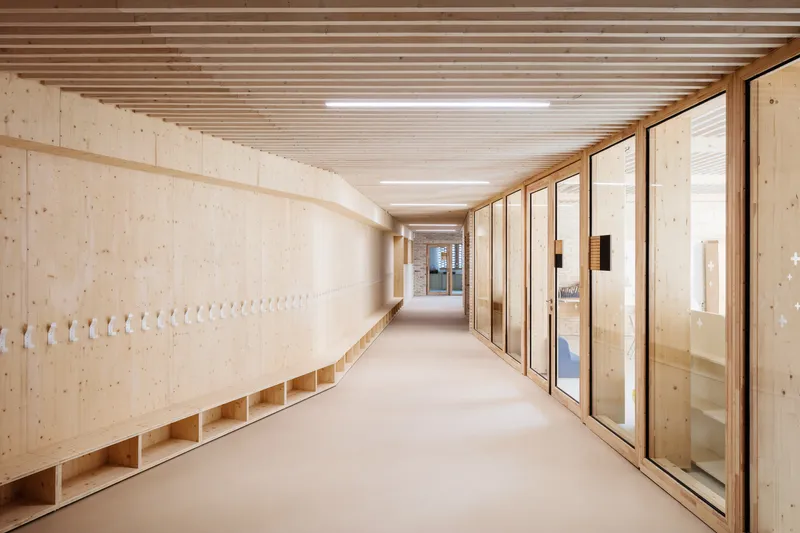
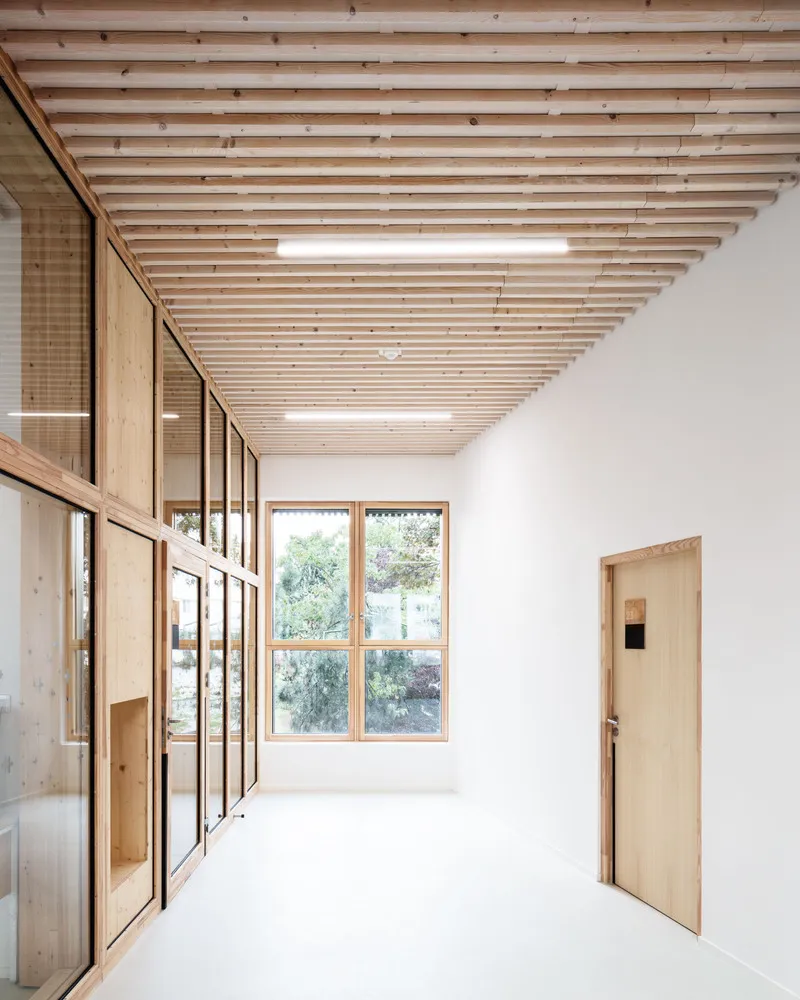
The design is structured around the concept of an “inner street”, a central spine that organizes circulation and anchors the school’s spatial identity. Running nearly 40 yards, this passage connects classrooms, play areas, and shared spaces while maintaining constant visual links to the outside. Natural light floods the interiors through glazed partitions, large bay windows, and openings in thick brick volumes, ensuring a bright, welcoming atmosphere for children and educators alike.
Materiality and Spatial Experience
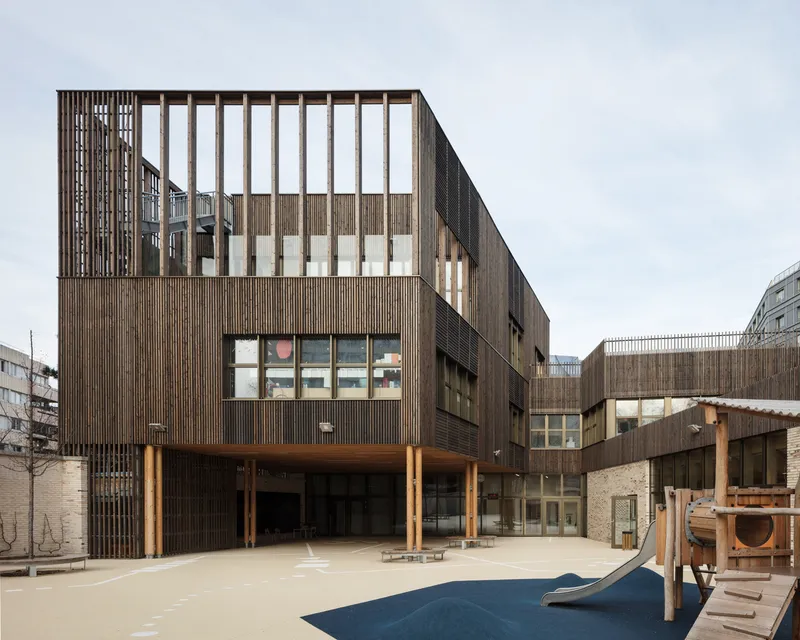
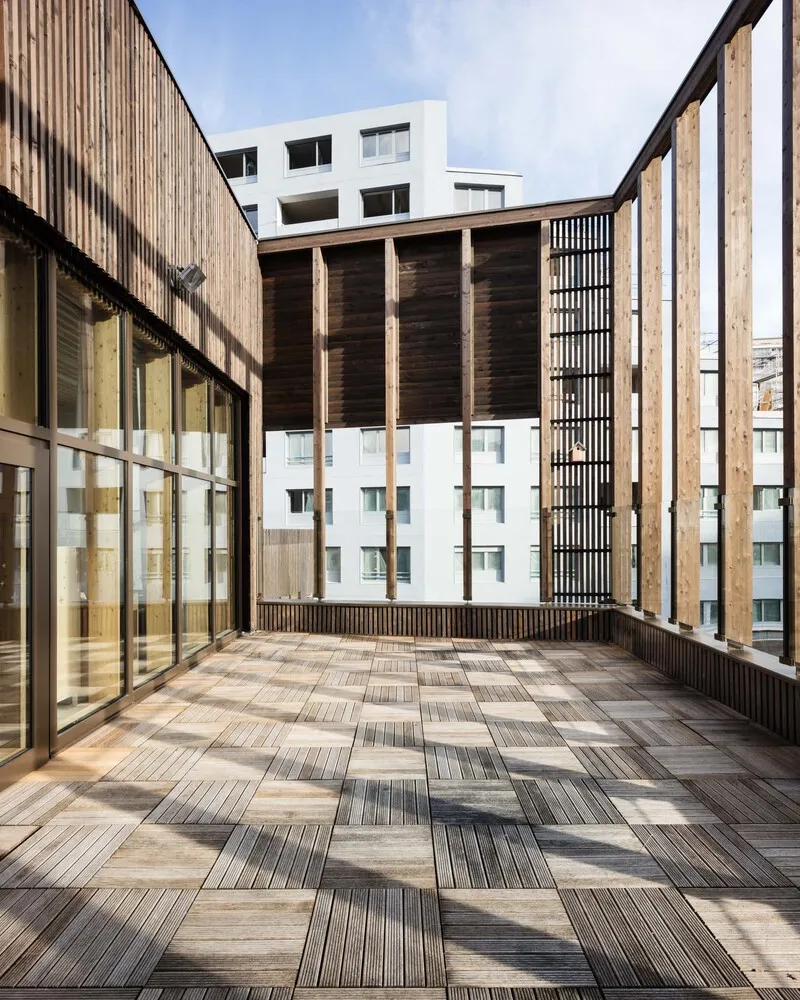
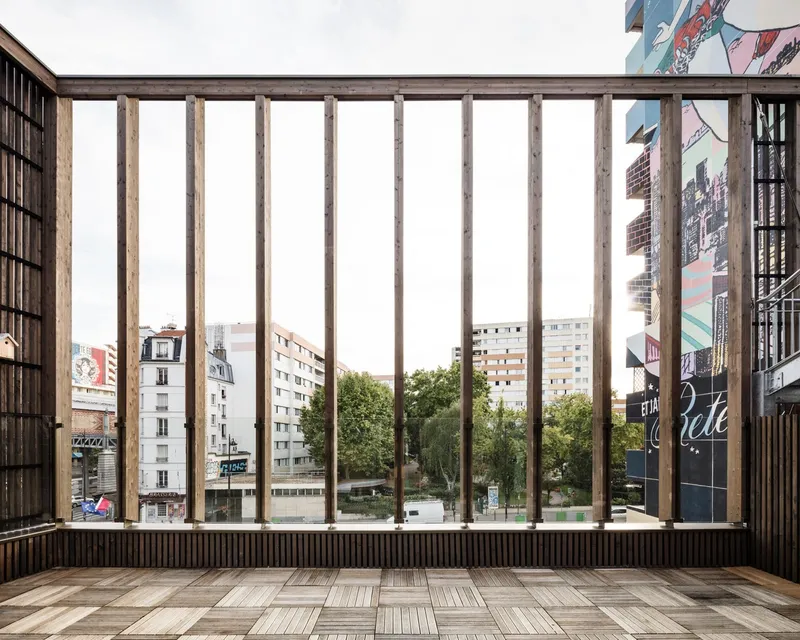
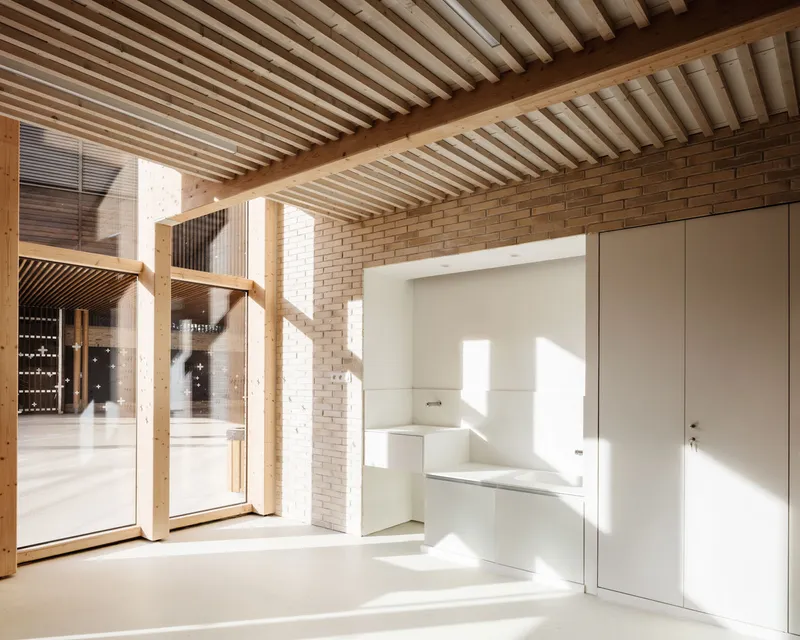
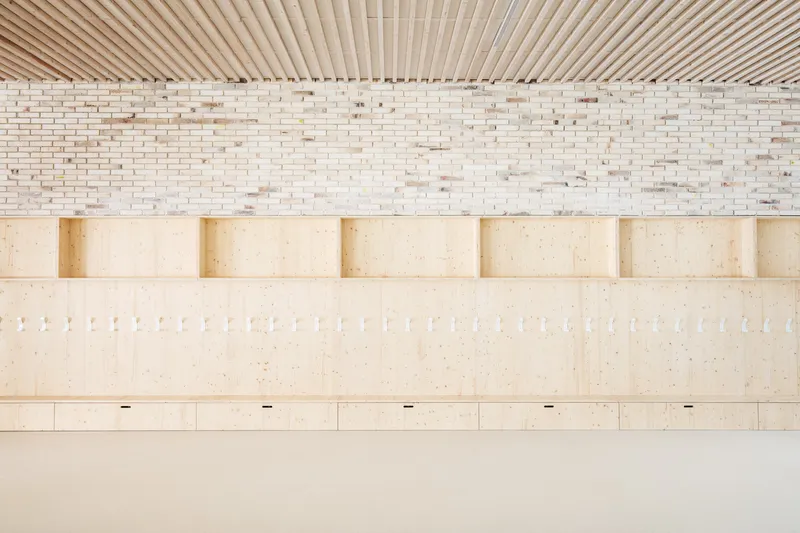
The building’s architectural language balances solid brick walls and glazed wooden frames, creating a rhythm of openness and enclosure. The brick volumes define children’s spaces, while the wooden structures—often load-bearing and fully glazed—encourage transparency and interaction. Carefully designed mashrabiya-inspired elements provide filtered light and privacy where needed, complementing the natural textures of wood, terracotta, and plant-filled landscapes visible from within.
Functionality and Flow
The entrance hall opens generously onto the inner street, connecting the leisure center, washrooms, dining hall, and classrooms. Every space is naturally lit and carefully integrated into the building’s structure. The design ensures multifunctionality—each constructive element serves dual purposes, from traffic direction to storage or framing specific spatial moments.
Sustainability and Low-Carbon Design
A key focus of the Jeanne d’Arc Nursery School is environmental performance. The project adopts a low-carbon approach, using biobased and geo-sourced materials such as wood-frame walls, straw insulation, and terracotta bricks fired in one of the last traditional French kilns. Prefabricated wooden elements reduce construction waste, while CLT (cross-laminated timber) walls and floors, wood-aluminum joinery, and natural wood cladding highlight the project’s ecological commitment.
The building meets passive design certification standards, with reduced heating needs, a high-performance thermal envelope, optimized sunlight, and dual-flow ventilation. Acoustic solutions and summer comfort strategies further enhance user experience, while significantly lowering the school’s carbon footprint.
A Model for Future Educational Architecture
The Jeanne d’Arc Nursery School demonstrates how architecture for education can go beyond functionality, offering spaces that nurture curiosity, creativity, and environmental awareness. By blending sustainable materials, innovative circulation concepts, and abundant natural light, the project creates an inspiring learning environment and stands as a benchmark for eco-friendly educational design in France and beyond.
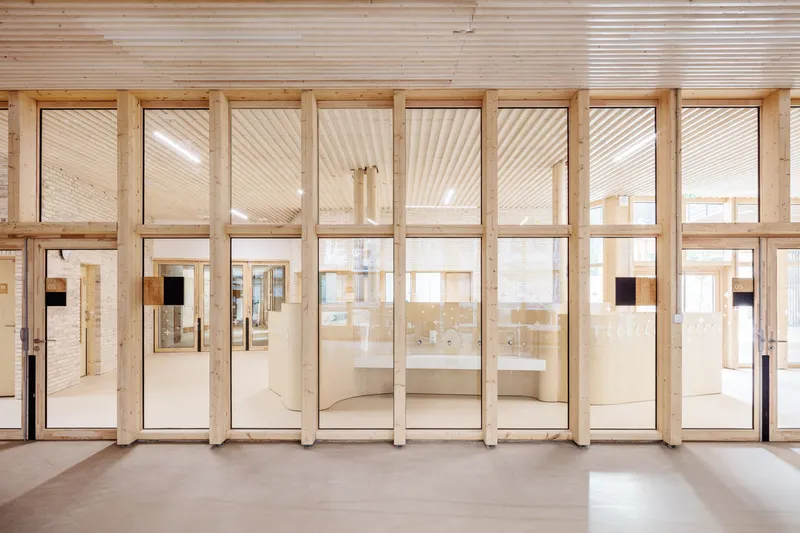
All Photographs are works of Charly Broyez



Popular Articles
Popular articles from the community


Co-Life: Senior Housing Design That Reconnects Older Adults With the City
Co-Life reimagines senior housing design through healing gardens, shared streets, workshops, and a sustainable community across generations.

The Musturak Paradise: Senior Living Architecture for a Connected Future in Temara, Morocco
The Musturak Paradise reimagines senior living architecture in Temara via private homes, social spaces, culture, community, and shared care.

Co-life: Sustainable Architecture for Age-Friendly Community Living
Co-life reimagines sustainable architecture for seniors through courtyards, rammed earth, shared gardens, and spaces designed for belonging.

Riyadh For All: Intergenerational Urban Design for Active Aging in Rabat
Riyadh For All reimagines urban design in Rabat with intergenerational co-living, adaptive courtyards, and Moroccan cultural exchange today.


Similar Reads
You might also enjoy these articles


Hodi-Mandai Geram
Project Function: Preservation and revitalization of the Intangible heritage and socio-spatial identity of the Hodi by Housing, Cultural Memory Center, Sacred Grove, landscape, local tourism economy


Olio Towers: A Mid-Rise for Performers That Fuses Housing, Rehearsal, and Stage
Located blocks from Houston's Theater District, this modular tower stacks living units around a central performance atrium.

Oasis: Modular Green Housing Carved into Dhaka's Urban Fabric
A shortlisted Plugin Housing entry reclaims unauthorized settlements in Dhaka with stepped concrete volumes, green roofs, and ventilation-driven design.

Black Hole: A Floating Megastructure for the Post-Physical Era
Emiliano Mazzarotto envisions a spherical, self-scaling arena where e-sports, digital hotels, and holographic stadiums replace traditional public space.

Explore Pont-Aven School Competitions
Discover active competitions in this discipline



Challenge to design public laboratory


Challenge to reimagine the Iron Throne


Photograph architecture without architects


Illustrate the lost glory of Angkor Wat - Render Challenge
Comments (0)
Please login or sign up to add comments
No comments yet. Be the first to comment!