

Kakapo Creek Children’s Garden by Smith Architects – A Sustainable Early Learning Centre Rooted in Nature
A circular, nature-integrated early learning centre with glazed classrooms, timber canopy, and sustainable features enhancing connection, daylight, biodiversity, and community.


The Kakapo Creek Children’s Garden in Mairangi Bay, Auckland, designed by Smith Architects, is a 450 m² early learning centre that blends sustainable architecture, biophilic design, and cultural symbolism into a nurturing educational environment. Completed in 2022, the centre accommodates up to 100 children and stands as a benchmark for eco-friendly educational architecture in New Zealand.
A Circular Learning Environment Inspired by Nga Hau E Wha
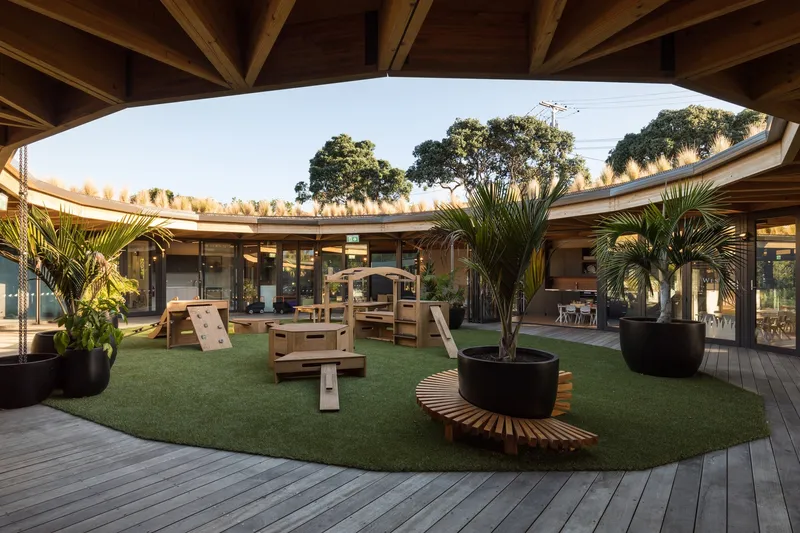
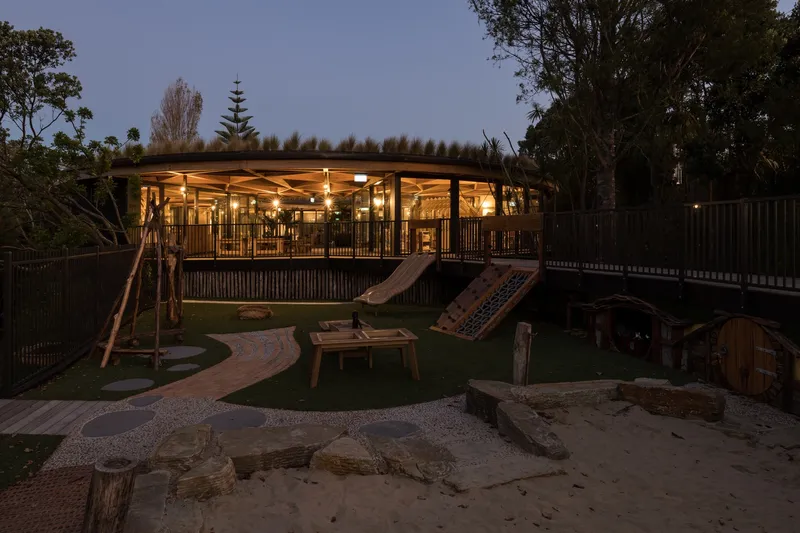
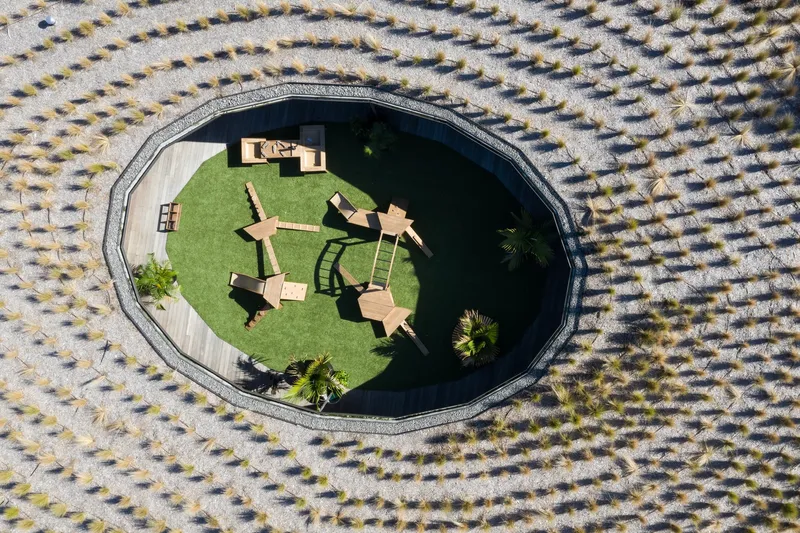
The architectural concept draws inspiration from Nga Hau E Wha – the four winds, a Māori cultural reference symbolizing a gathering place for people from all backgrounds. This narrative becomes the driving force behind the building’s circular form, designed to create a communal heart at its centre.
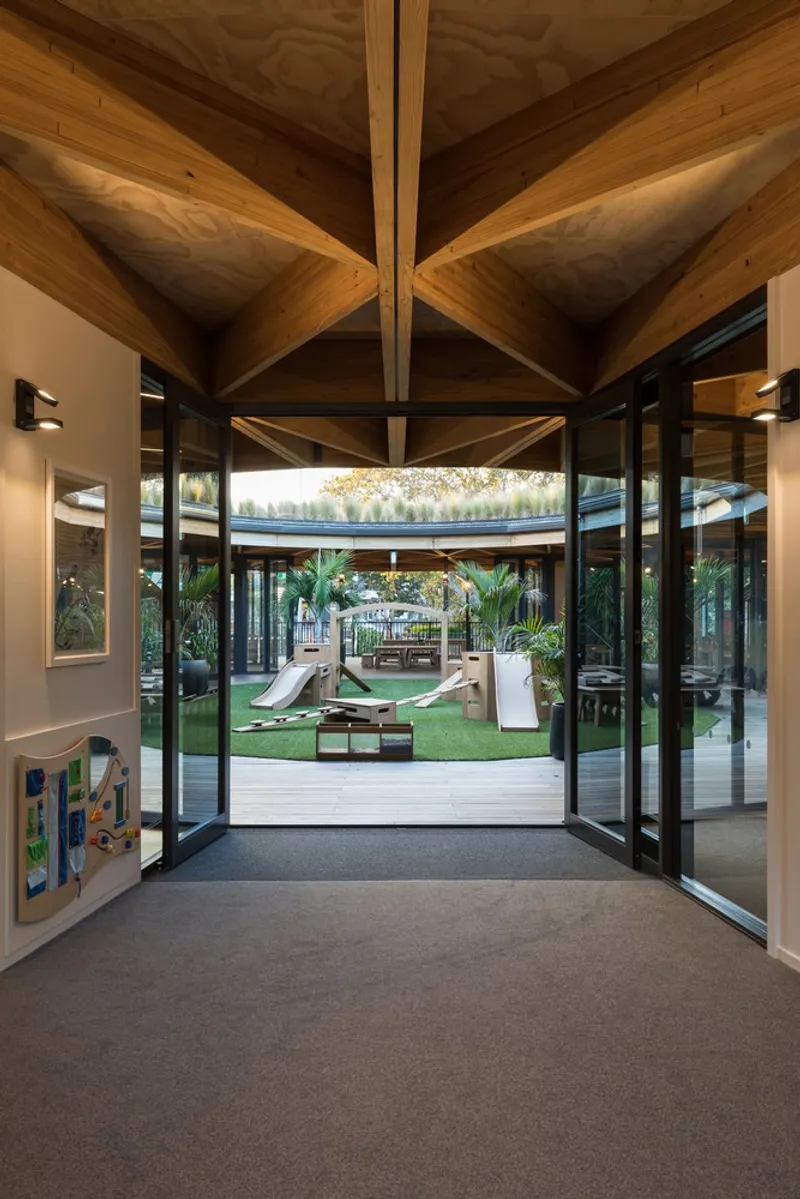
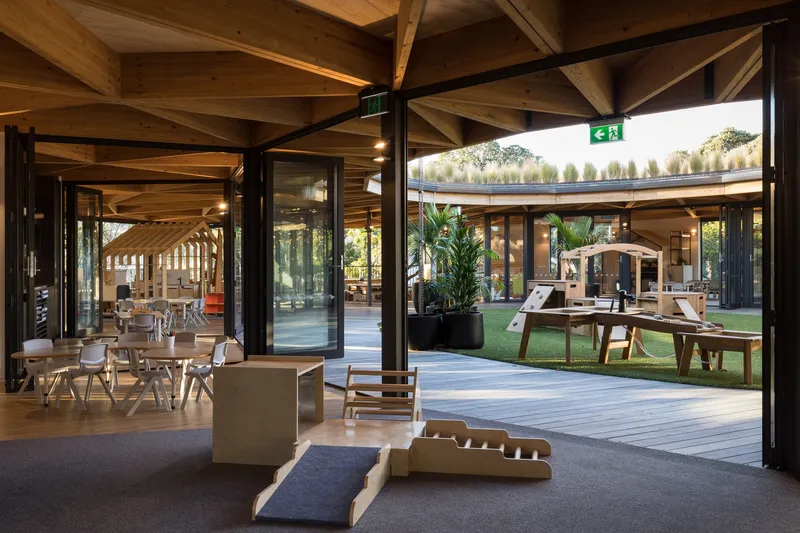
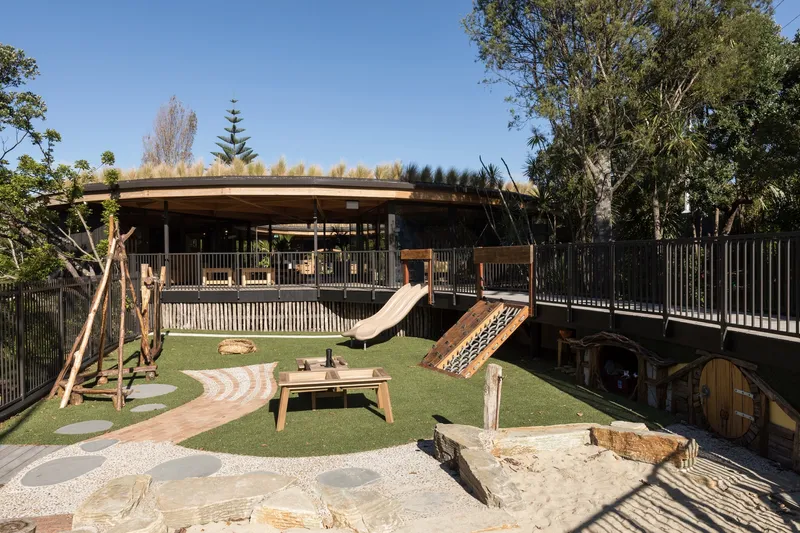
Four fully glazed classrooms radiate around this central courtyard, each oriented to strengthen visual and spatial connections. The circular geometry also echoes the curve of the natural stream defining the site’s northern boundary, grounding the building in its landscape and reinforcing a sense of place.
Design That Connects Children With Nature
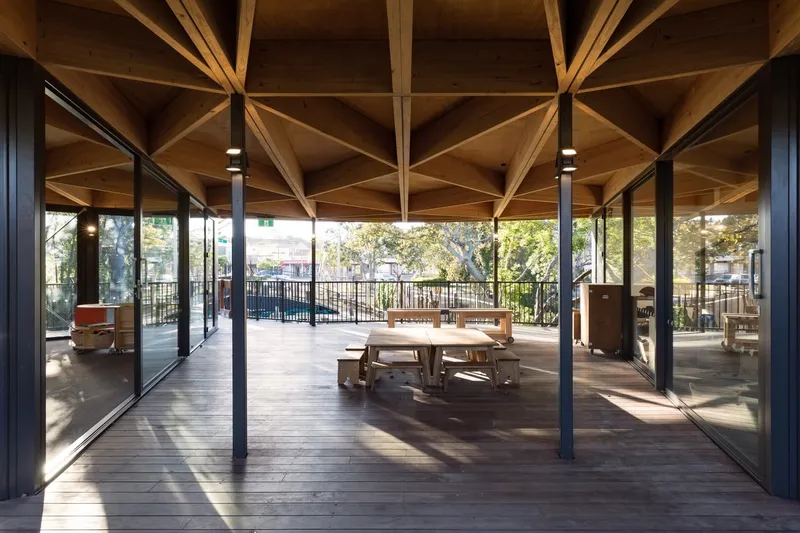
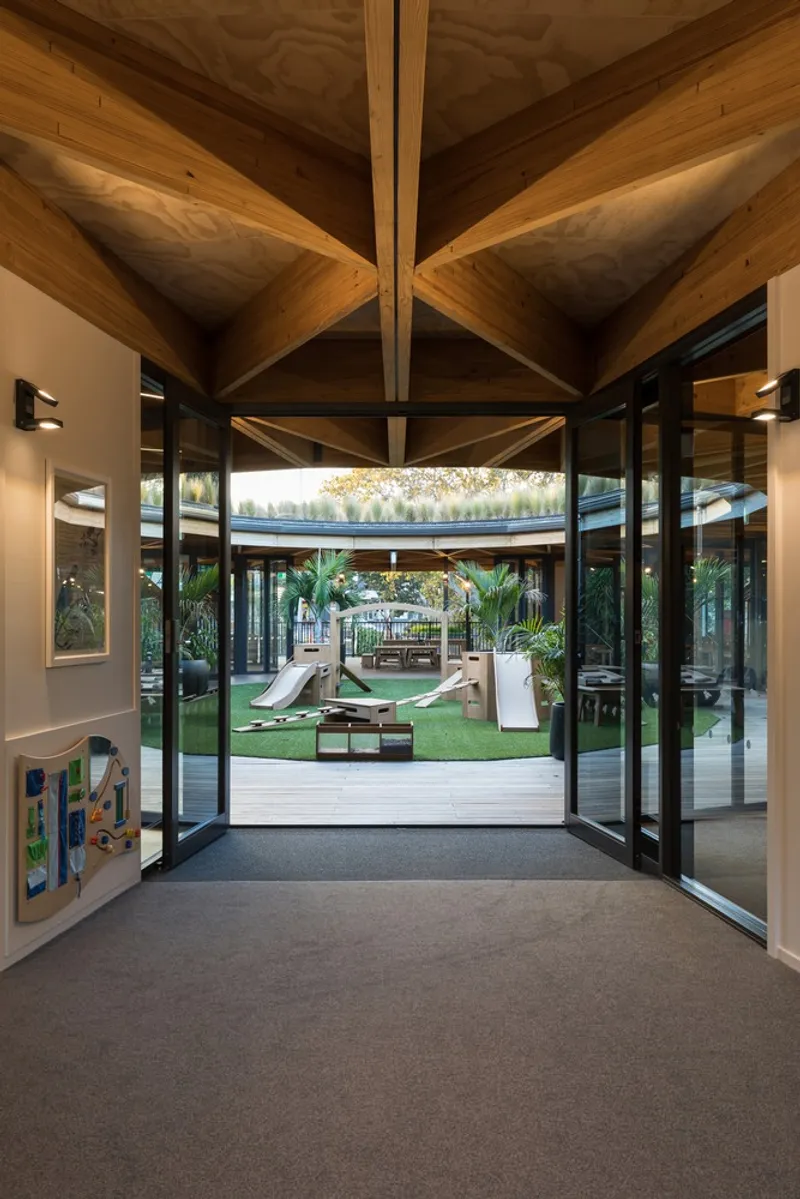
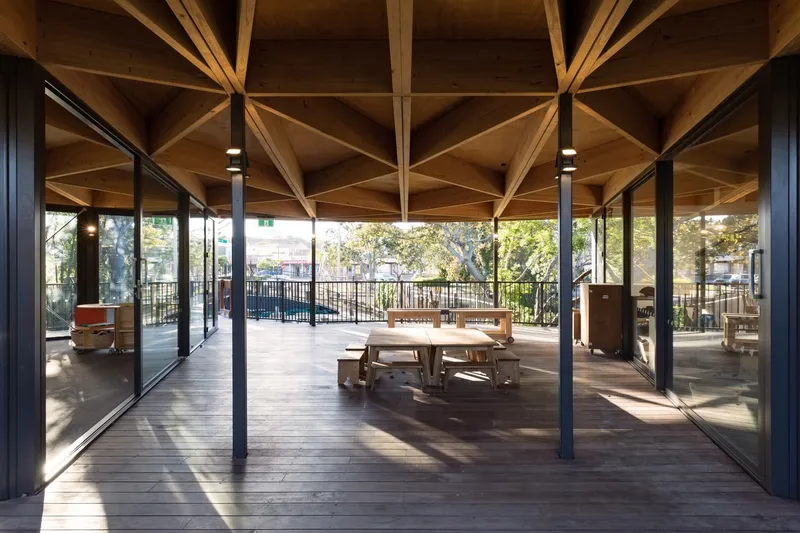
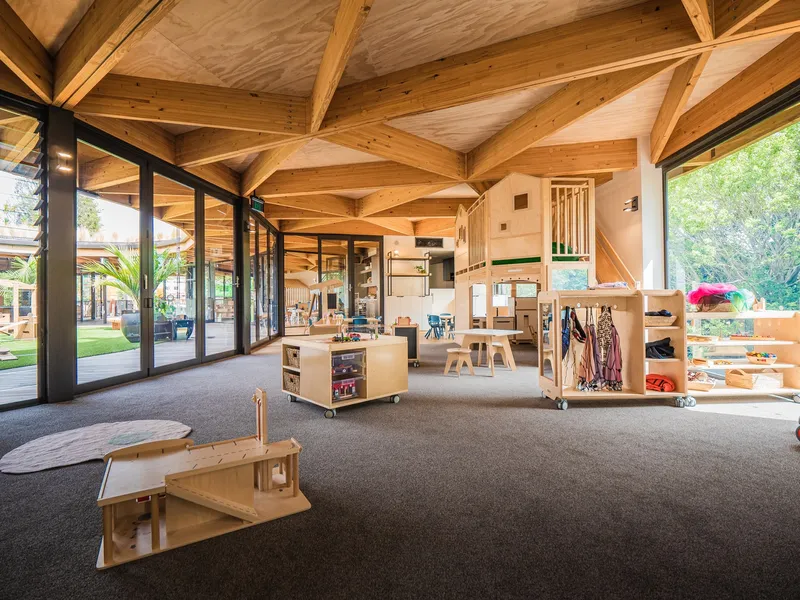
A defining feature of the Kakapo Creek Children’s Garden is its seamless relationship between interior and exterior spaces. Full-height glazing throughout the classrooms opens directly to the courtyard, inviting natural light while fostering indoor-outdoor learning.
A sculptural timber glulam and ply canopy unifies the centre, while the expansive green roof softens the building’s profile and merges it into the surrounding environment. This roofscape not only enhances thermal performance but also becomes an ecological habitat that strengthens local biodiversity.
Sustainable Architecture Focused on Well-Being
The project integrates several environmentally responsible features that prioritise energy efficiency, low-carbon design, and children’s health:
Natural Ventilation & Passive Comfort
Large glazed doors and windows support natural cross-ventilation, eliminating the need for carbon-intensive mechanical systems during most of the year.
Low-Carbon Heating & Cooling
Concealed electrical heat-pump units provide efficient temperature control. Their location above the bathroom ceilings minimizes noise and visual intrusion.
Green Roof & Water Management
The green roof reduces rainwater runoff by more than 50% and filters stormwater before it returns to the nearby stream. Rainwater is naturally purified through the soil and gravel beneath the building, reinforcing sustainable hydrological cycles.
Daylight Optimization
Floor-to-ceiling glazing maximizes daylight penetration, significantly reducing the need for artificial lighting during daytime hours.
Energy-Efficient Building Envelope
Low-E glazing minimizes heat loss, while roof and wall insulation exceed building code requirements. All lighting employs low-wattage LED fixtures.
Flexible, Future-Ready Design
All building services run beneath the raised floor, allowing easy maintenance and future alterations. The structure itself is adaptable—its form and materiality could suit alternative uses beyond childcare, from community hubs to small hospitality spaces.
Local residents even mistook the centre for a restaurant or bar—an indicator of its architectural versatility.
Biophilic Landscape Strategy
Extensive planting using native species surrounds the building and continues across the green roof. Careful site planning ensured that only three small trees were removed, while new landscaping introduces significantly more vegetation than before.
Circular Material Strategies
Materials salvaged from the site’s previous house were reused in the playground, reinforcing sustainable construction practices and reducing waste.
A Holistic, Community-Centred Early Learning Environment
Kakapo Creek Children’s Garden is more than an early childhood centre; it is a model for sustainable educational architecture, where cultural meaning, ecological stewardship, and child-centred design converge. The project demonstrates how thoughtful architecture can nurture young minds while respecting the environment and celebrating local identity.
All photographs are works of Mark Scowen




Popular Articles
Popular articles from the community


Lunar Spiral: Space Architecture Shaped by the Mathematics of the Universe
Lunar Spiral reimagines space architecture through Fibonacci geometry, lunar regolith, levitating habitats, and self-sustaining Moon living.

Co-life: Sustainable Architecture for Age-Friendly Community Living
Co-life reimagines sustainable architecture for seniors through courtyards, rammed earth, shared gardens, and spaces designed for belonging.

The Ocean Hive: Sustainable Architecture for a Self-Sufficient Civilization at Sea
The Ocean Hive imagines sustainable architecture at sea, where modular habitats, algae, wave power and ocean waste sustain a growing colony.

Co-Life: Senior Housing Design That Reconnects Older Adults With the City
Co-Life reimagines senior housing design through healing gardens, shared streets, workshops, and a sustainable community across generations.


Similar Reads
You might also enjoy these articles


Hodi-Mandai Geram
Project Function: Preservation and revitalization of the Intangible heritage and socio-spatial identity of the Hodi by Housing, Cultural Memory Center, Sacred Grove, landscape, local tourism economy


Olio Towers: A Mid-Rise for Performers That Fuses Housing, Rehearsal, and Stage
Located blocks from Houston's Theater District, this modular tower stacks living units around a central performance atrium.

Oasis: Modular Green Housing Carved into Dhaka's Urban Fabric
A shortlisted Plugin Housing entry reclaims unauthorized settlements in Dhaka with stepped concrete volumes, green roofs, and ventilation-driven design.

Black Hole: A Floating Megastructure for the Post-Physical Era
Emiliano Mazzarotto envisions a spherical, self-scaling arena where e-sports, digital hotels, and holographic stadiums replace traditional public space.


Explore Educational Building Competitions
Discover active competitions in this discipline



Challenge to design public laboratory


Challenge to reimagine the Iron Throne


Photograph architecture without architects


Illustrate the lost glory of Angkor Wat - Render Challenge
Comments (0)
Please login or sign up to add comments
No comments yet. Be the first to comment!