
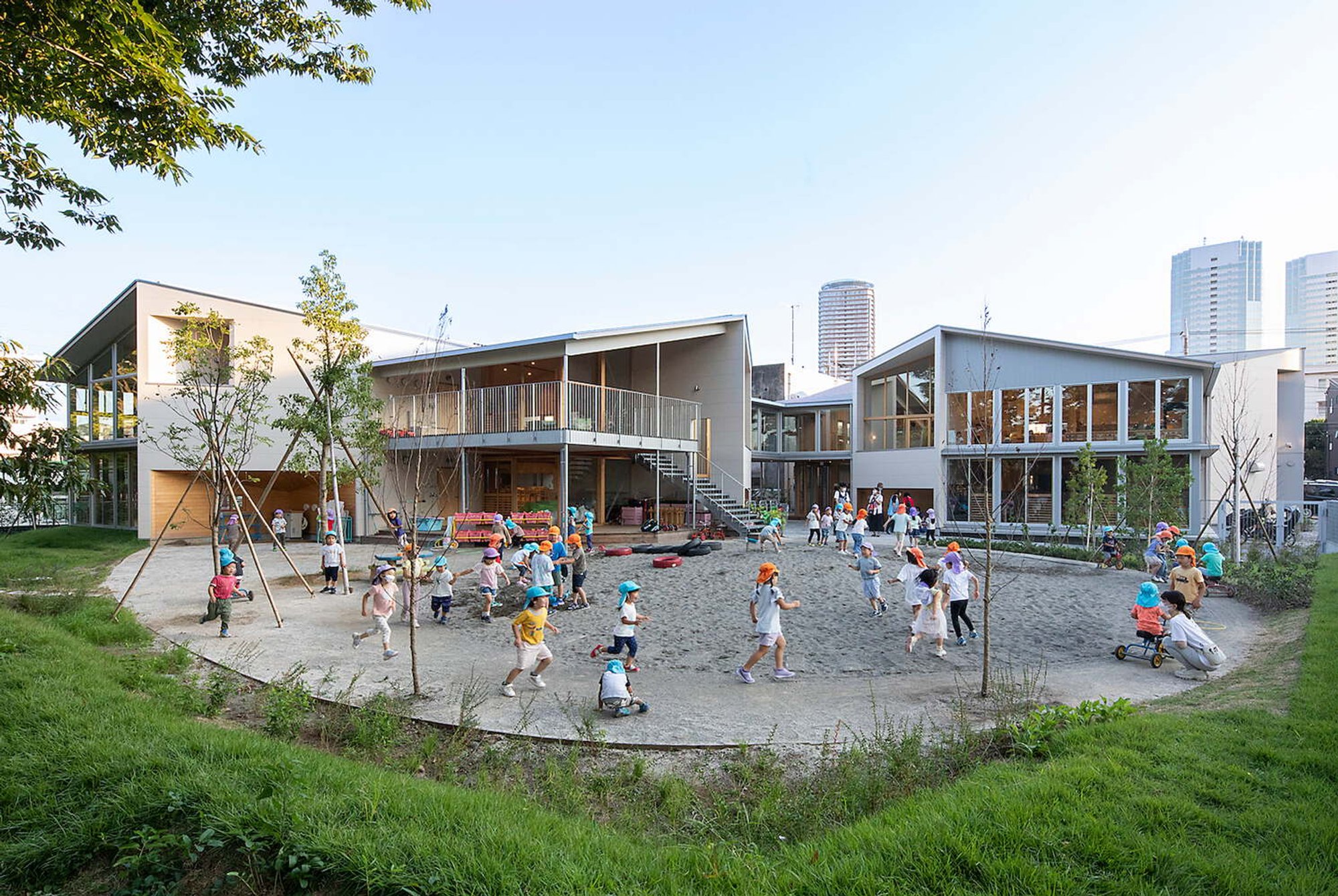
Kashimada Nursery by TERRAIN Architects: A Community-Centric Childcare Haven in Kawasaki
Kashimada Nursery blends timber design, community integration, and child-centric architecture to create a nurturing, sensory-rich environment in Kawasaki, Japan.

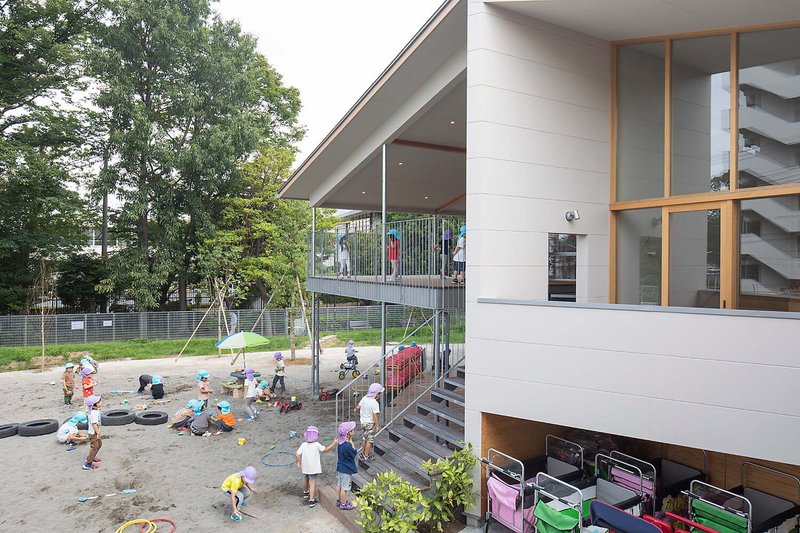
Nestled in the suburban fabric of Kawasaki, Japan, Kashimada Nursery by TERRAIN architects redefines early childhood architecture through a seamless blend of historical site context, timber construction, and spatial intimacy. Completed in 2022, the 1,219-square-meter facility transforms a former water distribution site into a vibrant, two-story wooden nursery that fosters connection—between children, the natural environment, and the broader community.
Revitalizing a Historic Site with Architectural Sensitivity
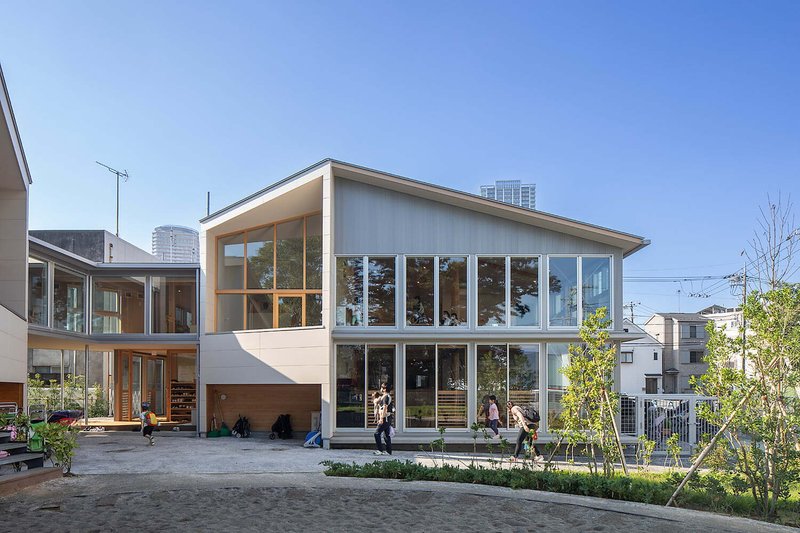
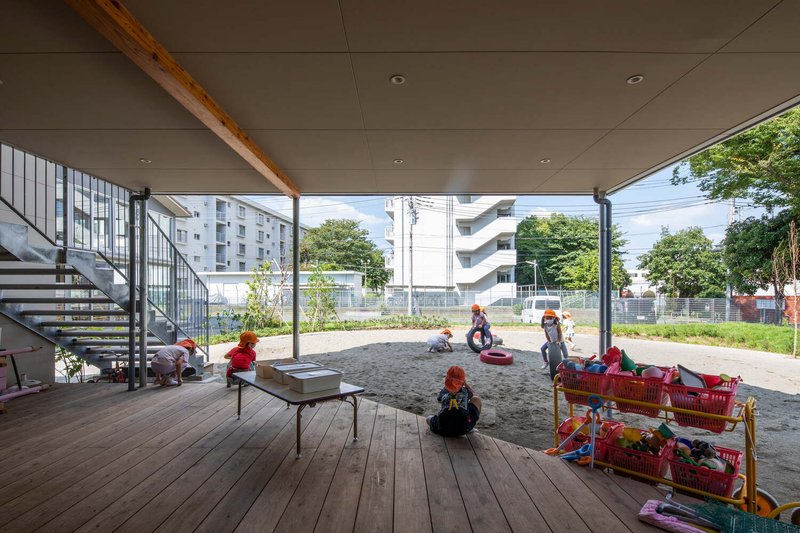
Located adjacent to an industrial zone and surrounded by residential towers, the nursery occupies a transitional zone between a busy road and a pedestrian path lined with mature deciduous trees. The site—previously a waterworks facility—was carefully adapted to retain the memory of its past, including the circular remains of an old surge tank. This conscious adaptive reuse sets the tone for a design that respects heritage while looking toward the future of community-focused urban development.
Human-Scale Design for Early Childhood Development
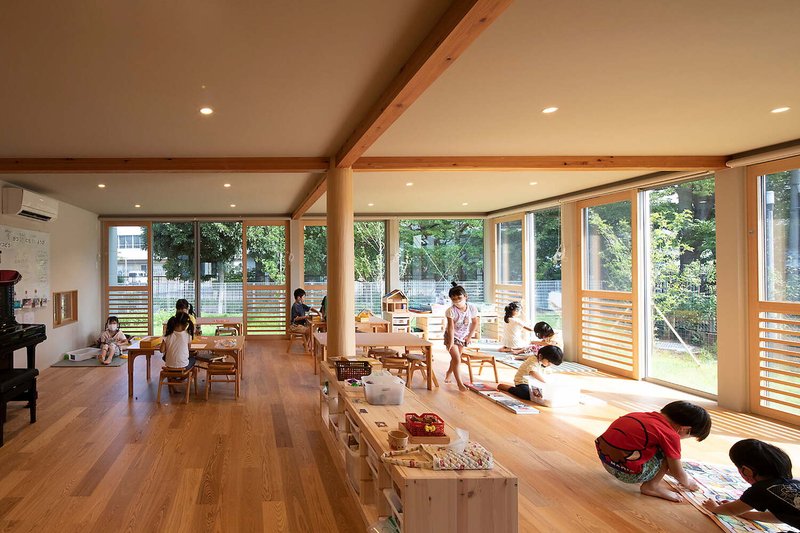
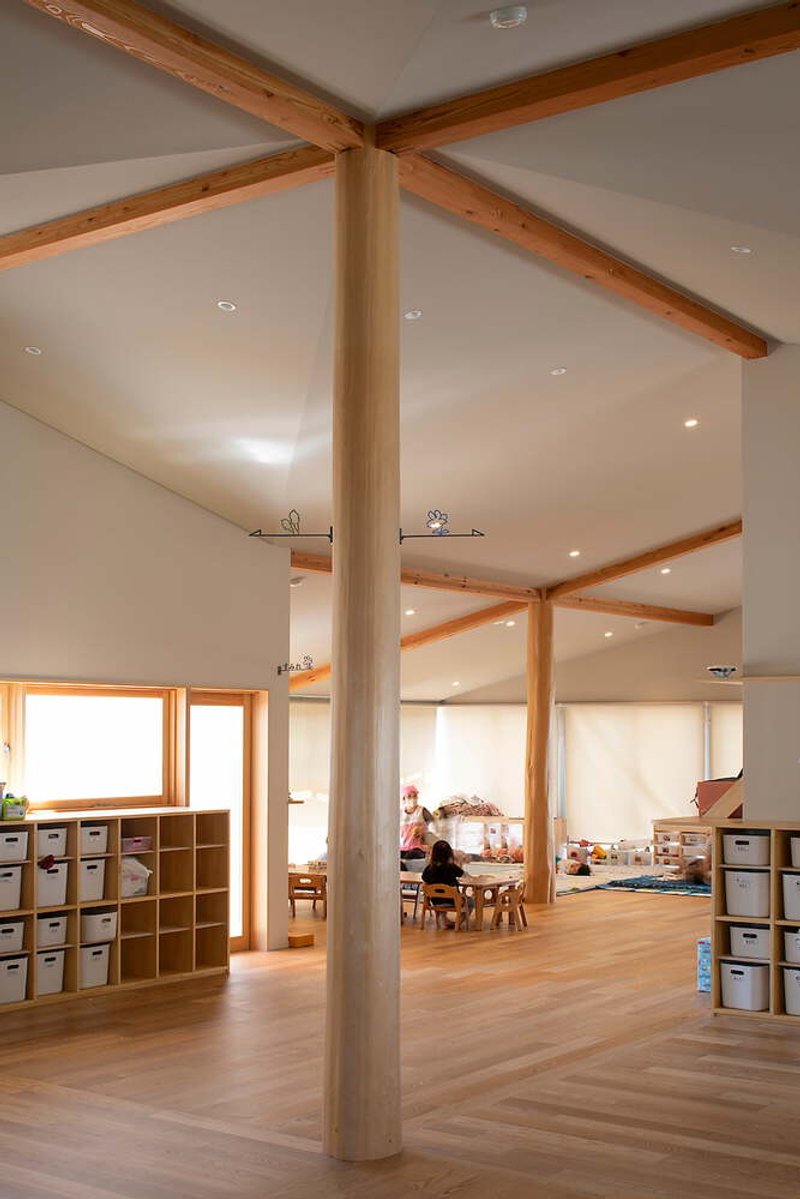
Drawing from their prior work in Uganda, TERRAIN architects introduced a modular wooden structural system based on dimensions familiar in both Ugandan and Japanese contexts. Each classroom is organized around a central column, creating a windmill layout using four modules of 8 tatami mats (hachijyo-ma). These hachijyo-ma units offer child-appropriate proportions that encourage low-level movement and intuitive interaction with the space.
The classrooms are offset by 3,640mm, a dimension equivalent to two tatami mats (futa-ma), creating a spatial rhythm that feels both flexible and comforting for young children. This strategy allows the nursery environment to support physical, sensory, and cognitive development through design.
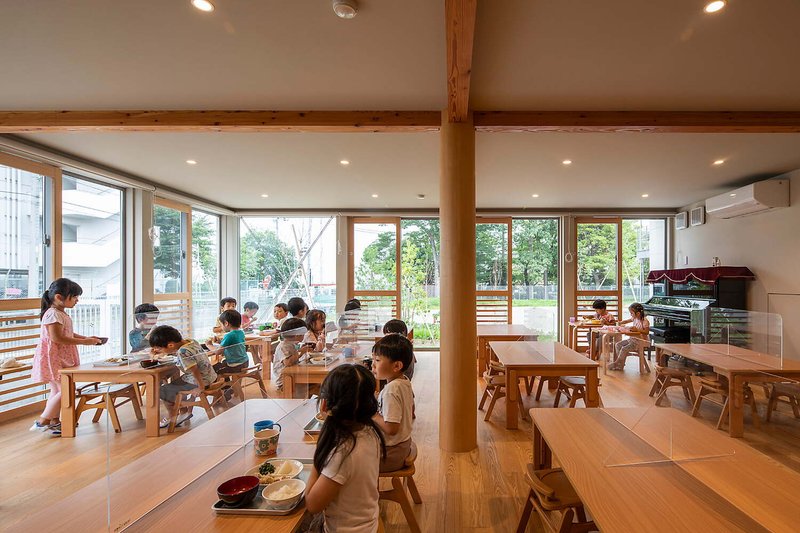
The “Junk-Box”: A Multisensory Learning Core
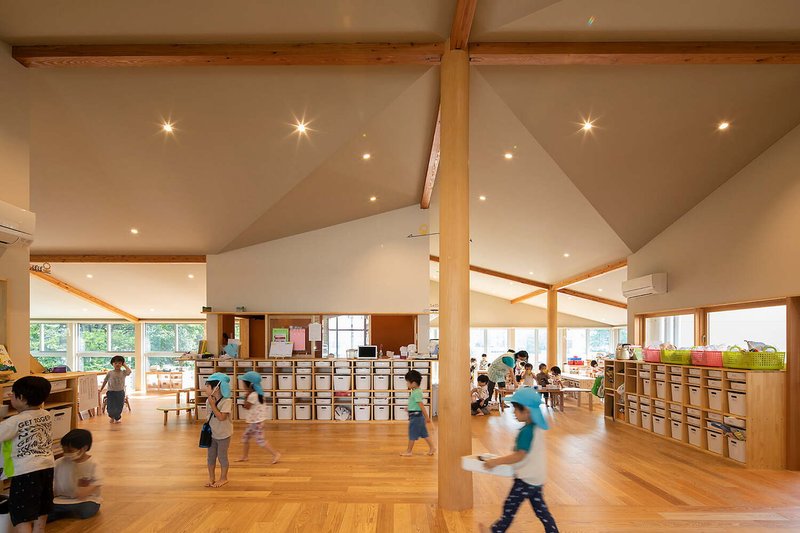
A standout feature in the nursery is the “Junk-Box”, a compact, multifunctional room shared by four classrooms. Drawing inspiration from the previous public nursery school, the Junk-Box combines teaching materials storage, child-height shelving, and integrated services like toilets and connecting pathways. Designed for visibility without full accessibility, it sparks curiosity while maintaining order, supporting Montessori-style independence and discovery.
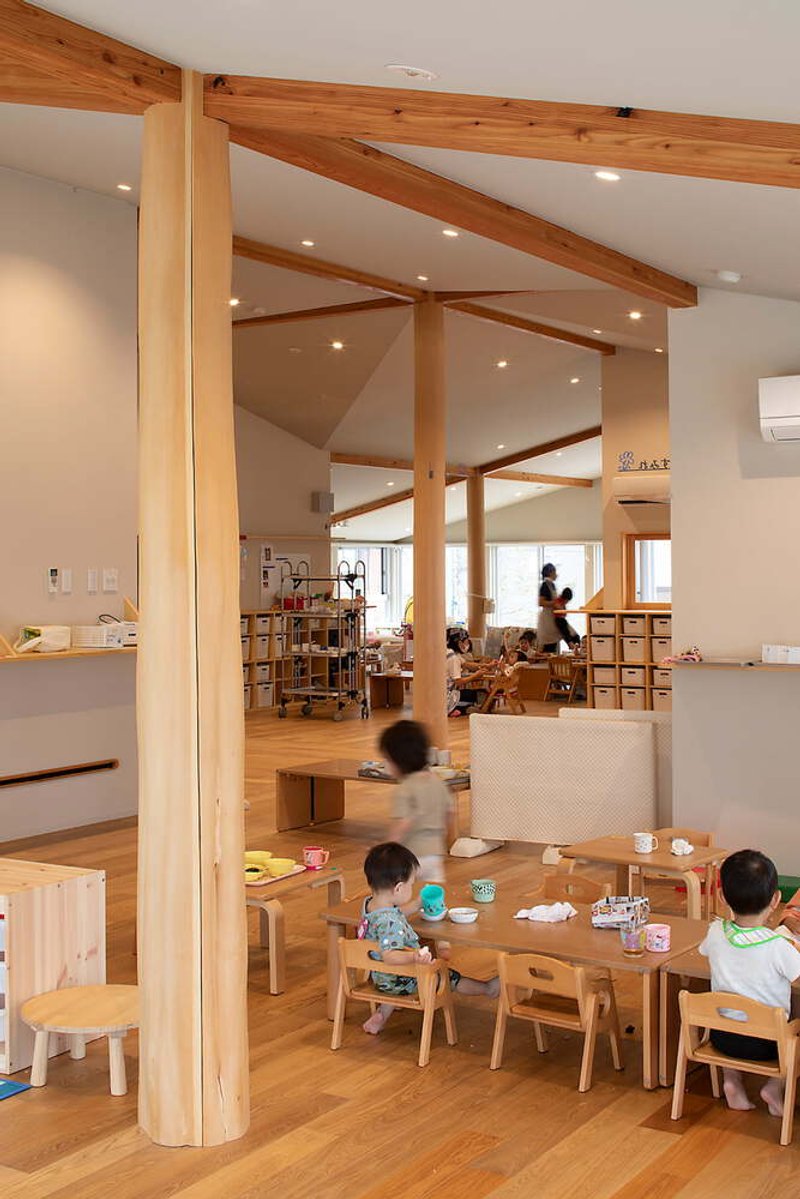
Architectural Form and Structural Expression
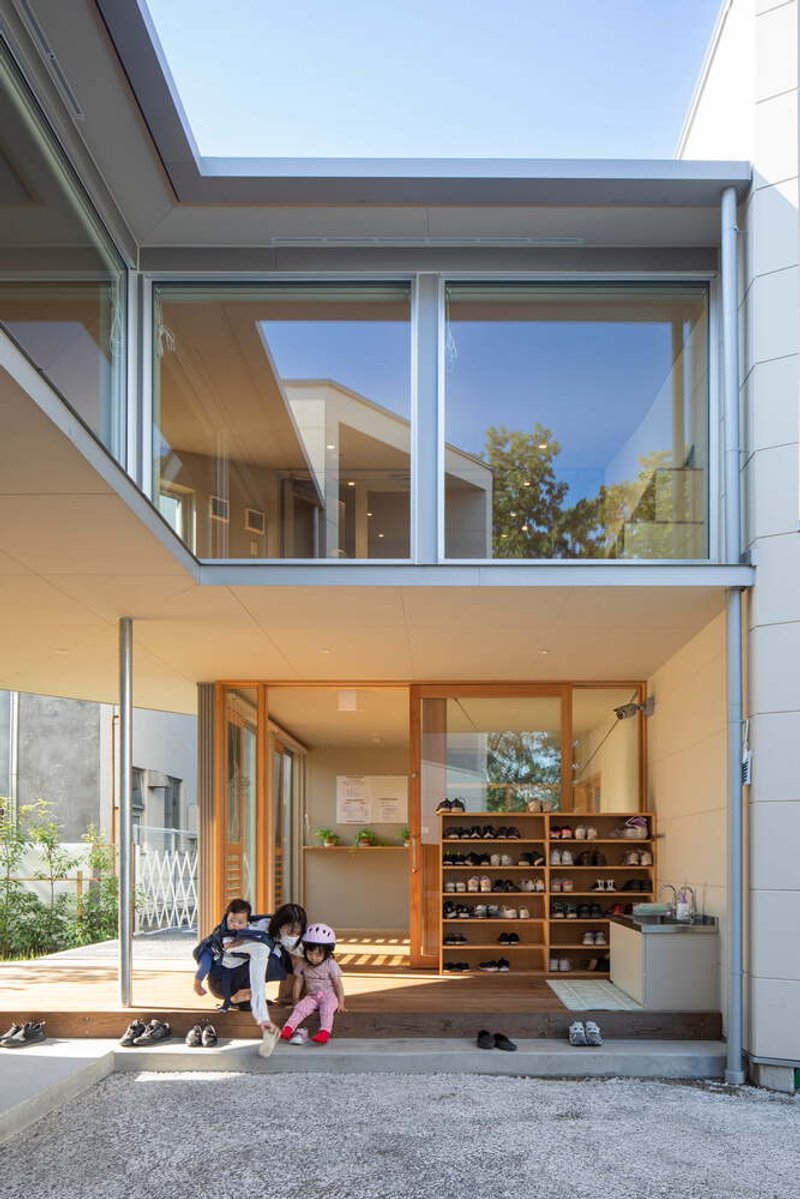
The overall facility is composed of two nearly identical buildings with single-sloped roofs, connected via a narrow passage that hosts the entrance and an upper-level reading area. These buildings are structurally independent but unified by strategically placed load-bearing walls around each Junk-Box, creating flexibility within the rigid frame.
Rather than using fixed partitions to divide spaces, TERRAIN architects use the structure itself—logs, beams, and open frameworks—to gently suggest activity zones and flow. This spatial openness encourages free movement, visibility, and interaction between interior and exterior spaces, promoting a sense of community belonging and safety.
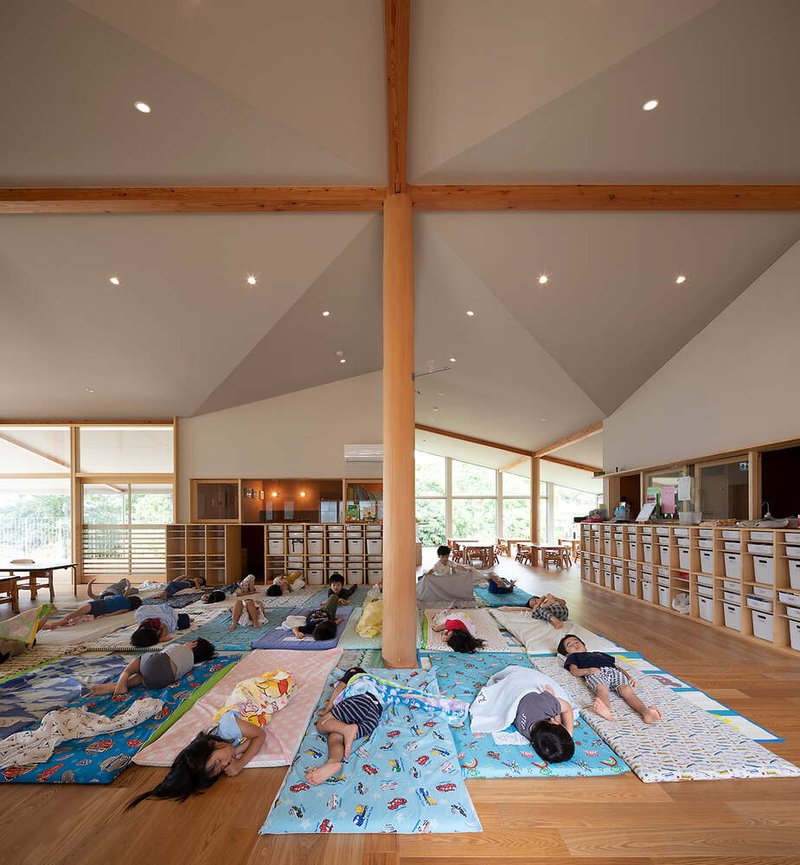
Community Interaction and Nature Integration
From the nearby green pedestrian path, passersby can witness everyday scenes of drop-off and pick-up, playground activities, and terrace gatherings. Conversely, children inside the nursery can observe seniors strolling or other groups of nursery children out for a walk, reinforcing a multi-generational, inter-nursery dialogue that grounds the facility in the rhythms of daily life.
Through thoughtful landscaping by HUMUS and structural collaboration with Ryotaro Sakata Structural Engineers, the nursery becomes more than just a place of care—it’s an urban social space interwoven with the fabric of Kawasaki’s neighborhoods.
All Photographs are works of Yuichi Higurashi




Popular Articles
Popular articles from the community

Fifth NRE Jazz Club – De Bever Architecten: Eindhoven’s Revitalized Cultural Hub
Historic gas factory transformed into Fifth NRE Jazz Club blending modern sustainability, jazz culture, dining, and heritage architecture seamlessly.
Atelier Macri Concept Store Interior Design by CASE-REAL
Atelier Macri store features a "ko" counter, walnut wood details, cork displays, blending retail, gallery, and seamless customer experiences.
Inverted Architecture Installation by Studio Link-Arc: Exploring the Intersection of Architecture and Living Organisms
Inverted Architecture Installation by Studio Link-Arc blends mycelium, sustainability, inverted design, ecological cycles, and urban adaptive architecture in Shenzhen.

Solar Steam: A Climate-Responsive Architecture That Redefines the Monument
A climate-responsive memorial architecture that transforms heat, decay, and time into a living system reflecting humanity’s ecological impact.


Similar Reads
You might also enjoy these articles


The Ken Roberts Memorial Delineation Competition (Krob)
As the most senior architectural drawing competition currently in operation anywhere in the world, it draws hundreds of entries each year, awarding the very best submissions in a series of medium-based categories.


Waterfront Redevelopment and Urban Revitalization in Mumbai: Forging a New Dawn for Darukhana
A transformative waterfront redevelopment project reimagining Darukhana’s shipbreaking heritage into an inclusive urban future.

OUT-OF-MAP: A Call for Postcards on Feminist Narratives of Public Space
Rhizoma Design and Research Lab invites artists, designers, architects, researchers, and students to reflect on how feminist perspectives can reshape public space. Selected works will be exhibited in Barcelona, October 2026. Submissions open until 15 April 2026.

Documentation Work on Buddhist Wooden Temple
Architectural syncretism and cultural hybridity: A comparative study of the Buddhist temples in Chattogram Hill tracks


Explore Architecture Competitions
Discover active competitions in this discipline




The International Standard for Design Portfolios


The Global Benchmark for Architecture Dissertation Awards


The Global Benchmark for Graduation Excellence


Challenge to design public laboratory
Comments (0)
Please login or sign up to add comments
No comments yet. Be the first to comment!