

Kokeniwa House by Cell Space Architects: A Harmonious Fusion of Architecture, Moss Gardens, and Forest Landscapes in Karuizawa
Kokeniwa House blends organic architecture with Karuizawa’s moss gardens, using natural materials and a minimal footprint to create a serene, nature-immersed living space.


Kokeniwa House, designed by Cell Space Architects, stands as a thoughtful architectural response to the preserved natural beauty of Karuizawa, Japan. Completed in 2022, this 1000 m² residence embraces its environment through an organic design philosophy rooted in respect for moss gardens, broadleaf forests, and the timeless character of the region’s established villa district. Photographed by Kouichi Torimura, the project reflects a deep connection between architecture and nature.
A Site Defined by Moss Gardens and Ancient Trees
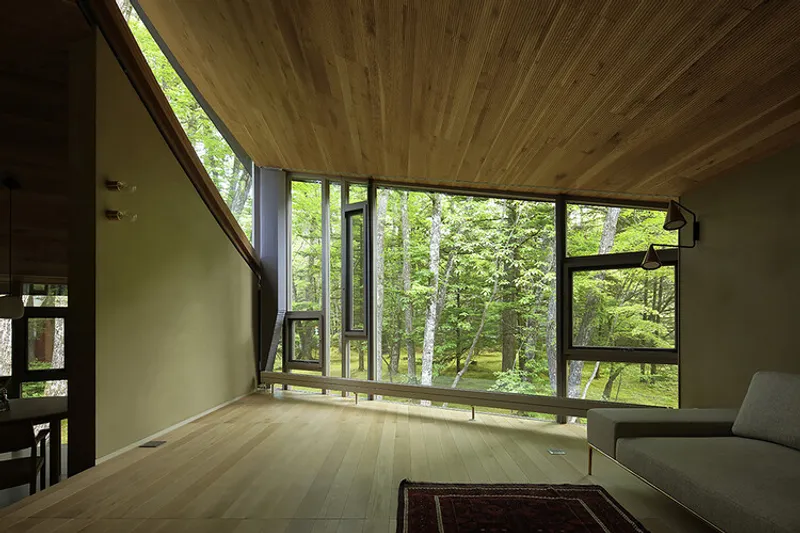
The home is situated within a mature residential area renowned for its meticulously cared-for moss landscapes. Here, broadleaf trees—such as konara and mizunara—create a natural canopy, filtering soft sunlight onto the plush green moss below. These moss gardens, cultivated over decades through careful raking and weeding, form a natural carpet that enhances the serenity of the environment.
Moss-covered embankments and seasonal trees along the property boundaries create gentle visual screens, blurring the edges between private and shared green spaces. This delicate interplay of boundaries turns the outdoors into a natural living room—quiet, contemplative, and deeply atmospheric.
Designing with Minimal Footprint: A Mushroom-Like Structure
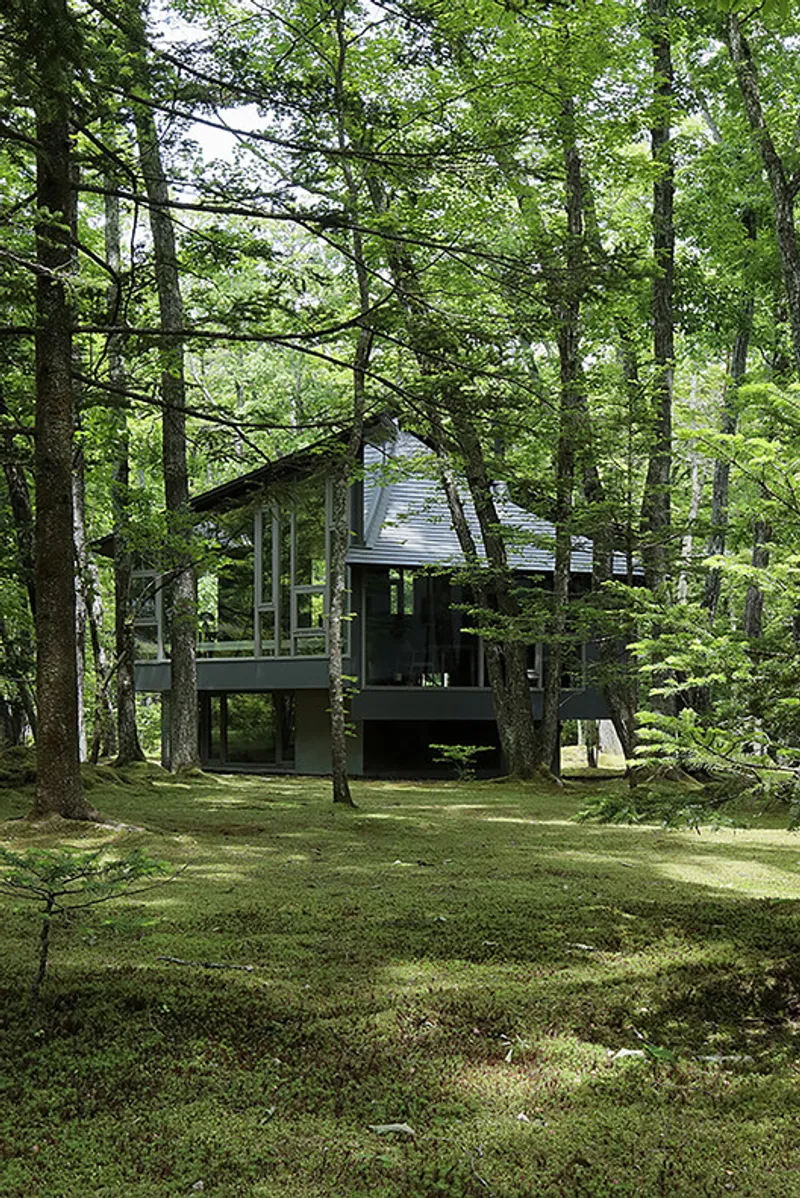
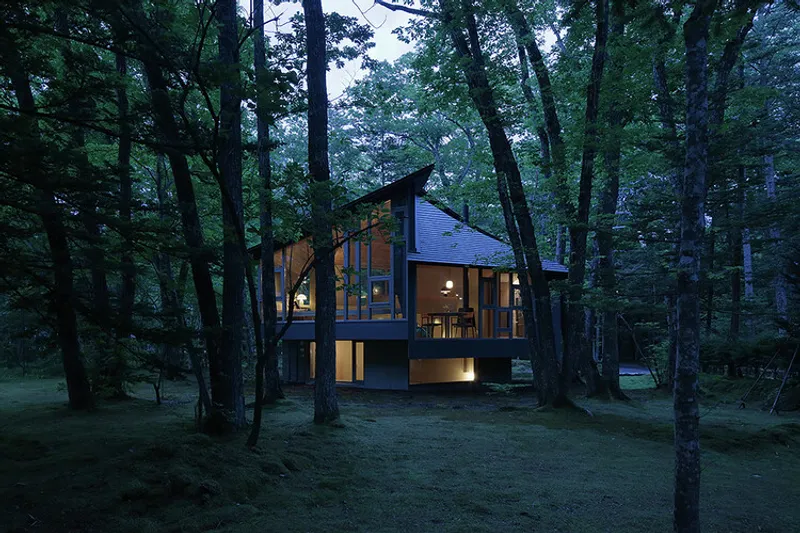
To respect the lush density of the surrounding plant life, the architects adopted a mushroom-inspired form. This minimized the building’s footprint and ensured minimal intervention in the existing landscape. The structure gently rises among the forest floor, avoiding major root systems and preserving the original ecological balance.
Inspired by the trunks and branches of local broadleaf trees, the house adopts a hexagonal geometry, shaped by observing natural growth patterns. Careful spacing preserved the existing vegetation, reaffirming the project's core objective: designing within nature, not against it.

An Immersive Nature Experience Through Organic Spatial Design
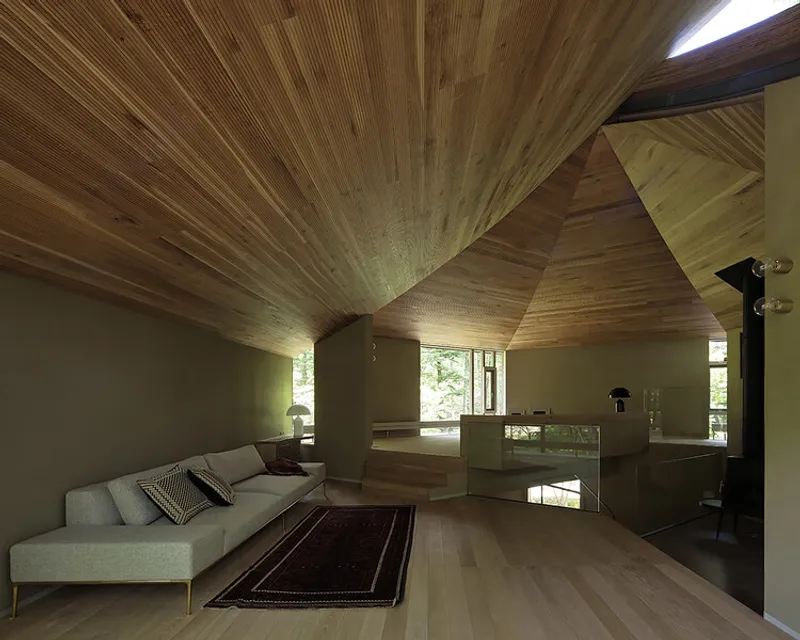
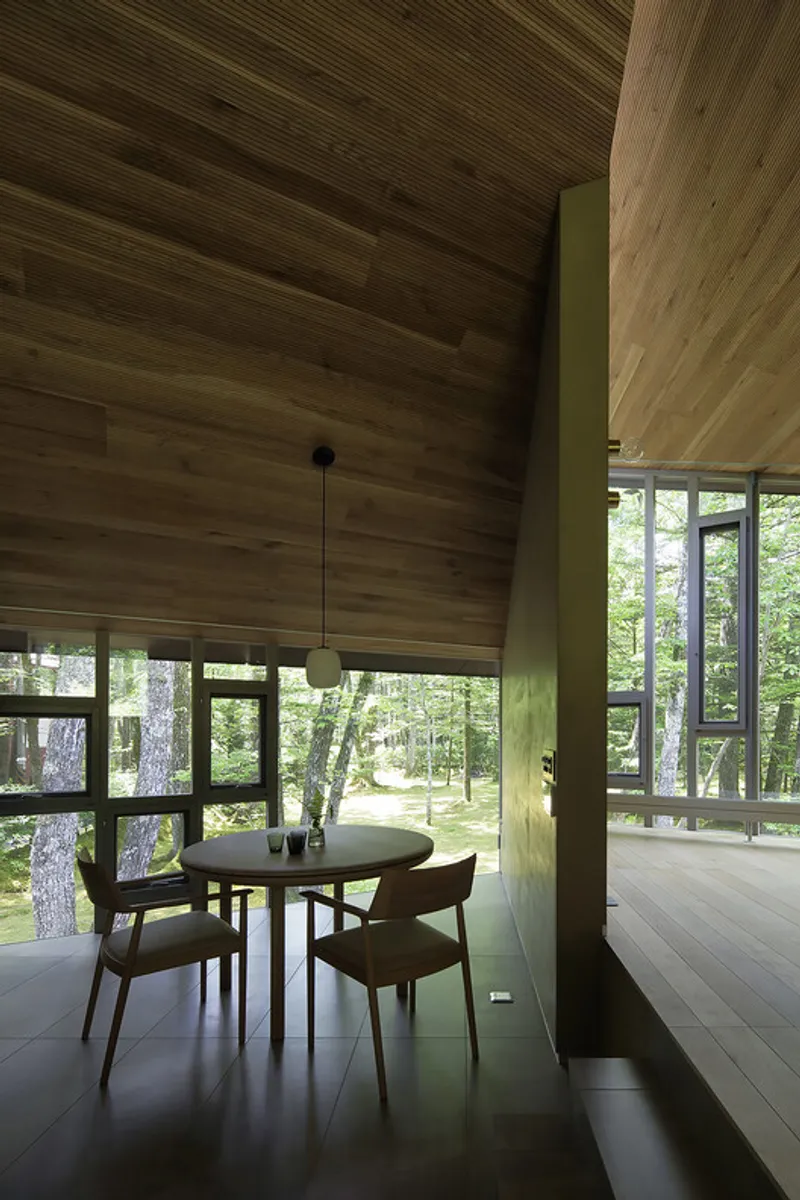
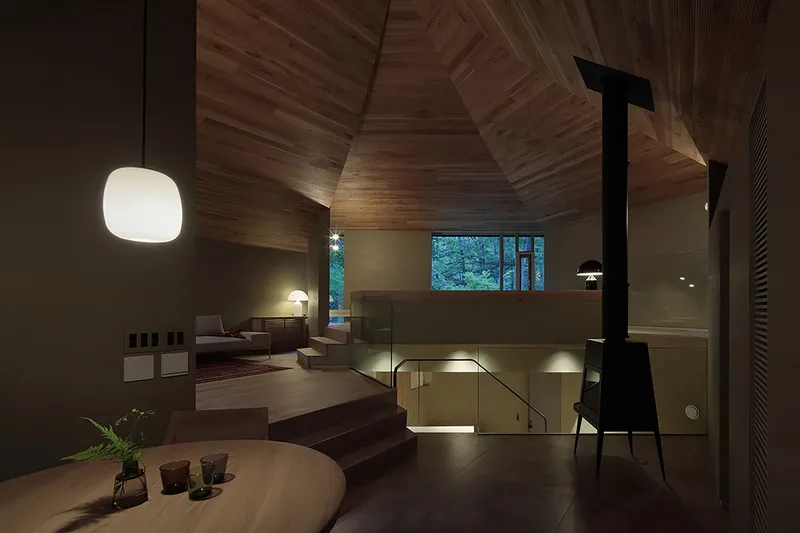
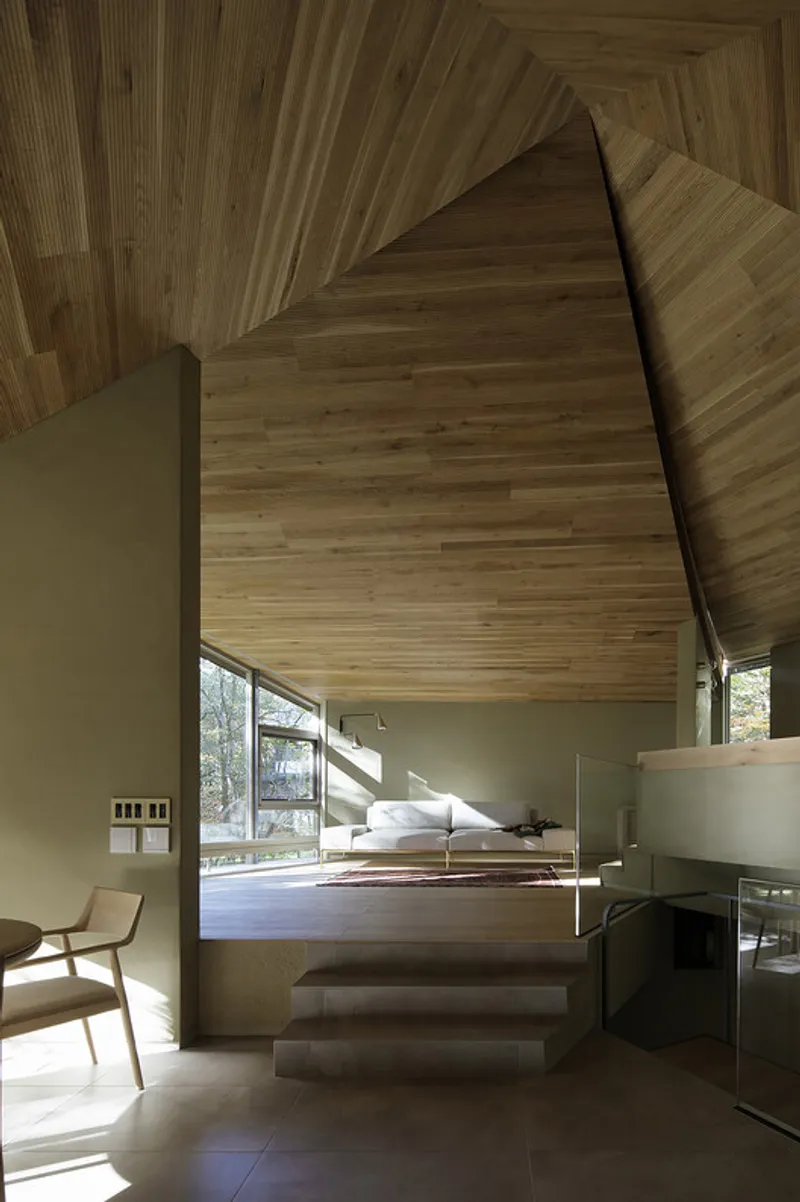
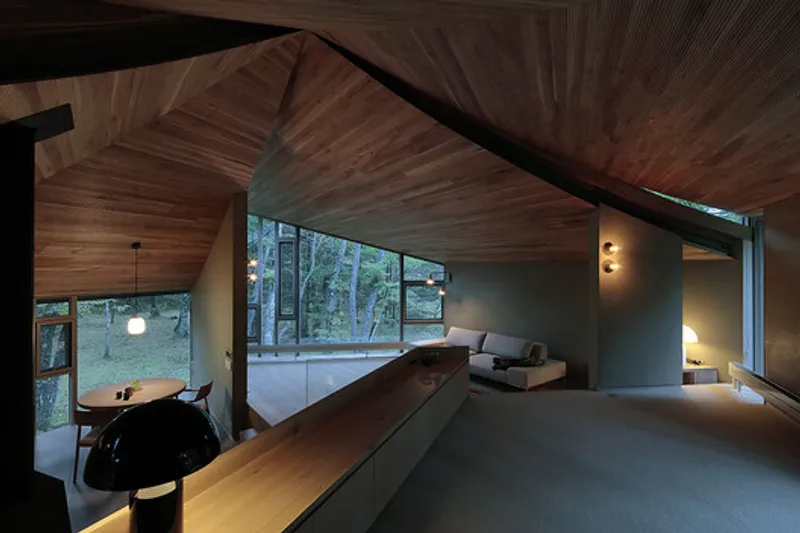
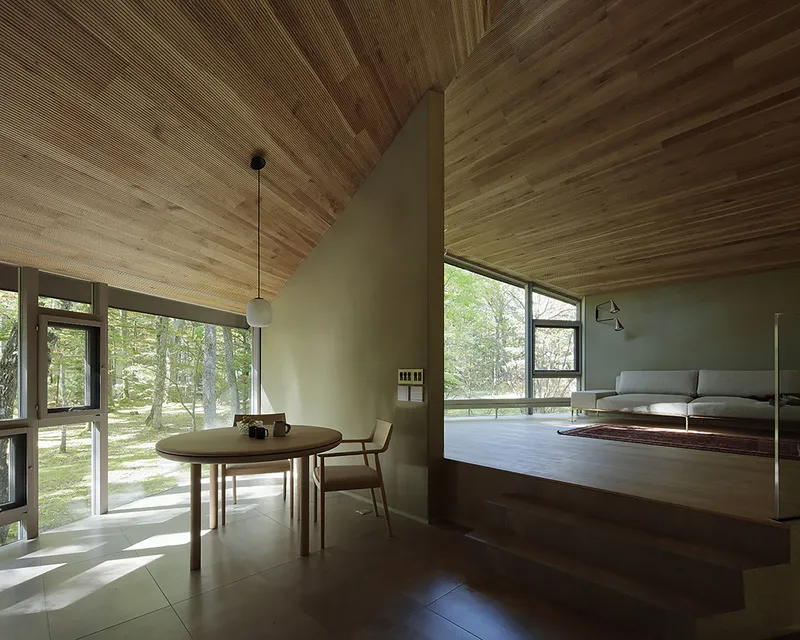
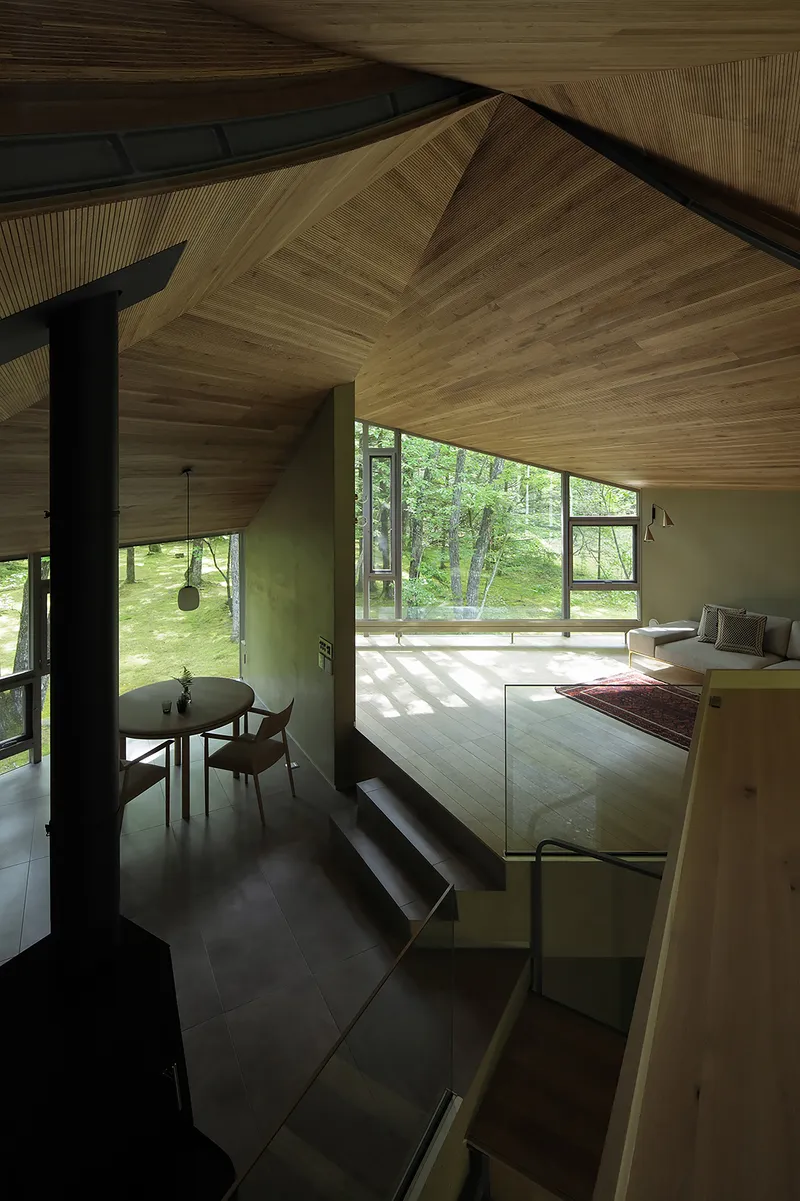
To soften the home’s overall volume and maintain visual harmony with the forest, the roof and floor were divided into three subtle elevation levels. This creates naturally defined zones within a single-room layout, offering varied spatial experiences without breaking the organic continuity.
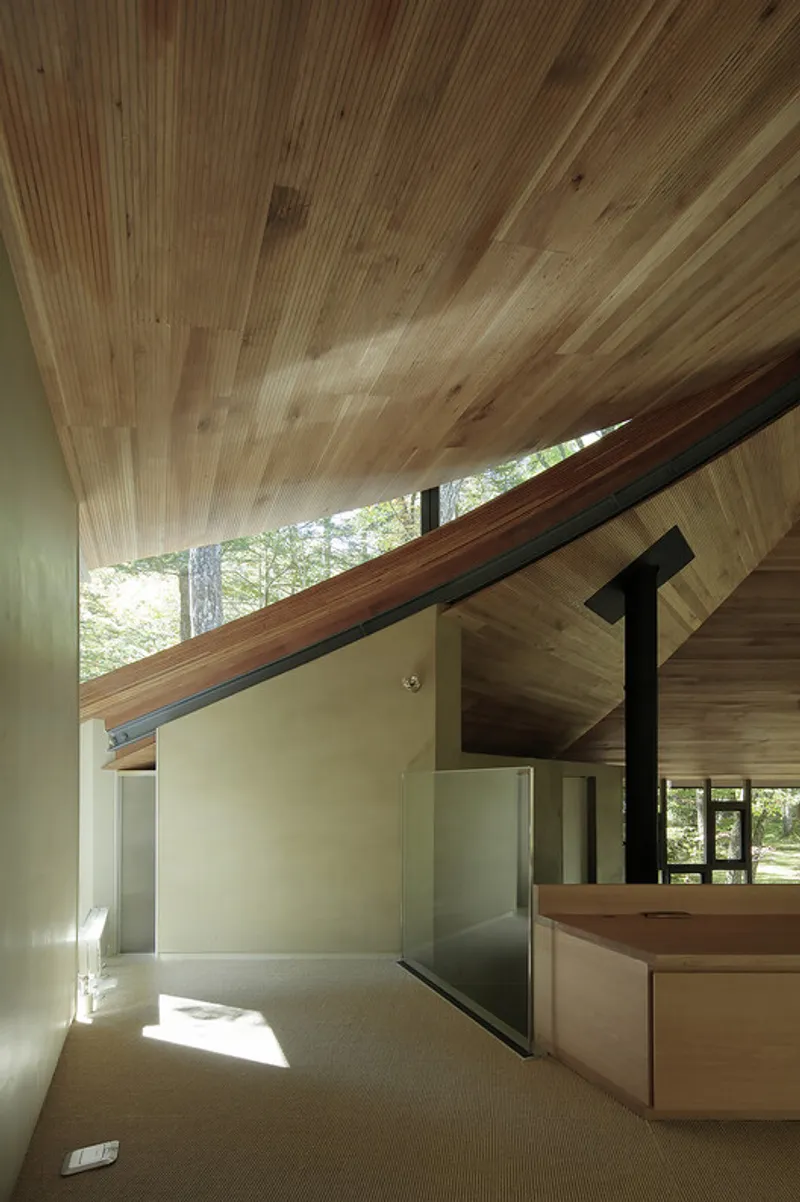
The gently curved wooden ceiling echoes the shapes of surrounding tree branches. Finely crafted oak ribs line the ceiling, producing an inviting sense of expansiveness. From every window and opening, residents overlook moss gardens and forests, bathing interior spaces in diffused green light that reflects softly across the wooden surfaces.
The result is a meditative interior, where the warmth of oak blends seamlessly with the cool tranquility of moss-covered earth—offering the sensation of living both indoors and outdoors simultaneously.
Crafting with Purpose: Offcut Wood and Sustainable Material Use
A defining feature of Kokeniwa House is its commitment to sustainable material use. The slotted wall and ceiling panels were crafted from offcuts of Hokkaido-grown oak, transformed into 6mm-thick flexible slats designed to resist deformation.
By introducing slits to both sides of the sapwood pieces, the architects created a material that maintains its tactile thickness yet remains soft and adaptive—mirroring the natural flexibility of tree branches. This approach highlights the wood’s irregular grains, color variations, and natural imperfections, forming a ceiling alive with layered tones and textures.
Just as forests display gradients of bark and branching, the interior surfaces celebrate the organic irregularity of natural wood. This produces a richly sensory environment that enhances the home’s immersive, nature-driven character.
A Home That Becomes Part of the Forest
Every aspect of Kokeniwa House—its layout, materials, openings, and roofline—works toward a single vision: to merge architecture with nature. By echoing the language of the forest and preserving the original moss landscape, the residence becomes an extension of the woodland itself.
Kokeniwa House stands as a model of environmentally sensitive architecture, celebrating harmony, sustainability, and deep respect for its surroundings. It demonstrates how thoughtful design can enhance human living while honoring the landscapes that sustain it.

All the photographs are works of kouichi Torimura


Popular Articles
Popular articles from the community


Jaramillo Van Sluys Arquitectura and Urbanismo Turn a Demolished Registry Lot in Quito into an Orchard Plaza
In Quito's Centro Histórico, a 2,800 m² plaza exposes the San Agustín convent wall and redraws its lost Augustinian orchard in volcanic stone.

LT2A and OPEN Architectes Thread a Brick and Glass High School Through a Wooded Belgian Campus
In Braine-l'Alleud, a 3,000 m² wing for Collège Cardinal Mercier pairs pale brick with a glazed colonnade, deferring to a small chapel and a dense wood.

David Macias Steps a Doorless Stone and Plaster House Down a Tropical Colombian Hillside
In the humid hills of Colombia, Threshold House replaces the front door with an open void and terraces its 850 m² down the slope instead of fighting it.

David Ortega Stacks a Two-Story Mexico City Penthouse Around a Steel Stair and a Pergola-Shaded Roof Terrace
In Colonia Roma, a 300 m² penthouse uses oak joinery, a planted steel stair and a slatted roof pergola to make a new-build apartment feel like a house.

Similar Reads
You might also enjoy these articles


Hodi-Mandai Geram
Project Function: Preservation and revitalization of the Intangible heritage and socio-spatial identity of the Hodi by Housing, Cultural Memory Center, Sacred Grove, landscape, local tourism economy


Olio Towers: A Mid-Rise for Performers That Fuses Housing, Rehearsal, and Stage
Located blocks from Houston's Theater District, this modular tower stacks living units around a central performance atrium.

Oasis: Modular Green Housing Carved into Dhaka's Urban Fabric
A shortlisted Plugin Housing entry reclaims unauthorized settlements in Dhaka with stepped concrete volumes, green roofs, and ventilation-driven design.

Black Hole: A Floating Megastructure for the Post-Physical Era
Emiliano Mazzarotto envisions a spherical, self-scaling arena where e-sports, digital hotels, and holographic stadiums replace traditional public space.

Explore Tetsuo Kobori Architects Competitions
Discover active competitions in this discipline

Challenge to reimagine the Iron Throne

Photograph architecture without architects

Illustrate the lost glory of Angkor Wat - Render Challenge

Design challenge to reuse E-waste
Comments (0)
Please login or sign up to add comments
No comments yet. Be the first to comment!