
Komorebi House by QueckArchitektur: A Minimalist Timber Home Rooted in Landscape and Light
A minimalist timber house in Germany blending charred wood, passive solar design, and quiet living within a forest landscape setting.

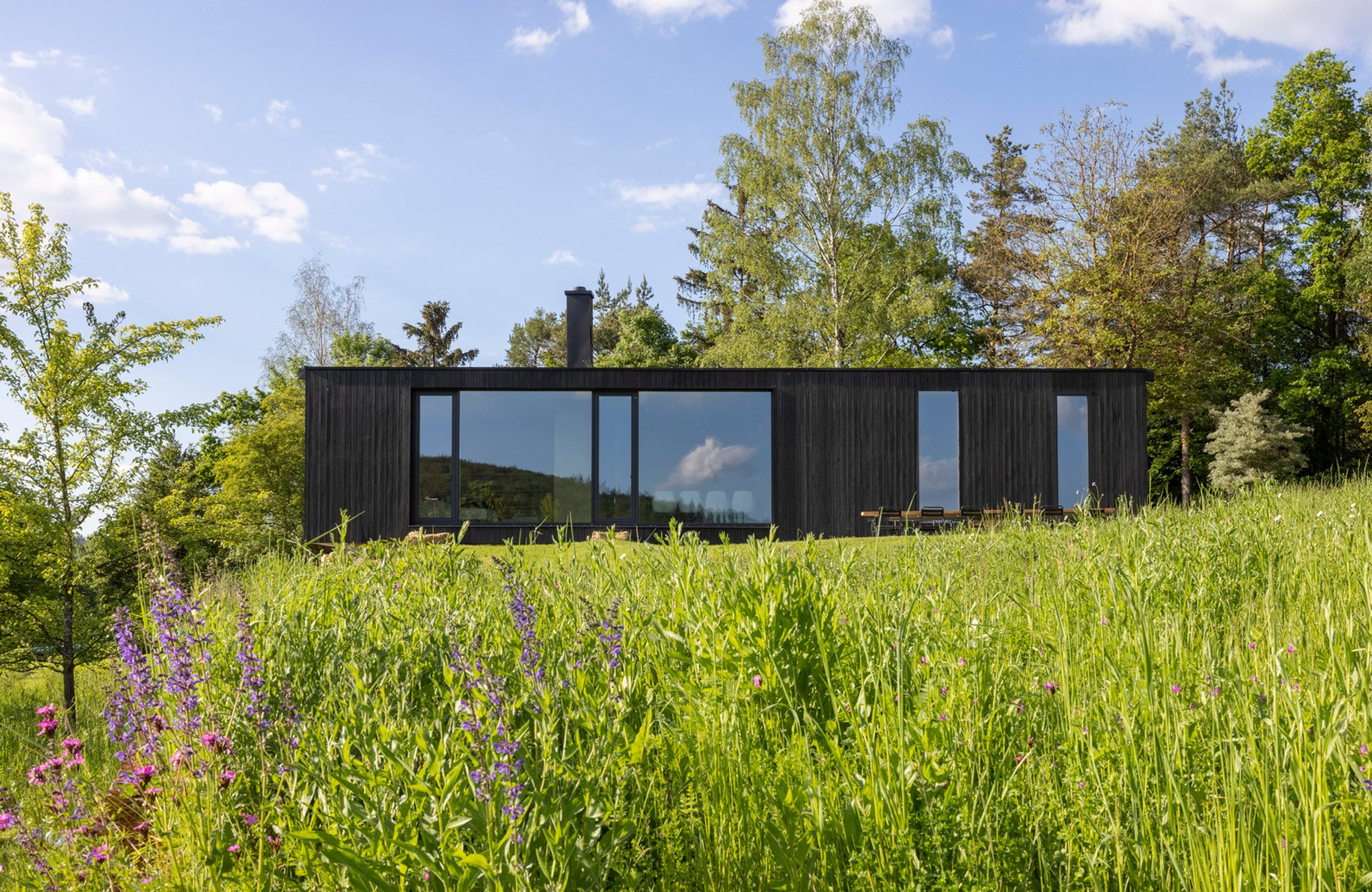
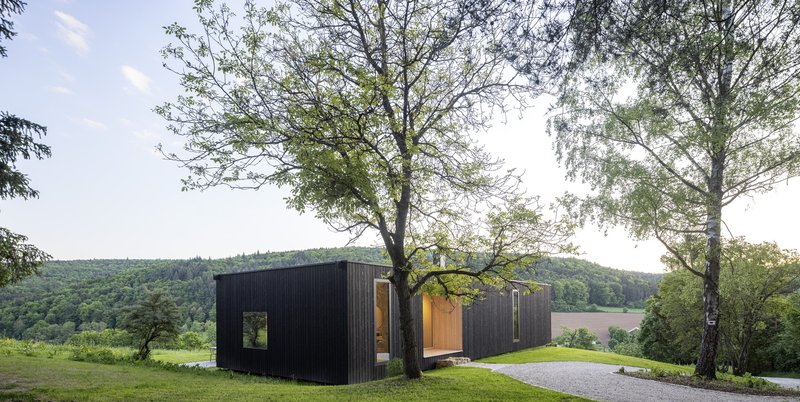
Set quietly at the edge of a forest in the Naab Valley near Duggendorf, Germany, Komorebi House by QueckArchitektur is a contemporary single-family residence that dissolves into its natural surroundings through restraint, material honesty, and ecological intelligence. Designed by lead architect Severin K. V. Queck and completed in 2024, the 153-square-metre house embodies a refined dialogue between architecture, landscape, and climate.
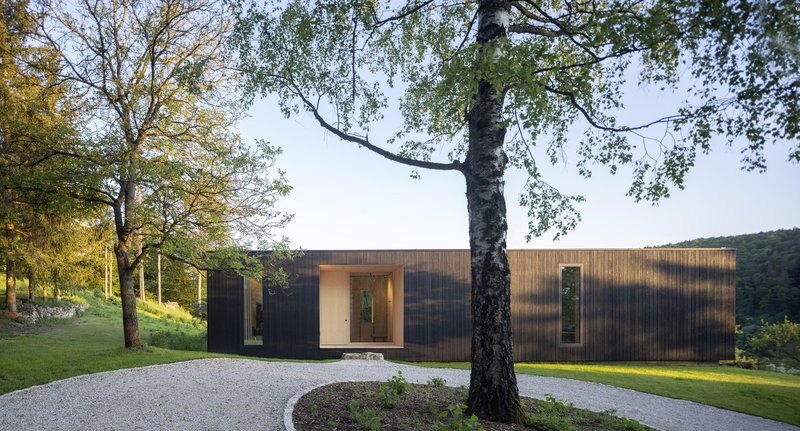
The name Komorebi is borrowed from Japanese and translates to “light filtered through the leaves of trees.” This poetic concept is not merely symbolic but deeply embedded in the architectural strategy of the house. Positioned behind a small village and overlooking a river landscape framed by wooded hills, the compact black volume sits low and understated, allowing nature to remain the dominant presence. Rather than competing with the environment, the architecture deliberately subordinates itself to it.
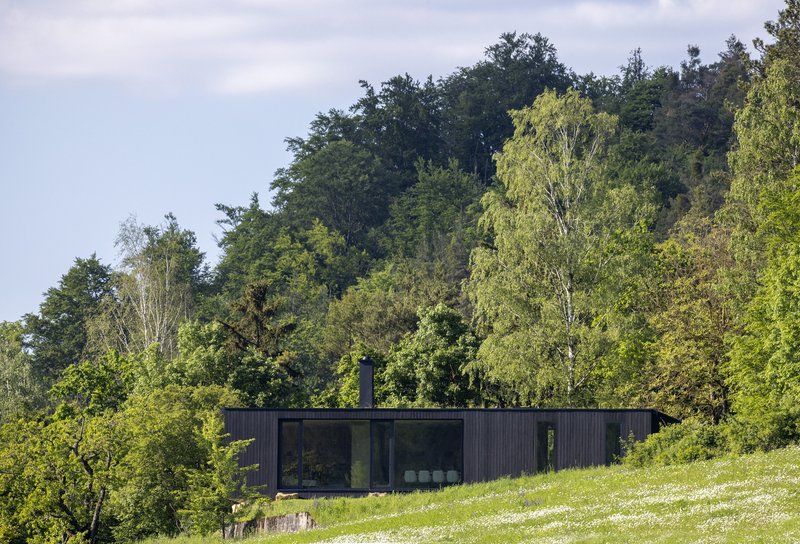
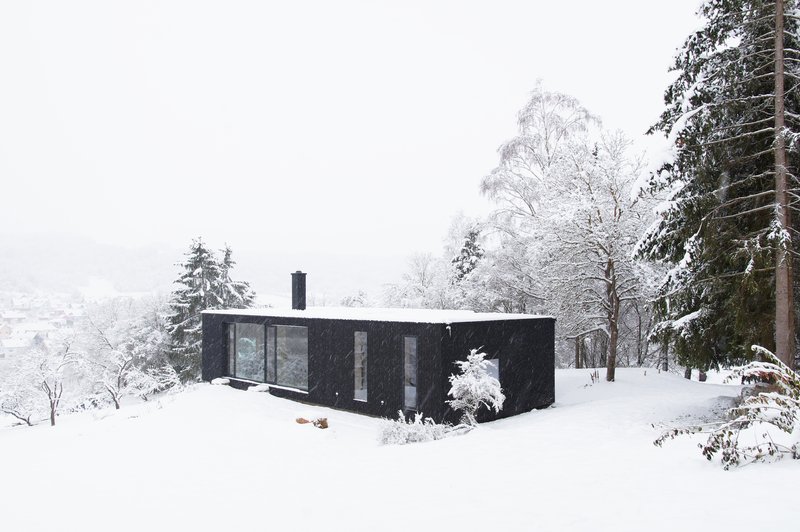
The house is conceived as a simple, elongated cube, finished in dark tones that echo the shadows of the surrounding forest. Its low height and restrained form reduce visual impact, while the south-facing orientation ensures that every interior space captures both expansive views and optimal sunlight throughout the day. Large glazed openings on the southern façade establish a continuous visual relationship with the landscape, reinforcing the sense of living within nature rather than beside it.
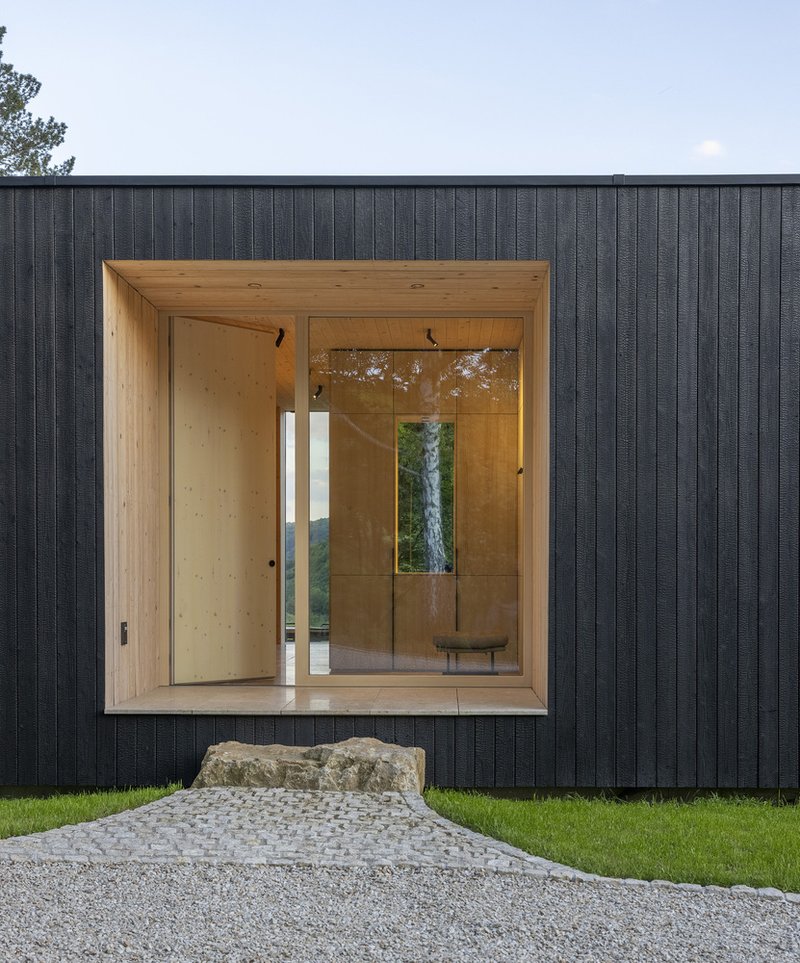
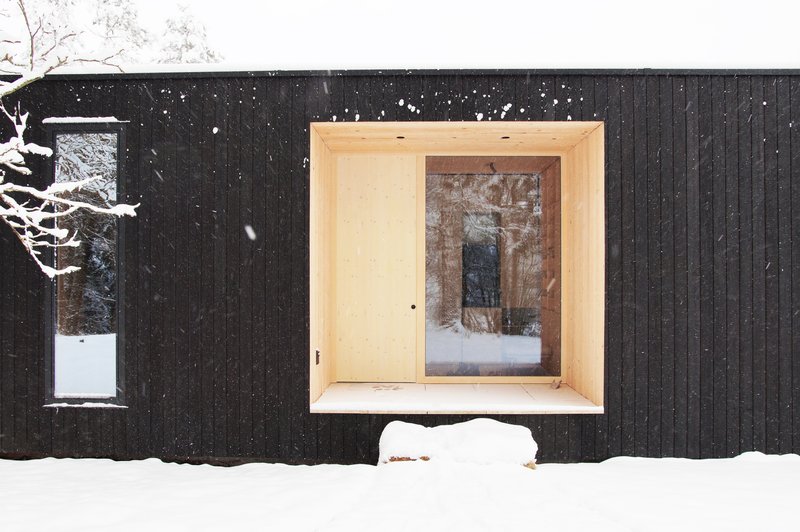
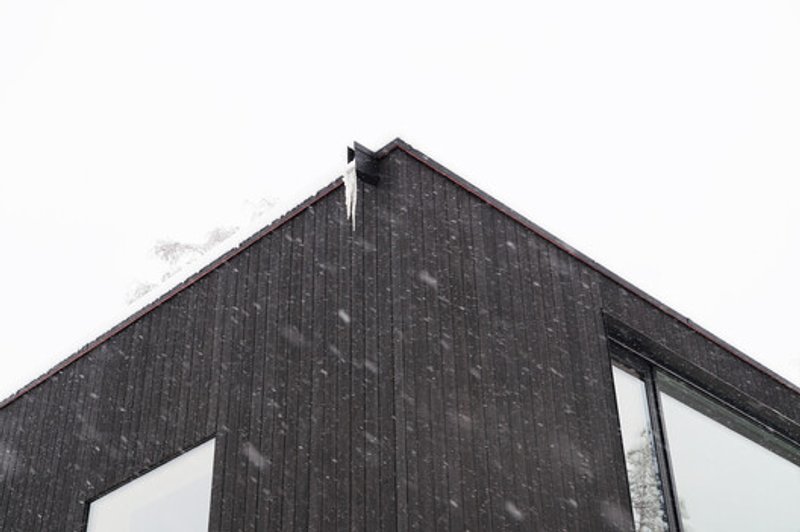
Wood is the defining material of Komorebi House, shaping both its aesthetic identity and its environmental performance. The exterior façade is clad in carbonized boards made from Japanese cedar, using a traditional charring technique that enhances resistance to moisture, fire, insects, and UV exposure. This dark, textured skin gives the house its monolithic appearance while significantly increasing durability and reducing maintenance.
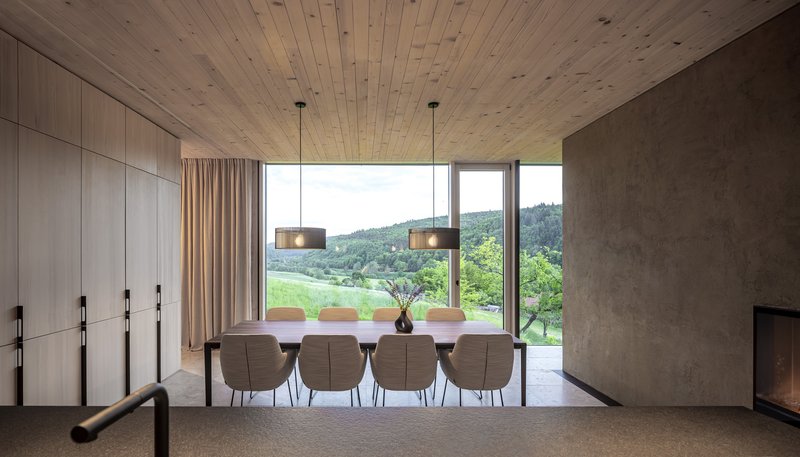
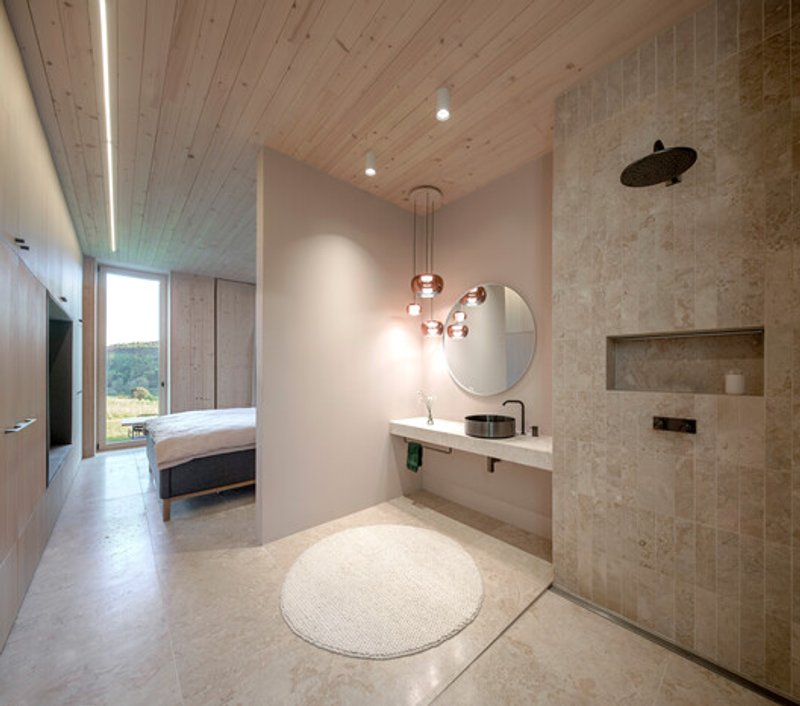
Inside, the atmosphere shifts from dark and protective to light and tactile. Pale spruce dominates the interior, used as solid elements on walls and ceilings to create a warm, calm living environment. The softness of wood is carefully balanced with limestone flooring, clay surfaces, and linen textiles, resulting in a nuanced interplay between hard and soft, heavy and light. The material palette remains deliberately limited, reinforcing the sense of clarity and spatial calm.
Spatial organization follows a linear logic across the building’s 19-metre length. Living spaces are arranged sequentially, with private functions such as bedrooms and bathrooms located to the east, and communal areas positioned to the west. The main entrance and secondary zones act as a subtle buffer between these areas, ensuring privacy without rigid separation. Within the open-plan interior, spatial boundaries are defined not only by walls but also by floor-to-ceiling built-in cabinetry, maintaining visual openness while creating functional zones.
At the heart of the living room stands one of the project’s most distinctive elements: a massive clay wall weighing approximately 18 tons and constructed from unfired earth. This sculptural core is both spatial anchor and climatic device. A steel insert with windows on either side allows the wall to be heated by a wood-fired system, storing thermal energy and gradually releasing it into the living space. Combined with passive solar gain from the south-facing glazing, this strategy significantly reduces energy demand during winter months.
Sustainability is integral to every aspect of the house’s construction. The external walls consist of 18 centimetres of solid spruce combined with 24 centimetres of wood fibre insulation, while the base plate and flat roof are also made entirely from solid spruce. An extensively green roof supports biodiversity and thermal regulation, while photovoltaic panels generate renewable energy on site. Rainwater collected from the roof is stored in an underground tank and reused for garden irrigation, closing the loop between architecture and landscape.
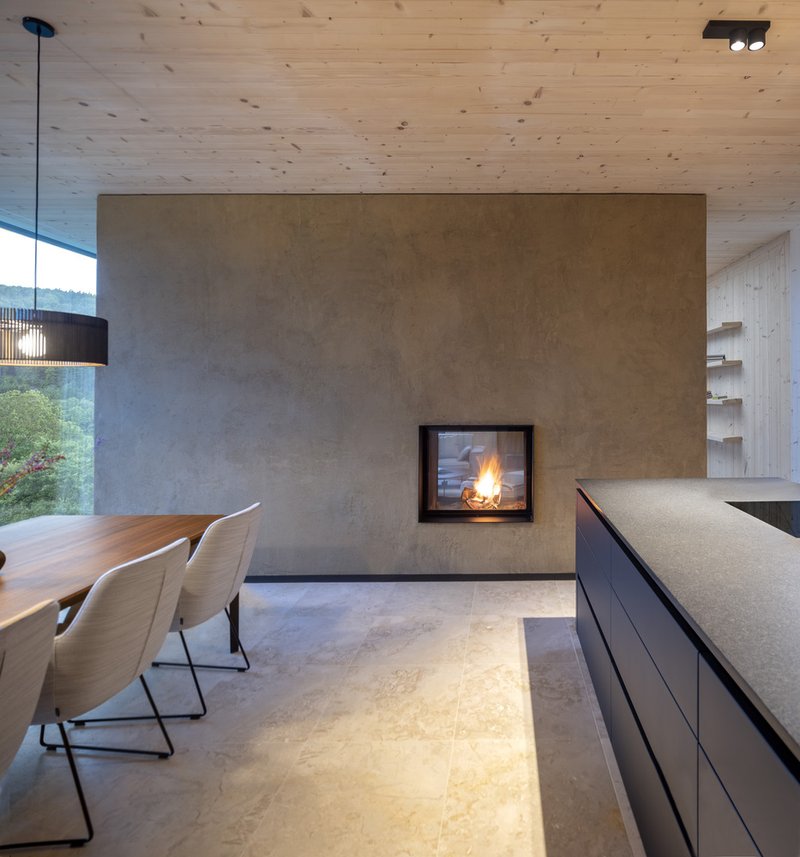
Komorebi House is ultimately defined by reduction rather than excess. Through precise detailing, ecological construction, and a deep respect for its context, QueckArchitektur has created a home that prioritizes silence, longevity, and connection to nature. The result is a contemporary timber house that feels timeless, grounded, and deeply attuned to both place and climate.
All photographs are works of
Herbert Stolz



Popular Articles
Popular articles from the community

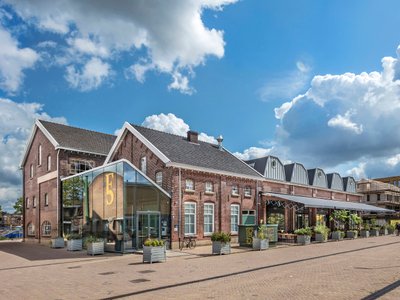
Fifth NRE Jazz Club – De Bever Architecten: Eindhoven’s Revitalized Cultural Hub
Historic gas factory transformed into Fifth NRE Jazz Club blending modern sustainability, jazz culture, dining, and heritage architecture seamlessly.


The Ken Roberts Memorial Delineation Competition (Krob)
As the most senior architectural drawing competition currently in operation anywhere in the world, it draws hundreds of entries each year, awarding the very best submissions in a series of medium-based categories.
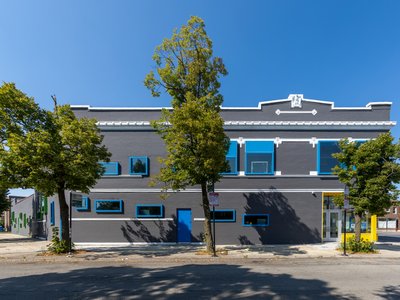
Gads Hill Early Learning Center by JGMA: Adaptive Reuse Shaping Community-Focused Educational Architecture
Adaptive reuse transforms fragmented structure into vibrant early learning center with playful façade, natural light, and community-focused sustainable design.
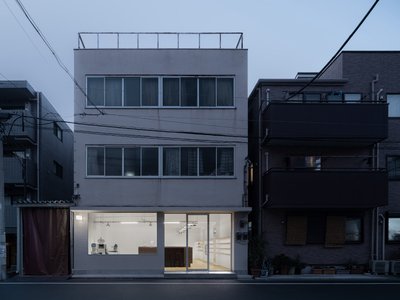
Atelier Macri Concept Store Interior Design by CASE-REAL
Atelier Macri store features a "ko" counter, walnut wood details, cork displays, blending retail, gallery, and seamless customer experiences.

Similar Reads
You might also enjoy these articles
The Ken Roberts Memorial Delineation Competition (Krob)
As the most senior architectural drawing competition currently in operation anywhere in the world, it draws hundreds of entries each year, awarding the very best submissions in a series of medium-based categories.


Waterfront Redevelopment and Urban Revitalization in Mumbai: Forging a New Dawn for Darukhana
A transformative waterfront redevelopment project reimagining Darukhana’s shipbreaking heritage into an inclusive urban future.

OUT-OF-MAP: A Call for Postcards on Feminist Narratives of Public Space
Rhizoma Design and Research Lab invites artists, designers, architects, researchers, and students to reflect on how feminist perspectives can reshape public space. Selected works will be exhibited in Barcelona, October 2026. Submissions open until 15 April 2026.


Documentation Work on Buddhist Wooden Temple
Architectural syncretism and cultural hybridity: A comparative study of the Buddhist temples in Chattogram Hill tracks

Explore Architecture Competitions
Discover active competitions in this discipline




The International Standard for Design Portfolios


The Global Benchmark for Architecture Dissertation Awards


The Global Benchmark for Graduation Excellence


Challenge to reimagine the Iron Throne
Comments (0)
Please login or sign up to add comments
No comments yet. Be the first to comment!