

"La Via dell’Acqua by Katarzyna Jamioł: Transforming Sardinia’s Public Spaces through Nature and Resilience
Reviving Nature, Connecting Community: A Vision for Sustainable Public Space in Sardinia


The La Via dell’Acqua project in Quartucciu, Sardinia, crafted by Katarzyna Jamioł, stands as a powerful vision in public space design, blending ecological restoration, urban innovation, and climate resilience. This ambitious undertaking, a shortlisted entry in the 2024 UnIATA awards, aims to rejuvenate the Is Cungiaus River landscape, transforming it from a neglected area into a biodiverse, climate-resilient oasis. Here, we delve into the details of the project, exploring its environmental, cultural, and urban dimensions.
The La Via dell’Acqua project takes a comprehensive approach to environmental and community-focused design. Its mission is to restore the Is Cungiaus River while simultaneously addressing climate impacts and enhancing urban livability. The proposal envisions a thriving ecosystem within the Cagliari metropolis that serves as a community retreat and an educational environment.
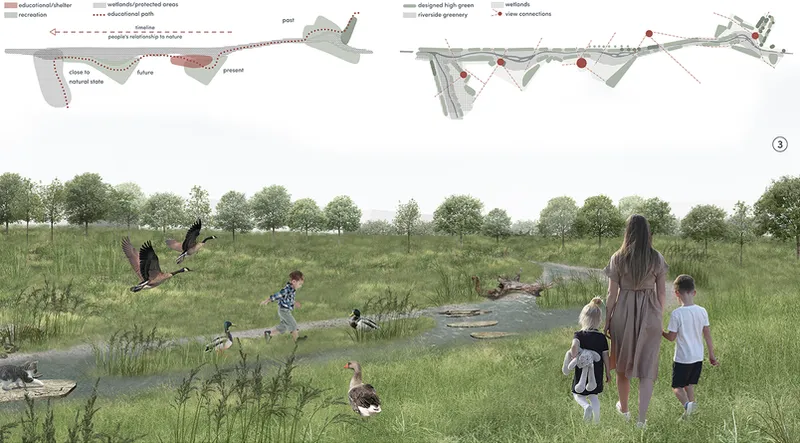
Environmental Restoration: River Renaturation and Climate Shelters
River Restoration: At the heart of La Via dell’Acqua is the revitalization of the Is Cungiaus River. The project incorporates riverbed widening and the addition of rainwater storage systems to reduce erosion and mitigate flood risks, aiming to restore ecological balance and create habitats that encourage biodiversity.
Climate Shelter Design: Recognizing Sardinia’s Mediterranean climate and climate change implications, the project includes climate shelters equipped with green roofing for thermal regulation. These shelters serve as havens against extreme temperatures, reflecting the project's commitment to sustainability and public comfort.
Cultural and Historical Context
The project thoughtfully integrates the area's rich history, reflecting Sardinia's prehistoric, Mediterranean, and European influences. Elements of traditional Sardinian architecture and cultural sites, like the Domus de Janas (ancient burial sites), are referenced throughout the project. Educational paths link visitors to the past, present, and future of the region, fostering a deeper understanding of Sardinia’s heritage and the evolving human relationship with nature.
Urban and Social Conditions
Accessibility and Community Focus: La Via dell’Acqua ensures accessibility for all visitors, with clear signage, Braille descriptions, and maneuvering areas for diverse user needs. This aspect emphasizes inclusivity and the project's role as a gathering place for Quartucciu residents.
Traffic and Connectivity: By addressing key traffic intersections, the design improves access to and from surrounding metropolitan areas. Paths and educational routes throughout the space connect visitors to Sardinia’s ecological history, fostering awareness of the impacts of urban development on natural environments.
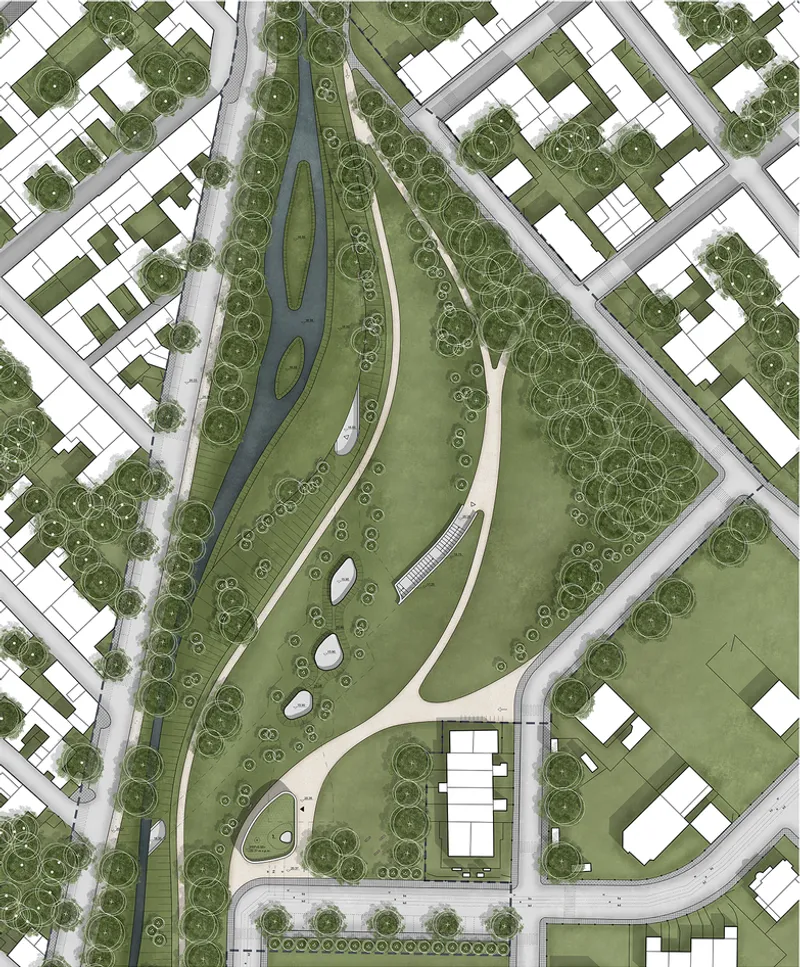
Educational Components
The project features a range of interactive educational elements, such as paths dedicated to local flora and fauna, explaining the ecological balance and climate resilience measures taken in the design. Exhibits on reptiles, native plant life, and Sardinian geological history contribute to a hands-on learning environment, emphasizing the importance of environmental stewardship.

Climate Change Adaptation Strategies
Flood Mitigation: By widening river sections and incorporating flood retention areas, La Via dell’Acqua prepares for increased rainfall and rising water levels. The design anticipates a 34% increase in flood management capacity, helping to protect the urban and natural landscapes from extreme weather events.
Heat Mitigation: The project’s climate shelters use reflective and insulating materials to counteract high temperatures. Rooftop greenery provides natural shade, reducing surface temperatures and creating a cooler microclimate for visitors.

Sustainable Materials and Infrastructure
La Via dell’Acqua incorporates eco-friendly materials, with wooden structures and natural elements that reflect the project’s commitment to sustainability. The climate shelters and park amenities are crafted from local, renewable materials, minimizing the environmental footprint of construction while enhancing the natural aesthetic of the landscape.
Land Development and Greenery Integration
Landscaping for Biodiversity: The project’s landscaping design fosters ecological resilience by using native plants and creating habitats for local wildlife. Trees, shrubs, and green spaces form a cohesive greenery network that integrates with urban structures, promoting a symbiotic relationship between nature and the built environment.
Floodplain Development: As part of the restoration, La Via dell’Acqua creates retention areas that mimic natural floodplains, furthering the land's capacity to manage excess water while offering habitats for flora and fauna.
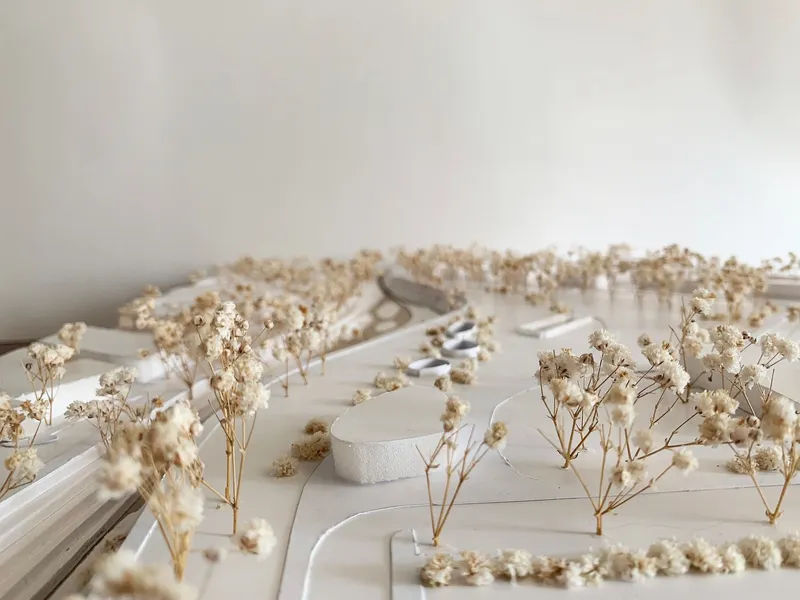
Long-Term Impact and Community Engagement
By addressing both climate challenges and social needs, the project promises to have long-term impacts on Sardinia's urban and natural landscape. Community engagement is encouraged through educational programs, recreational spaces, and cultural events, positioning La Via dell’Acqua as a living, evolving space that adapts to the needs of Quartucciu's residents while preserving Sardinia’s environmental heritage.
Katarzyna Jamioł's La Via dell’Acqua project exemplifies a progressive model for urban revitalization, where public space, environmental resilience, and cultural identity converge. By reimagining the Is Cungiaus River and surrounding areas as a dynamic ecosystem and community asset, the project is a testament to the role of architecture in fostering sustainable, resilient, and meaningful spaces. As climate change continues to challenge cities worldwide, La Via dell’Acqua serves as an inspiring example of adaptive, ecologically sensitive design, deserving of its recognition in the UnIATA '24 awards.


Popular Articles
Popular articles from the community


Architekt Andreas Gruber Scatters 23 Dark Timber Chalets Across a South Tyrolean Forest Edge
In Molini di Tures, Amonti Chalets breaks a resort into a hamlet of gabled timber houses, with parking, storage and services pushed into the slope.

U.GA Architects Wraps an Oval Rooftop Pool in Curved Board-Formed Concrete on Busan's Jeollidan-gil
In Busan's Jeonpo-dong, a 454 m² mixed-use block stacks a neighborhood facility, guest rooms and an oval rooftop pool inside spiraling concrete walls.

GROUP A Strips a 1969 Rotterdam Harbor Headquarters to Its Frame and Wraps It in Timber Louvers
In Rotterdam's M4H harbor district, Ferro Offices reuses a 1969 frame, adds one timber storey and reaches BREEAM-NL Outstanding.

Cube Design Draws an Ecological Corridor Between Two Shenzhen Hills with the Nankai Building
Beside Shenzhen's container docks, the Nankai Building pairs stacked balconies with a climbing green screen to connect two hillsides across its height.

Similar Reads
You might also enjoy these articles


Vereda Arquitetos Renovates a 40-Square-Meter Apartment Inside Niemeyer's Copan Building
A compact unit in São Paulo's most iconic residential tower gets a material overhaul that pairs exposed concrete with bold blue Formica.

Shakur's House: Exposed Brick as an Interior Organiser in a 168 m² Mashhad Residence
Brick moves indoors in this Mashhad residence, where masonry walls, glass partitions and teal planes sequence a compact home without closing it off.

Day and Night Park: A Time-Based Urban Newsstand in Beijing
A temporary urban newsstand in Beijing blending travel, light, and reading through poetic colors, compact form, and community-focused design.

Modernist Patio Renovation in El Masnou, Barcelona by Oliver Segura Arquitectura + Cebrià Arquitectura
Modernist patio renovation blending tradition and innovation with a movable pool, leveled floors, and Catalan materials in El Masnou.

Explore Landscape Design Competitions
Discover active competitions in this discipline

Challenge to reimagine the Iron Throne

Photograph architecture without architects

Illustrate the lost glory of Angkor Wat - Render Challenge

Design challenge to reuse E-waste
Comments (0)
Please login or sign up to add comments
No comments yet. Be the first to comment!