
Laoyuting Pavilion: Between Forest, Infrastructure, and the Memory of Shelter
A lightweight steel pavilion mediating wetland, tradition, and infrastructure, offering shade, pause, and a poetic threshold between nature and city.


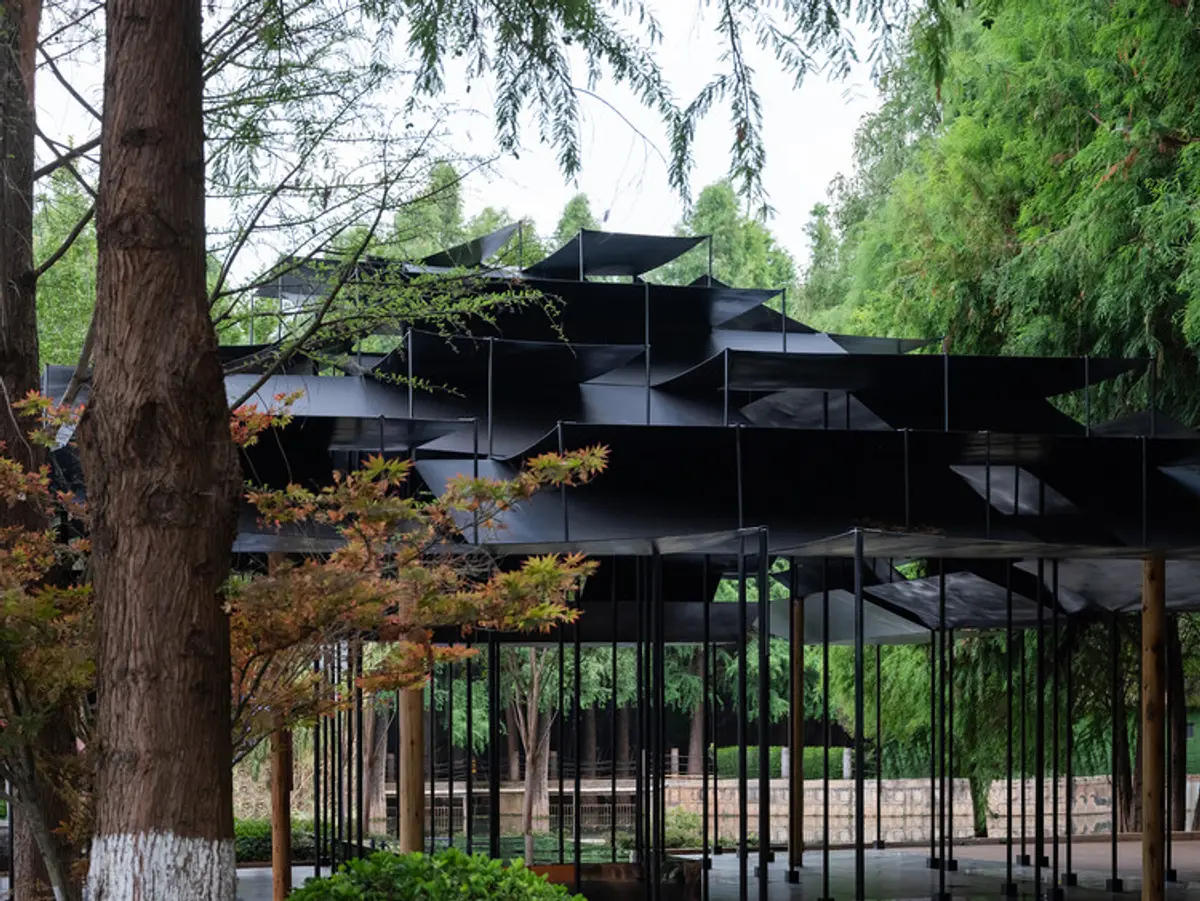
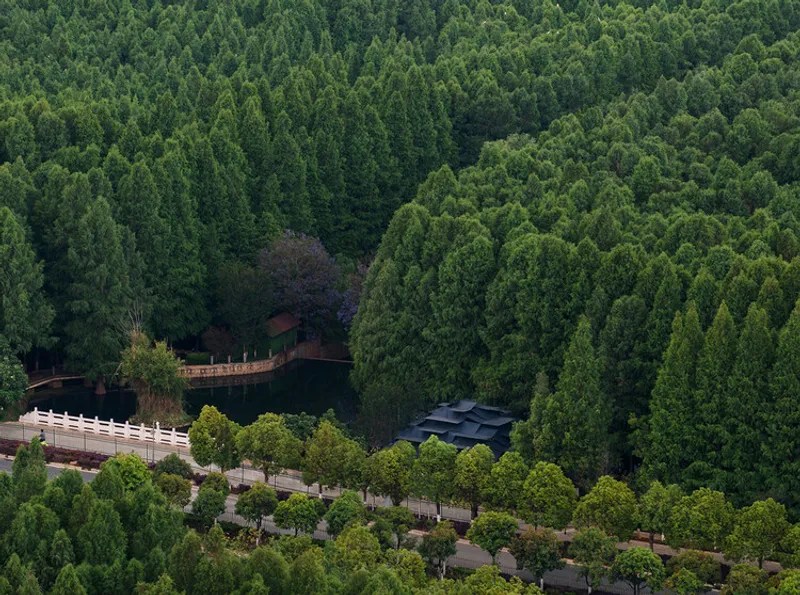
Set within the Laoyu River Wetland Park along the southern edge of Dianchi Lake in Kunming, the Laoyuting Pavilion by Atelier Deshaus is a subtle yet deeply evocative architectural intervention. Completed in 2024 as part of the Dianchi Art Season: “Home and Future”, the pavilion operates simultaneously as cultural infrastructure, landscape marker, and place of rest. What appears at first glance as a delicate steel structure unfolds into a complex meditation on nature, technology, and the architectural archetype of the Chinese ting—the traditional pavilion.
A Pavilion Rooted in Ecology and Daily Life
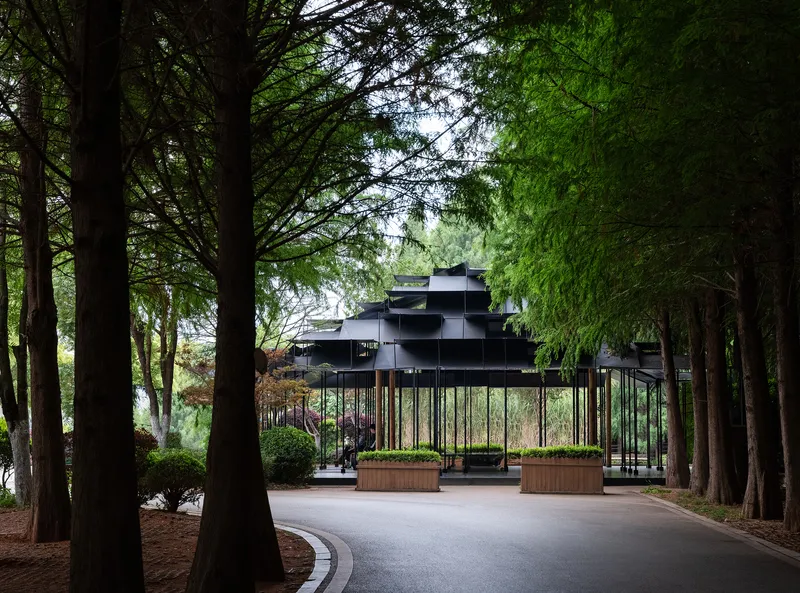
The Laoyu River Wetland is not merely a scenic landscape but a critical component of Kunming’s water purification system, functioning as the final natural filtration stage before water flows into Dianchi Lake. Bald cypress groves line the wetland’s edge, creating a hybrid environment where ecological infrastructure and everyday urban leisure intersect. Locals often come here to fish during moments of respite, giving the wetland—and later the pavilion—its name: Laoyuting, or “Fishing Pavilion.”
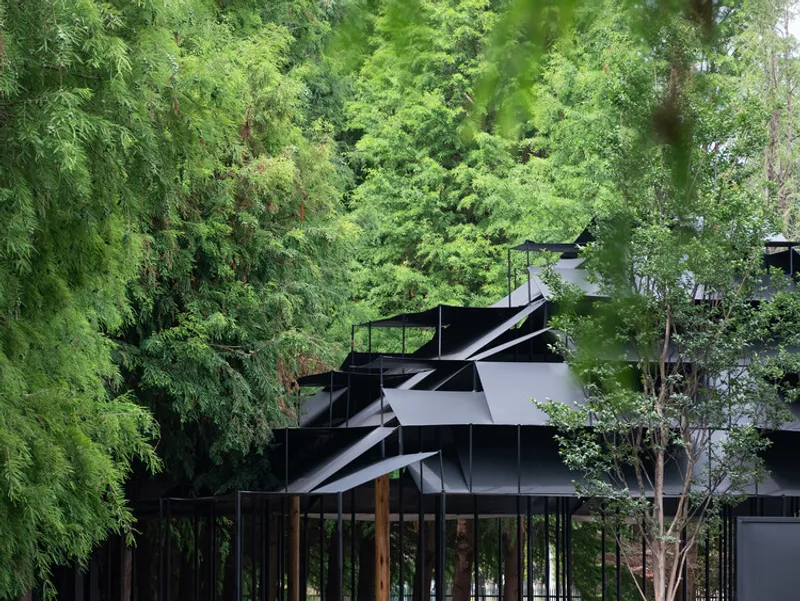
Originally conceived as the entrance structure for the Dianchi Art Festival, the pavilion has since been permanently retained as a spatial threshold to the wetland park and a resting place for visitors. This dual role—as both temporary cultural installation and lasting public architecture—deeply informs its design logic.
Between Road and Water, Artificial and Natural
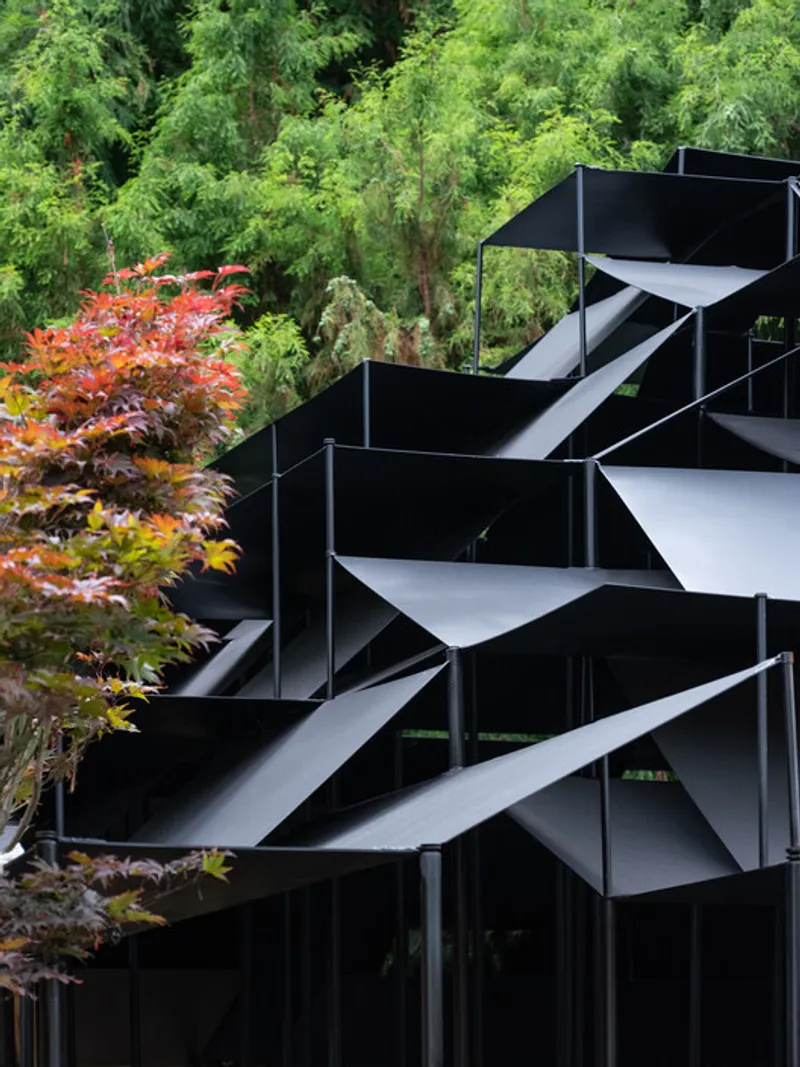
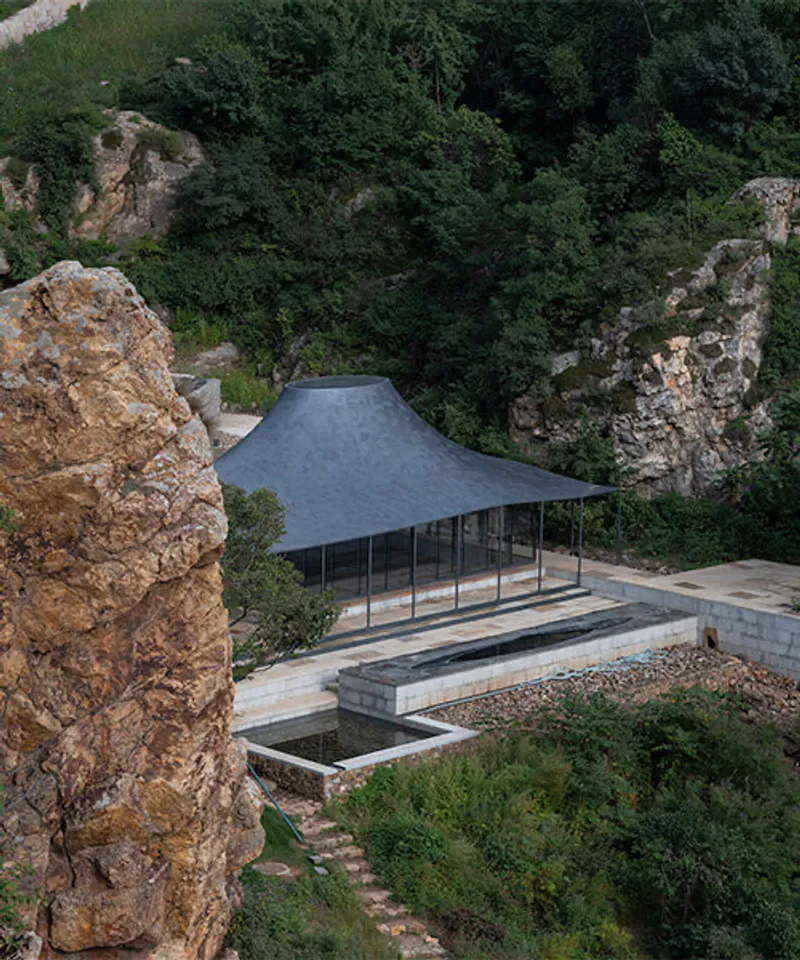
Positioned between a busy roadway and the expansive wetland forest, the pavilion acts as a mediating landscape device. Rather than forming a singular enclosed object, Atelier Deshaus conceived the structure as an artificial forest, composed of slender steel columns and a fragmented roof plane. This design creates an ambiguous spatial condition—neither fully inside nor outside, neither strictly natural nor overtly artificial.
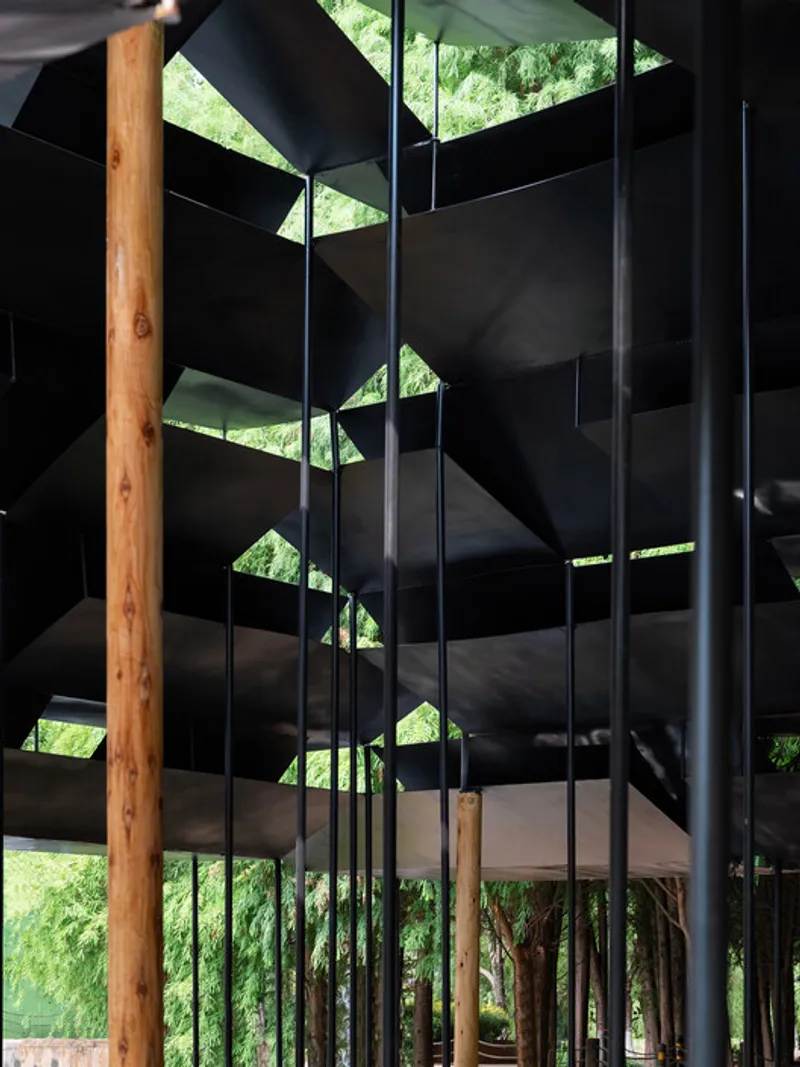
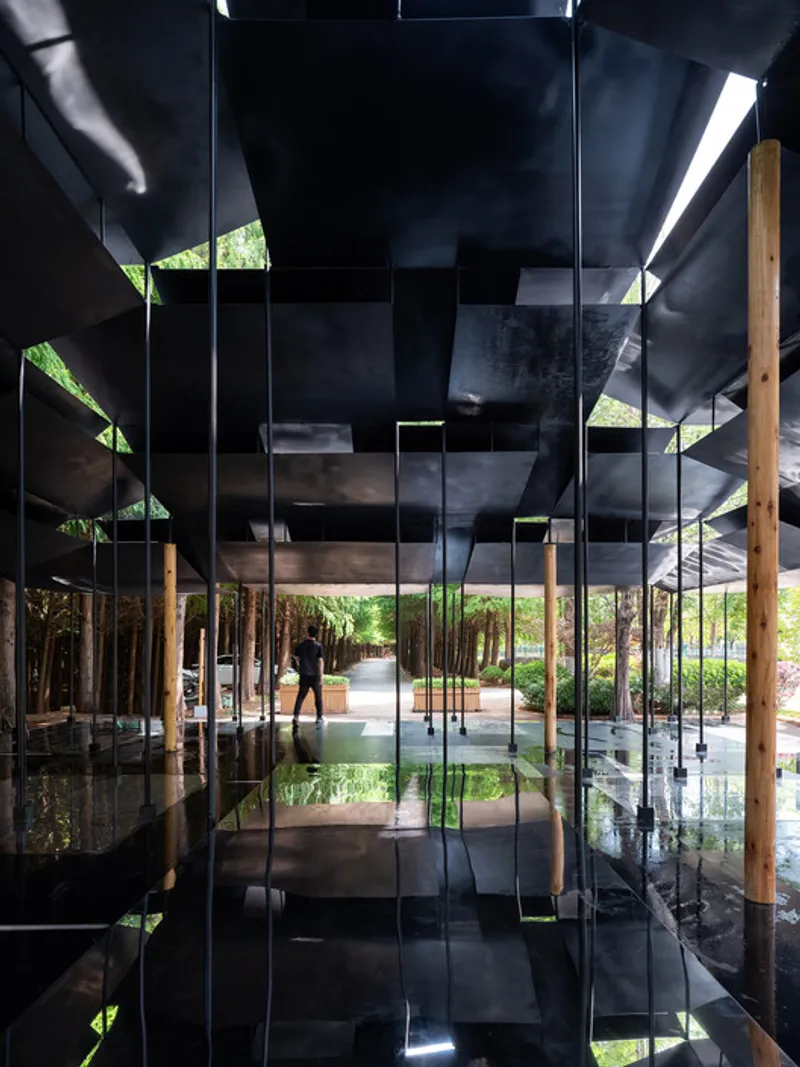
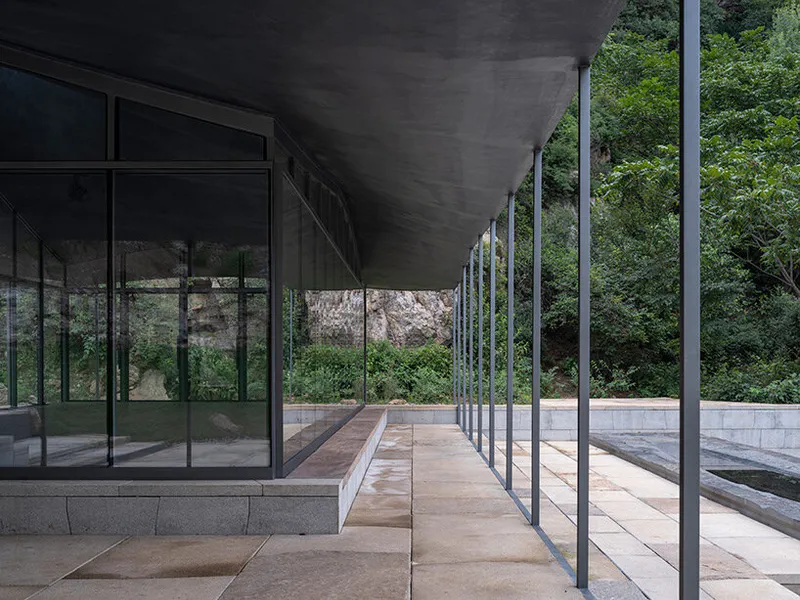
The experience of the pavilion oscillates between “walking beneath trees” and “standing under a primitive hut.”Visitors move through a field of thin columns, where density shifts subtly, allowing space for gathering, pause, or quiet observation. Two paths gently emerge from within the structure, guiding people toward the deeper wetland landscape and the water beyond.
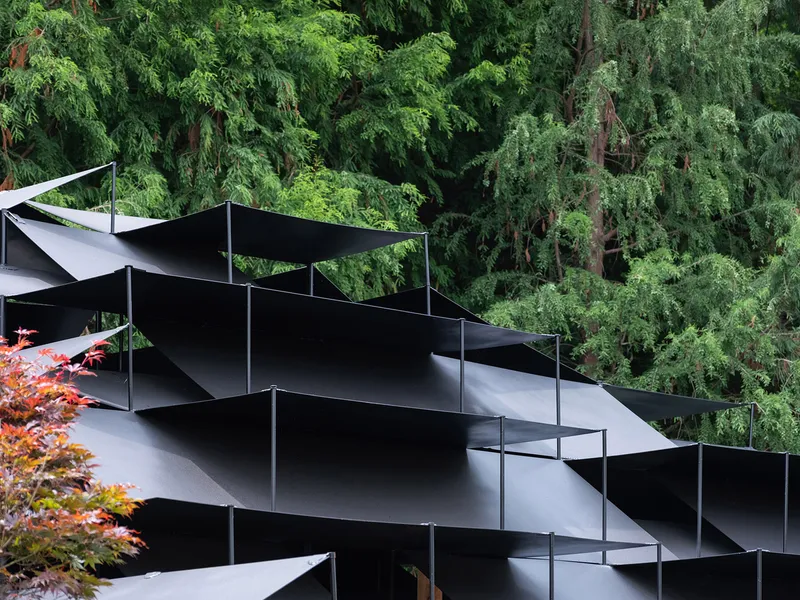
Fragmented Roof, Reimagined Tradition
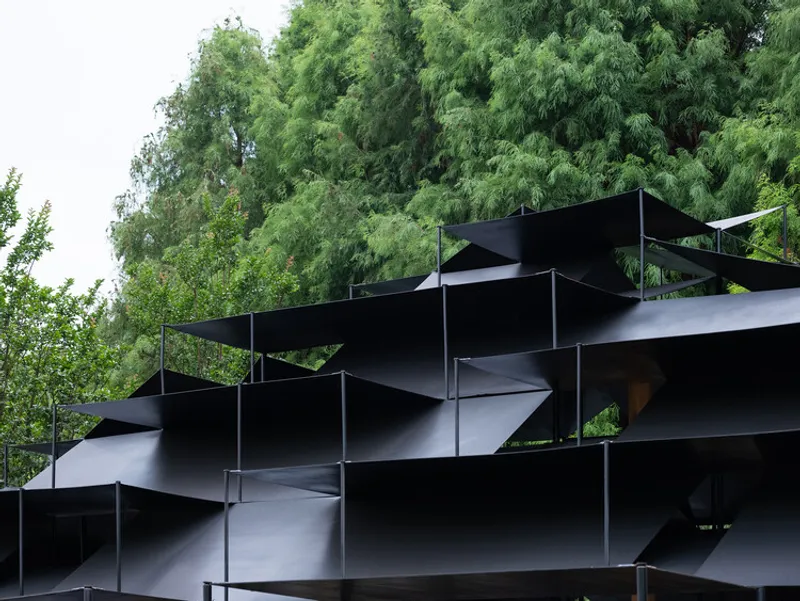
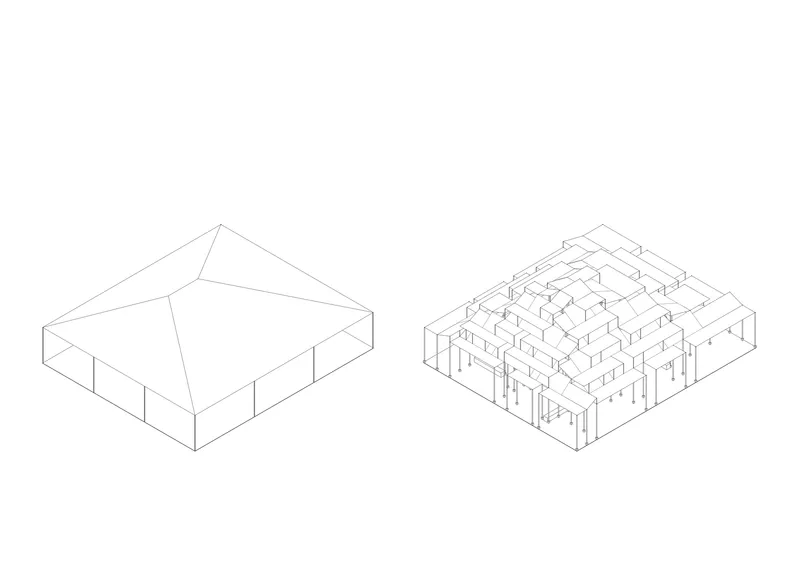
From afar, the pavilion’s roof recalls the four-sloped hipped roofs of traditional Chinese architecture. Yet upon closer inspection, this familiar form is deliberately fragmented and deconstructed. Steel plates—flat and sloped—overlap and separate, allowing light to filter through irregular openings. Sunlight breaks into fragments, creating a layered play of shadow, sky, and glimpses of treetops overhead.
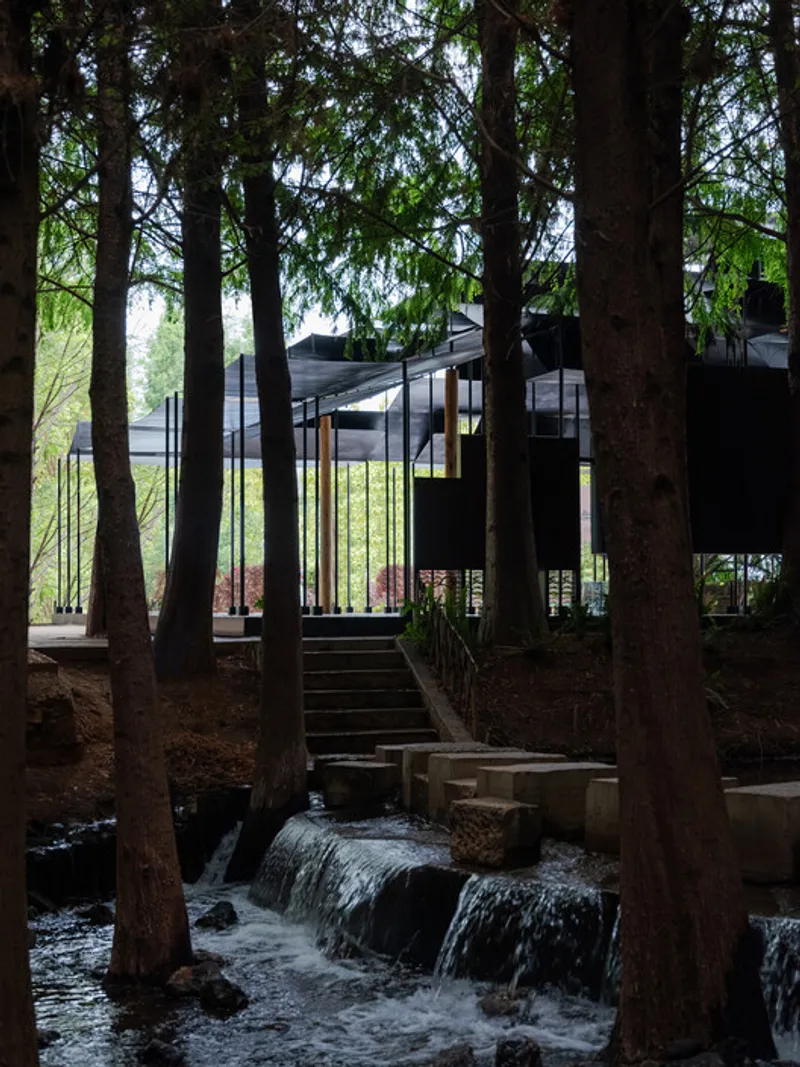
This fragmentation transforms the roof into something resembling a thatched canopy, despite being fabricated entirely from steel. The industrial material is effectively dematerialized, stripped of its usual connotations of heaviness and rigidity. In doing so, the pavilion invites a reconsideration of how technology can dissolve into landscape, rather than assert dominance over it.
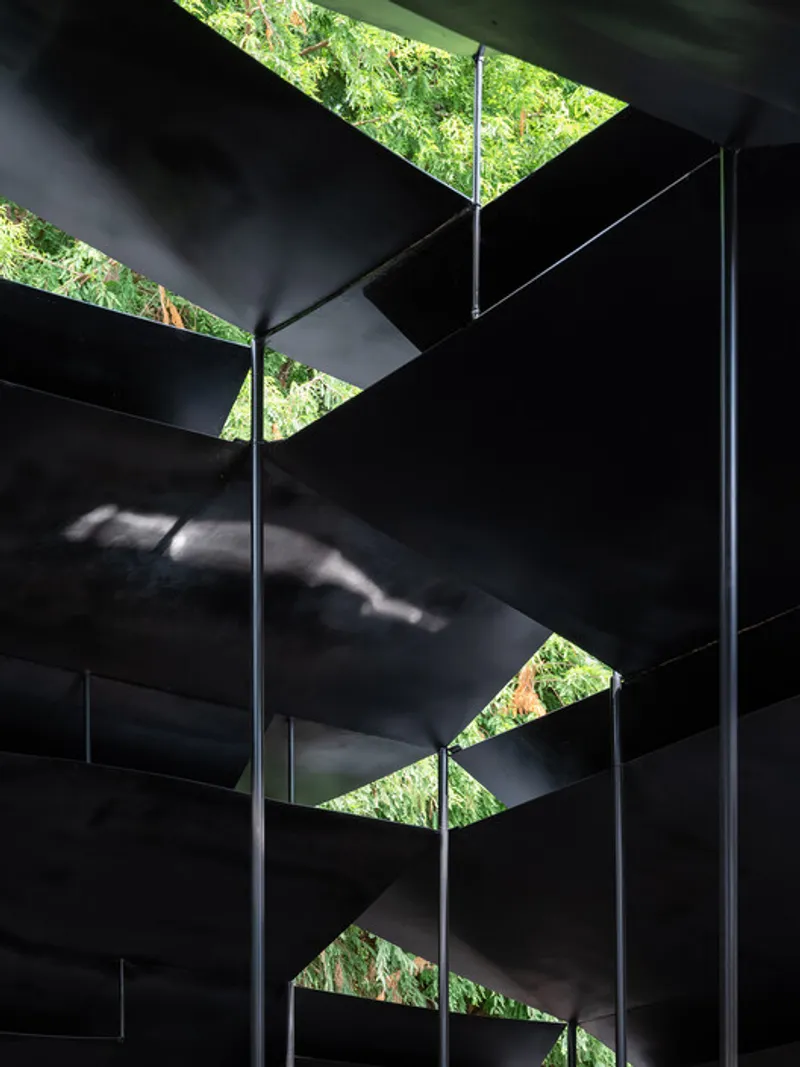
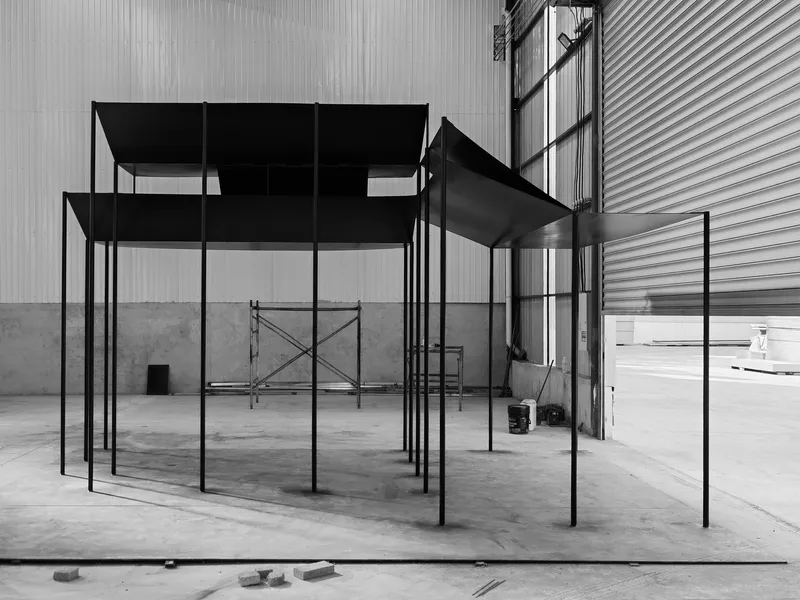
Structural Logic as Spatial Poetry
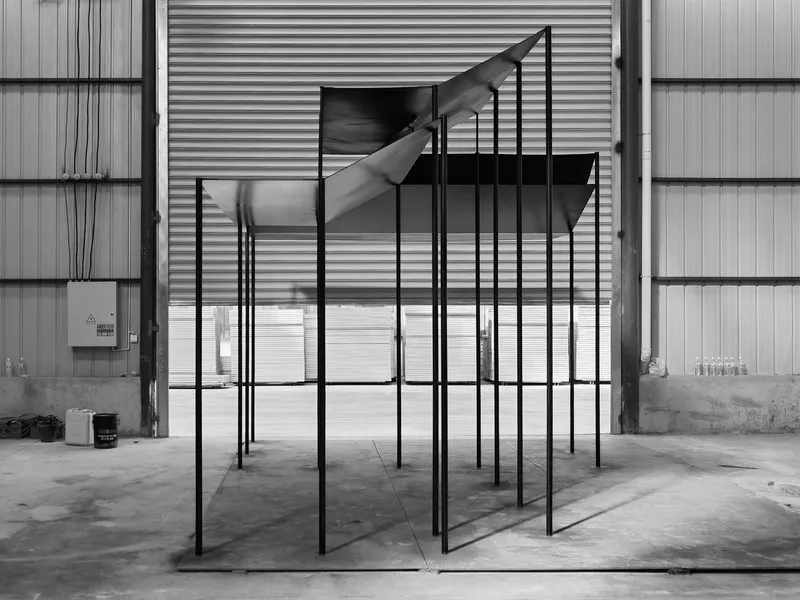
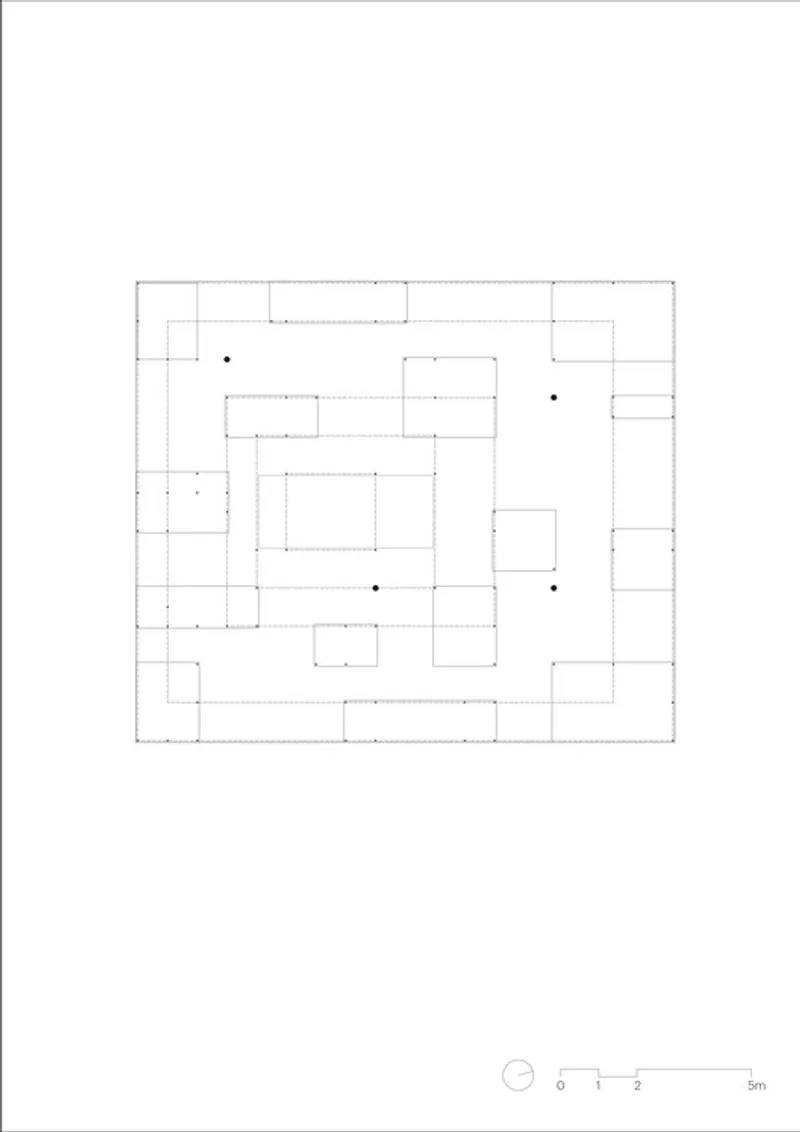
The pavilion’s construction is governed by a deceptively simple modular system: “six columns plus steel plates.”Multiple modules are overlapped, adjusted, and partially removed, allowing loads to be redistributed through shorter, thinner steel columns at higher levels. The result is a spatial field where column density varies—appearing almost random, yet carefully orchestrated.
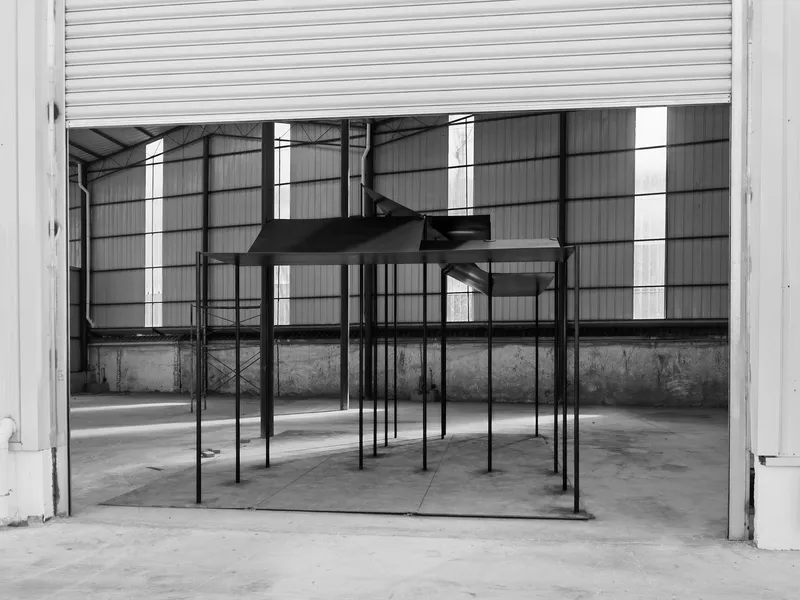
In total, 93 solid steel columns (40 mm in diameter) touch the ground, each working in cantilever. Above them, 125 shorter steel columns (20 mm diameter) support the fragmented roof planes. Hinged connections between flat and sloped plates give the roof a structural character that lies between flexibility and rigidity, reinforcing the pavilion’s sense of lightness and impermanence.
Building Without Touching the Ground
Environmental regulations within the wetland park strictly prohibited disturbance of the existing terrain. In response, Atelier Deshaus developed a micro-foundation strategy: steel plates placed directly atop the original ground surface, each column anchored to a compact steel block measuring just ten centimeters square. These blocks act as localized foundations, lifting the structure slightly above the earth and signaling a deliberate act of restraint.
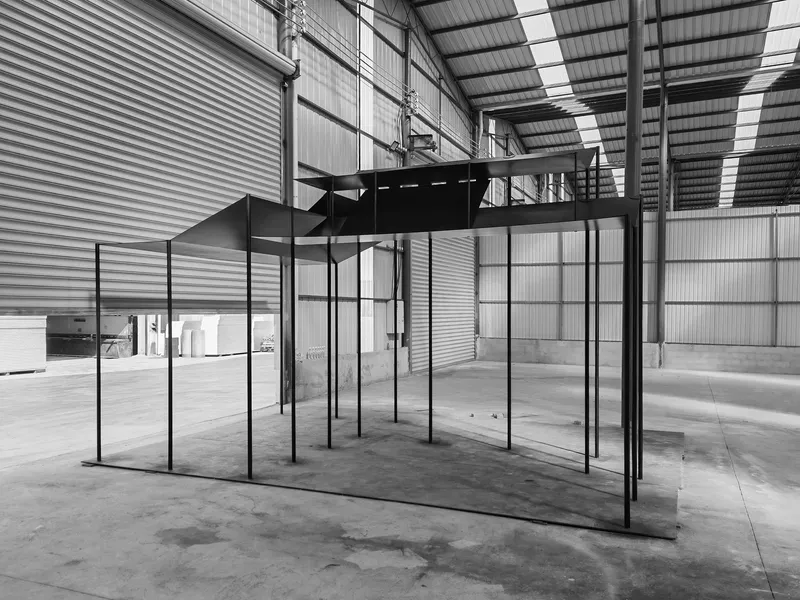
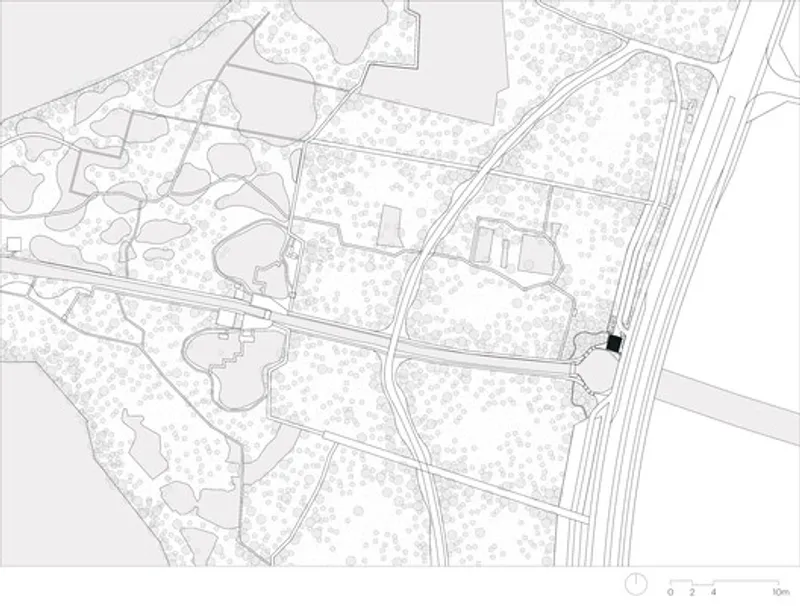
This approach not only protects the fragile wetland ecosystem but also reinforces the pavilion’s conceptual stance—hovering rather than occupying, touching lightly rather than imposing. The upward offset of the columns becomes a quiet architectural gesture of respect toward the landscape.
Prefabrication as Ecological Strategy
To further minimize on-site impact, the entire pavilion was designed as a prefabricated, dry-assembled system. Columns, roof plates, joints, and bolts were fabricated off-site and transported for assembly, turning construction into a process closer to installing a large-scale outdoor artwork than executing conventional building works.
This method aligns with the pavilion’s lightweight structural logic and underscores its role as a temporary-seeming yet permanent presence—a structure that could theoretically be dismantled and reassembled elsewhere, echoing the migratory logic of installations rather than static monuments.
Returning to the Archetype of the Tree
At its core, Laoyuting Pavilion is a reflection on the “tree” as the earliest architectural structure. By deconstructing the traditional pavilion roof and dispersing its support into a forest of columns, the project evokes humanity’s earliest shelters—constructed from branches, canopies, and gathered shade.
The pavilion does not attempt to replicate nature but rather translate its logic into architectural terms. It breathes, it allows passage, and it invites pause. In doing so, it establishes a new dialogue between human construction and ecological systems, between memory and future, tradition and contemporary technology.
A Pavilion for Pause and Passage
Laoyuting Pavilion ultimately resists being reduced to a single image or function. It is at once entrance, shelter, landscape marker, and infrastructural artifact. Its strength lies not in spectacle but in quiet spatial generosity, offering visitors a place to rest, observe, and transition—both physically and mentally—into the wetland environment.
In an era where architecture often competes for attention, Laoyuting Pavilion stands apart by withdrawing just enough. It demonstrates how minimal intervention, structural intelligence, and cultural memory can produce architecture that feels deeply rooted, even when it barely touches the ground.
All the Photographs are works of Ce Wang


Popular Articles
Popular articles from the community


Architekt Andreas Gruber Scatters 23 Dark Timber Chalets Across a South Tyrolean Forest Edge
In Molini di Tures, Amonti Chalets breaks a resort into a hamlet of gabled timber houses, with parking, storage and services pushed into the slope.

David Macias Steps a Doorless Stone and Plaster House Down a Tropical Colombian Hillside
In the humid hills of Colombia, Threshold House replaces the front door with an open void and terraces its 850 m² down the slope instead of fighting it.

LT2A and OPEN Architectes Thread a Brick and Glass High School Through a Wooded Belgian Campus
In Braine-l'Alleud, a 3,000 m² wing for Collège Cardinal Mercier pairs pale brick with a glazed colonnade, deferring to a small chapel and a dense wood.

David Ortega Stacks a Two-Story Mexico City Penthouse Around a Steel Stair and a Pergola-Shaded Roof Terrace
In Colonia Roma, a 300 m² penthouse uses oak joinery, a planted steel stair and a slatted roof pergola to make a new-build apartment feel like a house.

Similar Reads
You might also enjoy these articles


Hodi-Mandai Geram
Project Function: Preservation and revitalization of the Intangible heritage and socio-spatial identity of the Hodi by Housing, Cultural Memory Center, Sacred Grove, landscape, local tourism economy


Olio Towers: A Mid-Rise for Performers That Fuses Housing, Rehearsal, and Stage
Located blocks from Houston's Theater District, this modular tower stacks living units around a central performance atrium.

Oasis: Modular Green Housing Carved into Dhaka's Urban Fabric
A shortlisted Plugin Housing entry reclaims unauthorized settlements in Dhaka with stepped concrete volumes, green roofs, and ventilation-driven design.

Black Hole: A Floating Megastructure for the Post-Physical Era
Emiliano Mazzarotto envisions a spherical, self-scaling arena where e-sports, digital hotels, and holographic stadiums replace traditional public space.

Explore Remembrance Pavilion Competitions
Discover active competitions in this discipline

Challenge to reimagine the Iron Throne

Photograph architecture without architects

Illustrate the lost glory of Angkor Wat - Render Challenge

Design challenge to reuse E-waste
Comments (0)
Please login or sign up to add comments
No comments yet. Be the first to comment!