
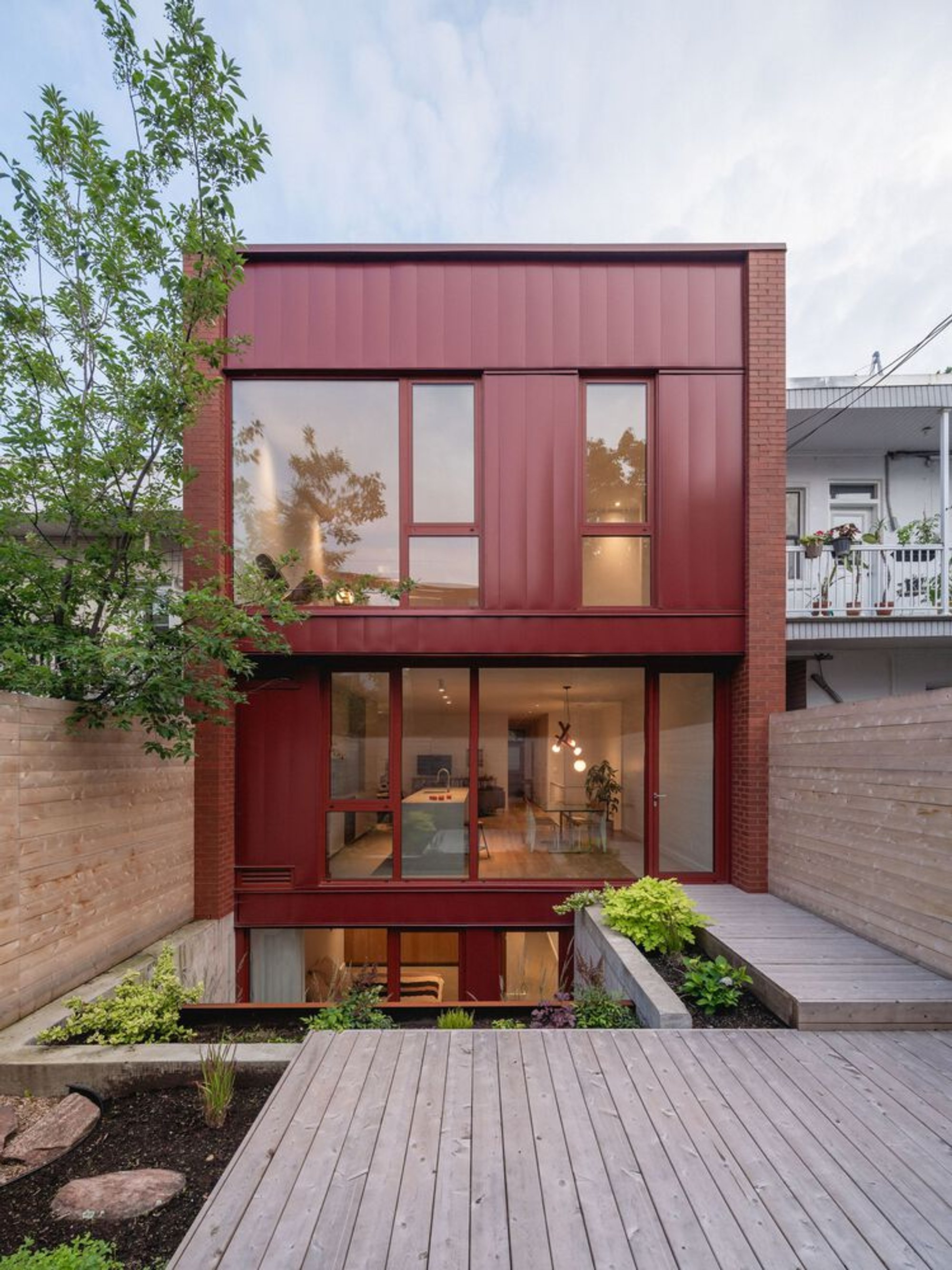
“Le Petit Merlot House by NatureHumaine: Heritage Renovation Meets Contemporary Montreal Living”
Le Petit Merlot House in Montreal blends heritage red-brick façades with contemporary interiors, mezzanine design, abundant natural light, and garden connectivity.

A Modern Duplex Rooted in Montreal Heritage
Nestled in the heart of Plateau Mont-Royal, Montreal, the Le Petit Merlot House is a striking example of heritage-sensitive renovation combined with contemporary design. Originally a 1920s duplex, this project by NatureHumaine expands and revitalizes the property while honoring the architectural language of the surrounding neighborhood, Le Petit Laurier.
The project’s name, Petit Merlot, reflects both the spirit of conviviality typical of Montreal streets and the warm red clay brick that dominates the local façades. This thoughtful integration of heritage and modernity ensures the house harmonizes with the historic urban fabric while offering functional, light-filled living spaces for modern family life.
Design Concept: Harmony Between Past and Present
The duplex renovation and extension were carefully planned to balance the neighborhood’s heritage features with contemporary living requirements. Situated on a 1,640 ft² lot without a service alley, the duplex aligns with its neighbors along the street. It consists of two residential units stacked vertically, with rear access to a private courtyard via a porte-cochère. The design maximizes space within Montreal’s two-story height restrictions, incorporating a mezzanine level to expand the upper unit.
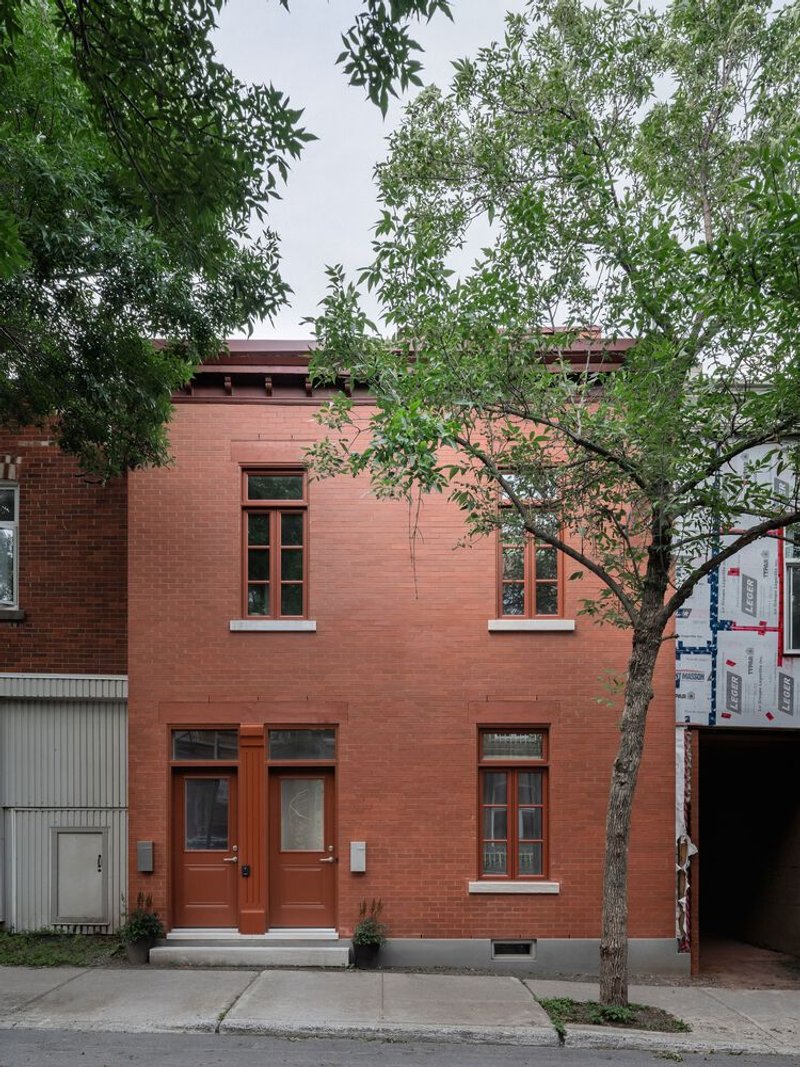
The front façade preserves the classic Plateau Mont-Royal character. Key elements include:
- Red clay brick in metric modular format
- Red-painted hemlock window lintels
- St-Marc stone spandrels beneath French windows
- A restored molded wooden cornice painted merlot red
- French windows with multiple panes and traditional woodwork detailing
These heritage elements are complemented by subtle modern interventions, ensuring the building respects its historical context while remaining fully functional for contemporary life.
Lower Unit: Seamless Indoor-Outdoor Living
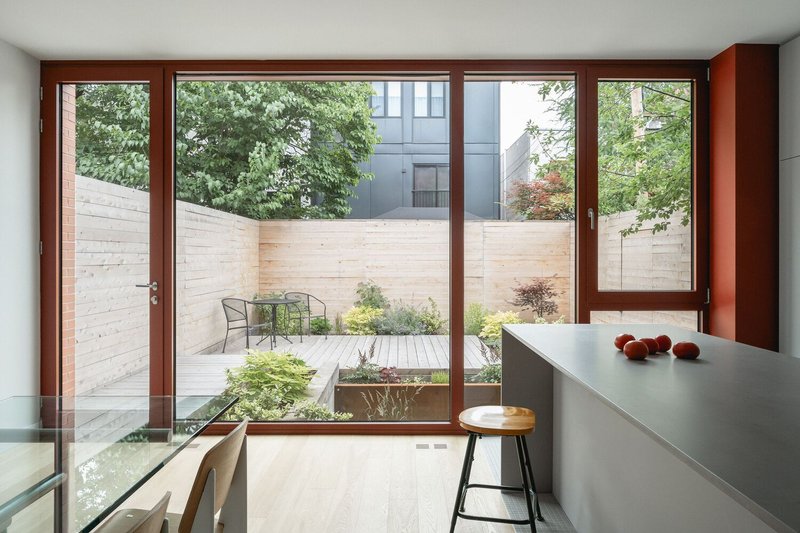
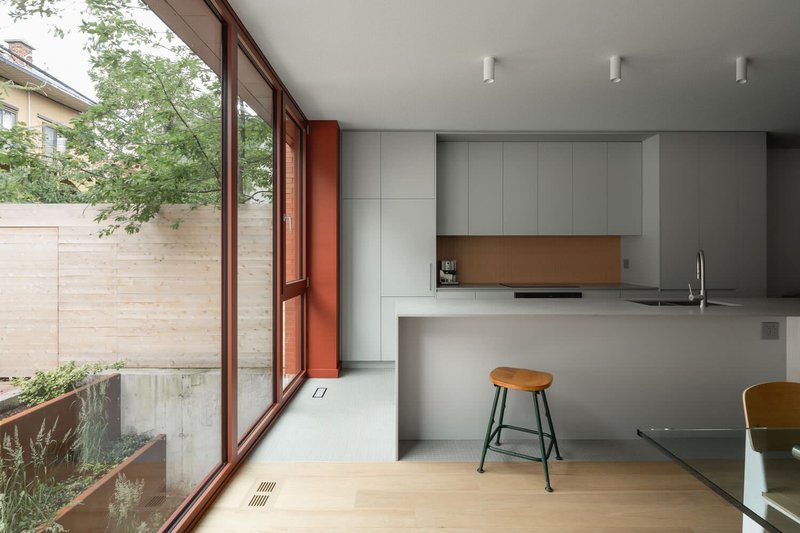
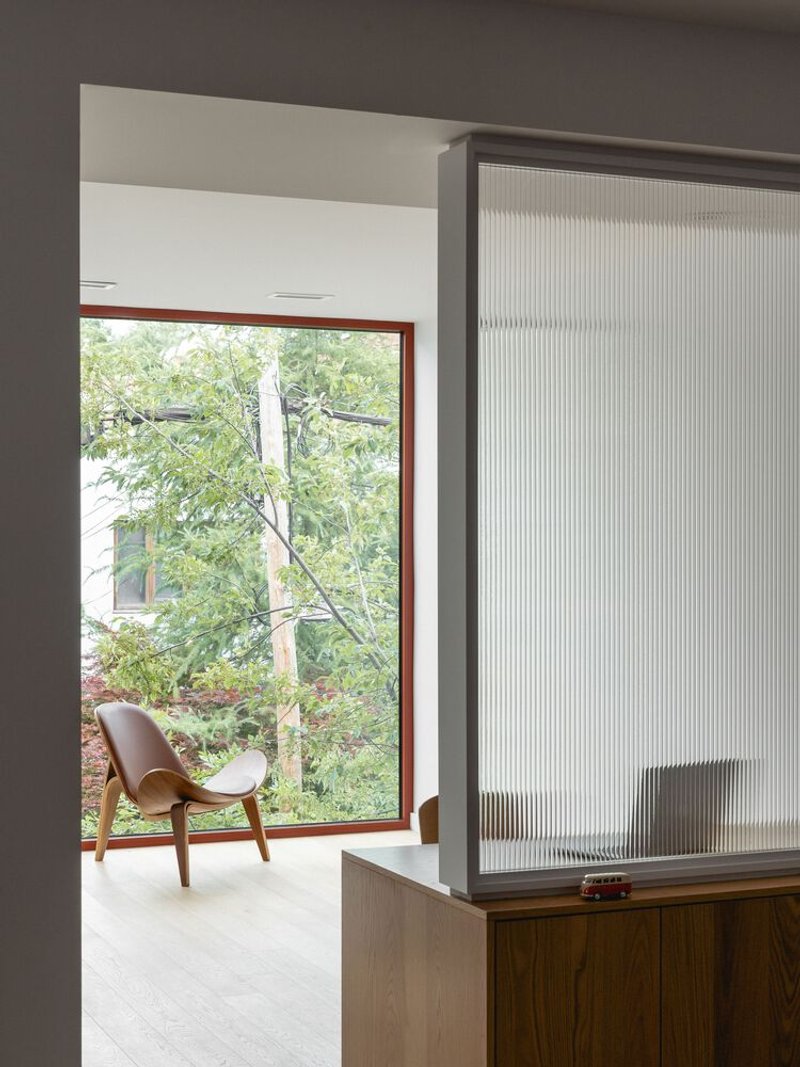
The 1,420 ft² lower unit emphasizes transparency and connection to the backyard garden. The rear façade is extensively glazed, allowing abundant natural light to flood the living spaces while visually linking the interior to the private exterior landscape.
Key features include:
- Open-plan living room, dining area, kitchen, and master bedroom
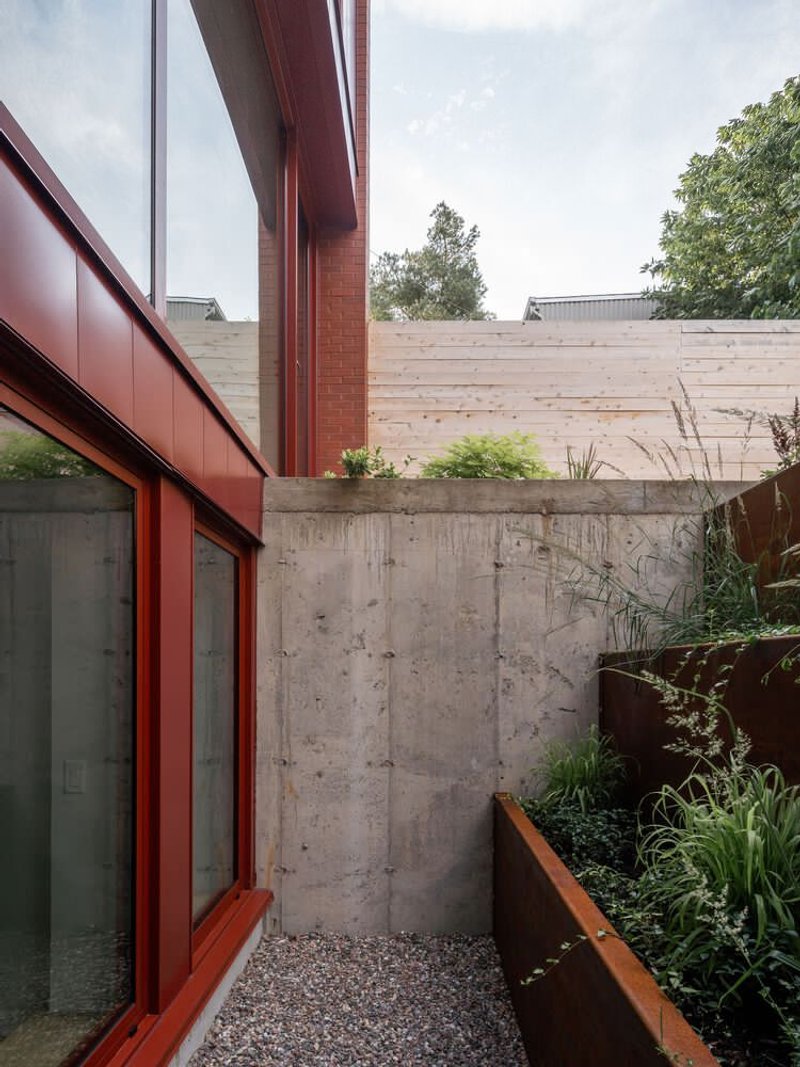
- Basement English courtyard with planted terraces that amplify daylight in the lower bedrooms and office
- Floor-to-ceiling glazing in bedrooms and office spaces to enhance brightness and spatial quality
This approach ensures that the lower unit feels expansive and connected to nature, despite its ground-level location.
Upper Unit: Light-Filled Modernity
The upper living unit, measuring 1,634 ft², maximizes southern sunlight and provides generous living spaces across multiple levels. Highlights include:
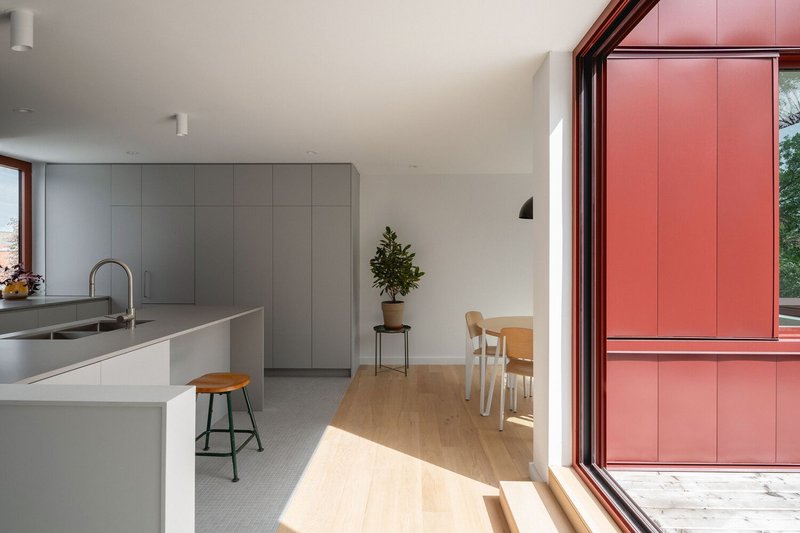
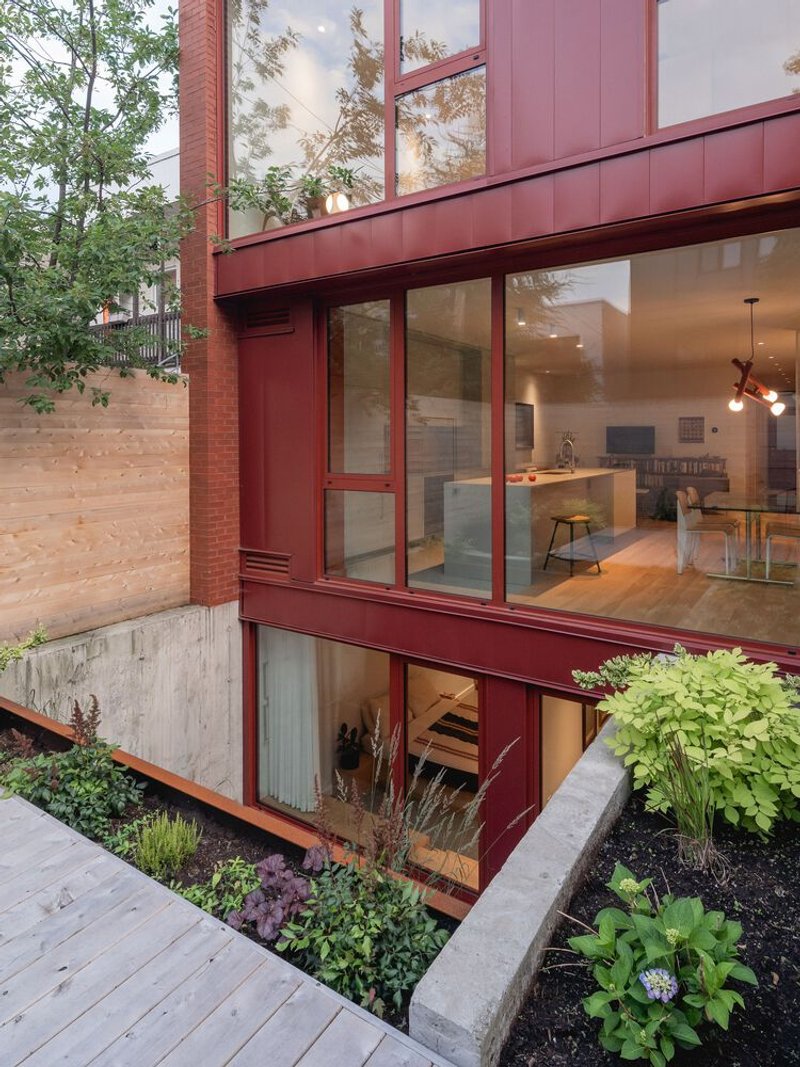
- Mezzanine kitchen and dining room opening onto a wooden terrace
- Corten steel planters integrated into terrace design
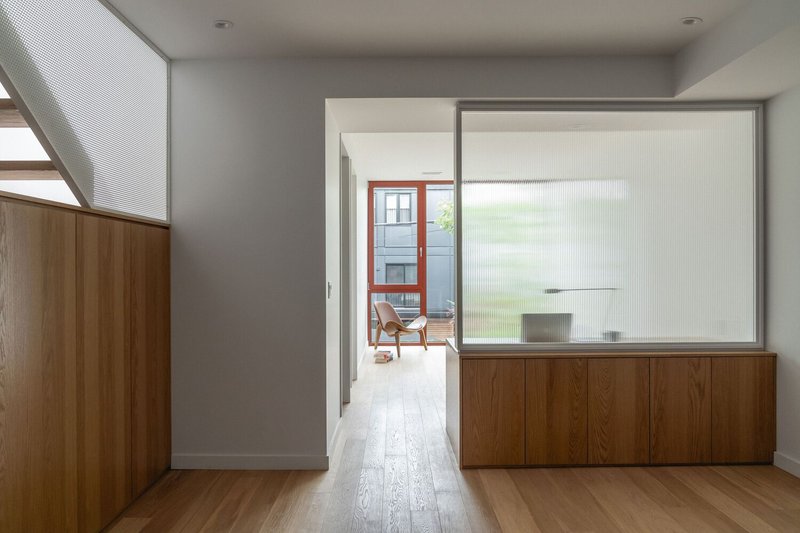
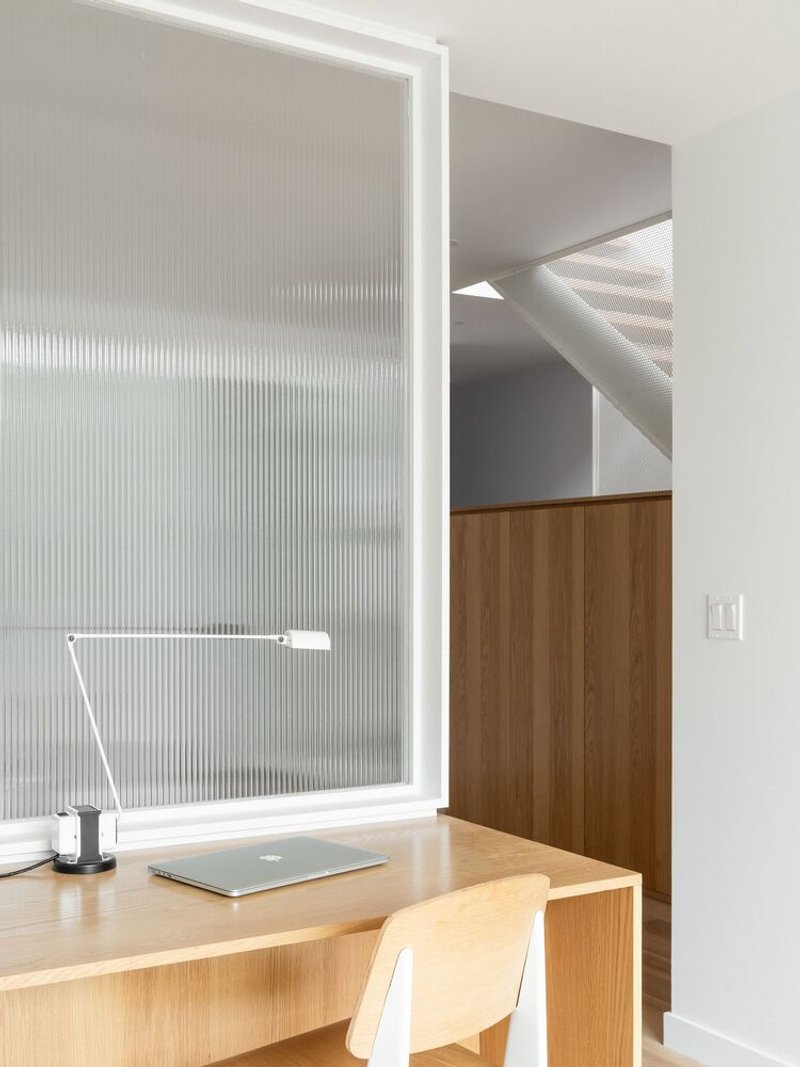
- Two bedrooms, a large living room, and a windowed office overlooking the garden
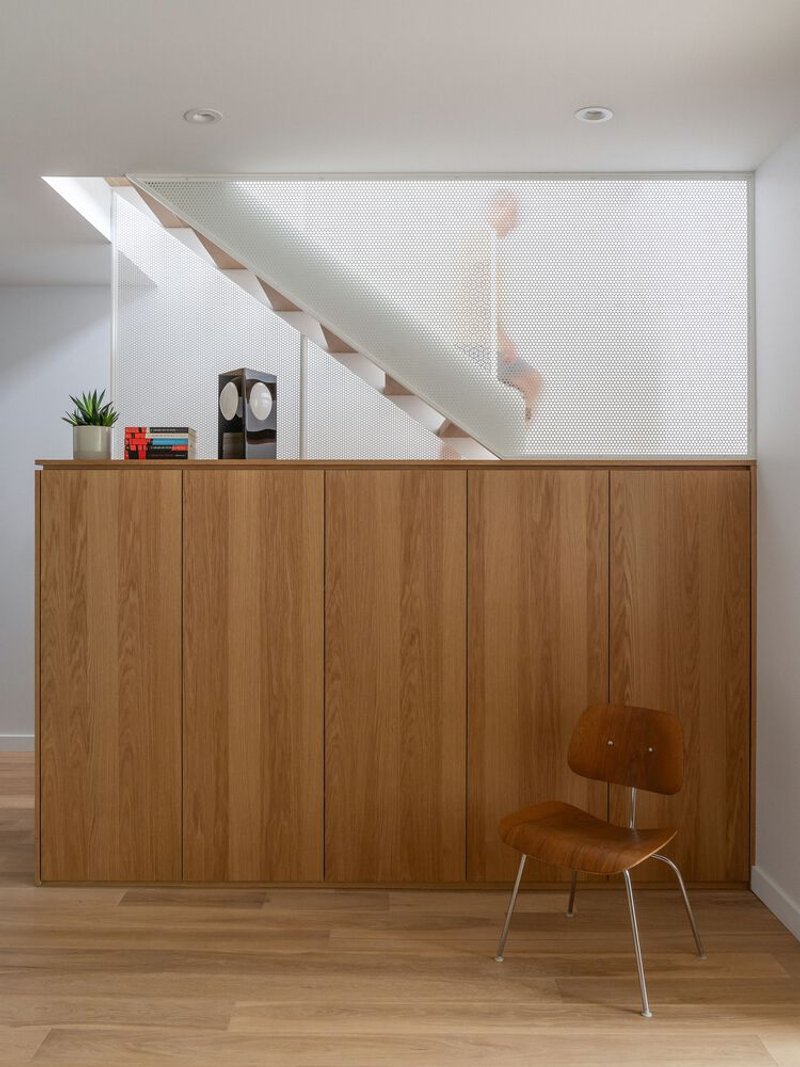
- Central wooden staircase with perforated white-painted steel cladding, creating a dynamic spatial experience
- Rear façade transparency across four levels, contrasting the more restrained heritage front
The contemporary rear design ensures soft, diffused light and a vibrant visual connection to the garden while providing privacy and comfort for the occupants.
Interior Design and Materiality
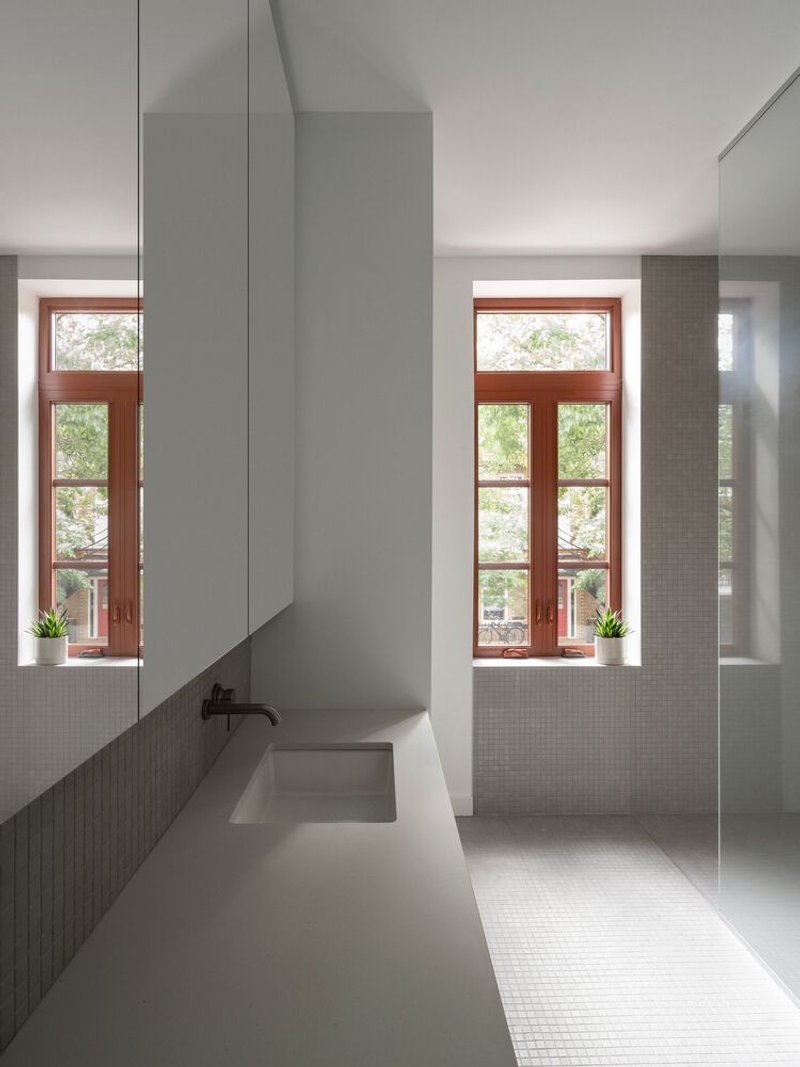
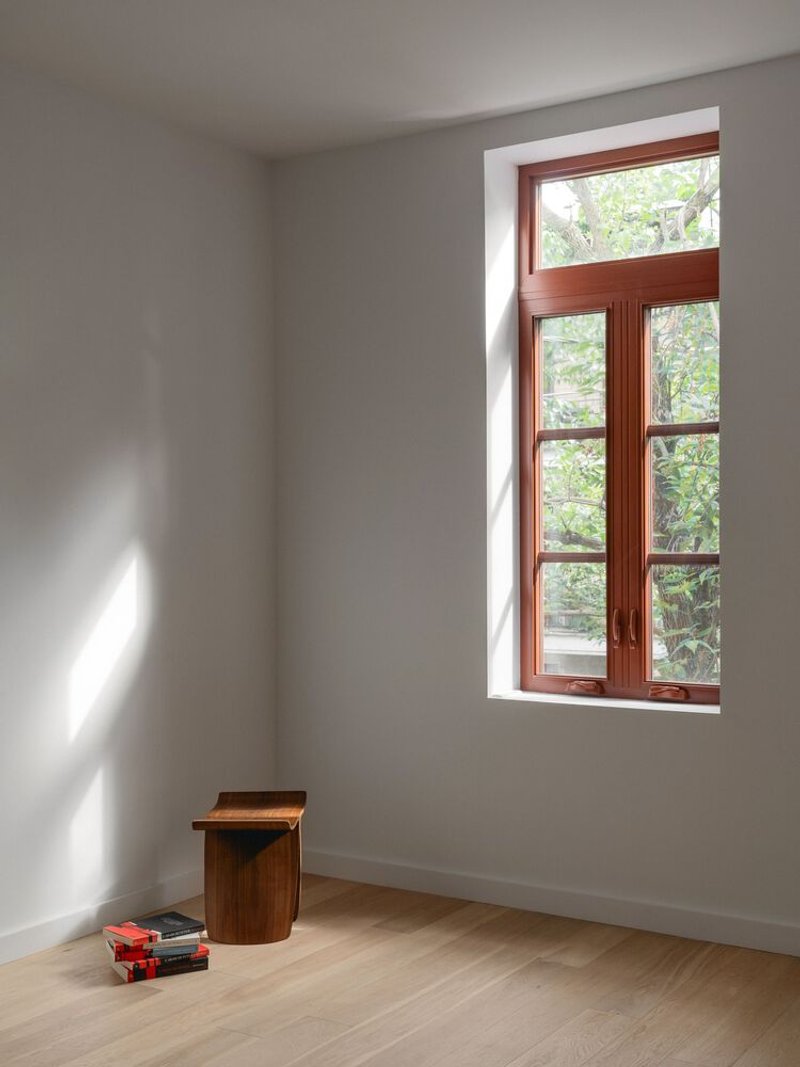
Le Petit Merlot House maintains visual cohesion between interior and exterior finishes. The deliberate use of red hues across architectural elements reinforces this theme:
- Red brick, window mullions, and parapet flashings
- Hemlock lintels and painted steel wall coverings
- Interior accents including a red-painted library in the upper unit and lighting fixtures in the lower unit
This subtle, consistent use of color unifies the project and emphasizes a harmonious relationship with the surrounding neighborhood.
Heritage Respect, Contemporary Comfort
Le Petit Merlot House stands as a model of heritage-integrated renovation, respecting the architectural legacy of Montreal’s Plateau district while providing updated living spaces that reflect modern lifestyle needs. Its combination of brick craftsmanship, transparent rear façades, and thoughtful interior finishes creates a home that is both historically respectful and vibrantly contemporary.
This project demonstrates how careful design can bridge the past and present, offering a refined, comfortable, and light-filled residence in one of Montreal’s most cherished neighborhoods.
All photographs are works of Raphaël Thibodeau




Popular Articles
Popular articles from the community

Inverted Architecture Installation by Studio Link-Arc: Exploring the Intersection of Architecture and Living Organisms
Inverted Architecture Installation by Studio Link-Arc blends mycelium, sustainability, inverted design, ecological cycles, and urban adaptive architecture in Shenzhen.

Solar Steam: A Climate-Responsive Architecture That Redefines the Monument
A climate-responsive memorial architecture that transforms heat, decay, and time into a living system reflecting humanity’s ecological impact.

Free Architecture Competitions You Can Enter Right Now
No entry fees, real prizes. Here are the best free architecture competitions open for submissions in 2026.
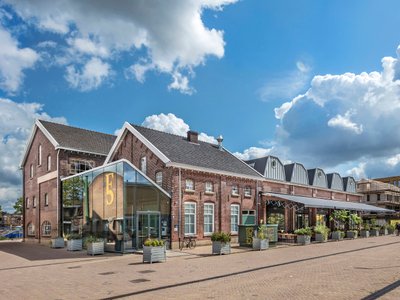
Fifth NRE Jazz Club – De Bever Architecten: Eindhoven’s Revitalized Cultural Hub
Historic gas factory transformed into Fifth NRE Jazz Club blending modern sustainability, jazz culture, dining, and heritage architecture seamlessly.


Similar Reads
You might also enjoy these articles


The Ken Roberts Memorial Delineation Competition (Krob)
As the most senior architectural drawing competition currently in operation anywhere in the world, it draws hundreds of entries each year, awarding the very best submissions in a series of medium-based categories.
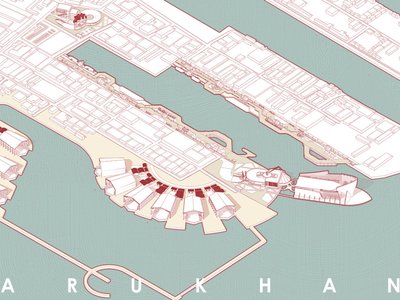
Waterfront Redevelopment and Urban Revitalization in Mumbai: Forging a New Dawn for Darukhana
A transformative waterfront redevelopment project reimagining Darukhana’s shipbreaking heritage into an inclusive urban future.

OUT-OF-MAP: A Call for Postcards on Feminist Narratives of Public Space
Rhizoma Design and Research Lab invites artists, designers, architects, researchers, and students to reflect on how feminist perspectives can reshape public space. Selected works will be exhibited in Barcelona, October 2026. Submissions open until 15 April 2026.


Documentation Work on Buddhist Wooden Temple
Architectural syncretism and cultural hybridity: A comparative study of the Buddhist temples in Chattogram Hill tracks


Explore Architecture Competitions
Discover active competitions in this discipline




The International Standard for Design Portfolios


The Global Benchmark for Architecture Dissertation Awards


The Global Benchmark for Graduation Excellence


Challenge to reimagine the Iron Throne
Comments (0)
Please login or sign up to add comments
No comments yet. Be the first to comment!