
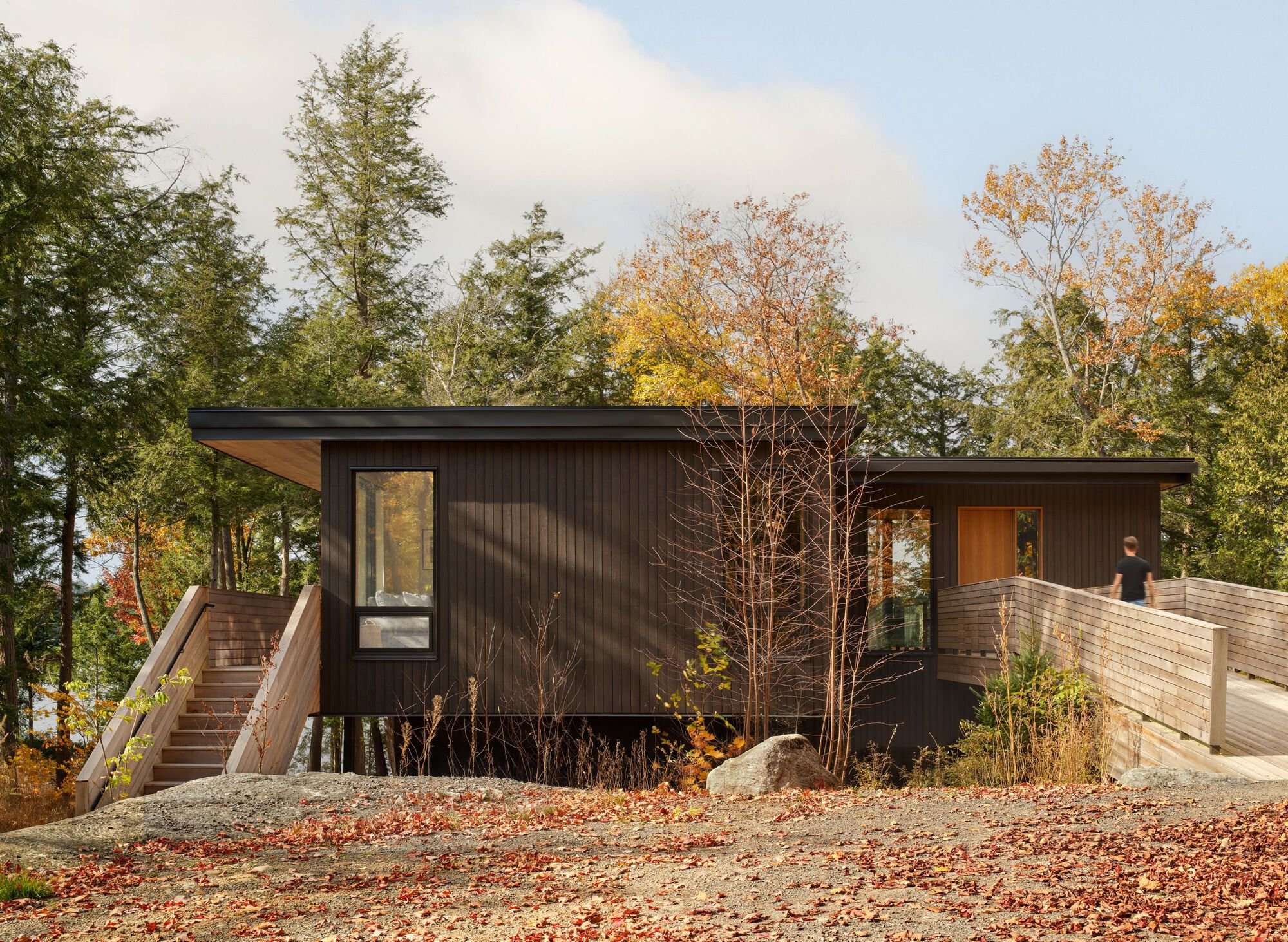
Long Lake Cottage by Dubbeldam Architecture + Design
An off-grid Canadian cottage elevated among trees, blending accessibility, sustainability, and immersive forest-lake living for multigenerational retreat and year-round use.

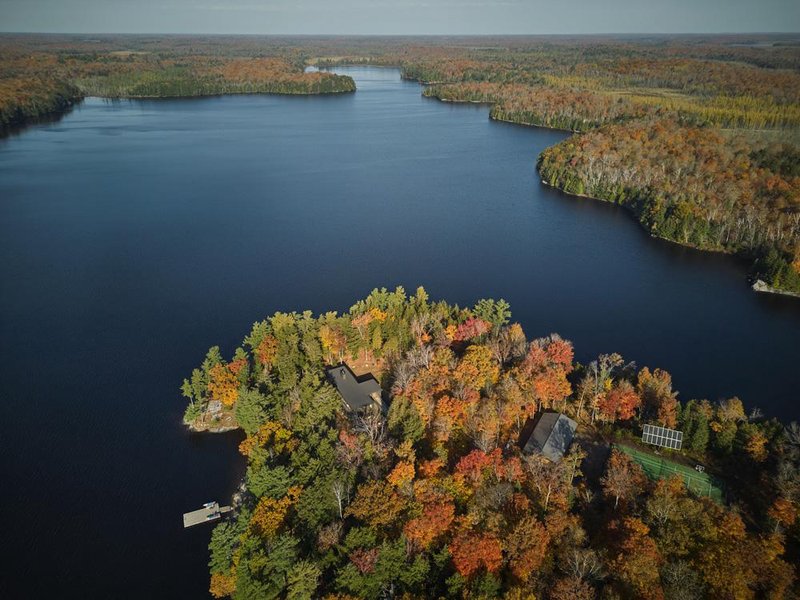
Set on a secluded peninsula along a pristine, motorboat-free lake in Ontario, Long Lake Cottage is an off-grid retreat that redefines contemporary wilderness living through accessibility, environmental restraint, and a profound respect for place. Designed by Dubbeldam Architecture + Design, the cottage is both a deeply personal refuge and a carefully considered architectural response to a sensitive forested landscape. Elevated among the trees and lightly touching the land, the project demonstrates how architecture can foster intimacy with nature while accommodating multigenerational and inclusive living.
The clients, an urban couple with a long-standing connection to the outdoors, spent over a year camping on the site before committing to construction. This extended period of observation allowed them to understand the rhythms of the land—its shifting light, prevailing winds, seasonal changes, and the way the forest opens toward the water. Their brief was clear yet ambitious: to create a year-round home that felt immersed in nature, minimized ecological impact, and welcomed family and friends of all ages and abilities. Accessibility was not treated as an add-on but as a fundamental design driver, shaping both the spatial organization and the experiential qualities of the cottage.
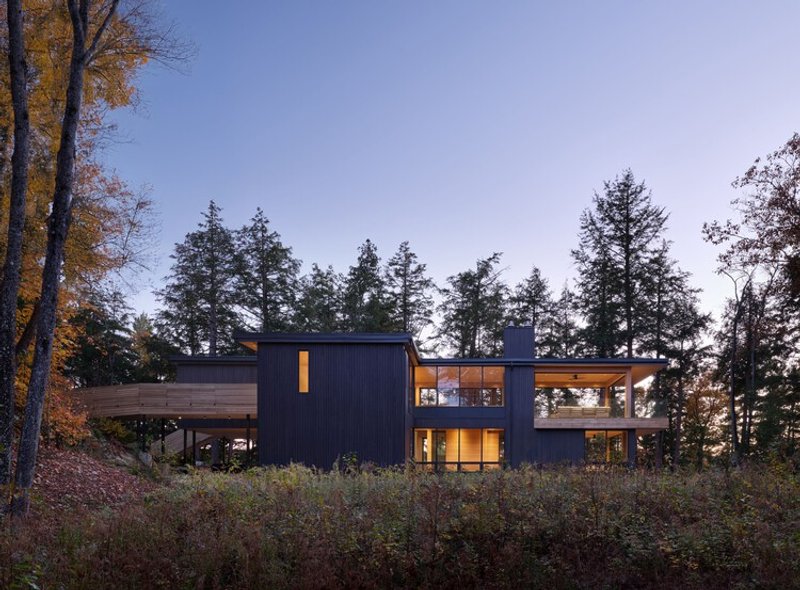
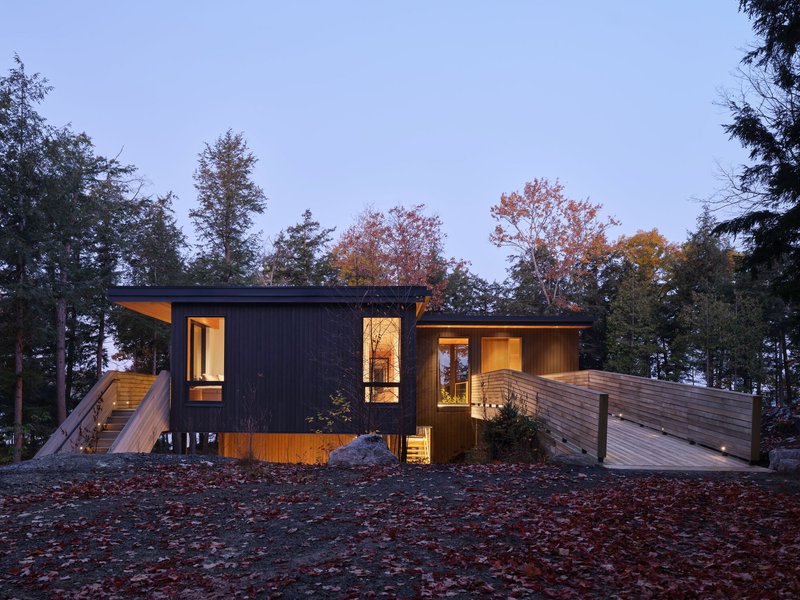
The site itself is defined by dramatic contrasts. A ridge of exposed bedrock rises behind the building, while dense forest slopes gently toward the lake’s edge. Rather than leveling the terrain or imposing a dominant form, the architects positioned the cottage so that it nestles into the landscape. On approach, the lower level remains largely concealed, allowing the upper floor to appear as though it floats above the forest floor. This perceptual lightness is reinforced by the building’s horizontal emphasis and the restrained palette of natural materials.
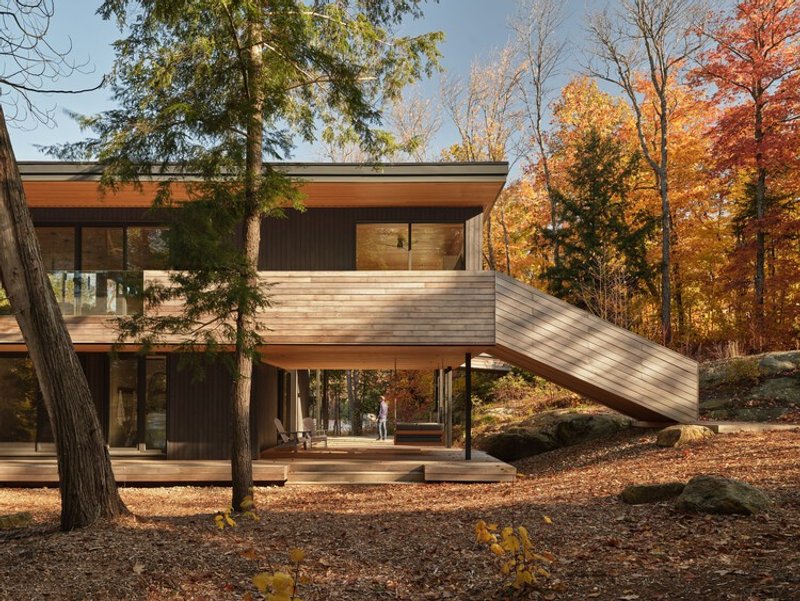
Access to the main living level is achieved via a bridge that spans from solid ground to the upper floor, ensuring step-free entry for a family member who uses a wheelchair. This elevated arrival is both practical and ceremonial, offering a gradual transition from forest to dwelling while revealing framed views of the lake through the trees. Once inside, the living spaces unfold as a continuous, light-filled environment suspended within the canopy.
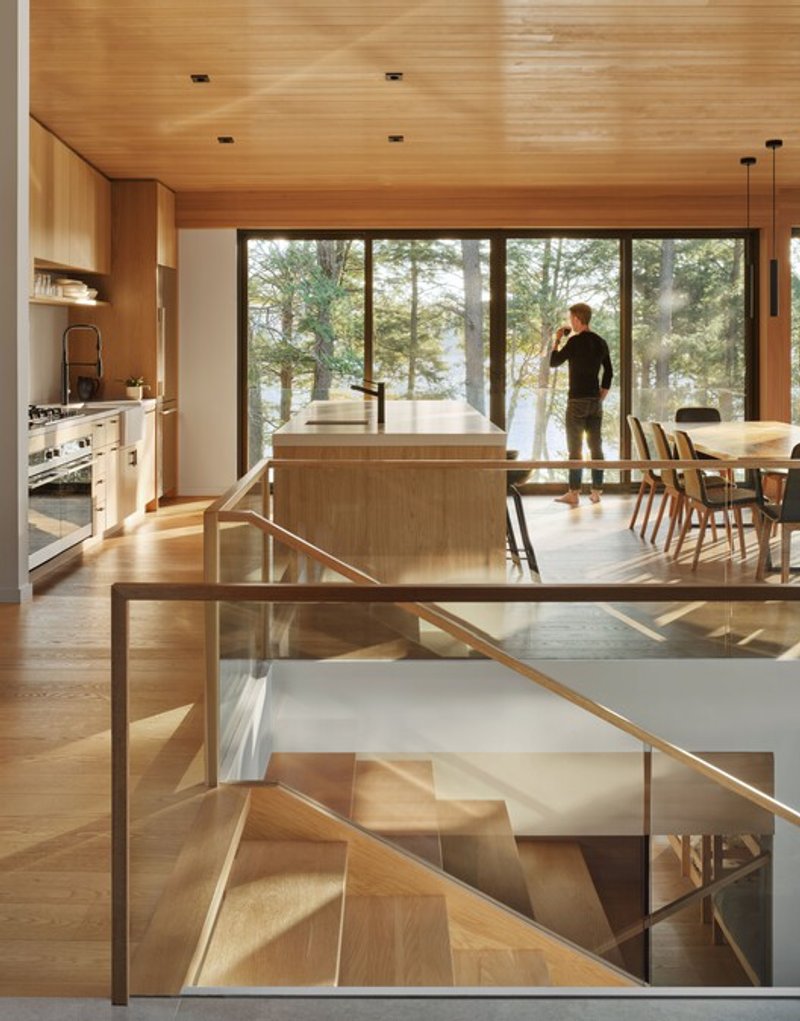
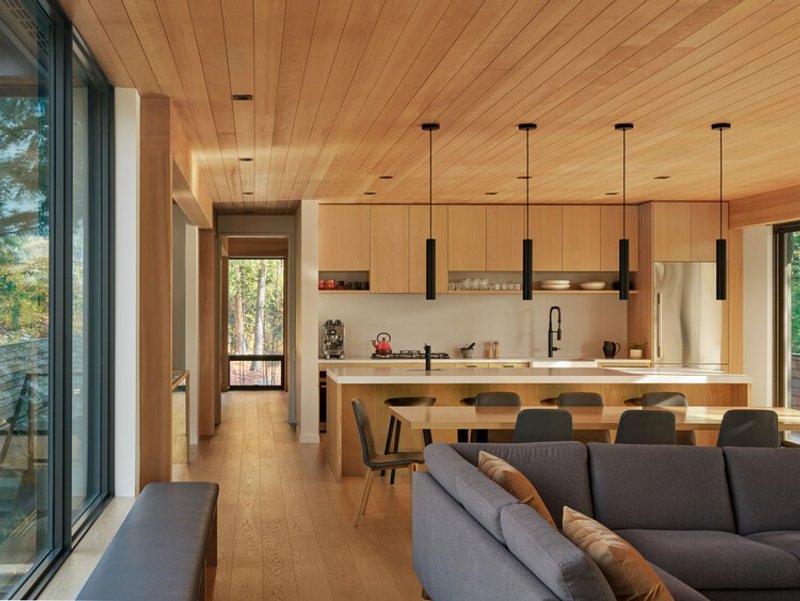
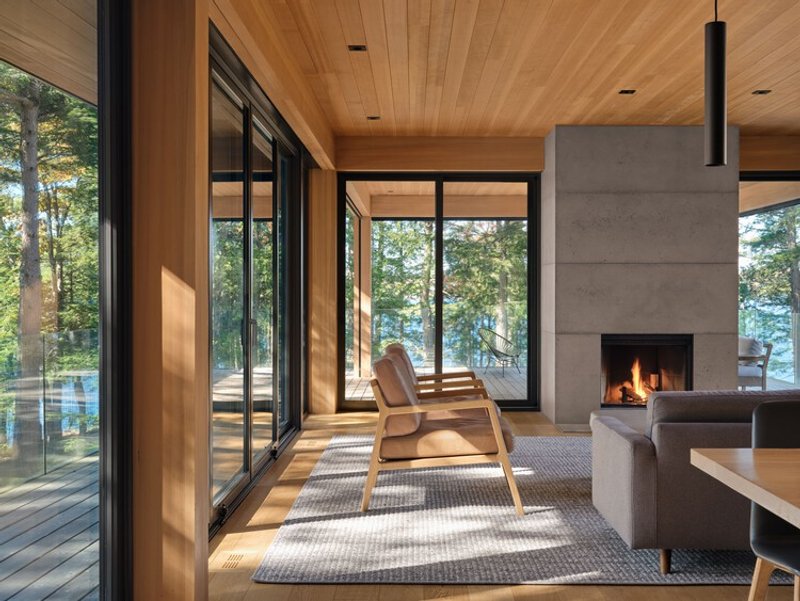
The upper level contains the primary communal functions—living, dining, and kitchen—organized in an open plan that prioritizes views and social interaction. Expansive wrap-around glazing and sliding doors dissolve the boundary between interior and exterior, opening onto a generous deck with western and southern exposures. From this vantage point, occupants experience the lake, sky, and forest as an ever-changing backdrop, with sunsets filtering through the trees and reflections shimmering across the water.
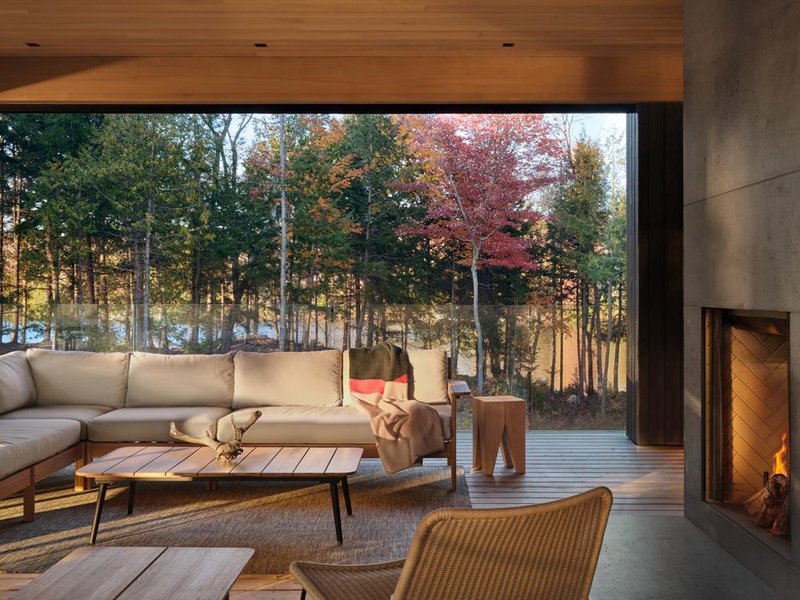
At the heart of the living area, a cast-in-place concrete hearth anchors the space, providing warmth both literally and figuratively. Seating is arranged to encourage gathering around the fire, while a custom-built window bench stretches along the glazing, offering additional places to sit, read, or simply observe the landscape. Integrated storage within the bench reinforces the project’s emphasis on efficiency and spatial economy.
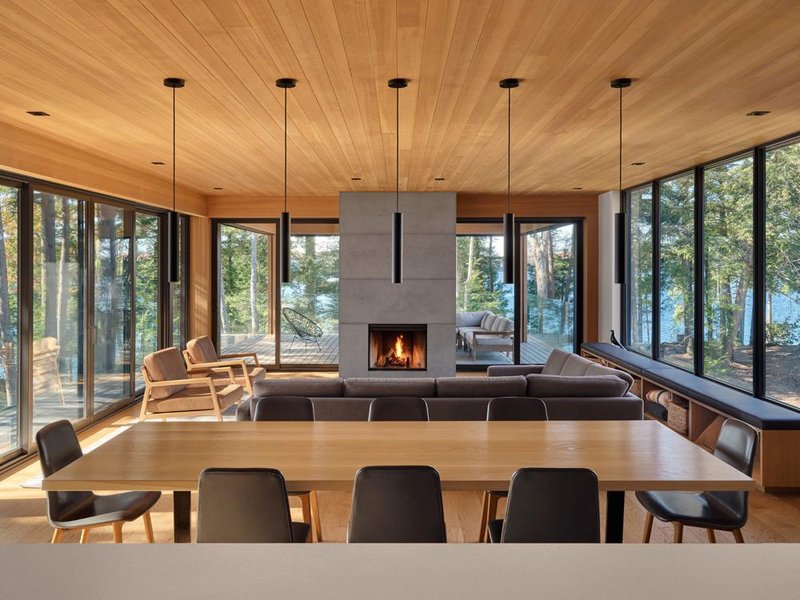
The kitchen is designed as a social hub rather than a separate service space. White oak millwork, engineered stone surfaces, and a long island with bar seating create a warm yet durable environment suited to both everyday use and large gatherings. Overhead, continuous western hemlock boards line the ceiling, softening acoustics and lending a tactile richness to the interior. This material language extends outward, with the same wood continuing onto the soffits of the exterior decks, reinforcing a sense of continuity between inside and out.
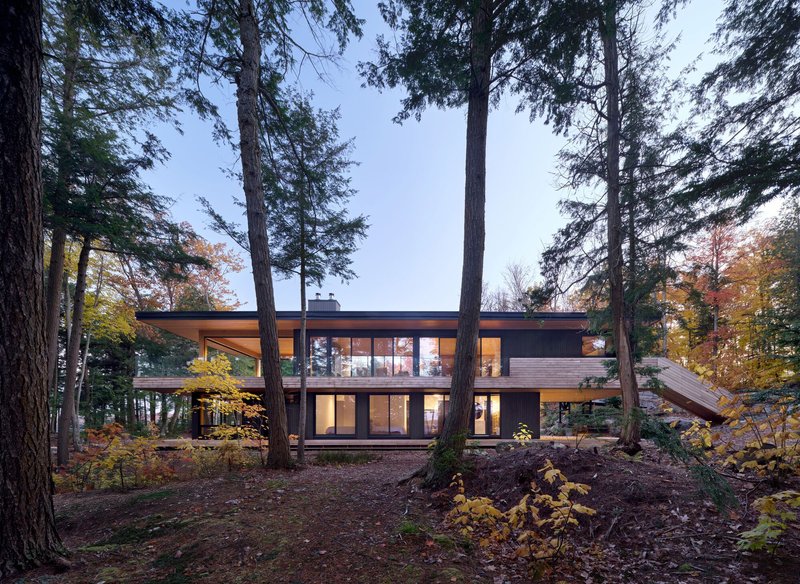
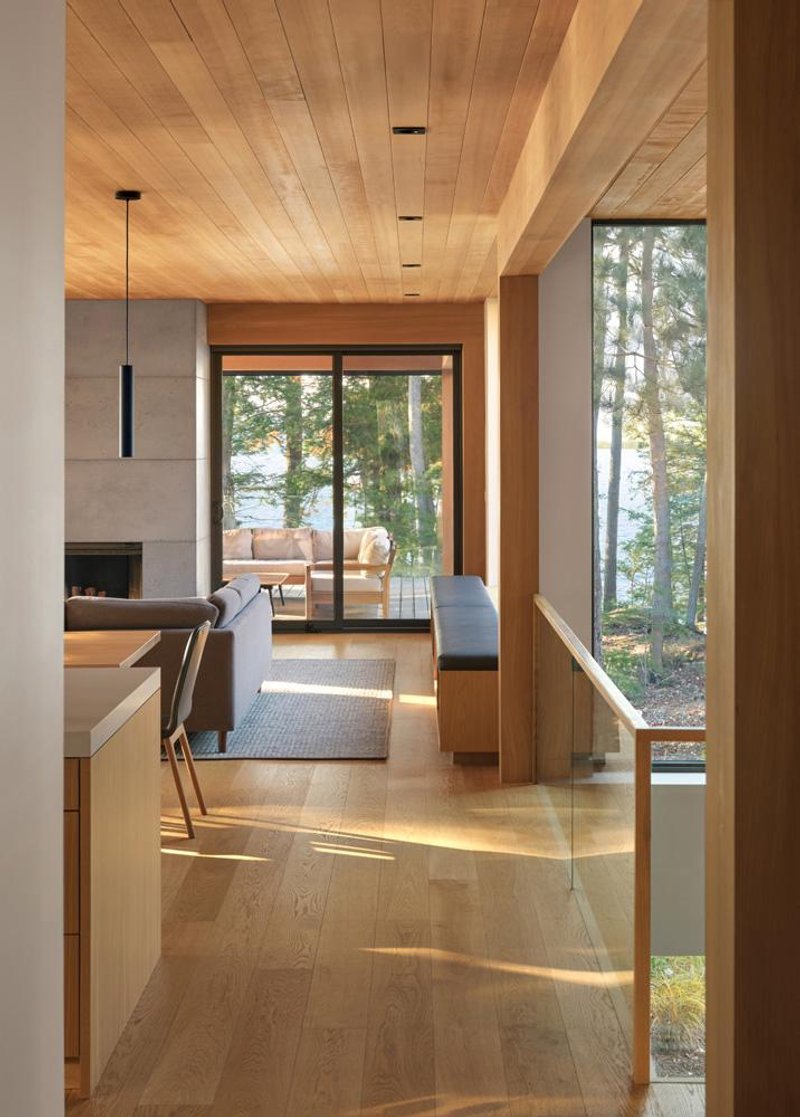
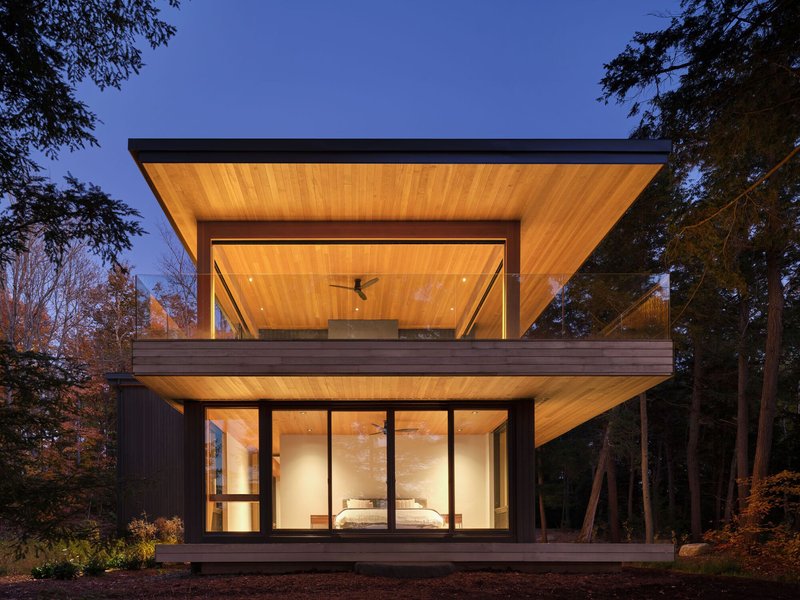
The lower level of the cottage is dedicated primarily to private spaces, housing five bedrooms that each open directly onto the forest through floor-to-ceiling windows and individual exterior entrances. This arrangement grants guests autonomy and privacy while maintaining a close relationship with the landscape. Waking up at ground level, surrounded by trees and filtered light, reinforces the sense of retreat and immersion in nature.
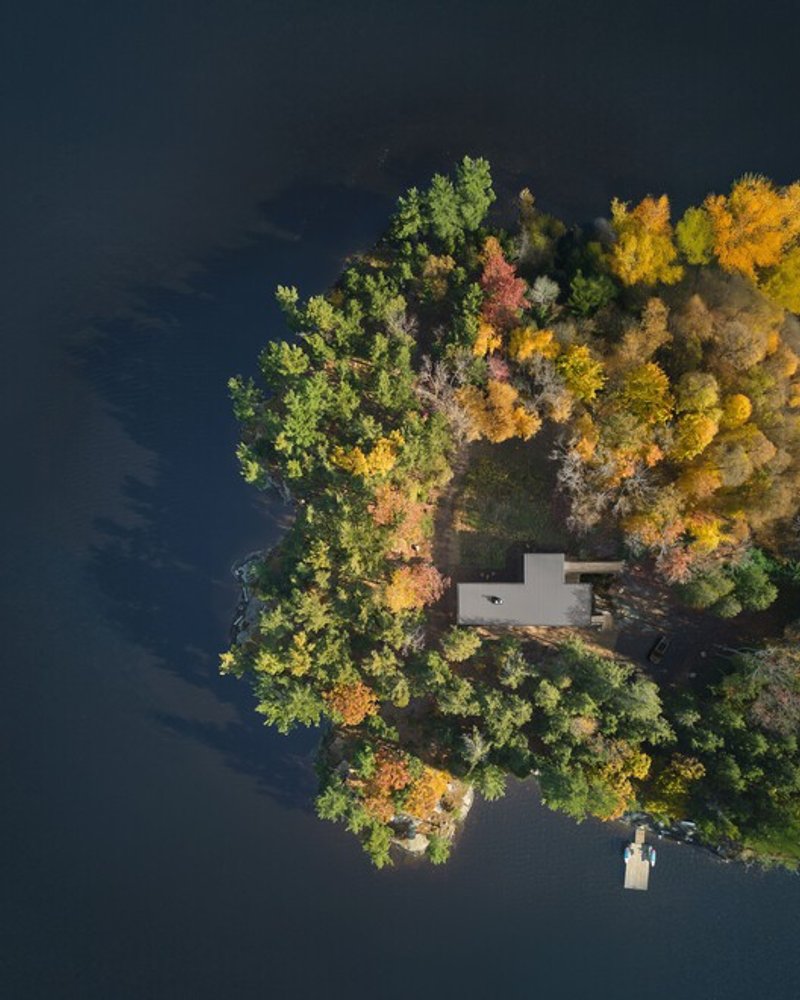
The primary bedroom, oriented toward the west, opens fully to the outdoors and includes an ensuite bathroom with an exterior shower—a deliberate nod to the clients’ love of camping and outdoor living. A sixth bedroom and associated bathroom are located on the upper level and are fully accessible, ensuring that all members of the family can share the experience of the cottage without compromise.
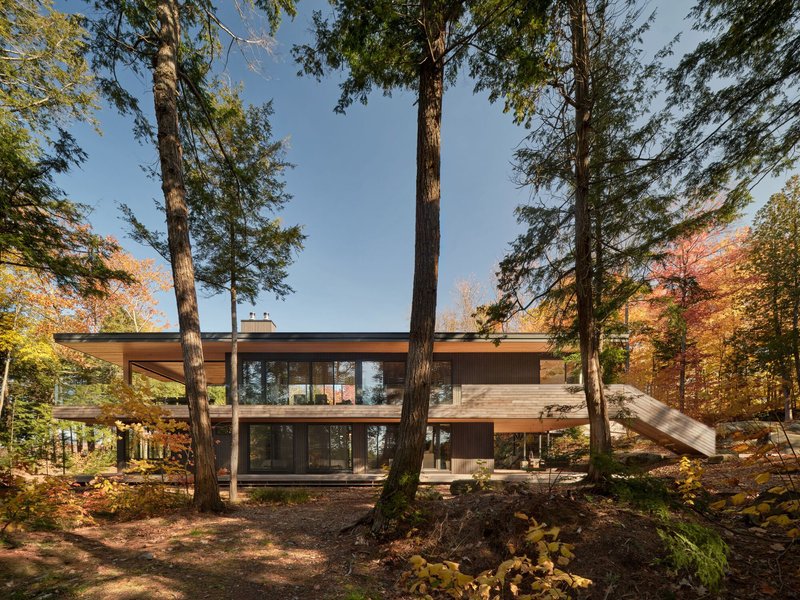
The two levels of the building are offset along their length, creating a pair of sheltered outdoor spaces that further extend the living areas into the landscape. The main upper deck functions as an outdoor living room, equipped with retractable screens for insect protection and a wood-burning fireplace that mirrors the interior hearth. This allows the deck to be used comfortably across seasons, even as temperatures drop. Below, a shaded deck tucked against the bedrock remains cool during summer months, benefiting from natural cross-ventilation and the thermal mass of the stone.
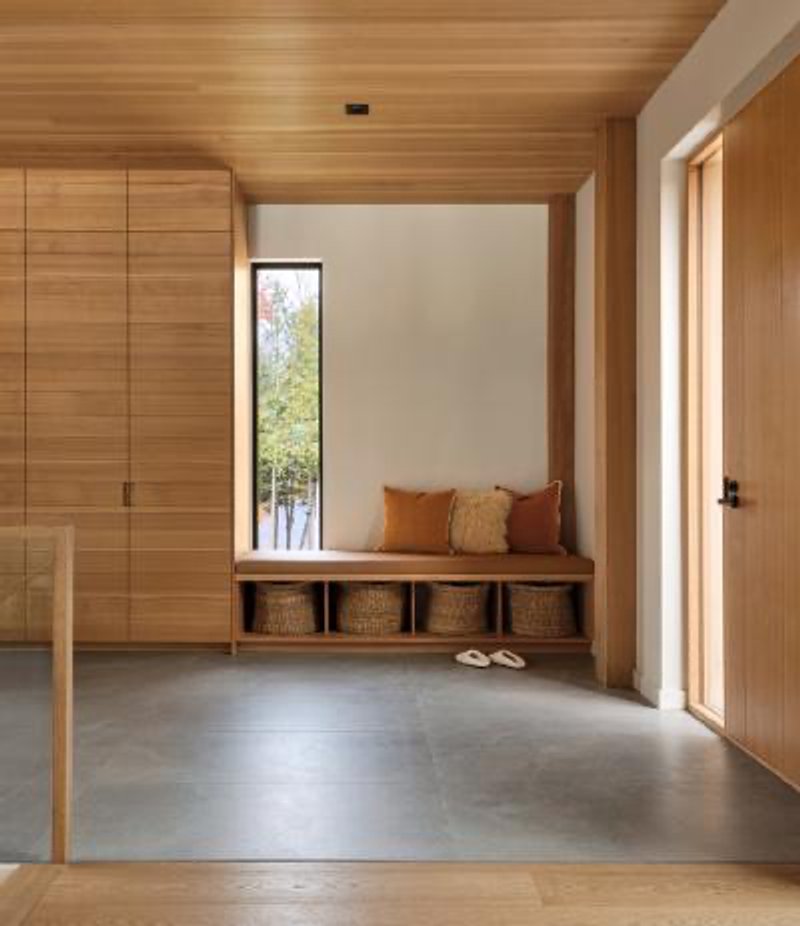
Sustainability is embedded throughout the project, not as a visual statement but as a quiet, integrated system. The cottage operates entirely off-grid, powered by a substantial solar array and designed for full winterization. Locally milled and sustainably harvested wood is used extensively, serving as both structure and finish. The exterior is clad in greyed cedar and charcoal-stained spruce, allowing the building to visually recede into the forest, while the interior palette of oak and hemlock creates warmth and comfort.
Rather than striving for architectural spectacle, Long Lake Cottage finds its strength in restraint. Its success lies in the careful calibration of form, material, and spatial organization to support human connection—both to one another and to the surrounding environment. By elevating communal spaces into the canopy and grounding private rooms within the forest floor, the design offers a nuanced interpretation of retreat living, one that is inclusive, sustainable, and deeply rooted in place.
In an era where wilderness architecture often risks either overstatement or nostalgic retreat, Long Lake Cottage proposes a quieter alternative: a home that listens to its site, accommodates diverse needs, and invites its occupants to slow down and live in sync with nature’s rhythms.
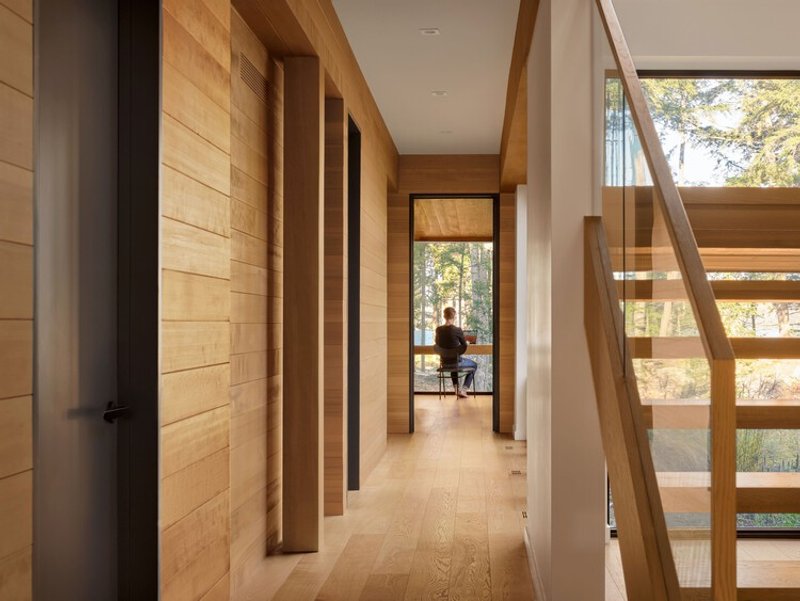
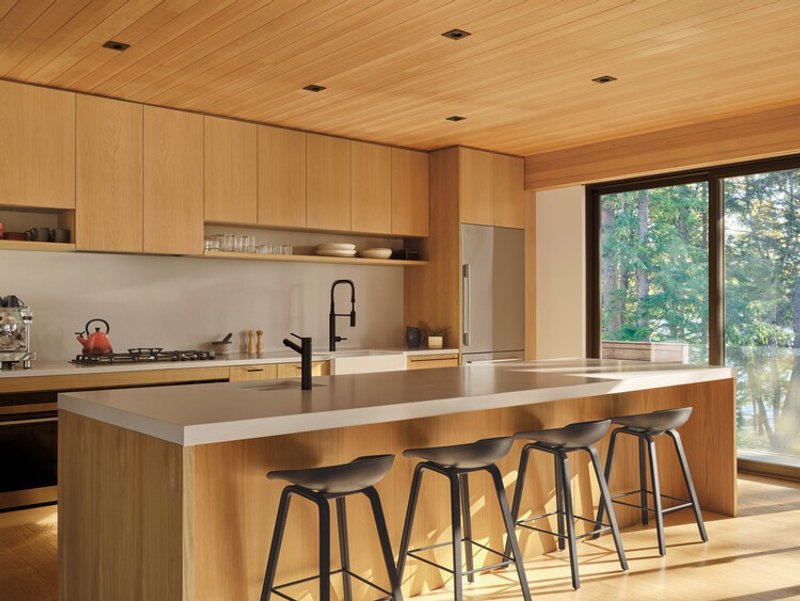
All the Photographs are works of Riley Snelling




Popular Articles
Popular articles from the community

Split House: A Compact Urban Home Blending Privacy, Light, and Flexible Living in Japan
Compact Japanese home featuring DOMA space, flexible café potential, passive lighting, privacy zoning, and sustainable urban living design.
Alton Cliff House: A Harmonious Retreat by f2a Architecture in Lake Country, Canada
Alton Cliff House blends corten steel, prefabrication, and sustainable design, creating a luxurious, energy-efficient retreat perched on Canadian cliffs.
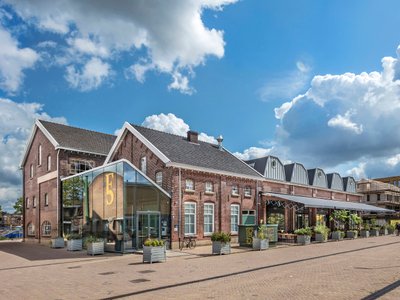
Fifth NRE Jazz Club – De Bever Architecten: Eindhoven’s Revitalized Cultural Hub
Historic gas factory transformed into Fifth NRE Jazz Club blending modern sustainability, jazz culture, dining, and heritage architecture seamlessly.

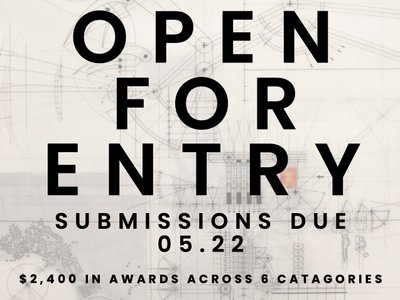
The Ken Roberts Memorial Delineation Competition (Krob)
As the most senior architectural drawing competition currently in operation anywhere in the world, it draws hundreds of entries each year, awarding the very best submissions in a series of medium-based categories.


Similar Reads
You might also enjoy these articles
The Ken Roberts Memorial Delineation Competition (Krob)
As the most senior architectural drawing competition currently in operation anywhere in the world, it draws hundreds of entries each year, awarding the very best submissions in a series of medium-based categories.

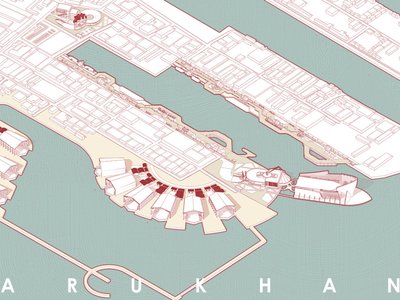
Waterfront Redevelopment and Urban Revitalization in Mumbai: Forging a New Dawn for Darukhana
A transformative waterfront redevelopment project reimagining Darukhana’s shipbreaking heritage into an inclusive urban future.
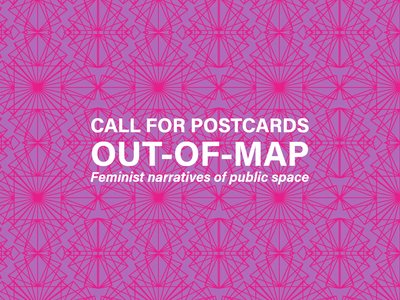
OUT-OF-MAP: A Call for Postcards on Feminist Narratives of Public Space
Rhizoma Design and Research Lab invites artists, designers, architects, researchers, and students to reflect on how feminist perspectives can reshape public space. Selected works will be exhibited in Barcelona, October 2026. Submissions open until 15 April 2026.

Documentation Work on Buddhist Wooden Temple
Architectural syncretism and cultural hybridity: A comparative study of the Buddhist temples in Chattogram Hill tracks

Explore Architecture Competitions
Discover active competitions in this discipline




The International Standard for Design Portfolios


The Global Benchmark for Architecture Dissertation Awards


The Global Benchmark for Graduation Excellence


Challenge to reimagine the Iron Throne
Comments (0)
Please login or sign up to add comments
No comments yet. Be the first to comment!