
Lovell International School by Plan Architect: A Treehouse-Inspired Learning Sanctuary in Pattaya
Lovell International School blends treehouse-inspired architecture with nature, creating a playful, sustainable, and immersive learning environment for young children.


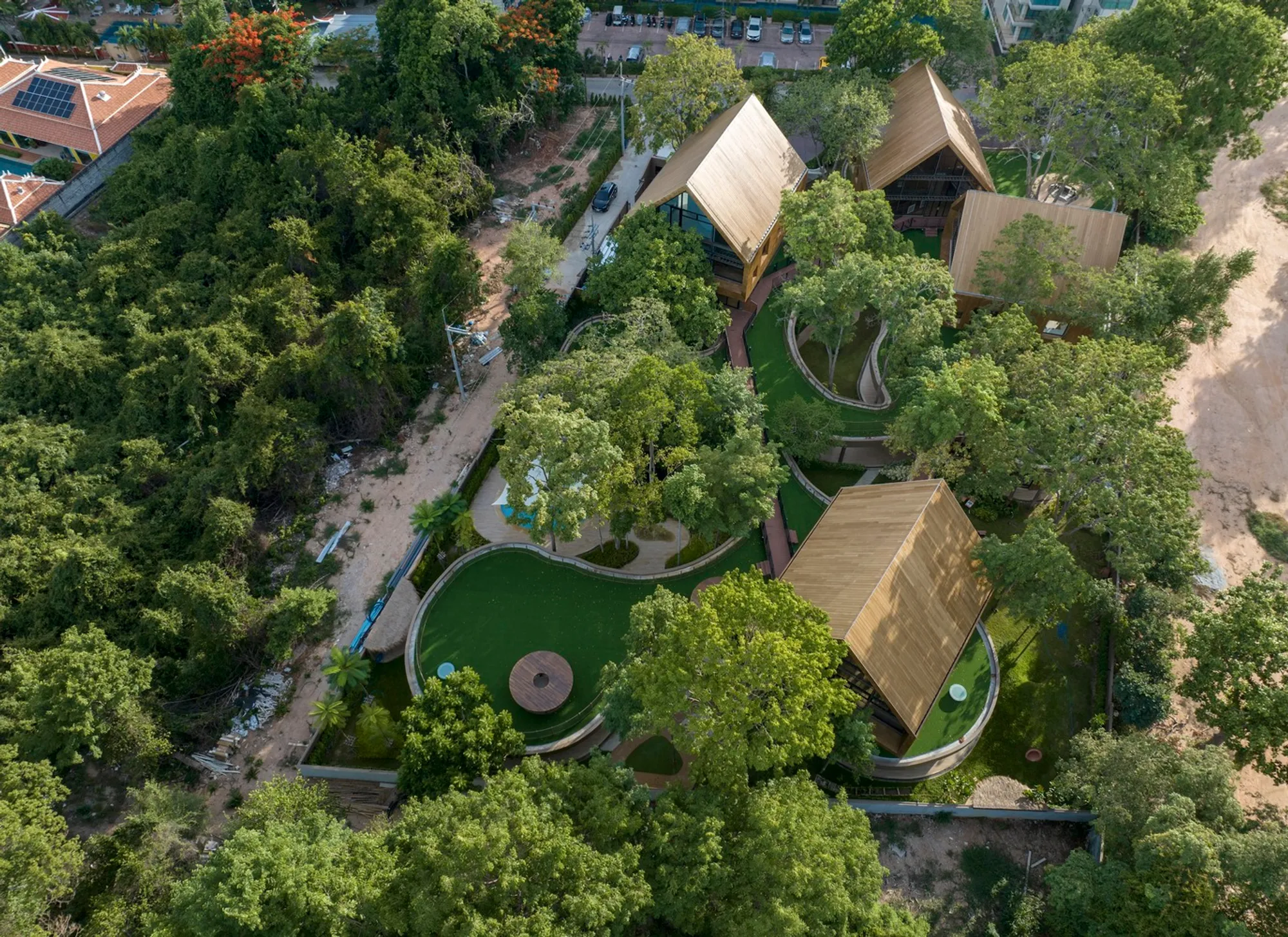
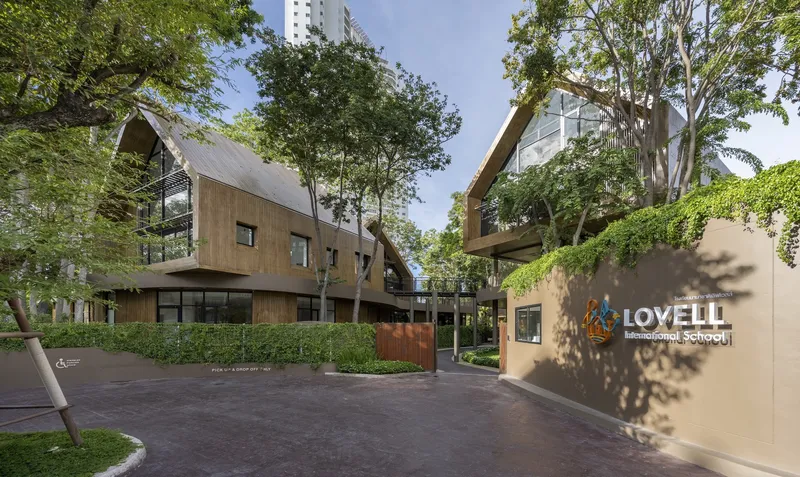
Located in Pattaya City, Thailand, Lovell International School by Plan Architect offers a refreshing vision of early childhood education, where architecture and nature seamlessly intertwine. Completed in 2023, this 2,800-square-meter international kindergarten places children at the center of a playful and immersive learning environment, designed with a deep respect for the existing landscape and a strong commitment to spatial harmony.
Nature-Inspired Design Rooted in Playful Learning
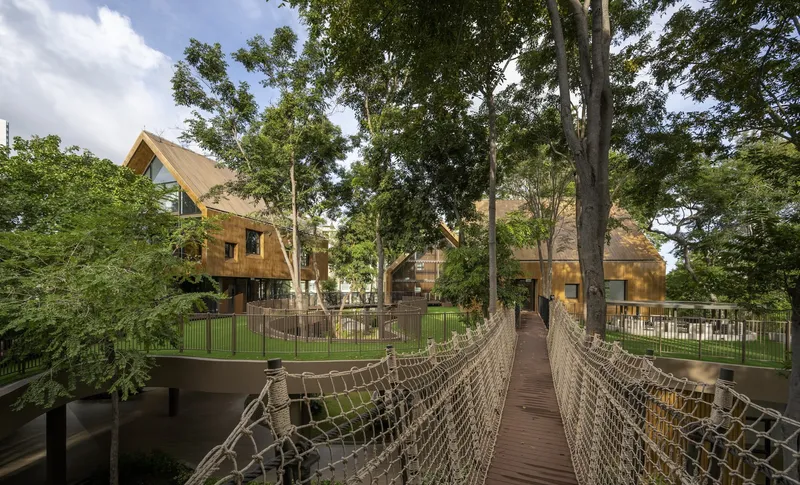
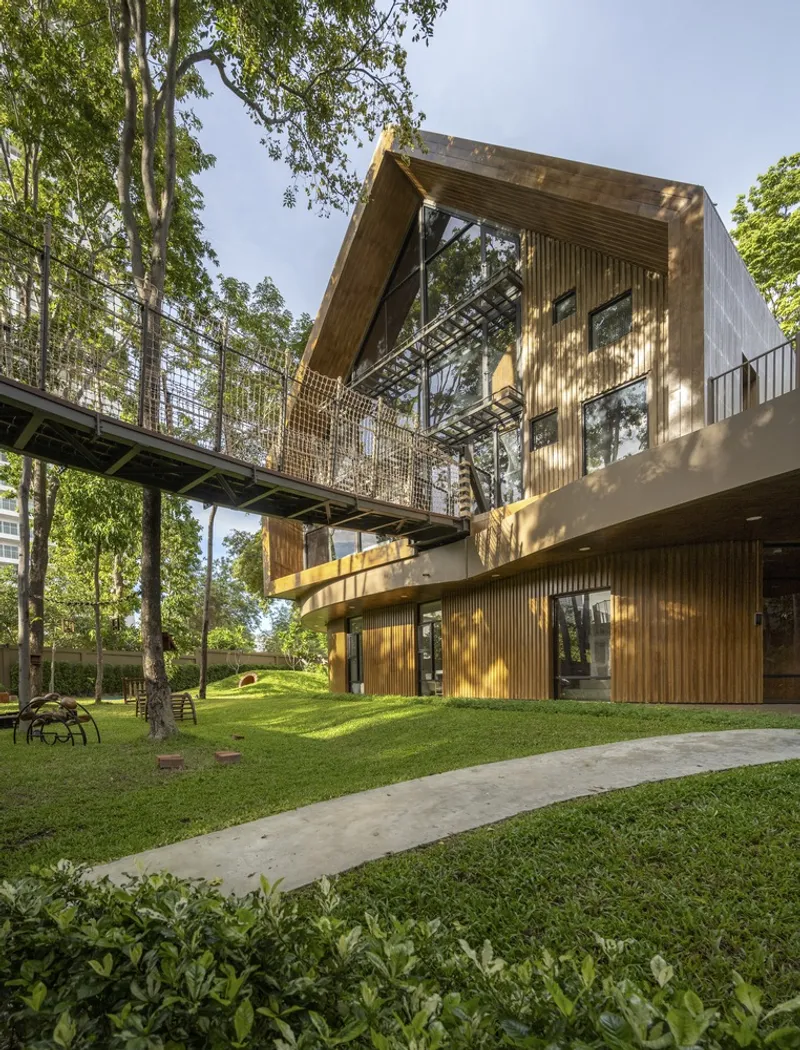
At the heart of the design is a treehouse concept, where the school’s built form gently rises amidst mature, pre-existing trees. Rather than removing these natural elements, Plan Architect embraced them—crafting an architectural layout that preserves the forest-like character of the site. This approach not only sustains the ecological integrity of the area but also sparks children's curiosity and imagination.
The school’s master plan uses a free-flowing curved form, skillfully navigating around the trees to create a sense of discovery. The building is divided into three main wings on the ground level, thoughtfully zoned according to age group and function: an under-3s wing, a kindergarten wing, and an admission area. Each zone features its own open-air courtyard, supporting a variety of outdoor learning experiences.
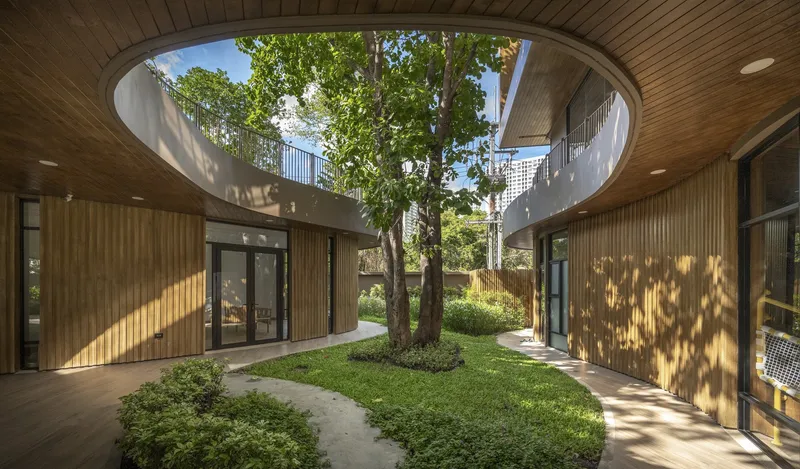
Spatial Fluidity and Indoor-Outdoor Synergy
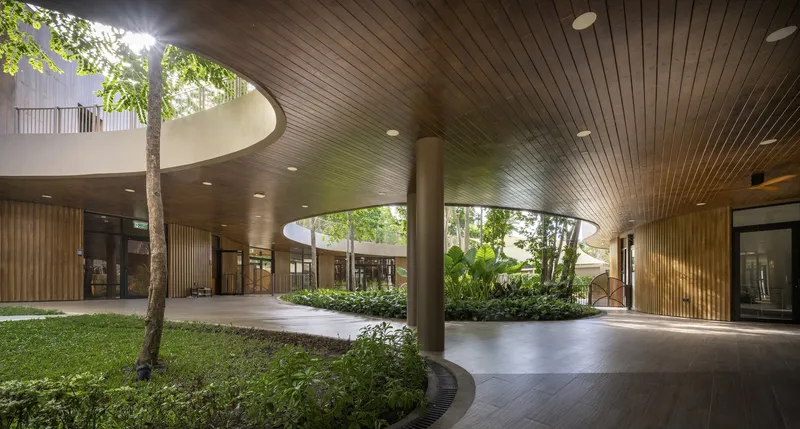
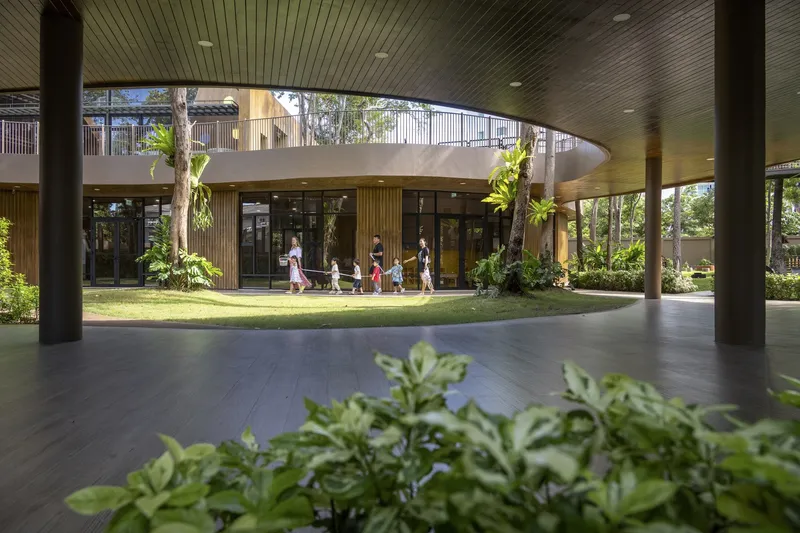
Each classroom connects directly with both an indoor play space and outdoor learning zone, enhancing flexibility throughout the year—particularly useful in response to tropical weather conditions and air quality concerns such as PM2.5 pollution. The indoor play corridors also serve as adaptive spaces for movement, exploration, and creative activities.
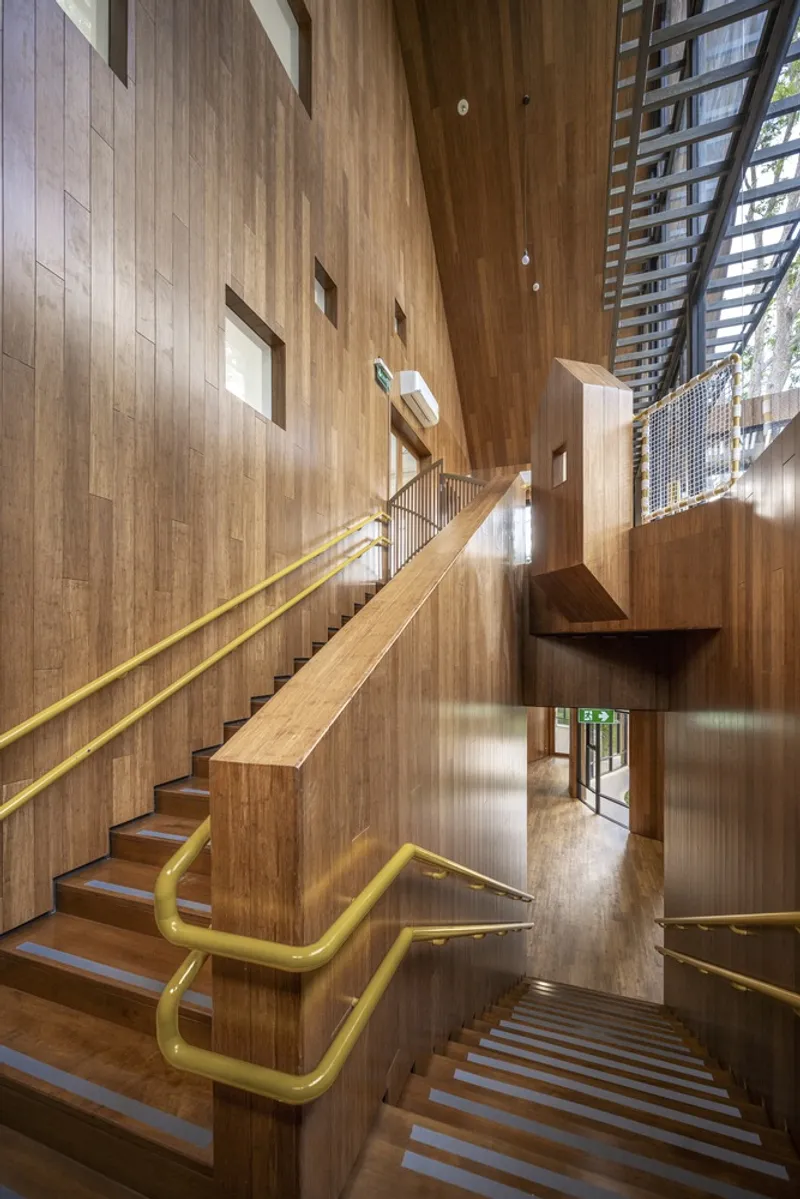
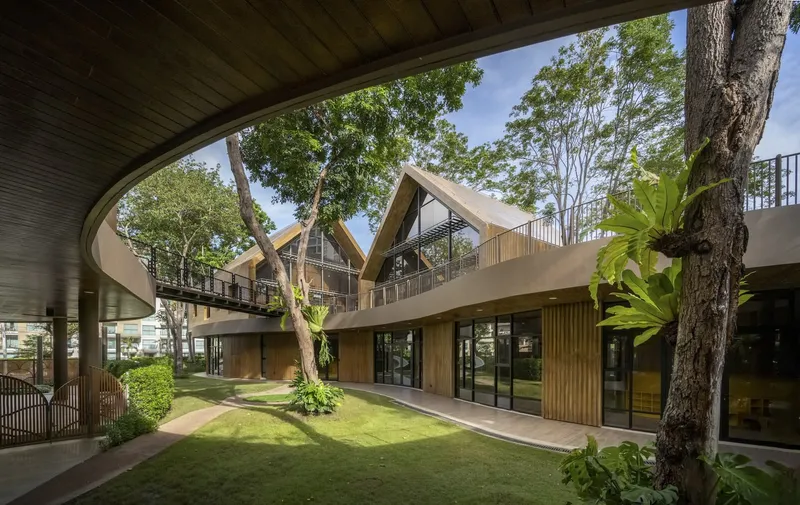
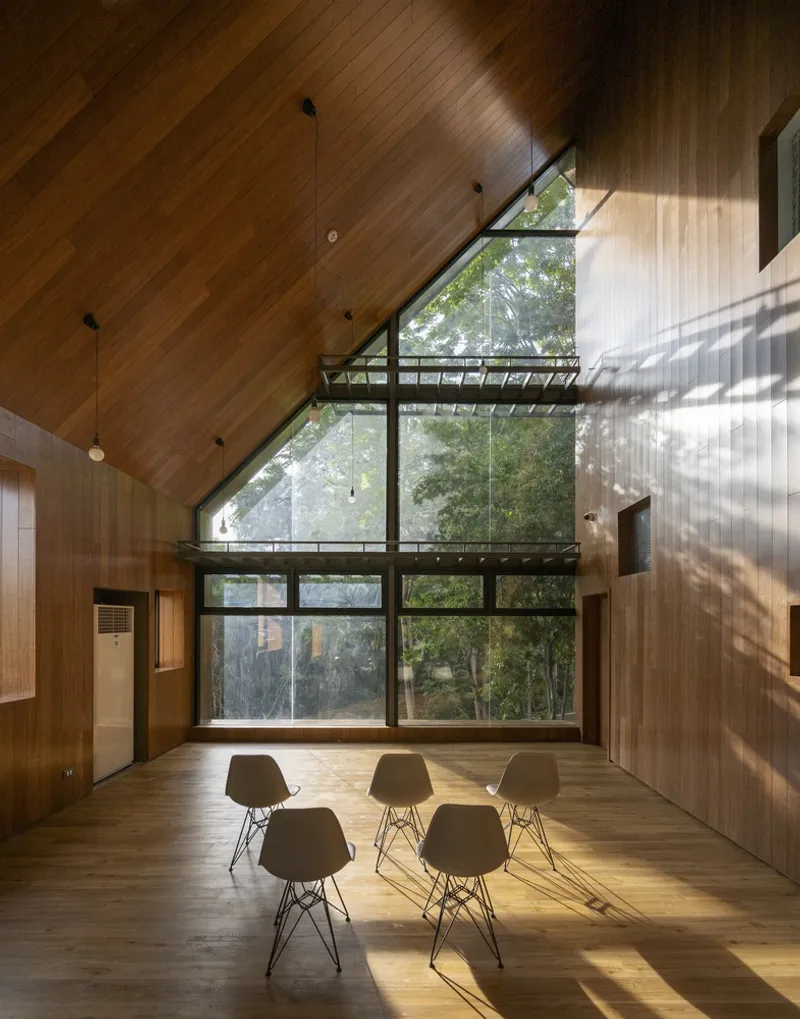
On the upper floor, the treehouse design emerges more prominently, where individual functions like the art room, cooking studio, soft gym, and multipurpose hall are elevated and expressed beneath distinct gable roofs. These spaces encourage varied learning modes and physical activities, with built-in play structures that support cognitive and motor development. The architecture here fosters imaginative play with hideouts, climbing frames, and adventure zones, providing a safe yet stimulating environment for children to explore.
Harmonious Interiors and Landscape Integration
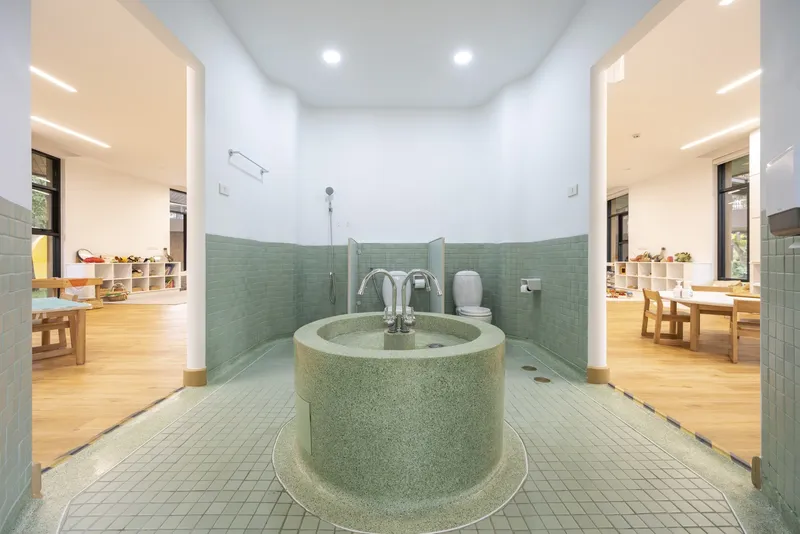
Inside, the school channels a cozy wooden aesthetic, reinforcing the concept of a "little house in the big woods." Natural materials and soft hues dominate the shared spaces, cultivating warmth and tranquility. Classrooms, in contrast, are bright and airy with white finishes to enhance light and focus during learning sessions.
The landscape design by Sukta Landscape is equally intentional. Each outdoor court is tailored to existing tree configurations and student age groups. Beyond traditional play areas, the campus integrates a green learning zone where children engage with agriculture, waste recycling, and sustainability practices. There’s also a dedicated water play area featuring a splash pool—ideal for the tropical climate—and a denser, forest-like zone that supports adventurous outdoor learning.
A Vision for Holistic and Sustainable Education
Lovell International School is more than an educational facility; it's a thoughtfully crafted ecosystem that promotes experiential learning, sustainability, and child-centered design. With a multidisciplinary team including Plan Engineering (MEP), Sukta Landscape, and material suppliers like Formica, Duragres, Shera, and Brilltile, the project delivers a model for contemporary school design in Southeast Asia.
By reimagining how architecture interacts with nature, Plan Architect has created a playful, inclusive, and ecologically sensitive school environment that supports the intellectual and emotional growth of young learners—while reminding us that even modern education spaces can take root in the forest.




Popular Articles
Popular articles from the community


Play: Fragments of Their World
Familiar architecture becomes modular playground design, creating safe spaces where displaced children can learn, connect, imagine and play.

The Earth Pod: 3D Printed Homes for Resilient Refugee Communities
The Earth Pod reimagines refugee housing through 3D printed homes made from clay, combining resilience, self-sufficiency, and rapid shelter.

Riyadh For All: Intergenerational Urban Design for Active Aging in Rabat
Riyadh For All reimagines urban design in Rabat with intergenerational co-living, adaptive courtyards, and Moroccan cultural exchange today.

The Musturak Paradise: Senior Living Architecture for a Connected Future in Temara, Morocco
The Musturak Paradise reimagines senior living architecture in Temara via private homes, social spaces, culture, community, and shared care.


Similar Reads
You might also enjoy these articles


Hodi-Mandai Geram
Project Function: Preservation and revitalization of the Intangible heritage and socio-spatial identity of the Hodi by Housing, Cultural Memory Center, Sacred Grove, landscape, local tourism economy


Olio Towers: A Mid-Rise for Performers That Fuses Housing, Rehearsal, and Stage
Located blocks from Houston's Theater District, this modular tower stacks living units around a central performance atrium.

Oasis: Modular Green Housing Carved into Dhaka's Urban Fabric
A shortlisted Plugin Housing entry reclaims unauthorized settlements in Dhaka with stepped concrete volumes, green roofs, and ventilation-driven design.

Black Hole: A Floating Megastructure for the Post-Physical Era
Emiliano Mazzarotto envisions a spherical, self-scaling arena where e-sports, digital hotels, and holographic stadiums replace traditional public space.

Explore Educational Building Competitions
Discover active competitions in this discipline



Challenge to design public laboratory


Challenge to reimagine the Iron Throne


Photograph architecture without architects


Illustrate the lost glory of Angkor Wat - Render Challenge
Comments (0)
Please login or sign up to add comments
No comments yet. Be the first to comment!