

Magnolia House: Harmonizing Architecture and Nature in Puembo, Ecuador
Magnolia House in Ecuador blends sculptural architecture with nature, featuring independent volumes, sunlight-oriented spaces, transparency, minimal materials, and family-focused design.


The Magnolia House in Puembo, Ecuador, designed byCaá Porá Arquitecturaand nicolas&nicolas in 2022, spans 350 m² and embraces a serene connection to its natural surroundings. With photography by Nicolás Provoste, the project blends clean lines, warm materials, and refined detailing, supported by manufacturers like AutoDesk, Edesa, and Simetrika.
A Fresh Take on Suburban Housing
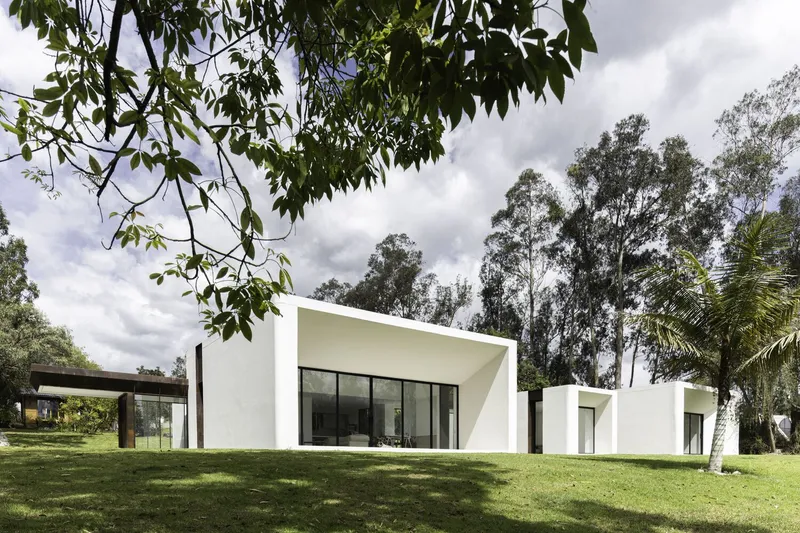
Magnolia House represents a thoughtful and alternative approach to suburban residential design. Instead of viewing the home as a mere architectural object, the project is conceived as a sequence of interconnected spaces shaped by the daily life of a family. Set in a lush suburban environment, away from the urban core, Magnolia House responds to nature and its surroundings while establishing its own symbolic and sculptural presence.
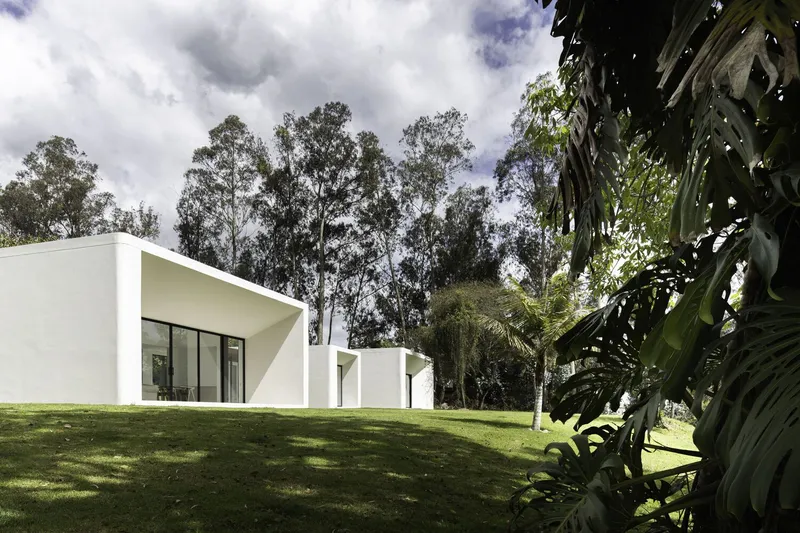
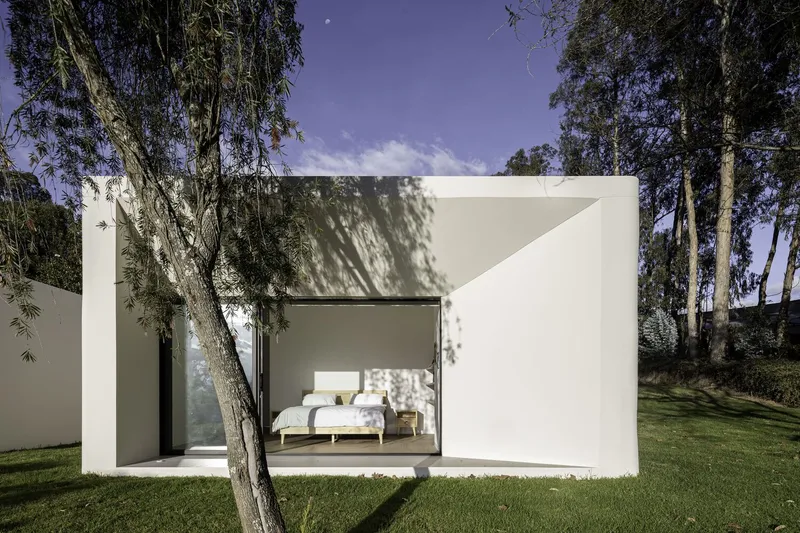
The 350 m² single-floor residence is organized into five independent volumes, each dedicated to specific activities. This partitioning allows for privacy, functionality, and spatial identity, while fostering a seamless connection with the surrounding landscape. By interweaving architecture and nature, the house transforms gardens and greenery into an extension of the interior spaces.
Spatial Organization & Sunlight Strategy
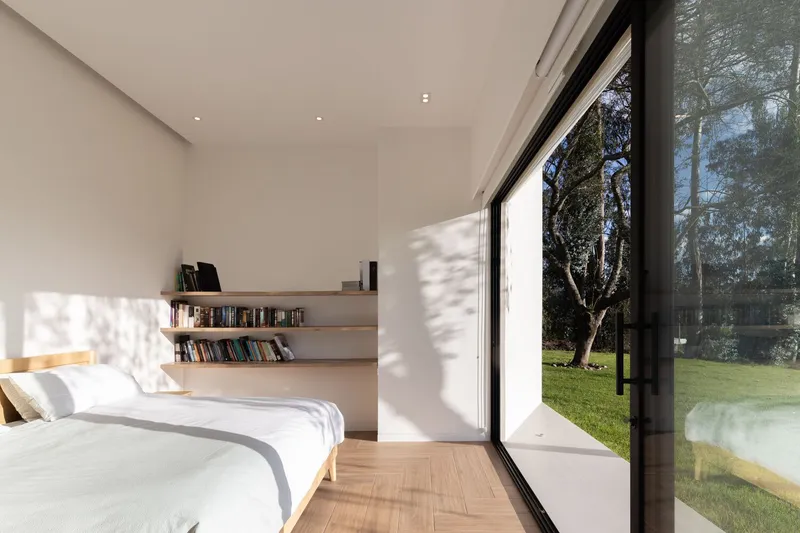
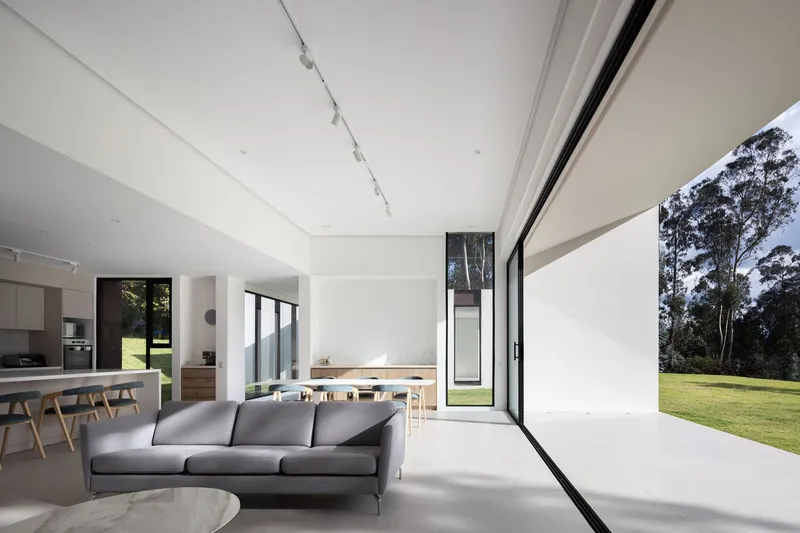
The design carefully considers sunlight orientation and natural ventilation. Private and service areas are positioned to capture the morning sun, enhancing early-day activities with natural light. Conversely, social and family spaces enjoy the afternoon sun, providing warmth and comfort when the family gathers after daily routines.
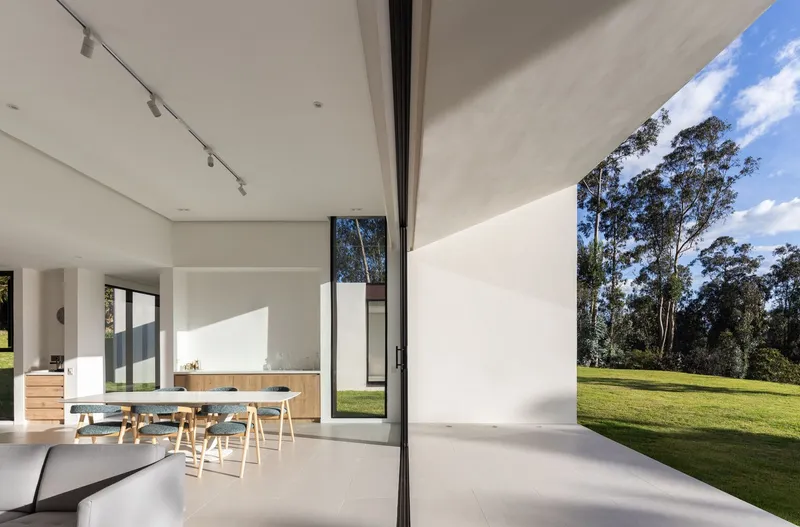
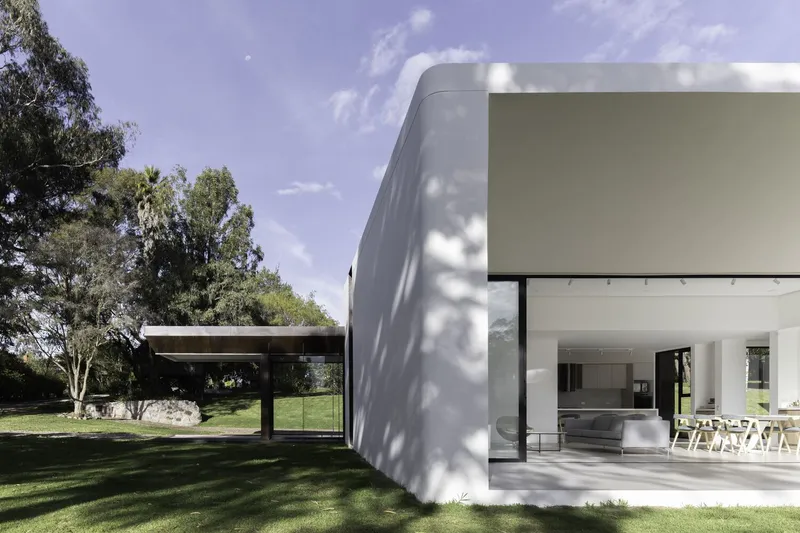
Transition spaces between the volumes are designed to feel like a garden walk, creating a fluid experience that blurs the line between interior and exterior. Concave spaces and visual openings further enhance transparency, bringing light and greenery into the home while reinforcing the sculptural quality of the architecture.
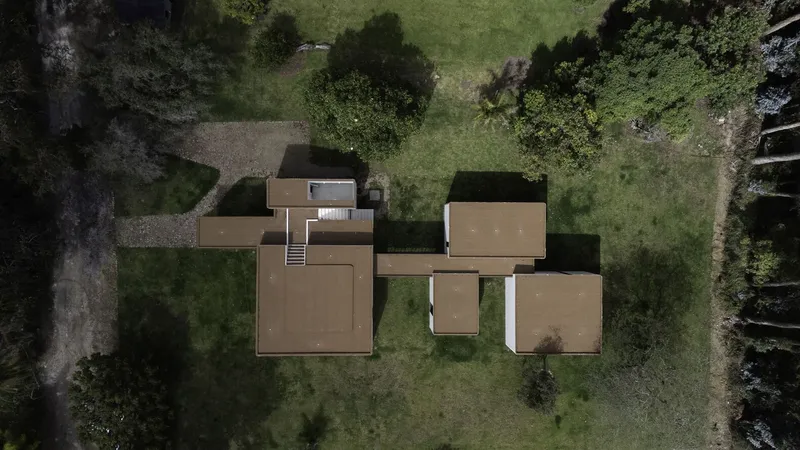
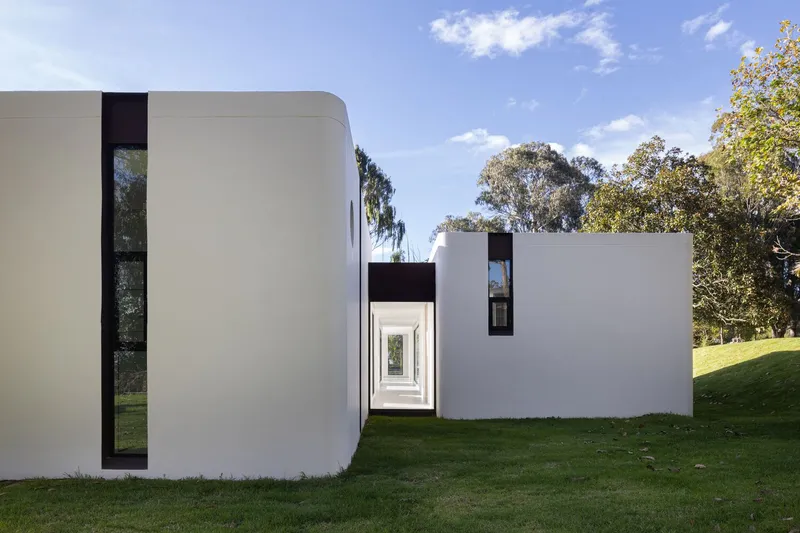
Functional Volumes with Distinct Personalities
Each volume of Magnolia House is tailored for specific activities, with variations in height, width, length, and internal finishes to reflect its purpose. Social areas are visually interconnected to encourage interaction, while private spaces maintain visual access to the outdoors for serenity and calm. Translucent bridges, crafted with rusted steel horizontal planes, introduce a more organic texture while emphasizing horizontality and spatial flow.
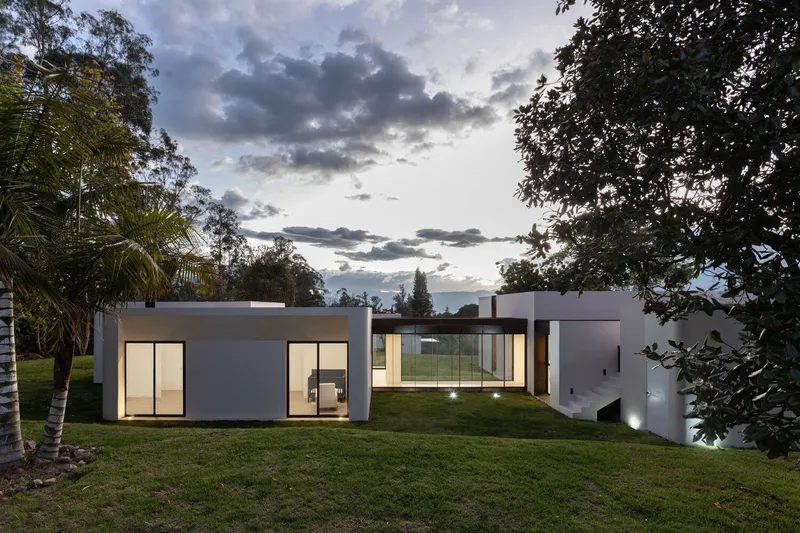
Minimalist Material Palette
The home employs a simple yet elegant material palette: smooth white planes, softened vertex lines, and continuous surfaces highlight the abstract sculptural character of the house. The juxtaposition of these white volumes against natural surroundings reinforces the concept of an architectural object that is distinct yet integrated with its context.
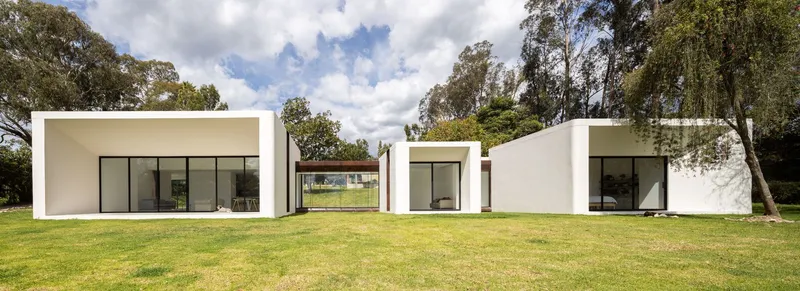
Abstract, Family-Centric Design
Magnolia House demonstrates how a suburban home can balance functionality, privacy, and family interaction. Its layout supports simultaneous or independent activities without disrupting the overall order, reflecting the needs of modern families who value both individual and collective experiences. Through abstraction, material simplicity, and thoughtful orientation, the house achieves a harmonious dialogue between nature, architecture, and daily life.


Popular Articles
Popular articles from the community

Faces of the Soviet Avant-Garde: Turning Moscow's Street Names into an Open-Air Museum
A network of sculptural installations across a Moscow residential district transforms forgotten architect names into spatial encounters with cultural memor

Singing Woman: Contemporary Architecture Inspired by Estonia’s Voice and the Sea
Singing Woman turns Estonia’s song culture into flowing opera house architecture, blending public life, landscape, sea, and national memory.
Temporary Home for Dogs: A Reversed Zoo Rethinks Animal Shelter Architecture
In Bucharest, a sinuous corridor and freed landscape flip the logic of containment, designing a shelter that works to make itself unnecessary.

The Amber Palace Opera: A Geological Fiction Surfaces on Tallinn's Baltic Waterfront
Pierre Brillard reimagines a Baltic legend as a public landscape, opera house, and waterfront promenade rooted in Tallinn's coastal identity.

Similar Reads
You might also enjoy these articles


Hodi-Mandai Geram
Project Function: Preservation and revitalization of the Intangible heritage and socio-spatial identity of the Hodi by Housing, Cultural Memory Center, Sacred Grove, landscape, local tourism economy


Olio Towers: A Mid-Rise for Performers That Fuses Housing, Rehearsal, and Stage
Located blocks from Houston's Theater District, this modular tower stacks living units around a central performance atrium.

Oasis: Modular Green Housing Carved into Dhaka's Urban Fabric
A shortlisted Plugin Housing entry reclaims unauthorized settlements in Dhaka with stepped concrete volumes, green roofs, and ventilation-driven design.

Black Hole: A Floating Megastructure for the Post-Physical Era
Emiliano Mazzarotto envisions a spherical, self-scaling arena where e-sports, digital hotels, and holographic stadiums replace traditional public space.

Explore Architecture Competitions
Discover active competitions in this discipline

Challenge to reimagine the Iron Throne

Photograph architecture without architects

Illustrate the lost glory of Angkor Wat - Render Challenge

Design challenge to reuse E-waste
Comments (0)
Please login or sign up to add comments
No comments yet. Be the first to comment!