

Mahamudra Hall by ABARI: A Sacred Fusion of Bamboo Architecture and Himalayan Spirituality
Mahamudra Hall by ABARI blends bamboo and rammed earth architecture in Nepal’s mountains, creating a sustainable, spiritual space for meditation and renewal.


A Sanctuary of Stillness in the Mountains of Nepal
Perched high in the tranquil mountains of Dakshinkali, just an hour from Kathmandu, Mahamudra Hall by ABARI (Architecture, Building, and Alternative Research Institute) stands as a modern manifestation of Himalayan spirituality and ecological craftsmanship. Designed for the Mahamudra Meditation Center, this 600-square-meter hall redefines cultural architecture by blending sacred geometry, natural materials, and sustainable construction in harmony with the Himalayan landscape.
Founded under the guidance of Chogyal Rinpoche, a young Tibetan Buddhist master, the meditation center represents his vision of bringing once-esoteric Buddhist teachings into the lives of ordinary people. The architecture itself becomes an instrument of mindfulness—a physical embodiment of spiritual aspiration, rooted in the belief that the built environment can radiate calm and awareness.
Architectural Design: A Bamboo Mandala in Motion
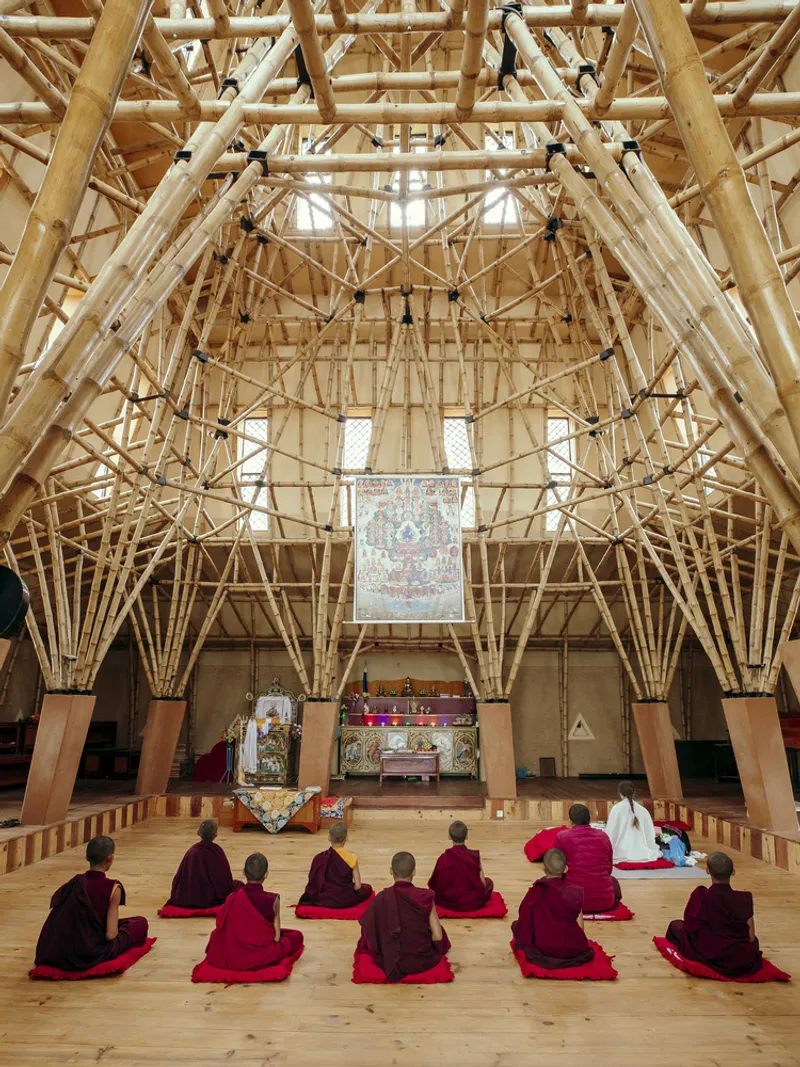
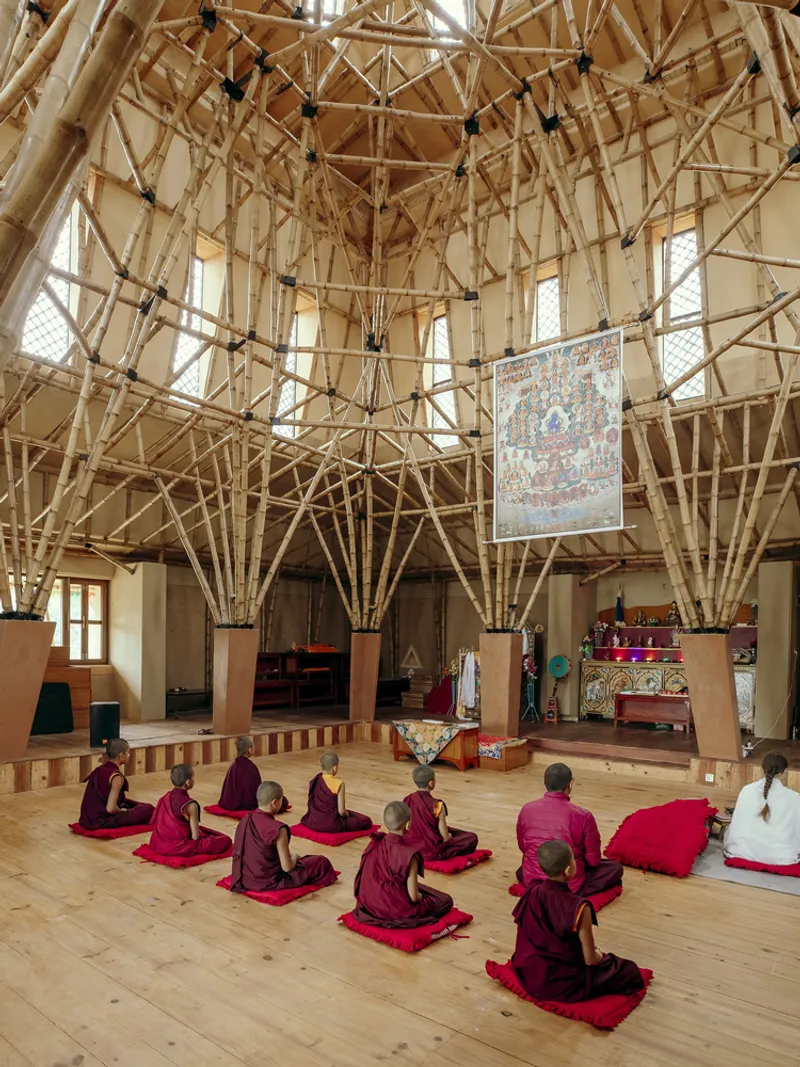
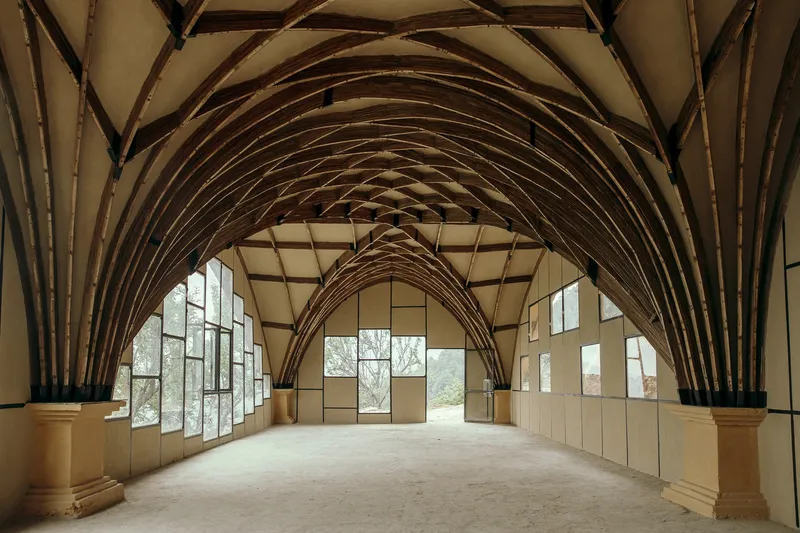
At the heart of the complex lies Mahamudra Hall, a majestic structure defined by its six-tiered bamboo roof, rising 16 meters into the sky. Handcrafted from locally sourced bamboo, the truss system forms a mandala-like geometry, symbolizing the harmony between the material and the metaphysical. This intricate construction makes it one of South Asia’s tallest bamboo structures, and a pioneering example of regenerative architectural innovation.
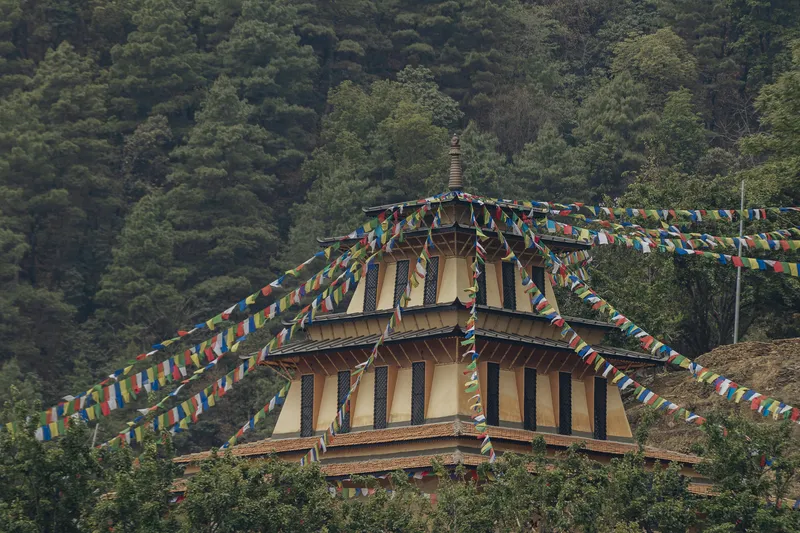
The square plan of the meditation hall mirrors traditional sacred proportions, while its tall copper roof channels spiritual energy upward—connecting the earthly and the divine. Every architectural decision serves a symbolic and functional purpose: angled and perforated windows allow sunlight to enter with varying intensity throughout the day, creating a meditative rhythm of light and shadow that guides daily practice within.
Sustainable Materiality: Building with the Earth
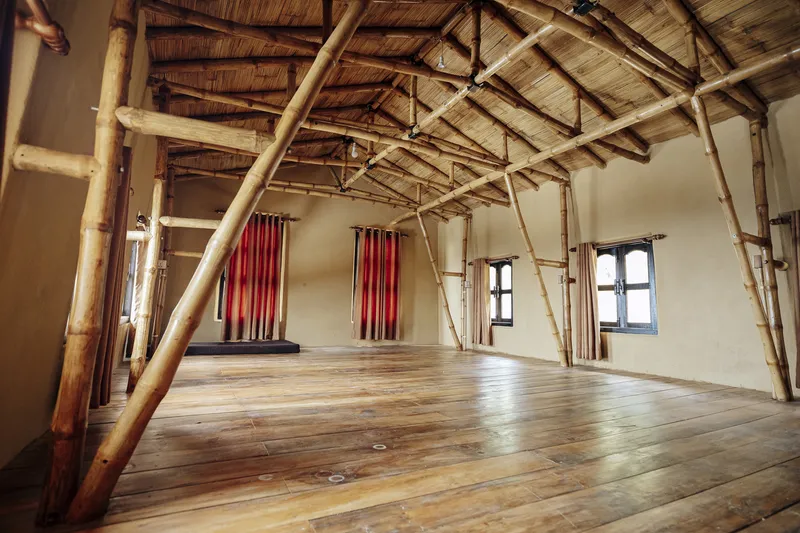
True to ABARI’s ethos of ecological stewardship, Mahamudra Hall is constructed almost entirely from bamboo, rammed earth, and copper—materials sourced from the local landscape. The rammed earth walls breathe naturally, maintaining a stable indoor microclimate and enhancing the sensory experience of meditation.
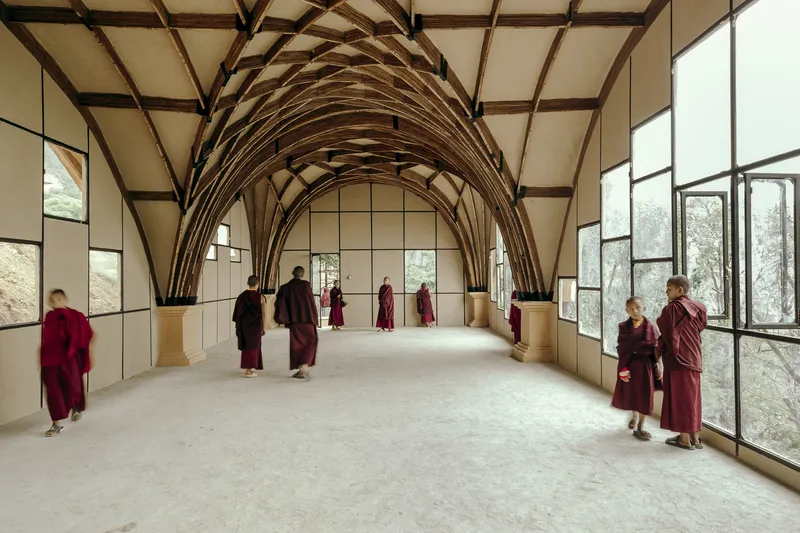
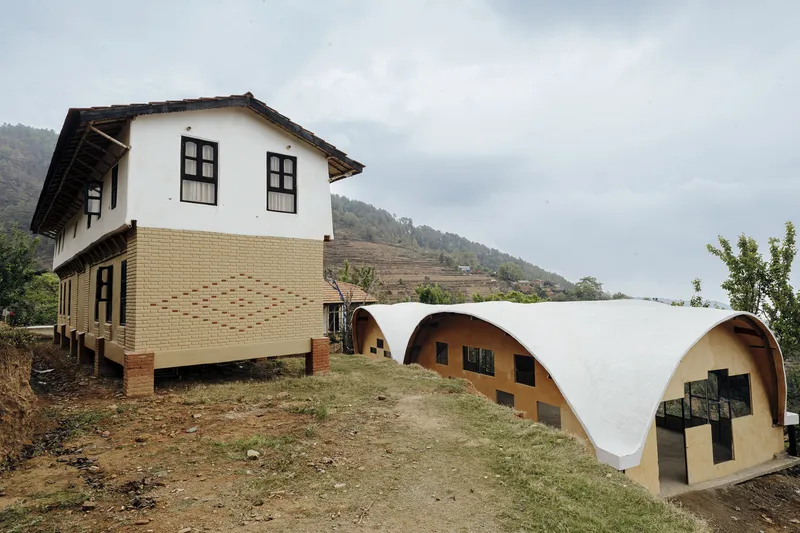
Beyond the main hall, other structures within the center—such as the dining hall and accommodations—continue the narrative of sustainability and comfort. The dining hall’s curved bamboo frame and wattle-and-daub walls embrace the meditators in organic protection from the rugged mountain weather. Meanwhile, residential spaces are insulated with sheep wool and finished with earthen plaster, creating a serene, thermally balanced environment for long retreats.
Ecological Regeneration: Bamboo as a Living System
ABARI’s work extends beyond architecture into landscape restoration and material regeneration. The firm has initiated bamboo plantations along degraded riverbanks, transforming erosion-prone areas into thriving ecosystems. This approach not only ensures a continuous supply of building material but also strengthens local biodiversity and supports community livelihoods.
By integrating architecture with ecology, Mahamudra Hall stands as a living example of regenerative design, where human habitation and environmental renewal coexist symbiotically.
Architecture as Meditation
Mahamudra Hall is not just a building—it is an invitation to mindfulness. Every curve of bamboo, every wall of earth, and every ray of filtered sunlight contributes to a holistic spatial experience rooted in Buddhist philosophy and sustainable practice.
In an era when architectural spectacle often overshadows spiritual and ecological sensitivity, ABARI’s Mahamudra Hall restores balance—reminding us that true architecture can still be both sacred and sustainable.



Popular Articles
Popular articles from the community


Co-Life: Senior Housing Design That Reconnects Older Adults With the City
Co-Life reimagines senior housing design through healing gardens, shared streets, workshops, and a sustainable community across generations.

Hill & Cross Opera: Sculptural Opera House Architecture Shaped by Tallinn’s Landscape and Identity
Hill & Cross Opera reimagines opera house architecture in Tallinn through its sculptural hill, civic plaza, glass wave and a luminous cross.

Co-life: Sustainable Architecture for Age-Friendly Community Living
Co-life reimagines sustainable architecture for seniors through courtyards, rammed earth, shared gardens, and spaces designed for belonging.

Conexión: Biophilic Design Reimagines High-Rise Living in Hong Kong
Conexión reimagines high-rise living in Hong Kong through biophilic design, green facades, shared spaces, daylight, water and nature within.


Similar Reads
You might also enjoy these articles


Hodi-Mandai Geram
Project Function: Preservation and revitalization of the Intangible heritage and socio-spatial identity of the Hodi by Housing, Cultural Memory Center, Sacred Grove, landscape, local tourism economy


Olio Towers: A Mid-Rise for Performers That Fuses Housing, Rehearsal, and Stage
Located blocks from Houston's Theater District, this modular tower stacks living units around a central performance atrium.

Oasis: Modular Green Housing Carved into Dhaka's Urban Fabric
A shortlisted Plugin Housing entry reclaims unauthorized settlements in Dhaka with stepped concrete volumes, green roofs, and ventilation-driven design.

Black Hole: A Floating Megastructure for the Post-Physical Era
Emiliano Mazzarotto envisions a spherical, self-scaling arena where e-sports, digital hotels, and holographic stadiums replace traditional public space.

Explore Meditation Space Competitions
Discover active competitions in this discipline



Challenge to reimagine the Iron Throne


Photograph architecture without architects


Illustrate the lost glory of Angkor Wat - Render Challenge


Bring back Drive In's
Comments (0)
Please login or sign up to add comments
No comments yet. Be the first to comment!