
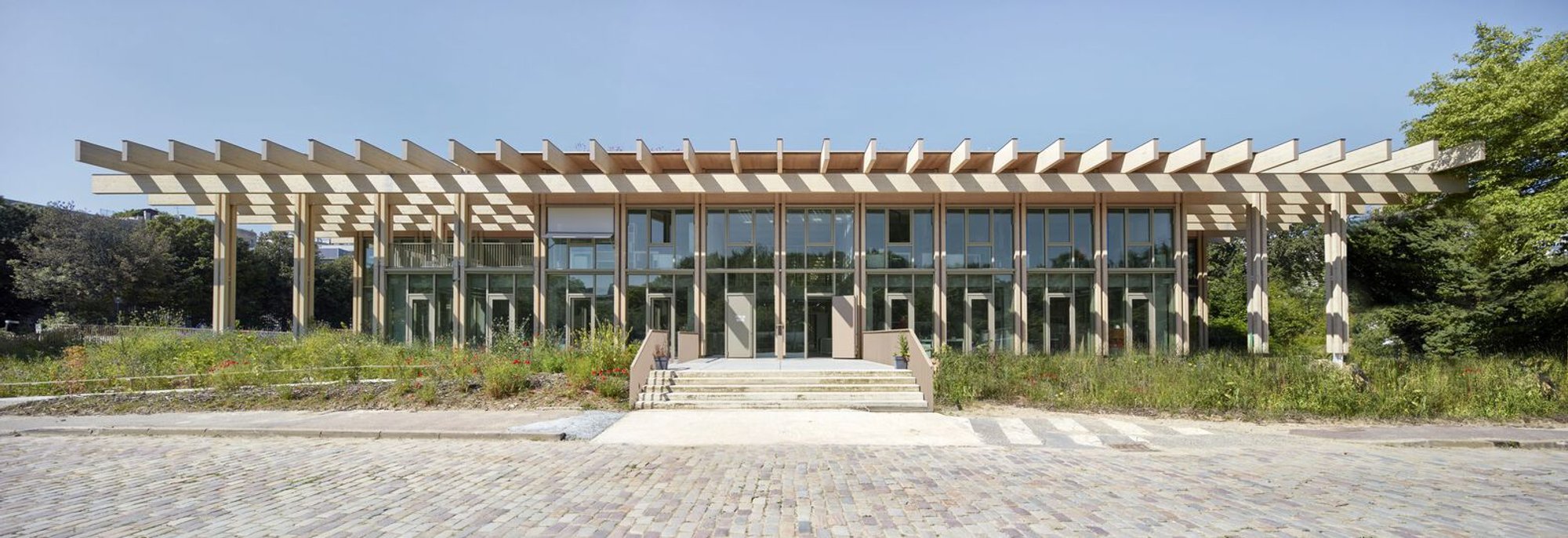
Maison des Services Latécoère by Brenac & Gonzalez & Associés
A low-carbon wooden pavilion in Toulouse, blending Japanese-inspired design, generous terraces, and frugal architecture to foster connection within a park setting.

A Low-Carbon Wooden Pavilion in the Park, Toulouse
Located in Toulouse, France, the Maison des Services Latécoère, designed by Brenac & Gonzalez & Associés, reinterprets the idea of a corporate service building as an open, welcoming pavilion set within a landscaped park. Completed in 2021 and covering an area of 1,953 m², the project demonstrates how frugal architecture, wood construction, and low-tech design strategies can coexist within a highly technological corporate environment.
Conceived as a place of gathering and connection, the building acts as a social and spatial hinge for the Latécoère campus. Architect Xavier Gonzalez describes it as “a pavilion in the park, a place people want to go to—like a party pavilion.” This philosophy guided the project’s architectural language, material choices, and spatial organization, resulting in a calm yet expressive structure that prioritizes human interaction and environmental responsibility.
Pavilion Typology and Architectural Concept
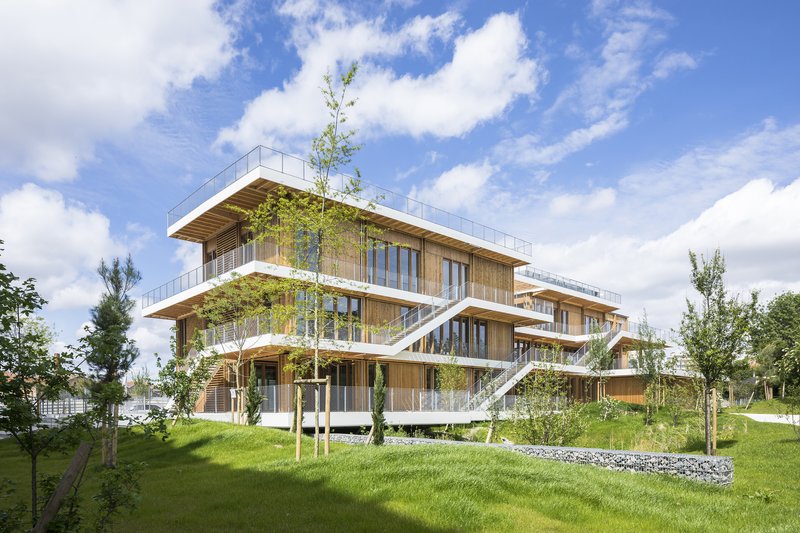
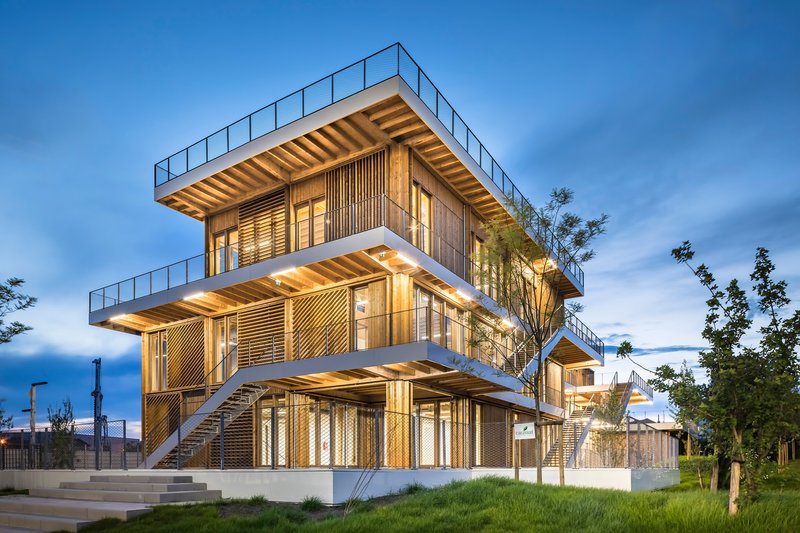
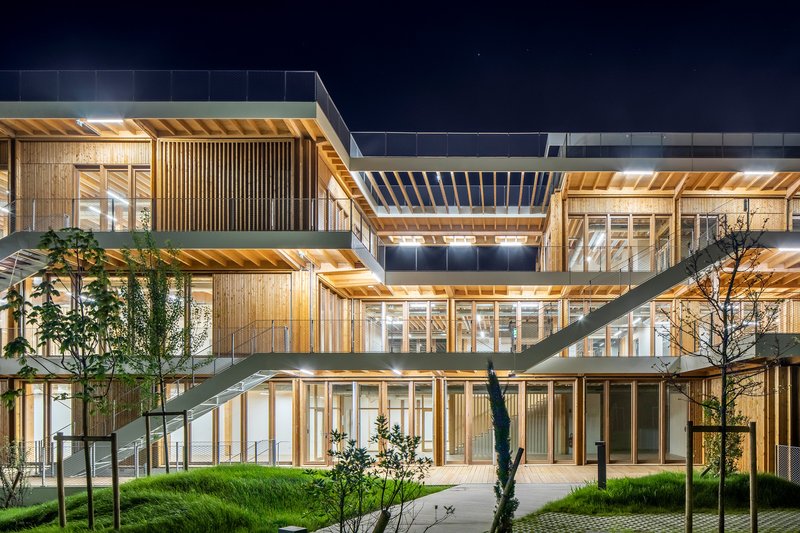
Inspired by the tea pavilion typology and Japanese garden architecture, the Maison des Services Latécoère is imagined as a light, permeable structure that blurs the boundaries between interior and exterior. Its rectangular volume extends across three levels, from the ground floor to the second floor, and is wrapped by generous terraces that overlook the surrounding wooded landscape.
Rather than asserting itself as a monumental object, the building integrates seamlessly into its context. The rhythm of the terraces, external staircases, and projecting beams reinforces a sense of openness and fluid circulation, encouraging users to move freely between levels while maintaining constant visual contact with the park.
Wood as Structure, Envelope, and Expression
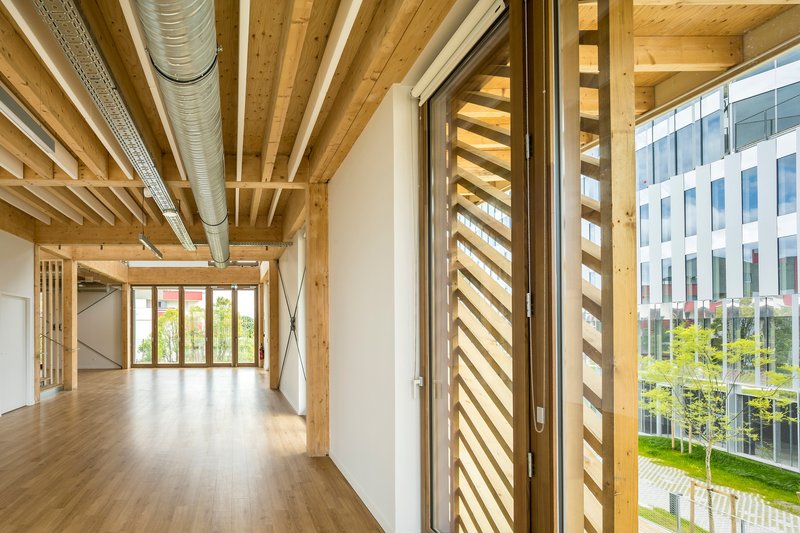
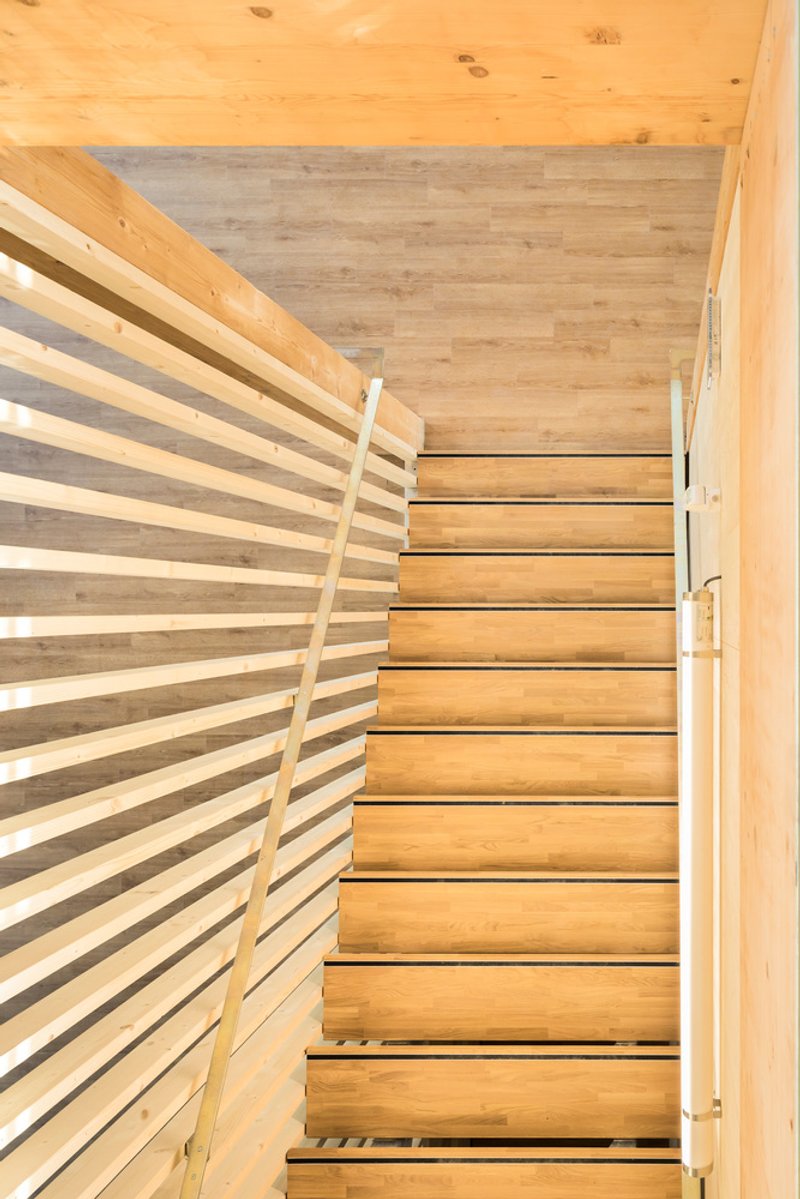
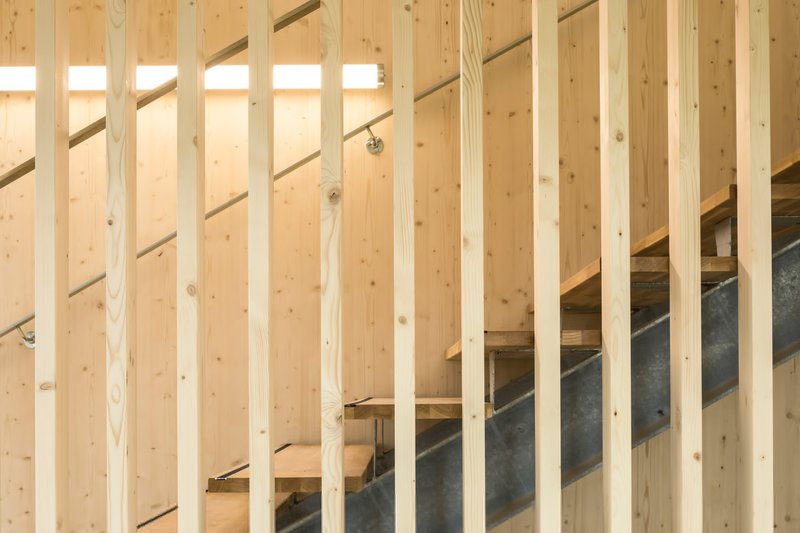
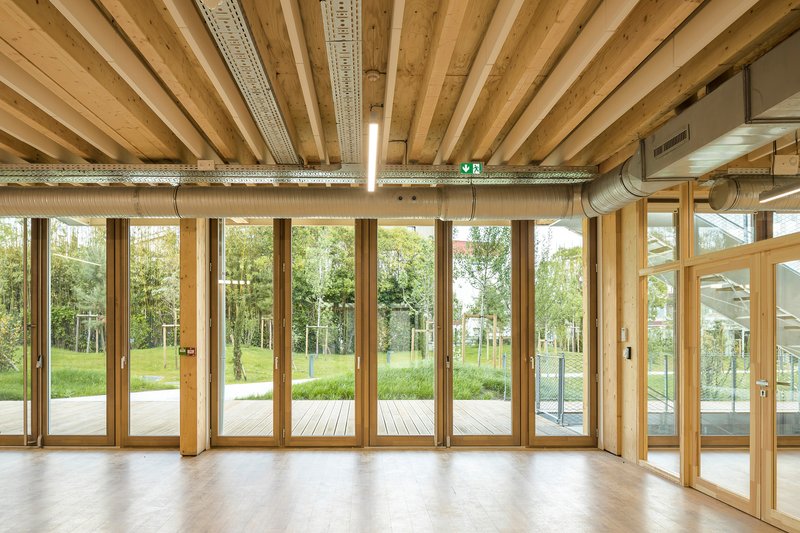
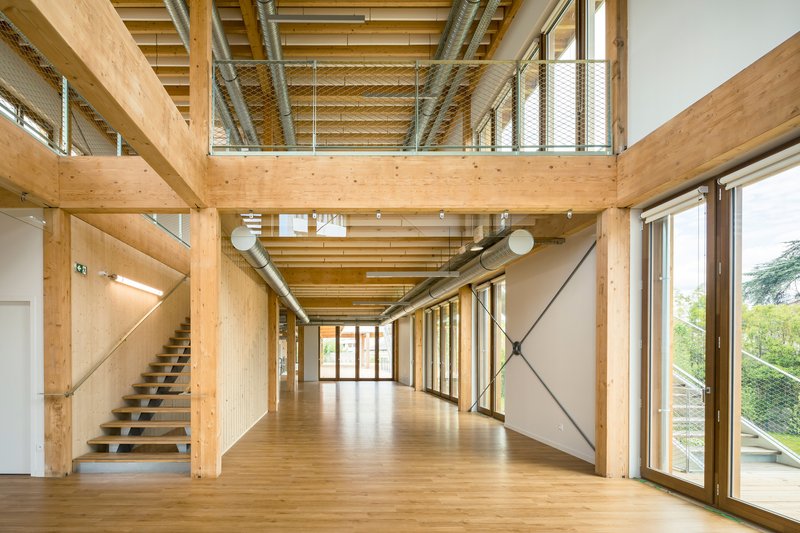
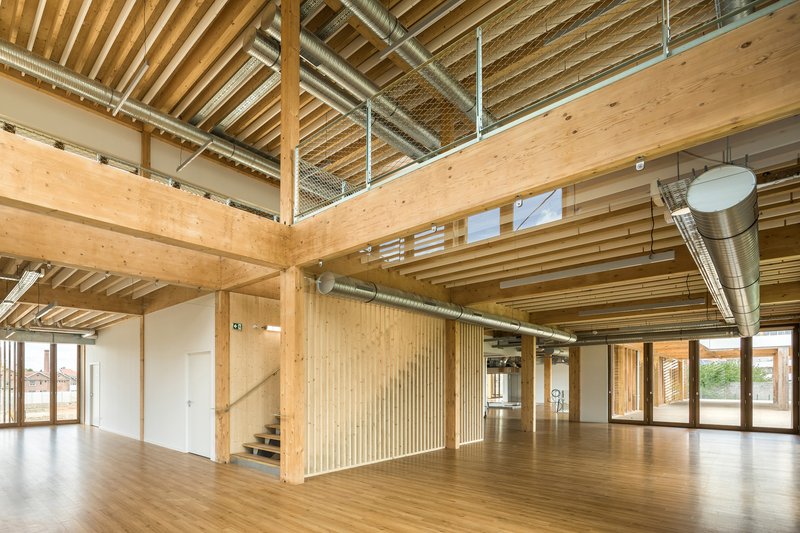
At the heart of the project lies an uncompromising commitment to wood construction. Designed as a low-carbon building, the structure celebrates the plasticity and structural capabilities of larch and spruce, used consistently throughout the project. Beams, posts, floors, joists, terraces, roofing, facades, joinery, and sunshades are all made of wood, eliminating unnecessary technological complexity.
From the outset, the architects embraced the inherent constraints of wood, choosing to work with the material rather than mask it through high-tech solutions. This approach results in a coherent architectural system where every structural, technical, and functional element is clearly legible and purposefully placed.
Spatial Organization and Environmental Comfort
Each floor opens onto wide terraces that act as transitional spaces between the interior and the park. External staircases and terrace walkways ensure fluid circulation and reduce reliance on enclosed corridors. On the second floor, two vertical emergences accommodate the restaurant mezzanine and reception spaces, reinforcing the building’s social role within the campus.
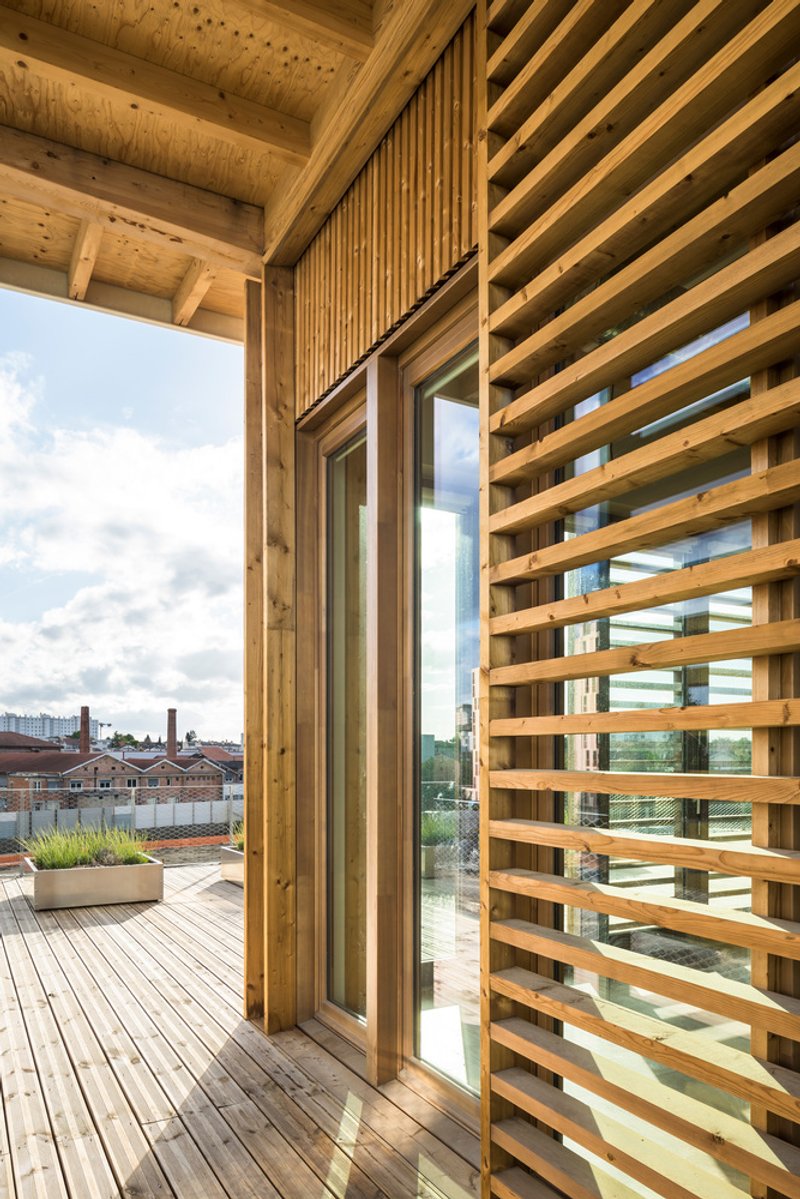
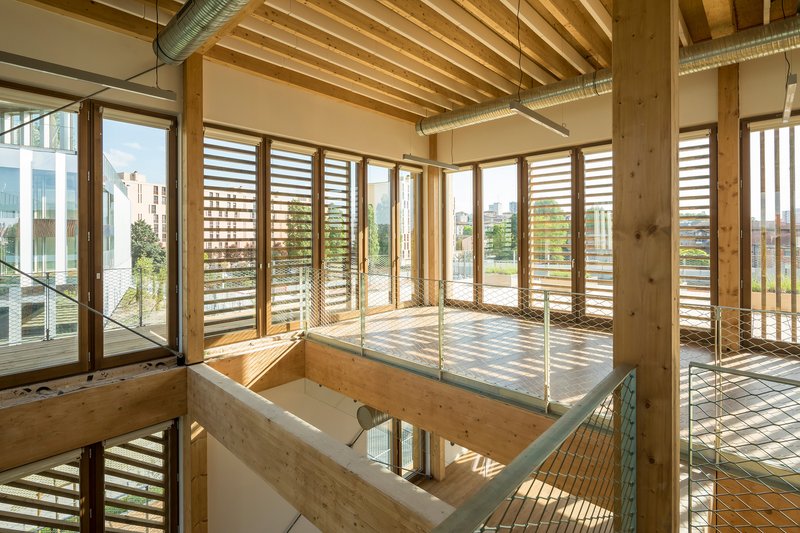
Large bay windows bring abundant natural light into the interior, while carefully designed solar shading strategies ensure thermal comfort. Overhanging terraces on the south and west facades provide passive protection from direct sunlight, while the east and north elevations feature a graphic composition of wooden moucharabieh-inspired brise-soleil elements. These fixed sunshades, with a slender height exceeding three meters, represent both a technical achievement and a strong architectural identity.
The interplay of light and shadow across the wooden facades changes throughout the day, echoing the site’s natural rhythms. This dynamic composition recalls the graphic logic of Sol LeWitt’s paintings, breaking down the building’s volume into a series of layered, luminous planes.
Construction System and Local Craftsmanship
Rejecting the widespread use of CLT (cross-laminated timber), the project adopts a more restrained construction system. Floors are composed of LVL panels with screed, laid over spruce joists, with acoustic baffles integrated between them. Structural beams and posts are made of glued laminated spruce, extending from the interior to the exterior to support terraces and balconies.
To protect the wooden structure from weathering, the edges of the floors and stair stringers are reinforced with metal elements. These details not only enhance durability but also introduce a subtle linear rhythm to the facade, reinforcing the sense of movement and continuity.
In line with a virtuous, local production approach, the timber frame was manufactured by Pyrénées Charpentes, while Agence Lorillard Occitanie supplied all 222 wooden joinery units. This emphasis on regional expertise strengthens the project’s environmental and economic sustainability.
Frugality as an Architectural Ethic
In an era where architectural frugality has become a necessity rather than a choice, the Maison des Services Latécoère stands as a convincing example of how simplicity can be both expressive and efficient. Frugality here is not merely about reducing materials or costs, but about adopting a clear, essential approach to design—one that avoids prescriptive excess and embraces constructive intelligence.
All photographs are works of Sergio Grazia



Popular Articles
Popular articles from the community


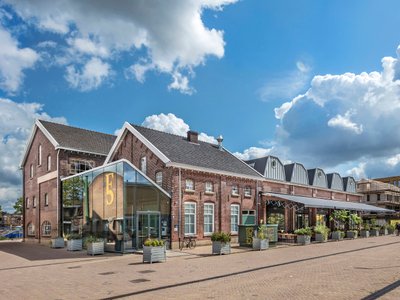
Fifth NRE Jazz Club – De Bever Architecten: Eindhoven’s Revitalized Cultural Hub
Historic gas factory transformed into Fifth NRE Jazz Club blending modern sustainability, jazz culture, dining, and heritage architecture seamlessly.
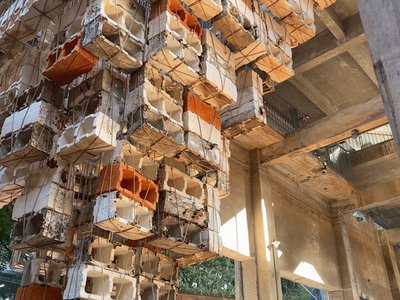
Inverted Architecture Installation by Studio Link-Arc: Exploring the Intersection of Architecture and Living Organisms
Inverted Architecture Installation by Studio Link-Arc blends mycelium, sustainability, inverted design, ecological cycles, and urban adaptive architecture in Shenzhen.
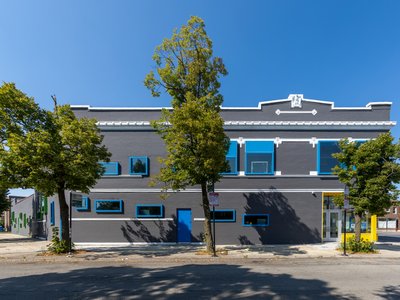
Gads Hill Early Learning Center by JGMA: Adaptive Reuse Shaping Community-Focused Educational Architecture
Adaptive reuse transforms fragmented structure into vibrant early learning center with playful façade, natural light, and community-focused sustainable design.

Similar Reads
You might also enjoy these articles


The Ken Roberts Memorial Delineation Competition (Krob)
As the most senior architectural drawing competition currently in operation anywhere in the world, it draws hundreds of entries each year, awarding the very best submissions in a series of medium-based categories.

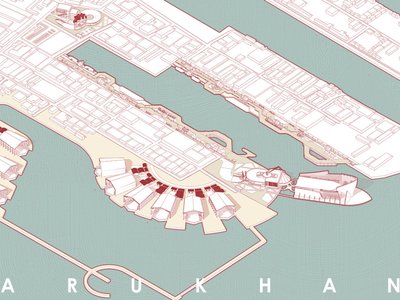
Waterfront Redevelopment and Urban Revitalization in Mumbai: Forging a New Dawn for Darukhana
A transformative waterfront redevelopment project reimagining Darukhana’s shipbreaking heritage into an inclusive urban future.

OUT-OF-MAP: A Call for Postcards on Feminist Narratives of Public Space
Rhizoma Design and Research Lab invites artists, designers, architects, researchers, and students to reflect on how feminist perspectives can reshape public space. Selected works will be exhibited in Barcelona, October 2026. Submissions open until 15 April 2026.

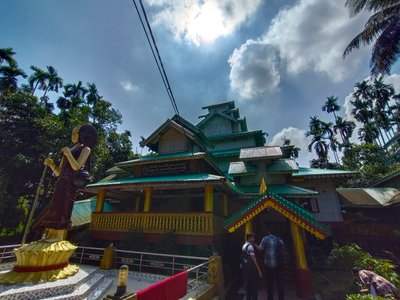
Documentation Work on Buddhist Wooden Temple
Architectural syncretism and cultural hybridity: A comparative study of the Buddhist temples in Chattogram Hill tracks

Explore Architecture Competitions
Discover active competitions in this discipline




The International Standard for Design Portfolios


The Global Benchmark for Architecture Dissertation Awards


The Global Benchmark for Graduation Excellence


Challenge to reimagine the Iron Throne
Comments (0)
Please login or sign up to add comments
No comments yet. Be the first to comment!