
Medník House by päivä architekti – A Forest-Edge Studio Extension Rooted in Craft, Landscape, and Light
A freestanding timber studio extension connecting forest and garden, offering light-filled creative space, natural materials, and panoramic views over the Sázava valley.

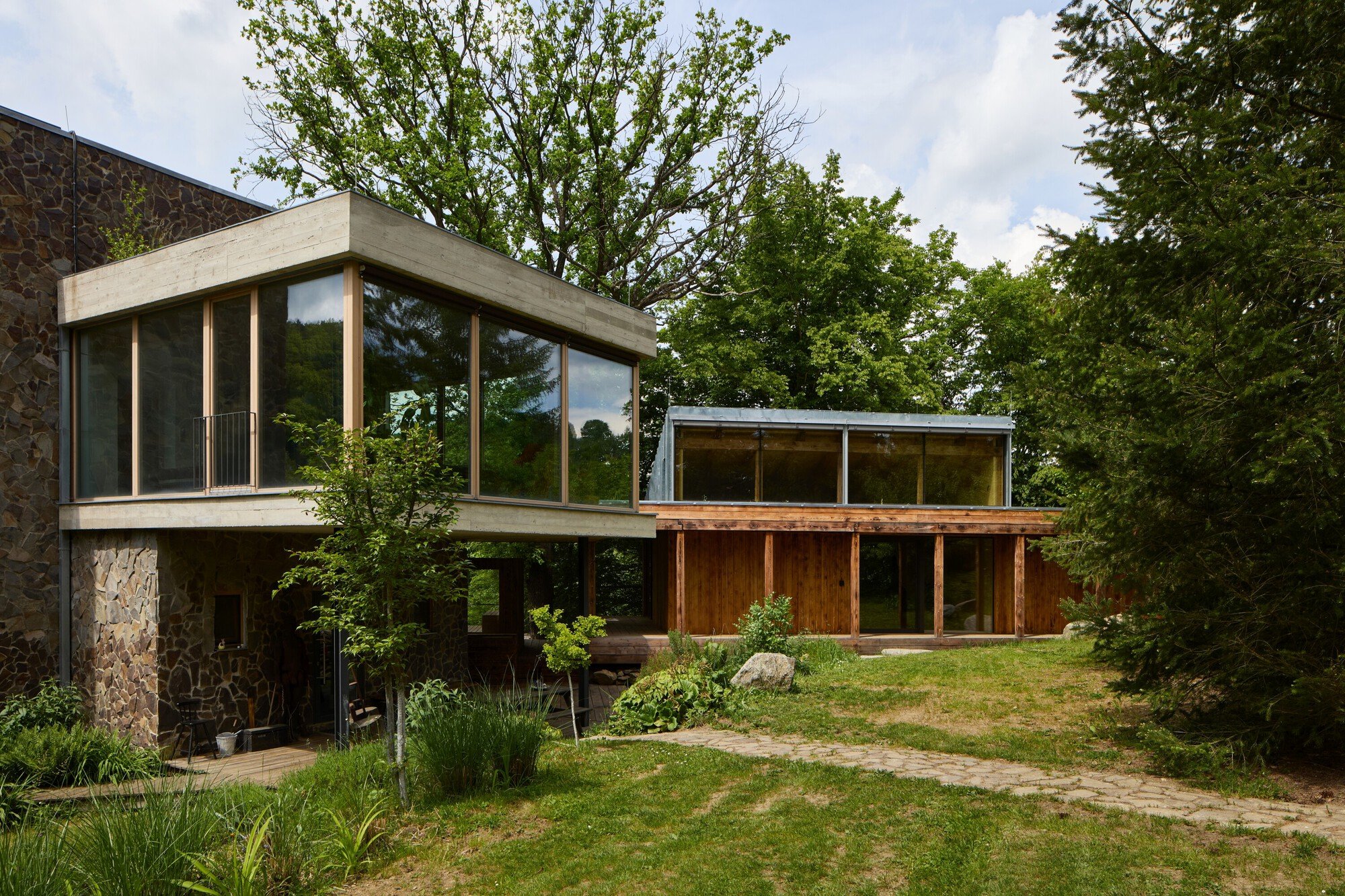
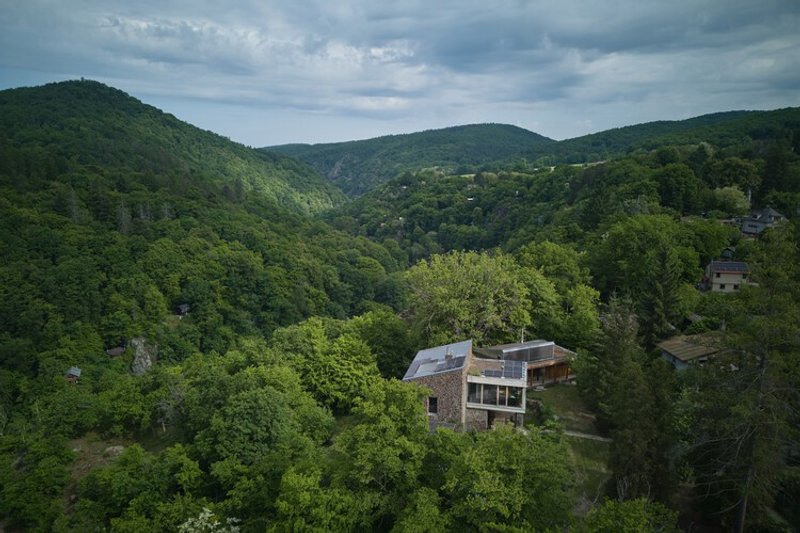
The Medník House extension, designed by päivä architekti, is a sensitive architectural addition to an early-20th-century family home perched above the Sázava River in Czechia. The original house, renovated and partially expanded in 2010, had gradually become too constrained for the client’s evolving lifestyle and creative work. The architects responded with a freestanding, nature-integrated studio building, positioned delicately between forest and garden, forming a quiet retreat that amplifies views toward the Medník hill and surrounding valley.
A Landscape-Led Search for Form and Placement
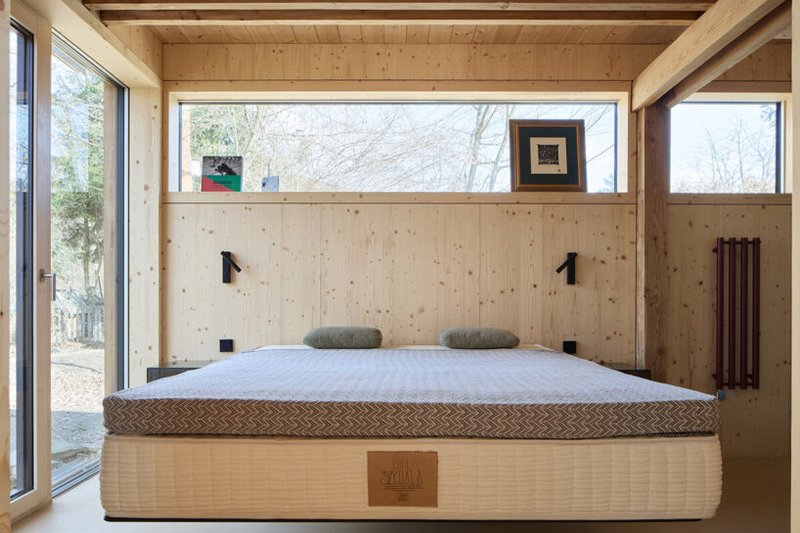
The client envisioned a light-filled studio with generous openness, complemented by a separate sleeping area, bathroom, and toilet. Daylight access, direct connection to nature, and a sense of creative openness were key.
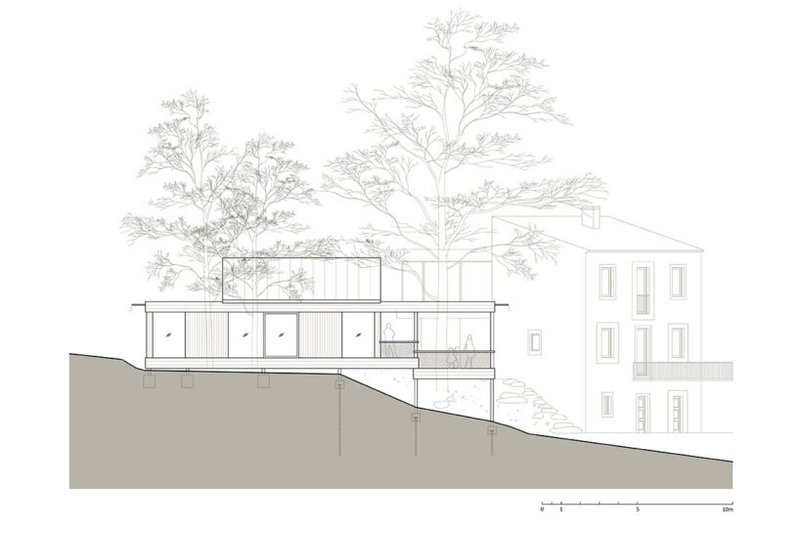
Finding the right footprint required careful consideration of:
- The wedge-shaped topography of the plot
- A steep rocky slope above the river
- The presence of mature forest trees
- The cherished panorama toward the Sázava valley and Medník peak
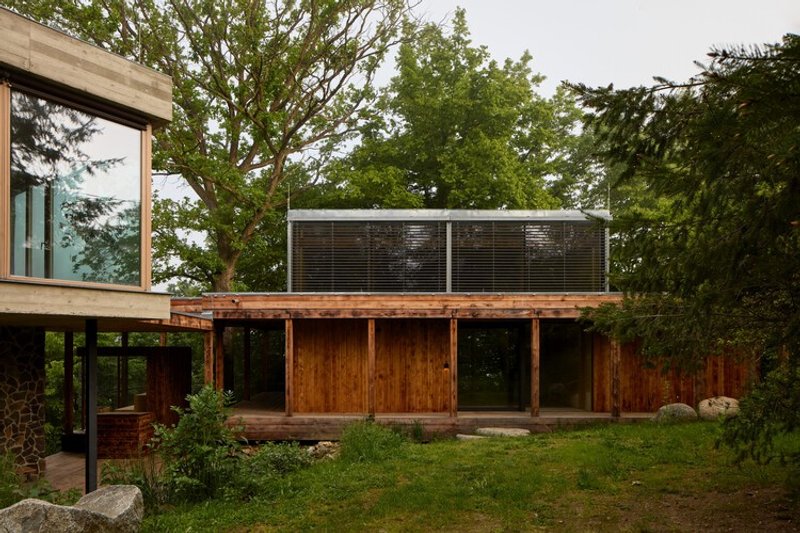
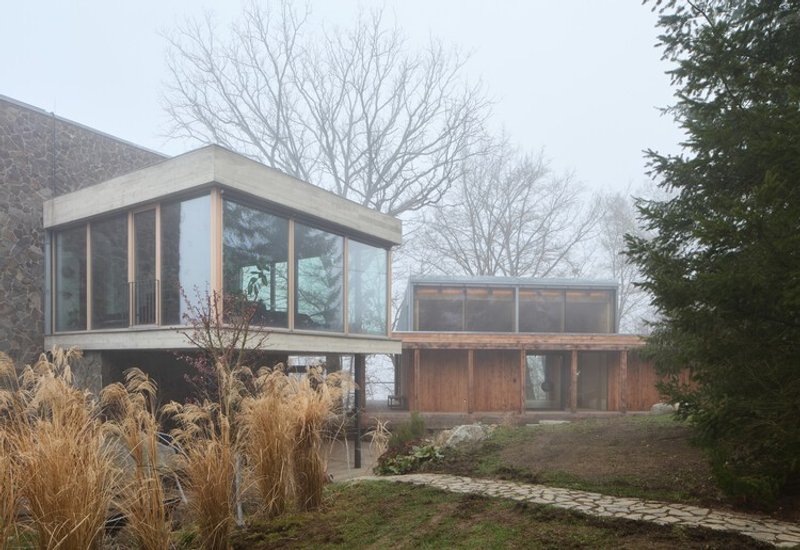
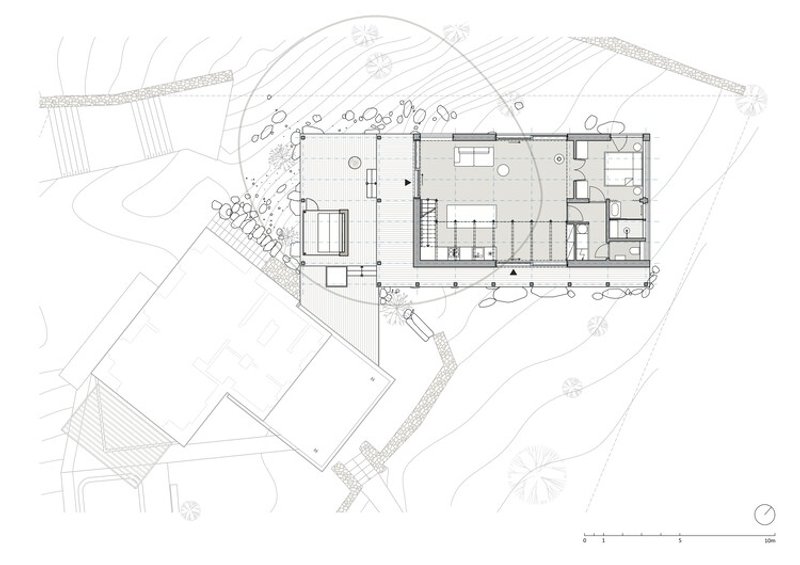
Rather than attaching the extension directly to the existing house, päivä architekti designed a standalone volume at the threshold between forest and garden. This preserves the original house’s relationship with the landscape while offering a distinct architectural identity for the new studio.
A Terrace Connection Threaded Around a Mature Oak
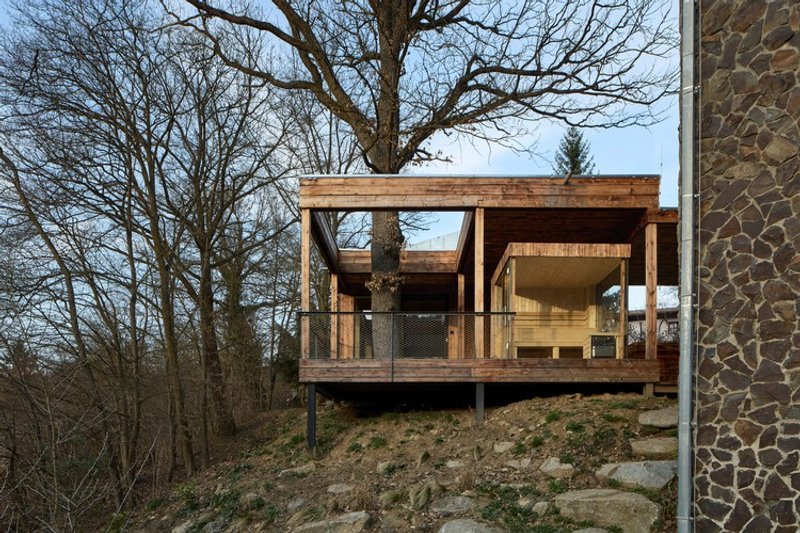
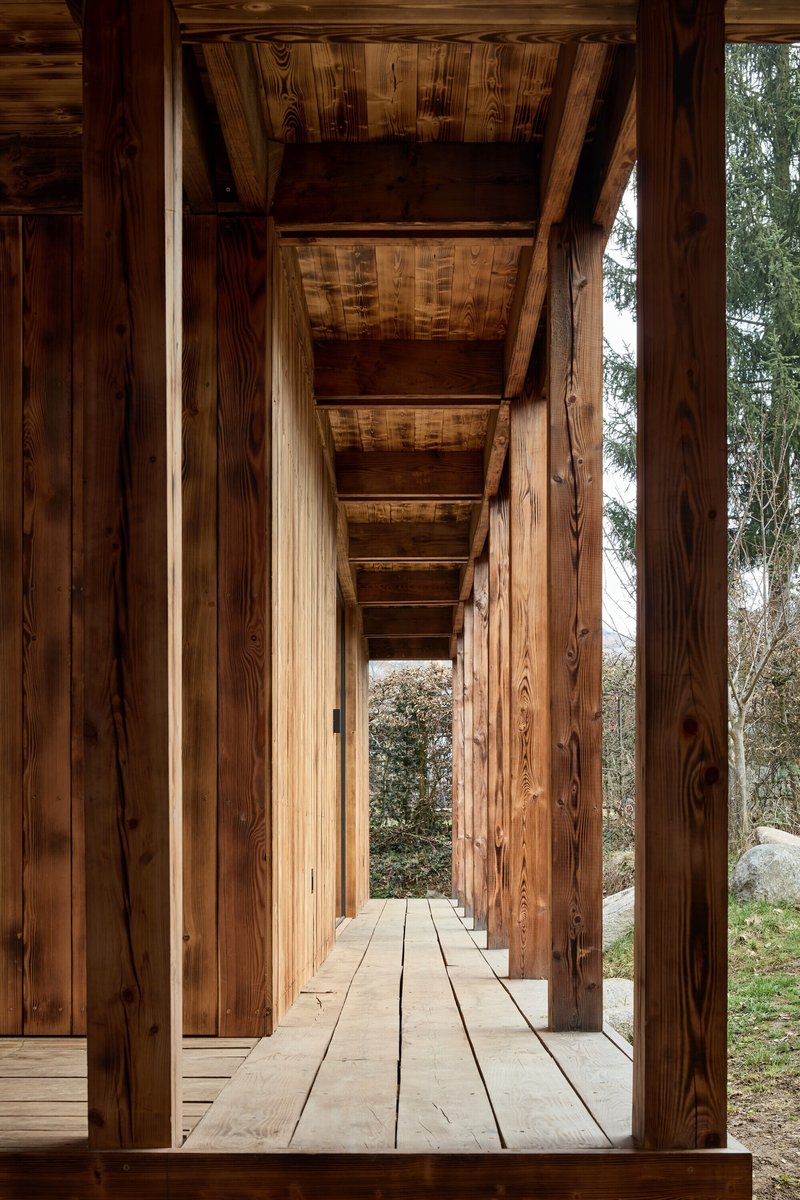
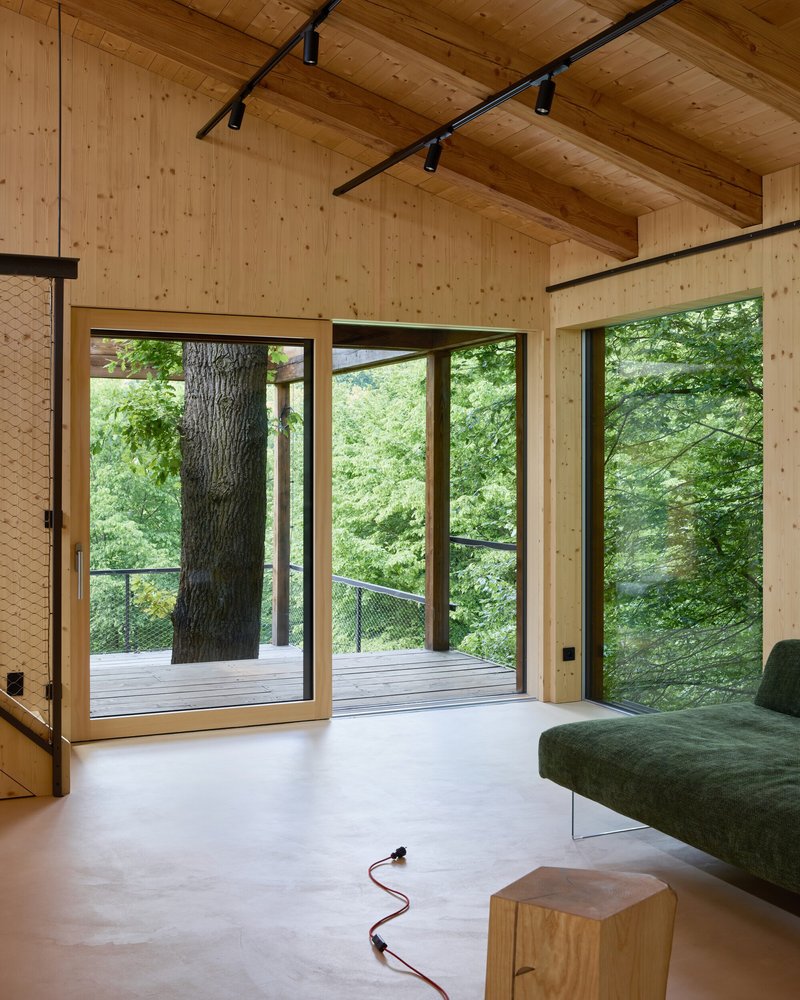
The new building connects to the existing house through a covered terrace, intentionally designed around a fully grown oak tree that stands close to the structure. This gesture preserves the site’s natural character while turning the oak into a defining spatial anchor.
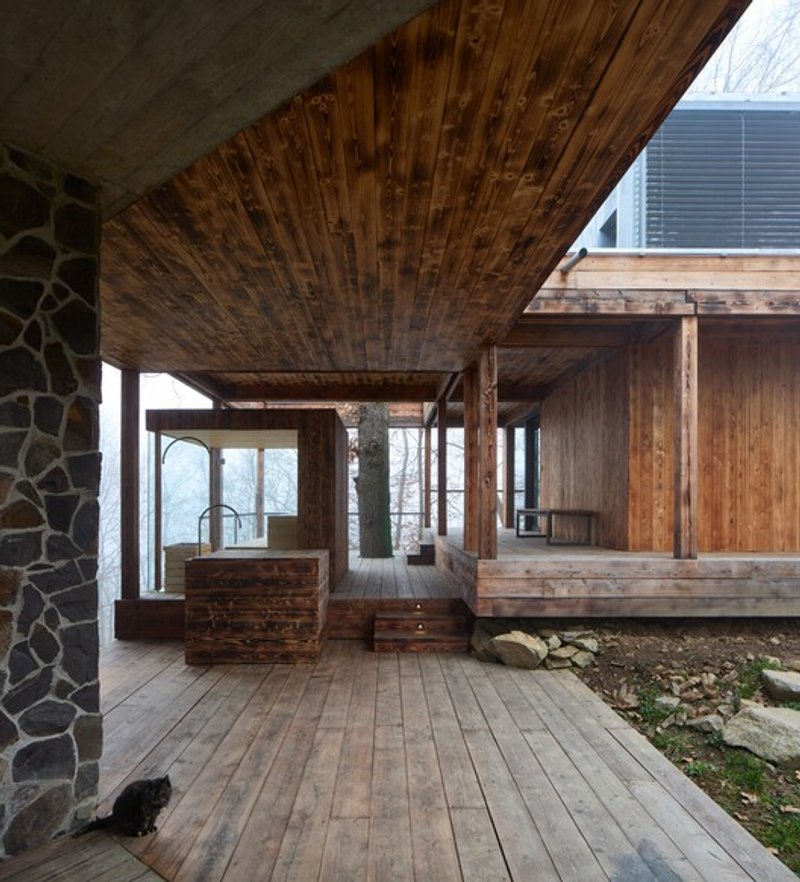
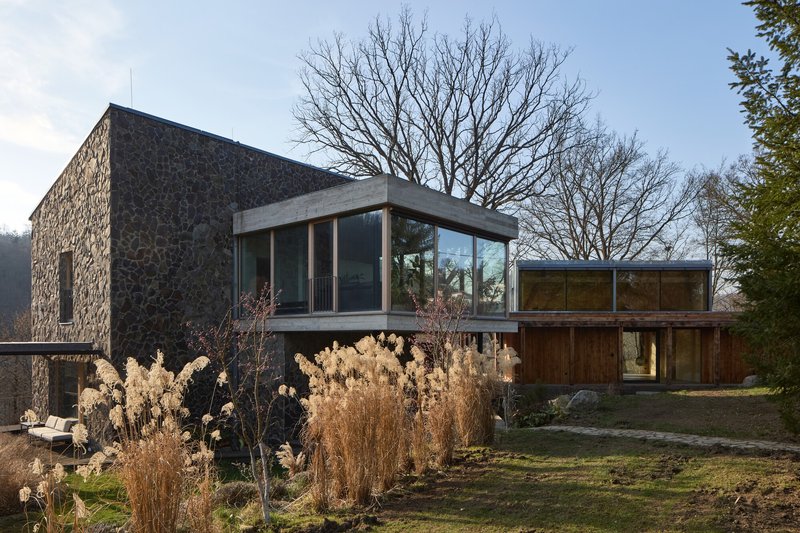
A covered walkway leads from the house toward the garden, enhancing movement between interior and exterior spaces and strengthening the project’s forest–garden intermediary identity.
Spatial Concept: Open Studio, Sliding Windows, and a Hanging Gallery
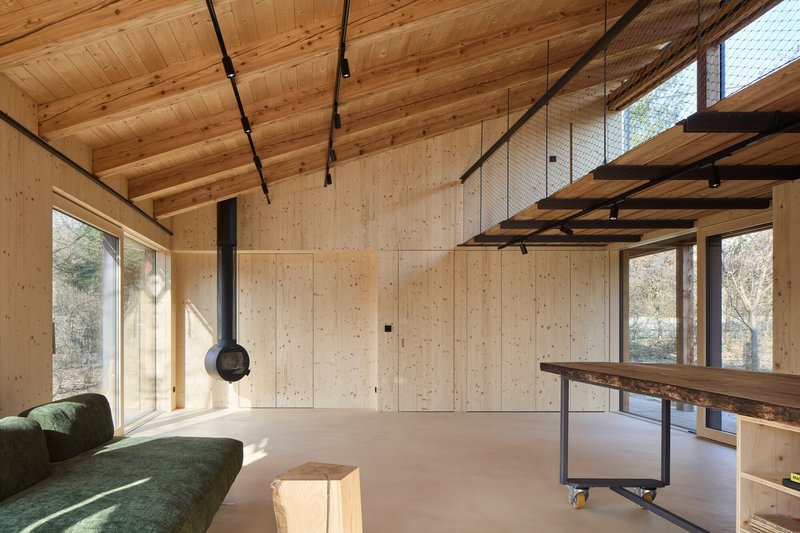
The extension opens generously toward the terrace and valley through large sliding windows, dissolving the boundary between indoor activities and the surrounding wilderness. A more solid corner turns back toward the existing structure, grounding the volume and shielding the studio from excessive exposure.
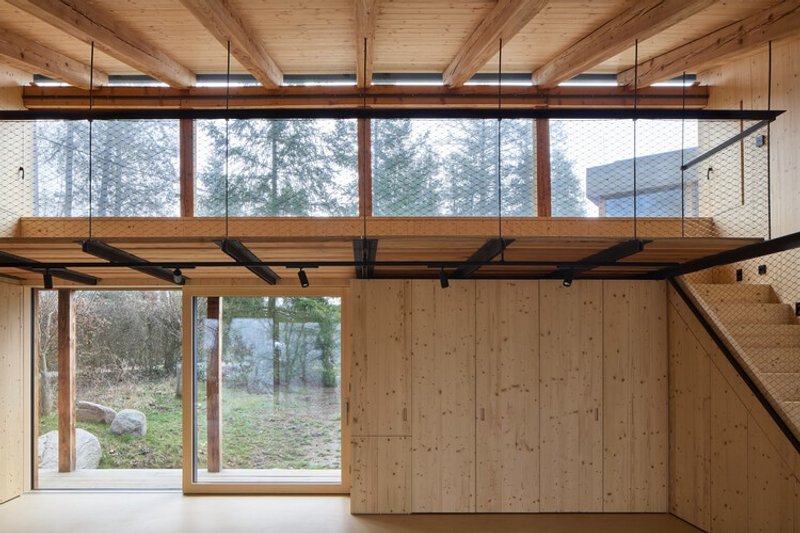
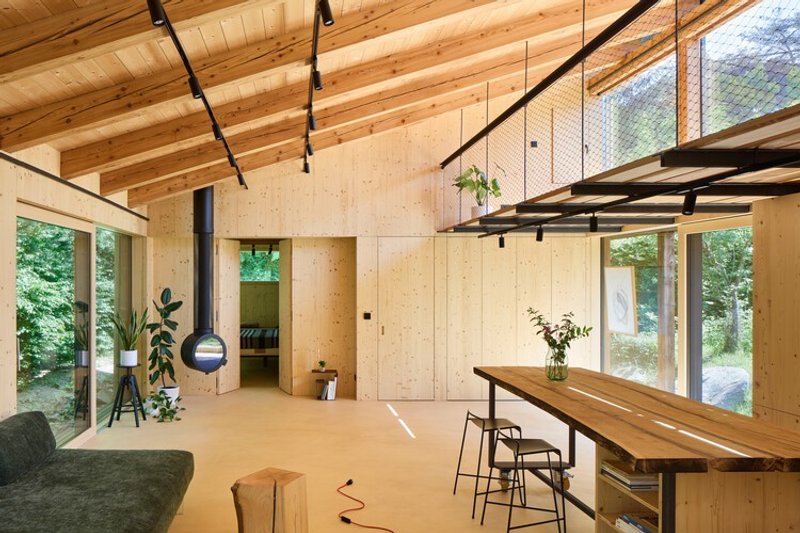
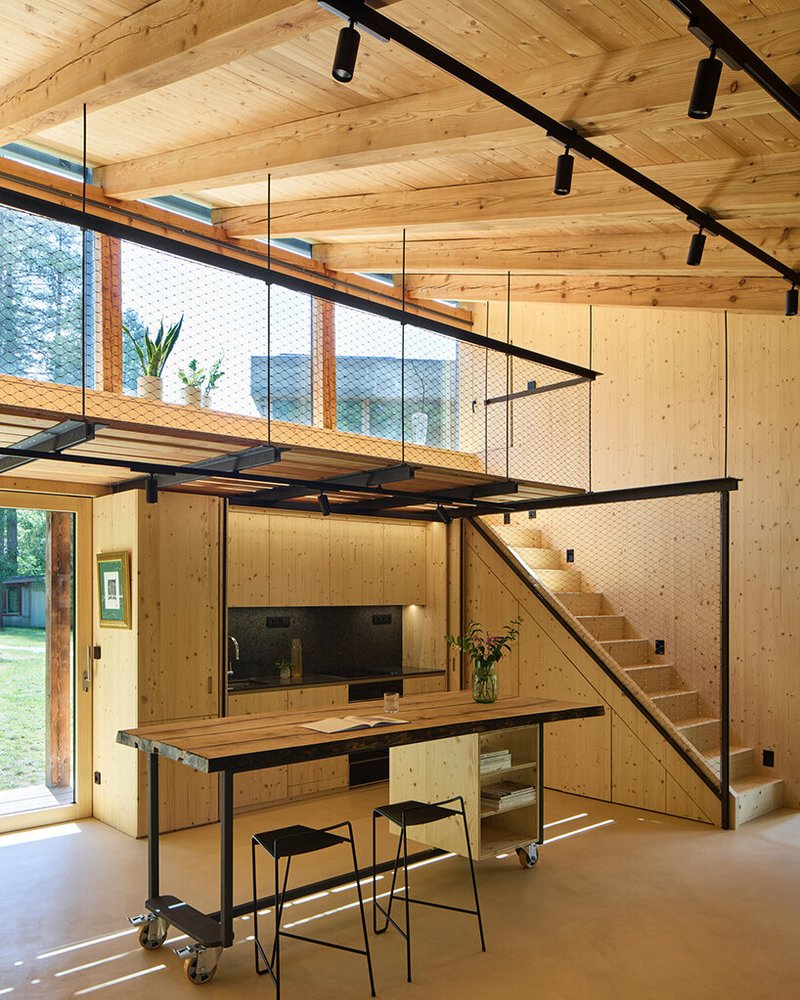
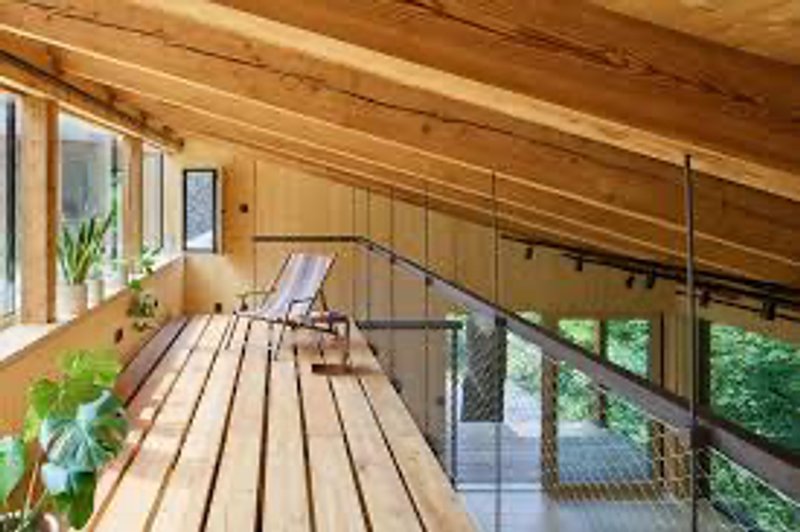
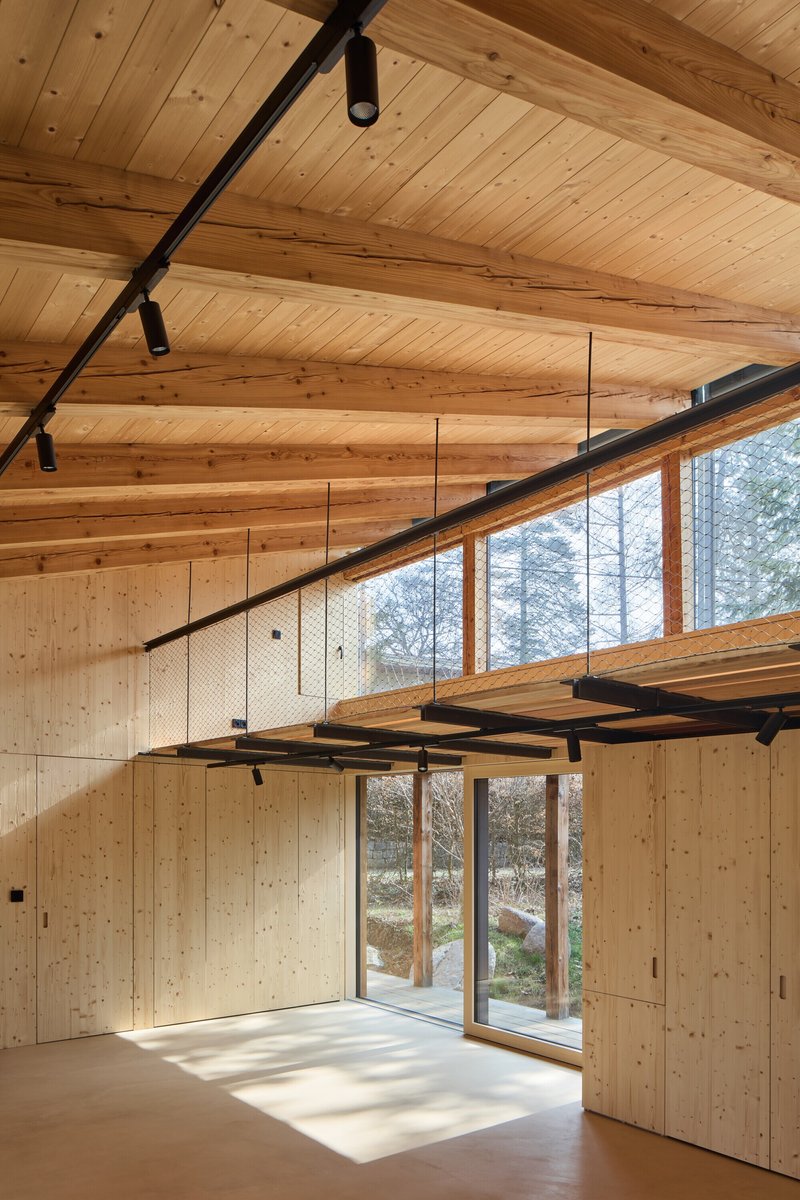
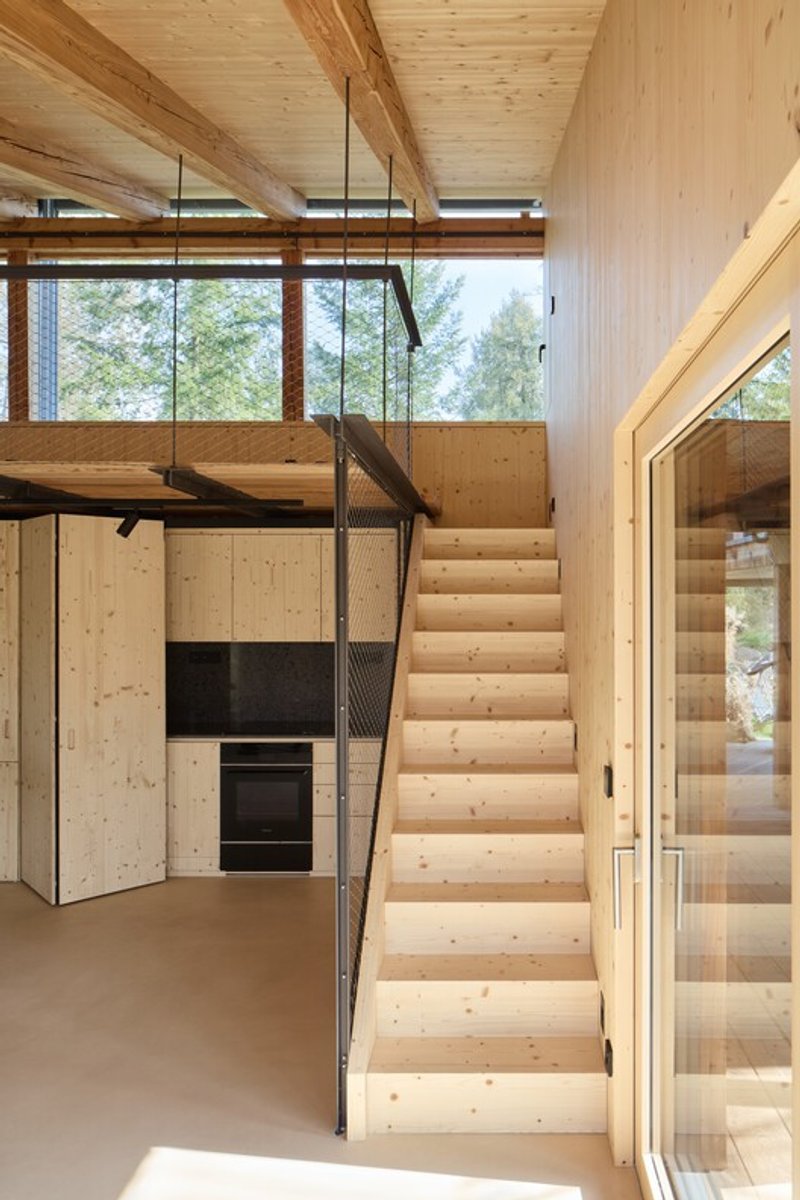
Inside, the architects inserted a simple hanging gallery—a lightweight mezzanine offering additional workspace, storage, or retreat. The morphology, roofline, and proportions subtly echo the original house while establishing a contemporary counterpart.
Craft-Oriented Construction: Steel, Wood, and Self-Build Techniques
A major design constraint—and opportunity—was the client’s intention to carry out much of the construction personally. This shaped the structural strategy:
- Micropile foundations installed professionally due to the sloped terrain
- A steel supporting frame erected with precision and efficiency
- Subsequent wooden superstructure built in self-help mode
- Simple, repeatable details to support owner-led construction
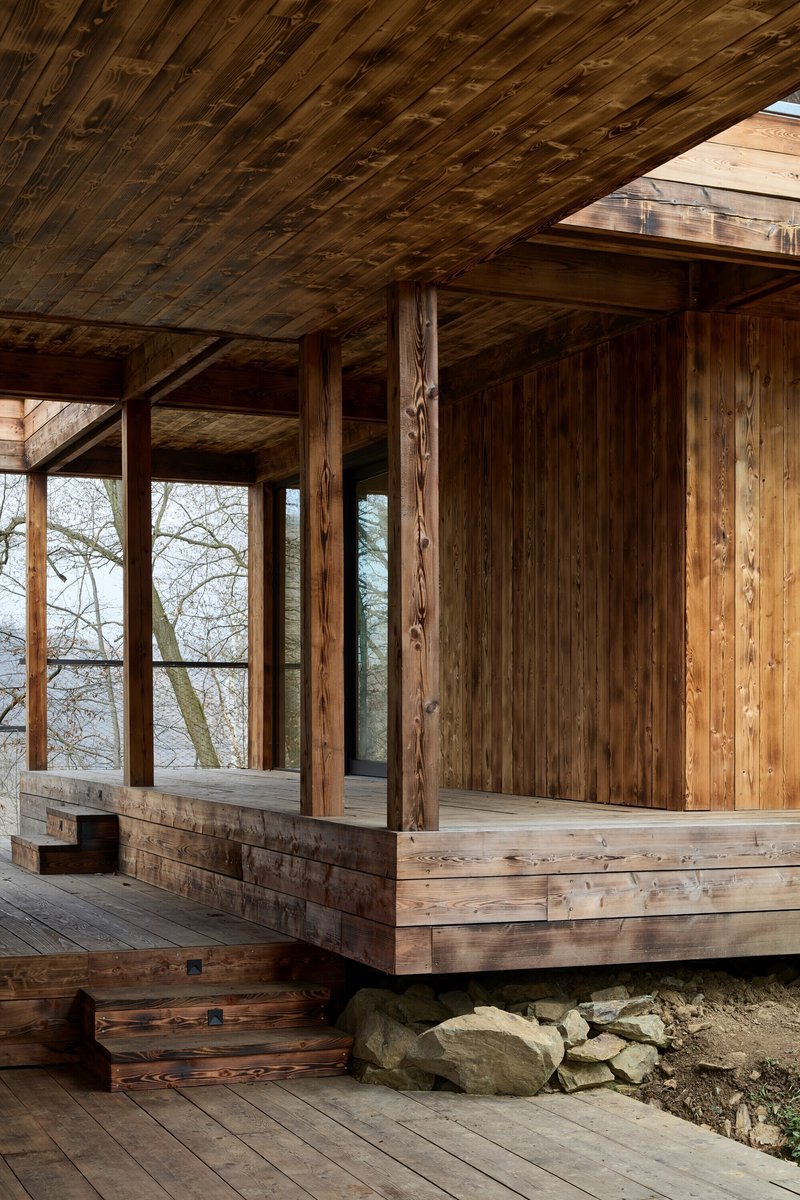
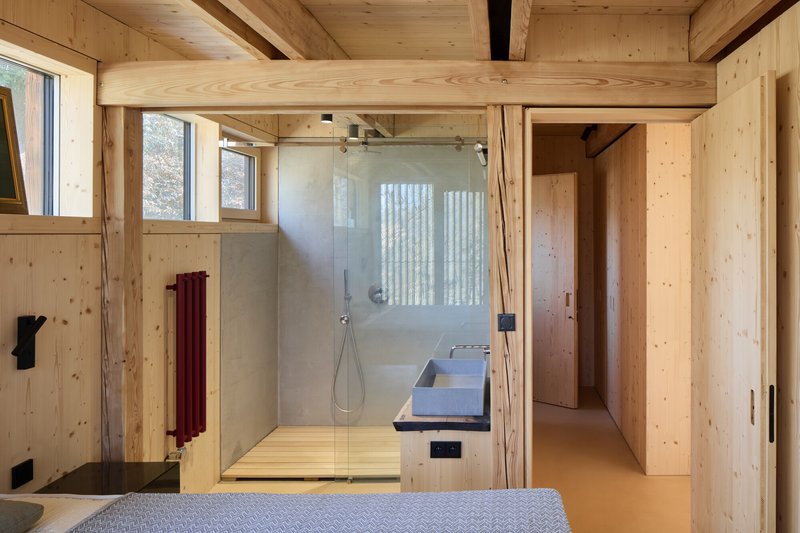
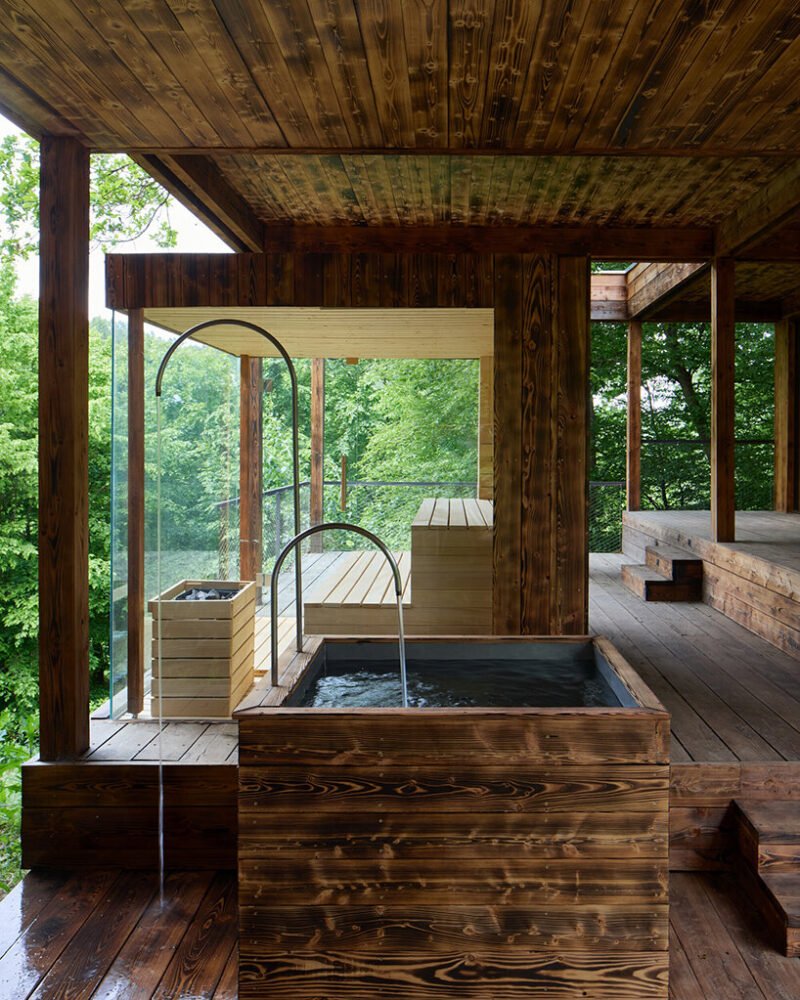
The exterior is clad in tanned larch, allowing the house to gradually weather into the forested context. The interior features spruce bioboard surfaces, built-in furniture, and warm timber textures that support both creative work and restful retreat.
Material Warmth and a Calm, Nature-Driven Atmosphere
The extension’s character is defined by:
- Larch cladding that ages gracefully under sun and rain
- Spruce interiors offering warmth, acoustic comfort, and a tactile ambiance
- Integrated storage and furniture built by local carpenters
- A minimal palette that enhances the surrounding forest’s presence
The resulting atmosphere is serene, meditative, and intimately connected to its landscape—an ideal setting for creative pursuits.
All the Photographs are works of Radek Úlehla




Popular Articles
Popular articles from the community

gru.a Builds a 70 m² Timber Shelter That Opens Like a Farm Door in Brazil's Valley of the Vines
In the mountainous region near Rio de Janeiro, a compact retreat uses plywood panels and deep eaves to blur the line between inside and out.
BAUEN Builds Two Rammed Earth Volumes in Paraguay Inspired by the Ovenbird's Nest
In San Bernardino, a house of compacted earth channels the instinct of a constructive bird to shelter life from the Paraguayan summer.
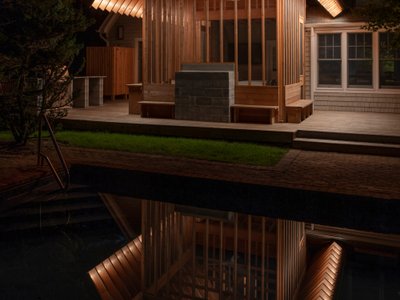
BLDUS Turns a 250-Square-Foot Screened Porch into a Pine Forest Temple in East Hampton
A gabled cedar pavilion mimics the rhythm of surrounding pines, anchoring a 1990s wooded home to its hollow in Long Island.
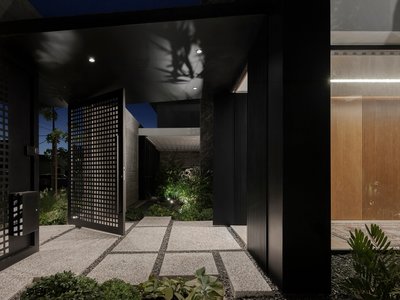
Constanti Architects Builds a Fortress of Privacy in Nicosia with House 345
A concrete and timber residence in Cyprus reinterprets the traditional introverted courtyard house for a new urban landscape.


Similar Reads
You might also enjoy these articles

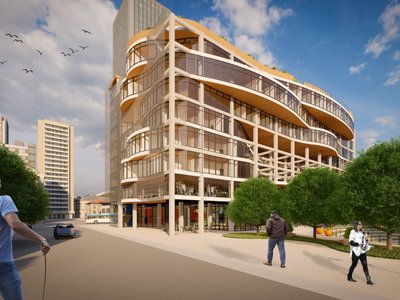
Olio Towers: A Mid-Rise for Performers That Fuses Housing, Rehearsal, and Stage
Located blocks from Houston's Theater District, this modular tower stacks living units around a central performance atrium.
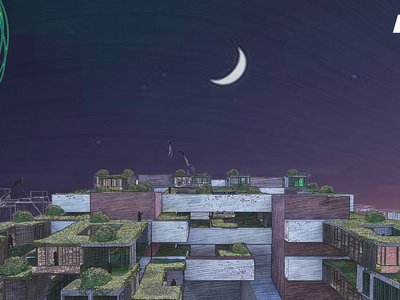
Oasis: Modular Green Housing Carved into Dhaka's Urban Fabric
A shortlisted Plugin Housing entry reclaims unauthorized settlements in Dhaka with stepped concrete volumes, green roofs, and ventilation-driven design.

Black Hole: A Floating Megastructure for the Post-Physical Era
Emiliano Mazzarotto envisions a spherical, self-scaling arena where e-sports, digital hotels, and holographic stadiums replace traditional public space.
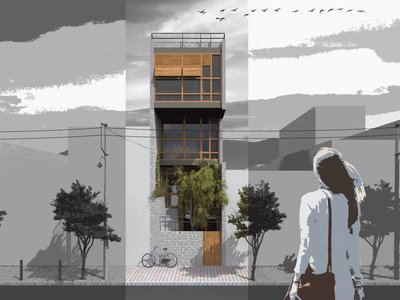
Compact & Sustainable Living in Piraeus: A Four-Level Family Home Built Around Light and Air
A narrow townhouse in one of Greece's densest port cities uses a central atrium and passive strategies to house three generations under one roof.

Explore Architecture Competitions
Discover active competitions in this discipline




The International Standard for Design Portfolios


The Global Benchmark for Architecture Dissertation Awards


The Global Benchmark for Graduation Excellence


Challenge to reimagine the Iron Throne
Comments (0)
Please login or sign up to add comments
No comments yet. Be the first to comment!