
MOCA Yinchuan: Where the Yellow River Shapes Contemporary Art
Designed by WAA, the Yinchuan Museum of Contemporary Art transforms geological forces into architectural form, creating a striking cultural landmark in northwest China.

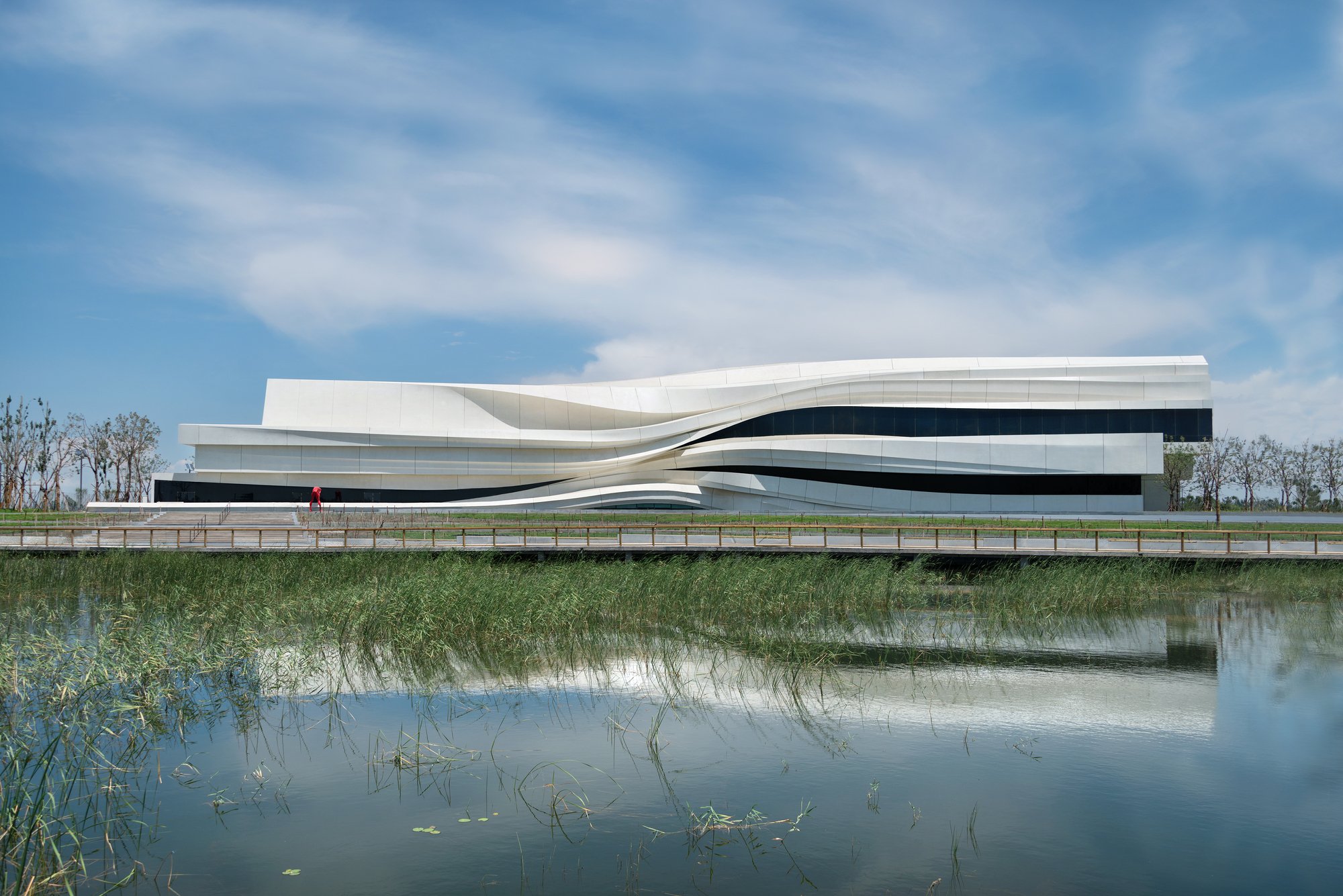
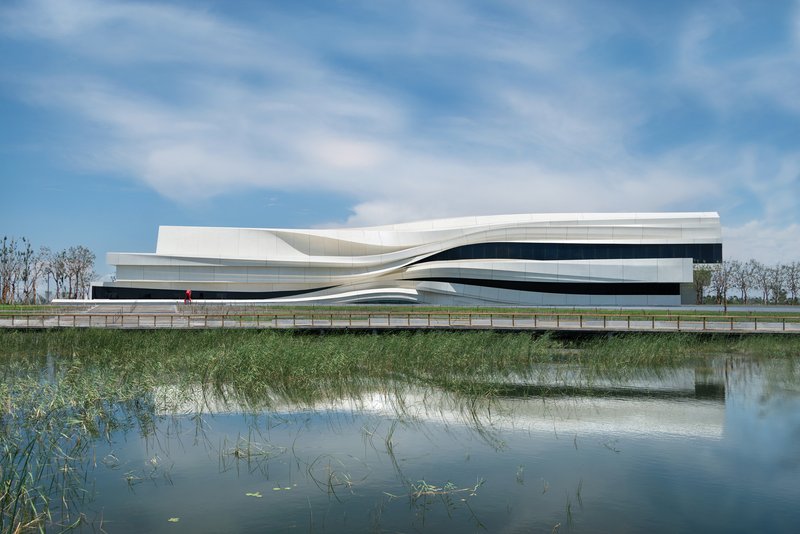
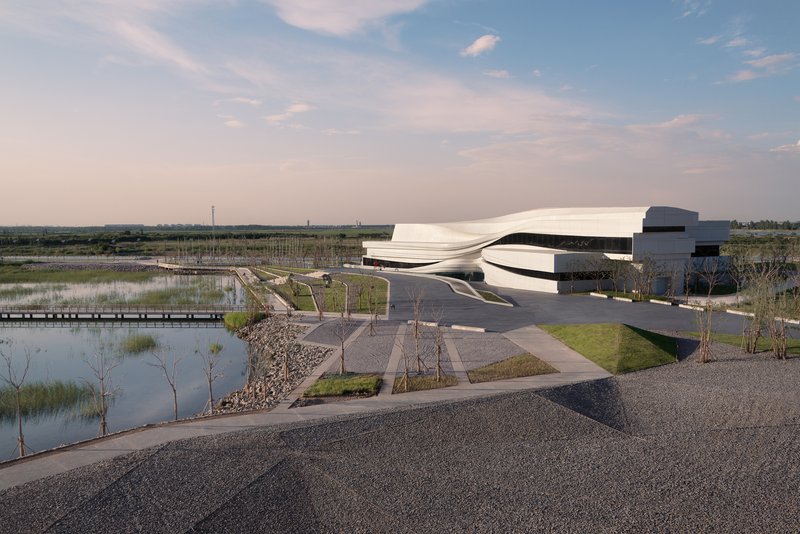
Situated at the border between lush wetlands and arid desert in northwest China, the Yinchuan Museum of Contemporary Art (MOCA) by WAA (we architech anonymous) stands as one of the most compelling examples of landscape-driven architecture in recent years. Completed in 2015, this 13,188 square meter cultural institution draws its entire formal language from the geological forces of the nearby Yellow River, translating millennia of erosion and sedimentation into a building that feels as much a part of the terrain as the land itself.
MOCA Yinchuan is the first contemporary art museum in the Ningxia Hui Autonomous Region, anchoring a new cultural complex on the eastern outskirts of the city. The project positions art and architecture as inseparable from geography, making a case for the museum as an extension of its environment rather than an imposition upon it.
Reading the Landscape: Design Concept
WAA grounded the project in the study of geomorphology, the science of natural land formations. The Yellow River, China's second longest, has spent thousands of years carving, depositing, and reshaping the terrain around Yinchuan. The design team observed these patterns of erosion and sedimentation and used them as the primary generative force behind the building's form.
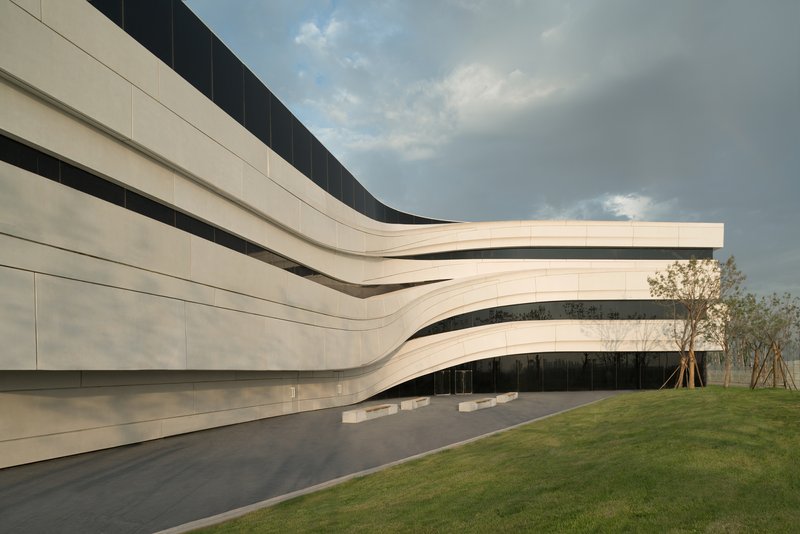
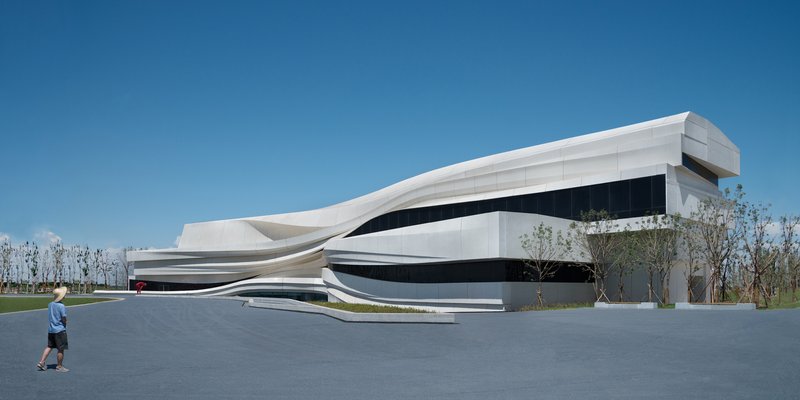
The museum's massing reads as a diagram of these geological forces. Creases and folds across the facade mirror the sedimentary layers visible in riverbank cross-sections, while the overall silhouette rises and falls in response to the surrounding topography. Using parametric techniques, WAA translated geological data into architectural surface, producing a facade that is both visually striking and conceptually rigorous.
The Facade: 1,600 Unique Panels
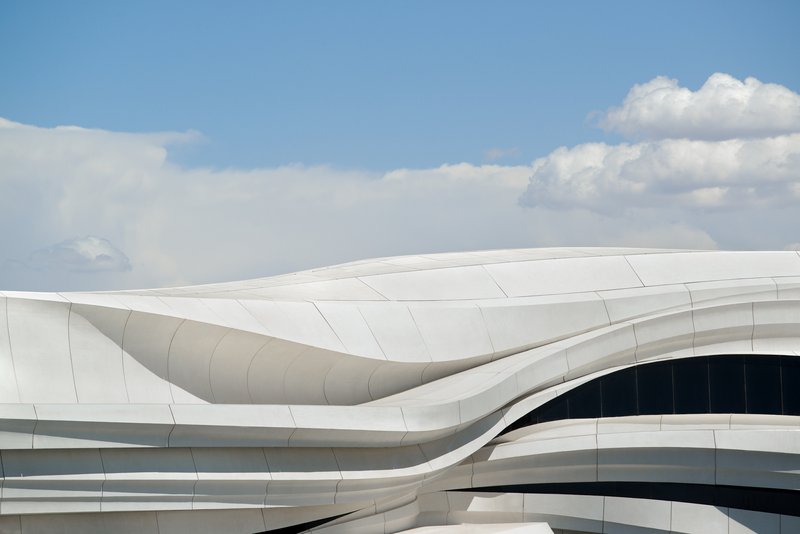
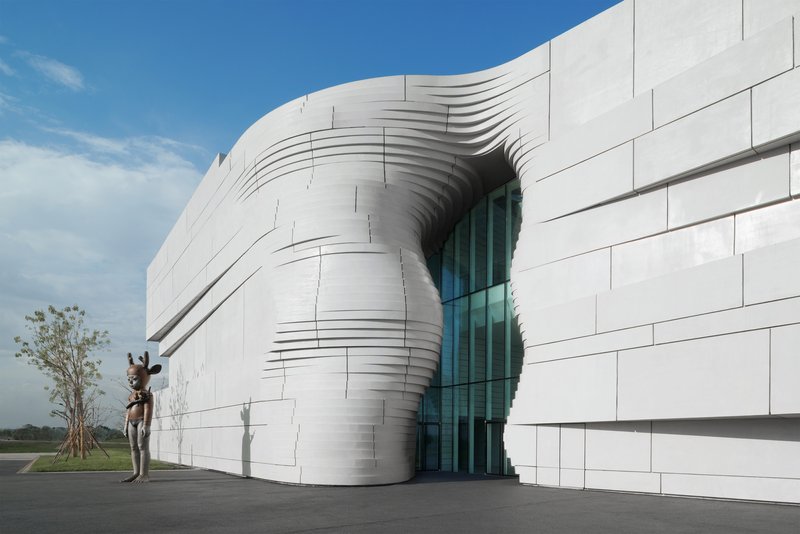
The building's most immediately recognizable feature is its ribbon-like facade, composed of more than 1,600 unique glass-reinforced gypsum (GRG) panels. Each panel was individually shaped to reference two contrasting qualities of the Yellow River landscape: the rigid, horizontal strata of geological formations and the soft, curving lines carved by water over time.
The result is a surface that appears to have been sculpted by natural forces rather than human hands. Deep folds and shallow creases create patterns of light and shadow that shift throughout the day, giving the building a quality of constant transformation. The facade does not merely decorate the structure; it is the structure's argument, making geological time visible at the scale of architecture.
Interior Spaces and Circulation
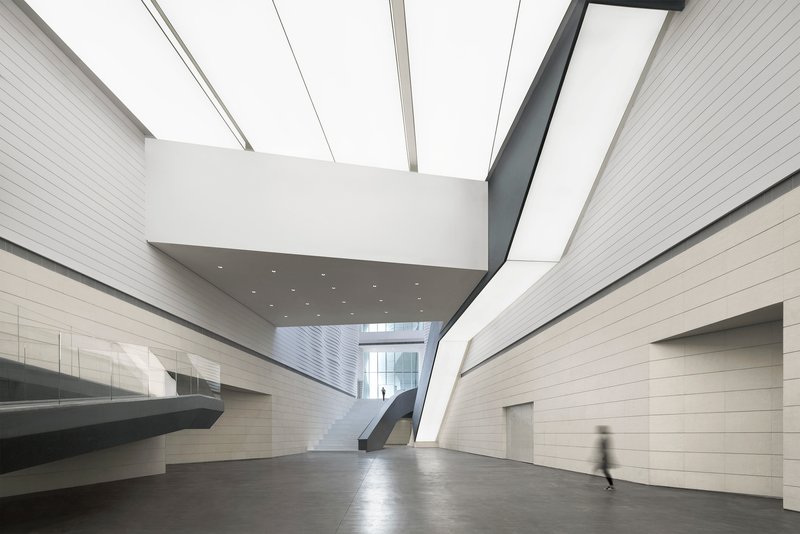
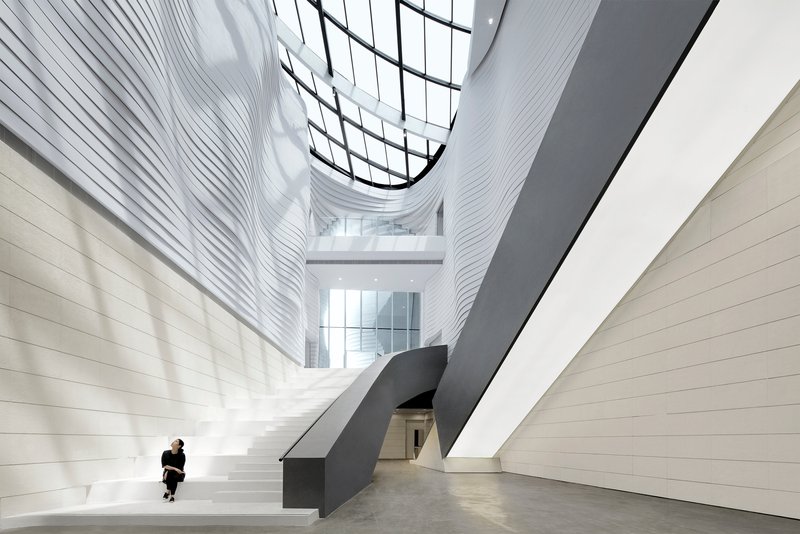
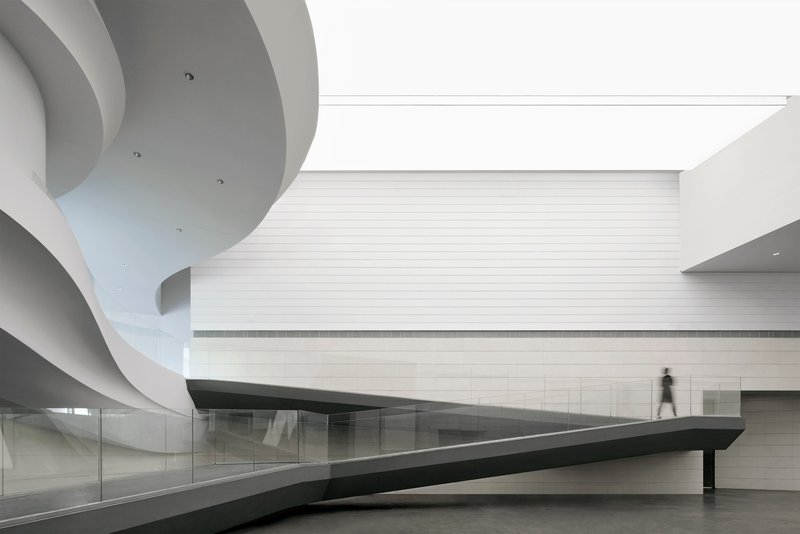
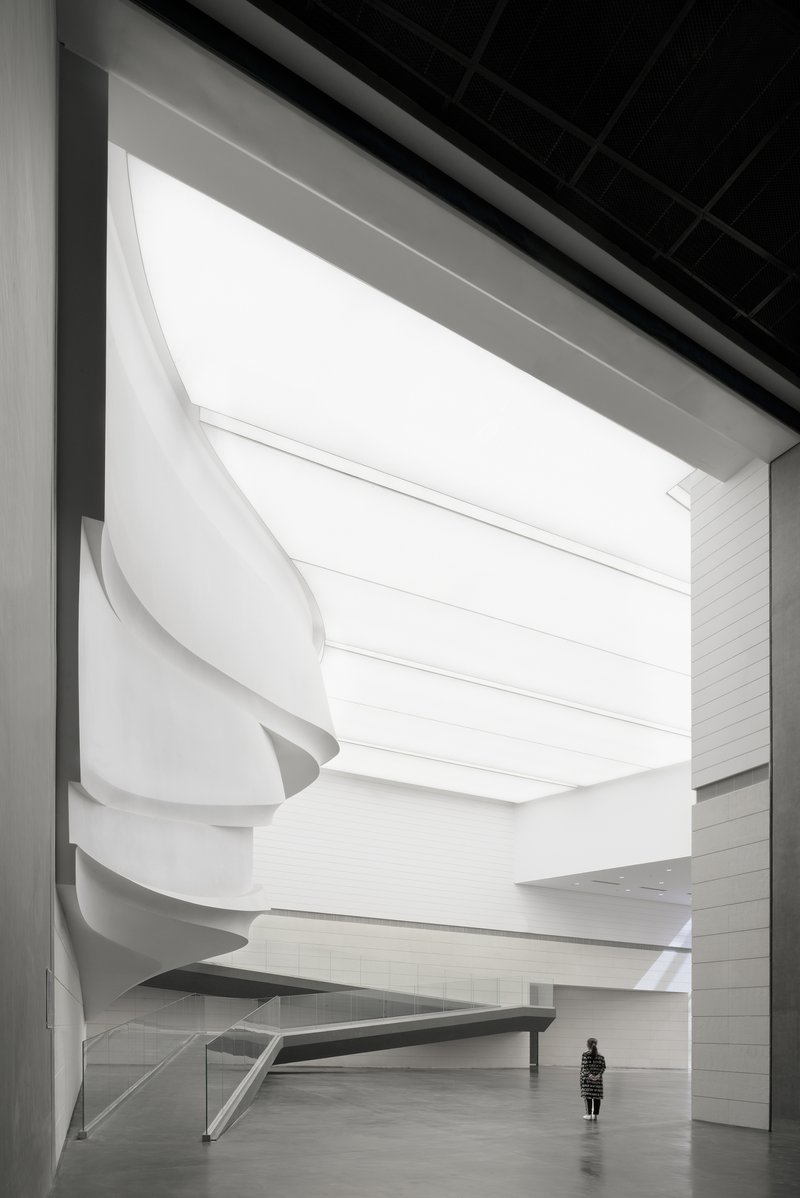
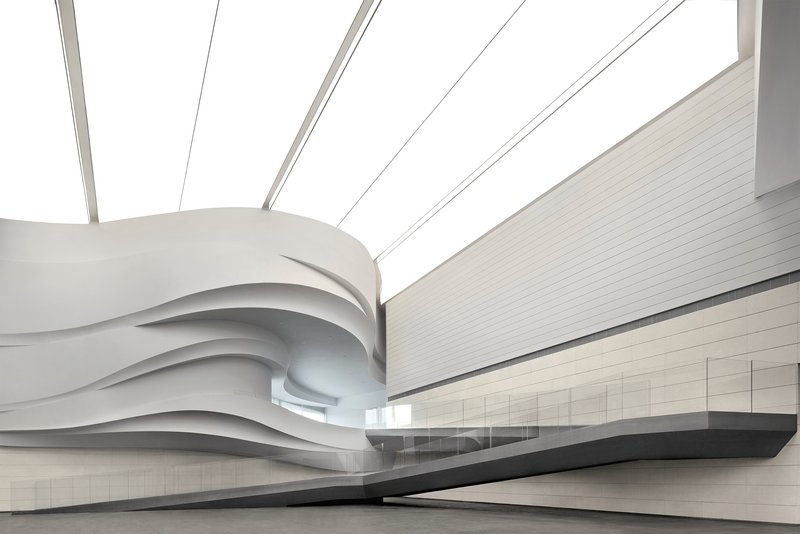
A large internal void fractures the building into two volumes, as if the structure had been split by the same tectonic forces that shaped the landscape outside. This central atrium serves as both the primary entrance and the circulatory spine of the museum. The entrance facade stretches the full height of the building, its surface treated with the same weathered, geological language as the exterior.
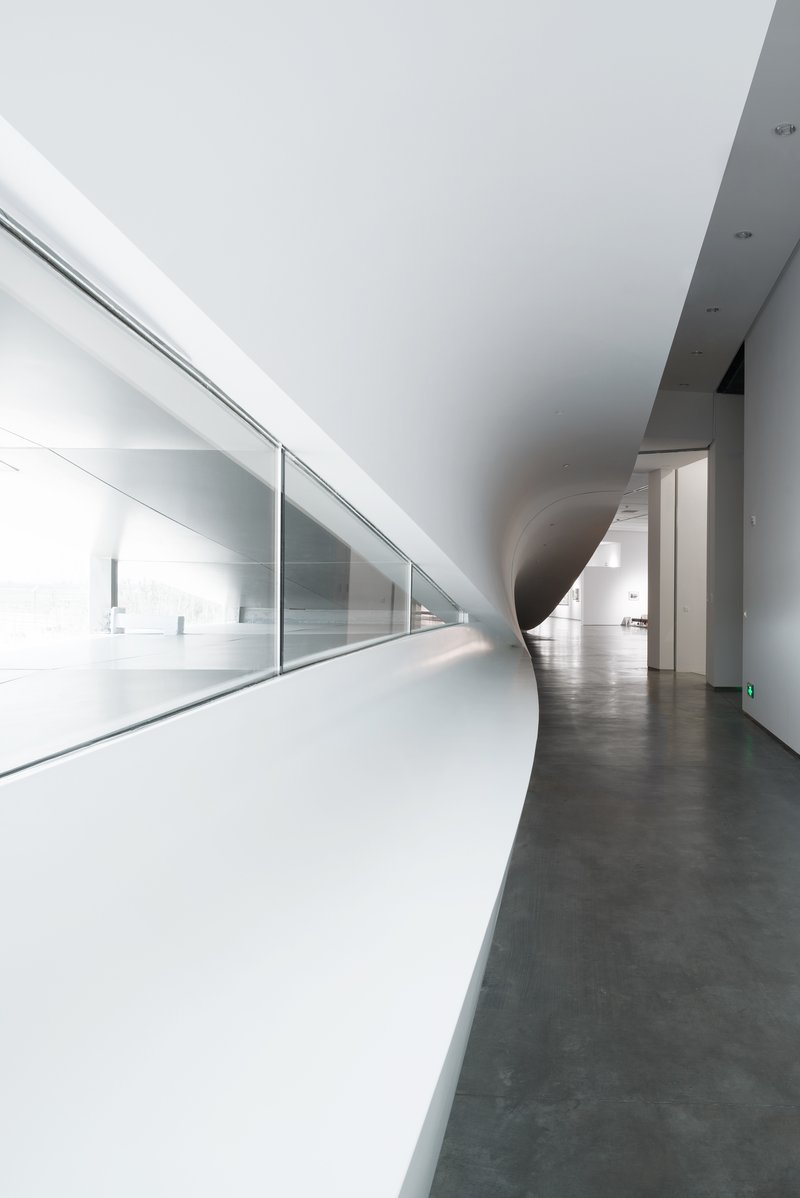
Within the atrium, two galleries accommodate sculpture and large-scale installations at the basement level. As visitors ascend through the building, the spatial experience shifts. The route through the gallery spaces creates a perception of climbing, and the environment becomes progressively whiter, brighter, and more refined. This gradient from raw to polished mirrors the geological narrative: from deep sedimentary layers below to the open sky above.
Gallery Program and Exhibition Spaces
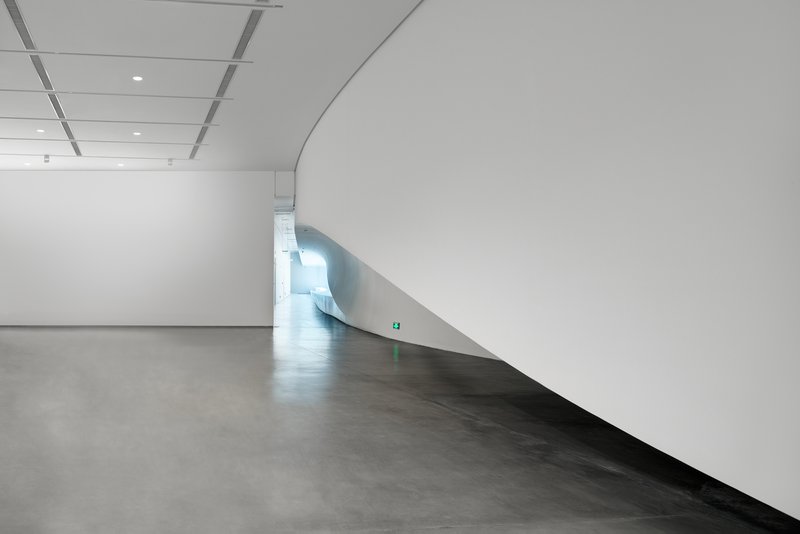
The museum houses multiple gallery types, each calibrated to different exhibition needs. Level 3 contains two large galleries dedicated to thematic collections, offering expansive, column-free spaces that give curators maximum flexibility. The basement-level galleries are designed for sculpture and installation work, with ceiling heights and floor loads that support heavy, three-dimensional pieces.
An elevated display deck on the second floor provides a transitional space between the thematic and permanent collections. The visitor's journey through the museum is carefully sequenced: descending into the deeper, more immersive galleries before ascending to the permanent collection and eventually reaching the restaurant at the upper levels with views over the surrounding wetland and desert.
Education and Community
Beyond its exhibition program, MOCA Yinchuan integrates strong educational functions throughout the building. A lecture theatre, library workshop, and classrooms are distributed across different levels, ensuring that learning is woven into the visitor experience rather than isolated in a single wing. These spaces are designed to support emerging artists and foster community engagement with contemporary art.
An outdoor sculpture park surrounds the museum complex, extending the cultural program into the landscape and providing a gathering space for the community. The park reinforces the building's central idea: that art, architecture, and landscape are continuous, not separate domains.
Project Details
- Architects: WAA (we architech anonymous)
- Location: Yinchuan, Ningxia Hui Autonomous Region, China
- Area: 13,188 m²
- Year: 2015
- Photography: NAARO
- Design Team: Di Zhang, Jack Young, Ruben Bergambagt, Huang Yisu
This article is part of uni.xyz's coverage of significant cultural architecture projects worldwide. Last updated: April 2026.



Popular Articles
Popular articles from the community

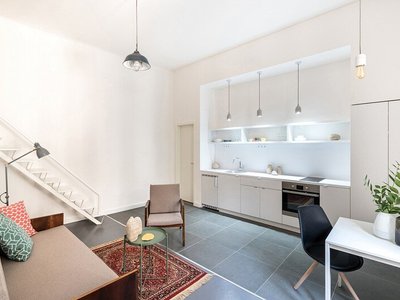
Marvila Apartment Renovation in Lisbon: A Bright Minimalist Attic Transformation by KEMA Studio
Bright attic transformed into minimalist Lisbon apartment with skylights, sustainable materials, open plan layout, and industrial-inspired interior design elements.
Magic Box Office Barcelona Innovative Sustainable Workplace Design
Innovative sustainable office design featuring triangular form, ceramic façade, flexible interiors, natural light optimization, and creative workspace for modern work culture.

Free Architecture Competitions You Can Enter Right Now
No entry fees, real prizes. Here are the best free architecture competitions open for submissions in 2026.
20 Most Popular Commercial Architecture Projects of 2025
From sustainable market concepts to heritage factories, the commercial buildings and proposals that drew the most attention on uni.xyz this year.

Similar Reads
You might also enjoy these articles
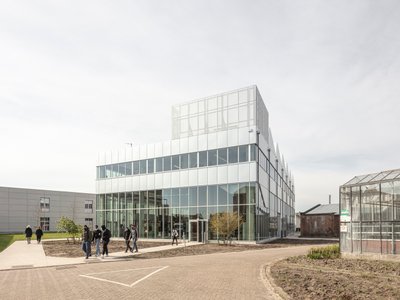
STEM School Mechelen by LAVA Architecten: A Future-Ready Educational Architecture in Belgium
Flexible, sustainable STEM school in Mechelen featuring modular classrooms, acoustic innovation, and energy-efficient design supporting future-focused collaborative learning environments.
Marvila Apartment Renovation in Lisbon: A Bright Minimalist Attic Transformation by KEMA Studio
Bright attic transformed into minimalist Lisbon apartment with skylights, sustainable materials, open plan layout, and industrial-inspired interior design elements.
Magic Box Office Barcelona Innovative Sustainable Workplace Design
Innovative sustainable office design featuring triangular form, ceramic façade, flexible interiors, natural light optimization, and creative workspace for modern work culture.
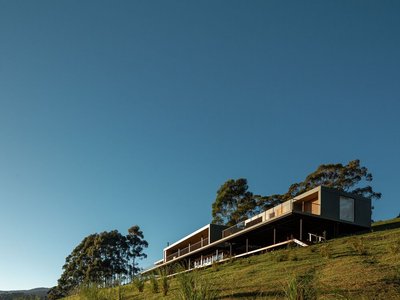
Mantiqueira House by SysHaus and M Magalhães Estúdio
A linear modular house embedded in Serra da Mantiqueira, integrating panoramic views, sustainable prefabrication, minimal terrain impact, and contemporary interiors.


Explore Cultural Architecture Competitions
Discover active competitions in this discipline




The Global Benchmark for Architecture Dissertation Awards


The Global Benchmark for Graduation Excellence


Challenge to design an urban locus of culture and heritage


Bring back Drive In's
Comments (0)
Please login or sign up to add comments
No comments yet. Be the first to comment!