

Viereck Architects Shape an Eagle-Like Restaurant Atop an Austrian Alpine Peak
At 2000 meters above sea level on Kreischberg Mountain, a crystalline timber and glass pavilion seats 400 with full panoramic views.


Before The Eagle arrived, the summit of Kreischberg Mountain held nothing more than a temporary shack with an oversized umbrella doing duty as an après-ski bar. What Viereck Architects delivered in its place, completed in 2020 after a single year of construction, is a 1060 square meter restaurant that seats 200 inside and another 200 on a heated outdoor terrace, all at 2000 meters above sea level. The client wanted something crystalline, something rock-like. The architects gave them an abstracted eagle, its faceted planes oriented to capture every significant view across the Austrian Alps.
What makes this project genuinely interesting is not the spectacle of a glass box on a mountaintop. It is the structural logic that holds it together: a cross-laminated timber superstructure with columns leaning inward at compound angles on a tight two-meter grid, star-shaped CLT beams radiating across the ceiling, and glass panels reaching nearly six meters in height. The entire assembly was coordinated through a shared BIM model with façade specialists and M&E engineers, a necessity given the punishing December-to-December timeline and a site where winter conditions can plunge to minus 25 degrees. Every decision, from the copper-piped terrace slabs to the stainless steel mesh railings, serves a dual mandate: perform in extreme cold, and get out of the way of the view.
A Crystalline Form on the Ridge


Seen from the slopes, The Eagle reads as a dark, angular mass cantilevering off the ridgeline. Its faceted envelope of dark metal cladding and glass sits atop a rendered concrete base that anchors the building to the terrain. The folded roof planes are not arbitrary geometry. Each angle responds to a specific orientation: opening toward a distant range, deflecting prevailing wind, or sheltering the terrace below. The building's silhouette is deliberately restrained for something so prominent. It does not compete with the peaks; it refracts them.
The cantilever is the most dramatic gesture, pushing the glazed upper volume out over the slope to maximize the sense of floating above the landscape. From the side, the building's proportions shift considerably. The dark cladding compresses against the snow, and the glass seems to dissolve the boundary between conditioned space and open air. At dusk, when interior light fills the glass envelope, the structure glows like an alpine lantern.
Terrace and the View Through Invisible Railings


The outdoor terrace is not an afterthought. It doubles the restaurant's capacity and functions in conditions that would shut down most exterior spaces. Prefabricated concrete plates with embedded copper pipes carry warm water through the floor surface, preventing ice formation down to minus 25 degrees Celsius. The result: 200 additional seats that operate reliably through the ski season without the maintenance nightmare of ice removal at altitude.
Stainless steel railings fitted with near-invisible metal netting preserve sightlines across the mountain backdrop. It is a small detail that makes a significant difference. Conventional balustrades at this scale would wall off the panorama; the mesh dissolves, leaving guests with the sensation of sitting at the edge of the mountain itself. The timber furniture on the terrace is robust enough for alpine exposure, and the raised platform creates a clear datum line between the restaurant's social space and the ski runs below.
Star-Shaped Timber Ceiling and Acoustic Strategy


The interior's most commanding element is the ceiling. CLT beams radiate in a star-shaped pattern from the structural columns, creating a dynamic overhead geometry that shifts as you move through the space. Between the beams, CLT ceiling slabs and perforated timber acoustic panels conceal the ventilation system, which is critical in a restaurant where hundreds of skiers arrive in wet boots and damp clothing. The hidden HVAC handles both heating and moisture extraction, keeping the interior warm without the stuffiness that plagues many mountain restaurants.
Suspended from this timber lattice are pendant lights made of compressed felt, shaped to resemble birds in flight. The reference is not decorative whimsy: eagles are common in the Kreischberg area, and the lamps reinforce the building's thematic identity without being literal. Against the ribbed wood ceiling and angled glazing, they create a layered visual texture that softens the scale of a room designed for 200 diners.
The 15-Meter Bar and Carved Stone Walls


The bar area announces itself through a shift in materiality. Steel frames, larger and heavier than the CLT columns elsewhere, define the space and support cascading timber wall panels. The centerpiece is a 15-meter-long counter clad in backlit stone plates. The stone is not decorative veneer applied for warmth; it is carved to resemble the surrounding mountain range, a geological abstraction that ties the interior directly to the landscape outside the glass.
A separate stone installation on the wall maps labeled peaks with backlit edges, functioning as both art piece and wayfinding tool for guests curious about what they are looking at through the windows. The stone and timber palette grounds the bar in tactile, heavy materials that contrast with the airiness of the dining room. Black pendant lights drop low over the seating, compressing the scale to something more intimate: a welcome shift after the soaring heights of the main guestroom.
Dining Against the Sky


The main dining space is where the six-meter glass panels earn their keep. Angled glazing leans outward, pulling the mountain panorama into the room and making the ceiling feel like the underside of a wing. Custom oak tables and black leather benches align precisely with the two-meter structural column grid, so that the furniture reads as part of the architecture rather than something arranged after the fact. The inward lean of the CLT columns adds a subtle kinetic quality to the space, as though the structure is bracing itself against alpine winds.
On overcast days, when clouds settle at the building's elevation, the view through the angled windows becomes almost abstract: white gradients interrupted by the dark lines of the timber cross-members. A timber cross silhouetted against this milky backdrop, visible in one of the window bays, is a quiet reference to the alpine vernacular of summit crosses. It is a small, considered moment in a building that consistently finds the right register between spectacle and restraint.
Concealed Services and Material Details


The false ceiling is doing heavy lifting. Behind the perforated timber panels and integrated ventilation grilles, the entire HVAC system is concealed, supplemented by electric floor heating below. The detailing is meticulous: backlit vertical wood panels create a warm glow at the transitions between wall and ceiling, and angular timber enclosures around service elements like sinks and countertops maintain the faceted language of the exterior. Nothing reads as back-of-house.
The consistency of this approach across the building, from the bar counter to the restroom finishes, reflects the discipline that a tight construction schedule demands. When every element is modeled in BIM and prefabricated off-site, there is no room for ad-hoc detailing. The payoff is a building where the material palette, CLT, stone, oak, felt, leather, steel, reads as coherent rather than curated.
Plans and Drawings


The elevation drawings reveal the logic behind the folded roof planes and the way the glazed upper volume relates to its concrete base. From the south-east, the angular roof masses stack and overlap, producing a silhouette that changes dramatically depending on approach direction. The south-west elevation shows the depth of the cantilever and the recessed openings cut into the lower level, where the "Eagle Fly-In" allows skiers to access snacks and drinks without removing their equipment. A human figure at the base of the drawing clarifies the building's true scale: this is not a modest chalet. It is a substantial piece of alpine infrastructure, compressed into a form that reads as taut and mineral.
Why This Project Matters
Mountain architecture too often falls into one of two camps: the nostalgic timber lodge that pretends modernity never happened, or the glass pavilion that ignores the violence of alpine weather. The Eagle occupies neither position. Its CLT structure is a genuine evolution of timber building tradition, not a cosmetic nod to it. Its glass walls are backed by a heating and ventilation strategy engineered for the specific humidity and temperature extremes of a ski restaurant at 2000 meters. And its faceted form, while visually striking, is derived from orientation analysis rather than sculptural ambition.
The project also demonstrates that a twelve-month construction window at altitude is feasible when design and fabrication are fully integrated through shared digital models. That lesson extends well beyond ski resorts. As construction schedules compress and sites become more logistically challenging across the industry, the coordinated BIM workflow that Viereck Architects employed here is less a luxury than a preview of standard practice. The Eagle is both a destination and a case study, and it succeeds convincingly as both.
The Eagle Mountain Top Restaurant by Viereck Architects. Located at Kreischberg Mountain, St. Georgen am Kreischberg, Austria. 1060 m². Completed 2020. Photography by Tom Lamm.
About the Studio
Share Your Own Work on uni.xyz
If projects like this are the kind of work you want to make, uni.xyz is a place to publish your own, find collaborators, and enter design competitions.


Popular Articles
Popular articles from the community


David Ortega Stacks a Two-Story Mexico City Penthouse Around a Steel Stair and a Pergola-Shaded Roof Terrace
In Colonia Roma, a 300 m² penthouse uses oak joinery, a planted steel stair and a slatted roof pergola to make a new-build apartment feel like a house.

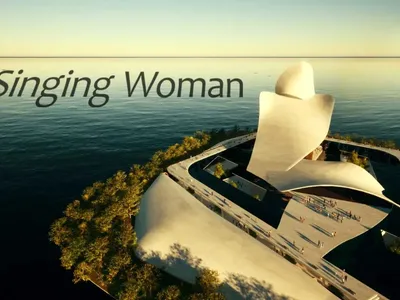
Singing Woman: An Opera House That Performs Before the Curtain Rises
Ovidiu Cristian Pavel's conceptual opera house translates Estonia's choral identity into a sculpted waterfront landmark facing the Baltic Sea.
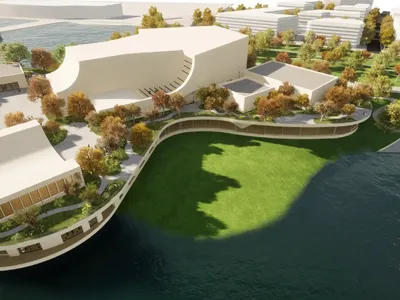
The Amber Palace Opera: A Geological Fiction Surfaces on Tallinn's Baltic Waterfront
Pierre Brillard reimagines a Baltic legend as a public landscape, opera house, and waterfront promenade rooted in Tallinn's coastal identity.

FCC Arquitectura Expands a Portuguese Granite House with a Board-Marked Concrete Wing
In Portugal, JV House pairs a cleaned-up whitewashed and granite dwelling with a timber-shuttered concrete extension, courtyards and a garden pool.

Similar Reads
You might also enjoy these articles

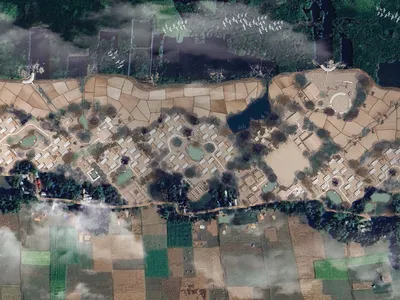
Hodi-Mandai Geram
Project Function: Preservation and revitalization of the Intangible heritage and socio-spatial identity of the Hodi by Housing, Cultural Memory Center, Sacred Grove, landscape, local tourism economy

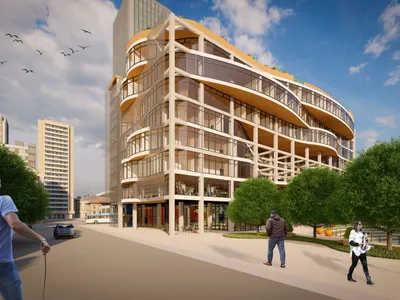
Olio Towers: A Mid-Rise for Performers That Fuses Housing, Rehearsal, and Stage
Located blocks from Houston's Theater District, this modular tower stacks living units around a central performance atrium.
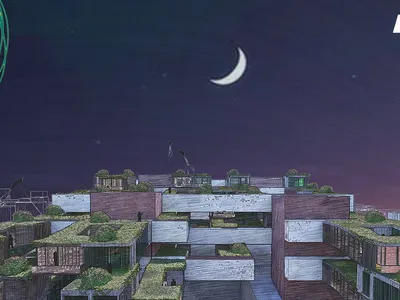
Oasis: Modular Green Housing Carved into Dhaka's Urban Fabric
A shortlisted Plugin Housing entry reclaims unauthorized settlements in Dhaka with stepped concrete volumes, green roofs, and ventilation-driven design.

Black Hole: A Floating Megastructure for the Post-Physical Era
Emiliano Mazzarotto envisions a spherical, self-scaling arena where e-sports, digital hotels, and holographic stadiums replace traditional public space.

Explore Architecture Competitions
Discover active competitions in this discipline

Challenge to reimagine the Iron Throne

Photograph architecture without architects

Illustrate the lost glory of Angkor Wat - Render Challenge

Design challenge to reuse E-waste
Comments (0)
Please login or sign up to add comments
No comments yet. Be the first to comment!