

Nashan Geological Museum: A Sculptural Tribute to Volcanic Heritage by Xiamen Urban Environment Design & Engineering
A sculptural museum on Nashan Mountain celebrating volcanic geology through immersive design, local materials, and sustainable architectural integration.


Located in Yangzhou, China, the Nashan Geological Museum is a landmark project designed by Xiamen Urban Environment Design & Engineering, seamlessly integrating environmental preservation, cultural education, and tourism. Completed in 2021 and spanning over 3,126 square meters, the museum stands as a powerful example of sustainable architecture rooted in geological storytelling.
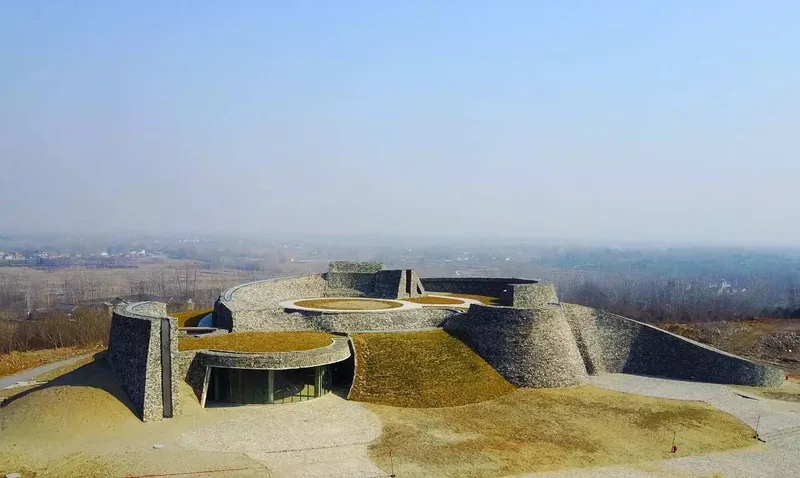
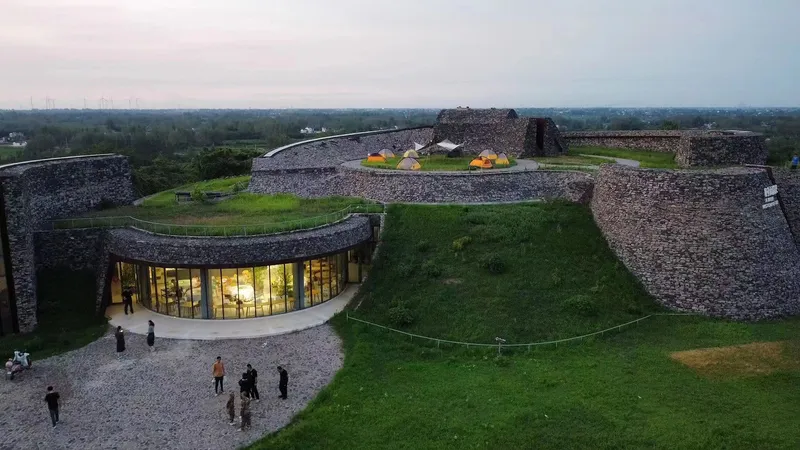
A Museum Built on an Ancient Volcano
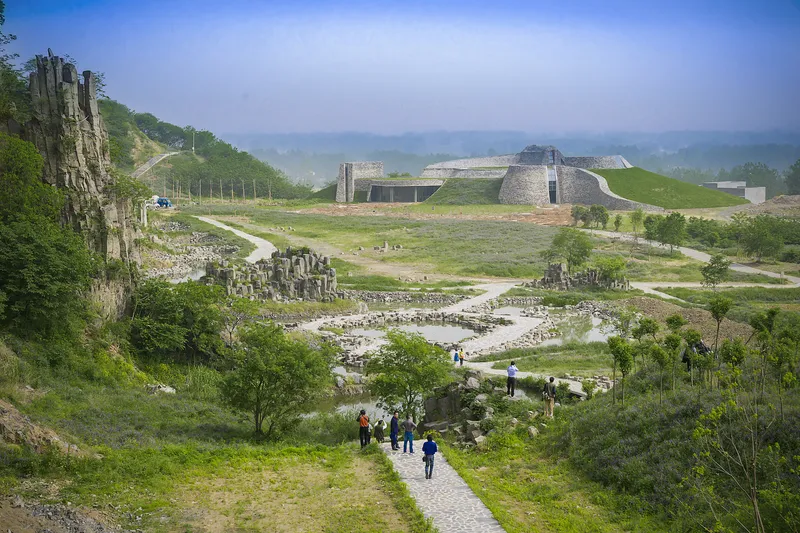
The museum is sited on Nashan Mountain, a 10-million-year-old shield volcano with a remarkably preserved geological record. This natural formation contains volcanic eruptive facies, overflow deposits, faults, and other volcanic structures. Rich in basalt columns, breccia, peridotite, diabase, and fossilized remains including wood and bone fossils, Nashan Mountain is considered a geological treasure trove of the Cretaceous period.
Conservation Through Design: A New Chapter for Nashan
Following decades of quarrying during China's post-reform era, the once-intact volcano suffered significant damage. However, this unintentional exposure revealed a cross-section of the volcano’s structure—sparking geological interest. By the early 2000s, the local government initiated protective measures, sealing off the mountain and laying the groundwork for a comprehensive geological park and museum.
The new development aims to strike a careful balance between ecological conservation and economic development through eco-tourism. Xiamen Urban Environment Design & Engineering was invited to lead the master planning and architectural design, with a vision to create a public space that celebrates Nashan’s volcanic past while promoting sustainability and scientific education.
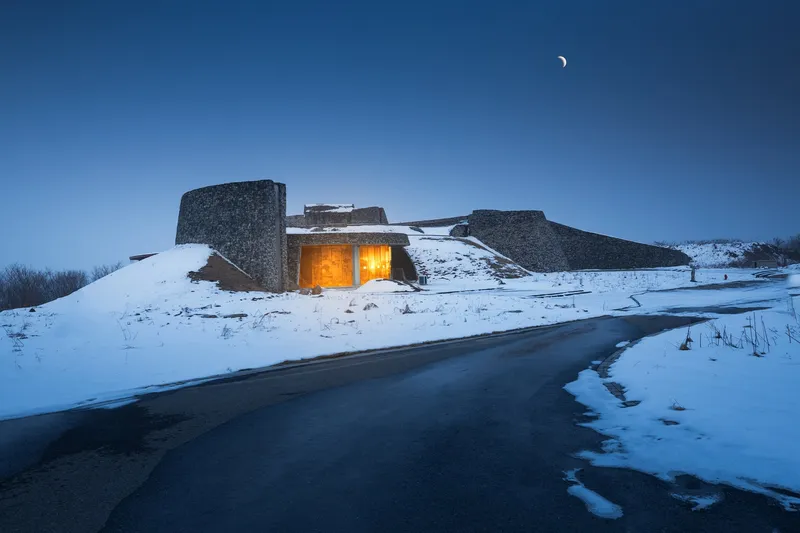
Volcanic Form, Local Materials
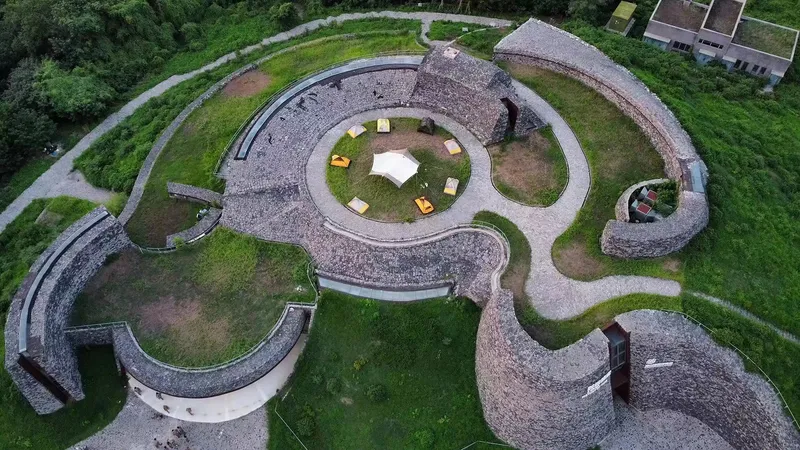
Inspired by the original form of the shield volcano, the architectural design of the museum reflects the natural contours of the landscape. The building’s exterior is clad in locally-sourced basalt and stone, offering a material connection to the terrain it inhabits. Its spiraling form guides visitors upwards in a looped pathway, culminating in a panoramic rooftop terrace.
This rooftop not only functions as a viewing platform—offering views of the basalt columns and night skies—but also serves as a recreational space for activities like picnics and grass surfing. Visitors can descend via a winding exterior path, encouraging indoor-outdoor interaction and spatial fluidity.
Immersive Experience and Interpretive Design
The interior of the museum takes visitors on a narrative journey through volcanic evolution, supported by 4D immersive technologies and interpretive installations that reflect local culture and natural history. The spiral layout enhances storytelling, allowing users to progress through exhibits while physically ascending the structure—symbolizing the geological uplift that formed the region.
Sustainability is at the core of the design, with low-maintenance materials, passive ventilation, and a strong emphasis on using local resources to minimize environmental impact and long-term costs.
Fostering Geological Awareness
The Nashan Geological Museum goes beyond conventional exhibition spaces. It is a sculptural landmark, a community hub, and an educational destination that strengthens public understanding of geological processes and promotes ecological stewardship. Through architectural innovation, it presents a model of how design can revitalize and reinterpret natural heritage sites.


Popular Articles
Popular articles from the community


Singing Woman: An Opera House That Performs Before the Curtain Rises
Ovidiu Cristian Pavel's conceptual opera house translates Estonia's choral identity into a sculpted waterfront landmark facing the Baltic Sea.

Aquadapt: An Underwater Habitat That Rewrites Its Rooms by the Hour
Curved modules ring the seabed while one shell shifts from breakfast room to cinema, farm and football pitch as residents' needs change.


FCC Arquitectura Expands a Portuguese Granite House with a Board-Marked Concrete Wing
In Portugal, JV House pairs a cleaned-up whitewashed and granite dwelling with a timber-shuttered concrete extension, courtyards and a garden pool.

Juan García Correa, John González and Claudia Rueda Sink a Circular Amphitheater into a Manizales Engineering Building
On the La Nubia campus in Manizales, Colombia, the S1 Building folds labs and offices into a hillside of ramped lawns that double as a campus route.

Similar Reads
You might also enjoy these articles


Hodi-Mandai Geram
Project Function: Preservation and revitalization of the Intangible heritage and socio-spatial identity of the Hodi by Housing, Cultural Memory Center, Sacred Grove, landscape, local tourism economy


Olio Towers: A Mid-Rise for Performers That Fuses Housing, Rehearsal, and Stage
Located blocks from Houston's Theater District, this modular tower stacks living units around a central performance atrium.

Oasis: Modular Green Housing Carved into Dhaka's Urban Fabric
A shortlisted Plugin Housing entry reclaims unauthorized settlements in Dhaka with stepped concrete volumes, green roofs, and ventilation-driven design.

Black Hole: A Floating Megastructure for the Post-Physical Era
Emiliano Mazzarotto envisions a spherical, self-scaling arena where e-sports, digital hotels, and holographic stadiums replace traditional public space.

Explore Geological Heritage Competitions
Discover active competitions in this discipline

Challenge to reimagine the Iron Throne

Photograph architecture without architects

Illustrate the lost glory of Angkor Wat - Render Challenge

Bring back Drive In's
Comments (0)
Please login or sign up to add comments
No comments yet. Be the first to comment!