
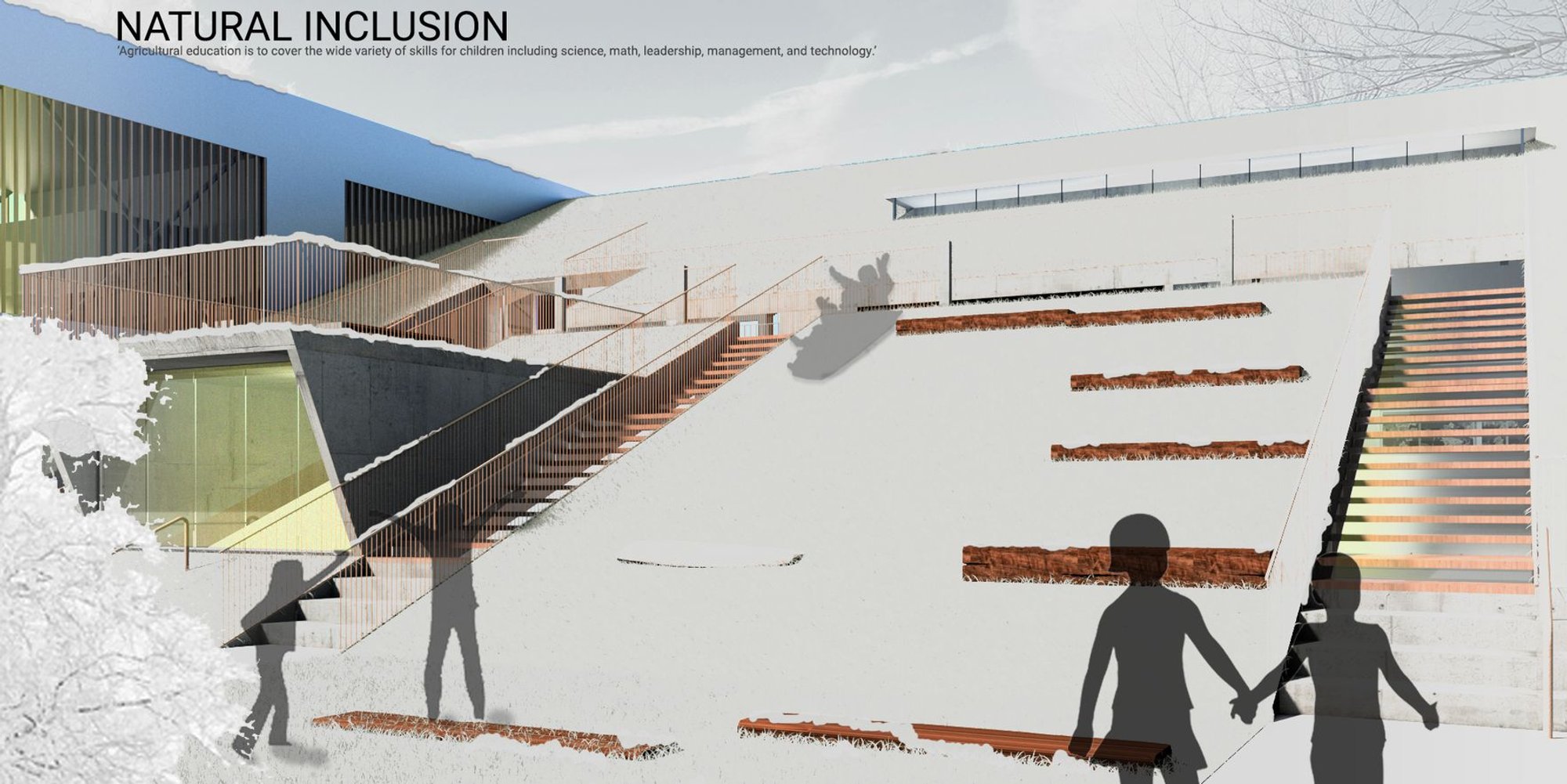
Natural Inclusion: A Model for Sustainable School Architecture
Empowering education through sustainable school architecture with greenhouses, rooftop playgrounds, and immersive nature learning

Project by Chris Lee
Shortlisted entry of Learn Better
In an era where architecture and education increasingly intersect, this proposal redefines what a sustainable learning environment can look like. Rooted in the principles of sustainable school architecture, the project known as "Natural Inclusion" integrates nature directly into the educational ecosystem.
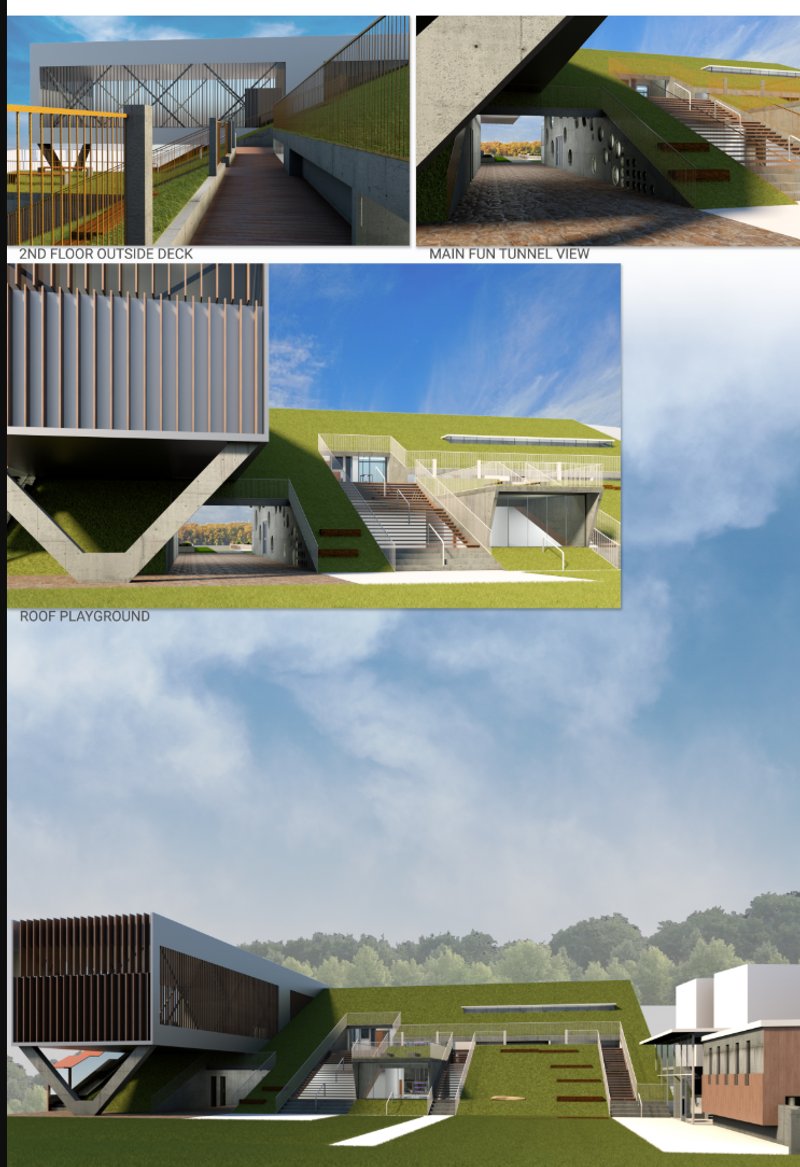
At its core, the design challenges the conventional boundaries of learning by embedding agricultural education within the school’s infrastructure. By introducing programs like rooftop playgrounds, greenhouses, and school farming centers, the school nurtures not just intellectual growth, but also emotional and environmental intelligence.
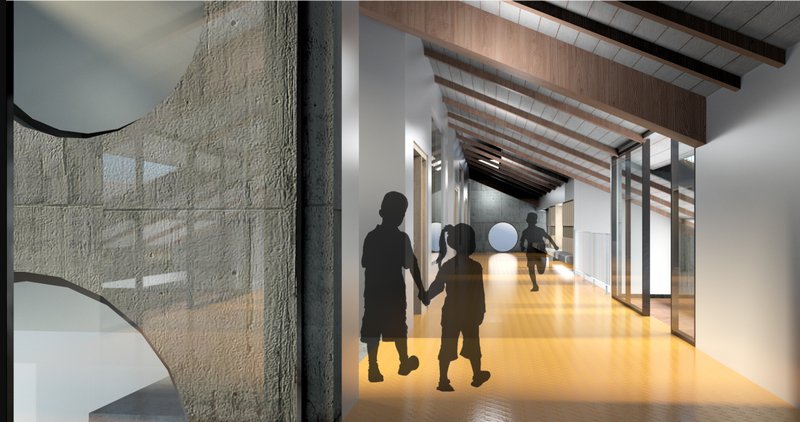
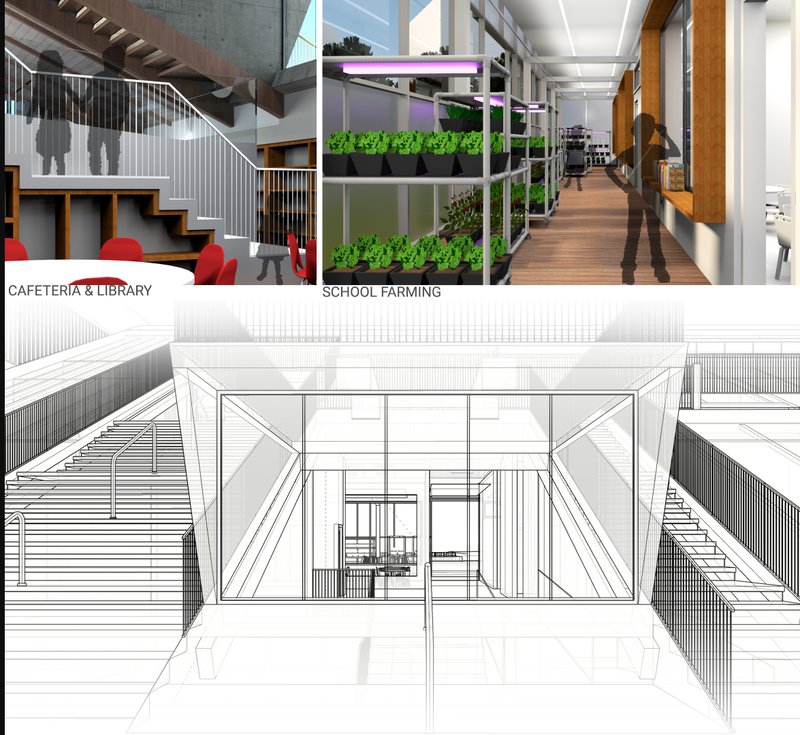
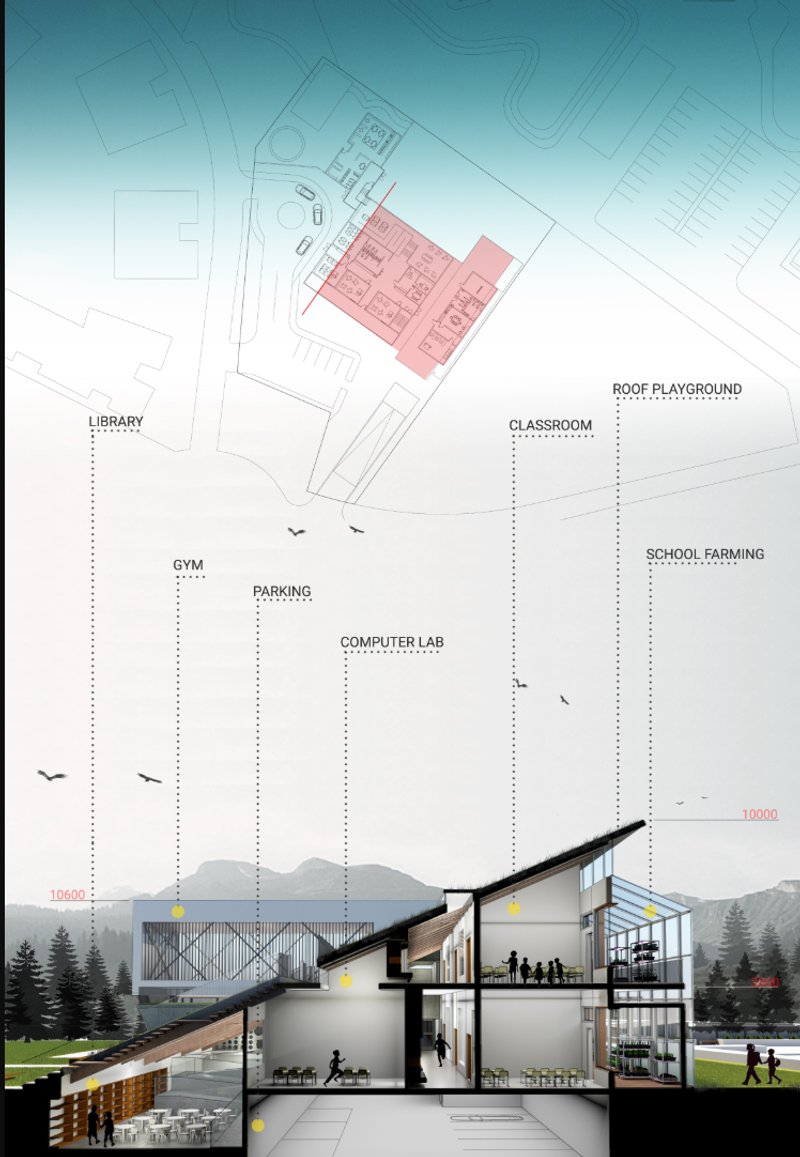
Children are encouraged to develop skills across diverse disciplines — from science and math to leadership and technology — through hands-on interaction with nature. This immersive approach supports holistic development while fostering a deep respect for ecological systems. The architectural layout separates vehicular and pedestrian access to ensure child safety and employs green terraces that extend learning spaces vertically.
The multi-level configuration of the school ensures optimal zoning — kindergarten and upper-grade areas are isolated for age-appropriate engagement, while community-friendly access points support public interaction with outdoor courts and tracks. The farming center and greenhouse serve as functional classrooms, enabling students to cultivate, observe, and learn about food systems and sustainability in real time.
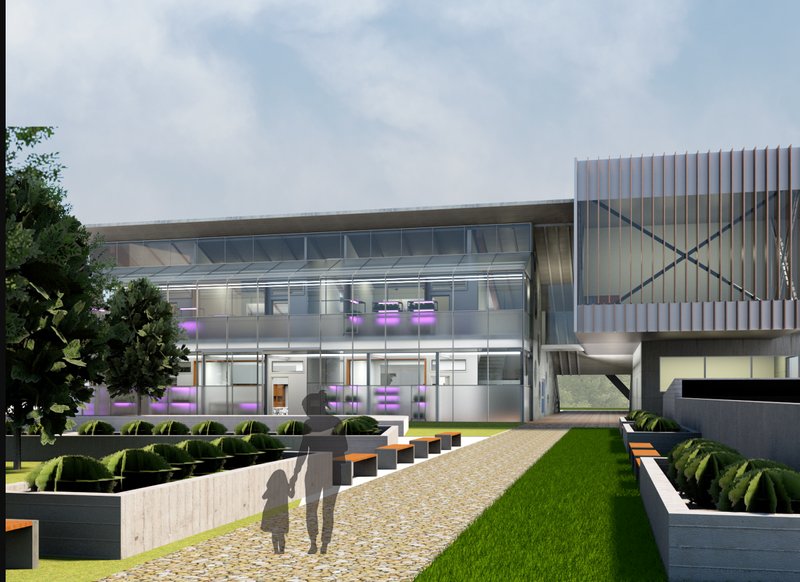
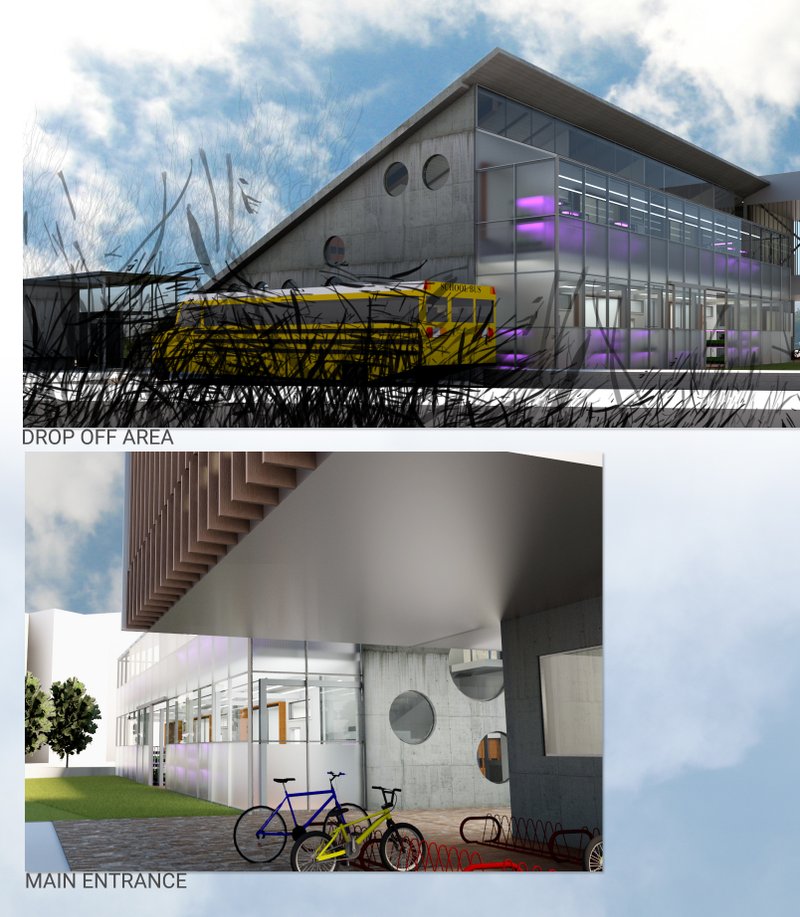
Design elements such as a sun-lit cafeteria, a tech-integrated computer lab, and flexible classrooms are all woven into a structure that visually and functionally embraces its natural context. The result is an inclusive architecture that transcends walls — promoting thinking, feeling, and doing as an integrated educational philosophy.
Chris Lee’s shortlisted entry in the Learn Better competition stands out as a pioneering effort in sustainable school design — one that anticipates future educational needs by rooting them in nature and community.




Popular Articles
Popular articles from the community

20 Most Popular Commercial Architecture Projects of 2025
From sustainable market concepts to heritage factories, the commercial buildings and proposals that drew the most attention on uni.xyz this year.

Free Architecture Competitions You Can Enter Right Now
No entry fees, real prizes. Here are the best free architecture competitions open for submissions in 2026.

Filtering Space: A Gradual Spatial Experience
From urban intensity to spatial calm.


Similar Reads
You might also enjoy these articles
Filtering Space: A Gradual Spatial Experience
From urban intensity to spatial calm.


The Ken Roberts Memorial Delineation Competition (Krob)
As the most senior architectural drawing competition currently in operation anywhere in the world, it draws hundreds of entries each year, awarding the very best submissions in a series of medium-based categories.

Waterfront Redevelopment and Urban Revitalization in Mumbai: Forging a New Dawn for Darukhana
A transformative waterfront redevelopment project reimagining Darukhana’s shipbreaking heritage into an inclusive urban future.

OUT-OF-MAP: A Call for Postcards on Feminist Narratives of Public Space
Rhizoma Design and Research Lab invites artists, designers, architects, researchers, and students to reflect on how feminist perspectives can reshape public space. Selected works will be exhibited in Barcelona, October 2026. Submissions open until 15 April 2026.

Explore Educational Building Competitions
Discover active competitions in this discipline




The Global Benchmark for Architecture Dissertation Awards


Challenge to design public laboratory

Challenge to merge furniture with learning


Competition to design a workstation for architects
Comments (0)
Please login or sign up to add comments
No comments yet. Be the first to comment!