
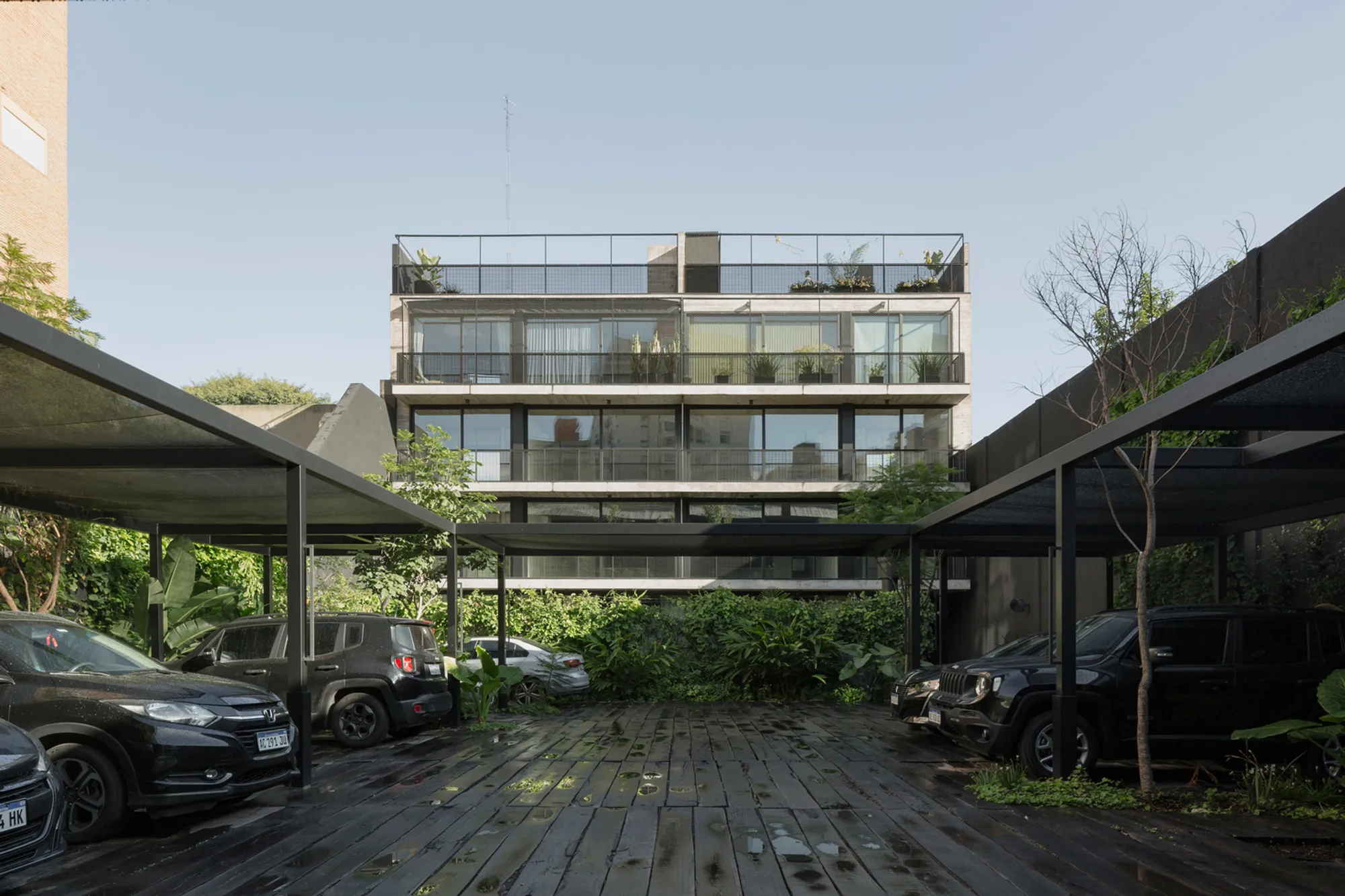
Newbery Urban Homes by Dieguez Fridman
Newbery Urban Homes blends concrete, light, and greenery to create communal, terrace-filled residences that mirror Buenos Aires’ evolving urban lifestyle.


Bringing Neighborhood Atmosphere into Vertical Living
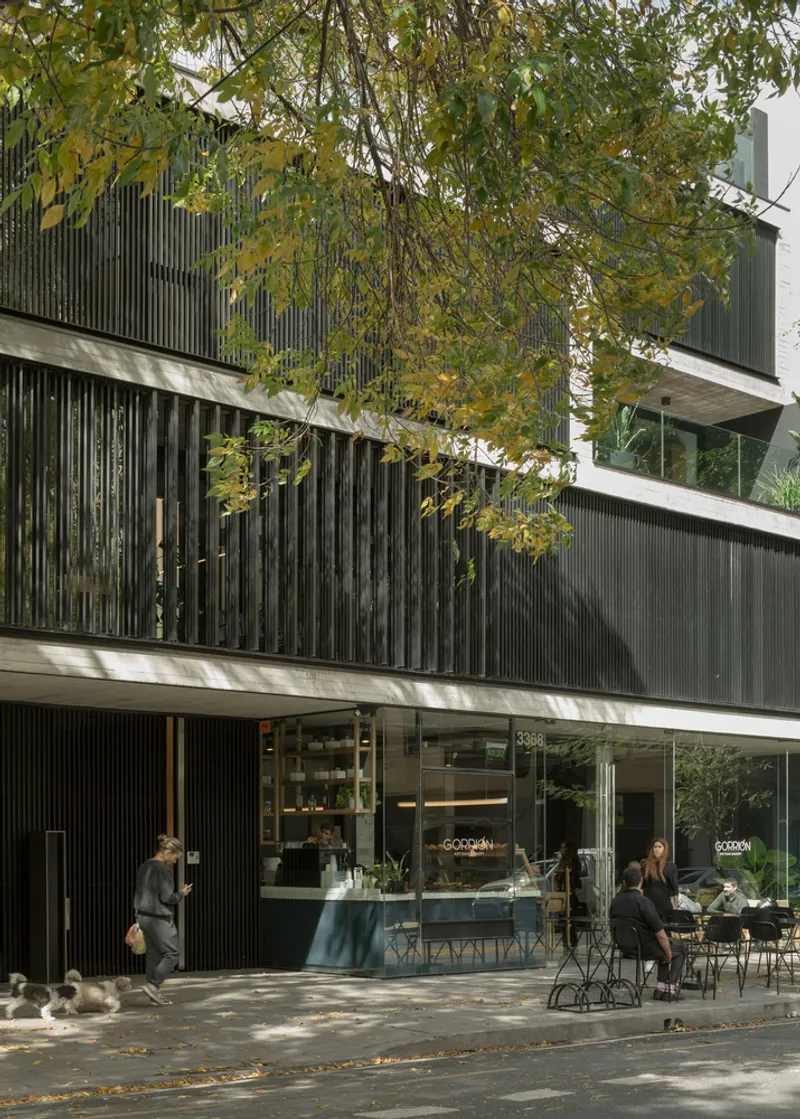
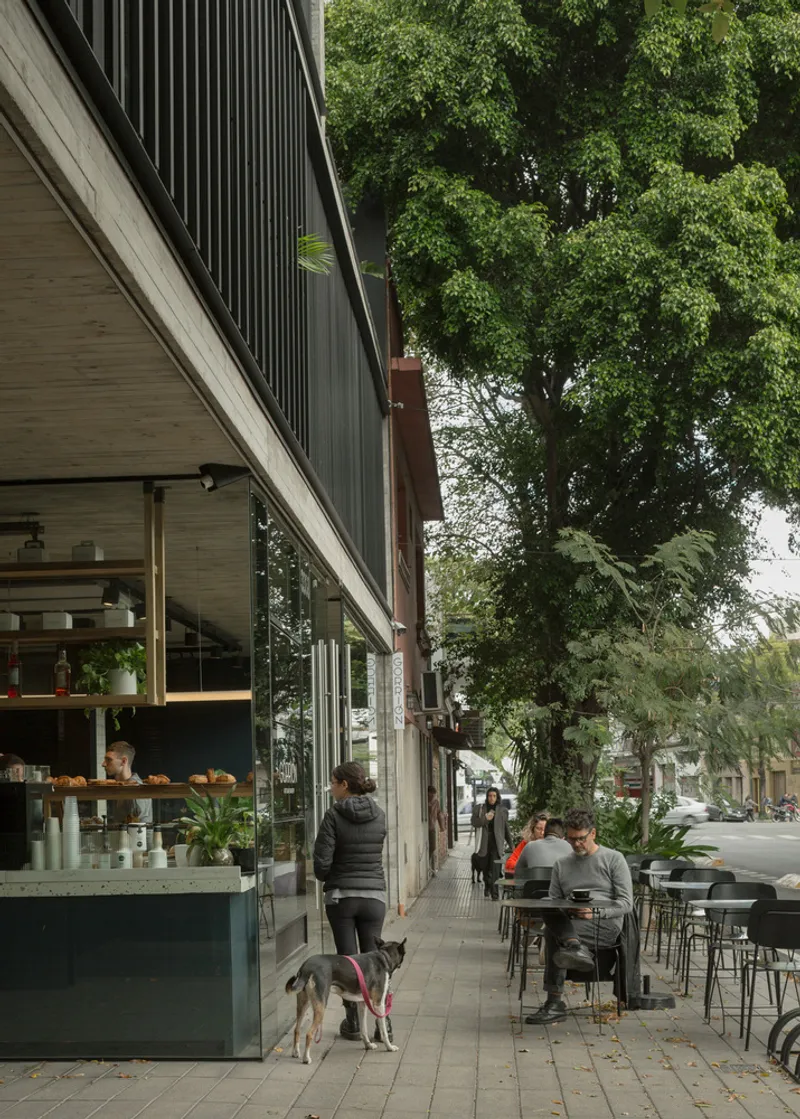
Nestled in the leafy residential neighborhood of Colegiales, Newbery Urban Homes by Dieguez Fridman redefines contemporary apartment living in Buenos Aires. The project captures the essence of a district in transition—where traditional houses coexist with a growing collection of cafes, design studios, and creative hubs—by extending the vibrancy of the streetscape into the architecture itself.
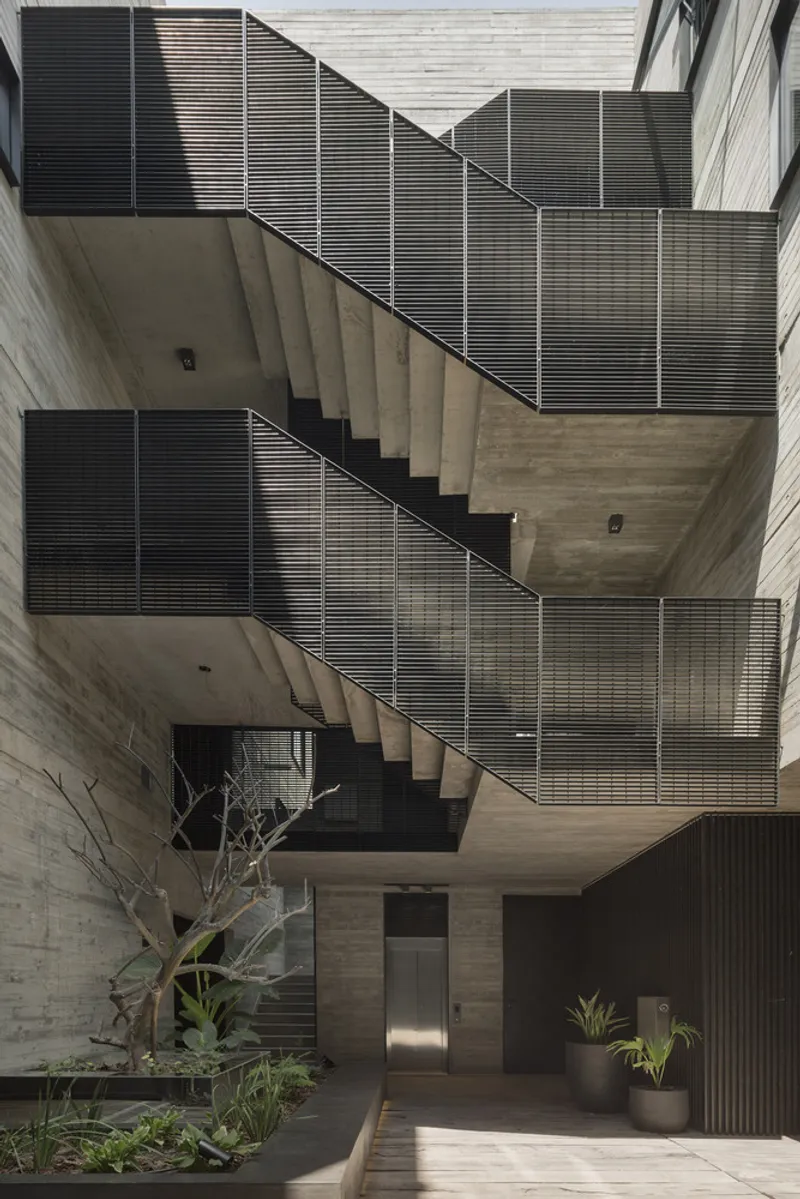
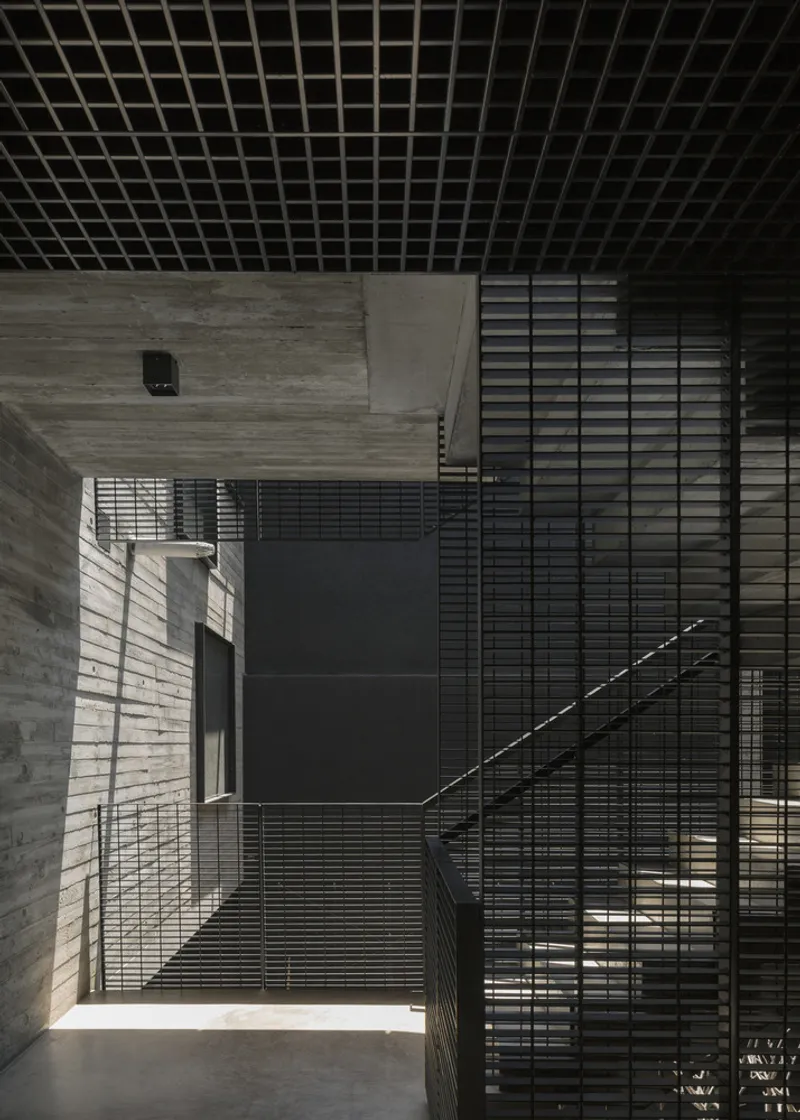
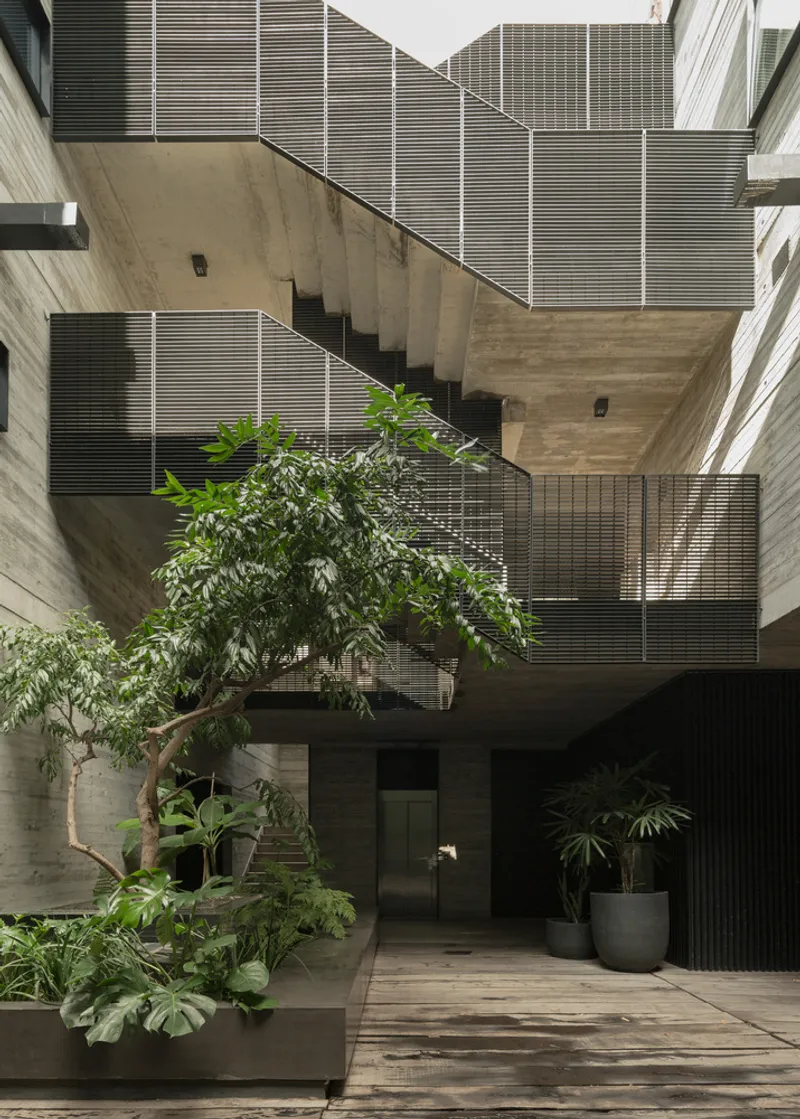
The architects envisioned the building as a continuation of the neighborhood’s promenade, designing open circulation spaces that bridge the street and each home. These semi-public corridors—filled with plants, light, and the play of shadow—create opportunities for spontaneous encounters among residents, fostering a subtle yet powerful sense of community.
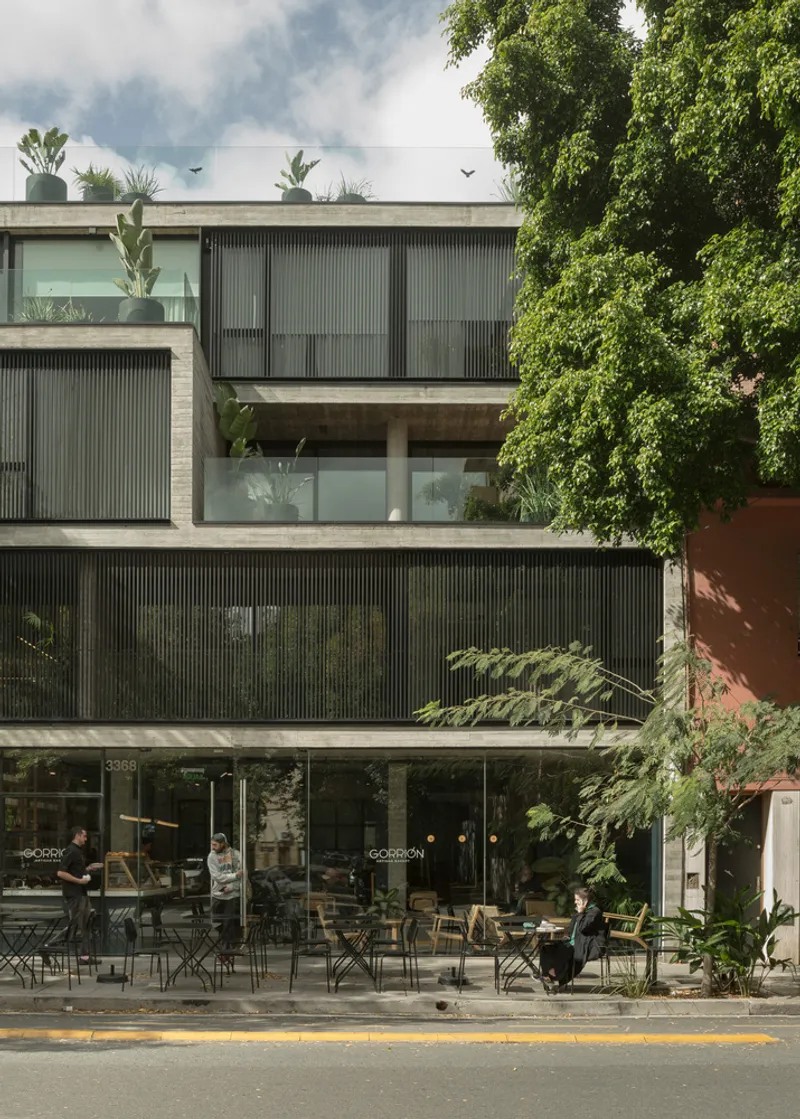
Architectural Concept: Between Grid and Movement
Buenos Aires is characterized by its strict orthogonal grid overlaying a flat topography, a structure that often appears uniform at first glance. However, small deviations in this fabric—such as corners, dead ends, and green interruptions—create unique spatial experiences. Newbery Urban Homes is located precisely at one of these moments, where Delgado Street terminates at the site, opening up a rare, axial view down a tree-lined boulevard.
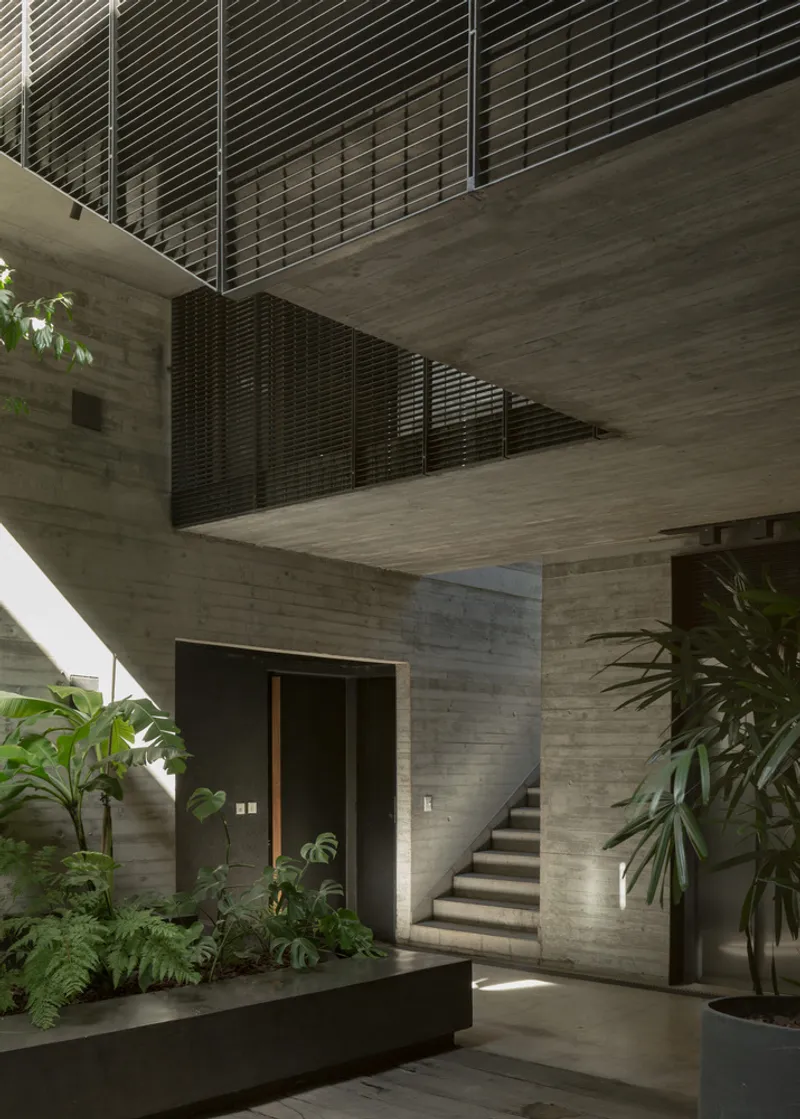
Rather than resisting the rigid grid, the architects embraced it as a framework for variation. The project capitalizes on this unusual perspective through large terraces and deep balconies, offering framed views of the surrounding canopy and extending domestic life outdoors.
Material Honesty and Light Expression
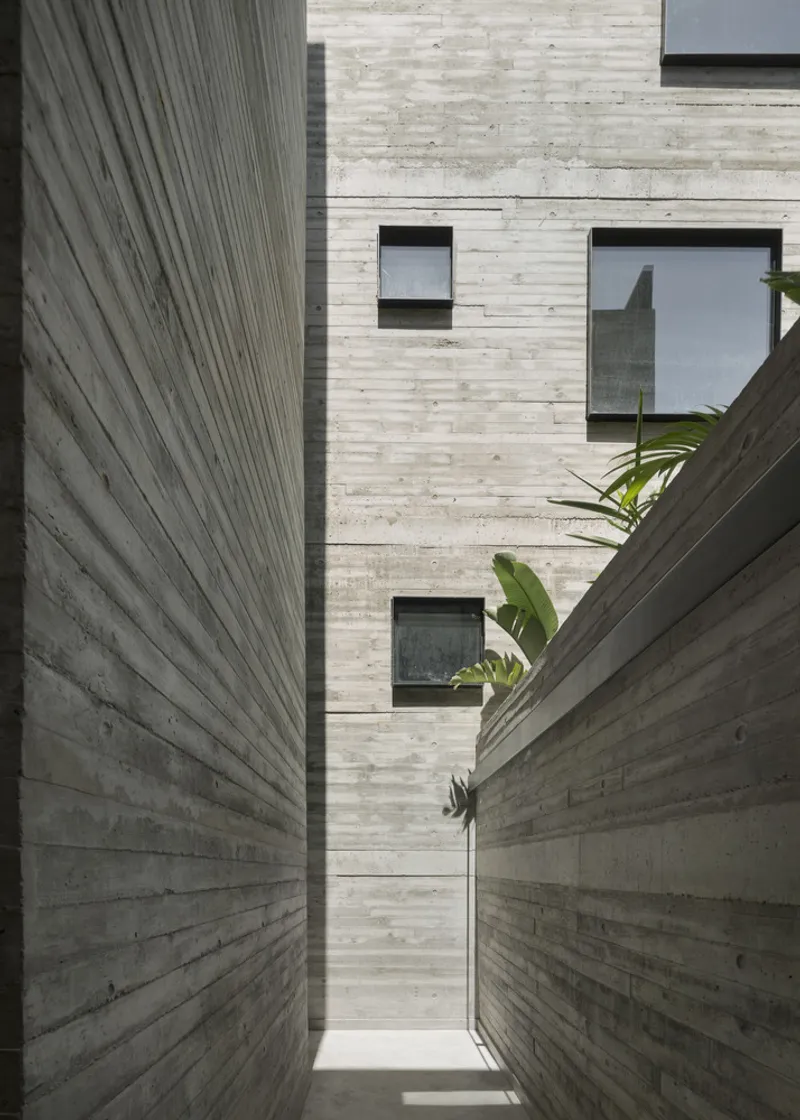
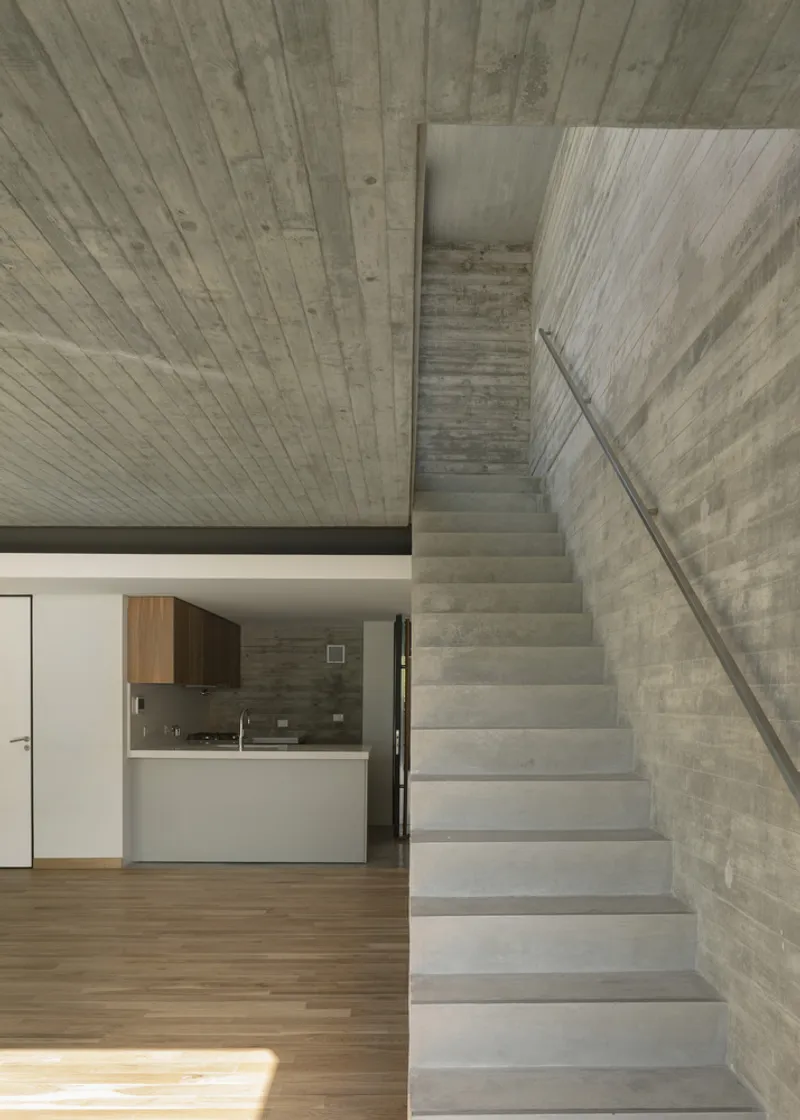
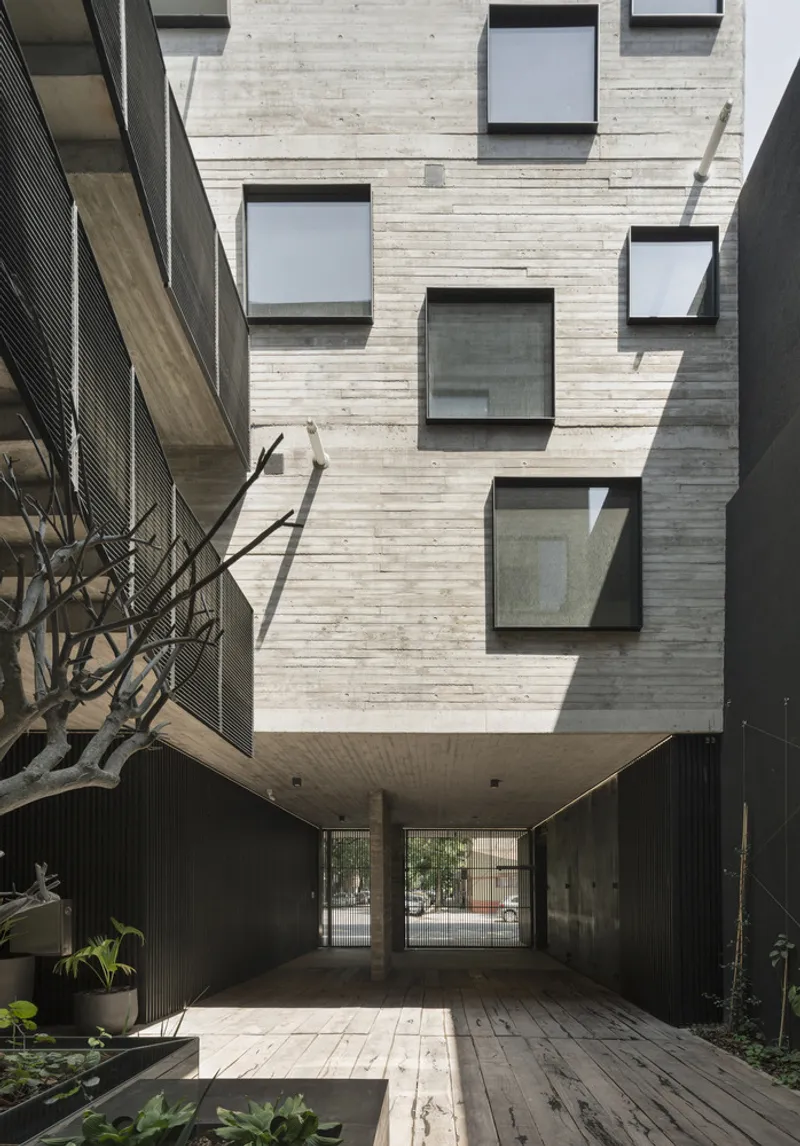
In keeping with the city’s architectural tradition, the building is constructed primarily in exposed concrete, poured over wooden formwork to retain the grain and texture of the boards. This tactile surface softens the material’s perceived heaviness, grounding it in both craftsmanship and authenticity.
Complementing the raw concrete, operable aluminum sunshades filter western sunlight and provide privacy from the street. Throughout the day, the shifting patterns of light and shadow transform the facades and interiors, blurring the boundaries between indoor and outdoor realms. These rhythmic changes echo Henri Bergson’s notion that movement brings “indeterminacy inside matter,” embedding life within the architectural experience.
Living Between the Public and the Private
Buenos Aires’ mild climate enables residents to use balconies and terraces as extensions of living spaces throughout the year. In Newbery Urban Homes, these transitional zones act as thresholds between the intimate domestic interior and the public realm of the street. They serve not only as climatic filters but also as social interfaces—places to rest, gather, or simply observe the life of the city below.




Popular Articles
Popular articles from the community


The Musturak Paradise: Senior Living Architecture for a Connected Future in Temara, Morocco
The Musturak Paradise reimagines senior living architecture in Temara via private homes, social spaces, culture, community, and shared care.

The Ocean Hive: Sustainable Architecture for a Self-Sufficient Civilization at Sea
The Ocean Hive imagines sustainable architecture at sea, where modular habitats, algae, wave power and ocean waste sustain a growing colony.

Riyadh For All: Intergenerational Urban Design for Active Aging in Rabat
Riyadh For All reimagines urban design in Rabat with intergenerational co-living, adaptive courtyards, and Moroccan cultural exchange today.

Lunar Spiral: Space Architecture Shaped by the Mathematics of the Universe
Lunar Spiral reimagines space architecture through Fibonacci geometry, lunar regolith, levitating habitats, and self-sustaining Moon living.


Similar Reads
You might also enjoy these articles


Hodi-Mandai Geram
Project Function: Preservation and revitalization of the Intangible heritage and socio-spatial identity of the Hodi by Housing, Cultural Memory Center, Sacred Grove, landscape, local tourism economy


Olio Towers: A Mid-Rise for Performers That Fuses Housing, Rehearsal, and Stage
Located blocks from Houston's Theater District, this modular tower stacks living units around a central performance atrium.

Oasis: Modular Green Housing Carved into Dhaka's Urban Fabric
A shortlisted Plugin Housing entry reclaims unauthorized settlements in Dhaka with stepped concrete volumes, green roofs, and ventilation-driven design.

Black Hole: A Floating Megastructure for the Post-Physical Era
Emiliano Mazzarotto envisions a spherical, self-scaling arena where e-sports, digital hotels, and holographic stadiums replace traditional public space.


Explore Latin American Houses Competitions
Discover active competitions in this discipline


Challenge to design mud housing for contemporary communities


Challenge to reimagine the Iron Throne


Photograph architecture without architects


Illustrate the lost glory of Angkor Wat - Render Challenge
Comments (0)
Please login or sign up to add comments
No comments yet. Be the first to comment!