

NO.51 Tea House
From A to B

Introduction: From A To B.
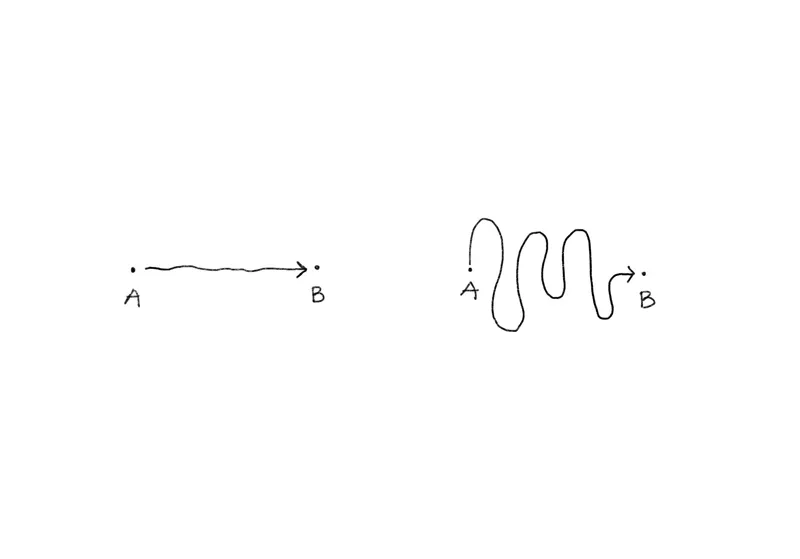 Figure 1. From A To B, 2022
Our design started with a simple thought experiment: how to arrive at B from A?
To physically arrive at a destination (Point B), we need to create a line or a path to connect the two points. On an architectural plan, this line represents the physical walls that separate the space on one side of the line from the other. For us, this is the fundamental process of creating space. We tried to stick to this simple concept in this project and challenged ourselves to use one line (one wall) to finish our design.
Iterations and Architectural Language: 90 Ways to Draw a Line.
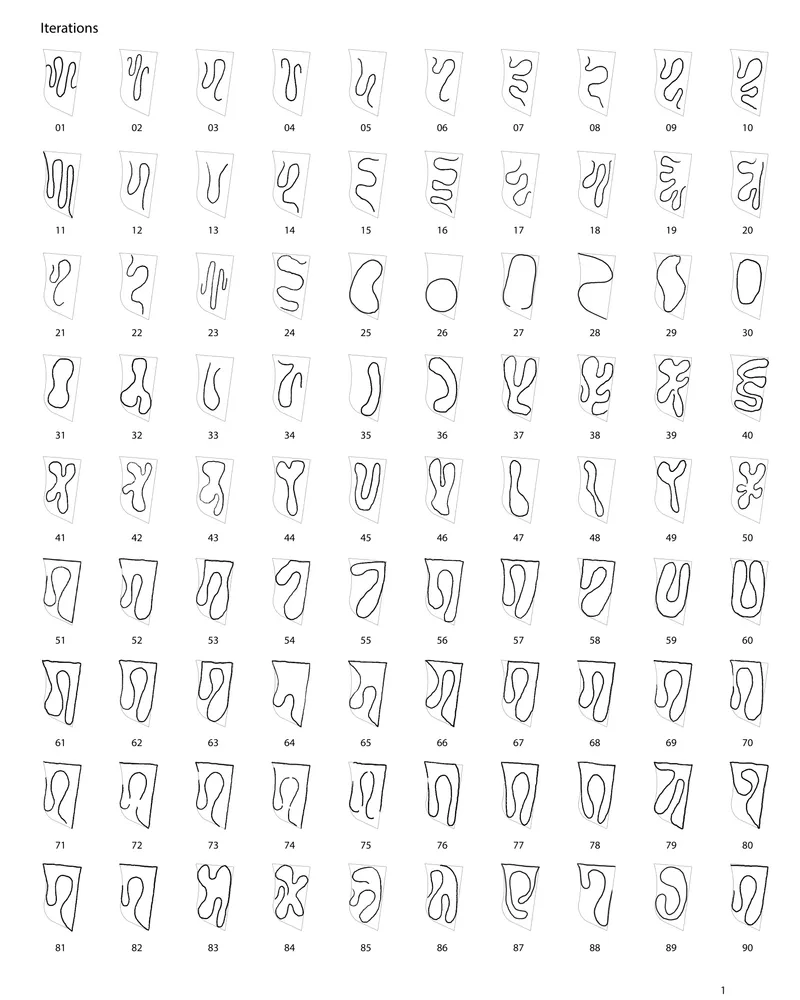 Figure 2. 90 ways to draw a Line, tablet computer, 2022
In the drawing 90 ways to draw a Line, we explored different ways to interact with the shape of the site through a single line. Each iteration expresses an intention and has the potential to become a reality. We choose No.51 as our final proposal because of its potential to form spaces with different spatial qualities without losing the totality of the original concept.
Interior, Exterior, and Landscape.
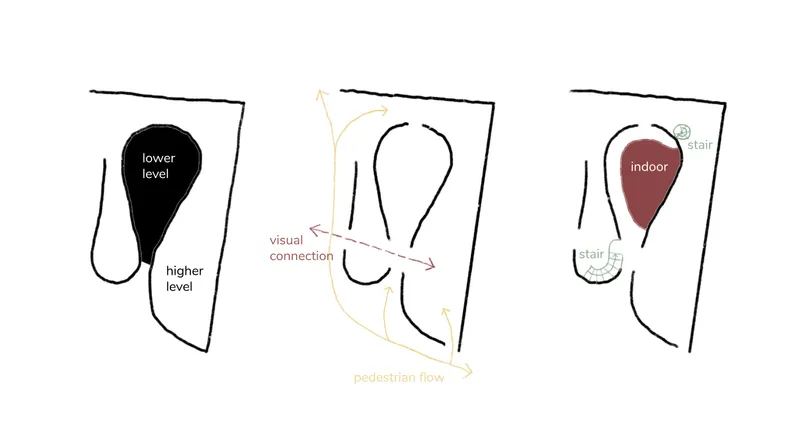 Figure 3. Programming Diagram, tablet computer, 2022
We used the shape of No.51 to create three enclosed spaces and used the changing height of the landscape to add different characters to each space.
On the left diagram of Figure 3, we can see the center space has a lower level, enhancing the feeling of enclosure. It is also where the counter and the kitchen are located.
The middle image shows how we created the openings to enhance the visual connection between the space inside the wall and the open field across Westlands street.
The last drawing in Figure 3 indicates the location of the indoor space and how the lower and higher levels are connected. The purpose of adding the two vertical connections is to avoid dead ends in the project.
Walking into the Landscape
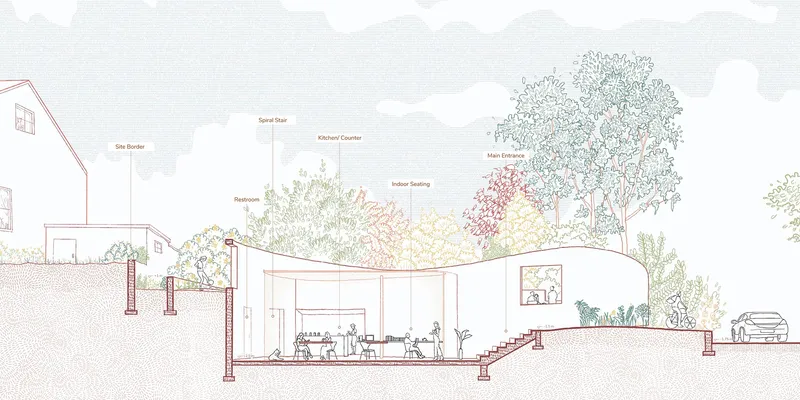 Figure 4. Section AA, computer, 2022
In section AA, we used the height difference on the site to create a more enclosed space for indoor programs such as a kitchen, counter, and storage space.
 Figure 5. Interior Views, acrylic paint, 2022
The space inside is not completely enclosed. By creating a gap between the ceiling and the wall, sunlight can enter the space and create a sculpture-like shadow. This new spatial experience is designed to challenge the traditional way of drinking Tea and stimulate visitors' senses.
Drinking Tea Together: A community gathering space for Bellingham.
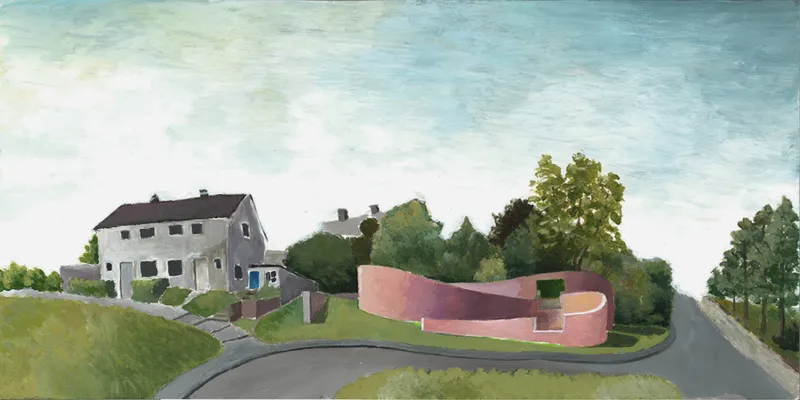 Figure 6. Exterior View of No.51 Tea House, acrylic paint, 2022
Two main concepts were considered from a pedestrians' perspective. First, in Figure 6, we can see the height of the teahouse is lower than the first-floor height of the neighbor building. Also, the discontinuous wall makes the tea house works as a sculpture in a public park, which invites everyone to play and interact with it. These gestures respect the surrounding environment and create a friendly and welcoming image in the neighborhood.
To enhance the publicity, all the outdoor spaces are opened for public use, and people can visit the tea house anytime, even when the main indoor space is closed.
By creating spaces with different spatial qualities with a single line, we believe that our proposal can provide a unique experience that constructs a memory connecting the people of Bellingham and the flavor of the Tea.

Popular Articles
Popular articles from the community


Opera by the Sea Estonia: Three Shells Dissolving Architecture into Tallinn's Coastline
A winning opera house proposal replaces monumental form with interconnected shells that blur the boundary between building, park and Baltic Sea.

Extended Shell: Retrofitting Kolkata's Balconies as Living Urban Thresholds
A modular retrofit system recovers the social and environmental intelligence of Kolkata's historic verandas for contemporary Park Street residents.

Singing Woman: Contemporary Architecture Inspired by Estonia’s Voice and the Sea
Singing Woman turns Estonia’s song culture into flowing opera house architecture, blending public life, landscape, sea, and national memory.

Faces of the Soviet Avant-Garde: Turning Moscow's Street Names into an Open-Air Museum
A network of sculptural installations across a Moscow residential district transforms forgotten architect names into spatial encounters with cultural memor

Similar Reads
You might also enjoy these articles

Day and Night Park: A Time-Based Urban Newsstand in Beijing
A temporary urban newsstand in Beijing blending travel, light, and reading through poetic colors, compact form, and community-focused design.

Modernist Patio Renovation in El Masnou, Barcelona by Oliver Segura Arquitectura + Cebrià Arquitectura
Modernist patio renovation blending tradition and innovation with a movable pool, leveled floors, and Catalan materials in El Masnou.

Alto Residencial Coop: Cooperative Housing Development in Santiago de Compostela by Carbajo Barrios Arquitectos
A linear cooperative housing complex blending white volumes and perforated metal façades, enhancing community living, natural light, privacy, and urban integration.

Vil Genis School by BPA ARCHITECTURE – Massy, France
Vil Genis School in Massy, France, features sustainable design, south-facing classrooms, community integration, accessible spaces, and modern educational architecture.

Explore Architecture Competitions
Discover active competitions in this discipline


Challenge to reimagine the Iron Throne

Photograph architecture without architects

Illustrate the lost glory of Angkor Wat - Render Challenge

Design challenge to reuse E-waste
Comments (0)
Please login or sign up to add comments
No comments yet. Be the first to comment!