
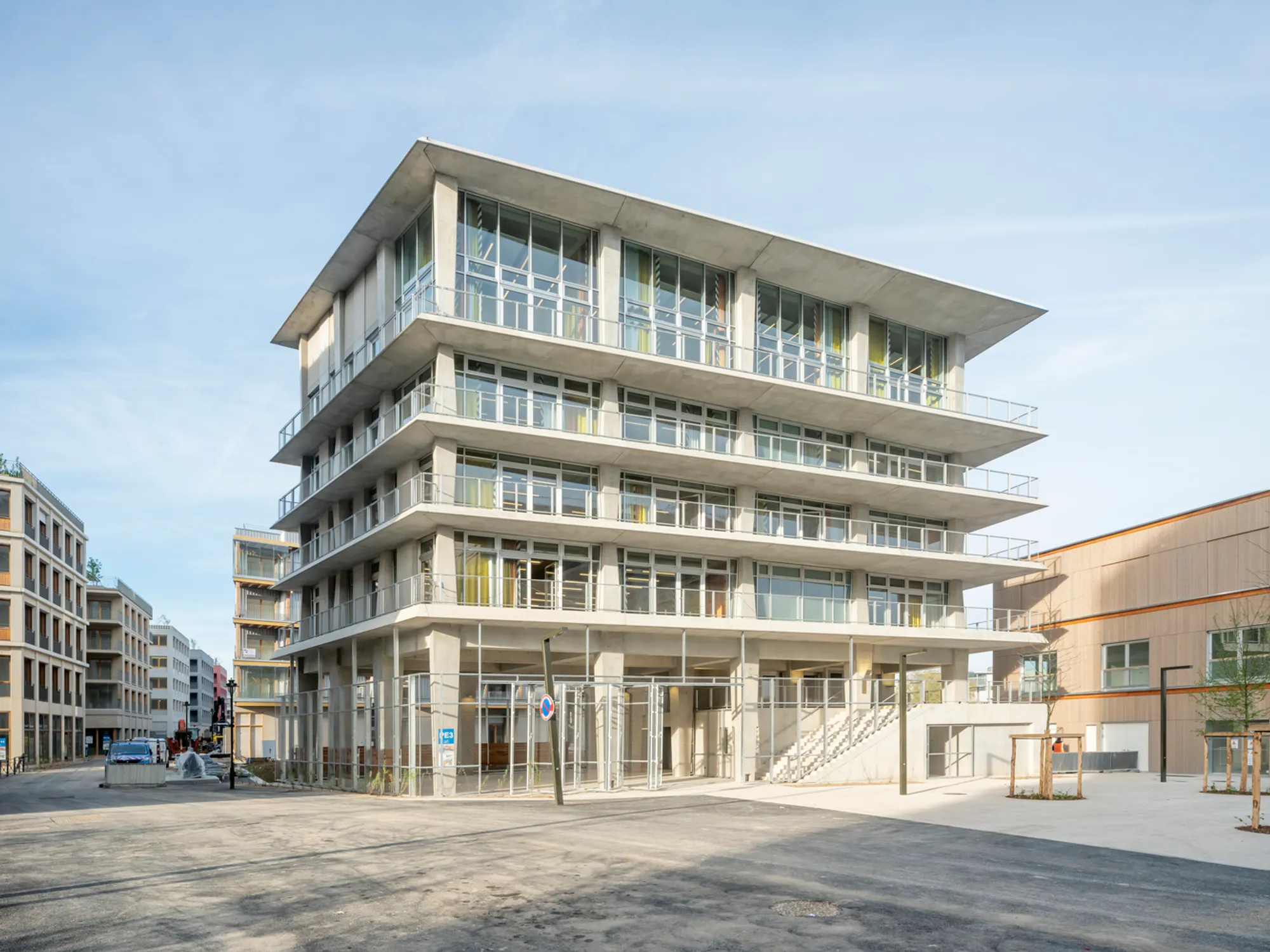
Olympe: From Short-Lived Olympic Athletes’ Village to Dynamic Urban Arts Centre by Farid Azib Architects
Olympe transforms a temporary Olympic athletes’ village in L’Île-Saint-Denis into a versatile, sustainable Urban Arts Centre with modular, sports-inspired design.


Architects: Farid Azib Architects
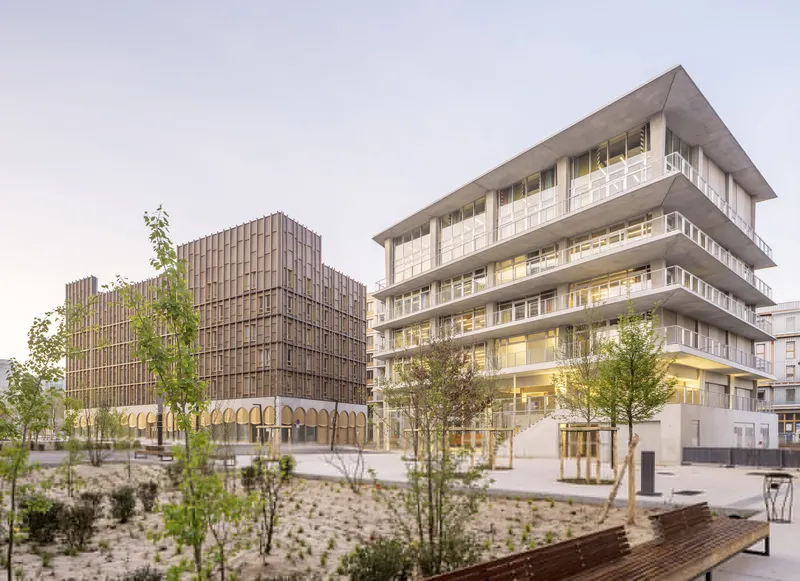
Situated in the vibrant river eco-district of L’Île-Saint-Denis, just north of Paris, the Olympe Urban Arts Centre is a striking example of adaptive reuse and sustainable urban architecture. Originally planned as part of a mixed-use development zone, the site was briefly transformed into an Olympic athletes’ village for Paris 2024. After the Games, the building evolved into a multi-functional Urban Arts Centre, blending cultural, social, and recreational uses for the local community.
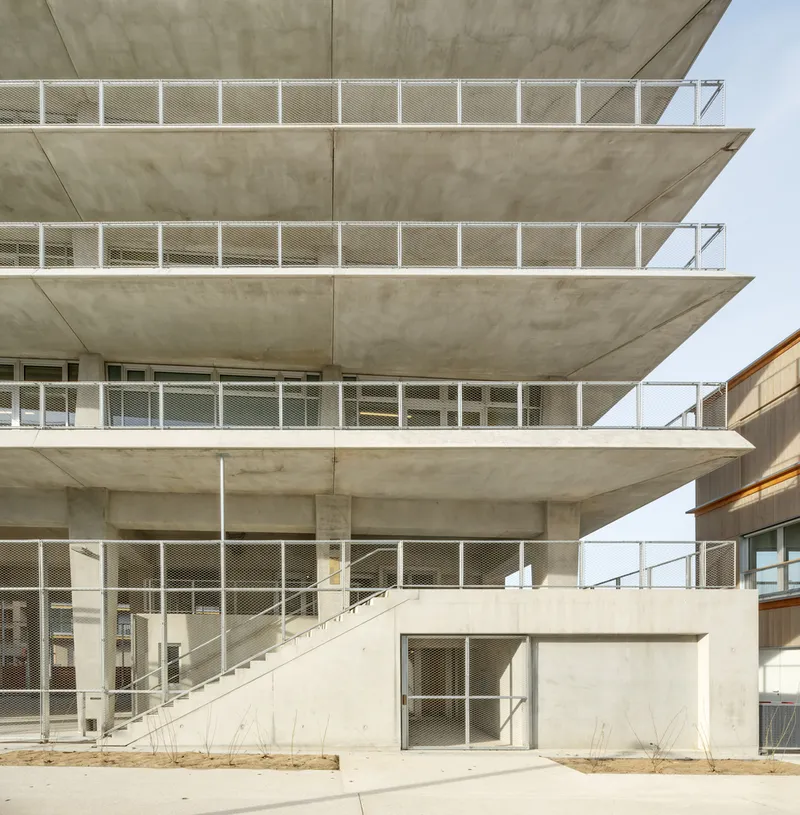
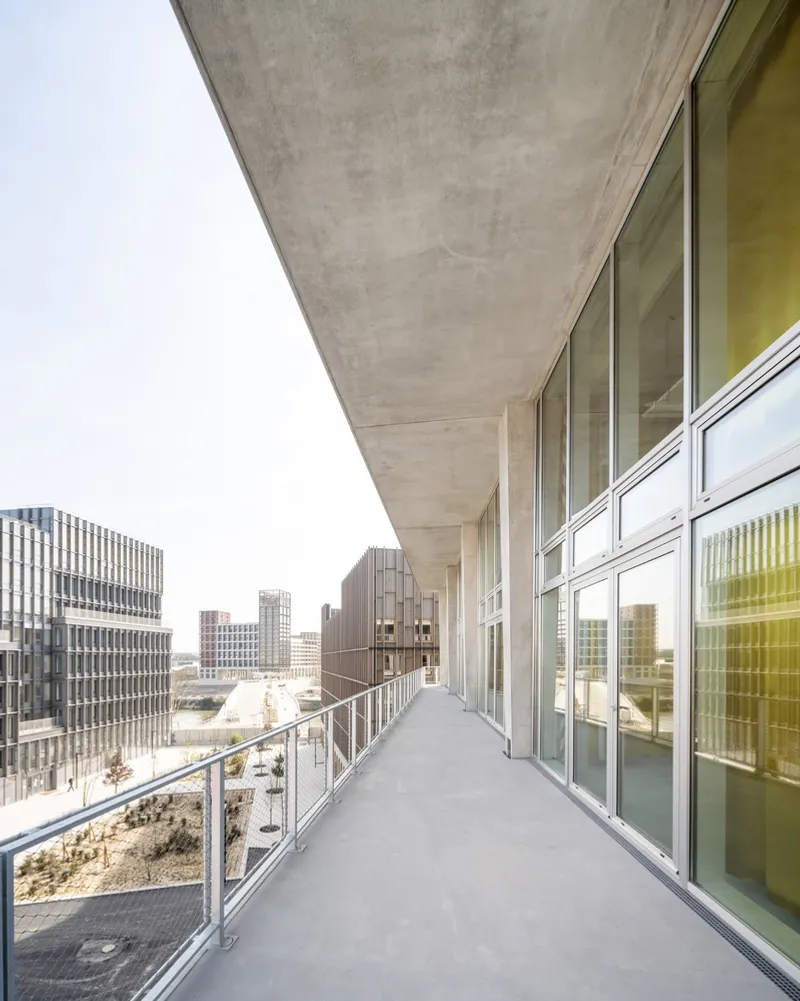
The architectural challenge was significant: creating a structure capable of transitioning from a temporary sports accommodation into a permanent cultural and urban hub, without major structural interventions. Farid Azib Architects responded with a design that prioritizes flexibility, modularity, and adaptability, making the building a lasting focal point for the district.
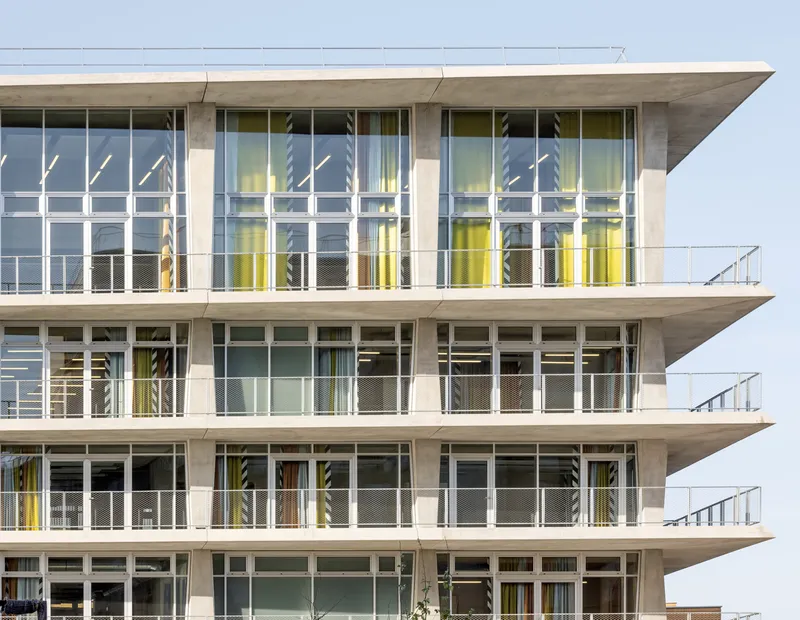
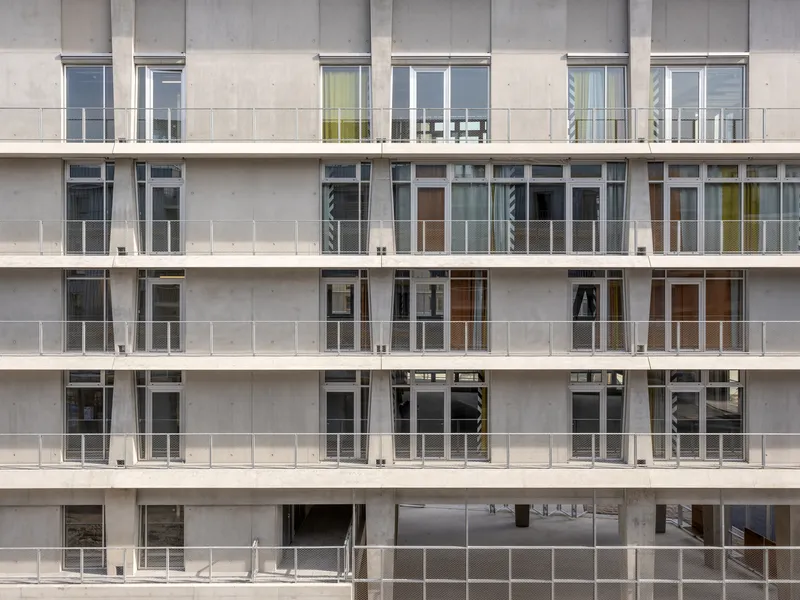
Design Concept: Athletics as Architectural Metaphor
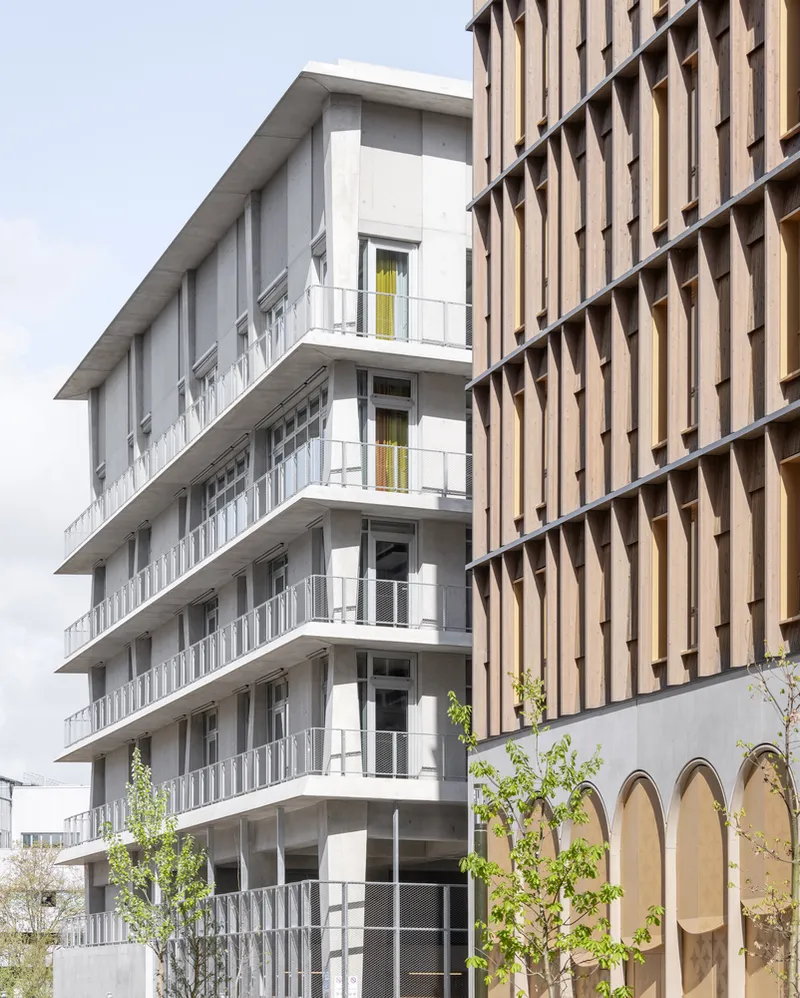
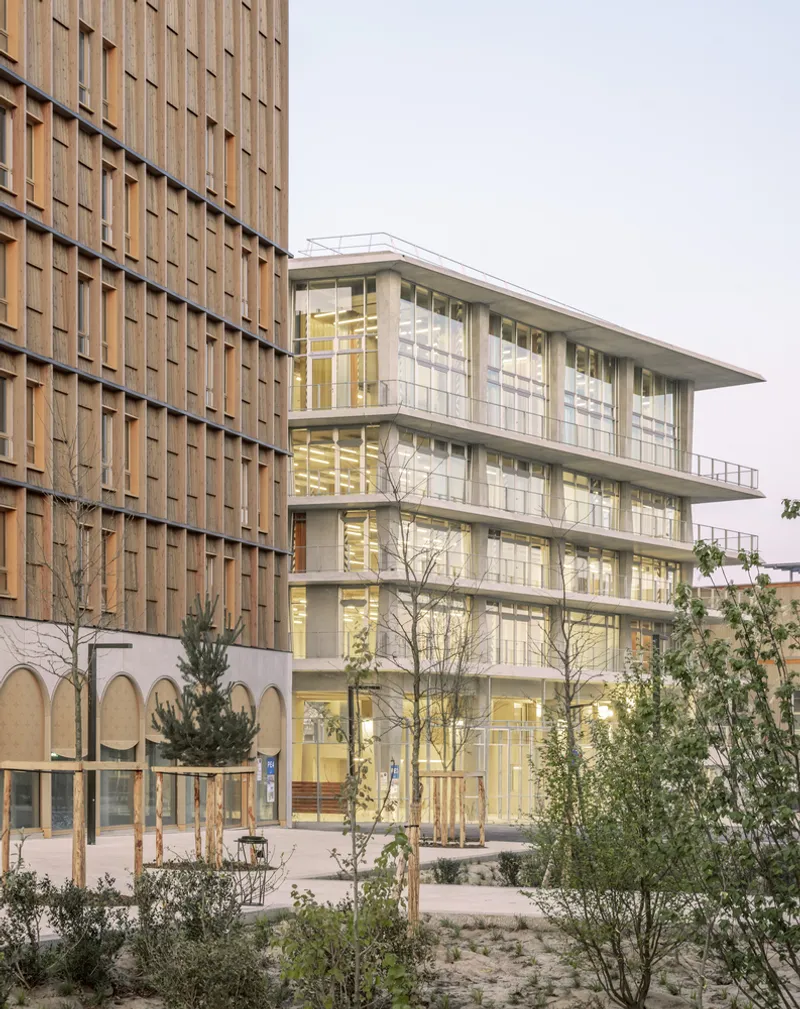
The design of the Olympe building draws inspiration from the dynamic qualities of athletes: flexibility, strength, and resilience. Its five-story, 24-meter concrete structure embodies these traits through the concepts of compression, tension, and extension:
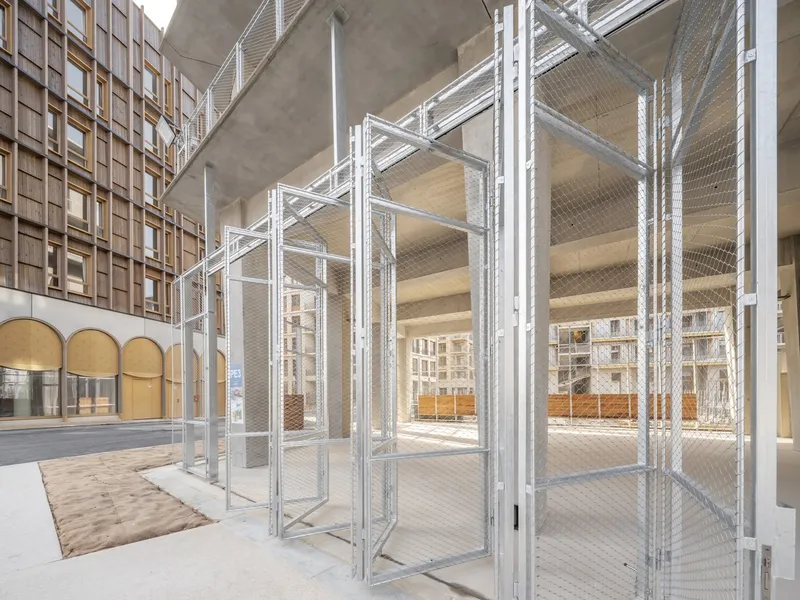
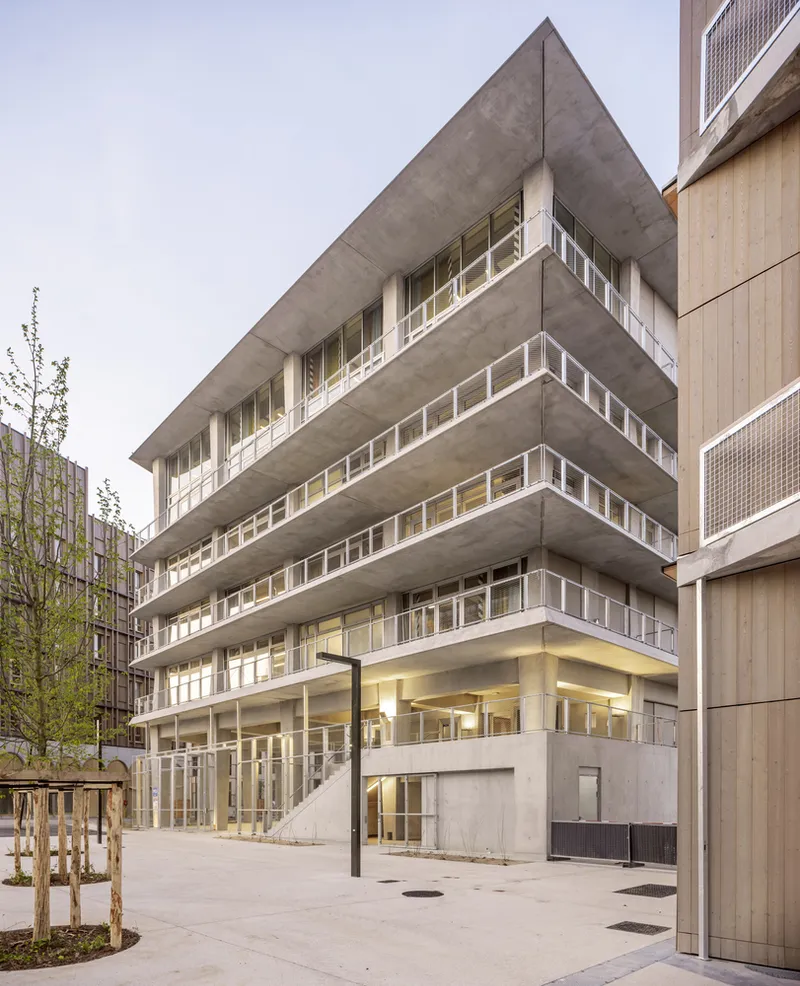
- Compression: The ground floor, rooted and robust, symbolizes stability and energy concentration. Sculpted load-bearing posts support floating, modular floors above, while a retractable stainless-steel mesh envelope opens the building to the main square, Place de la Batellerie, encouraging public engagement.
- Tension: Structural elements mimic the physical tension of athletes, contracting and stabilizing weights while providing maximum flexibility.
- Extension: Representing imagination and creative potential, the upper floors support diverse cultural and urban activities, reflecting the building’s ongoing versatility.
This sports-inspired architectural language ensures the structure remains visually striking, functionally adaptable, and symbolically connected to the Olympic legacy.
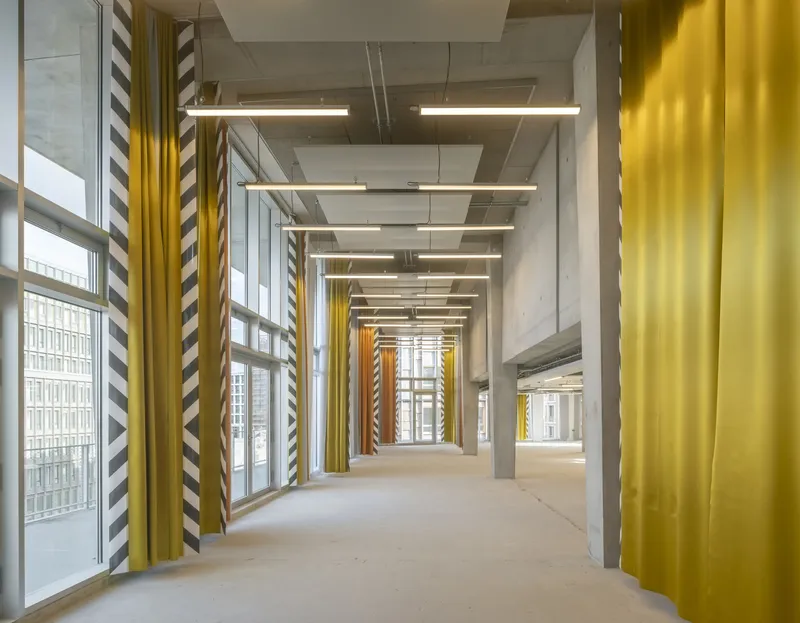
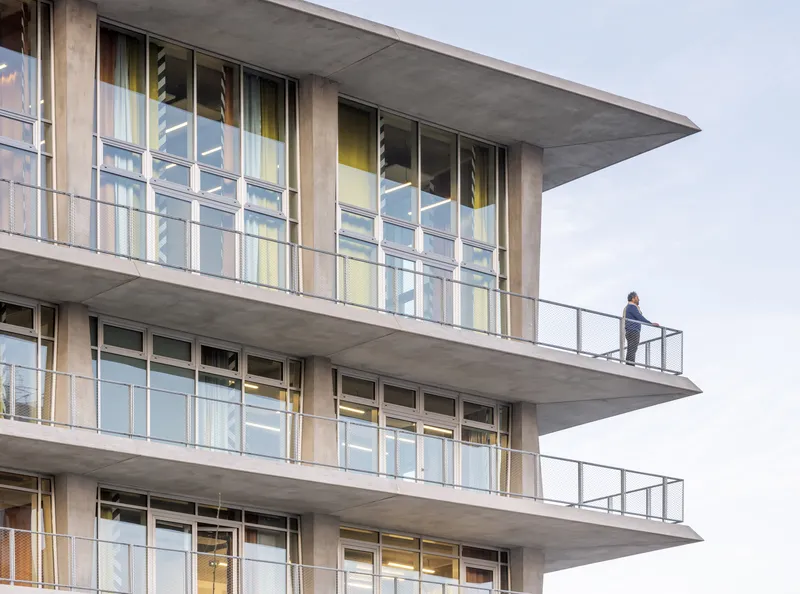
Adaptive Reuse and Functional Layout
The Olympe Urban Arts Centre is organized across five reversible and modular floors, allowing seamless adaptation between Olympic accommodation and permanent cultural functions:
- Ground Floor: Open and permeable, designed to host public activities, forums, and events. The retractable facade enhances interaction with the square and integrates the building into its urban context.
- First Floor: Multi-purpose sports area, emphasizing urban dance and breakdance, with vertical circulation for easy accessibility.
- Second Floor: Eight studios and workshops ranging from 22–40 m², serving artists, athletes, project teams, and creative residents. These flexible spaces can accommodate diverse cultural activities.
- Third Floor: Multi-purpose room for events, workshops, and group gatherings, adaptable to various cultural and creative needs.
- Fourth Floor: Dedicated to festive activities and catering, offering privatizable spaces for events linked to the Urban Arts Centre.
All floors feature color-coded curtains in gold, silver, and bronze, evoking Olympic medals. These curtains provide blackout, acoustic, and thermal insulation, while adding a decorative, functional identity to the raw concrete interior.
Sustainability and Community Integration
Sustainability was a key focus in this project. The roof incorporates solar panels for renewable energy production, while the adaptable design ensures long-term usability with minimal environmental impact. By reimagining temporary Olympic infrastructure into a vibrant cultural hub, the Olympe project exemplifies forward-thinking urban regeneration, fostering community engagement, creativity, and sports culture in L’Île-Saint-Denis.Sustainability was a key focus in this project. .
All photographs are works of
Luc Boegly



Popular Articles
Popular articles from the community


The Earth Pod: 3D Printed Homes for Resilient Refugee Communities
The Earth Pod reimagines refugee housing through 3D printed homes made from clay, combining resilience, self-sufficiency, and rapid shelter.

Pangolin Can Help Mining: Biomimicry Architecture for an Asteroid Mining Habitat
Pangolin Can Help Mining explores biomimicry architecture through a modular 3D-printed habitat designed for asteroid mining and future life.
REBIRTH: Sustainable Architecture Shaped by Community, Resilience and Renewal
REBIRTH uses sustainable architecture, circular design, local materials and shared spaces to restore community, dignity and hope for widows.
Garden of Hope: Sustainable Architecture for a Resilient Community in Qandahar
Garden of Hope reimagines sustainable architecture as secure, organic community where women rebuild lives through housing, work, and nature.


Similar Reads
You might also enjoy these articles


Hodi-Mandai Geram
Project Function: Preservation and revitalization of the Intangible heritage and socio-spatial identity of the Hodi by Housing, Cultural Memory Center, Sacred Grove, landscape, local tourism economy


Olio Towers: A Mid-Rise for Performers That Fuses Housing, Rehearsal, and Stage
Located blocks from Houston's Theater District, this modular tower stacks living units around a central performance atrium.

Oasis: Modular Green Housing Carved into Dhaka's Urban Fabric
A shortlisted Plugin Housing entry reclaims unauthorized settlements in Dhaka with stepped concrete volumes, green roofs, and ventilation-driven design.

Black Hole: A Floating Megastructure for the Post-Physical Era
Emiliano Mazzarotto envisions a spherical, self-scaling arena where e-sports, digital hotels, and holographic stadiums replace traditional public space.

Explore Architecture Competitions
Discover active competitions in this discipline



The International Standard for Design Portfolios


The Global Benchmark for Architecture Dissertation Awards

The Global Benchmark for Graduation Excellence


Challenge to reimagine the Iron Throne
Comments (0)
Please login or sign up to add comments
No comments yet. Be the first to comment!