
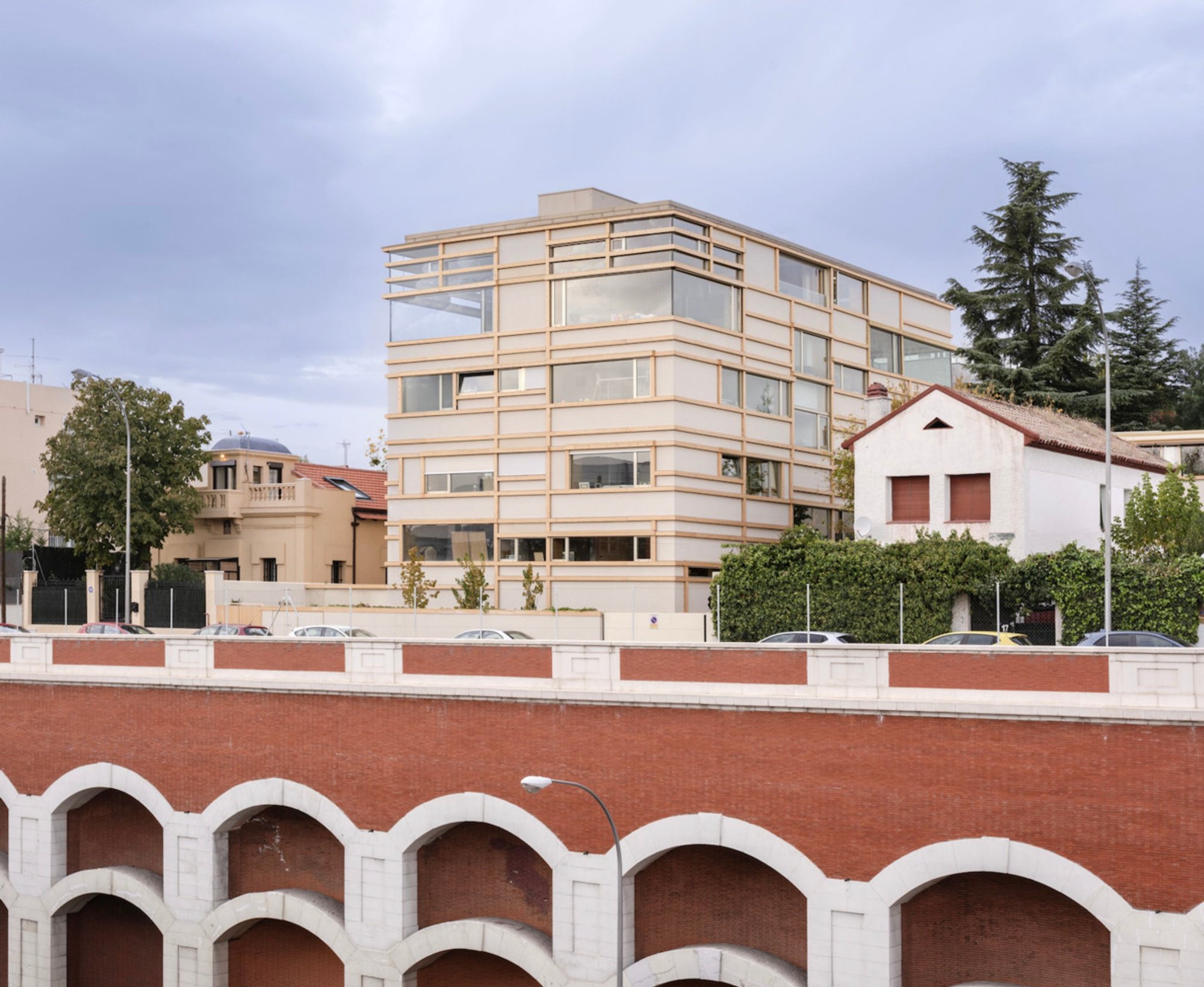
Our-Shelves Houses by SUMA Arquitectura – Sustainable Cooperative Housing in Madrid
Our-Shelves Houses by SUMA Arquitectura blends cooperative housing, sustainable CLT timber construction, private gardens, and customizable duplex living in Madrid.

Our-Shelves Houses, designed by SUMA Arquitectura, redefines the concept of cooperative housing in Madrid, Spain. Completed in 2021, this 296 m² residential project provides an innovative response to the challenges of low-density urban contexts, offering a model that blends sustainability, typological innovation, and community living.
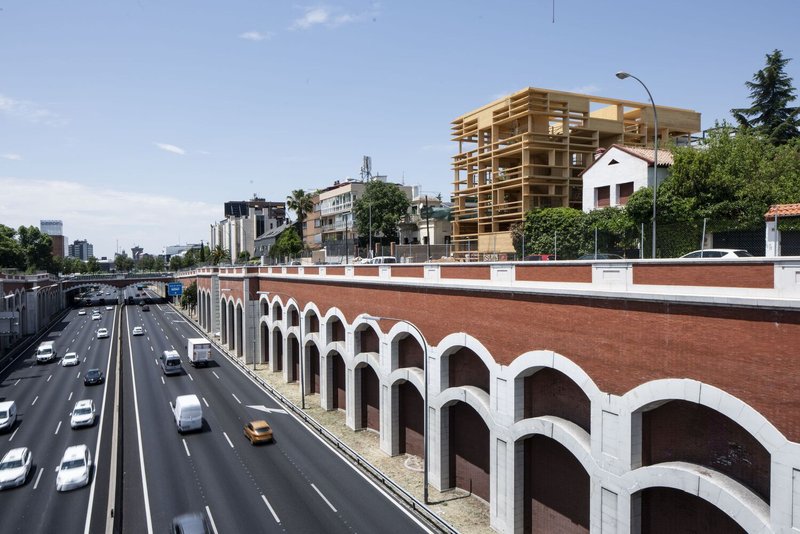
Located in a neighborhood where most buildings predate Madrid’s 1997 General Urban Planning Plan, the project adapts to complex volumetric constraints and varying building heights. Instead of imposing a rigid block, SUMA Arquitectura introduced a design strategy that prioritizes landscaped buffers and setbacks, generating both private and communal outdoor spaces. This integration recovers the spirit of Madrid’s historic “linear city” while ensuring natural light, greenery, and ventilation shape everyday living.
Cooperative Housing as a Customized Living Model
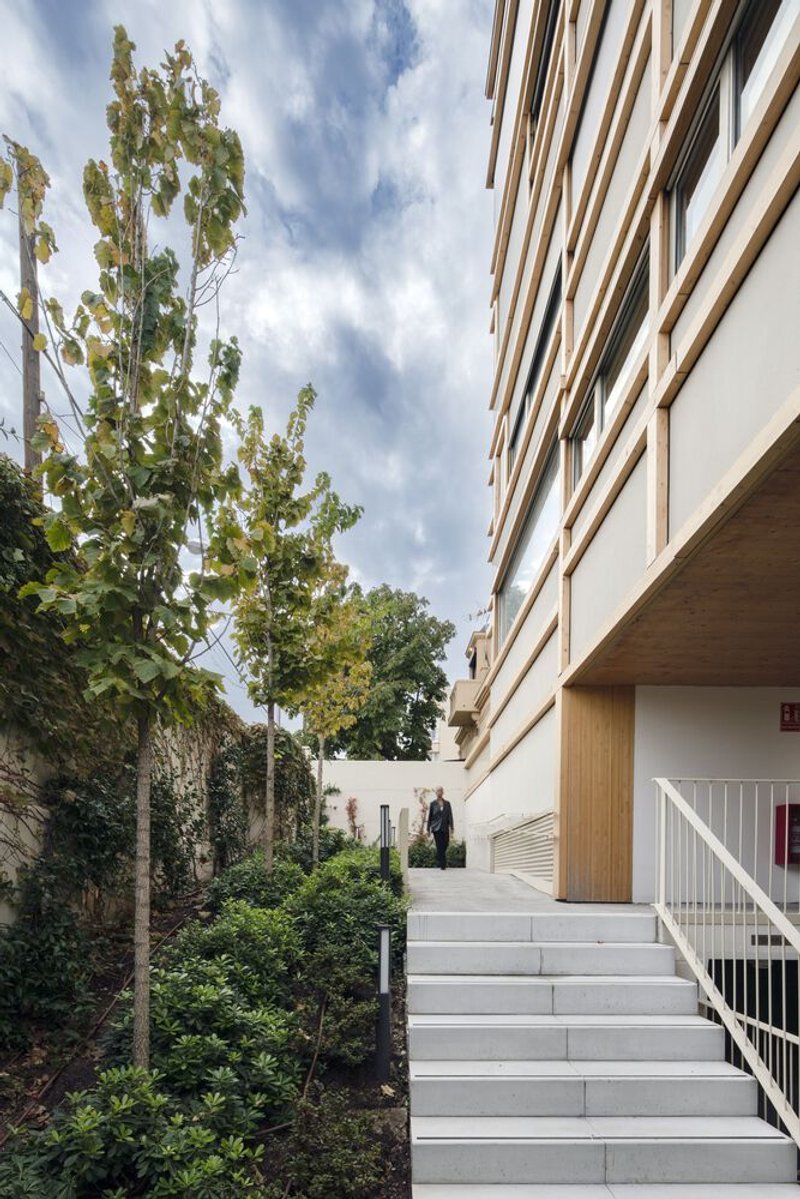
The project was developed as a cooperative housing initiative for young professionals seeking their first home. Unlike standard residential developments, Our-Shelves Houses consists of 8 duplex apartments, each with three staggered levels. This unique spatial arrangement ensures that all homes benefit from private outdoor areas — gardens on the ground floor and large terraces on the upper penthouses.
Customization is at the heart of the design. Each apartment is treated like a tailor-made suit, adapted to the specific needs of its occupants. Beyond material selection, residents participated in shaping layouts and details, creating personalized homes that reflect individual lifestyles and collective identity. Shared amenities include a swimming pool, landscaped gardens, and underground parking, strengthening the sense of community.
Typological and Spatial Innovation
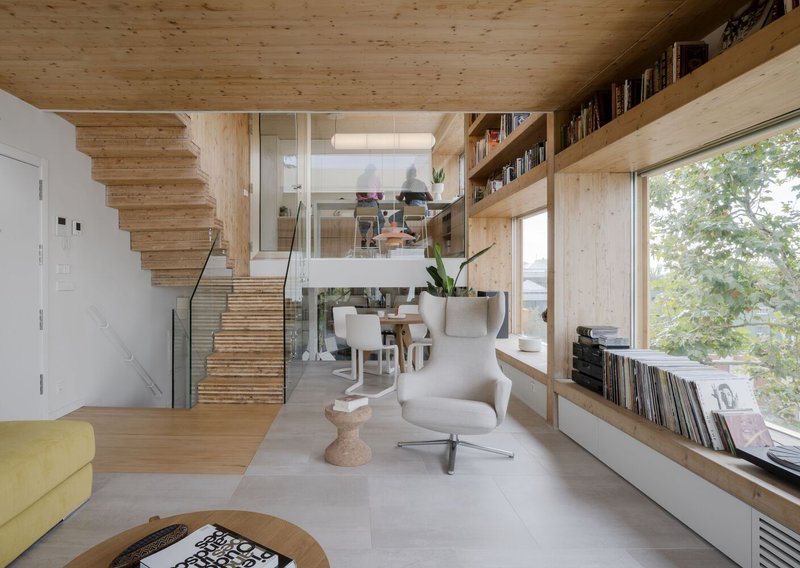
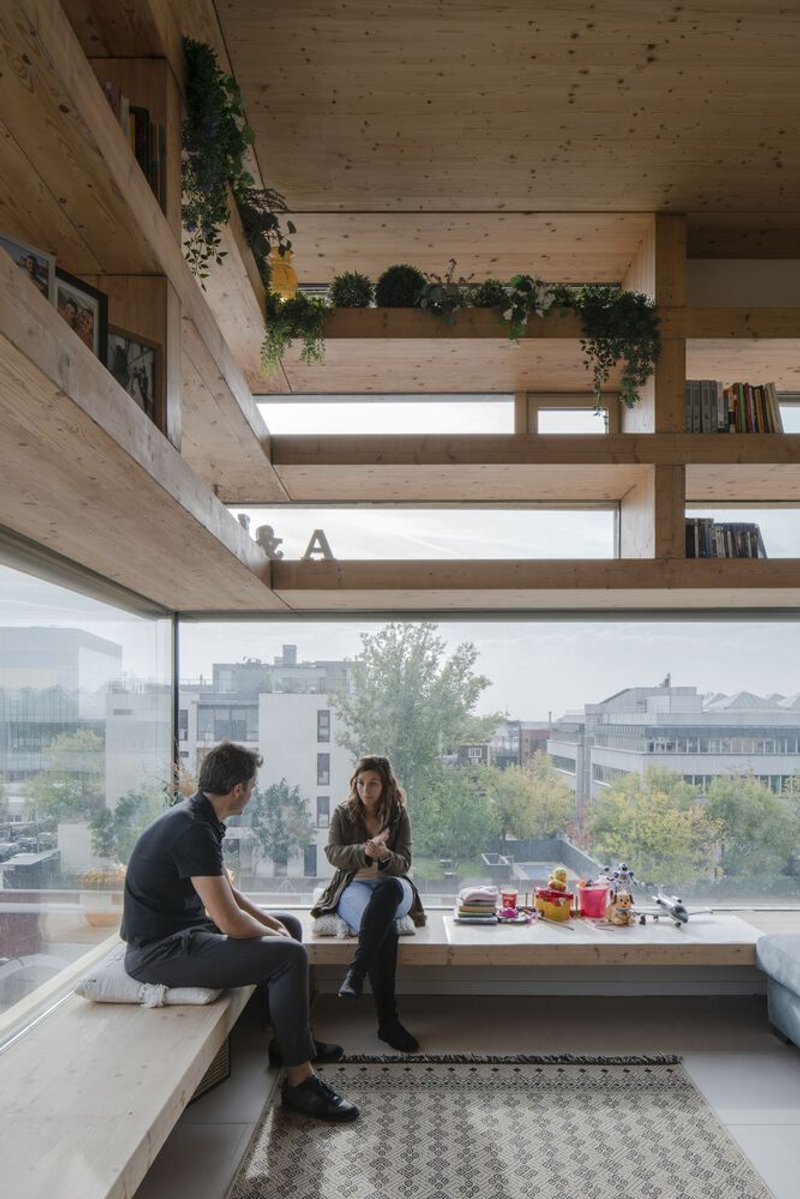
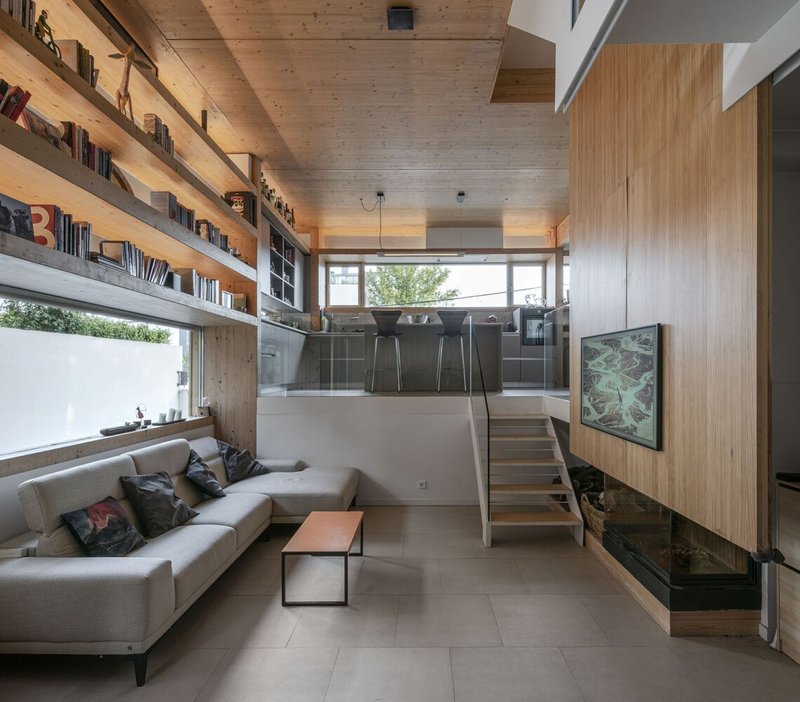
The design introduces split-level living, allowing apartments to span multiple heights and enhance connectivity between rooms, terraces, and gardens. This arrangement fosters visual openness, cross-ventilation, and a stronger dialogue between indoor and outdoor spaces.
A key feature of the project is the wooden structure, which serves multiple roles:
- Load-bearing framework
- Sun shading and privacy control
- Integrated furniture and shelving
- Visual continuity with nature
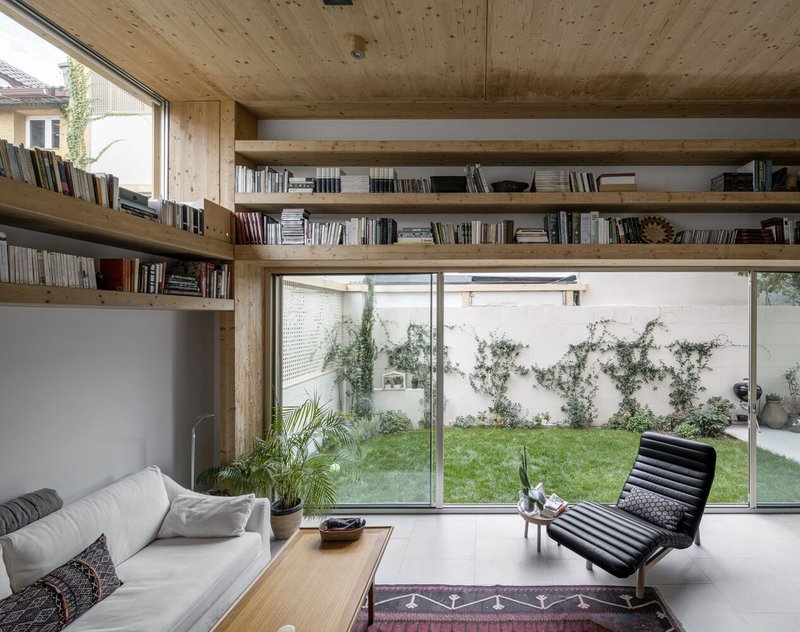
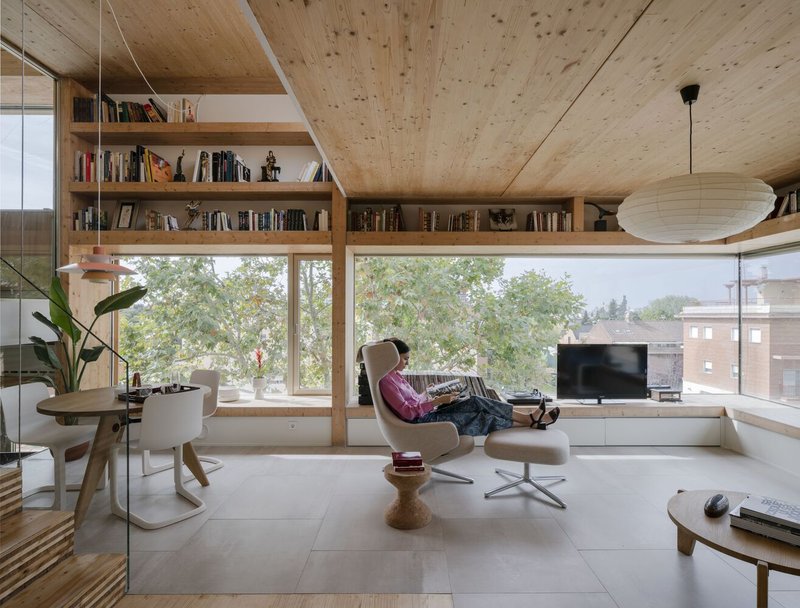
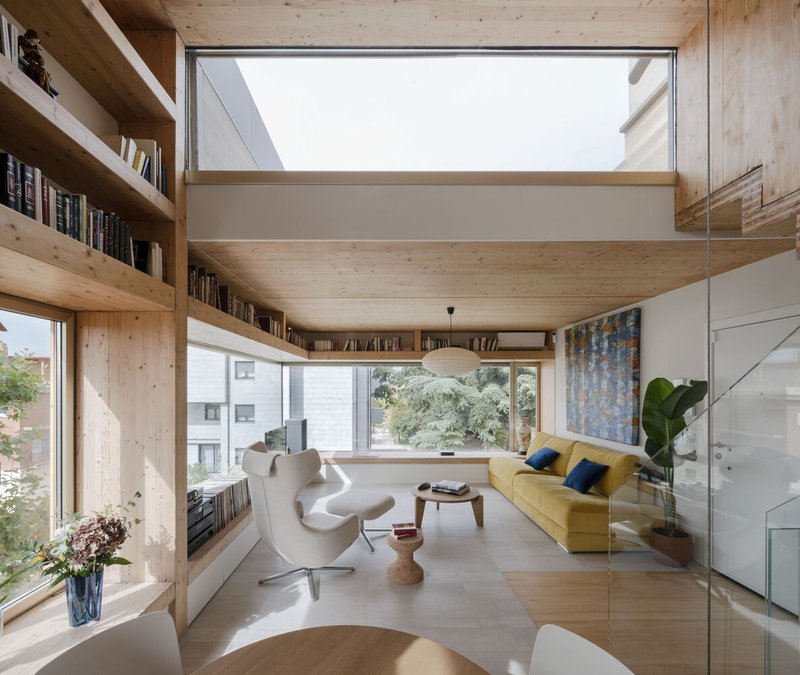
The building’s envelope is conceived as a “customizable matrix”, where recessed planes double as functional shelves and storage solutions. From wardrobes and desks to kitchen counters and bookshelves, the architecture itself accommodates everyday living, merging structure and function into one cohesive system.
Sustainable and Prefabricated Timber Construction
Sustainability drives every aspect of the design. The building relies on an aerothermal system with heat exchange, ensuring energy-efficient heating, cooling, and ventilation. Solar panels and a rainwater harvesting system further reduce environmental impact.
Structurally, the project employs cross-laminated timber (CLT) and glued laminated timber (GLT) made from red fir and wild pine. This renewable material is not only low-carbon but also prefabricated for quick, dry, and waste-minimized construction. The CLT slabs, visible as ceiling finishes, provide both structural strength and aesthetic warmth, reducing the need for additional cladding or labor.
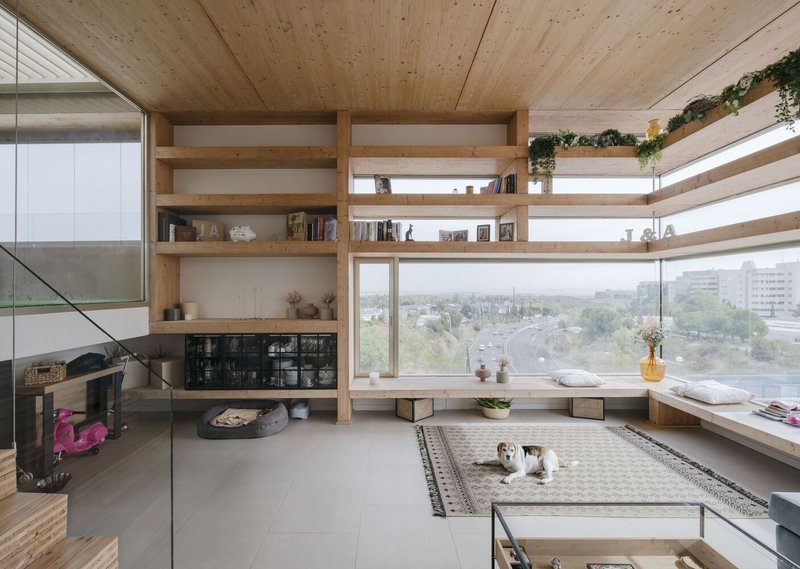
By combining CLT prefabrication with a reinforced concrete base, SUMA Arquitectura achieves a balance between durability, efficiency, and architectural expression. The result is a housing complex that demonstrates how contemporary cooperative living can be both sustainable and socially innovative.
Our-Shelves Houses by SUMA Arquitectura represents a new paradigm in cooperative housing design. Through its emphasis on customization, prefabricated timber construction, and sustainable systems, it delivers a residential model that adapts to both community needs and ecological responsibility. More than just apartments, these homes function as repositories of memory and identity, tailored to reflect the individuality of each resident while reinforcing collective belonging.


Popular Articles
Popular articles from the community

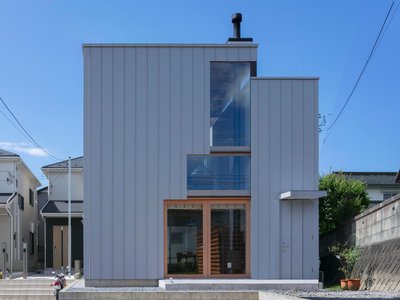
Split House: A Compact Urban Home Blending Privacy, Light, and Flexible Living in Japan
Compact Japanese home featuring DOMA space, flexible café potential, passive lighting, privacy zoning, and sustainable urban living design.
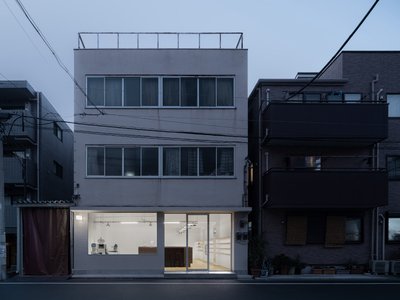
Atelier Macri Concept Store Interior Design by CASE-REAL
Atelier Macri store features a "ko" counter, walnut wood details, cork displays, blending retail, gallery, and seamless customer experiences.
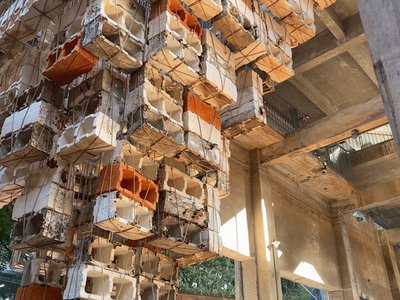
Inverted Architecture Installation by Studio Link-Arc: Exploring the Intersection of Architecture and Living Organisms
Inverted Architecture Installation by Studio Link-Arc blends mycelium, sustainability, inverted design, ecological cycles, and urban adaptive architecture in Shenzhen.
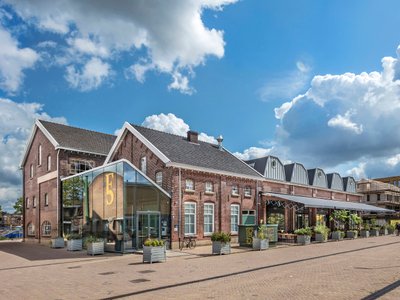
Fifth NRE Jazz Club – De Bever Architecten: Eindhoven’s Revitalized Cultural Hub
Historic gas factory transformed into Fifth NRE Jazz Club blending modern sustainability, jazz culture, dining, and heritage architecture seamlessly.
Similar Reads
You might also enjoy these articles


The Ken Roberts Memorial Delineation Competition (Krob)
As the most senior architectural drawing competition currently in operation anywhere in the world, it draws hundreds of entries each year, awarding the very best submissions in a series of medium-based categories.


Waterfront Redevelopment and Urban Revitalization in Mumbai: Forging a New Dawn for Darukhana
A transformative waterfront redevelopment project reimagining Darukhana’s shipbreaking heritage into an inclusive urban future.

OUT-OF-MAP: A Call for Postcards on Feminist Narratives of Public Space
Rhizoma Design and Research Lab invites artists, designers, architects, researchers, and students to reflect on how feminist perspectives can reshape public space. Selected works will be exhibited in Barcelona, October 2026. Submissions open until 15 April 2026.


Documentation Work on Buddhist Wooden Temple
Architectural syncretism and cultural hybridity: A comparative study of the Buddhist temples in Chattogram Hill tracks

Explore Architecture Competitions
Discover active competitions in this discipline




The International Standard for Design Portfolios


The Global Benchmark for Architecture Dissertation Awards


The Global Benchmark for Graduation Excellence


Challenge to reimagine the Iron Throne
Comments (0)
Please login or sign up to add comments
No comments yet. Be the first to comment!