
PAF House: A Contemporary Tropical Residence Embracing Landscape and Open Architecture
Contemporary Colombian house with concrete volumes, open spaces, terraces, and lush landscape integration, maximizing views, natural light, and sustainable living.


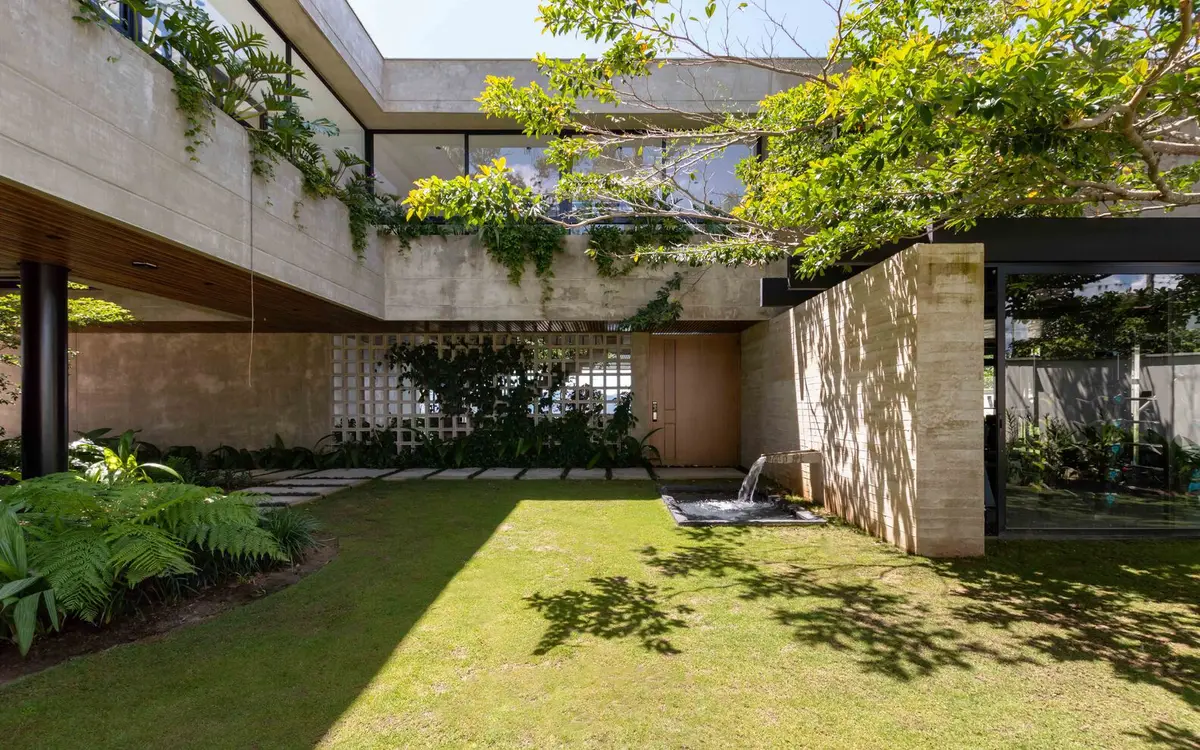
PAF House, designed by Fernán Olarte Pinto in collaboration with OG Arquitectura & Construcción, is a remarkable example of contemporary residential architecture in Colombia. Located in the lush setting of La Mesa de Ruitoque, near Floridablanca, this modern home redefines tropical living through open architecture, sustainable design, and a strong connection with nature.
Set within a 6975 ft² built area on a steeply sloped site, the house captures panoramic views of the surrounding mountains and the city of Bucaramanga. The region’s mild tropical climate, ranging between 20°C and 27°C, plays a key role in shaping the architectural response.
Concept: From Country House to Permanent Residence
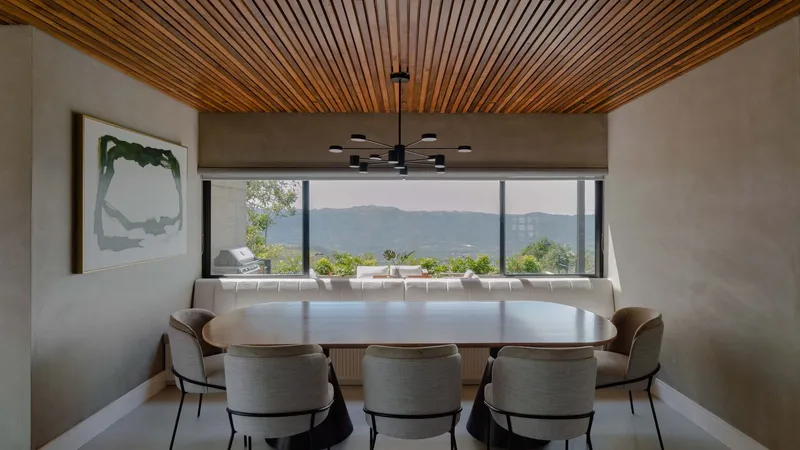
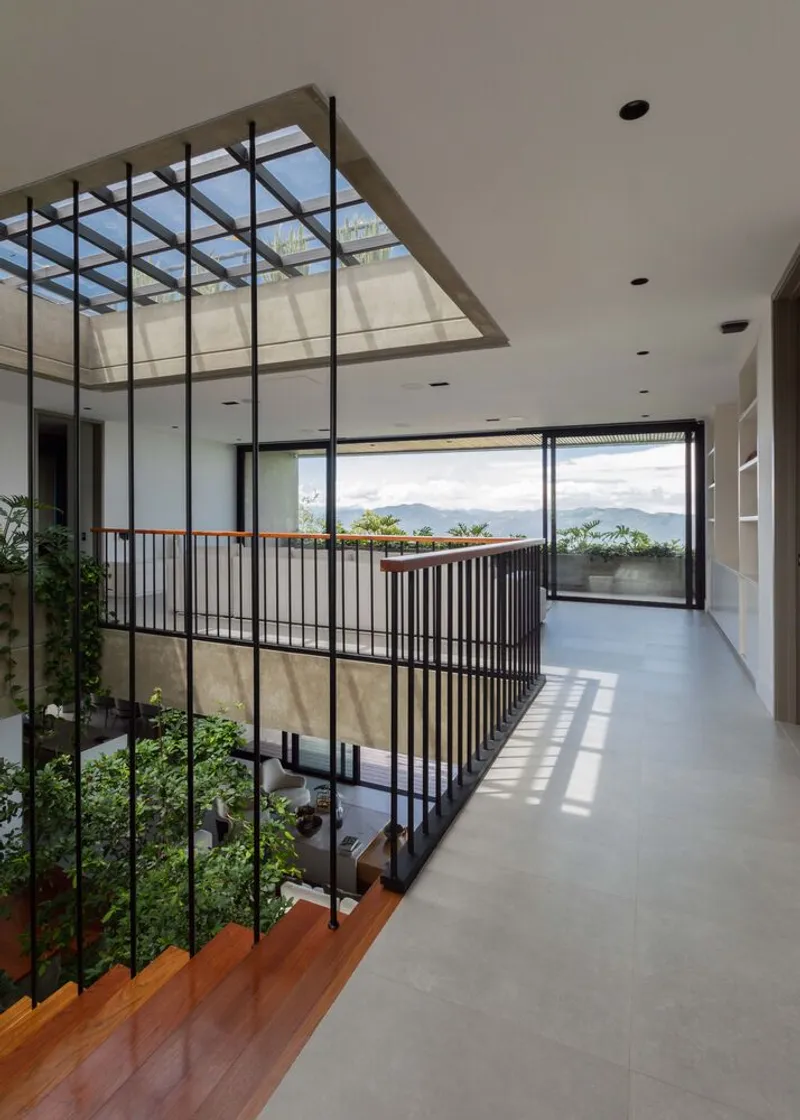
Originally conceived as a countryside retreat, the project evolved into a full-time residence during the global impact of the COVID-19 pandemic. Despite this shift, the core idea of open architecture remained intact, emphasizing fluid spatial relationships, natural ventilation, and seamless indoor-outdoor integration.
The design responds intelligently to the site’s topography, transforming constraints into opportunities for layered spatial experiences and uninterrupted landscape views.
Spatial Organization and Architectural Layout
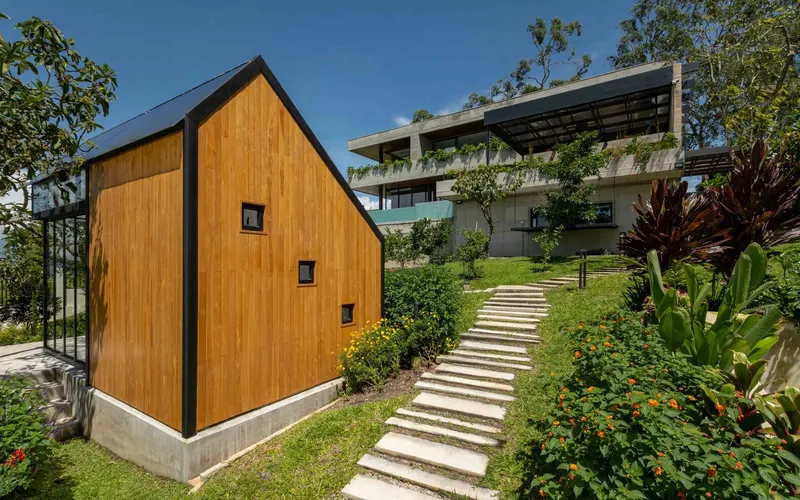
The PAF House is organized into two primary levels, defined by clean geometric volumes arranged in an L-shaped configuration. This layout maximizes orientation, privacy, and visual connectivity with the surroundings.
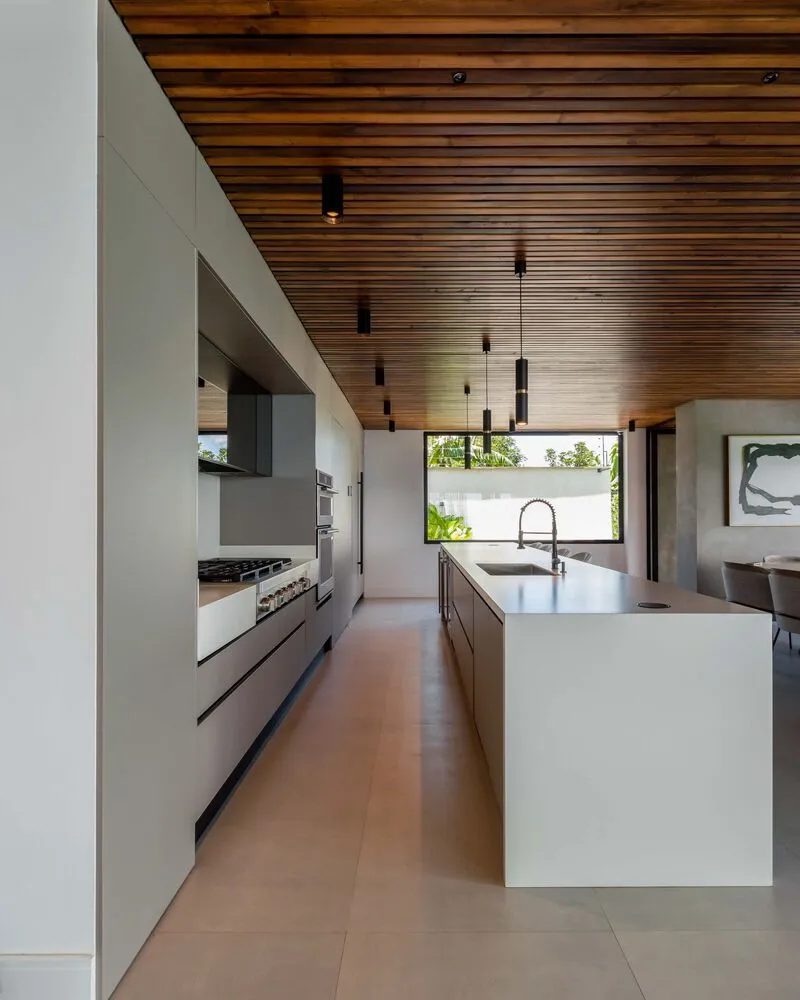
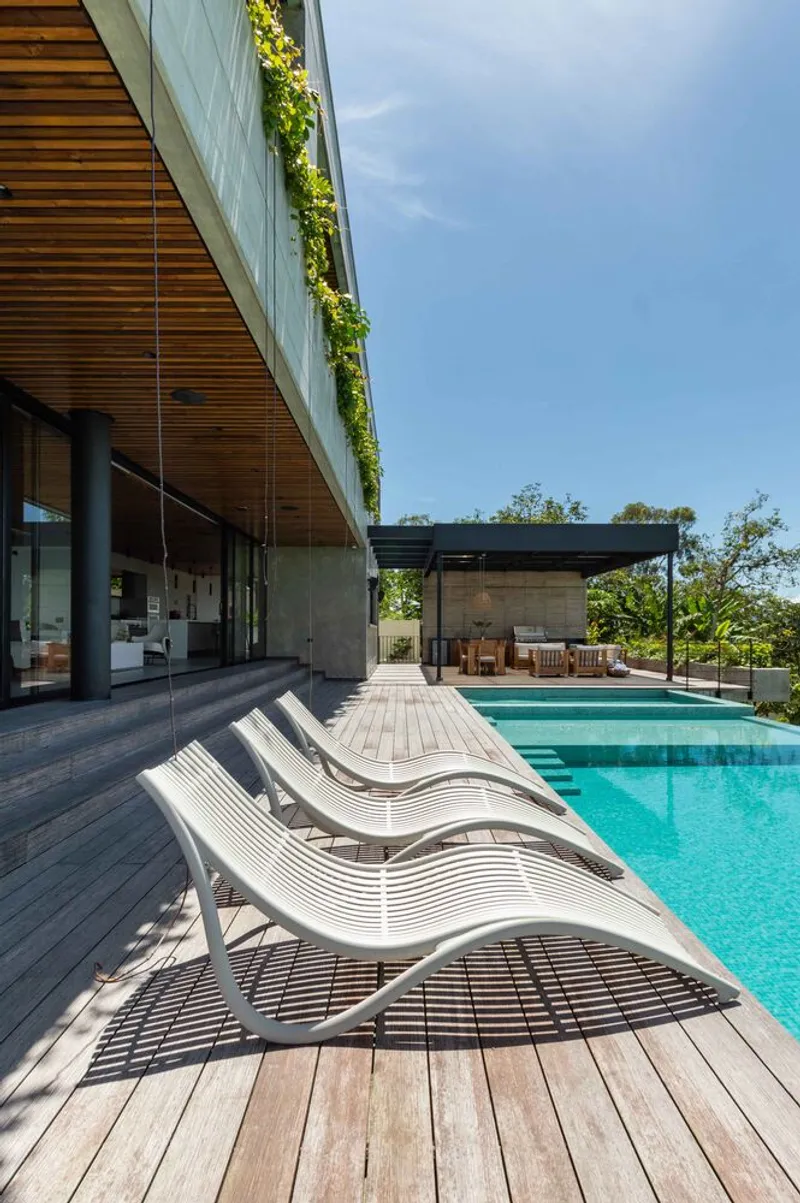
Ground Floor: Social and Service Integration
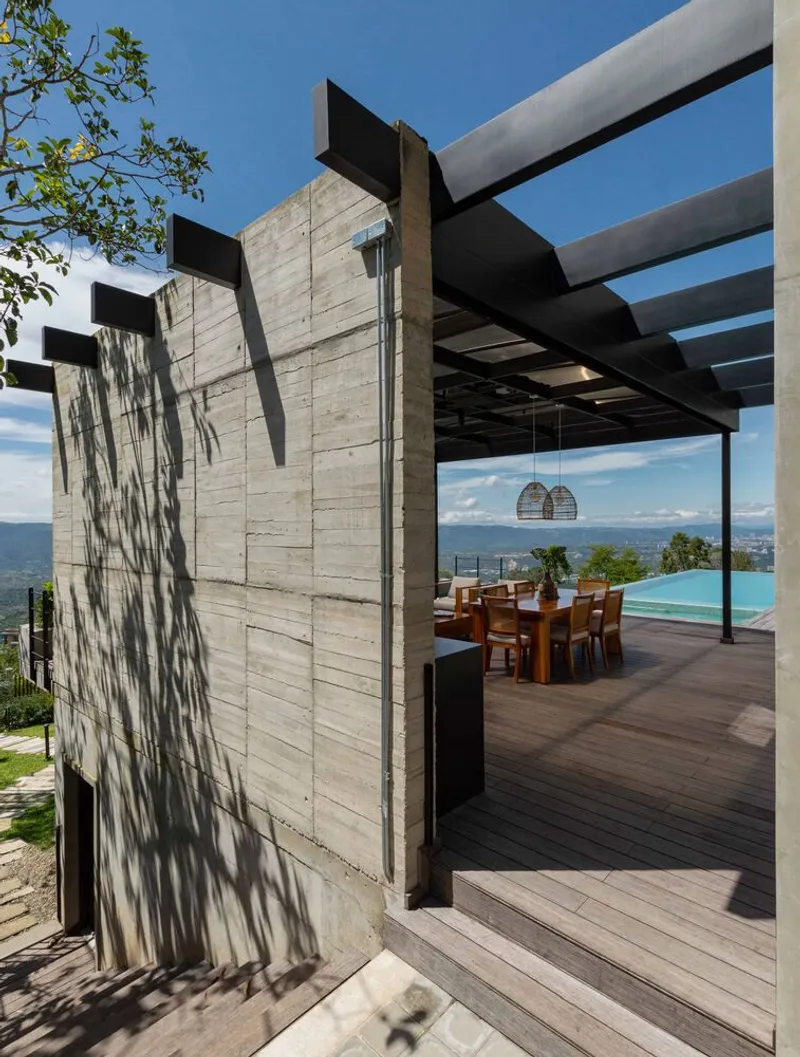
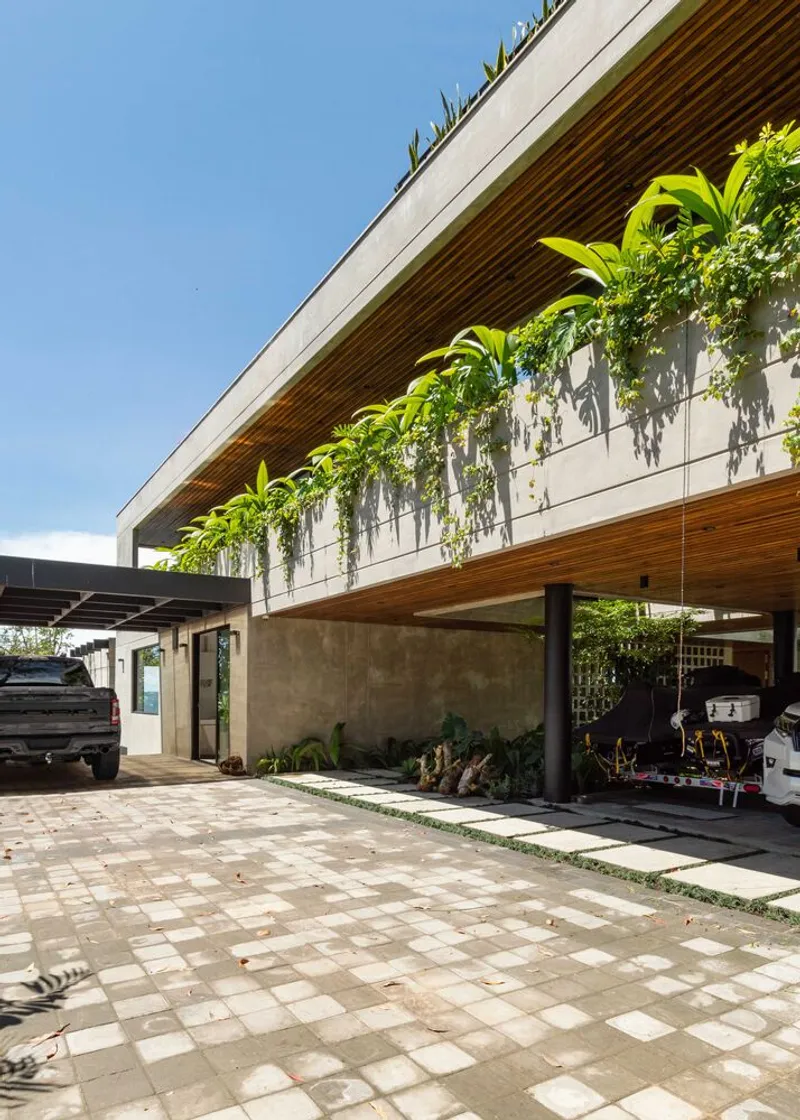
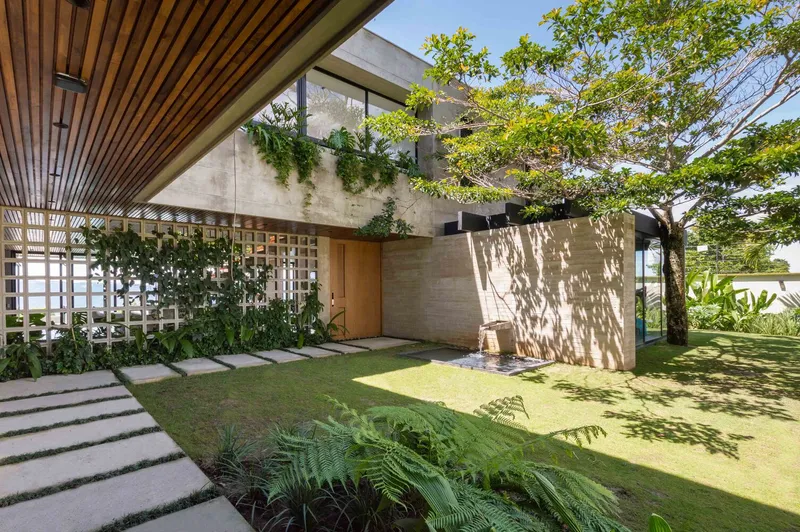
The ground level is conceived as a dynamic interface between built form and landscape. Entry is orchestrated through a sequence of courtyards and transitional spaces that guide visitors toward the main house. A striking concrete wall paired with a rain-fed reflective water feature creates a sensory arrival experience, enhancing the connection to natural elements.
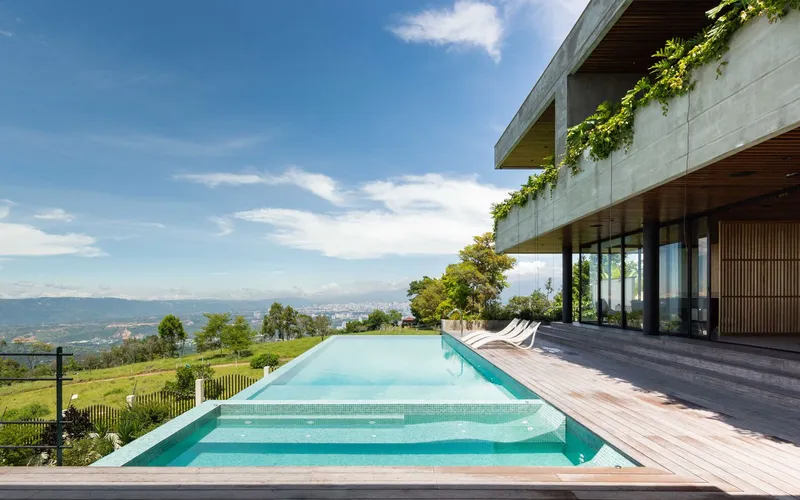
The first-floor volume, a linear rectangular prism positioned along the highest point of the site, houses service functions internally while opening outward to communal areas. Expansive terraces and a swimming pool extend the living spaces into the landscape, functioning as panoramic viewpoints.
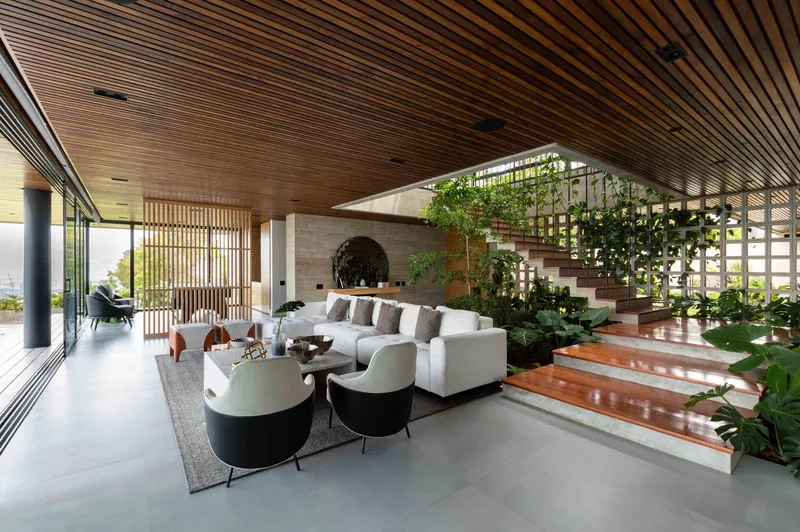
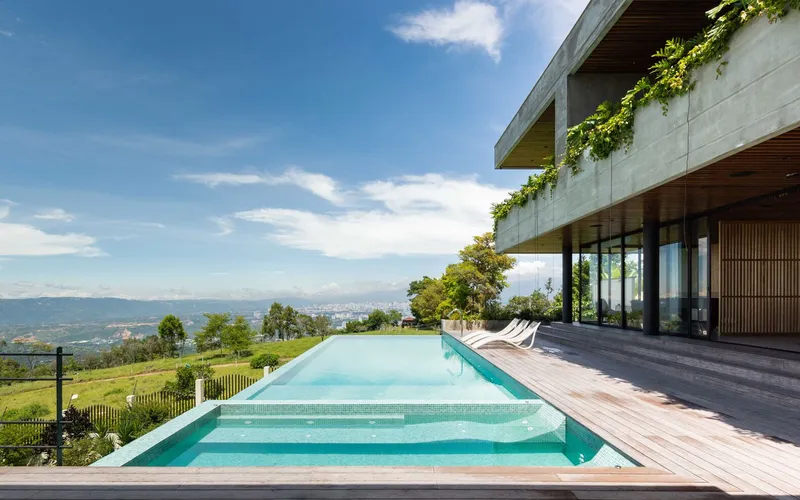
Landscape Integration and Outdoor Experience
A network of pathways weaves through the site, connecting the main residence with auxiliary spaces such as a secluded wooden cabin nestled within the forest. These circulation routes reinforce the project’s emphasis on exploration, immersion, and engagement with nature.
The outdoor design is not merely complementary but integral, blurring boundaries between architecture and environment through gardens, terraces, and open vistas.
Upper Floor: Private Living and Panoramic Views
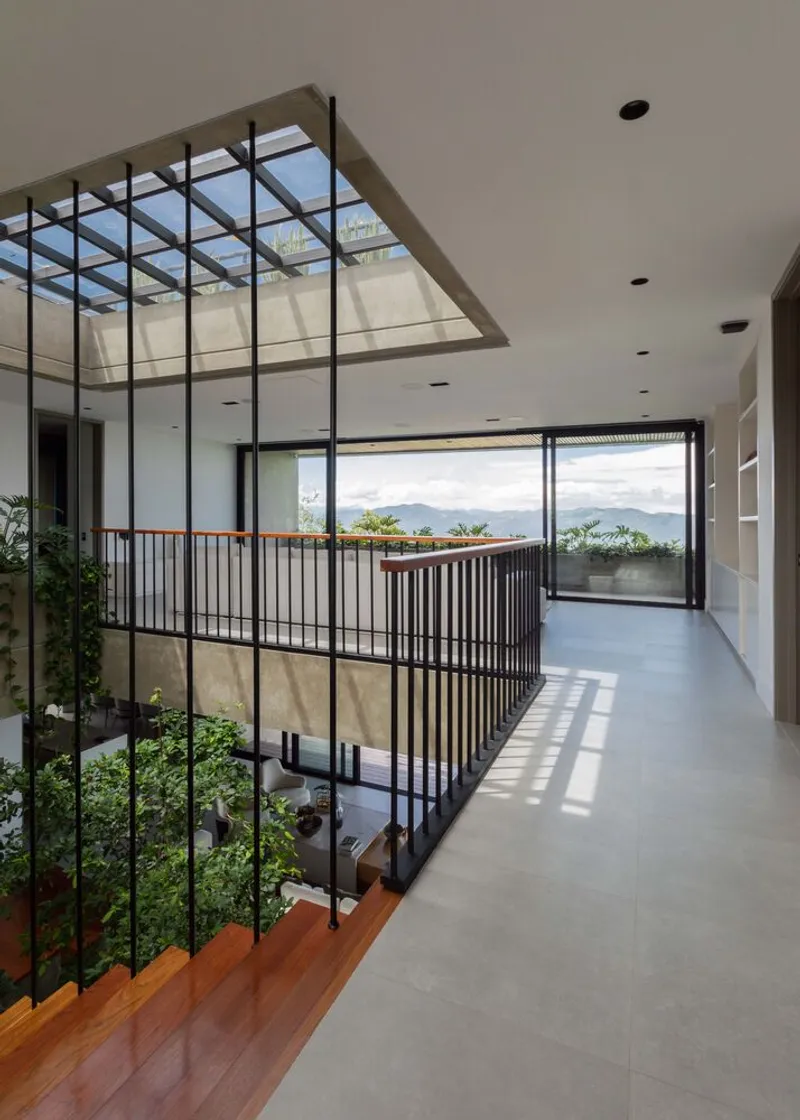
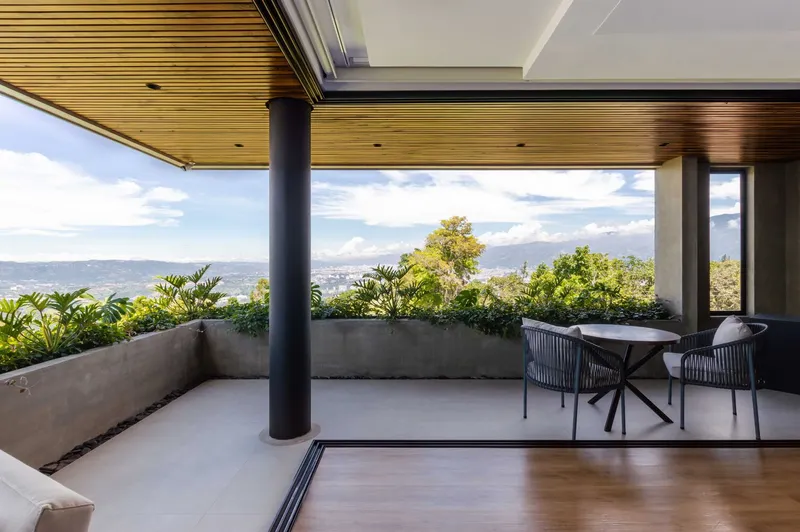
The second level accommodates the private program, including the master suite and secondary bedrooms. The master bedroom enjoys direct access to a terrace overlooking the city, while additional bedrooms are arranged within a perpendicular volume, unified by a continuous perimeter terrace.
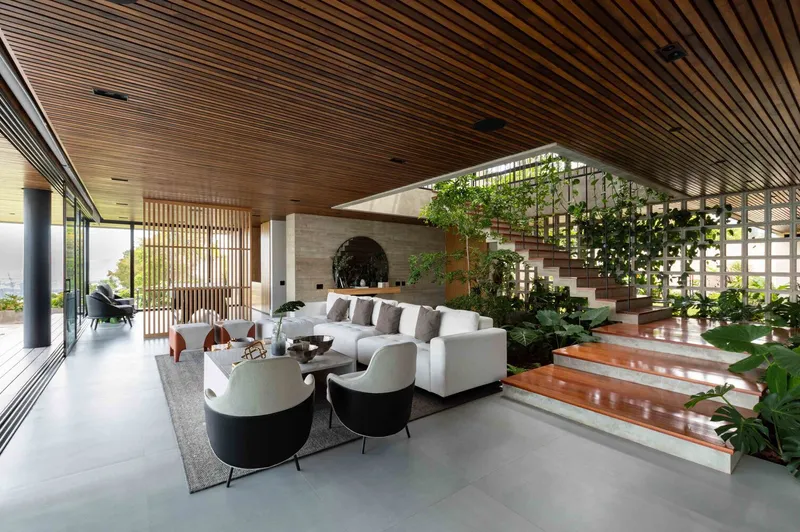
This elevated level enhances privacy while maintaining visual continuity with the surrounding landscape. The integration of vegetation and natural light further enriches the spatial experience.
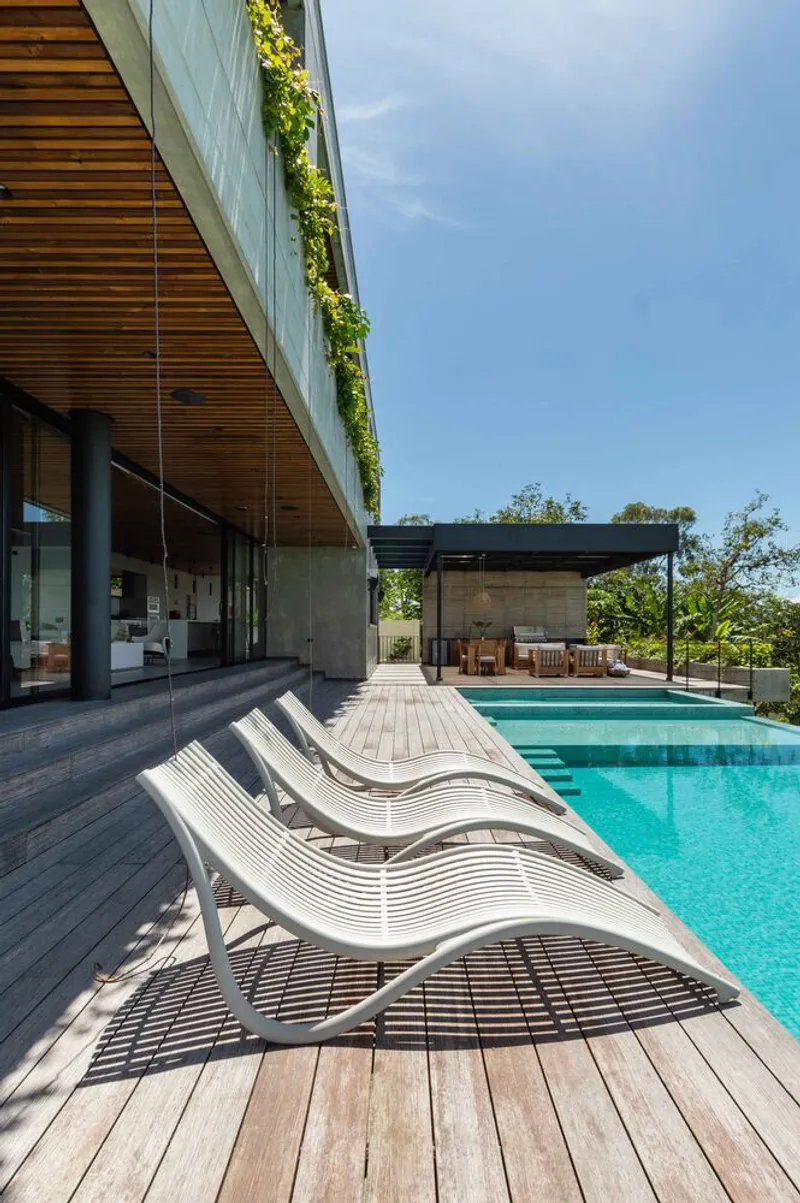
Sustainability is embedded in the design through passive strategies and renewable energy systems. A green roof structure houses solar panels, contributing to the home’s energy efficiency while offering an additional դիտpoint with expansive views.
Sustainable Features and Material Strategy
Materiality plays a crucial role in defining the architectural identity. Externally, exposed concrete provides durability and contrast against the lush greenery. Internally, warm wood finishes soften the spaces, creating a harmonious balance between natural and industrial elements.
Architectural Expression and Design Language
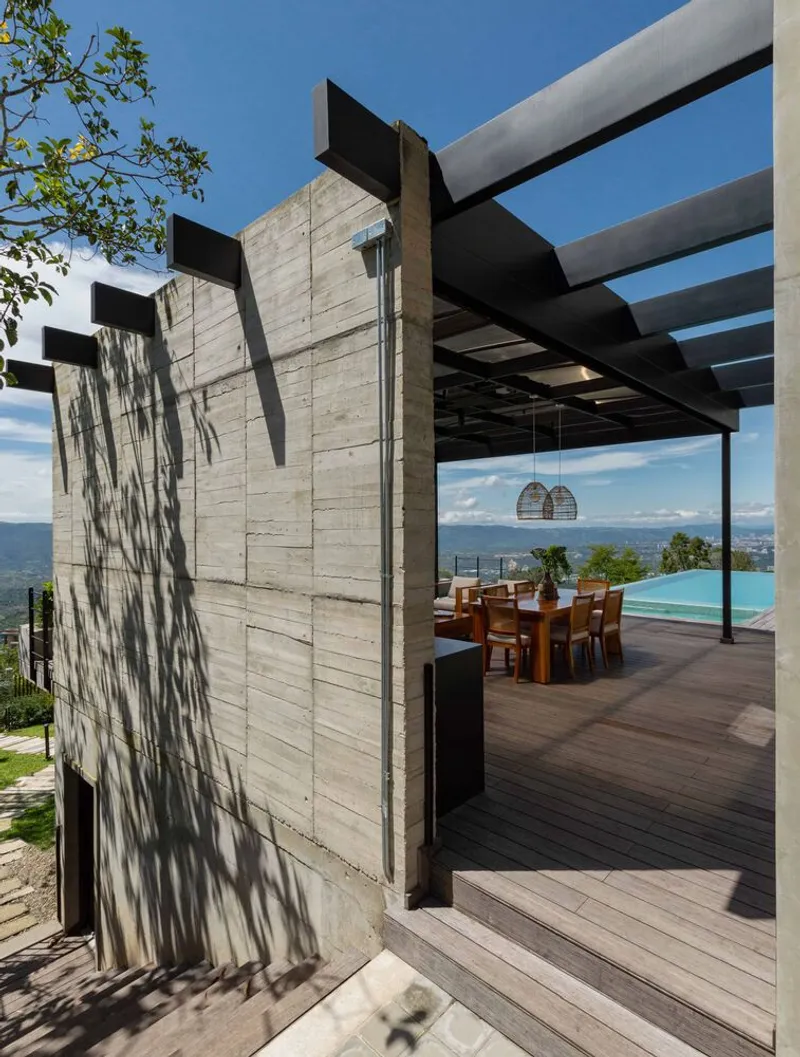
The architectural language of PAF House is defined by simplicity, clarity, and precision. The use of pure volumes, transparent facades, and layered outdoor spaces creates a fluid dialogue between interior and exterior.
Strategically placed openings and lattice elements frame views, regulate light, and enhance cross-ventilation. The result is a home that is both visually striking and environmentally responsive.
A Model for Contemporary Tropical Living
PAF House stands as a benchmark in modern residential architecture, demonstrating how thoughtful design can adapt to changing lifestyles while remaining rooted in its original vision. By integrating open-plan living, sustainable systems, and strong landscape connections, the project offers a refined approach to tropical architecture.
It is a compelling example of how architecture can harmonize with nature, respond to context, and elevate everyday living through design innovation.
All photographs are works of
Juan Serrano


Popular Articles
Popular articles from the community


Cloaked Colonization: A Mobile Underwater Habitat That Moves Like a Fish
Micah Abaya's shortlisted EHC Pacific entry reimagines ocean settlement as a dispersed network of self-sustaining architectural organisms.

Faces of the Soviet Avant-Garde: Turning Moscow's Street Names into an Open-Air Museum
A network of sculptural installations across a Moscow residential district transforms forgotten architect names into spatial encounters with cultural memor

The Amber Palace Opera: A Geological Fiction Surfaces on Tallinn's Baltic Waterfront
Pierre Brillard reimagines a Baltic legend as a public landscape, opera house, and waterfront promenade rooted in Tallinn's coastal identity.

Opera by the Sea Estonia: Three Shells Dissolving Architecture into Tallinn's Coastline
A winning opera house proposal replaces monumental form with interconnected shells that blur the boundary between building, park and Baltic Sea.

Similar Reads
You might also enjoy these articles

FAMM Arquitectura Organizes Ten Villas Around Courtyards and Jungle in Nosara, Costa Rica
El Molino pairs two elongated volumes with deep overhangs and timber louvers to build a compact coastal community five minutes from the beach.
Oscar Niemeyer's Ibirapuera Park Pavilions Define São Paulo's Cultural Identity in Concrete and Curve
A constellation of modernist volumes set within São Paulo's most important urban park, conceived for the city's 400th anniversary in 1954.
Sanjay Puri Architects Wraps a Jaipur Office Tower in Capsule-Shaped Green Buffers
A nine-level climate-responsive workplace near Jaipur Airport uses stacked planter terraces and aluminium screens to fight 40°C heat.
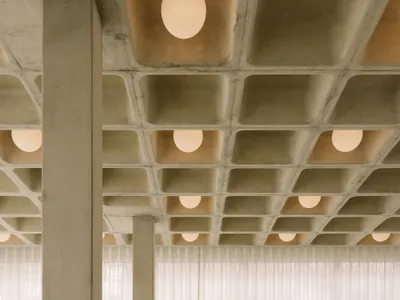
RHO Converts a Berlin Spree-Side Industrial Courtyard into Enkime's 1,000 m² Agency Headquarters
A social media agency's new home in Charlottenburg trades glossy branding for concrete waffle ceilings, glazed tile, and sheer curtains.

Explore Residential Building Competitions
Discover active competitions in this discipline

Challenge to design mud housing for contemporary communities

Challenge to reimagine the Iron Throne

Photograph architecture without architects

Illustrate the lost glory of Angkor Wat - Render Challenge
Comments (0)
Please login or sign up to add comments
No comments yet. Be the first to comment!