
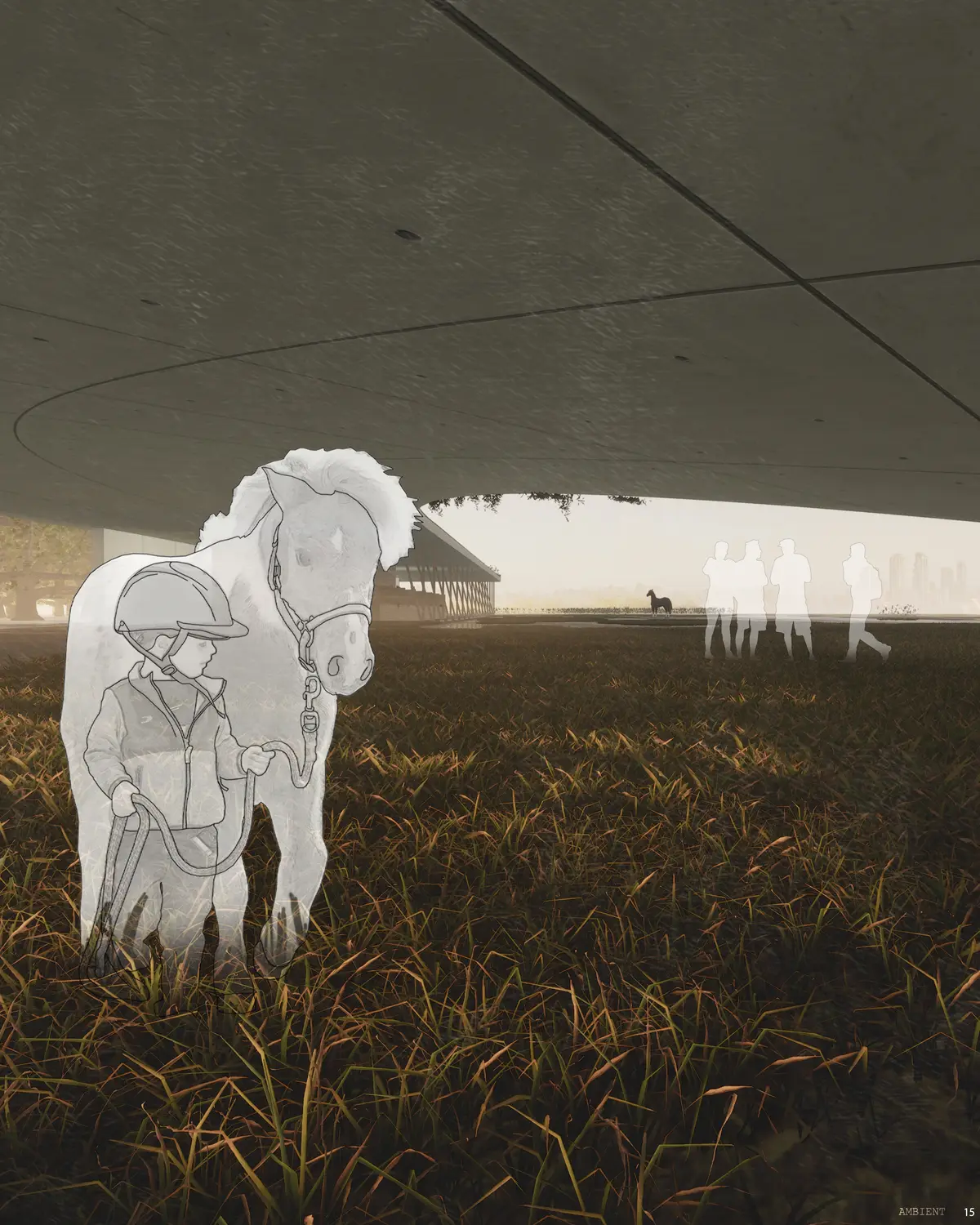
PANTEON PADDOCKS
LIKE A CHERISHED MEMORY, OUR FIRST TOY WAS A ROCKING HORSE — A TIMELESS COMPANION IN THE PLAYGROUND OF OUR EARLIEST DREAMS.

The word "Pantheon" is often associated with a temple dedicated to all the gods in ancient Rome, implying a place of reverence and importance.
This combination suggests a place where horses are treated with the highest regard, reflecting a commitment to excellence and a sense of honor. It conveys the idea that paddocks are not just a functional space but a place of significance and prestige.
HORSE RACING AND BRITISH SOCIETY IN THE LONG EIGHTEENTH CENTURY
This paragraph highlights four key arguments. Firstly, race meetings and associated betting could be pleasurable and leisurely activities for some British rulers and their sons, but they also represented potential hotbeds for youthful royal rebellions, gathering oppositional support, or expressing political dissatisfaction and subversion. Secondly, many Members of Parliament were passionate lovers of horse racing, but it could distract them from active participation in Westminster politics, and at times, races attracted parliamentary legislation. Thirdly, the presence and support for race meetings by 18th-century politicians typically helped in securing patronage and electoral advantages, facilitating networking. Lastly, the discourse on races and politics were contemporary toponyms in newspapers and elite correspondence, attracting proprietary interests and elite society.
The Morning Chronicle described horse races as "an ancient, approved, and national sport of the British people," and this became an increasingly accepted viewpoint. Horse racing connected the elite and middle classes in a common interest for entertainment.
SIGNIFICANCE OF EQUESTRIAN SPORTS IN BRITAIN
Horse racing is the second most-watched sport in the United Kingdom, following football, with a long tradition in the country. The first recorded horse races took place during the reign of Henry II in the 12th century, right in central London, and these races were celebrated in various songs. Betting on horse races is as old as the sport itself, but in Britain, these connections are particularly strong.
The Horserace Betting Levy Board (HBLB) represents an organization that is a quasi-public body under the Department for Digital, Culture, Media, and Sport in the United Kingdom. It is a statutory body established by the Betting Levy Act.
HYDE PARK AND EQUESTRIAN CULTURE
Hyde Park and Rotten Row played a significant role in the development of equestrian sports in the United Kingdom. During the Victorian era, Hyde Park and Rotten Row became centers of social life for the London elite, and equestrian sports gained popularity among aristocrats and the public.
In the 20th century, many of the preserved yards near Hyde Park transformed into riding schools, with Cadogan Riding School being the most famous among them. This school taught many members of the royal family how to ride, including Queen Elizabeth II when she was a child. State services and the BBC had riding clubs that utilized stables near Hyde Park.
IDEA
Since London represents a multicultural city, as evident on the graph, one of the cultural facts is the archetype of the horse. This archetype doesn't always represent the same symbol, but it is deeply connected to each individual culturally.
Promotion of horseback riding, as well as equestrian facilities on the outskirts of London, equestrian sports, in the form of a museum with exhibits but primarily through activities involving interaction with animals/horses. Some more frequent events. Temporary accommodation for horses, as the location is considered unsuitable for permanent stabling...
STRUCTURE
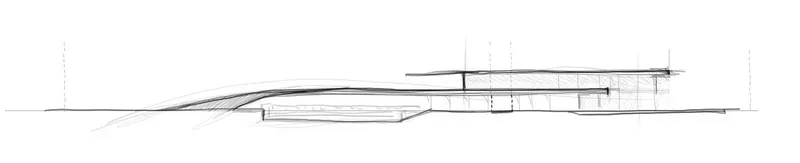
To maintain the strong horizontal aspect of Hyde Park, the architectural structure somewhat emerges from the ground, creating an impression of blending with the terrain. The design is influenced by existing paths at the specific location.
EQUESTRIAN TRAILS
During the research, riders expressed dissatisfaction with the existing trails being very short, so a proposal was made to introduce new trails in Hyde Park. At certain points along the trail, the establishment of resting areas and watering spots for horses is planned, symbolizing and further familiarizing the horse symbol to both riders and passersby.


Popular Articles
Popular articles from the community


Juan García Correa, John González and Claudia Rueda Sink a Circular Amphitheater into a Manizales Engineering Building
On the La Nubia campus in Manizales, Colombia, the S1 Building folds labs and offices into a hillside of ramped lawns that double as a campus route.

Cube Design Draws an Ecological Corridor Between Two Shenzhen Hills with the Nankai Building
Beside Shenzhen's container docks, the Nankai Building pairs stacked balconies with a climbing green screen to connect two hillsides across its height.

Architekt Andreas Gruber Scatters 23 Dark Timber Chalets Across a South Tyrolean Forest Edge
In Molini di Tures, Amonti Chalets breaks a resort into a hamlet of gabled timber houses, with parking, storage and services pushed into the slope.

U.GA Architects Wraps an Oval Rooftop Pool in Curved Board-Formed Concrete on Busan's Jeollidan-gil
In Busan's Jeonpo-dong, a 454 m² mixed-use block stacks a neighborhood facility, guest rooms and an oval rooftop pool inside spiraling concrete walls.

Similar Reads
You might also enjoy these articles

Yenisei Monitoring Center: A Sun-and-Moon Sphere Anchors a Research Campus on Siberia's Great River
In Krasnoyarsk, shifting square blocks, a glazed central sphere and descending window rhythms turn river science into a public spectacle on the Yenisei.
Andretta Artist's Village: A Node-Based Masterplan That Lets the Hills Write the Plan
A cultural landscape strategy for Palampur's artist colony threads studios, residences and stages along a porous spine shaped by the Dhauladhar terrain.
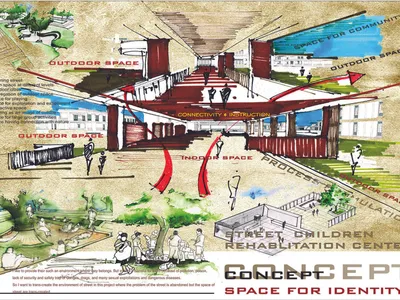
Street Children Rehabilitation Center: A Brick Campus That Eases Children From Street to Safety
A low-rise courtyard campus where learning streets, uthans and shaded verandahs stage a gradual passage from street into protective, family-scale life.
The NEON Culture: A Field of Pavilions Built for the 24-Hour City
Smaran Alva spreads galleries, stages, clubs and markets across a varied site, treating light, sound and ramped movement as the real building materials.

Explore Architecture Competitions
Discover active competitions in this discipline


Design a brochure to showcase the effects of the technosphere

Challenge to illustrate ‘A tale of Two Cities’

Deconstructivism - Illustration Design Challenge

Challenge to reimagine the Iron Throne
Comments (0)
Please login or sign up to add comments
No comments yet. Be the first to comment!