
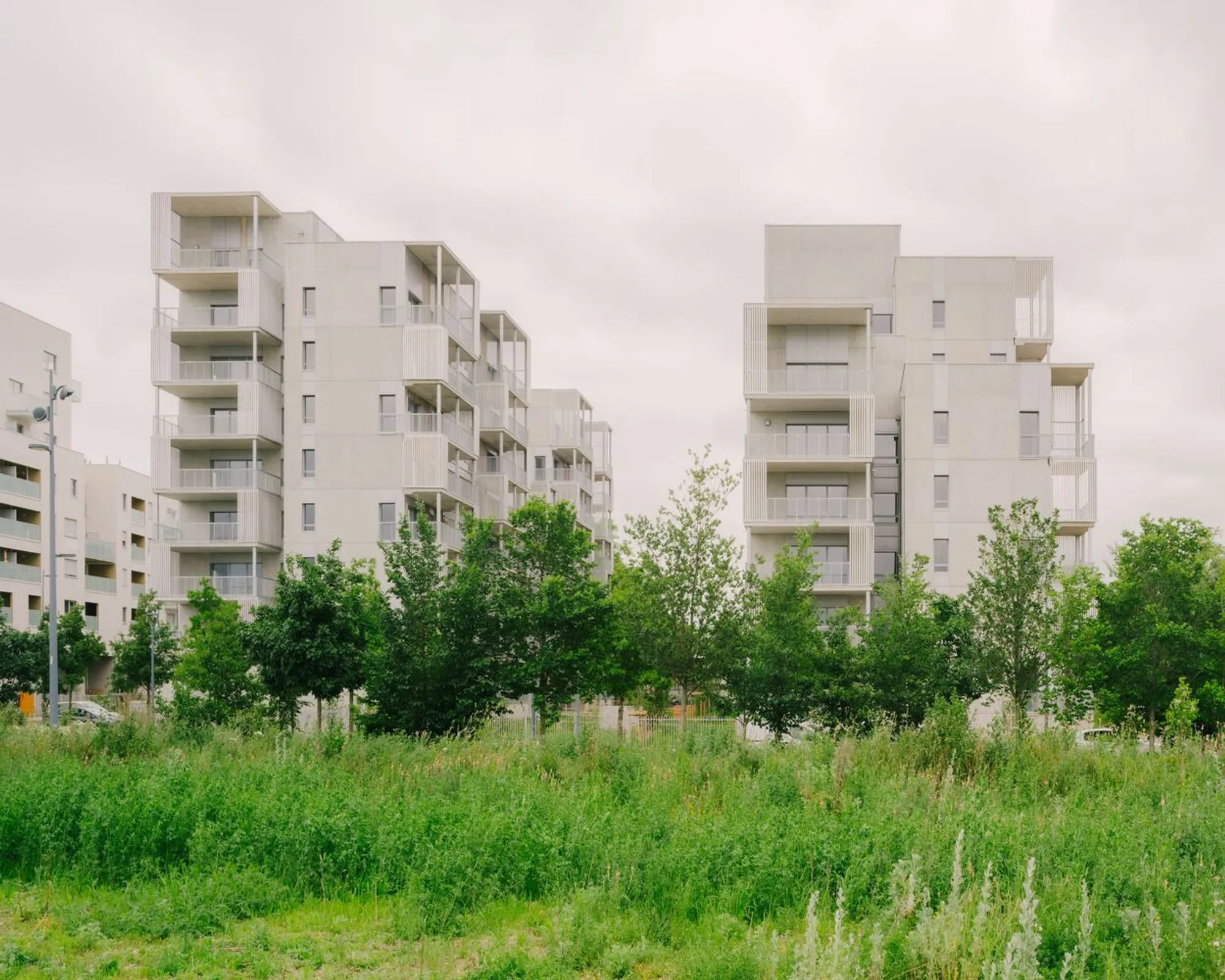
Parilly 116 Housing Units: A Model of Sustainable Social Housing Architecture by Tectoniques + BBC & Associés
A sustainable social housing project in Lyon combining prefabrication, bioclimatic design, and community spaces for future-ready urban living.


A New Urban Vision for Lyon’s Grand Parilly District
The Parilly 116 Housing Units project by Tectoniques and BBC & Associés is a forward-thinking example of sustainable social housing architecture within the Grand Parilly urban development in southeast Lyon, France. This 20-hectare site—strategically located at the city’s entrance—was identified by the Métropole de Lyon for dense and sustainable residential expansion.
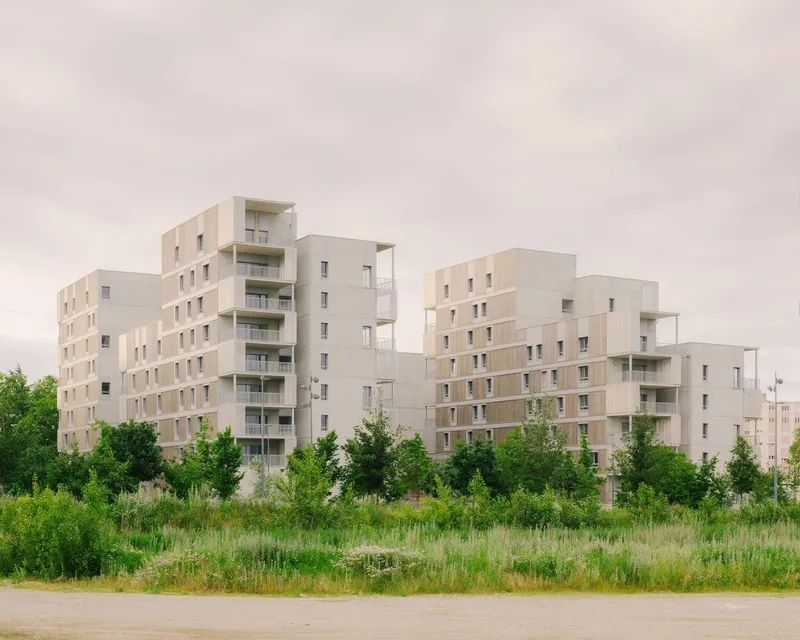
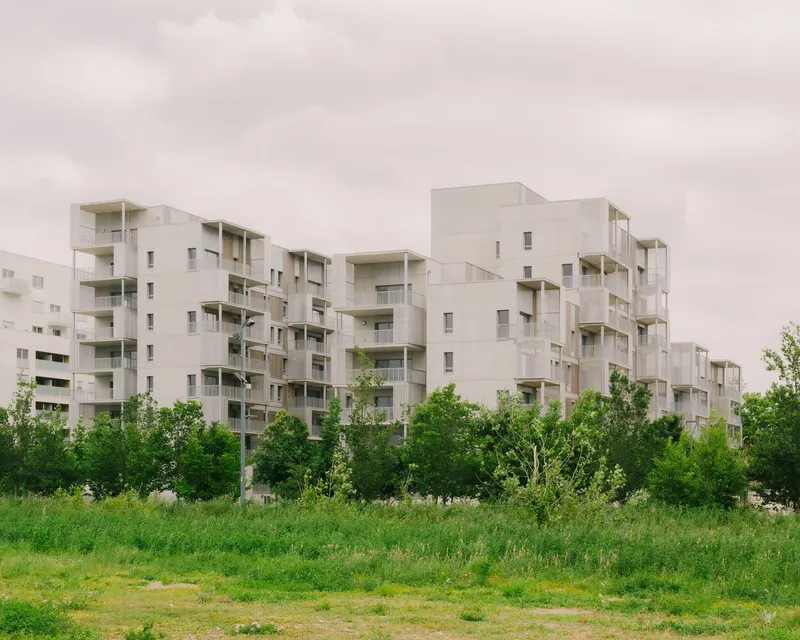
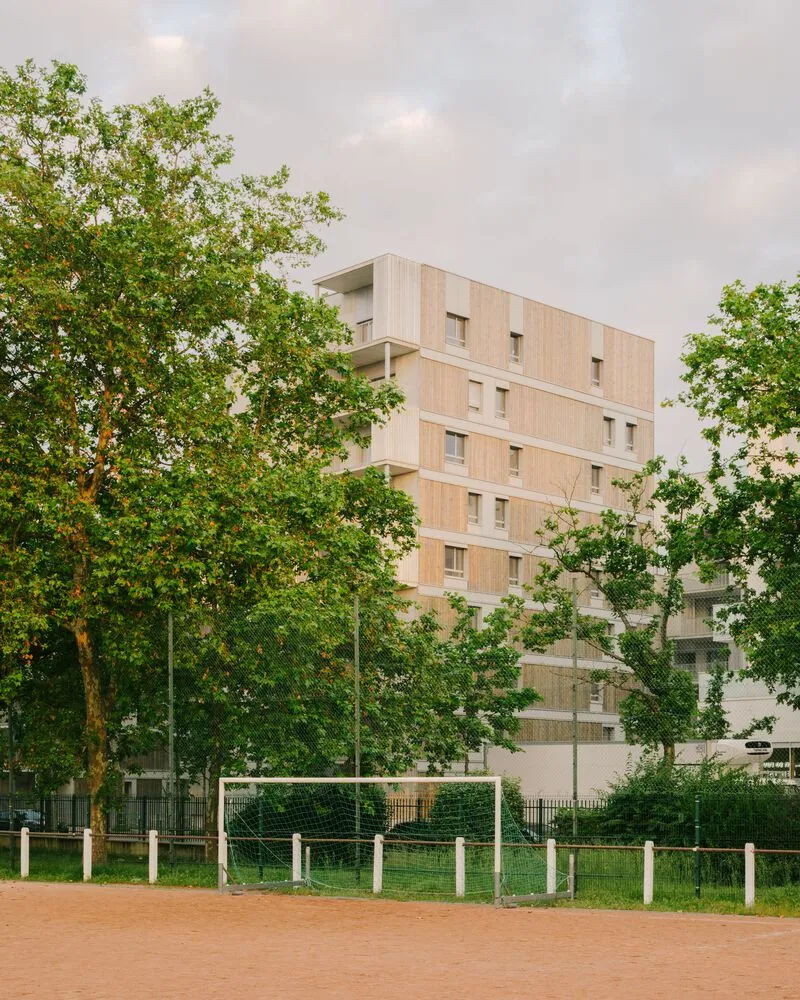
Amid the comb-shaped blocks and the green landscaped axis known as “the green furrow,” the project distinguishes itself through its innovative volumetric articulation, social inclusivity, and environmental responsibility. It embraces density while humanizing scale and form, offering high-quality living conditions rooted in bioclimatic principles.
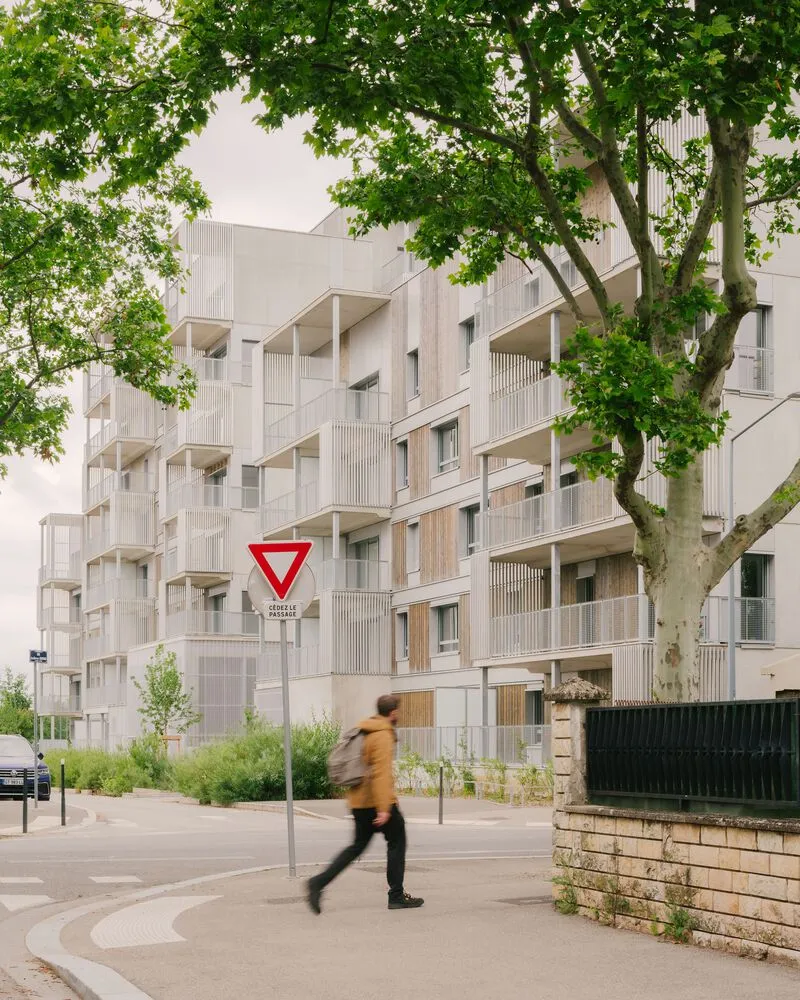
Bioclimatic Design and Urban Integration
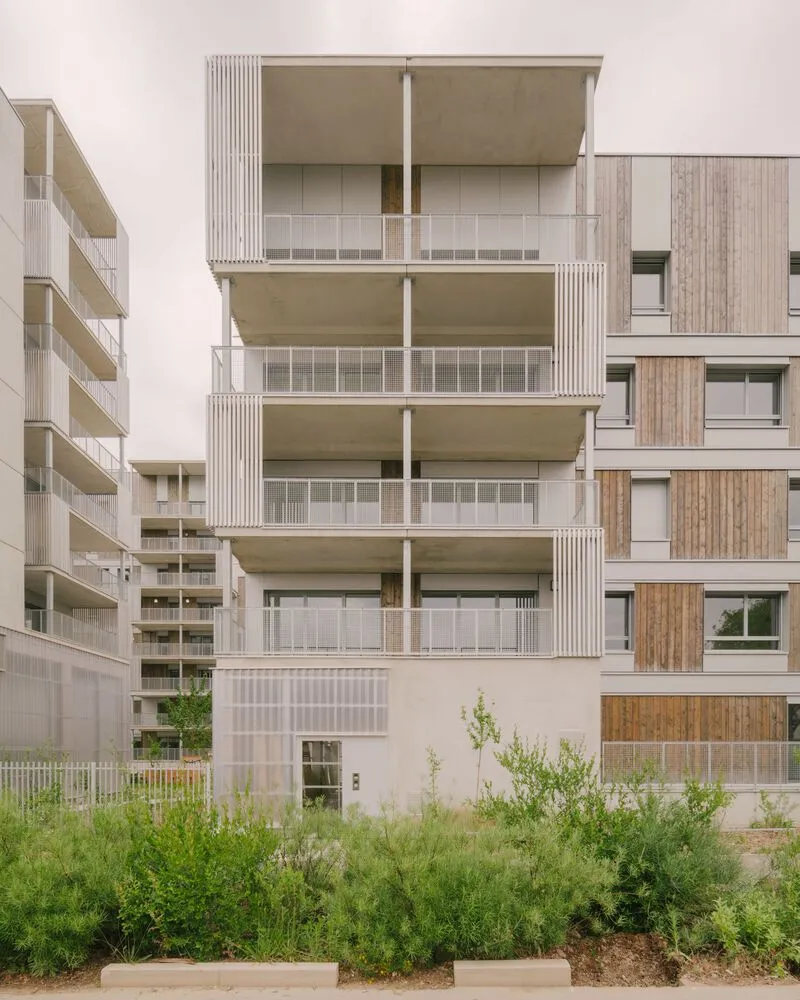
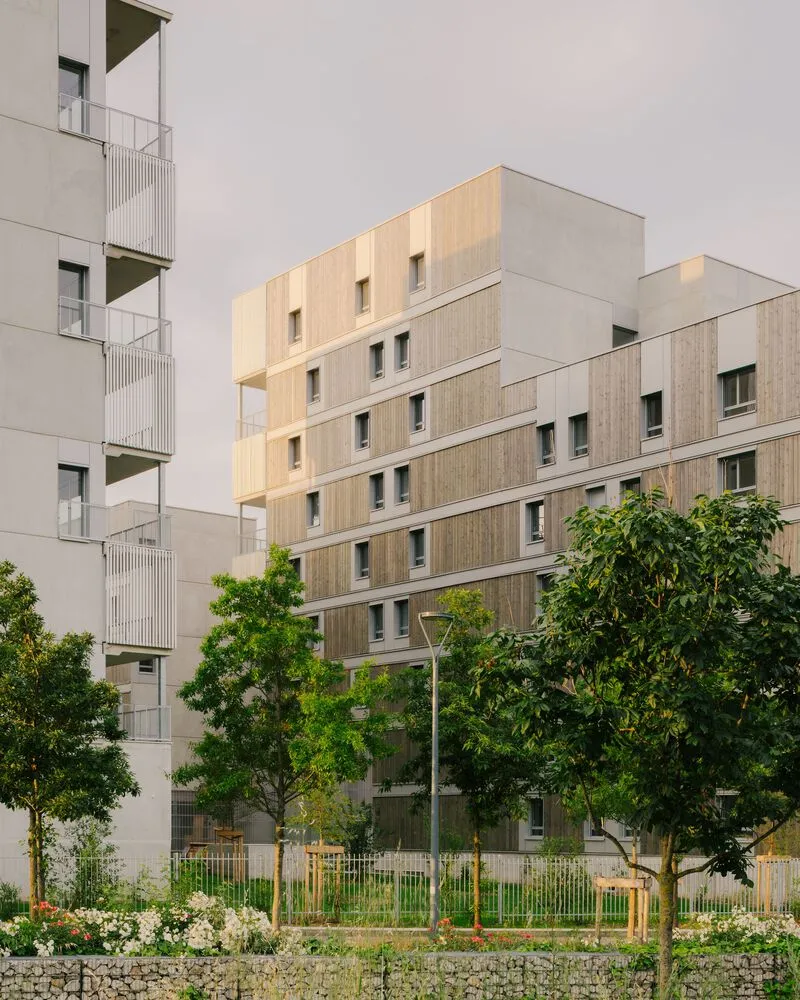
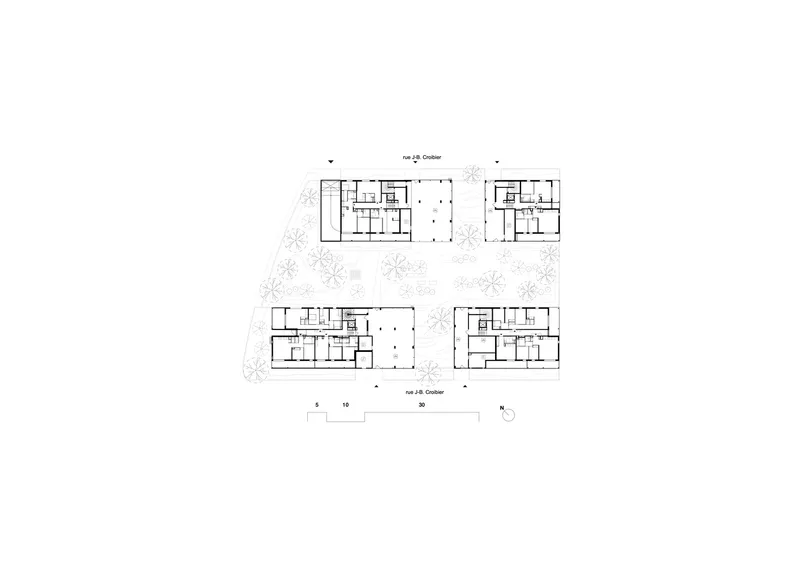
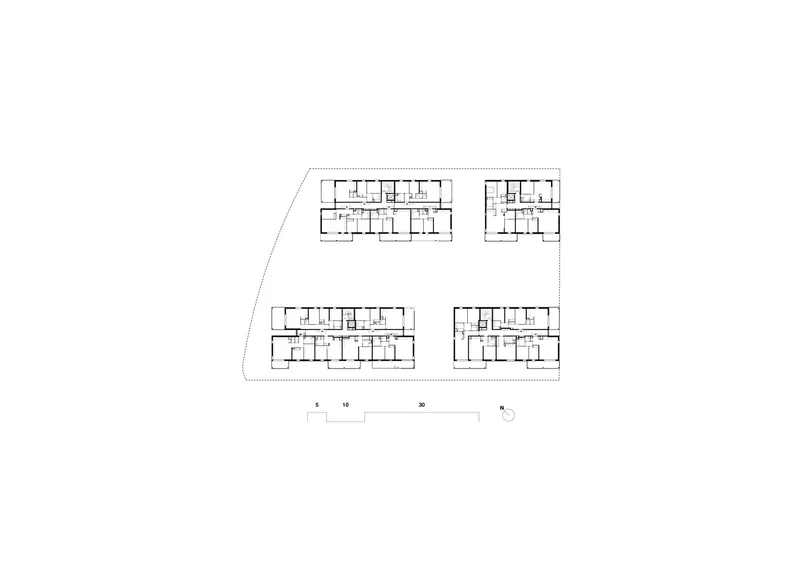
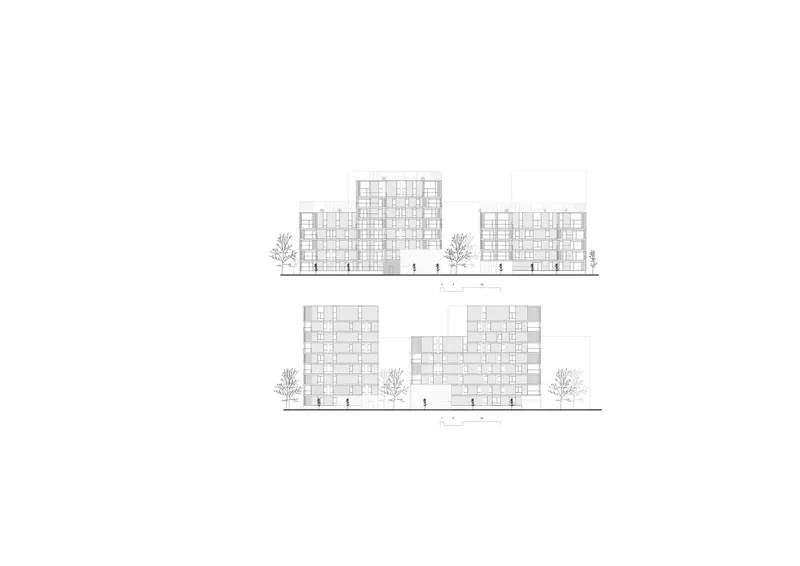
The project carefully integrates with the historical Faubourien urban fabric to the south. Its massing and layout not only comply with urban regulations but also strategically promote passive design strategies. Each building is volumetrically fragmented to ensure that 92% of the 116 apartments are either dual-oriented or fully through apartments, allowing for natural cross-ventilation and abundant daylight.
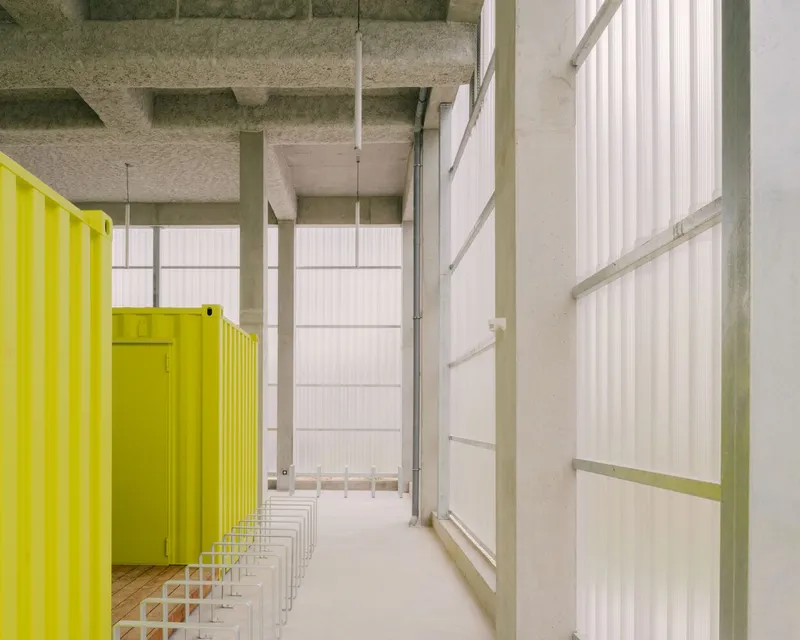
The buildings are served by naturally lit corridors and open circulation paths, enhancing orientation and user experience. Common walkways are placed centrally in each plot, glazed at both ends, and provide visual continuity and environmental comfort throughout the building.
Public-Private Transition and Community Activation
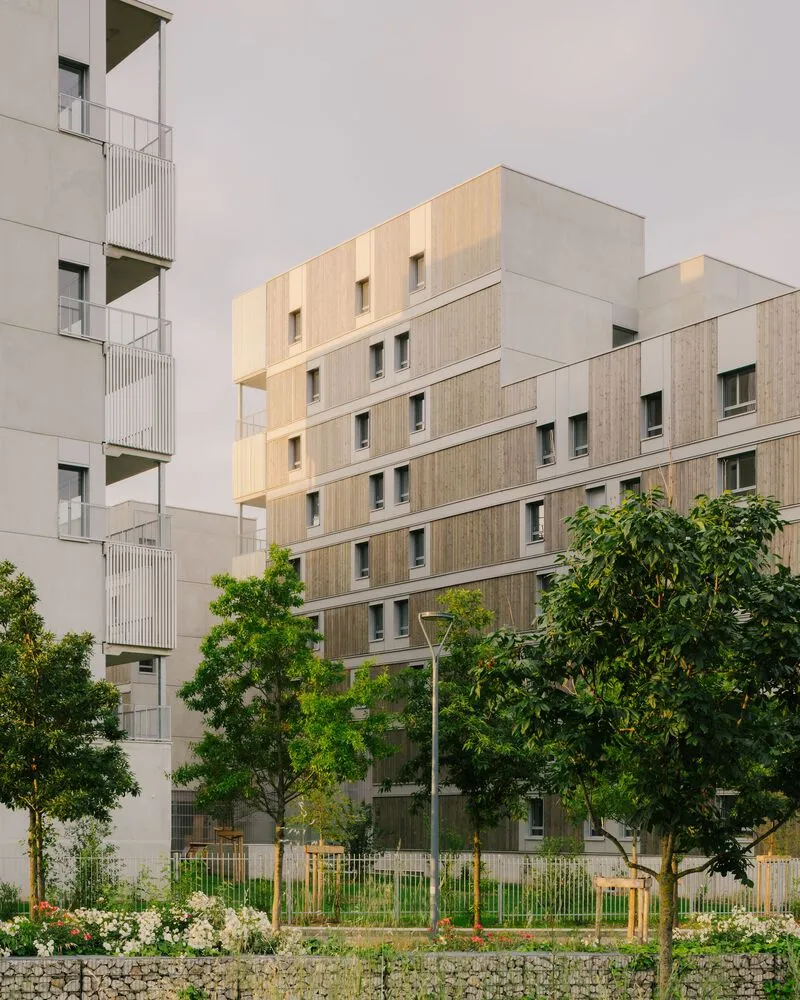
The project makes a conscious effort to redefine the threshold between public and private spaces. The ground plane is activated through large open green areas with integrated furniture, creating social nodes and encouraging passive cooling. These landscaped zones act as buffers, protecting raised ground-floor residences while fostering interaction.
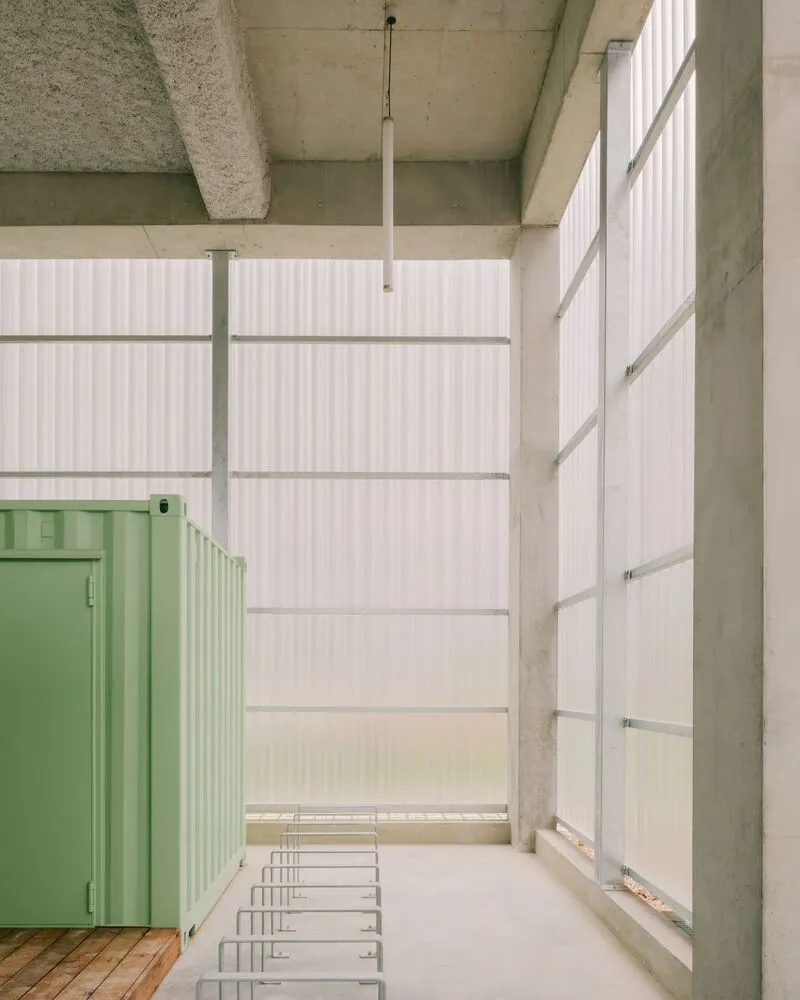
The generously scaled, double-height entrance halls further reinforce this boundary. Designed as transformable communal spaces, they accommodate flexible uses ranging from food distribution points and DIY workshops to pop-up stores and cafés—acknowledging the evolving needs of the residents and community.
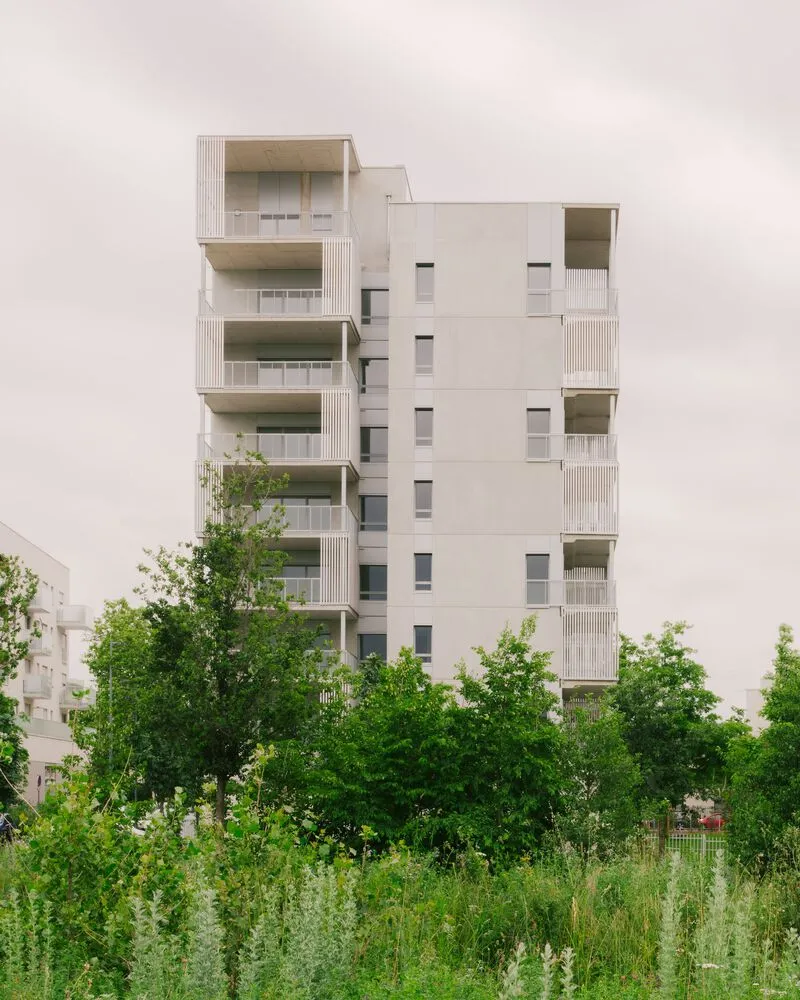
Living Comfort and Spatial Quality
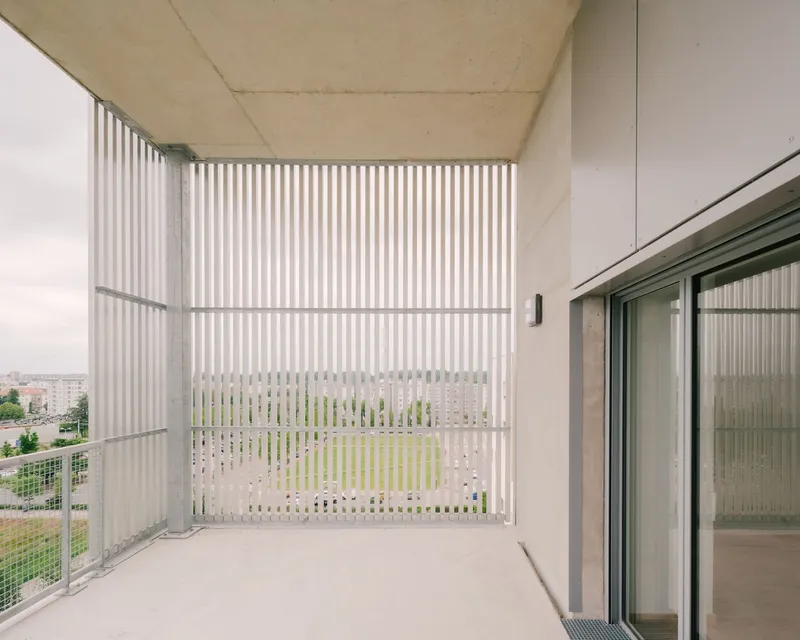
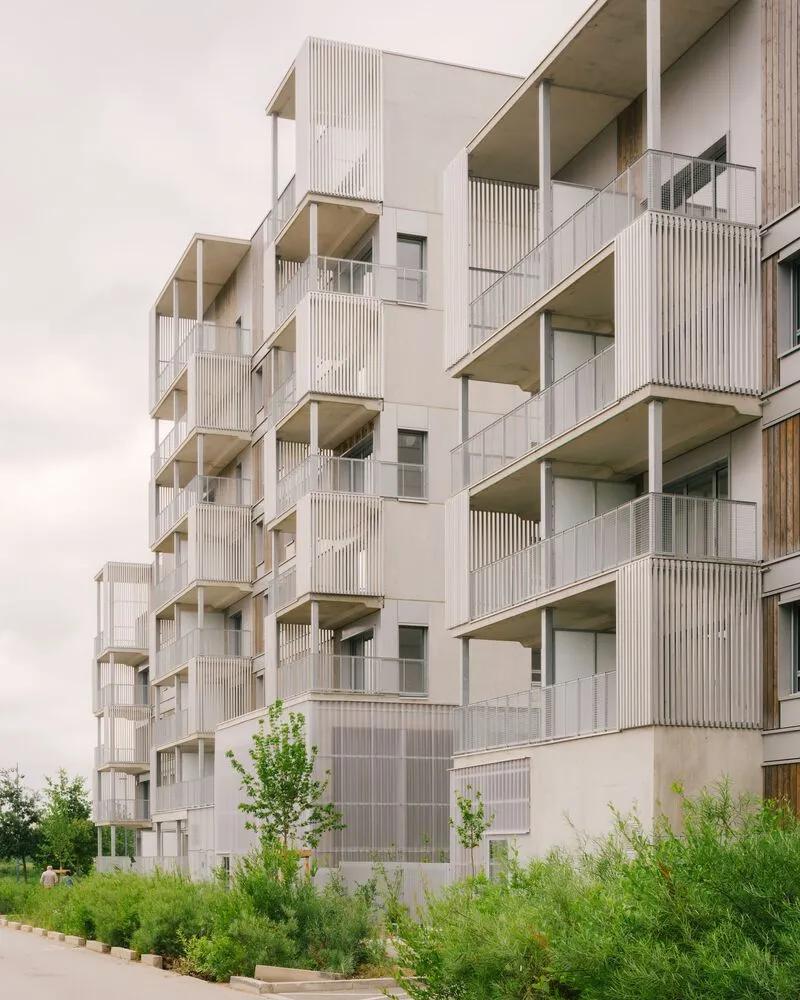
Each housing unit is designed to maximize comfort, daylight, and usability. The layouts offer clear separations between day and night zones, and kitchens and living rooms are placed at building corners to benefit from double orientations. Expansive balconies extend the interiors, providing outdoor space and reinforcing the visual and environmental connection to the surroundings.
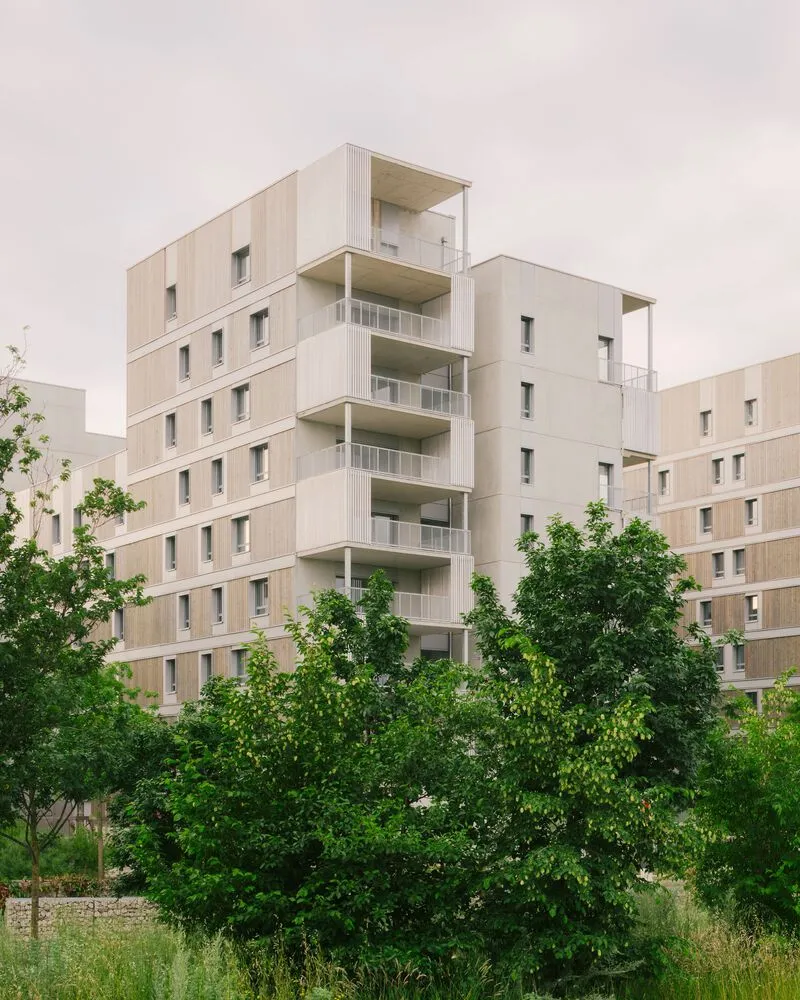
The architecture favors simple, easily furnishable layouts, reinforcing the project’s ethos of high-quality yet cost-conscious housing. Natural light, passive ventilation, and corner positioning help ensure thermal comfort and visual richness in each unit.
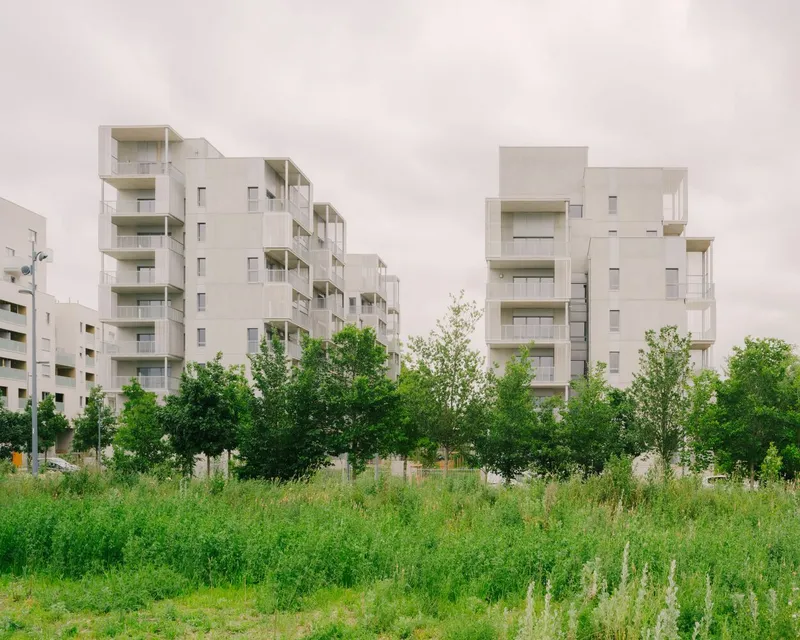
Prefabrication and Bio-Based Construction
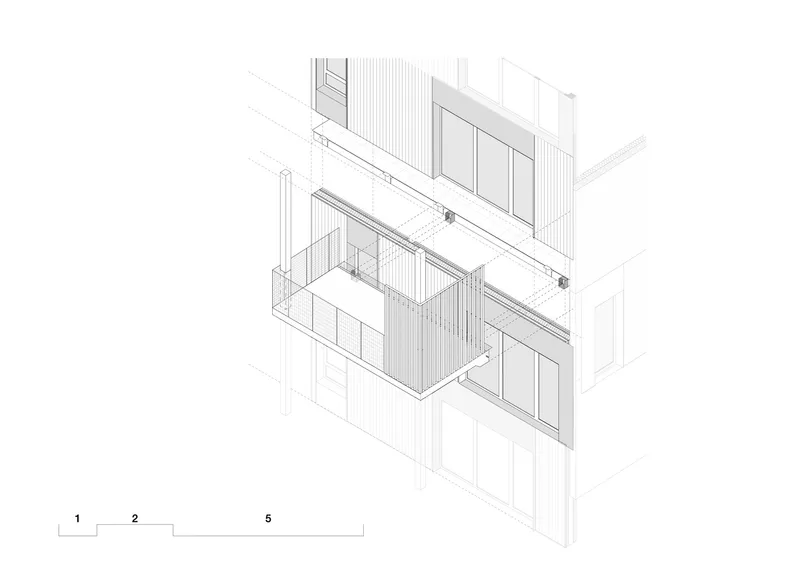
Sustainability is embedded in the construction methodology. The structure employs a hybrid prefabricated system: a concrete primary frame for structural and acoustic integrity, combined with wood-frame façades to reduce the carbon footprint. These façades are prefabricated with factory-installed aluminum millwork and insulation, ensuring precision and minimizing on-site waste.
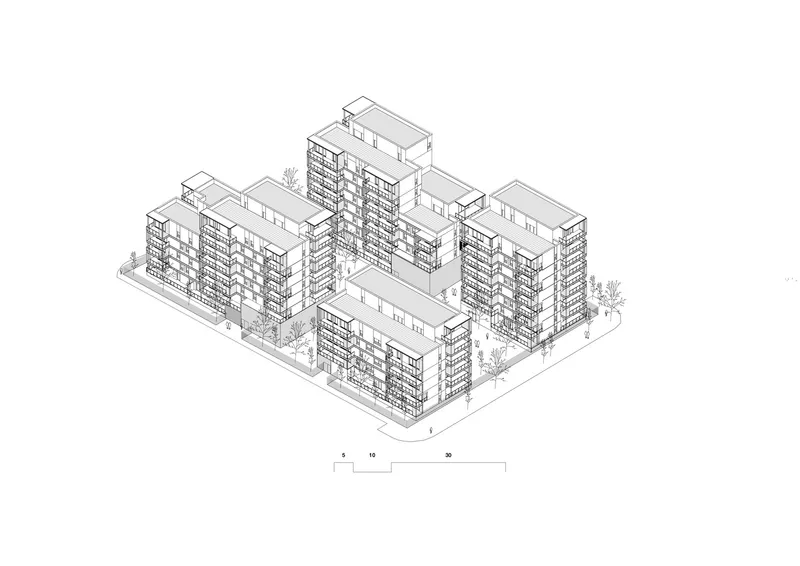
Balconies are constructed from prefabricated concrete and mounted on galvanized steel exoskeletons. Privacy screens made of full-height tubular metal filter light and protect against weather, while also contributing to the building's distinct architectural identity.
Exterior insulation is applied continuously via a wood-frame mantle wall system, and materials are left honest and expressive—ranging from rough-cast concrete gables to corrugated polycarbonate in communal areas. The subdued color palette underscores the structure's modular clarity and ecological restraint.
Towards a Replicable Model for Future Housing
The Parilly 116 Housing Units is not merely a housing development; it’s a prototype for future-ready, sustainable social housing architecture. It demonstrates that density, environmental performance, and community life are not mutually exclusive, but deeply interwoven. Through responsible material choices, adaptive social programming, and passive design intelligence, Tectoniques and BBC & Associés deliver a project that is both humane and future-facing.
This work exemplifies how contemporary social housing can serve as a catalyst for urban transformation while maintaining a deep commitment to human scale, environmental sensitivity, and social cohesion.
All Photographs are works of Maxime Verret



Popular Articles
Popular articles from the community


Lunar Spiral: Space Architecture Shaped by the Mathematics of the Universe
Lunar Spiral reimagines space architecture through Fibonacci geometry, lunar regolith, levitating habitats, and self-sustaining Moon living.

The Musturak Paradise: Senior Living Architecture for a Connected Future in Temara, Morocco
The Musturak Paradise reimagines senior living architecture in Temara via private homes, social spaces, culture, community, and shared care.

Co-life: Sustainable Architecture for Age-Friendly Community Living
Co-life reimagines sustainable architecture for seniors through courtyards, rammed earth, shared gardens, and spaces designed for belonging.

Conexión: Biophilic Design Reimagines High-Rise Living in Hong Kong
Conexión reimagines high-rise living in Hong Kong through biophilic design, green facades, shared spaces, daylight, water and nature within.

Similar Reads
You might also enjoy these articles

Bamboo Housing Challenge 2026: Design Affordable, Sustainable Homes Using Bamboo
An international design competition by Bamboo U and IBUKU inviting architects and designers to reimagine affordable housing using bamboo — with the winning design built full-scale in Bali.
Computational Design & Education: Beegraphy Design Awards Introduces 7th Category (Featuring Jiyun's Innovative Approach)
Dive into Beegraphy’s 7th Design Awards category, where computational design meets education to create immersive, interactive learning tools, inspired by Jiyun’s work.
From Parametric Lighting to Urban Furniture: Join the 2nd Workshop in Beegraphy’s Computational Design Series
Dive into Cutting-Edge Design Techniques and Practical Applications with Industry Experts

Last Call: Unleash Your Architectural Genius in SHAK's Kindergarten Design Competition
Urgent call for architects to join SHAK's kindergarten design competition before the looming deadline


Explore Architecture Competitions
Discover active competitions in this discipline



Challenge to reimagine the Iron Throne


Photograph architecture without architects


Illustrate the lost glory of Angkor Wat - Render Challenge


Design challenge to reuse E-waste
Comments (0)
Please login or sign up to add comments
No comments yet. Be the first to comment!