
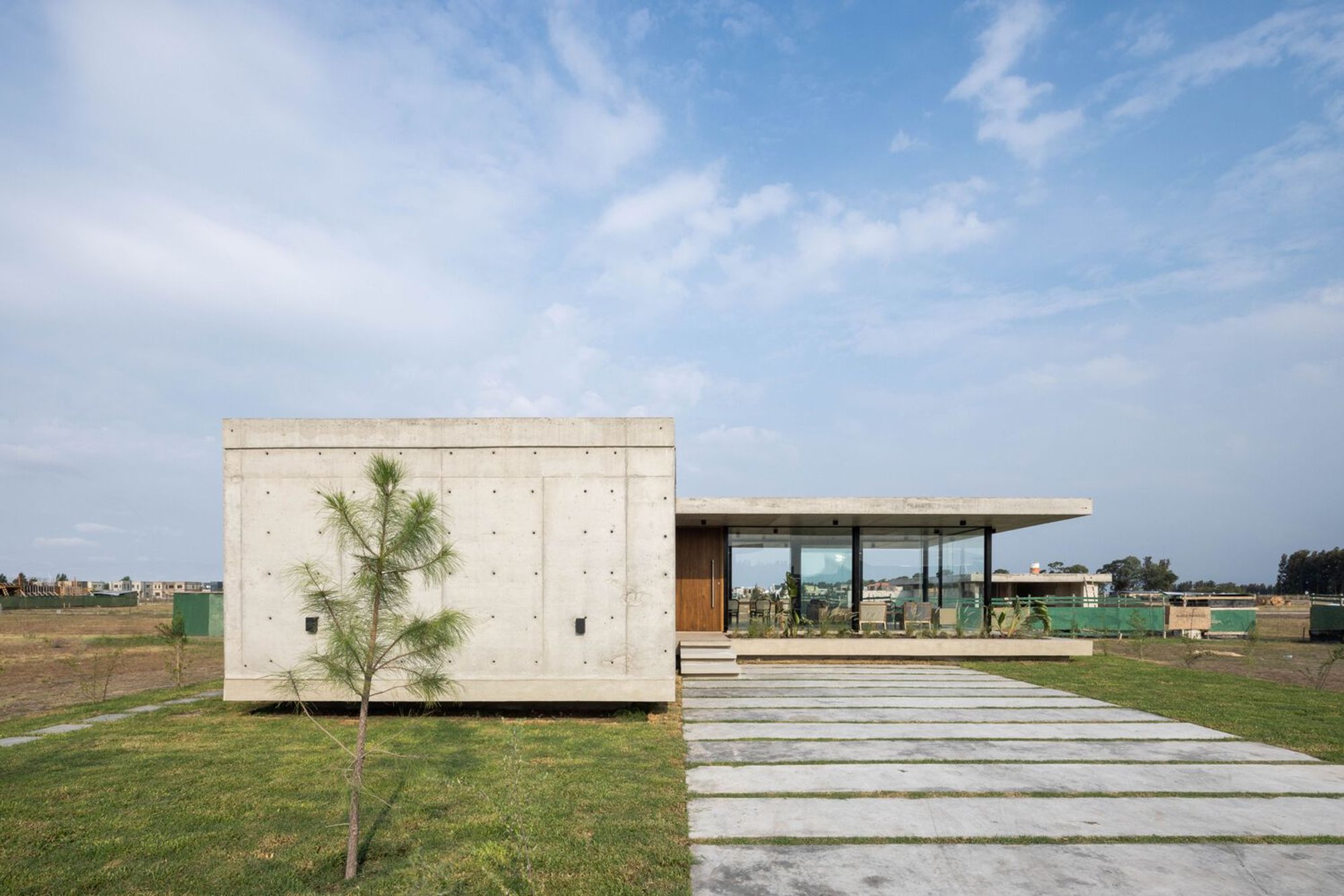
Pekin House by TIM Arquitectos – A Minimalist Expression of Rationalist Modernism in Argentina
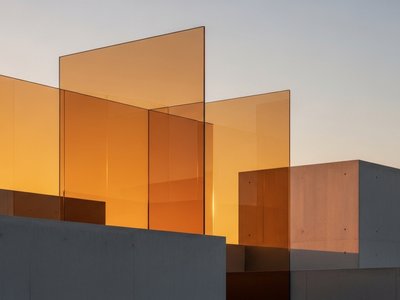
Pekin House by TIM Arquitectos blends minimalism, rationalist modernism, exposed concrete, and glass, creating a light, functional family residence.

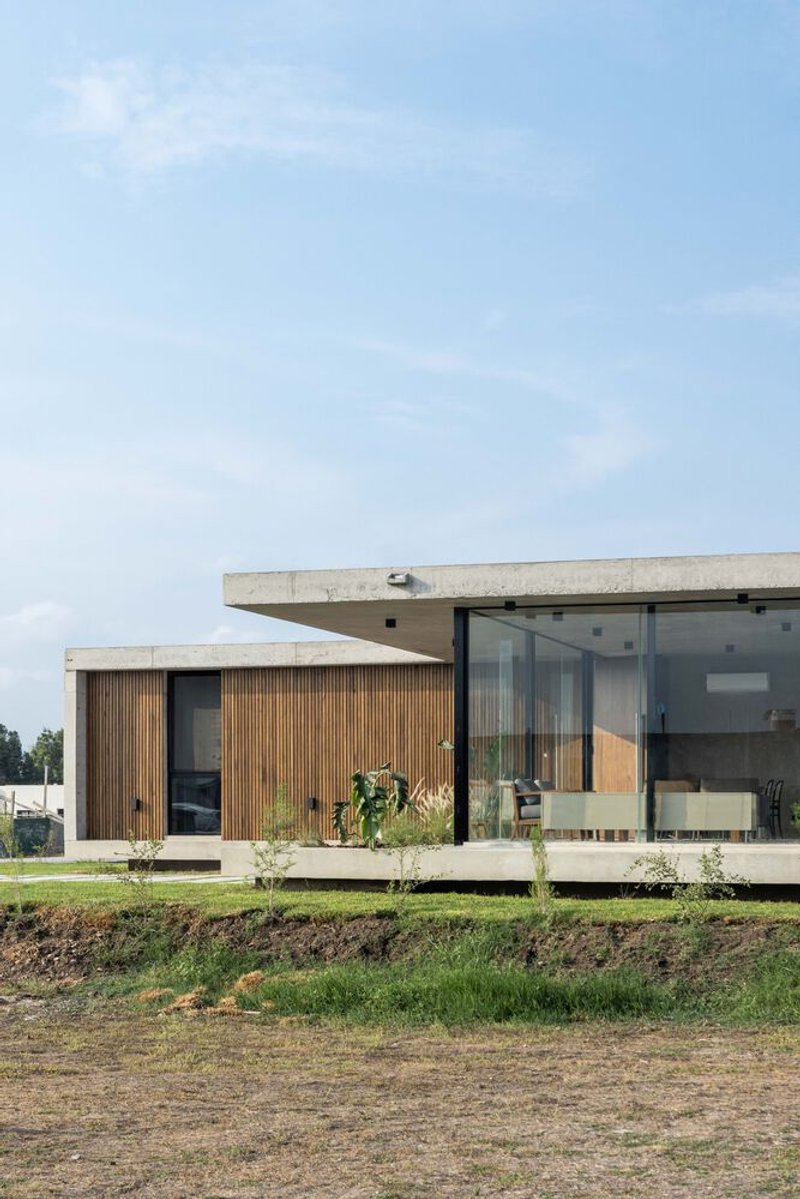
Located in Canning, Argentina, Pekin House by TIM Arquitectos is a refined example of contemporary residential architecture rooted in the principles of the modern movement. Designed by Martín Aracama and photographed by Luis Barandiaran, the 149 m² residence embodies minimalism, rationalist design, and material purity, creating a timeless home for a young family.
The architectural concept is guided by the studio’s design philosophy:
- Absence of ornamentation and moldings for a clean, modern aesthetic.
- Purity of façades with simple geometries and contrasting volumes.
- Prominent entrances that define circulation and welcome transitions.
- Glazed social spaces maximizing light and transparency.
- Clear functional divisions, separating the kitchen from social areas to enhance both privacy and usability.
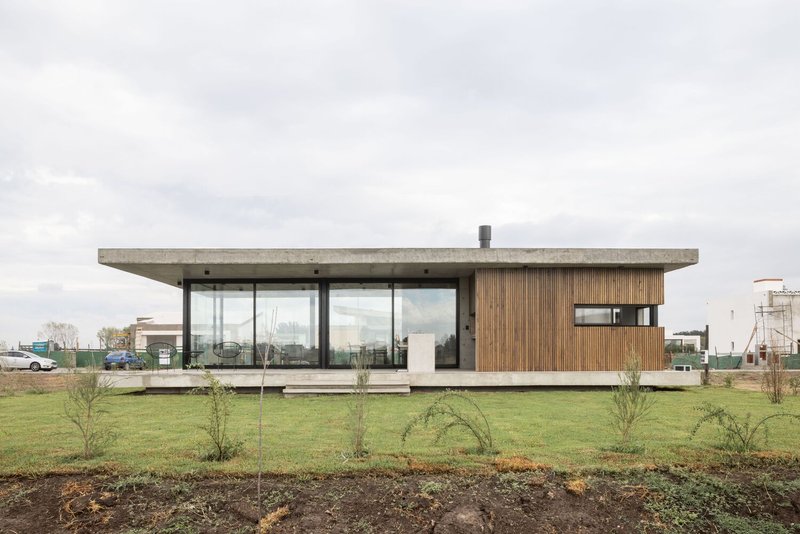
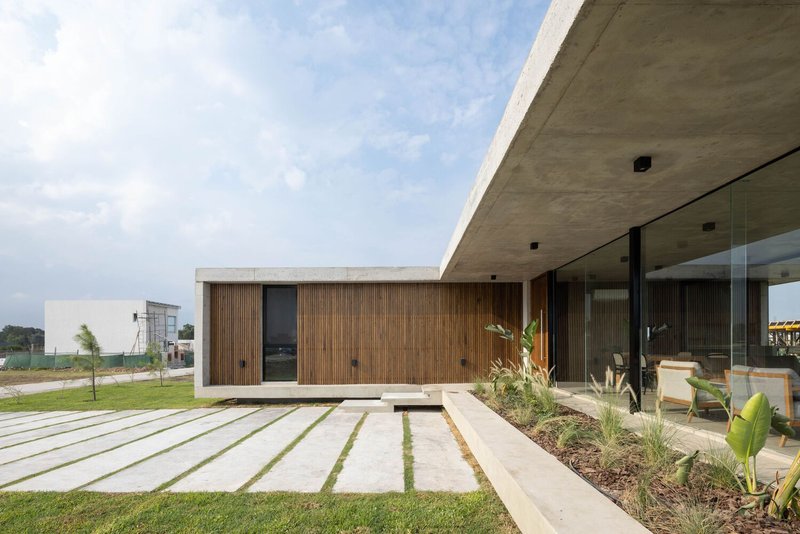
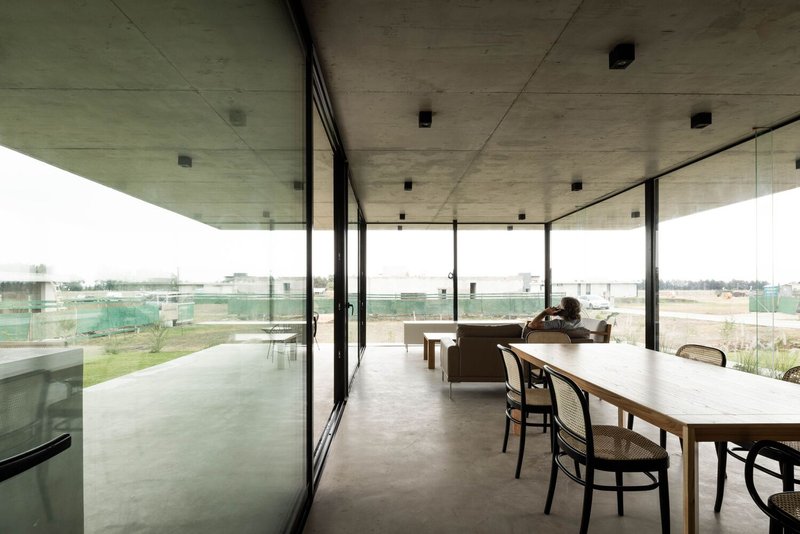
Inspiration and Design Narrative
Architect Felipe Aracama, lead designer of Casa Pekin, draws inspiration from his experience in Ocho al Cubo, Chile, where architects built experimental houses without clients, creating a living architecture laboratory. Pekin House follows this spirit, becoming part of Lares, a neighborhood envisioned as a contemporary architectural experiment blending rationalist principles with community-oriented urban planning.
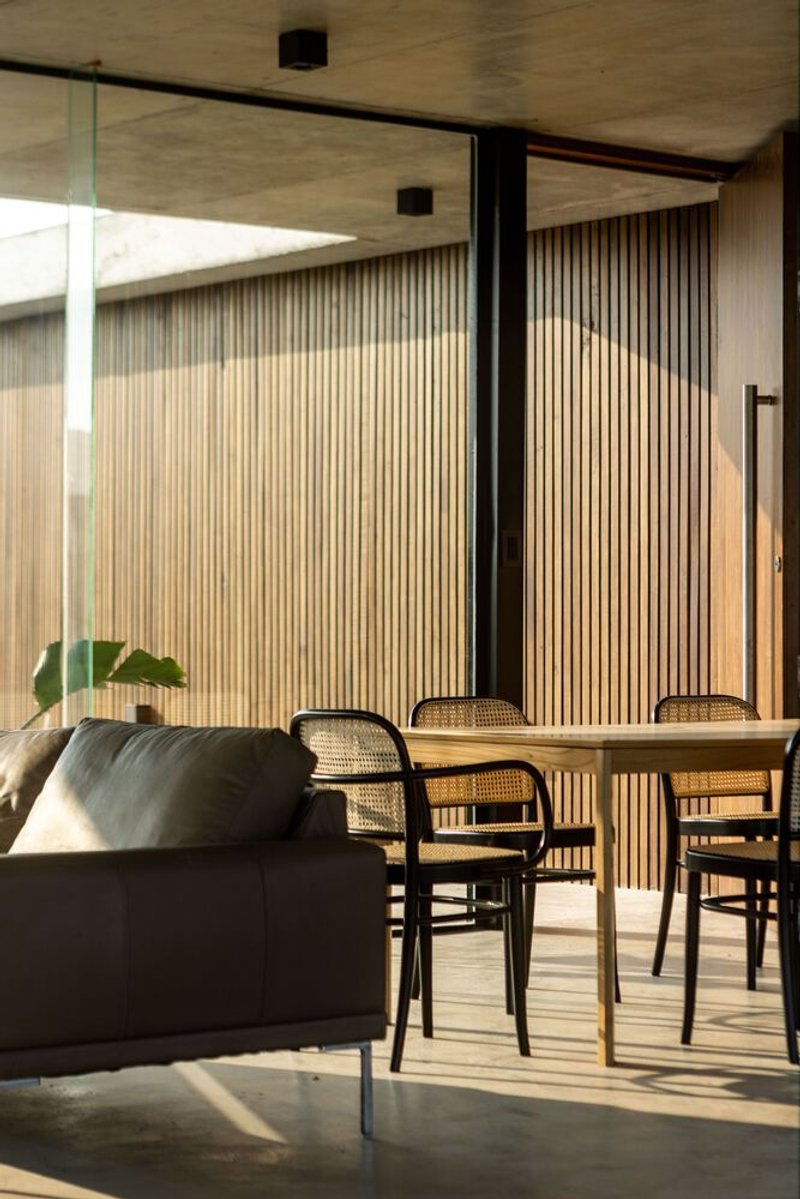
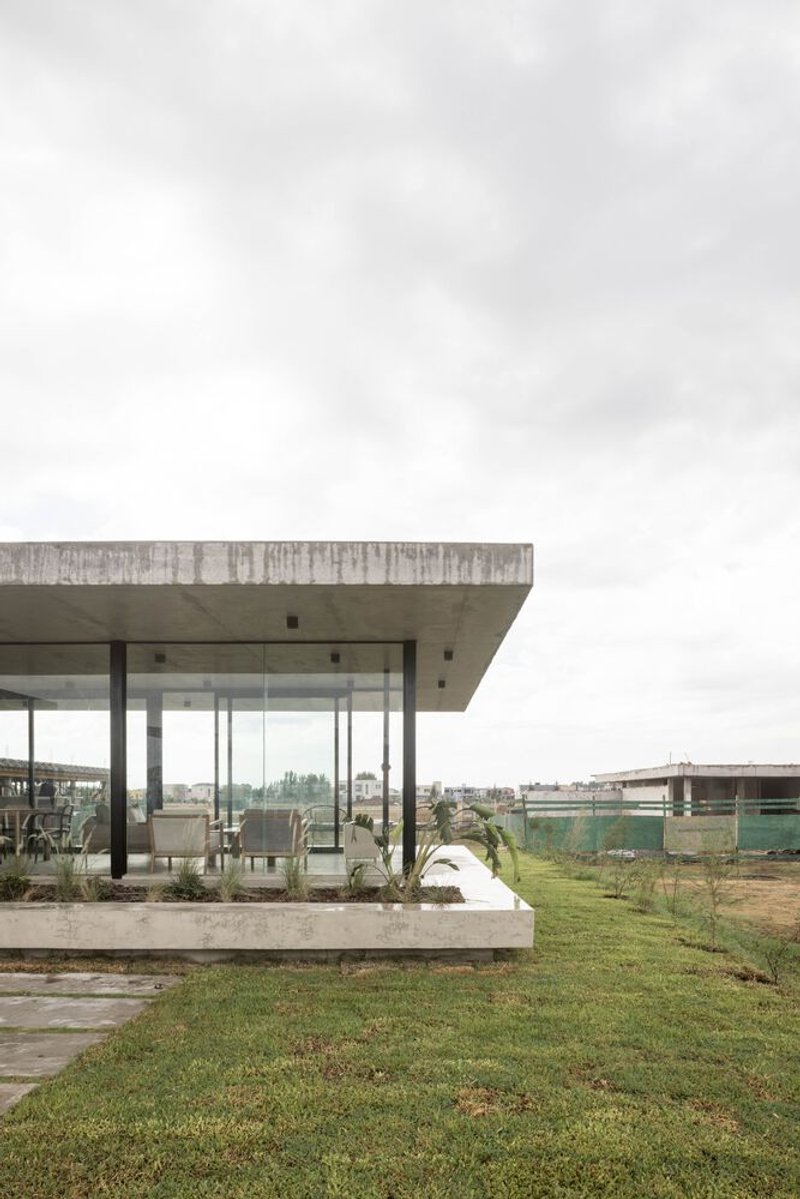
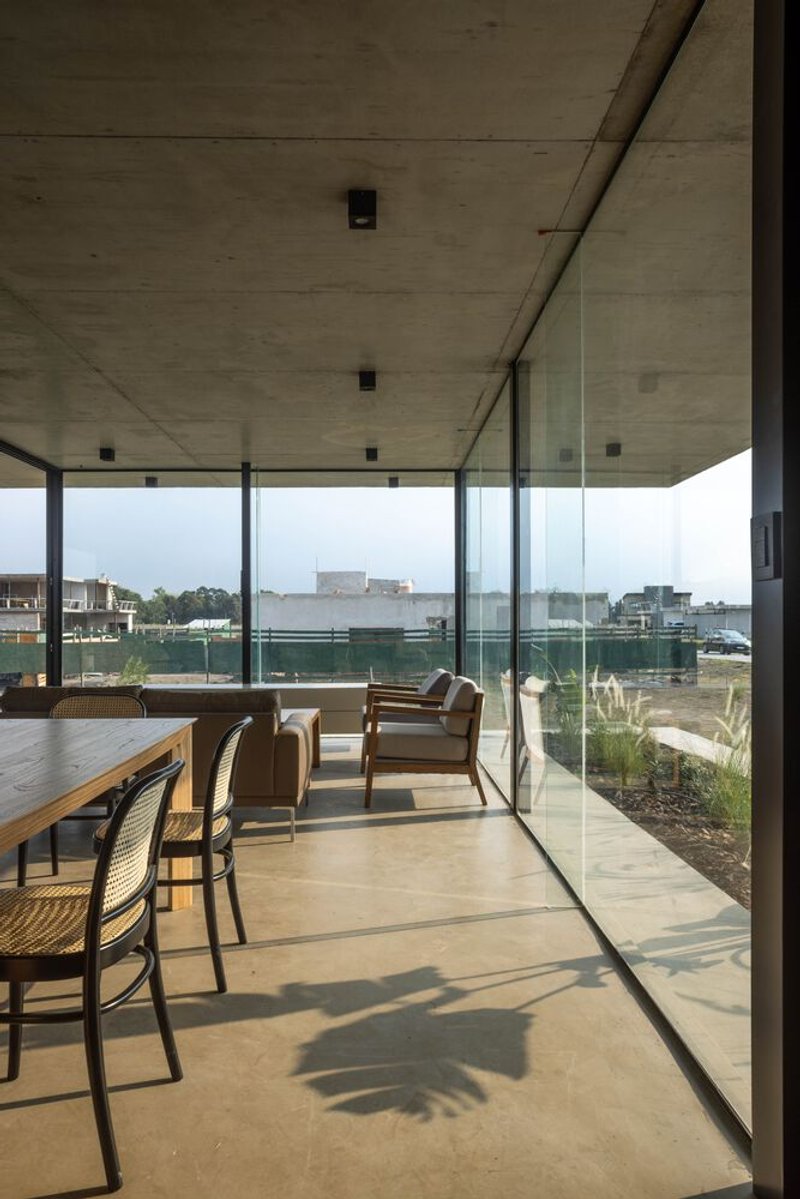
The house reflects a minimalist lifestyle, prioritizing function, geometry, and open living. With three defined zones — social, private, and service — the plan emphasizes flexibility and comfort. The heart of the home is the social space, designed as a glazed pavilion with an exposed concrete ceiling, providing a bright, transparent, and welcoming environment for family life and gatherings.
Architectural Features and Materiality
- Rationalist modernism: Strongly influenced by the early 20th-century modern movement, the design celebrates form, structure, and simplicity.
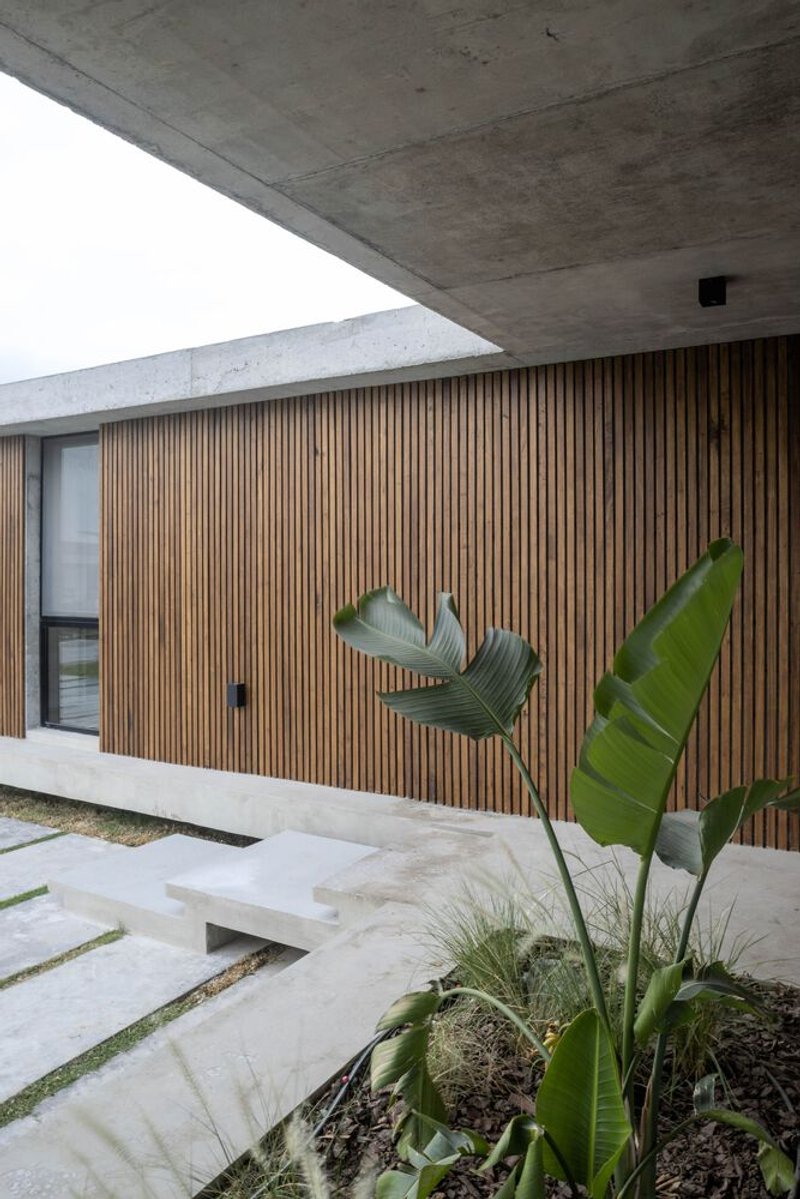
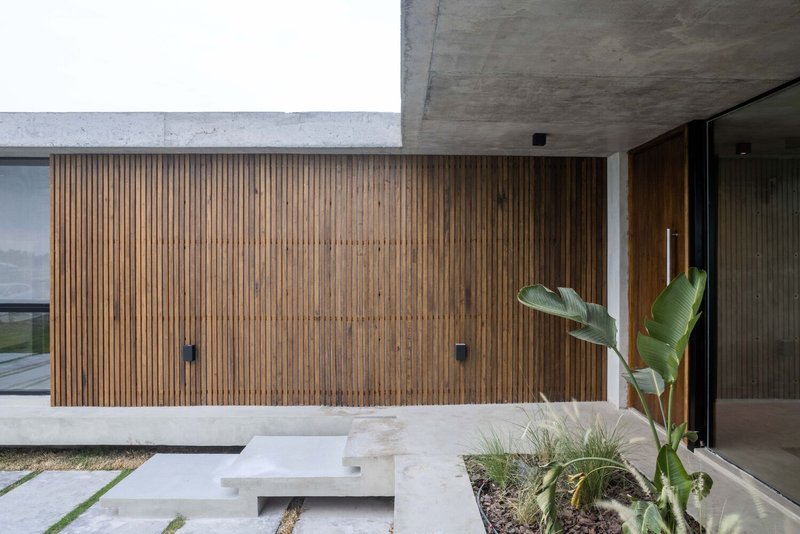
- Contrasting planes: The front façade reveals a dialogue between a blind volume and a glazed one, reinforcing the duality of openness and intimacy.
- Floating effect: A carefully designed cantilevered slab and eaves create the impression of a light, hovering structure. The absence of gallery supports further enhances this floating quality.
- Material palette: Exposed concrete, wood, and glass dominate the design, offering warmth, structural clarity, and transparency.
- Interior design: Furniture choices, including Michael Thonet pieces and kiri wood, align with the home’s rationalist, understated aesthetic.
A House Defined by Lightness and Social Space
The protagonist of the design is the social space: an open, light-filled environment framed by glass walls and shaded by extended eaves. This design move not only emphasizes architectural lightness but also enhances thermal comfort, creating a shaded living-dining space that blurs the boundaries between indoors and outdoors.
The separation of the kitchen from the social zone is a deliberate design decision, maintaining functional clarity while ensuring both spaces operate independently without conflict. This reinforces the idea of architecture as a medium that enhances daily living through thoughtful spatial hierarchy.
Pekin House is a testament to the enduring influence of modernist rationalism, reinterpreted with contemporary minimalism and contextual sensitivity. More than just a residence, it is part of a broader vision — contributing to the architectural identity of Lares neighborhood while offering a refined, functional, and poetic living experience.
All Photographs are works of Luis Barandiaran




Popular Articles
Popular articles from the community



Fifth NRE Jazz Club – De Bever Architecten: Eindhoven’s Revitalized Cultural Hub
Historic gas factory transformed into Fifth NRE Jazz Club blending modern sustainability, jazz culture, dining, and heritage architecture seamlessly.
Inverted Architecture Installation by Studio Link-Arc: Exploring the Intersection of Architecture and Living Organisms
Inverted Architecture Installation by Studio Link-Arc blends mycelium, sustainability, inverted design, ecological cycles, and urban adaptive architecture in Shenzhen.

Free Architecture Competitions You Can Enter Right Now
No entry fees, real prizes. Here are the best free architecture competitions open for submissions in 2026.


Similar Reads
You might also enjoy these articles


The Ken Roberts Memorial Delineation Competition (Krob)
As the most senior architectural drawing competition currently in operation anywhere in the world, it draws hundreds of entries each year, awarding the very best submissions in a series of medium-based categories.
Waterfront Redevelopment and Urban Revitalization in Mumbai: Forging a New Dawn for Darukhana
A transformative waterfront redevelopment project reimagining Darukhana’s shipbreaking heritage into an inclusive urban future.

OUT-OF-MAP: A Call for Postcards on Feminist Narratives of Public Space
Rhizoma Design and Research Lab invites artists, designers, architects, researchers, and students to reflect on how feminist perspectives can reshape public space. Selected works will be exhibited in Barcelona, October 2026. Submissions open until 15 April 2026.


Documentation Work on Buddhist Wooden Temple
Architectural syncretism and cultural hybridity: A comparative study of the Buddhist temples in Chattogram Hill tracks


Explore Architecture Competitions
Discover active competitions in this discipline




The International Standard for Design Portfolios


The Global Benchmark for Architecture Dissertation Awards


The Global Benchmark for Graduation Excellence


Challenge to reimagine the Iron Throne
Comments (0)
Please login or sign up to add comments
No comments yet. Be the first to comment!