

Pian Médoc Junior High School: Harmonizing Education and Nature by BPM Architectes
Nature-focused junior high school in Le Pian-Médoc combining sustainable wooden construction, inclusive learning spaces, and environmental integration.


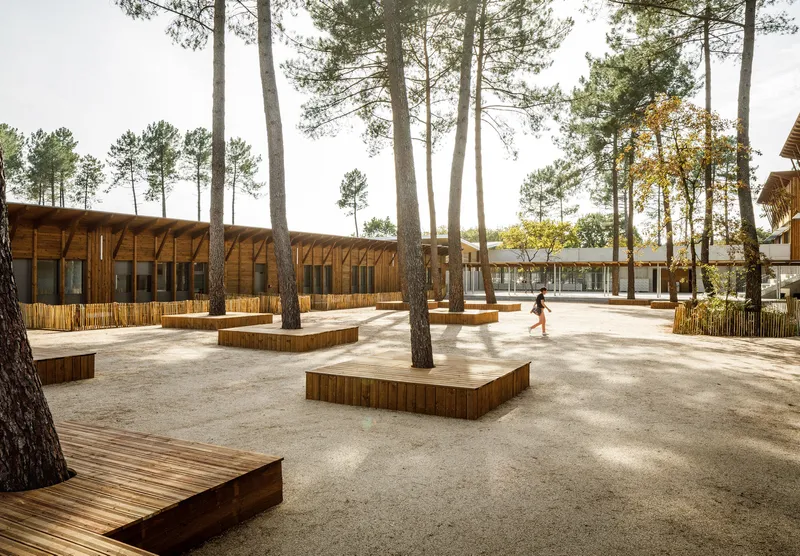
Nestled in the lush greenery of Le Pian-Médoc, France, the Pian Médoc Junior High School by BPM Architectes (2022) exemplifies architecture that nurtures learning, community, and environmental sensitivity. Covering a 3,300 m² area, the project transforms a heavily wooded 3.2-hectare site into a thoughtful, inspiring educational environment while preserving its natural surroundings.


Nature-Centric Urban Planning
The school is strategically located with a pine forest to the north and a busy road to the south, while residential areas lie to the west and a newly deforested, constructible plot sits east. A 75-meter setback zone along the road retains a preserved wooded fringe, acting as a natural buffer that harmonizes the campus with its environment. This design approach ensures the architecture respects and interacts with the existing vegetation rather than imposing upon it, creating a school integrated within a forested setting.
The urban planning constraints shaped both circulation and building placement, ensuring functional access while maintaining ecological sensitivity. Roads and pathways were designed to minimize disruption to the preserved woodland, emphasizing a seamless connection between students, staff, and nature.


Architectural Design and Spatial Organization
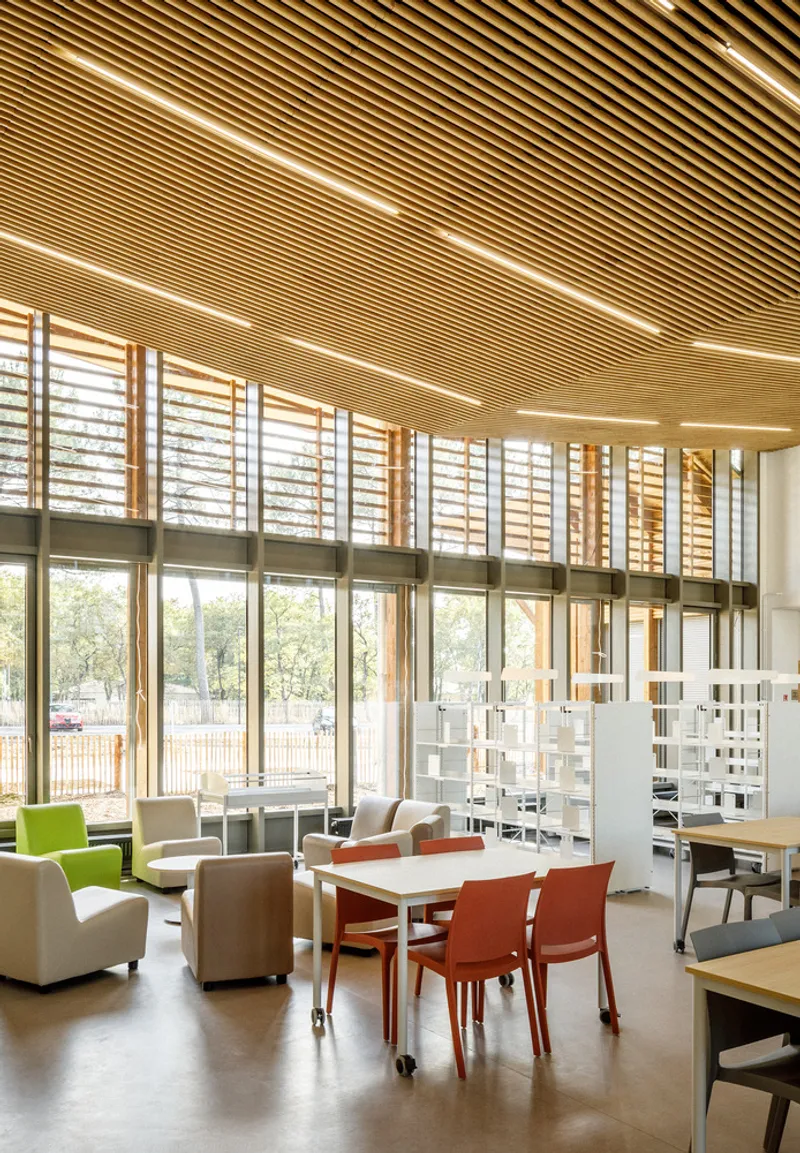
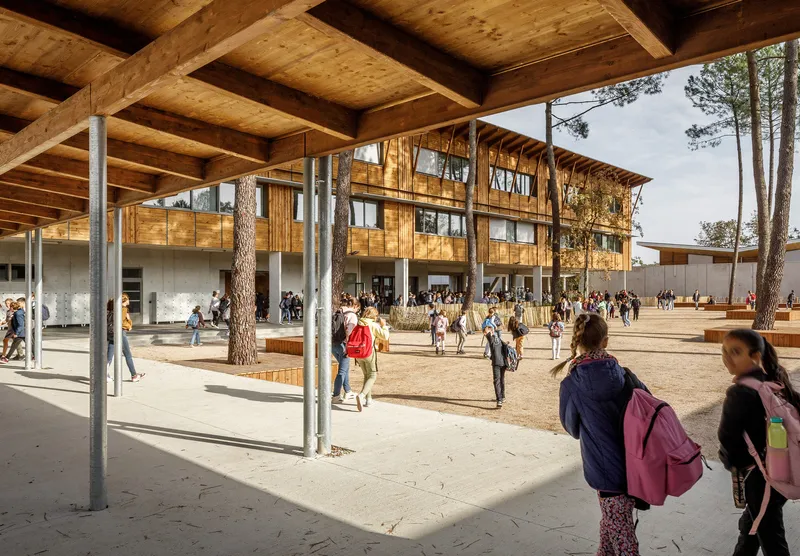
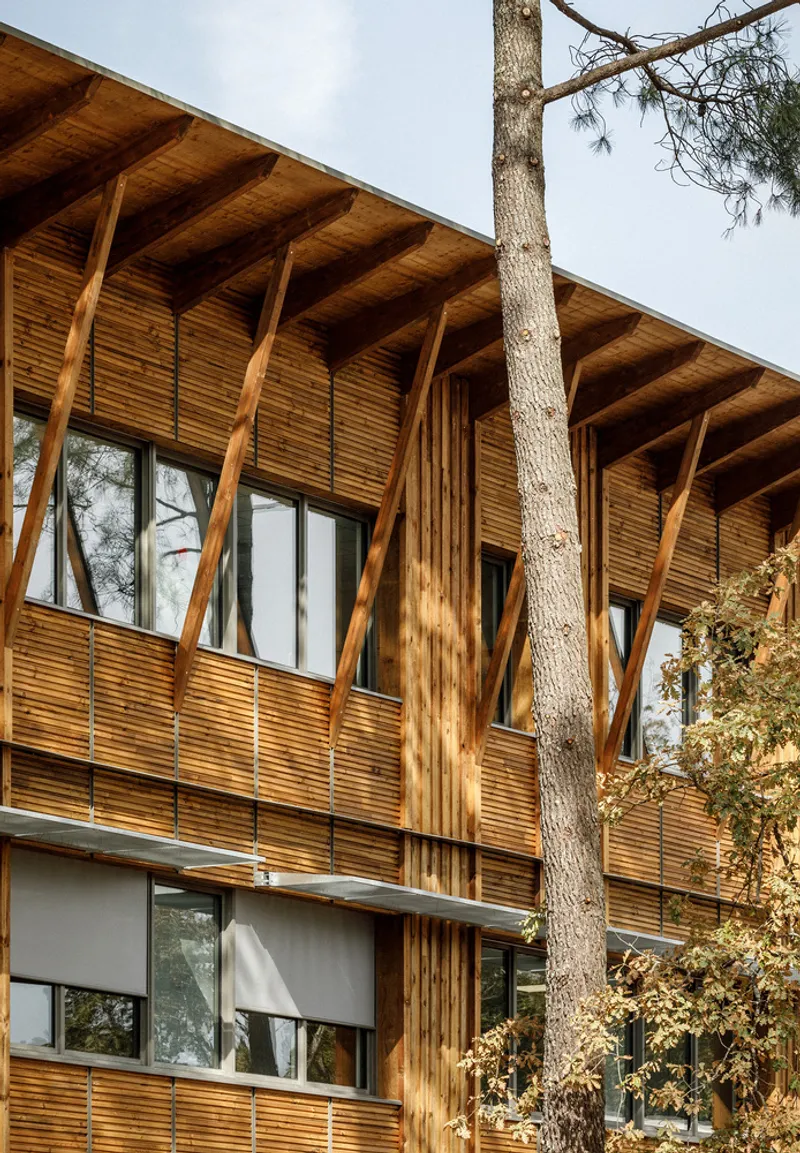
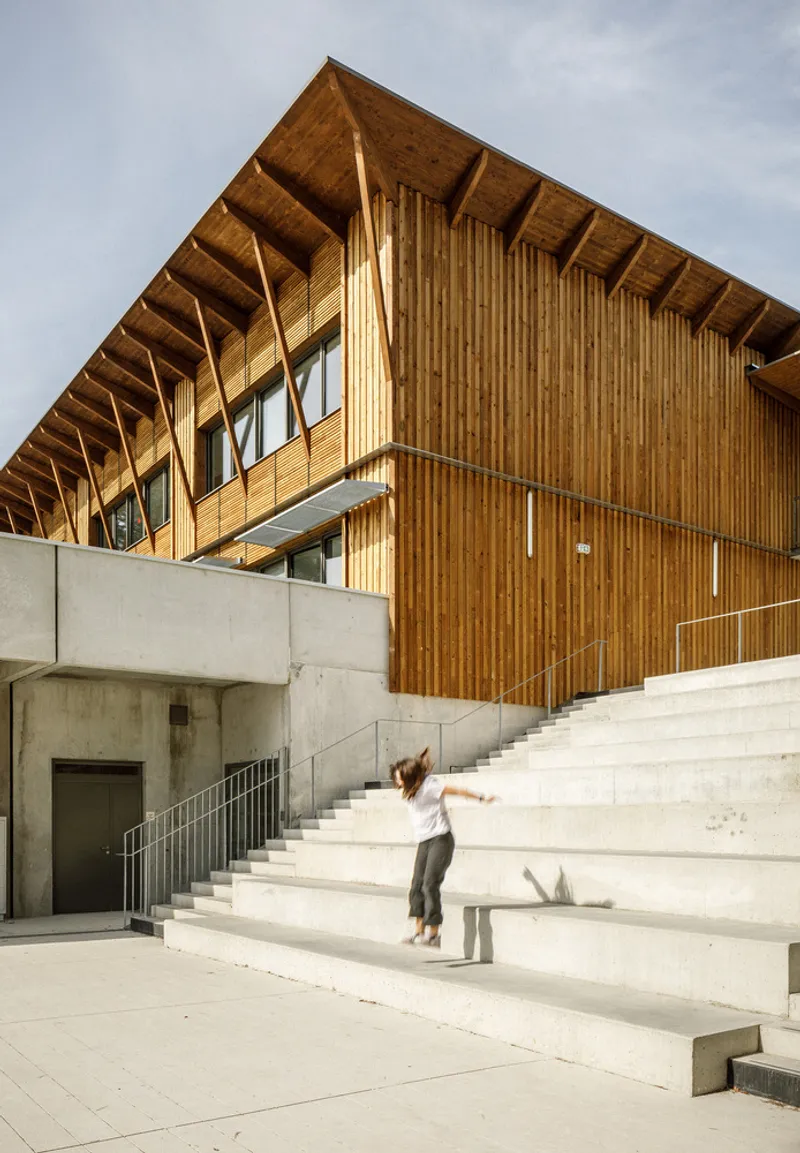
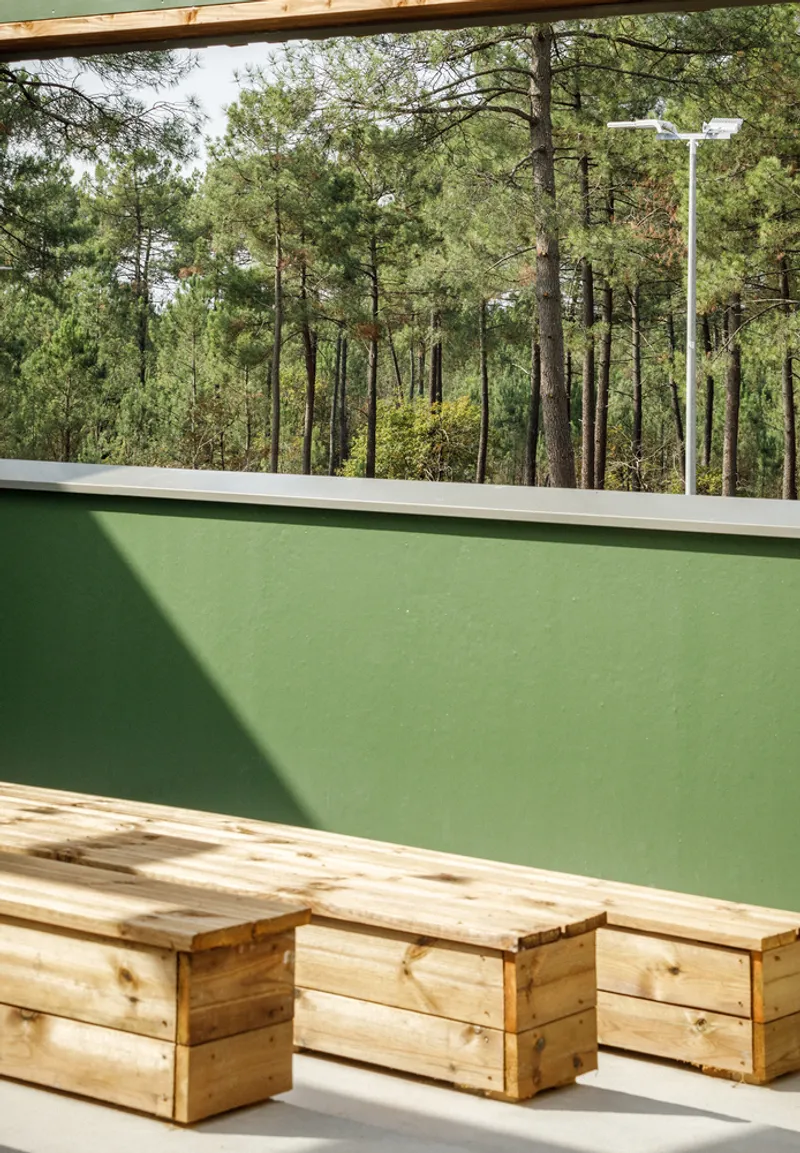
The school is organized around two clear North-South axes, enhancing visual transparency and spatial continuity. This orientation allows natural light and forest views to permeate the interior, fostering a direct connection between learning spaces and the surrounding landscape. The architecture is poetic yet practical: wooden facades and vertical wooden posts reflect the forest context, creating rhythmic, elegant elevations that extend into roof overhangs.
BPM Architectes designed the school around four main entities, blending two primary typologies: a sturdy, enclosed light concrete base and airy wooden constructions predominantly using maritime pine, a sustainable local material. The ground floor enclosure frames a central protected playground, which functions as the heart of student life, promoting social interaction, recreation, and community cohesion.

Sustainable Construction and Environmental Integration
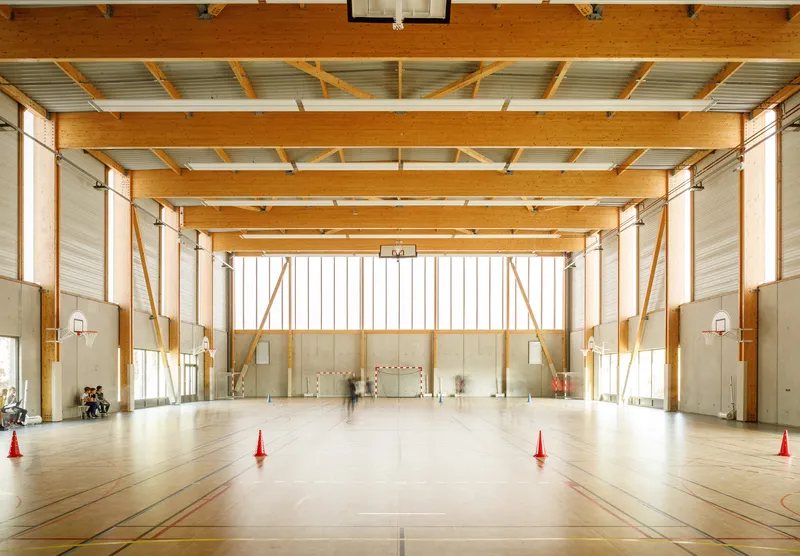
The project exceeds environmental standards, achieving E3C2 certification under the E+C- label. Sustainability is embedded in every design decision, from material selection to construction methodology. Remarkably, 80% of the wood harvested on-site was reused in the building, creating a circular, resource-conscious approach. The landscape integrates mineral and vegetal areas, calm reflection zones, active play areas, and expressive spaces, ensuring that every square meter serves educational, social, and ecological purposes.
BPM Architectes’ vision places the student experience at the core of design: classrooms, communal areas, and circulation paths encourage interaction, creativity, and well-being. By bringing nature inside, fostering light-filled spaces, and organizing volumes around environmental principles, the school becomes a dynamic learning environment where architecture actively supports pedagogy.

Interior Design and Materials
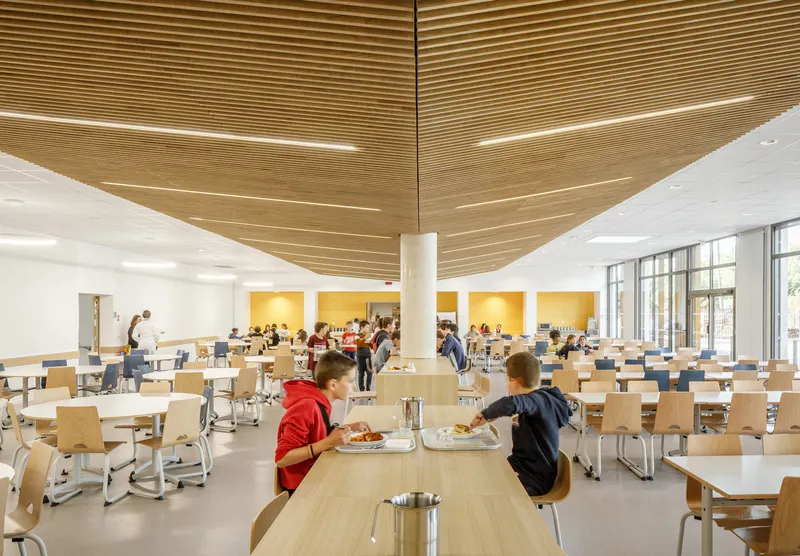
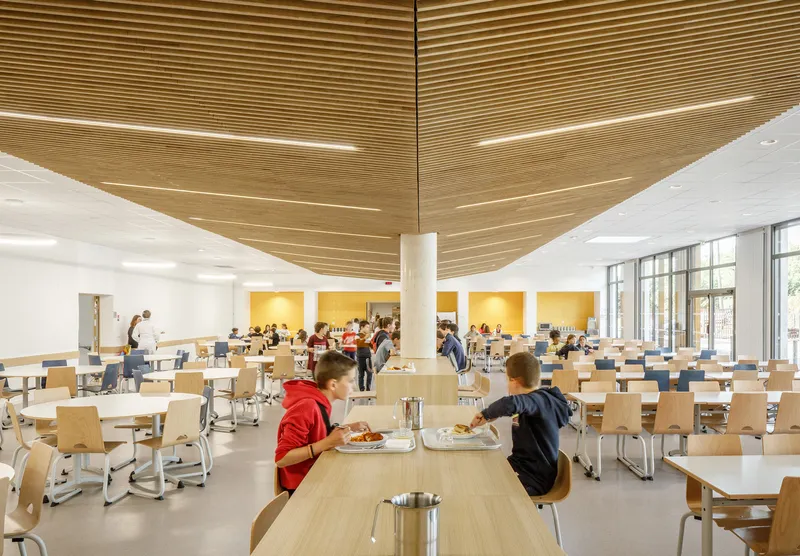
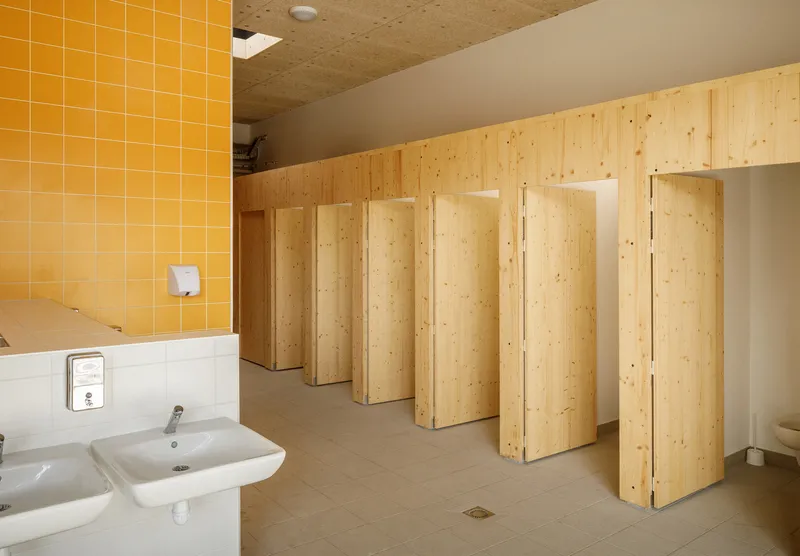
Interiors are minimal yet warm, with wood, concrete, and natural light forming the backbone of a design that is both functional and inviting. Classrooms, dining areas, and circulation spaces are designed to maximize visibility, acoustics, and comfort. Materials like Gerflor flooring and Zolpan finishes were carefully chosen to balance durability with aesthetic harmony, ensuring spaces remain welcoming, resilient, and low-maintenance.

Educational Philosophy Embodied in Architecture
The Pian Médoc Junior High School demonstrates how architecture can enhance knowledge transfer and human development. Every design element: from outdoor play areas to wooden facades: is conceived to foster curiosity, collaboration, and respect for nature. The project is a model of how modern school architecture can combine environmental stewardship, functional efficiency, and emotional well-being.
BPM Architectes’ approach proves that educational architecture is not just about building classrooms: it is about creating an inclusive, inspiring, and sustainable environment where students connect with their peers, their teachers, and the natural world around them.
All photographs are works of
11H45




Popular Articles
Popular articles from the community


Conexión: Biophilic Design Reimagines High-Rise Living in Hong Kong
Conexión reimagines high-rise living in Hong Kong through biophilic design, green facades, shared spaces, daylight, water and nature within.

The Musturak Paradise: Senior Living Architecture for a Connected Future in Temara, Morocco
The Musturak Paradise reimagines senior living architecture in Temara via private homes, social spaces, culture, community, and shared care.

The Earth Pod: 3D Printed Homes for Resilient Refugee Communities
The Earth Pod reimagines refugee housing through 3D printed homes made from clay, combining resilience, self-sufficiency, and rapid shelter.

Riyadh For All: Intergenerational Urban Design for Active Aging in Rabat
Riyadh For All reimagines urban design in Rabat with intergenerational co-living, adaptive courtyards, and Moroccan cultural exchange today.

Similar Reads
You might also enjoy these articles

FAMM Arquitectura Organizes Ten Villas Around Courtyards and Jungle in Nosara, Costa Rica
El Molino pairs two elongated volumes with deep overhangs and timber louvers to build a compact coastal community five minutes from the beach.
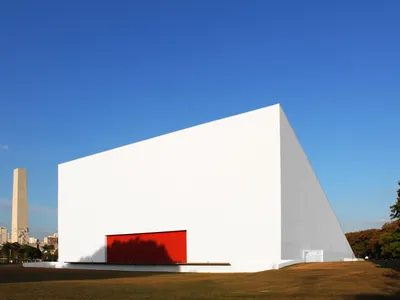
Oscar Niemeyer's Ibirapuera Park Pavilions Define São Paulo's Cultural Identity in Concrete and Curve
A constellation of modernist volumes set within São Paulo's most important urban park, conceived for the city's 400th anniversary in 1954.
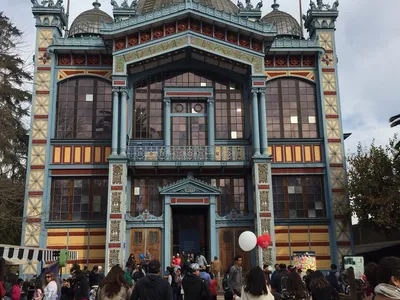
How Henri Picq's 1889 Paris Pavilion Traveled 11,000 Kilometers to Become Santiago's Artequín Museum
A prefabricated iron and glass pavilion built for the Paris Universal Exposition found a second life as a children's art museum in Chile.
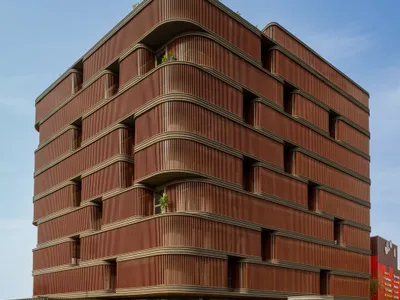
Sanjay Puri Architects Wraps a Jaipur Office Tower in Capsule-Shaped Green Buffers
A nine-level climate-responsive workplace near Jaipur Airport uses stacked planter terraces and aluminium screens to fight 40°C heat.


Explore Architecture Competitions
Discover active competitions in this discipline



Challenge to design public laboratory


Challenge to reimagine the Iron Throne


Photograph architecture without architects


Illustrate the lost glory of Angkor Wat - Render Challenge
Comments (0)
Please login or sign up to add comments
No comments yet. Be the first to comment!