
Pole Mokotowskie Park Modernization: A Harmonious Revival by WXCA
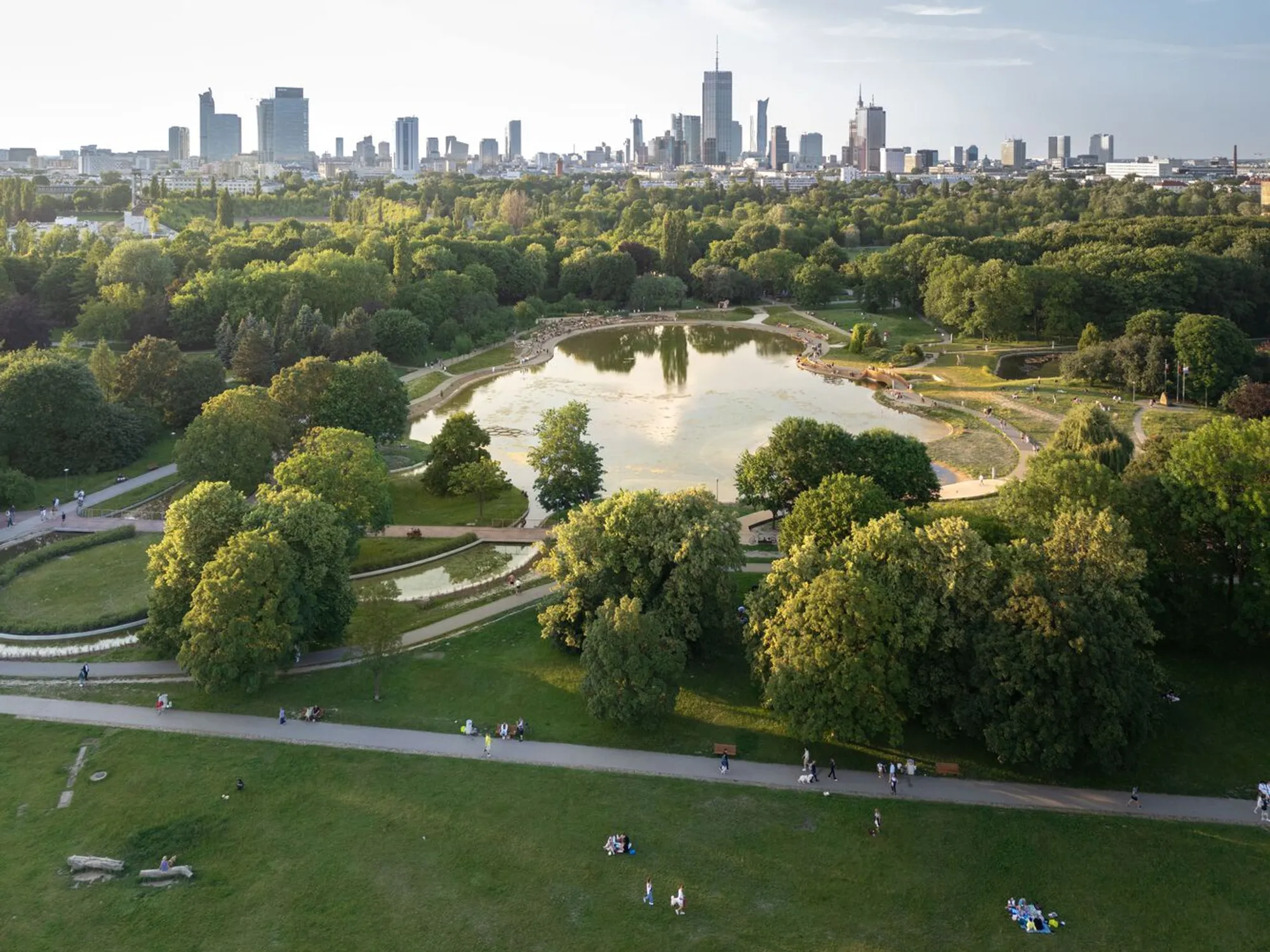
Pole Mokotowskie Park in Warsaw was revitalized by WXCA, featuring naturalized ponds, biocenotic gardens, sustainable pathways, and enhanced recreational spaces.


Located in the heart of Warszawa, Poland, Pole Mokotowskie Park is one of the city’s largest and most cherished green spaces. Spanning over 66,500 m², this urban park has long served as a social and cultural hub, where daily activities of residents have shaped its character alongside the original design. Recognizing this unique ecosystem, WXCA architects adopted an approach of “design acupuncture,” carefully enhancing the park while respecting its organic social and environmental rhythms.
Revitalizing Warsaw’s Urban Green Space
Originally designed in the 1970s and 80s, Pole Mokotowskie had seen little modernization until recently. The renovation project focused not only on quantitative improvements but also on qualitative enhancements to support the coexistence of humans, plants, and animals. Central to this effort was the naturalization of the park’s main water reservoir, a complex feature historically constrained by concrete linings and seasonal water refilling.
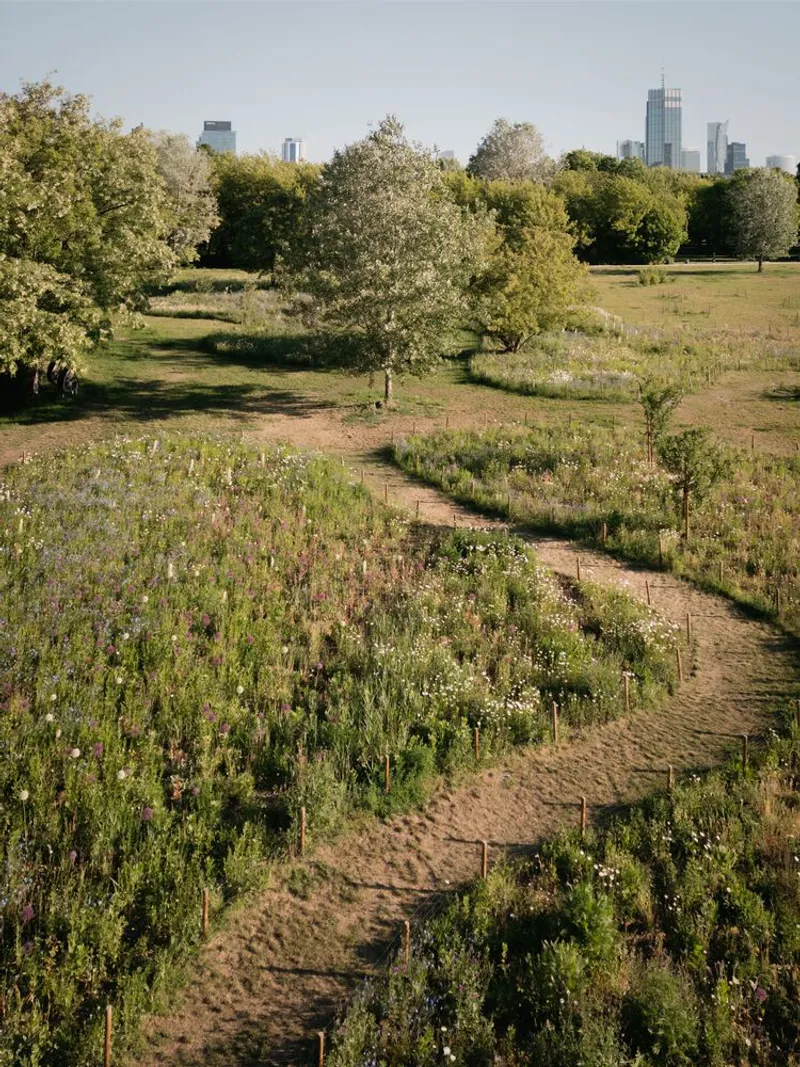
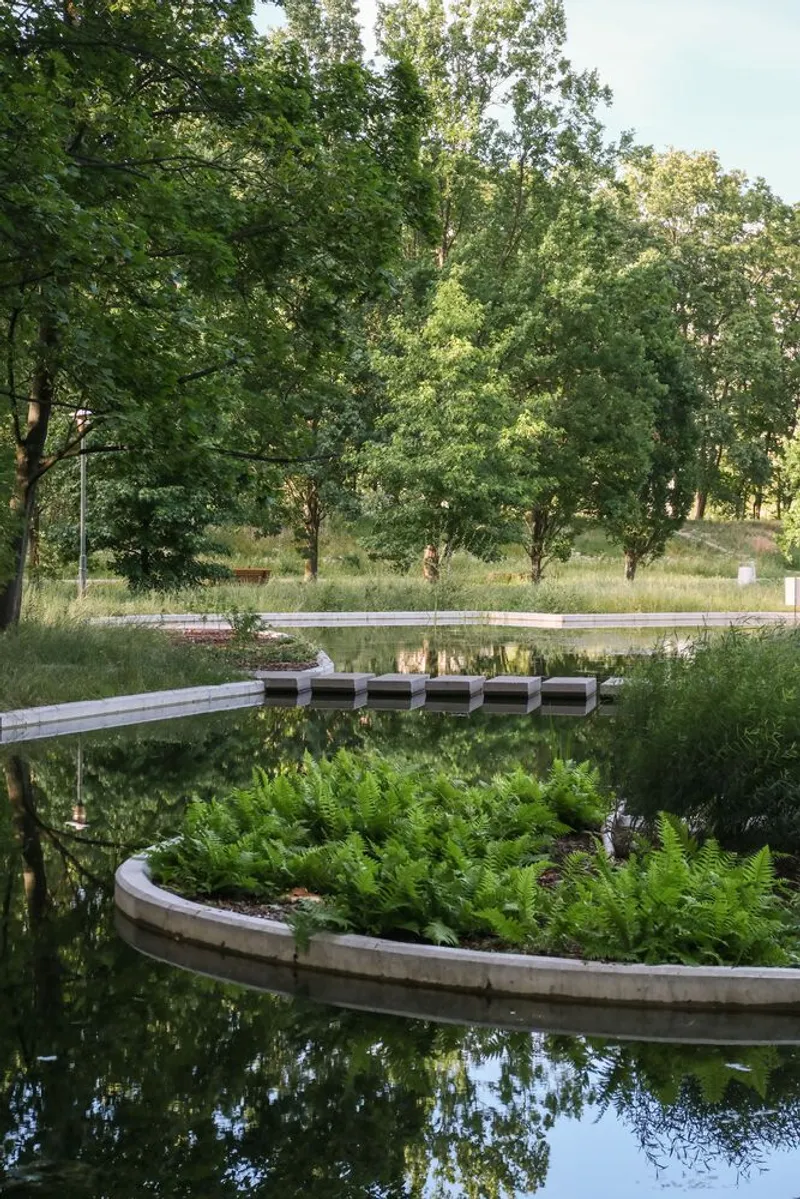
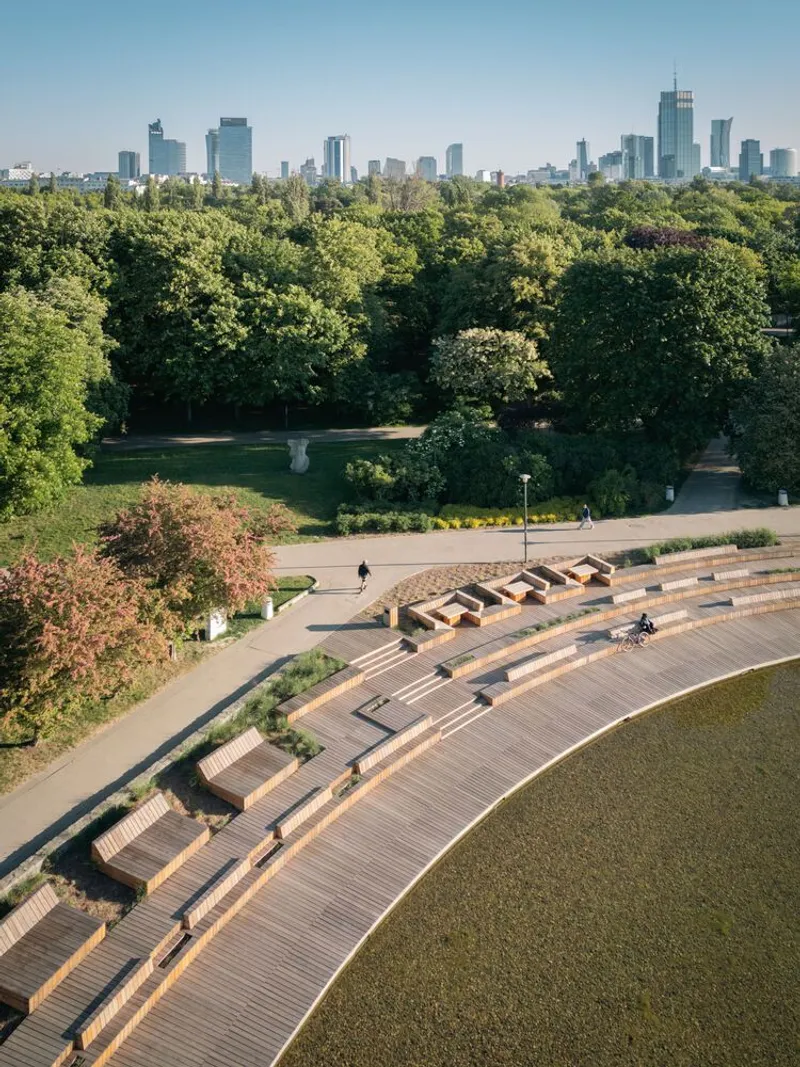
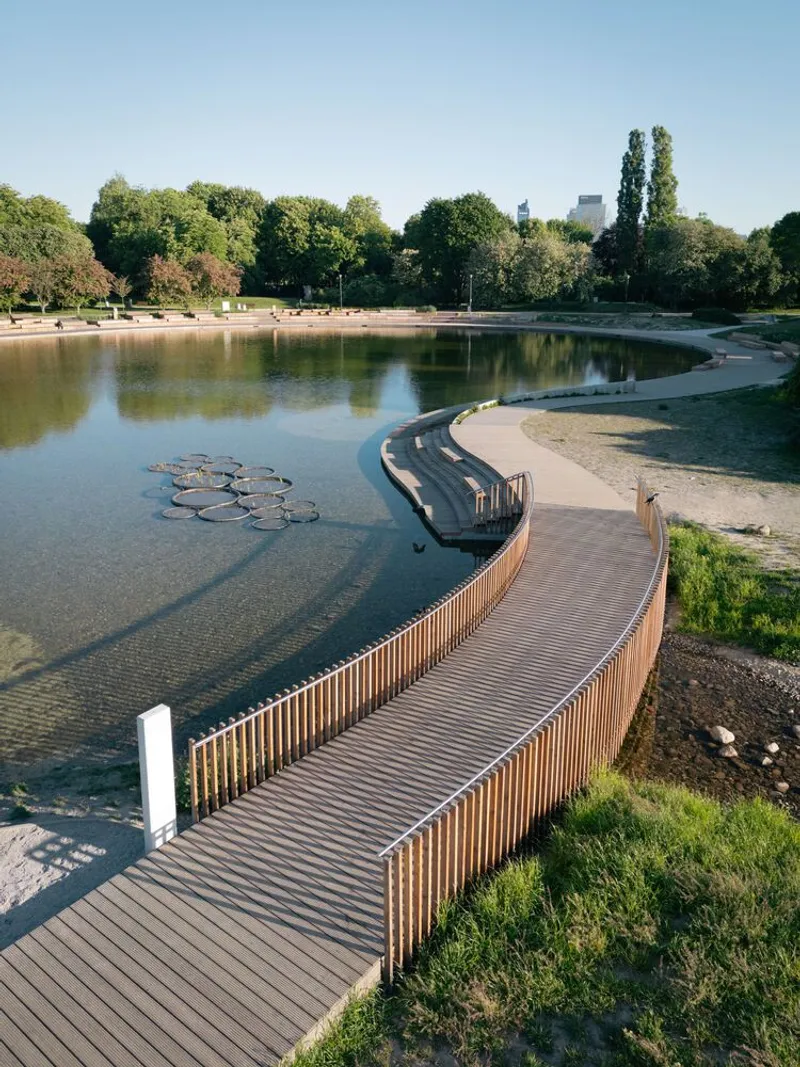
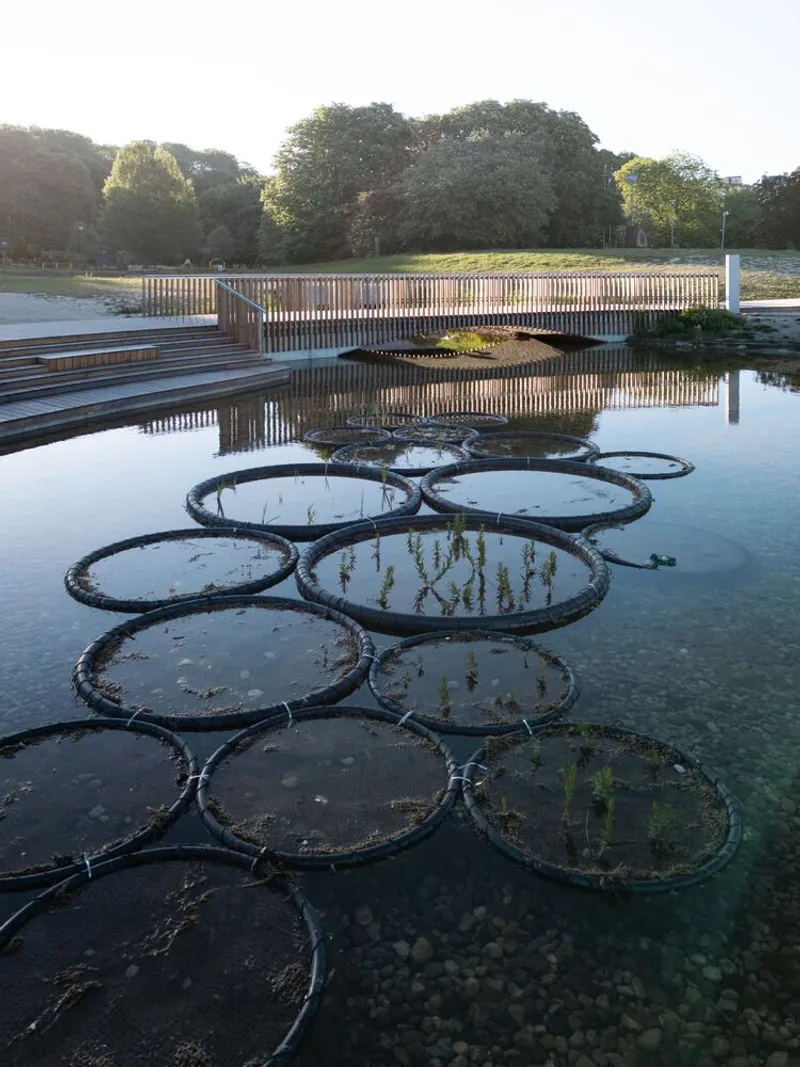
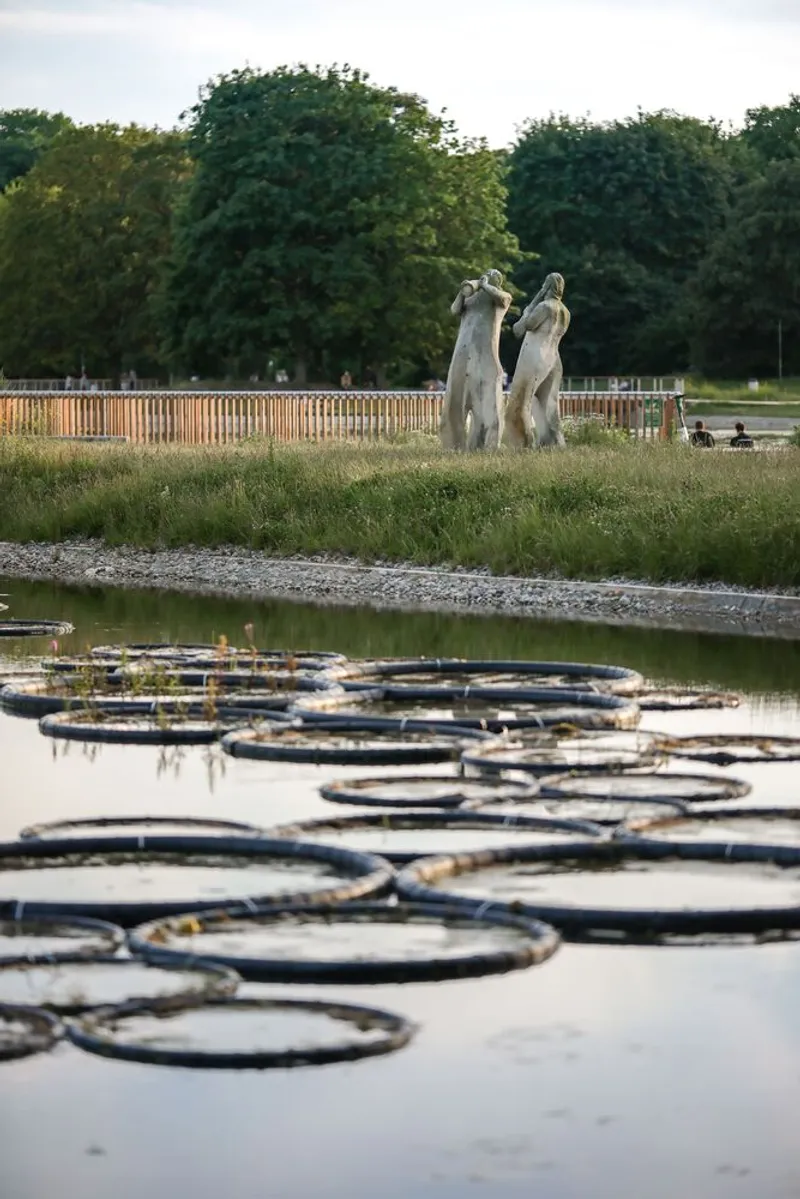
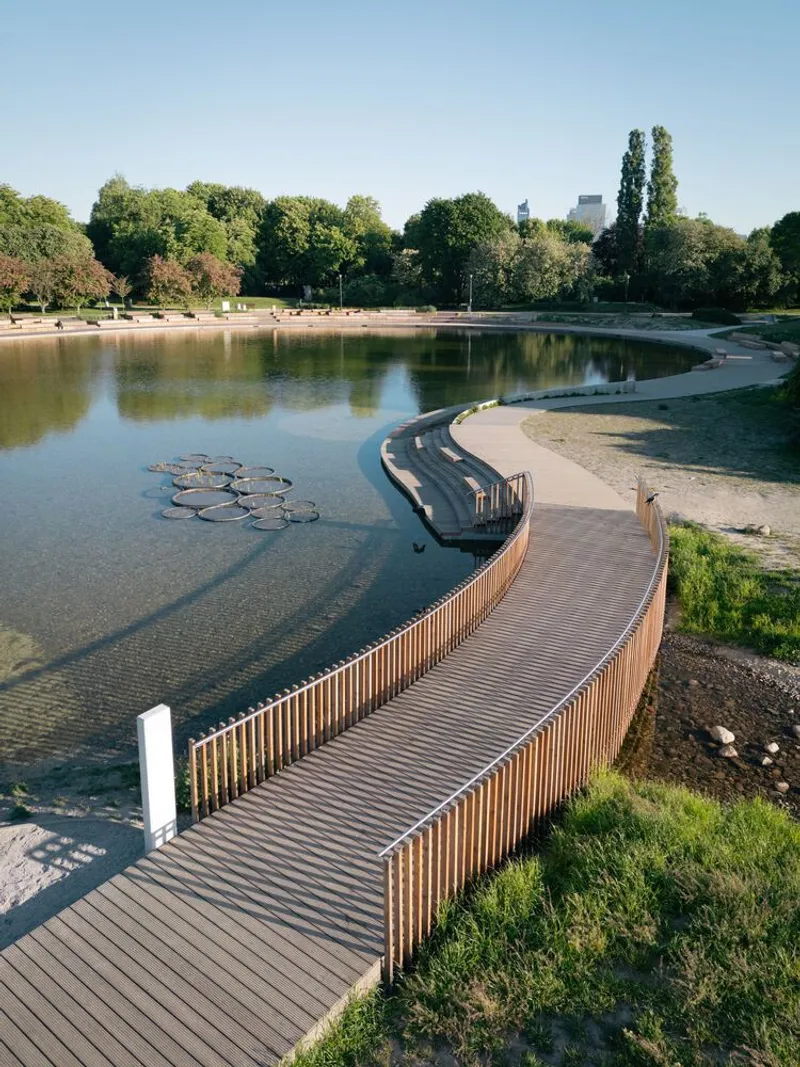
WXCA transformed the reservoir into a sustainable, all-year-round pond using hydro-botanical filters and aquatic plants to maintain high water quality through mechanical, chemical, and biological processes. The pond was enlarged and deepened, replacing over 16,000 m² of concrete with gravel and insulated layers, while the removed concrete was repurposed to create mounds in the biocenotic garden and along the shoreline. Mineral filters, reeds, and aquatic vegetation provide habitats for wildlife and improve water purification, while a closed system with spillways and streams ensures constant circulation.
Enhancing Human-Nature Interaction
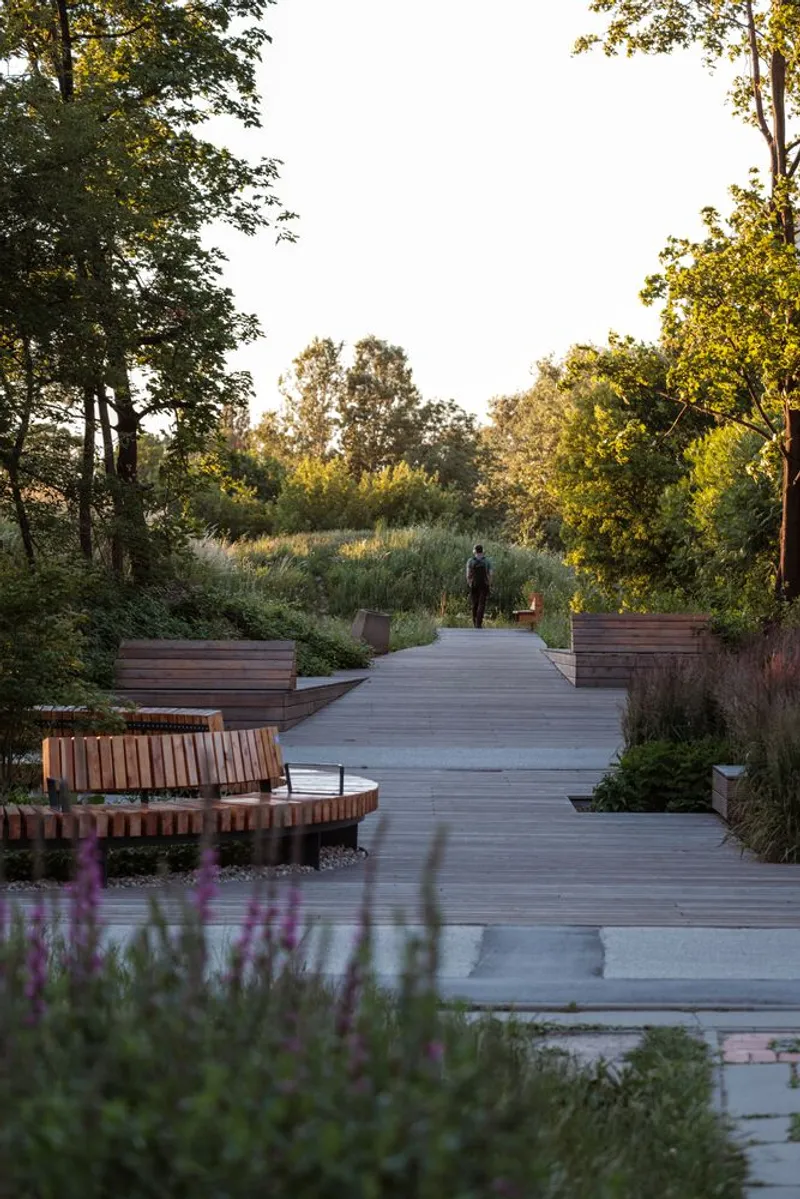
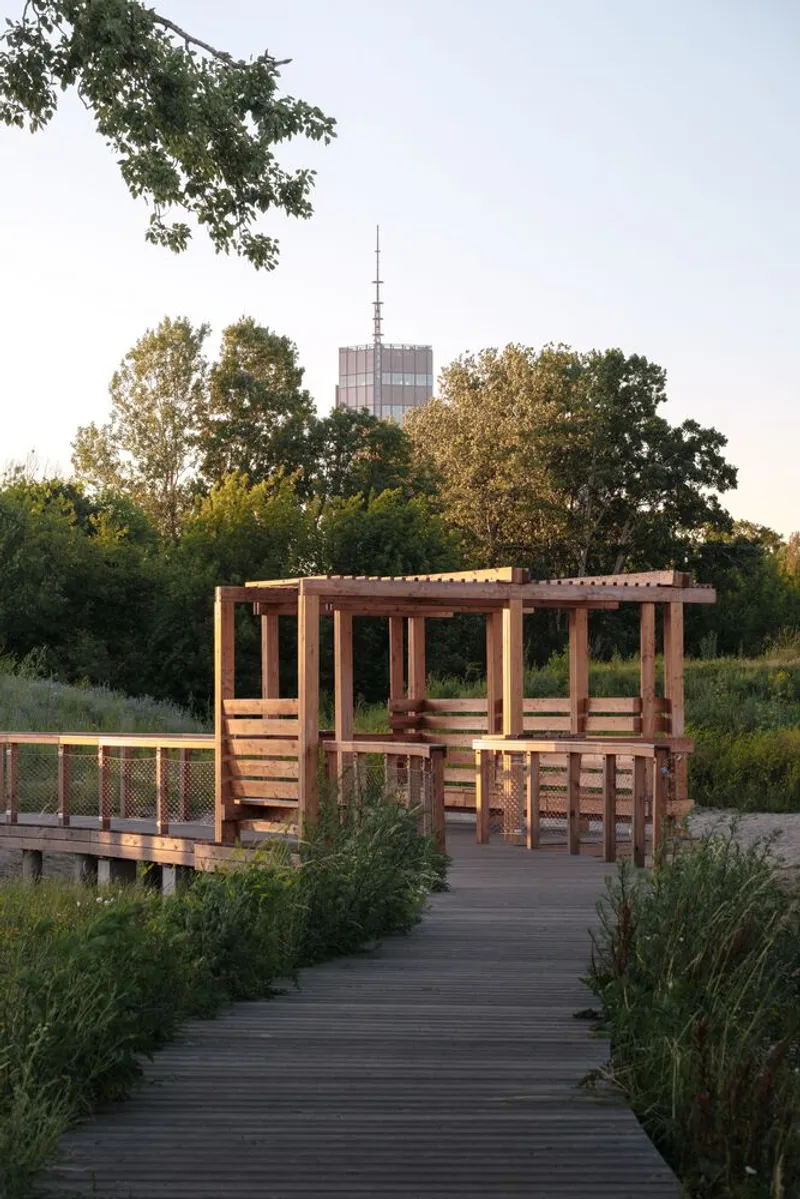
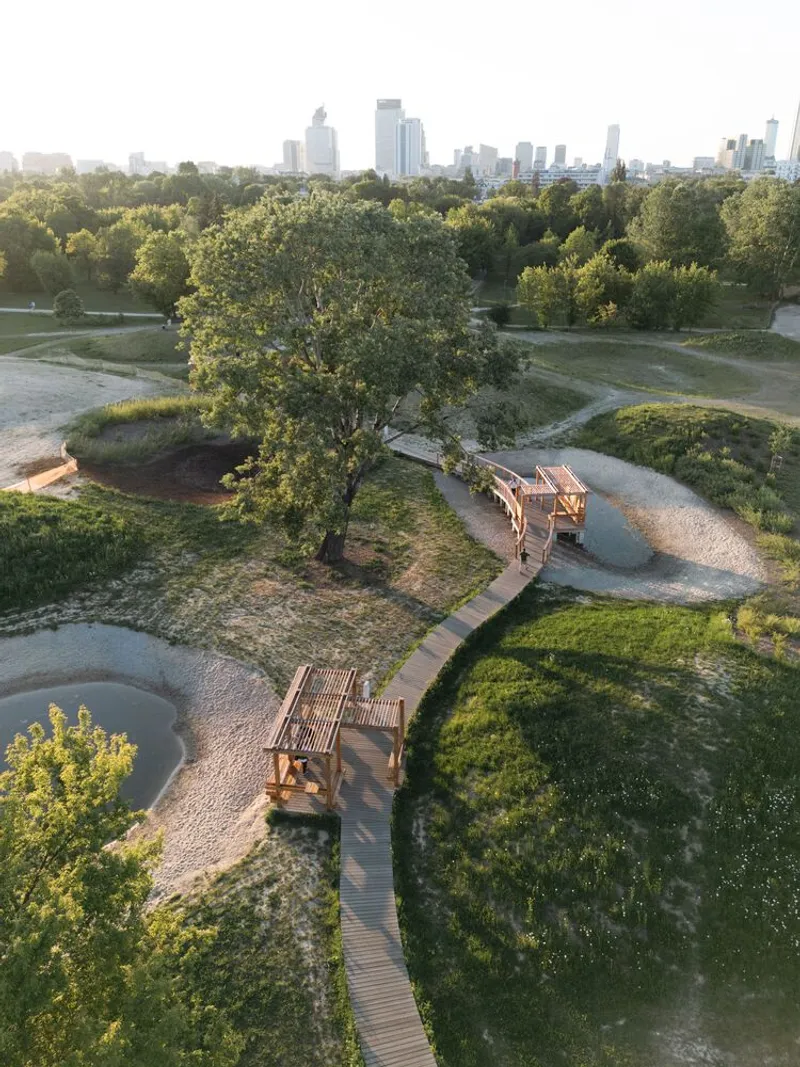
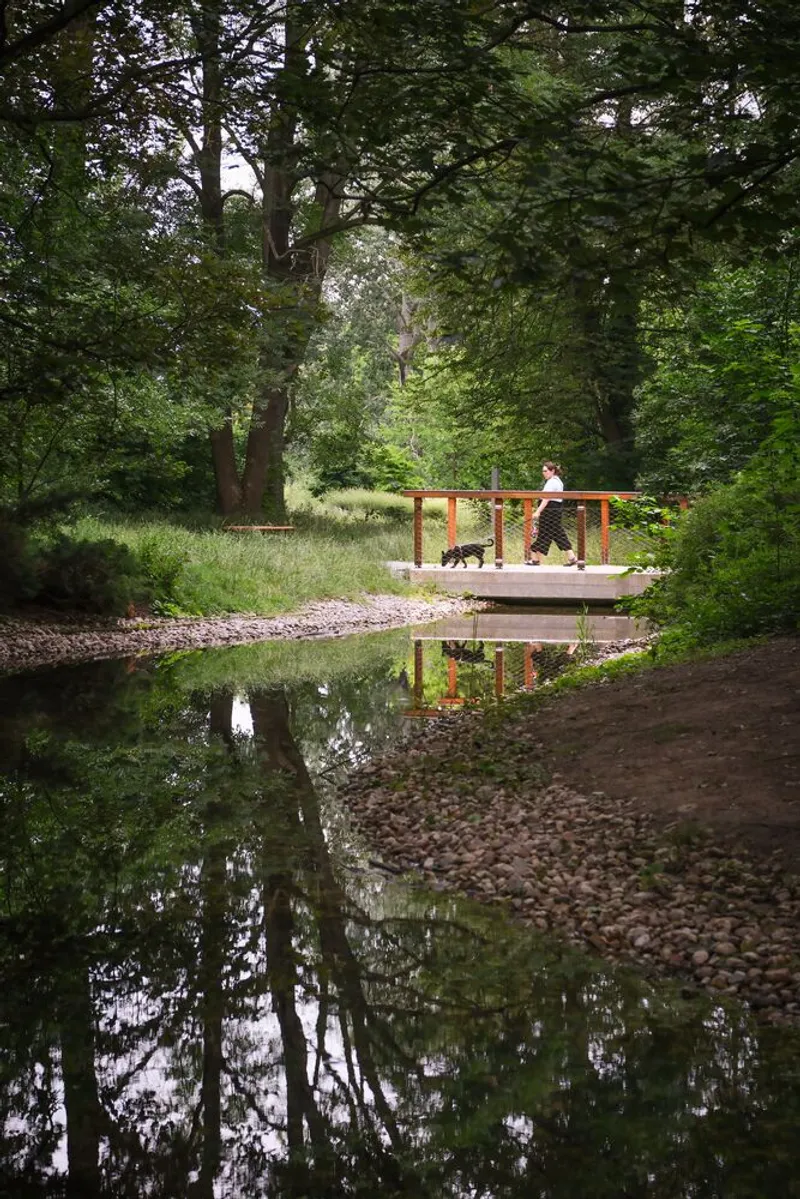
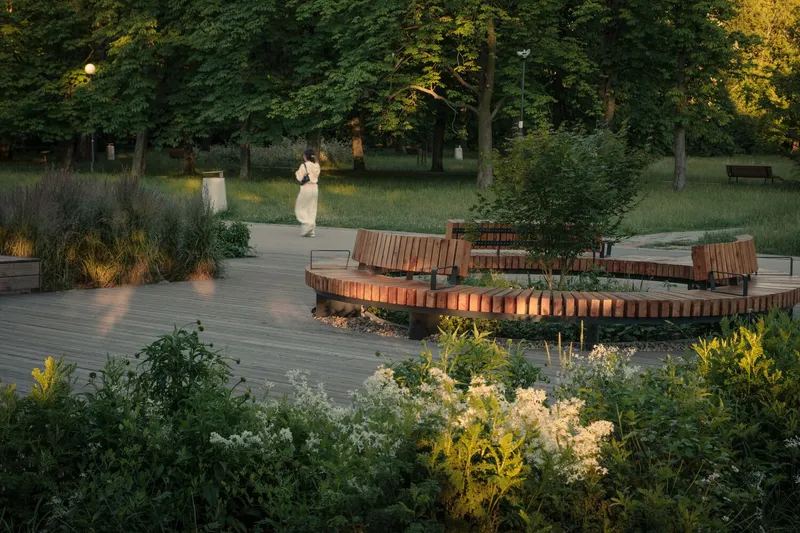
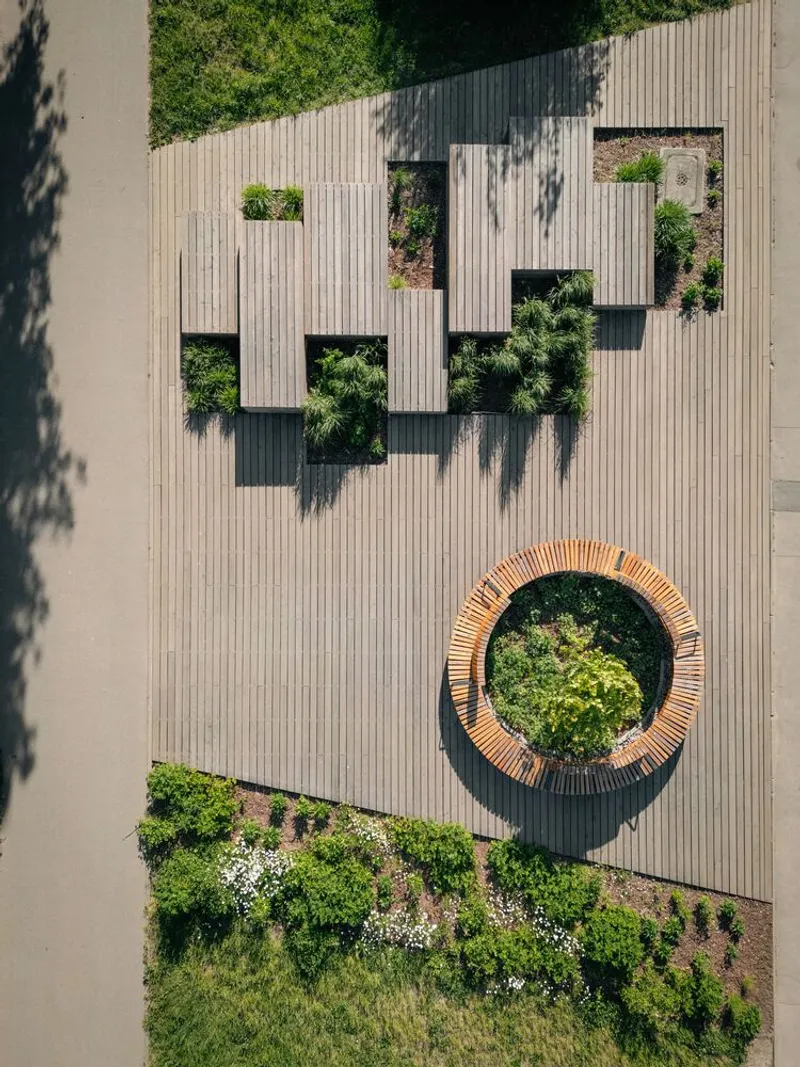
The modernization extended to the surrounding landscape and park infrastructure. Existing pathways were upgraded with permeable materials, and new wooden decks, bridges, and terraces were added for leisure and recreation. Seating areas at varying heights create audience spaces along the lake, while northern zones prioritize recreation, and southern areas are designed as natural habitats for flora and fauna. New ponds for dogs and biocenotic garden water features further enhance ecological and social utility.
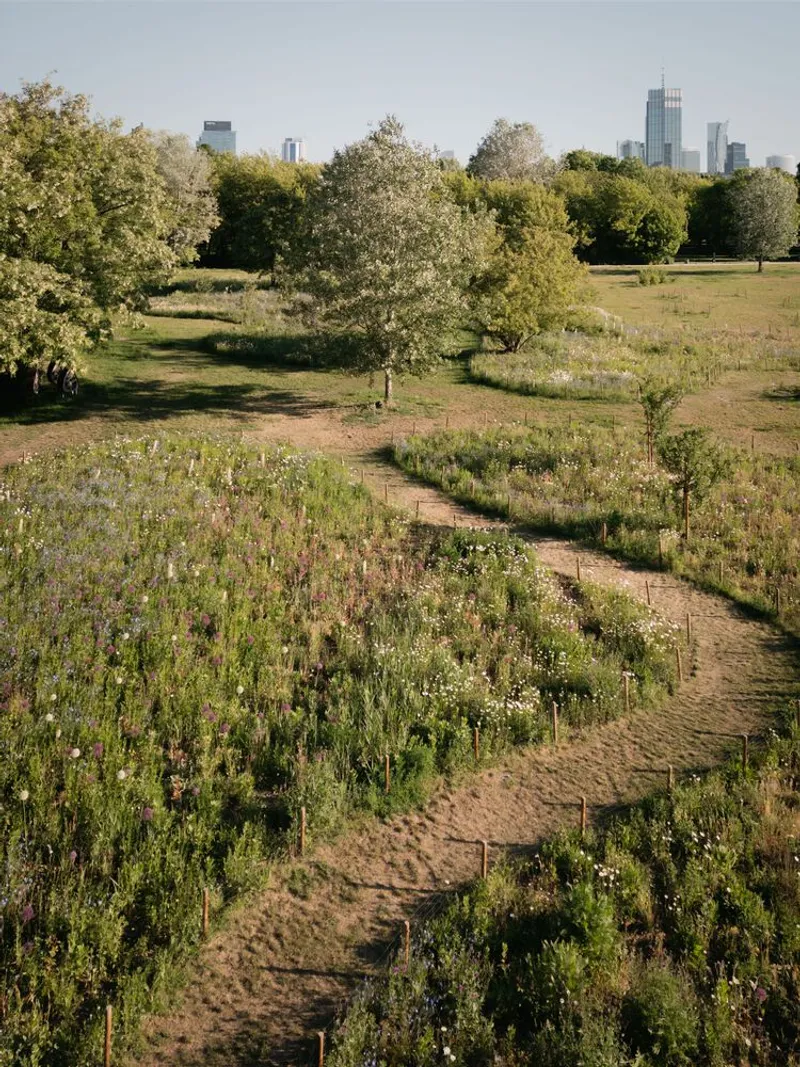
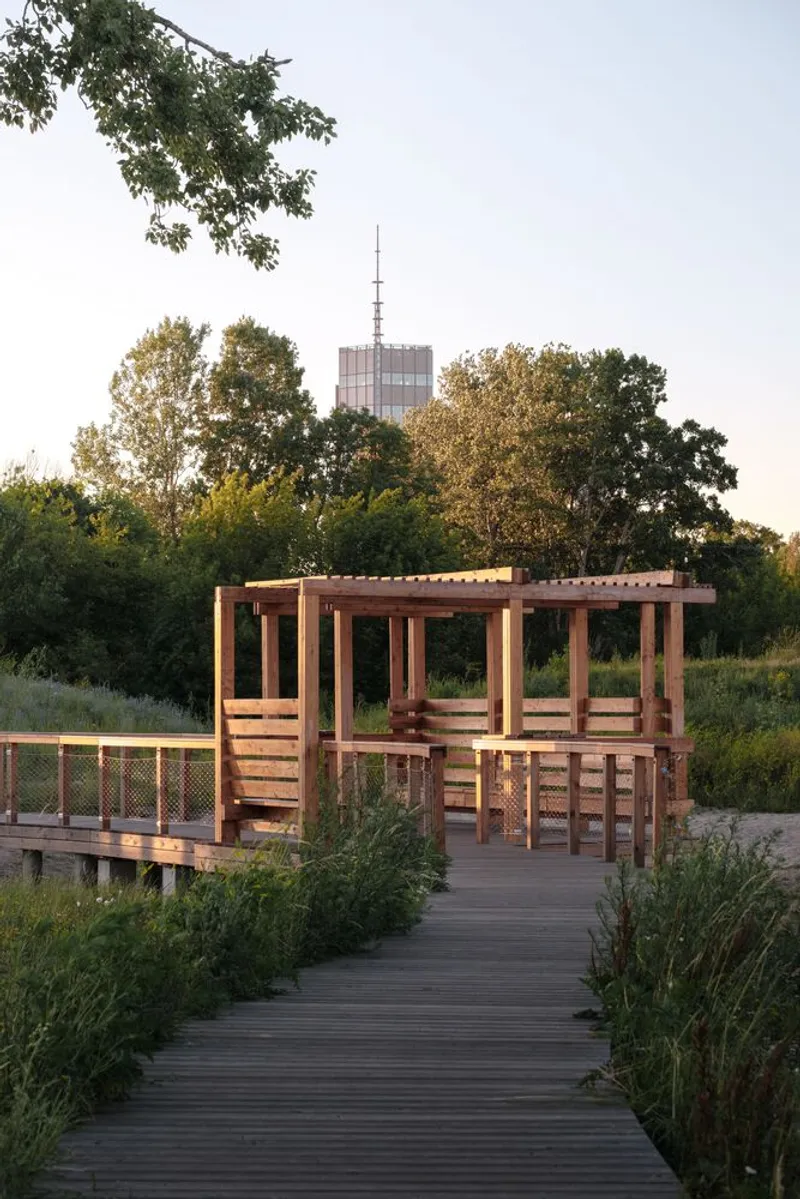
The biocenotic garden, developed on a reclaimed municipal cleaning company site, features rain gardens, meandering wooden platforms, gazebos, and diverse plant communities, including orchards, reed beds, flower meadows, and sensory gardens. Native and semi-natural species were carefully selected to support biodiversity and maintain ecological balance.
A Process-Oriented Design Philosophy
WXCA’s vision for Pole Mokotowskie emphasized that public space is a living organism, a process rather than a single event. By adopting “spatial acupuncture,” the architects intervened selectively, enhancing connections, preserving wild nature, and supporting both social and ecological networks. This thoughtful approach resulted in a revitalized park that balances recreation, environmental stewardship, and cultural memory.
Community Collaboration and Future Phases
The project began with an extensive social consultation in 2018 after WXCA won the architectural competition. The first phase included naturalizing the reservoir, developing the biocenotic garden, upgrading pathways, and installing urban furniture, playgrounds, skateboarding elements, and dog-friendly areas. Future phases will further implement the competition concept, including reconstructing Finnish houses and developing a water playground.
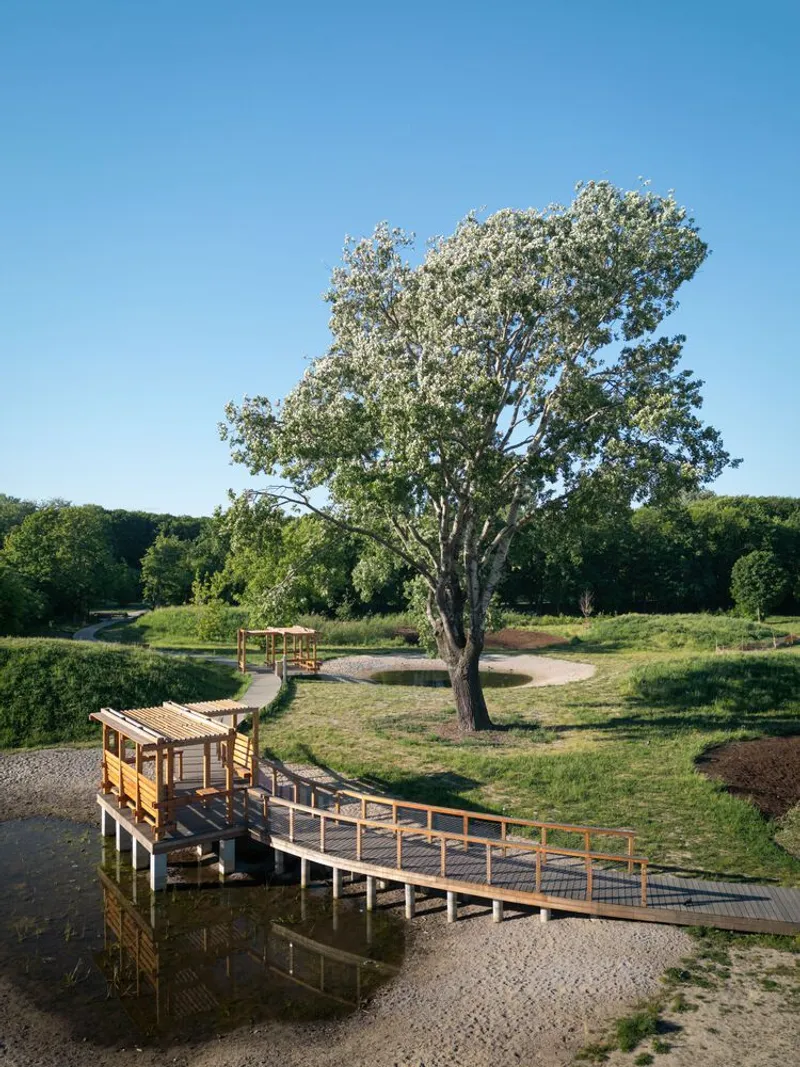
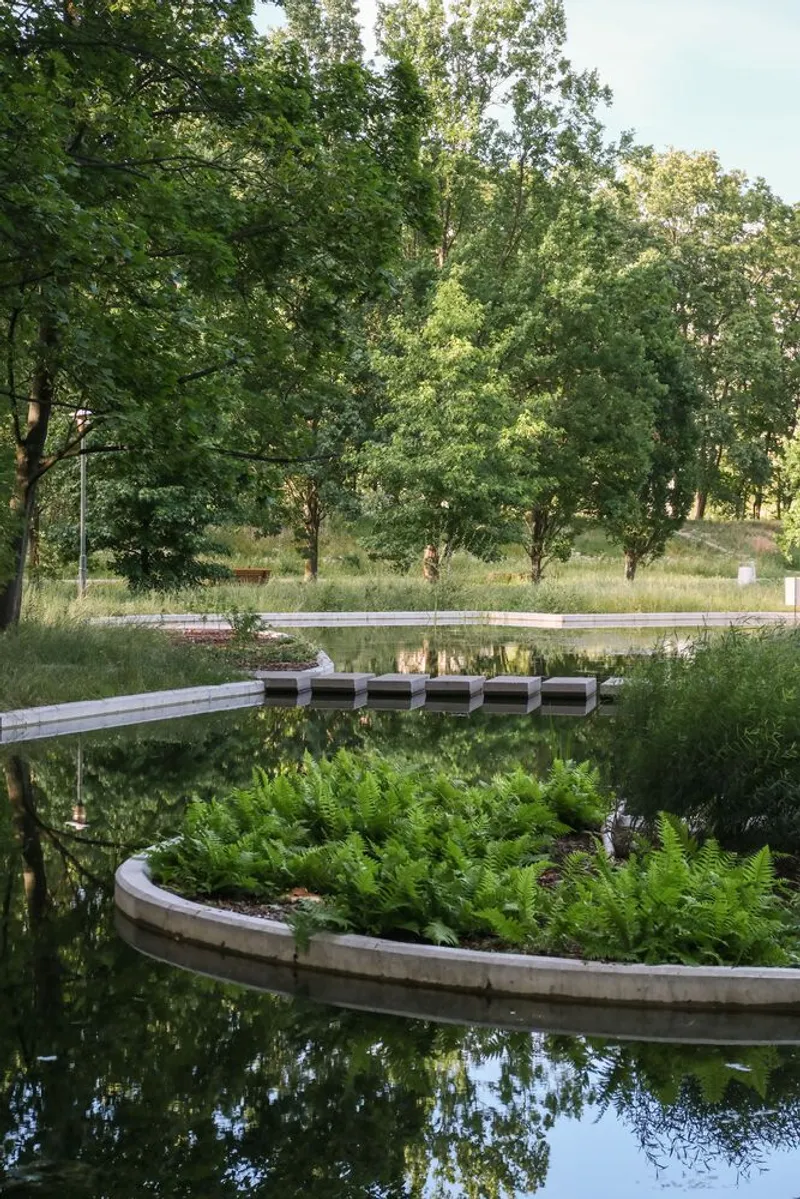
Pole Mokotowskie Park’s modernization demonstrates the transformative power of sensitive landscape architecture: where social interaction, ecological sustainability, and thoughtful design converge to create a park that serves both people and nature.
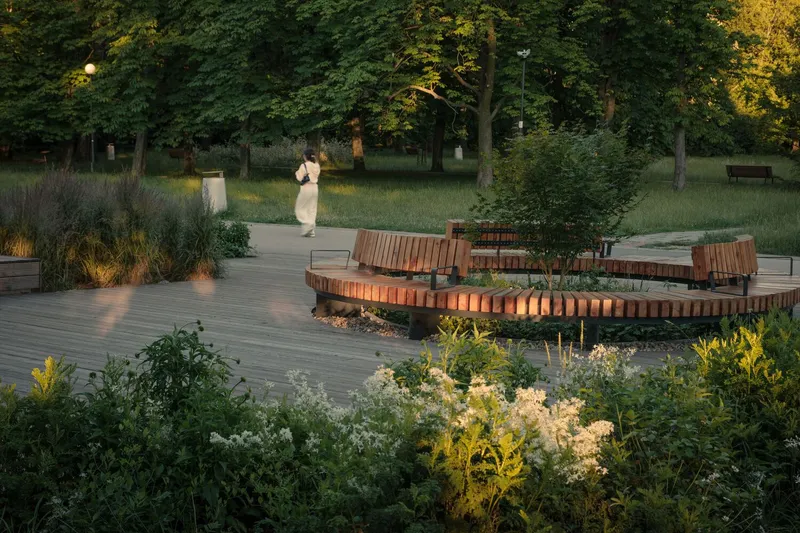
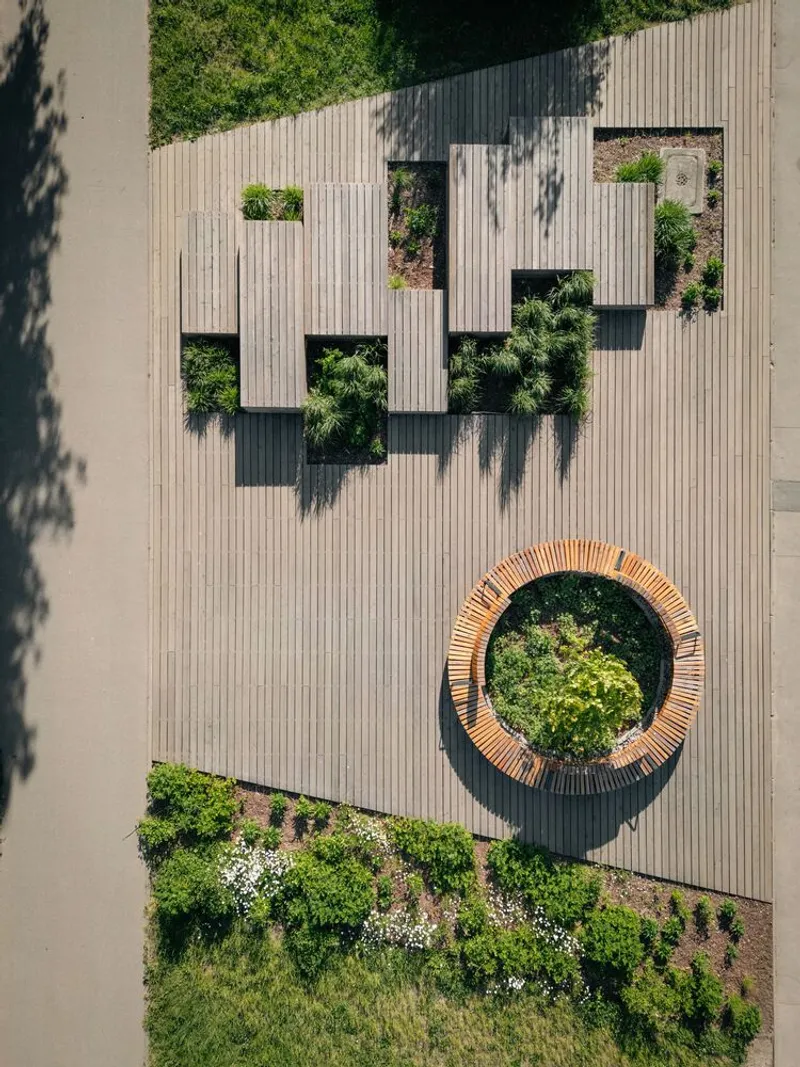
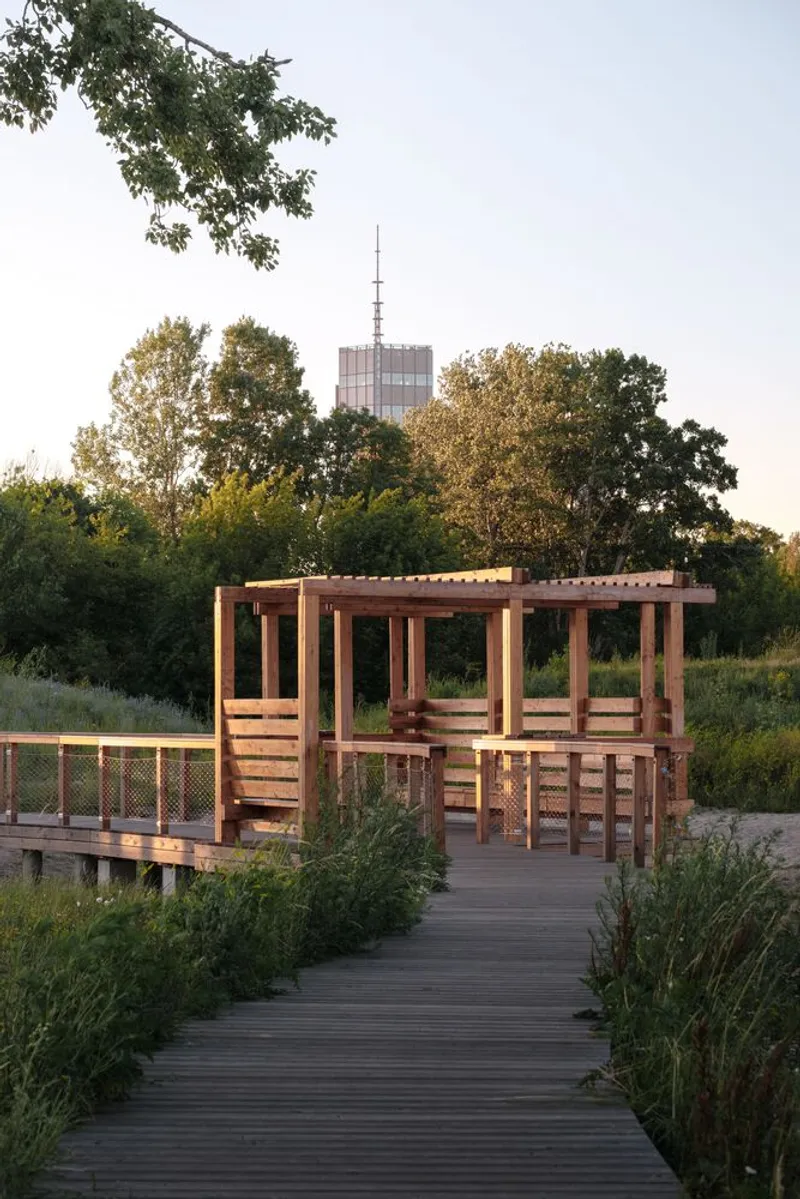
All photographs are works of
WXCA-A.Borun, T.Wieteska



Popular Articles
Popular articles from the community


Lunar Spiral: Space Architecture Shaped by the Mathematics of the Universe
Lunar Spiral reimagines space architecture through Fibonacci geometry, lunar regolith, levitating habitats, and self-sustaining Moon living.

The Musturak Paradise: Senior Living Architecture for a Connected Future in Temara, Morocco
The Musturak Paradise reimagines senior living architecture in Temara via private homes, social spaces, culture, community, and shared care.

The Ocean Hive: Sustainable Architecture for a Self-Sufficient Civilization at Sea
The Ocean Hive imagines sustainable architecture at sea, where modular habitats, algae, wave power and ocean waste sustain a growing colony.

Conexión: Biophilic Design Reimagines High-Rise Living in Hong Kong
Conexión reimagines high-rise living in Hong Kong through biophilic design, green facades, shared spaces, daylight, water and nature within.


Similar Reads
You might also enjoy these articles

Bamboo Housing Challenge 2026: Design Affordable, Sustainable Homes Using Bamboo
An international design competition by Bamboo U and IBUKU inviting architects and designers to reimagine affordable housing using bamboo — with the winning design built full-scale in Bali.

Computational Design & Education: Beegraphy Design Awards Introduces 7th Category (Featuring Jiyun's Innovative Approach)
Dive into Beegraphy’s 7th Design Awards category, where computational design meets education to create immersive, interactive learning tools, inspired by Jiyun’s work.
From Parametric Lighting to Urban Furniture: Join the 2nd Workshop in Beegraphy’s Computational Design Series
Dive into Cutting-Edge Design Techniques and Practical Applications with Industry Experts

Last Call: Unleash Your Architectural Genius in SHAK's Kindergarten Design Competition
Urgent call for architects to join SHAK's kindergarten design competition before the looming deadline


Explore City Park Competitions
Discover active competitions in this discipline



Challenge to reimagine the Iron Throne


Photograph architecture without architects


Illustrate the lost glory of Angkor Wat - Render Challenge


Design challenge to reuse E-waste
Comments (0)
Please login or sign up to add comments
No comments yet. Be the first to comment!