
Preschool of the Arts Expansion by Boyd Architects: Innovative Educational Architecture in Mount Pleasant
The Preschool of the Arts expansion by Boyd Architects blends playful, daylight-filled classrooms with cohesive brick-metal design, enhancing safety and educational functionality.


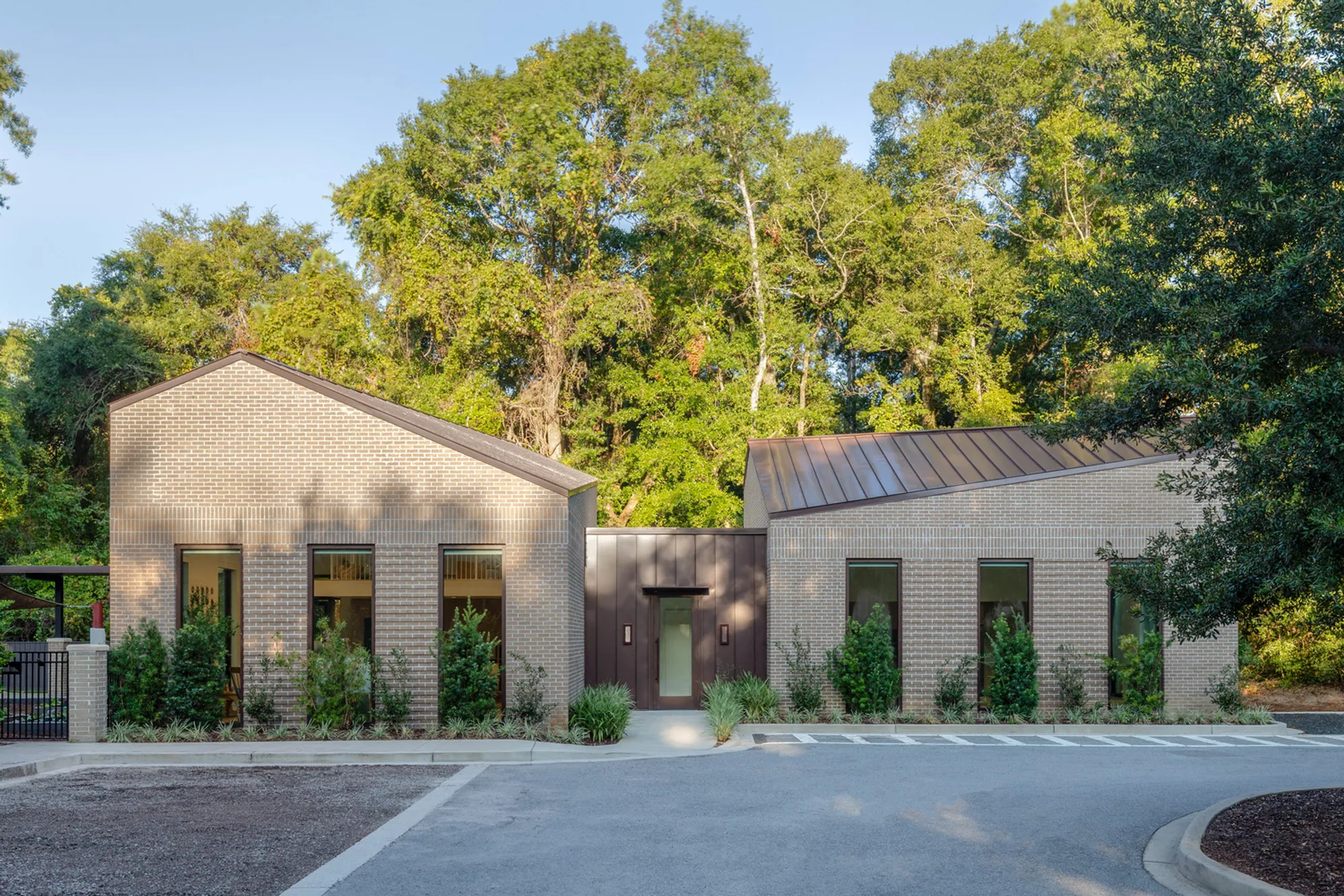
Located in Mount Pleasant, United States, the Preschool of the Arts designed by Boyd Architects is a striking example of thoughtful educational architecture and kindergarten design. Completed in 2024, this expansion responds to the rapid growth of the Chabad of Charleston’s preschool program, addressing the urgent need for additional classrooms while maintaining the unique character of the 2.5-acre site.
The original facility quickly became insufficient for the expanding student body. With just two classrooms initially, the school sought to double enrollment while accommodating essential programmatic requirements, including parking, outdoor play areas, buffer yards, and protected wetlands. The challenge was compounded by the limited buildable area on the property, with the 11,000-square-foot existing building occupying much of the space.
Strategic Site Planning and Architectural Integration
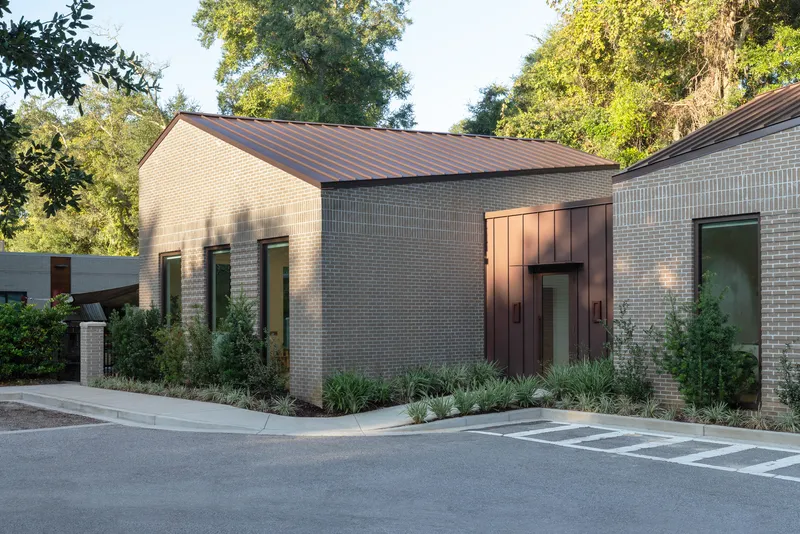
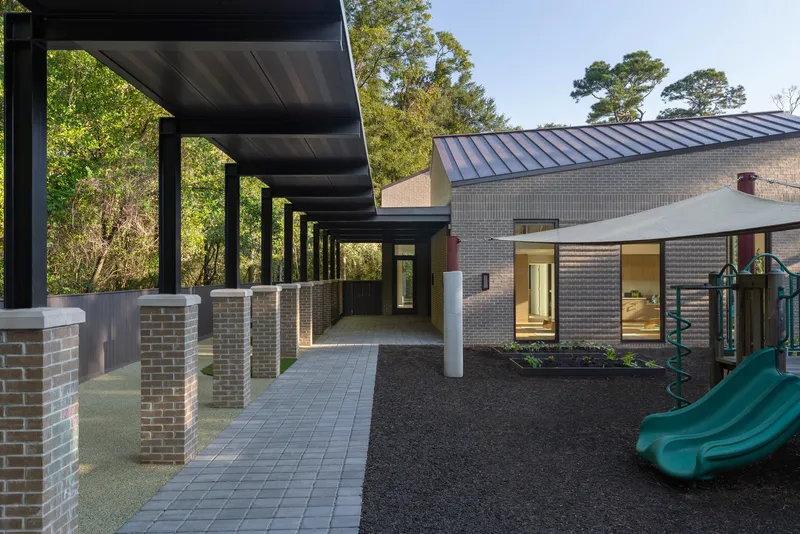
The new structure is strategically carved into the one viable space between the original building and the street. This location not only creates a strong architectural presence near the site entrance but also enhances security by defining the forward edge of the outdoor play area. A covered walkway connects the expansion to the original facility, preserving the primary drop-off and check-in point while promoting seamless circulation.
Harmonious Design with Distinctive Identity
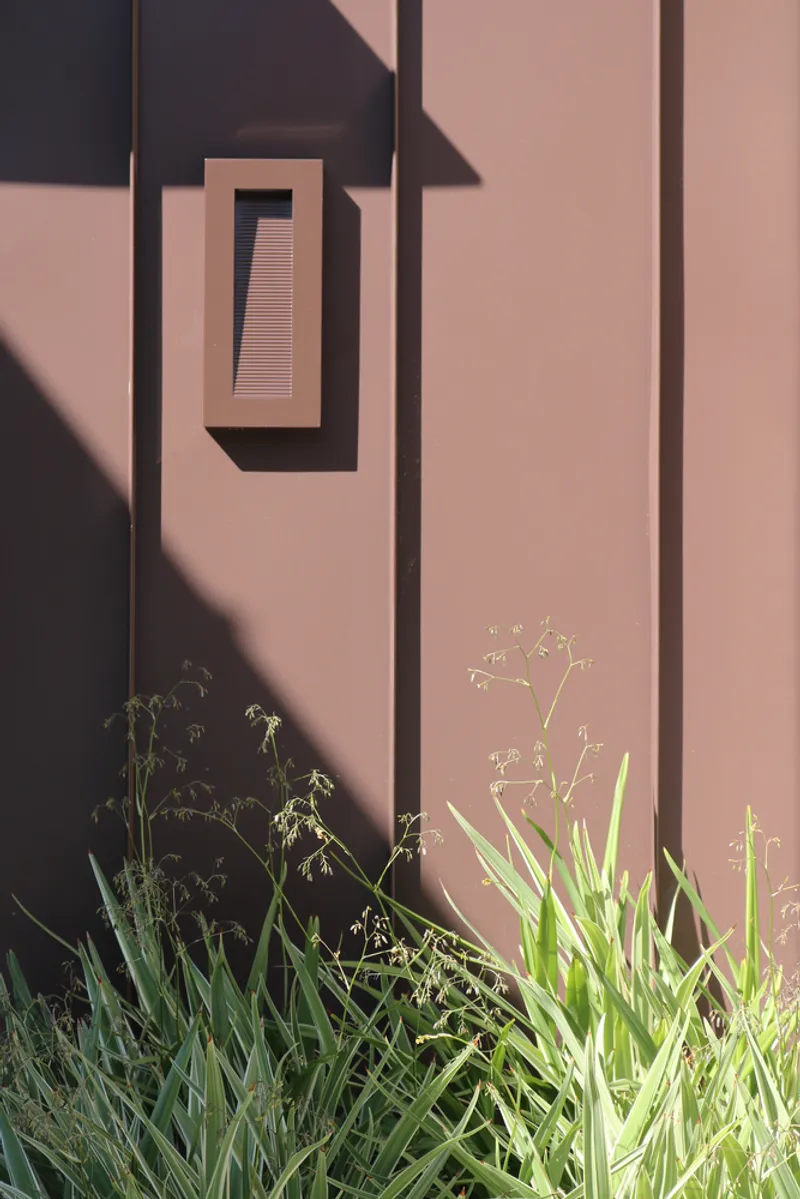
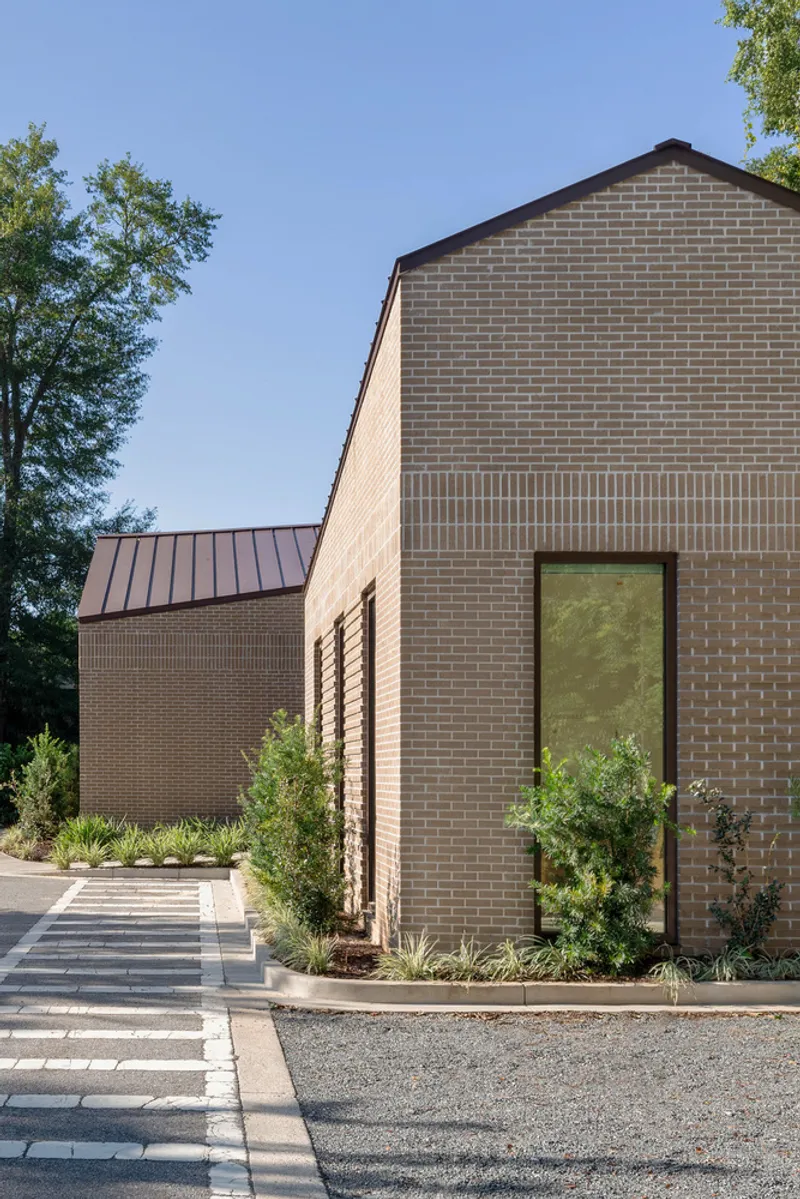
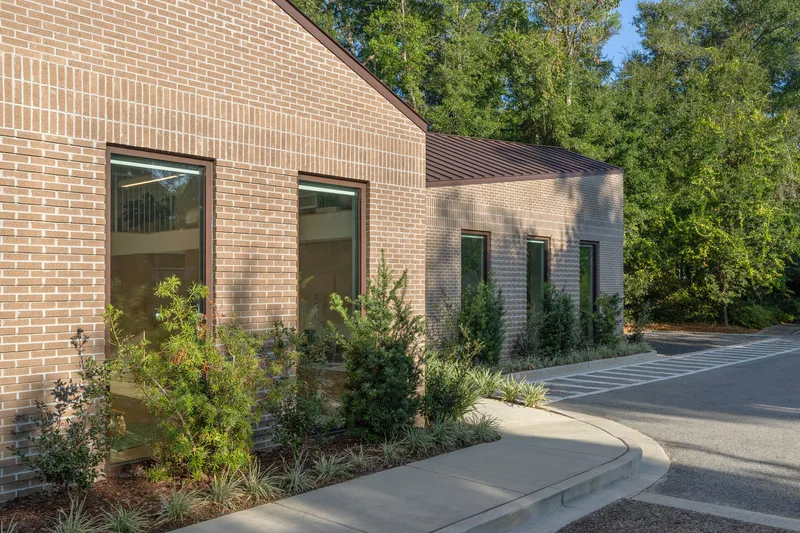
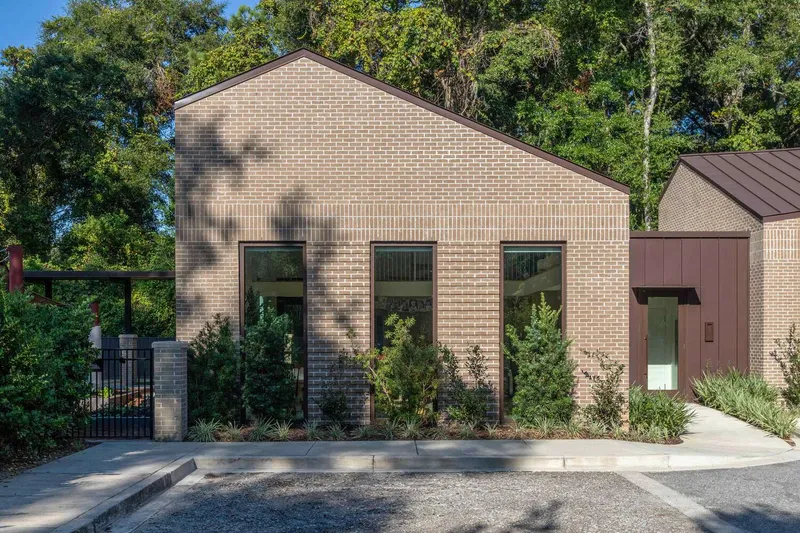
Boyd Architects achieved a careful balance between continuity and contrast in this expansion. The brick façade of the new building closely matches the original structure, ensuring cohesion, while the standing seam metal panels echo the stained cypress cladding without the maintenance concerns of wood. This design choice creates a fresh, durable aesthetic while respecting the material identity of the original school.
The two new classrooms are articulated as separate volumes linked by a “hyphen” that houses bathrooms, storage, and an emergency exit vestibule. The rotated ridge lines of the classroom volumes generate four distinct façade profiles, introducing a playful, dynamic personality to the otherwise orderly campus.
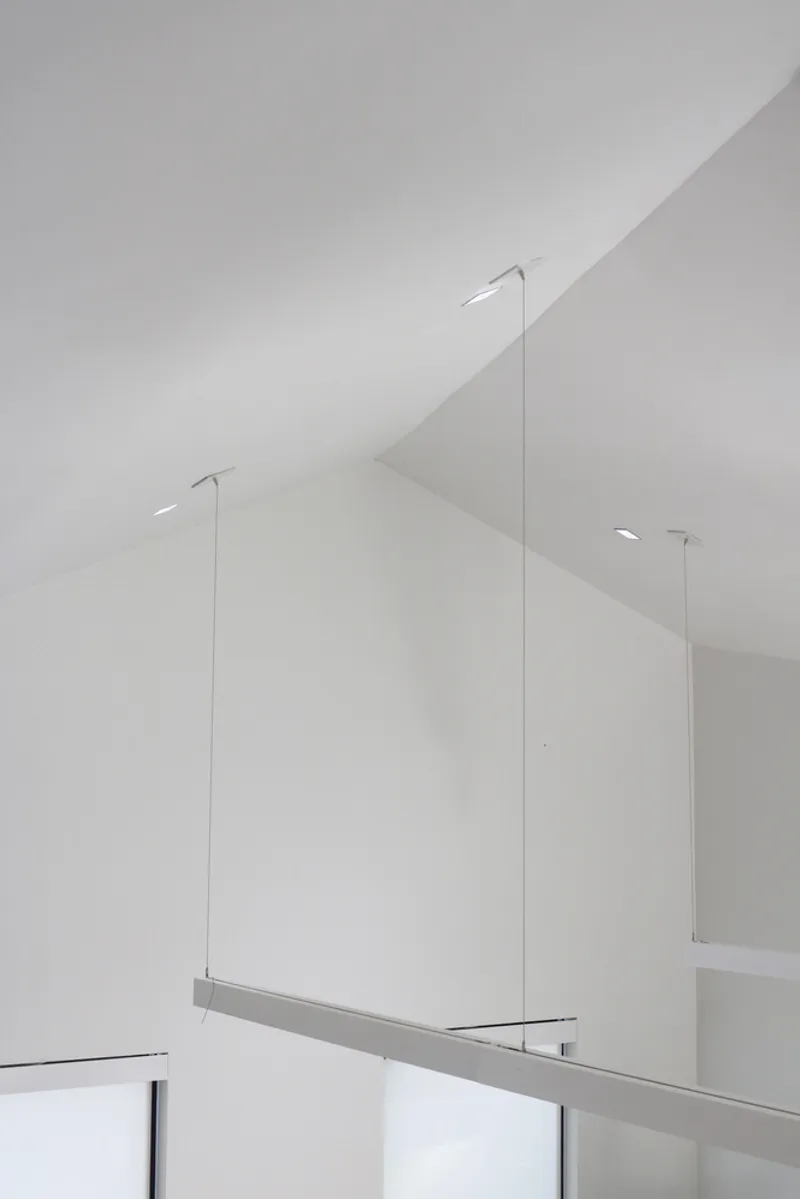
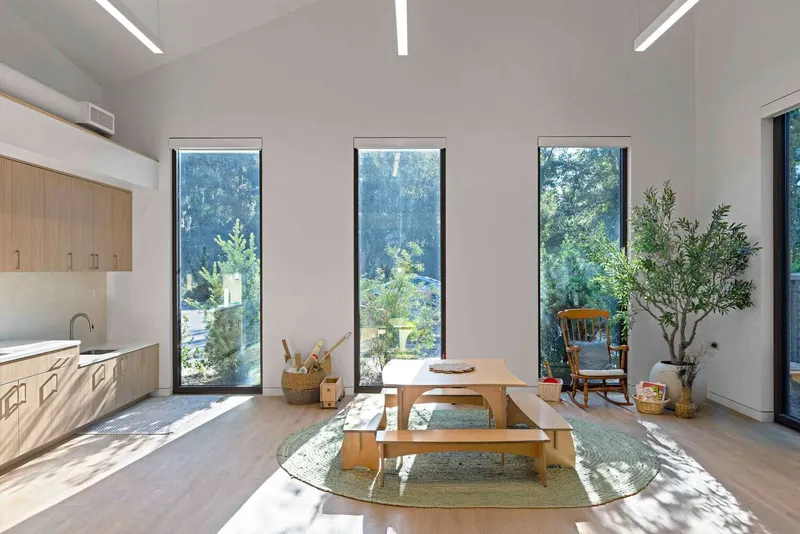
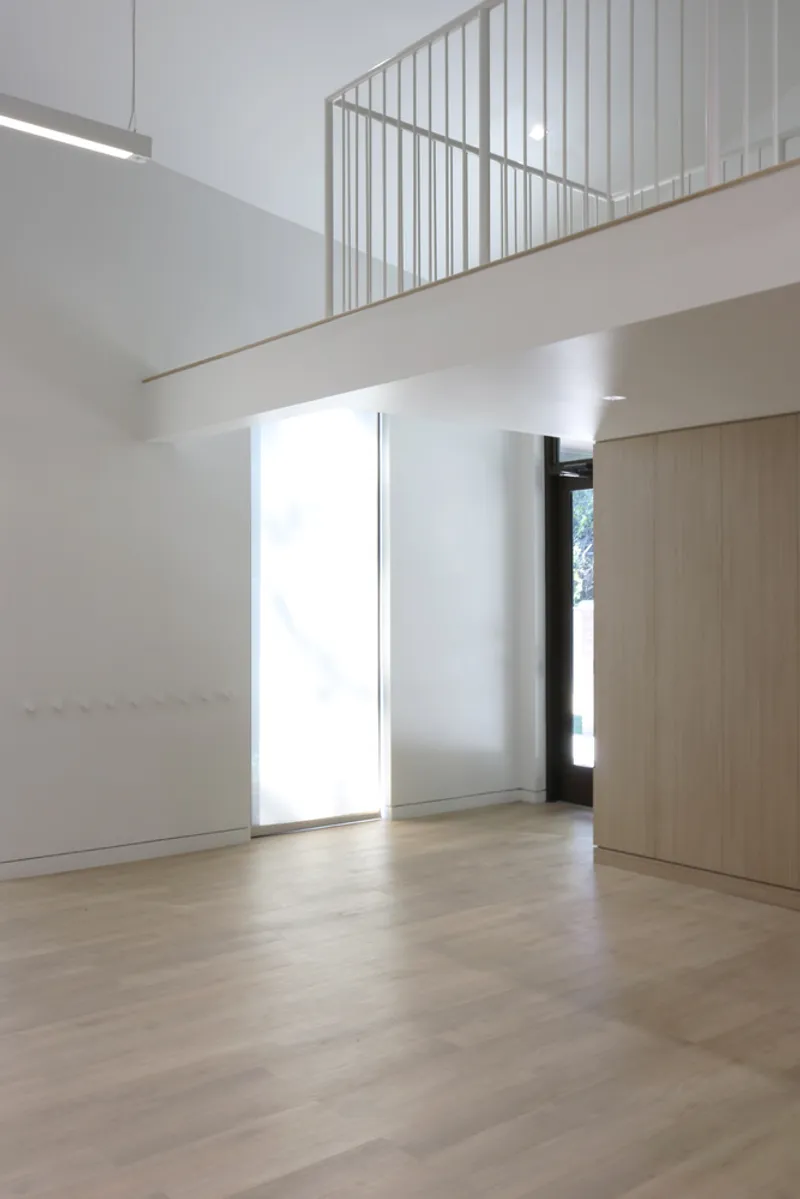
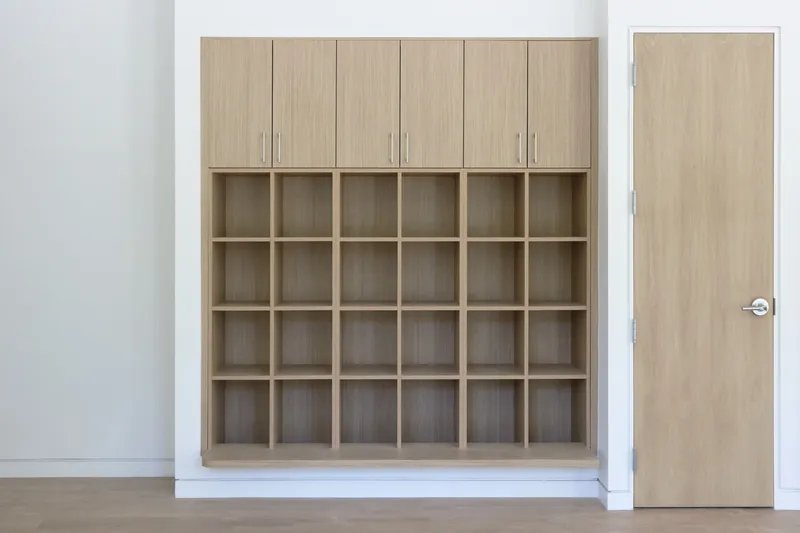
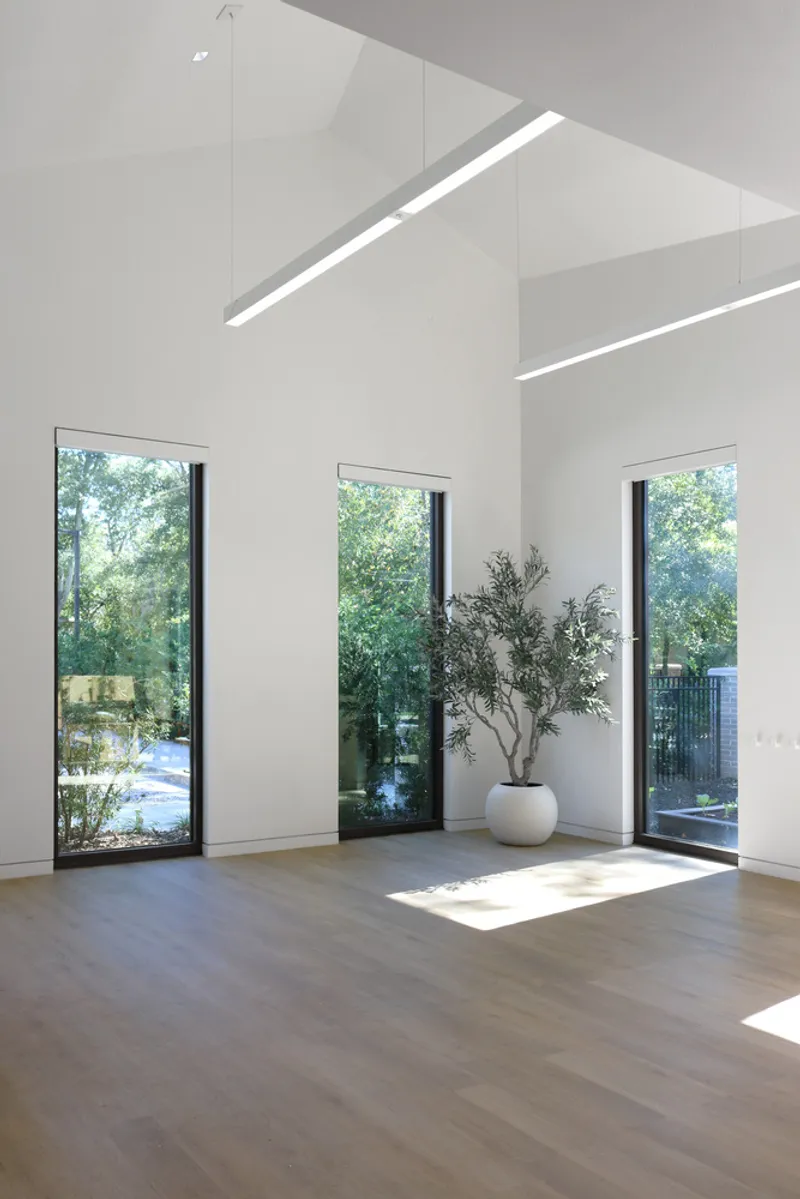
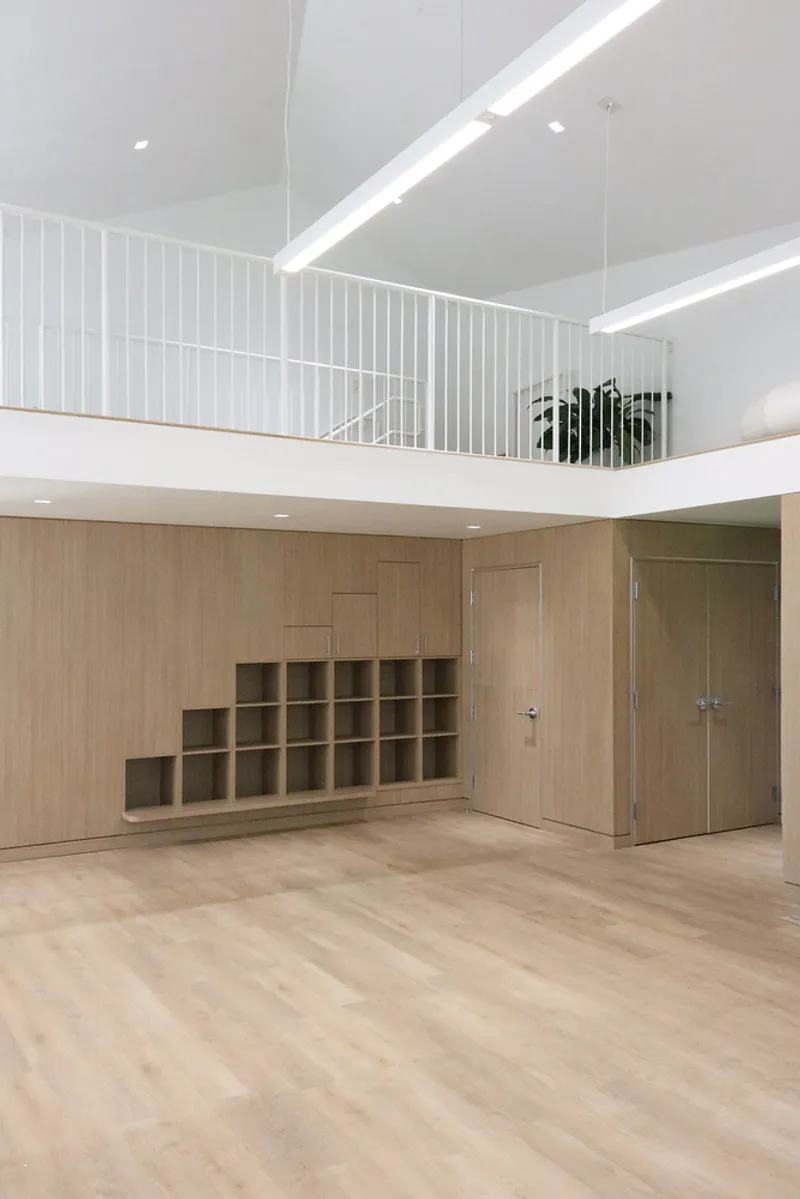
Inside, the south classroom features an asymmetrical vaulted ceiling with a reading loft for older children, enhancing the learning environment. Large storefront windows maximize natural light, visually connecting interior spaces with the outdoor play area and adjacent forested areas. A simple, resilient interior palette allows the children, their activities, and toys to enliven the spaces, promoting an interactive and inspiring educational experience.
Materials, Functionality, and Sustainability
The expansion employs a thoughtful combination of brick, metal, and natural materials, creating a low-maintenance and sustainable environment. Every design choice—from the classrooms’ orientation to the material palette—was driven by the need to optimize daylight, safety, and usability while providing a playful, inviting atmosphere for young learners.
All photographs are works of Mike Habat Photo




Popular Articles
Popular articles from the community


Lunar Spiral: Space Architecture Shaped by the Mathematics of the Universe
Lunar Spiral reimagines space architecture through Fibonacci geometry, lunar regolith, levitating habitats, and self-sustaining Moon living.

Riyadh For All: Intergenerational Urban Design for Active Aging in Rabat
Riyadh For All reimagines urban design in Rabat with intergenerational co-living, adaptive courtyards, and Moroccan cultural exchange today.

Play: Fragments of Their World
Familiar architecture becomes modular playground design, creating safe spaces where displaced children can learn, connect, imagine and play.

The Earth Pod: 3D Printed Homes for Resilient Refugee Communities
The Earth Pod reimagines refugee housing through 3D printed homes made from clay, combining resilience, self-sufficiency, and rapid shelter.


Similar Reads
You might also enjoy these articles


Hodi-Mandai Geram
Project Function: Preservation and revitalization of the Intangible heritage and socio-spatial identity of the Hodi by Housing, Cultural Memory Center, Sacred Grove, landscape, local tourism economy


Olio Towers: A Mid-Rise for Performers That Fuses Housing, Rehearsal, and Stage
Located blocks from Houston's Theater District, this modular tower stacks living units around a central performance atrium.

Oasis: Modular Green Housing Carved into Dhaka's Urban Fabric
A shortlisted Plugin Housing entry reclaims unauthorized settlements in Dhaka with stepped concrete volumes, green roofs, and ventilation-driven design.

Black Hole: A Floating Megastructure for the Post-Physical Era
Emiliano Mazzarotto envisions a spherical, self-scaling arena where e-sports, digital hotels, and holographic stadiums replace traditional public space.


Explore Educational Building Competitions
Discover active competitions in this discipline



Challenge to design public laboratory


Challenge to reimagine the Iron Throne


Photograph architecture without architects


Illustrate the lost glory of Angkor Wat - Render Challenge
Comments (0)
Please login or sign up to add comments
No comments yet. Be the first to comment!