
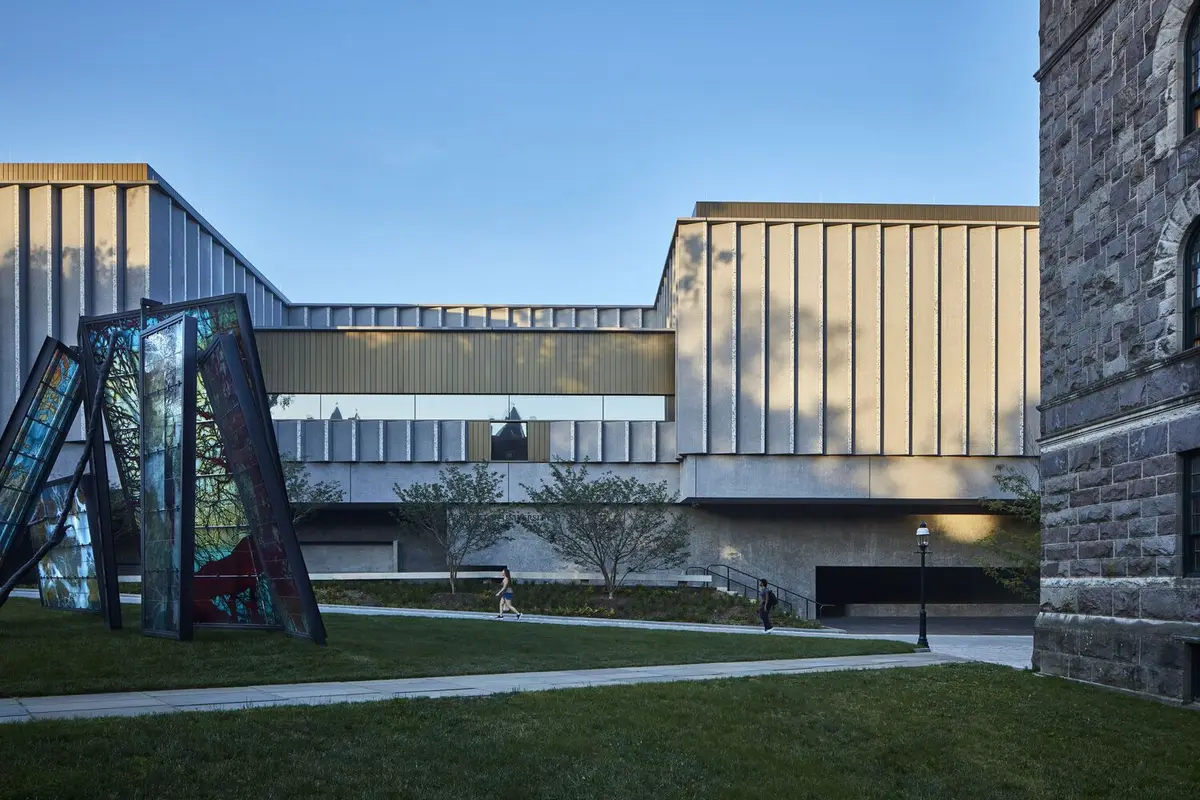
Princeton University Art Museum: A Landmark Cultural Hub by Adjaye Associates
The Princeton University Art Museum by Adjaye Associates blends contemporary design, sustainability, and campus integration, creating a dynamic cultural and educational hub.


Located in Princeton, United States, this remarkable project is a collaboration between the internationally renowned Adjaye Associates and executive architect Cooper Robertson, bringing together architecture, landscape, and engineering expertise to create a building that is both functional and visually striking. The design seamlessly integrates the surrounding environment, guided by James Corner Field Operations, whose landscape architecture fosters a strong connection between interior spaces and the outdoors. Spanning 13,565 m² (146,000 sq ft), the building accommodates a variety of activities while maintaining a cohesive aesthetic and human-centered spatial experience. Structural integrity is ensured by Silman, with Kohler Ronan providing mechanical and electrical engineering, and Nitsch Engineering overseeing civil works. Thoughtful lighting design by Tillotson accentuates the architectural forms, while sustainable strategies developed by Vidaris prioritize energy efficiency and environmental responsibility. The project’s meticulous attention to materiality, scale, and context is captured beautifully by photographers Richard Barnes and Dror Baldinger, highlighting the harmonious interplay of light, form, and landscape throughout the building.
A Bold New Icon at Princeton University
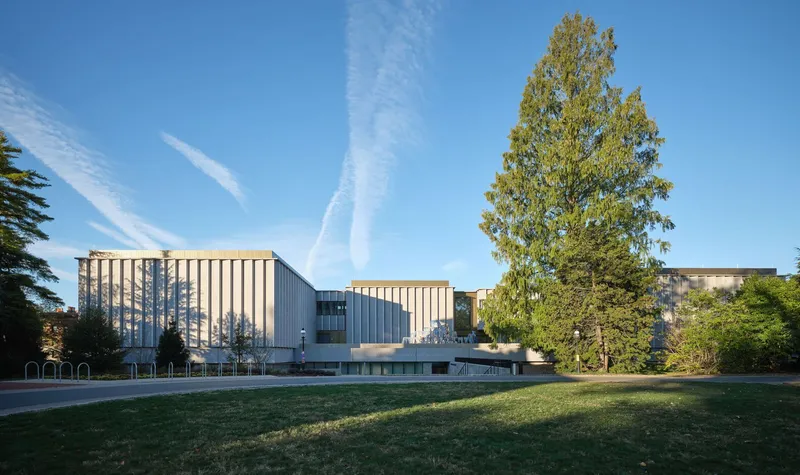
The Princeton University Art Museum, designed by Adjaye Associates in collaboration with Cooper Robertson, emerges as a transformative cultural landmark at the heart of Princeton’s campus. This ambitious project doubles the size of the previous museum while maintaining a strong connection to its historic site. Conceived as a “campus within the campus,” the museum reaffirms its role as a dynamic cultural hub for both the university community and the public.
Centrally located between Elm Drive and Chapel Drive along McCosh Walk, the museum spans 146,000 square feet across three stories, reflecting Princeton’s architectural heritage while embracing a contemporary design language.
Contextual Design: Integration with Campus Life
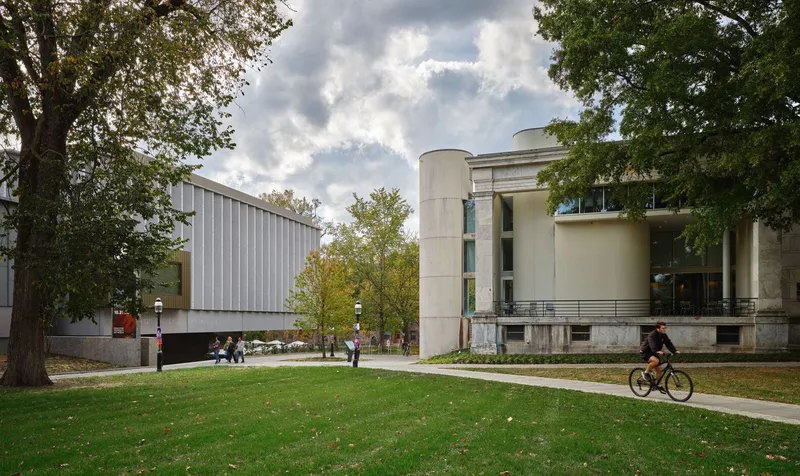
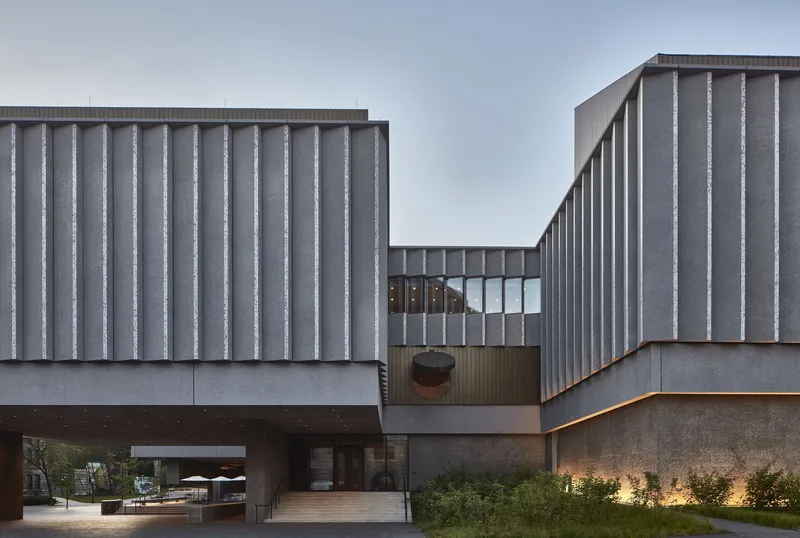
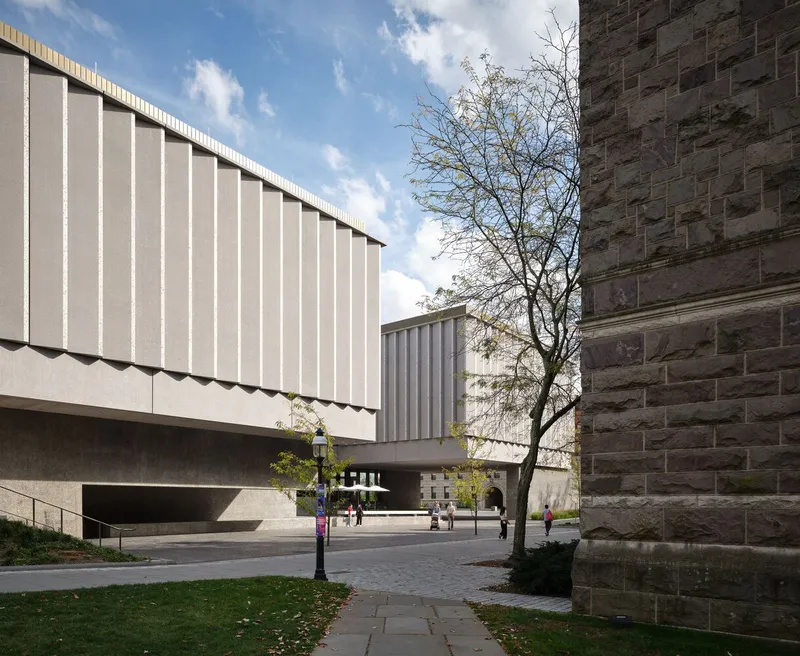
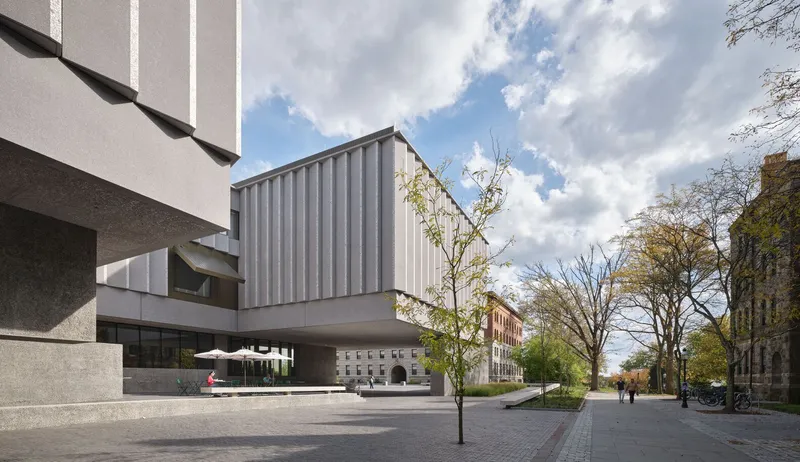
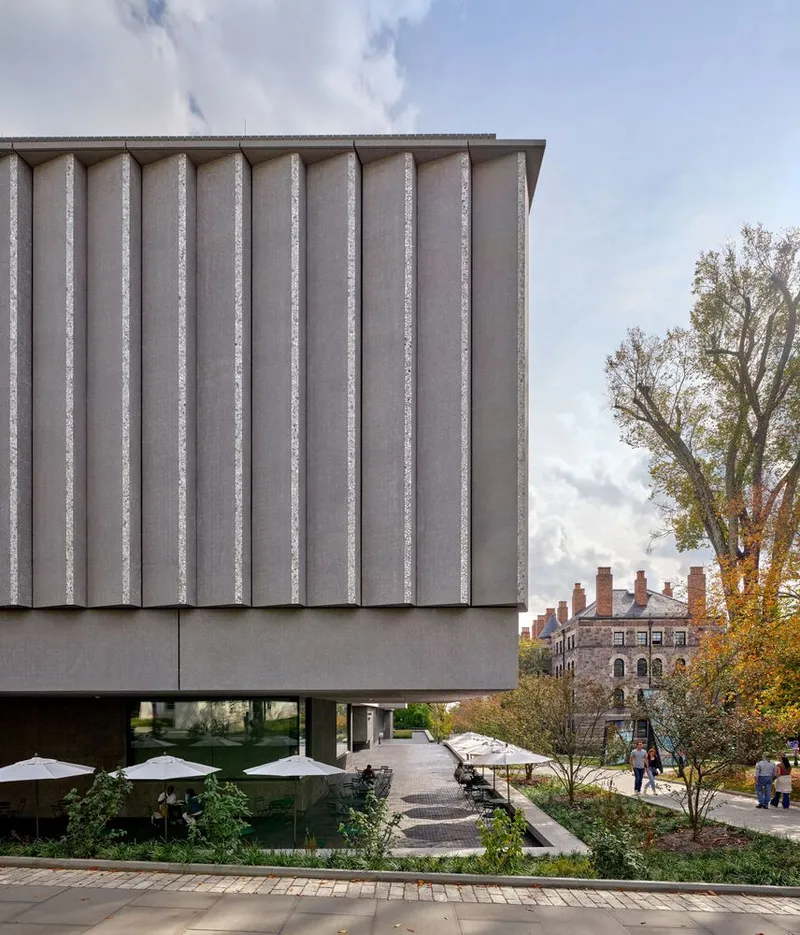
The museum’s design prioritizes permeability and campus integration. Its mass is broken into nine interconnected pavilions that resonate with surrounding buildings. Organized along north-south and east-west axes, the museum aligns with existing desire lines, keeping it accessible and connected to daily campus life even when galleries are closed.
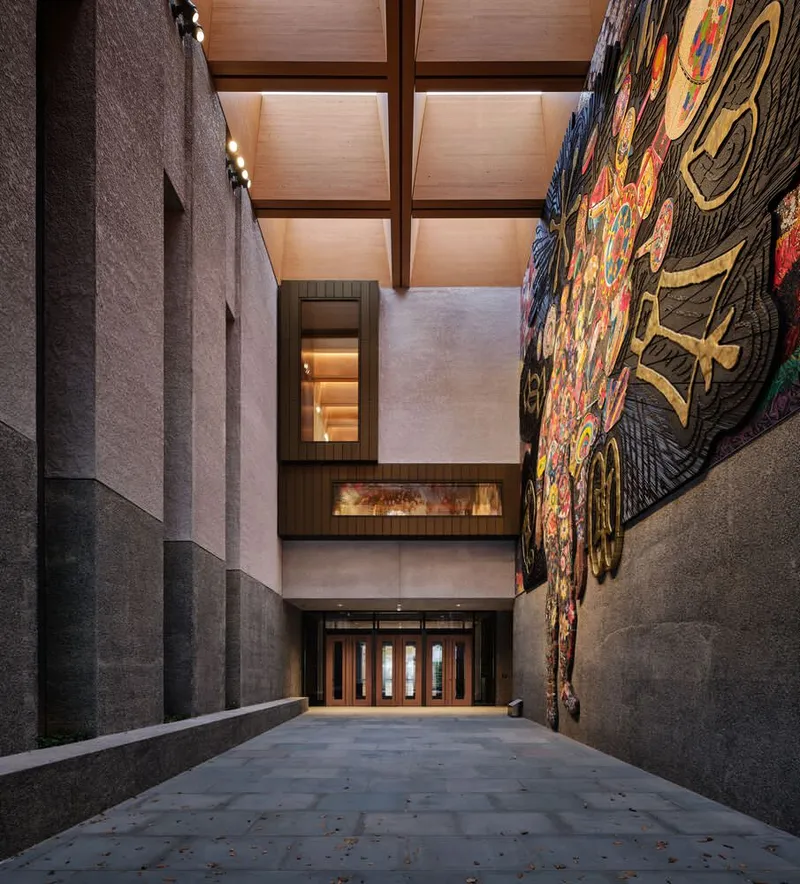
Two major artwalks traverse the ground floor, linking the building to campus circulation. This allows parts of the museum to remain active beyond gallery hours, encouraging community engagement and continuous interaction with art.
Architecture & Spatial Experience
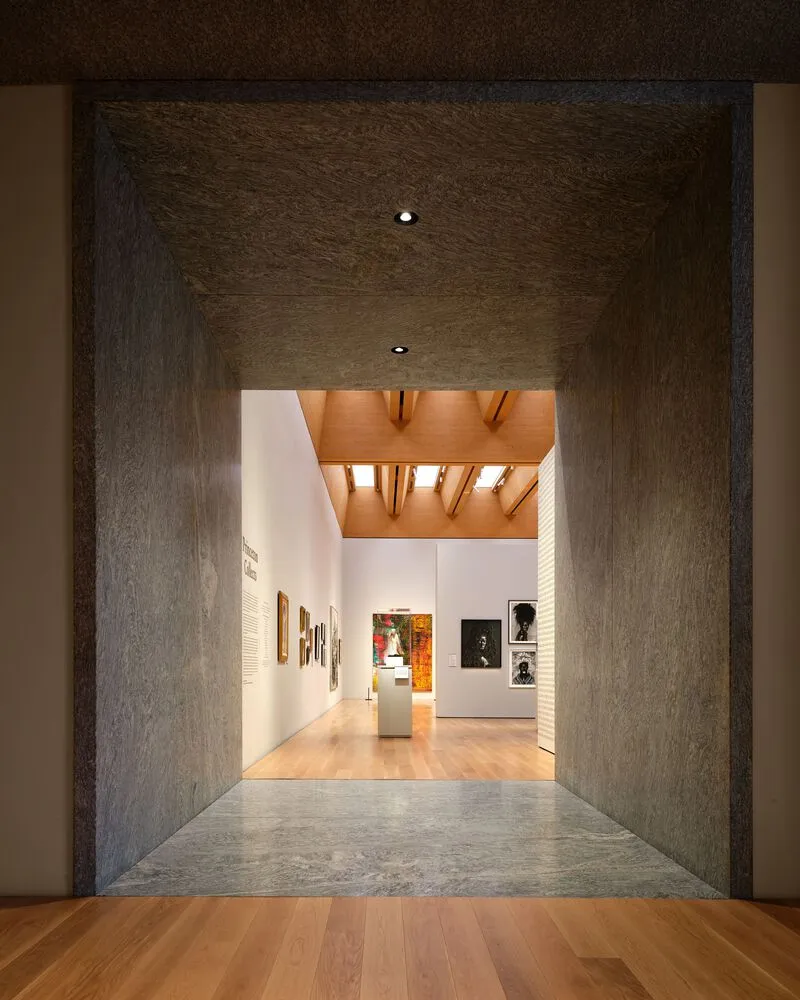
Galleries are arranged as a sequence of volumes interspersed with in-between spaces framing views of campus landmarks, landscape, and outdoor sculptures. The building mass steps down along the site’s natural gradient, creating terraces, open-air courtyards, and gathering spaces suitable for events ranging from 200 to 2,000 people.
The landscape design preserves mature elms and beeches, relocates significant trees when necessary, and introduces new green terraces that blend seamlessly with the surrounding topography.
Transparency, Materiality, and Engagement
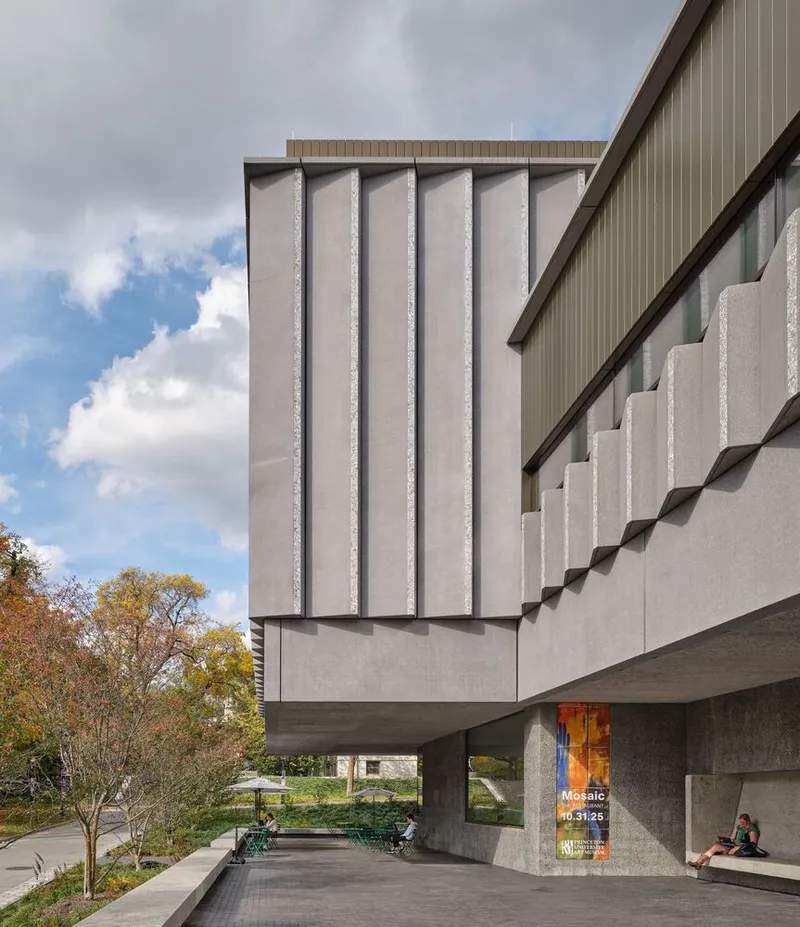
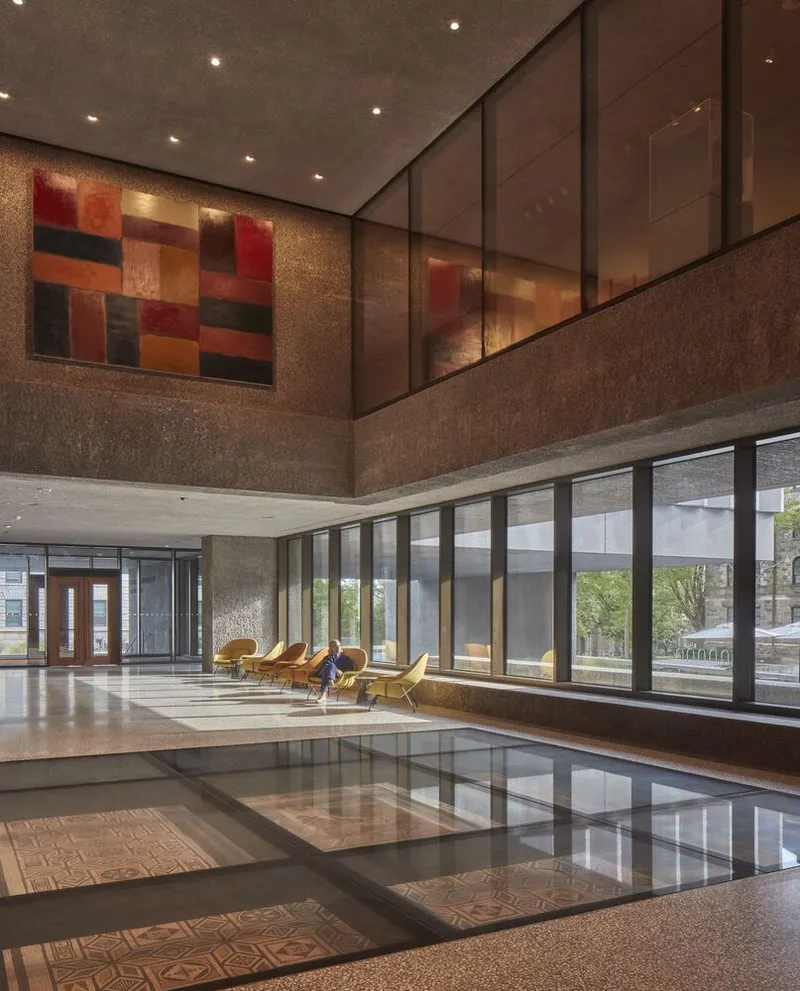
The museum emphasizes transparency and engagement. Strategically placed lens windows, light wells, and open circulation connect visitors with art, landscape, and campus life. The exterior features alternating rough and polished stone aggregate panels, bronze accents, and triple-glazed windows, creating a textured and responsive façade that interacts with light throughout the day.
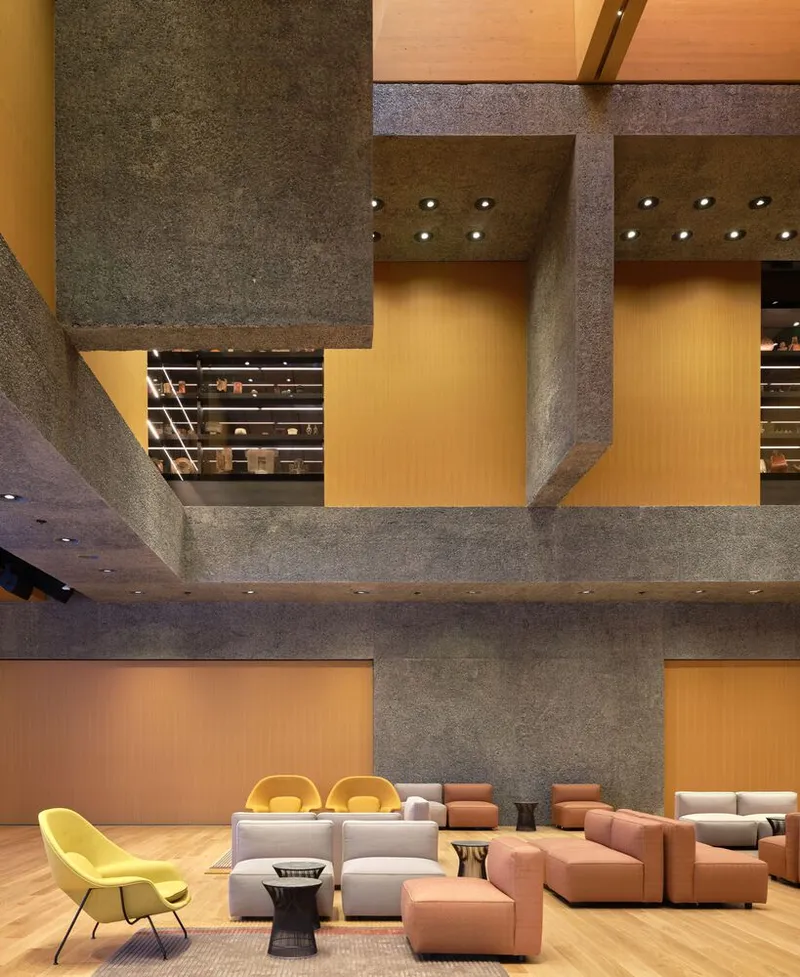
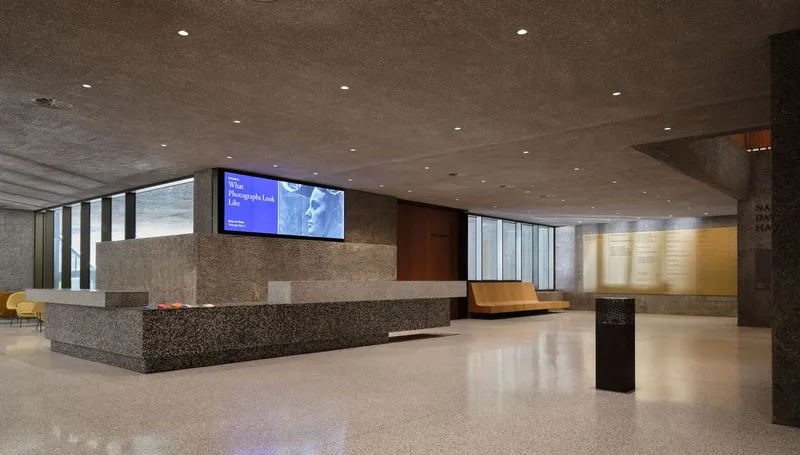
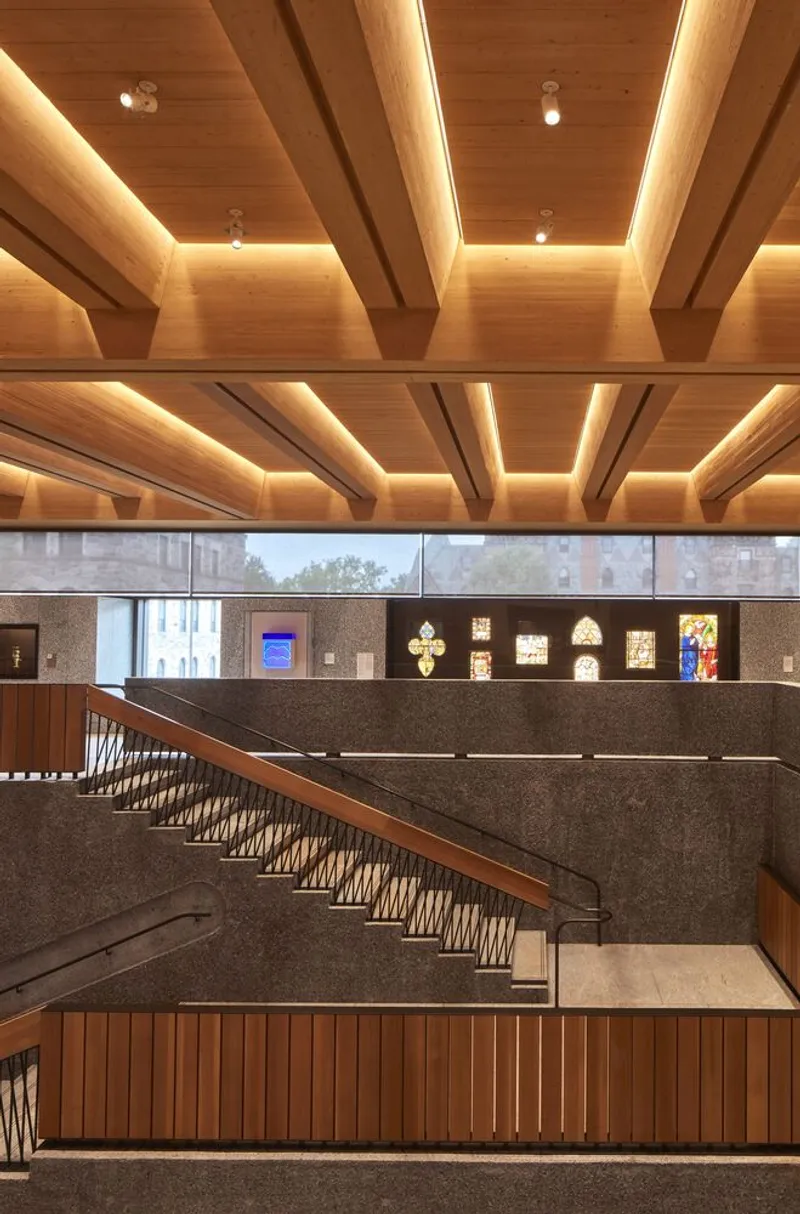
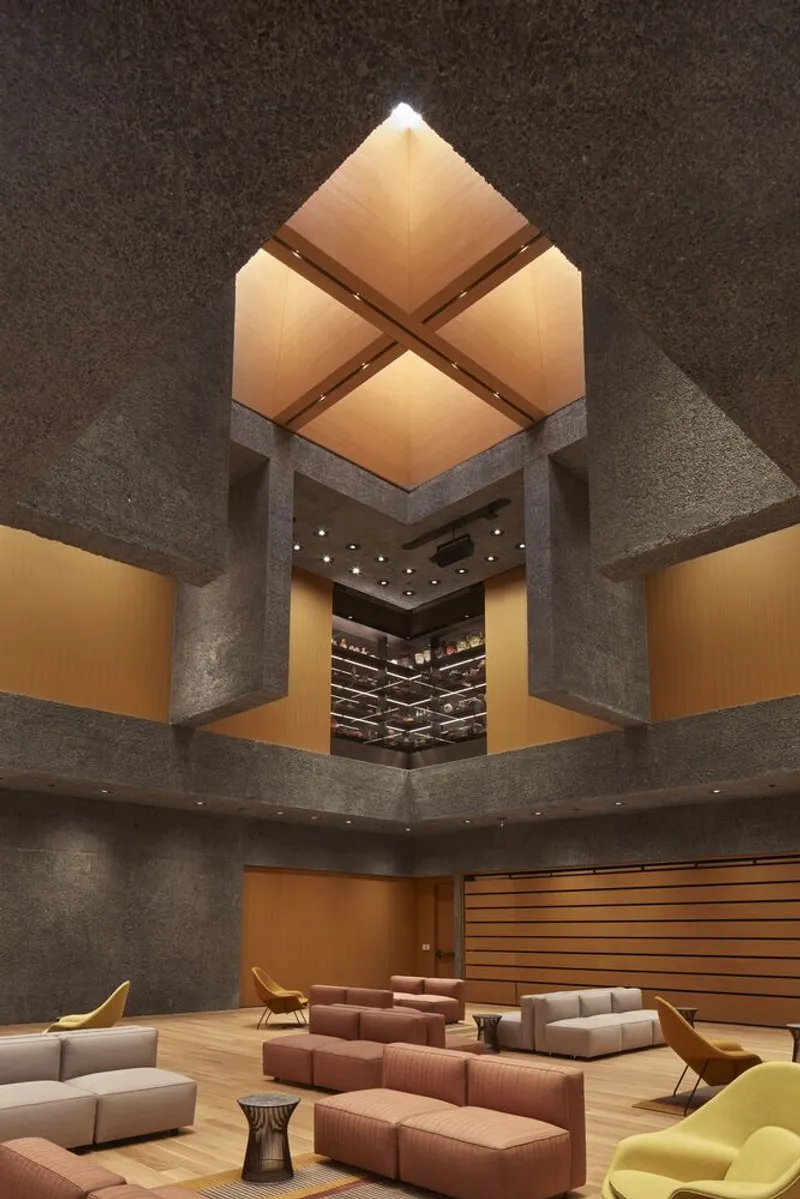
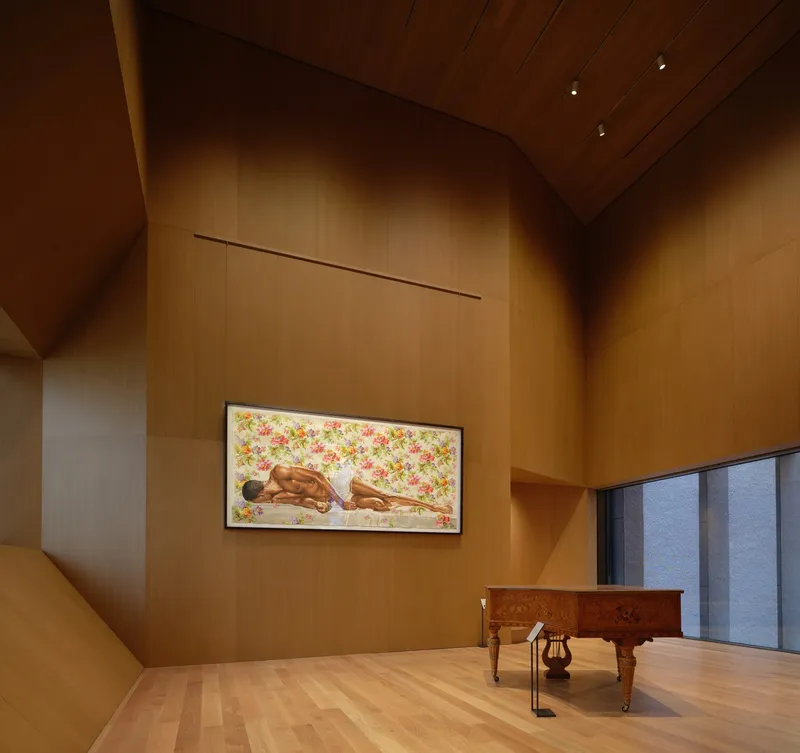
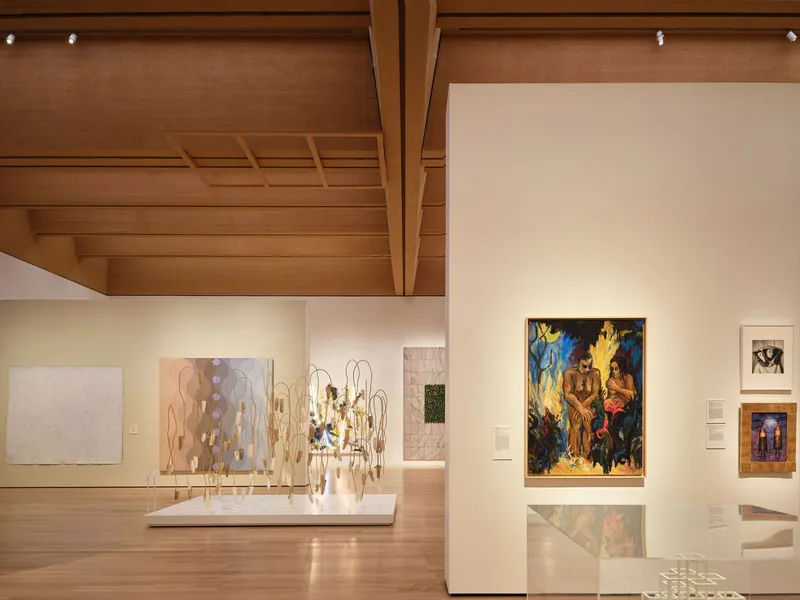
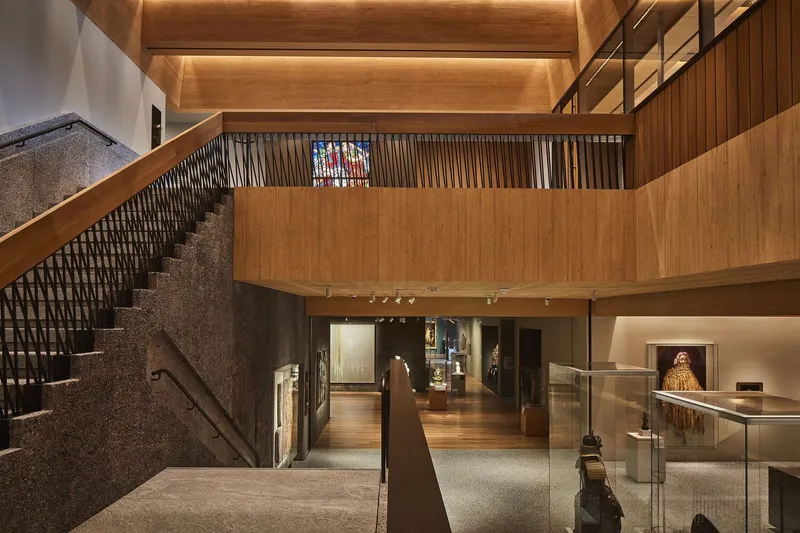
Inside, structural glulam beams and warm materials such as terrazzo and wood bring tactility and human scale to major spaces like the Entrance Hall, Grand Stair Hall, and Grand Hall. The interiors mirror the craftsmanship and materiality of the exterior, enhancing the visitor experience.
Innovative Curatorial Vision
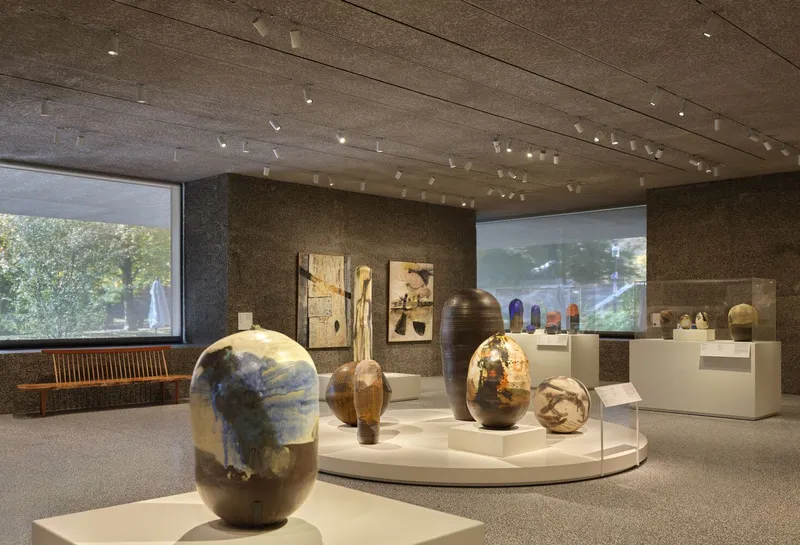
The museum’s design supports a curatorial approach that prioritizes cultural exchange and storytelling. With 95% of gallery space on a single level, Princeton’s global collection is displayed cohesively, challenging traditional hierarchies of art presentation.
Visitors encounter works across geography, chronology, and culture, with visible storage, varied ceiling heights, and framed vistas dissolving the conventional boundaries between museum and campus.
Supporting Education, Research, and Community
The museum program accommodates teaching, research, and creative practice at all levels. The ground floor houses:
- Public and educational spaces
- Object study classrooms
- Creativity labs
- Seminar rooms and lecture halls
Upper levels include galleries, conservation studios, offices, and a rooftop café with indoor and outdoor seating. The flexible Grand Hall hosts lectures, performances, and community gatherings, extending the museum’s role as a site for dialogue and cultural exchange.
Commitment to Sustainability
The Princeton University Art Museum achieves LEED Gold certification, aligning with Princeton University’s Sustainability Plan for net-zero carbon emissions by 2046. Sustainability was embedded from the project’s inception, including:
- High-performance building envelope and heavy insulation
- Triple-glazed “lenses” with structural thermal breaks
- Optimized moisture and humidity control for art conservation
- Zoning systems allowing selective operation to minimize energy use
These strategies ensure optimal conservation conditions while keeping the museum active throughout the day and evening.
The Princeton University Art Museum exemplifies contemporary museum architecture that harmonizes with historic context, promotes cultural engagement, and prioritizes sustainability and educational impact. Its thoughtfully articulated spaces, innovative curatorial vision, and responsive design make it a dynamic cultural landmark for Princeton University and the broader community.
All photographs are works of Richard Barnes,Dror Baldinger


Popular Articles
Popular articles from the community


The Amber Palace Opera: A Geological Fiction Surfaces on Tallinn's Baltic Waterfront
Pierre Brillard reimagines a Baltic legend as a public landscape, opera house, and waterfront promenade rooted in Tallinn's coastal identity.

Manzana Morphosis: Stretching Barcelona's Grid into a Living Landscape for 2050
A radical reworking of the Eixample manzana turns density into a tool for generous public space, vertical ecology, and environmental performance.
Extended Shell: Retrofitting Kolkata's Balconies as Living Urban Thresholds
A modular retrofit system recovers the social and environmental intelligence of Kolkata's historic verandas for contemporary Park Street residents.

Opera by the Sea Estonia: Three Shells Dissolving Architecture into Tallinn's Coastline
A winning opera house proposal replaces monumental form with interconnected shells that blur the boundary between building, park and Baltic Sea.

Similar Reads
You might also enjoy these articles


Hodi-Mandai Geram
Project Function: Preservation and revitalization of the Intangible heritage and socio-spatial identity of the Hodi by Housing, Cultural Memory Center, Sacred Grove, landscape, local tourism economy


Olio Towers: A Mid-Rise for Performers That Fuses Housing, Rehearsal, and Stage
Located blocks from Houston's Theater District, this modular tower stacks living units around a central performance atrium.

Oasis: Modular Green Housing Carved into Dhaka's Urban Fabric
A shortlisted Plugin Housing entry reclaims unauthorized settlements in Dhaka with stepped concrete volumes, green roofs, and ventilation-driven design.

Black Hole: A Floating Megastructure for the Post-Physical Era
Emiliano Mazzarotto envisions a spherical, self-scaling arena where e-sports, digital hotels, and holographic stadiums replace traditional public space.

Explore Adp Architects Competitions
Discover active competitions in this discipline

Challenge to reimagine the Iron Throne

Photograph architecture without architects

Illustrate the lost glory of Angkor Wat - Render Challenge

Design challenge to reuse E-waste
Comments (0)
Please login or sign up to add comments
No comments yet. Be the first to comment!