
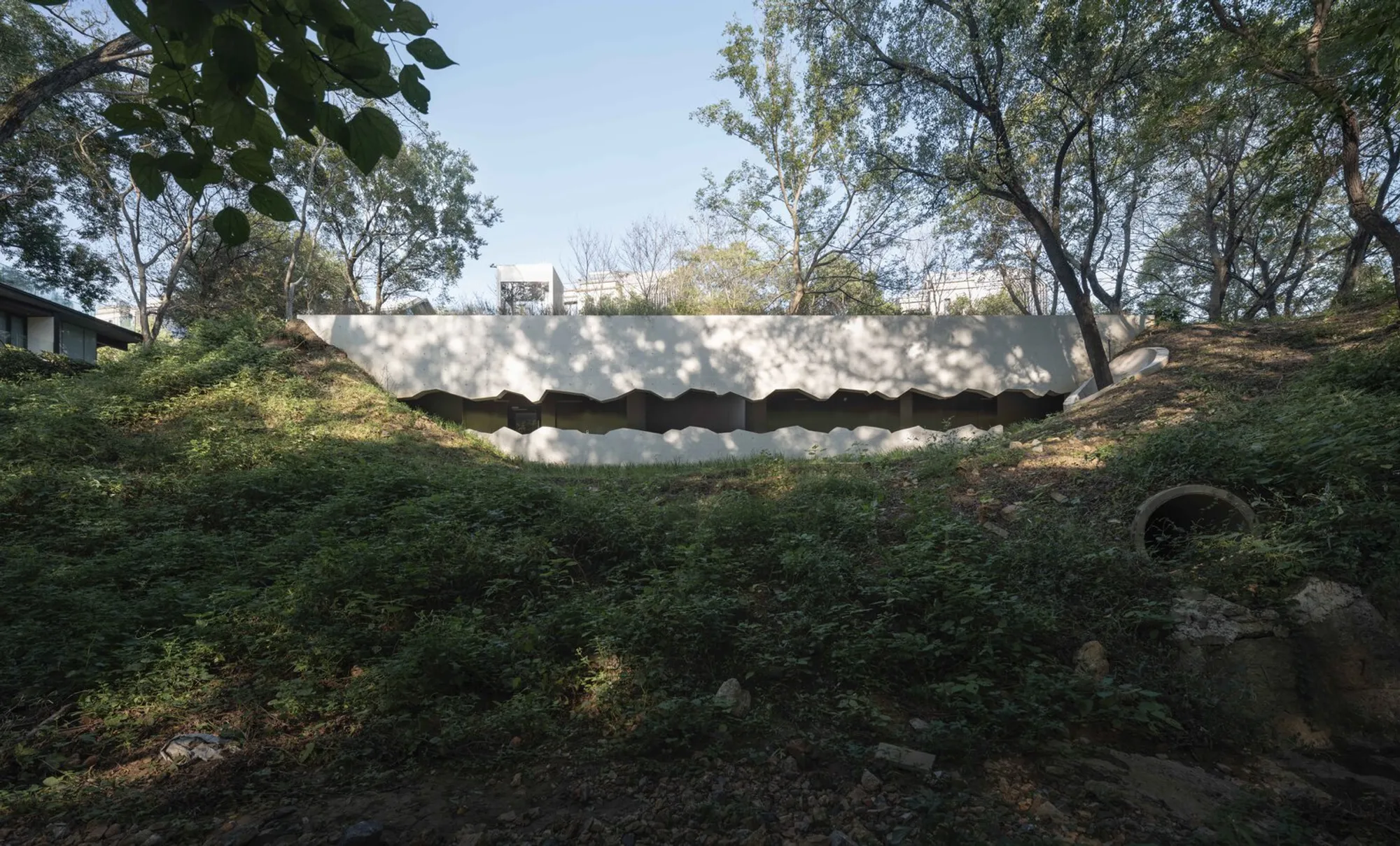
Public Restroom of Nanjing Sifang Art Lake District by WUWU Atelier & ADINJU
A nature-immersed public restroom blending concrete, forest views, and topography, offering elevated treetop perspectives and serene valley-framed spaces with minimal intervention.


A Sculptural Public Restroom Immersed in the Forest Landscape of Nanjing
Designed by WUWU Atelier and ADINJU, the Public Restroom of Nanjing Sifang Art Lake District redefines the idea of civic infrastructure through architecture deeply connected to nature. Completed in 2024, the 120-square-meter project blends into the wooded landscape, transforming essential public space into a contemplative, sensory experience rooted in the site’s topography, forest density, and shifting light.
A Floating Pavilion Among the Pines: “The Cloud on Trees”
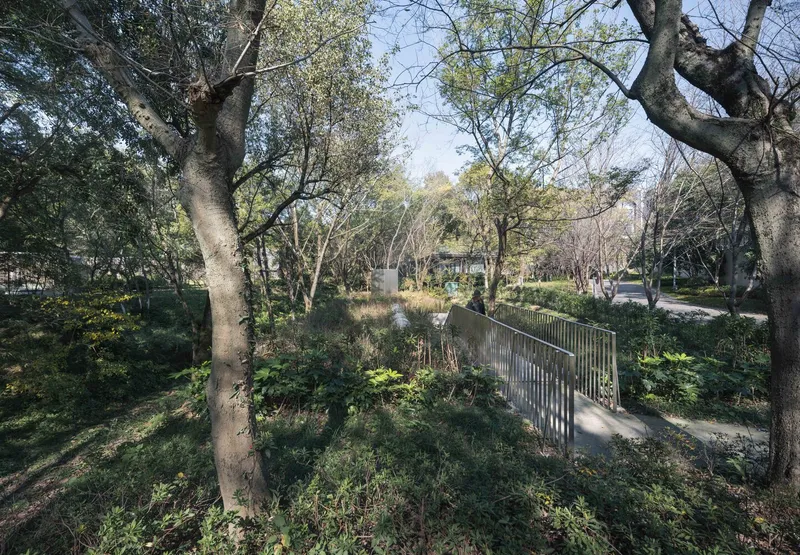
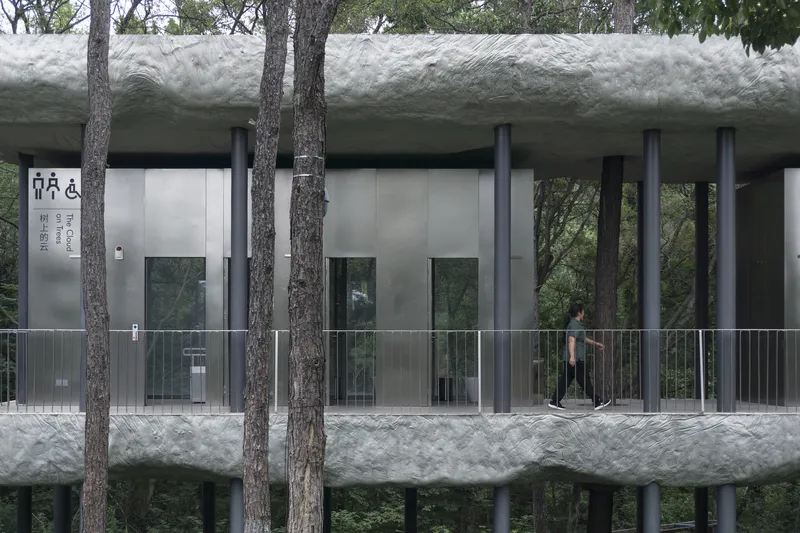
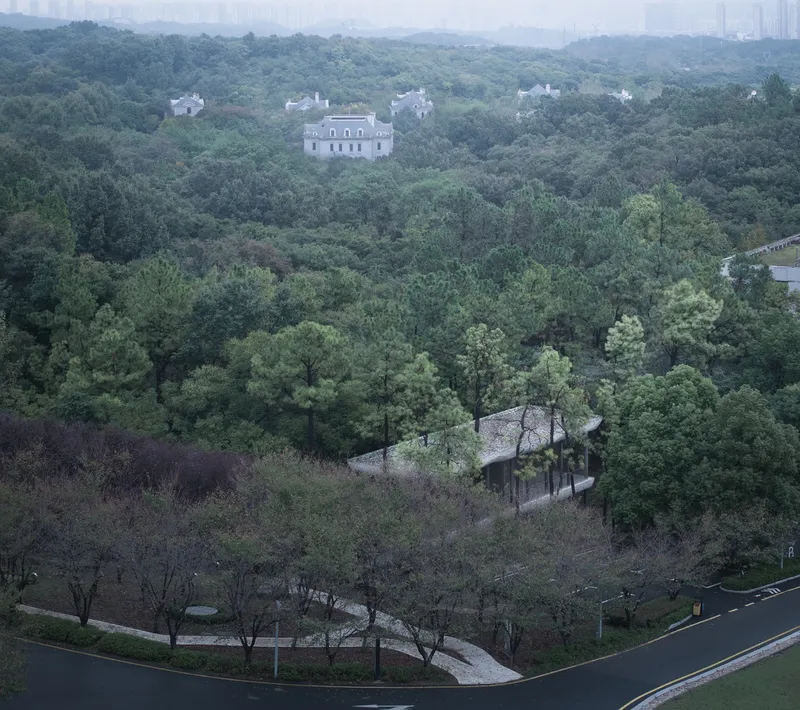
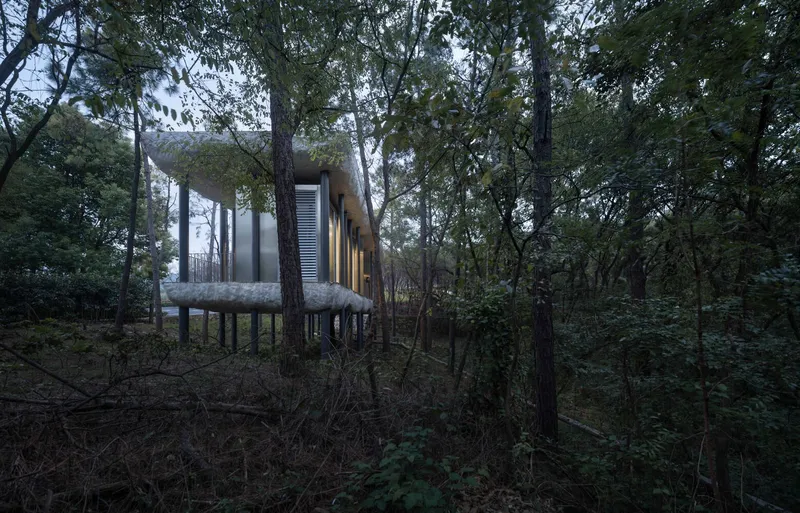
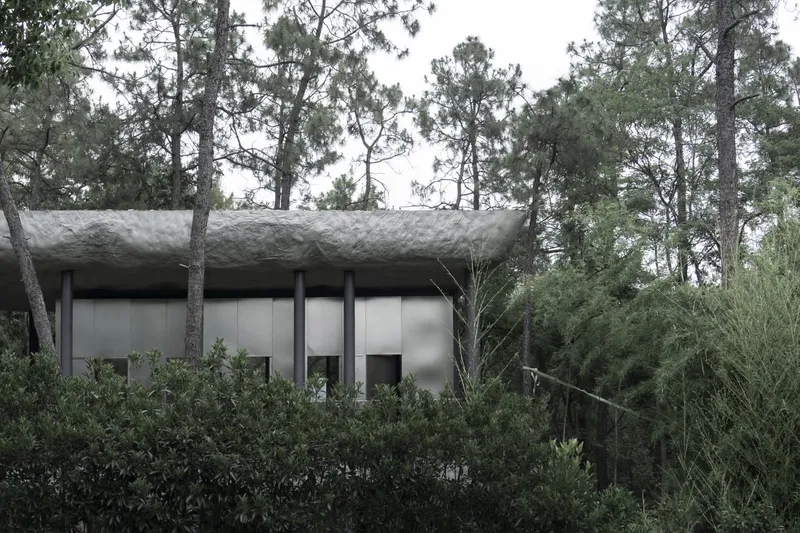
Set within a pine grove near the parking area, the building occupies a sloping terrain featuring a natural 2–3-meter elevation difference. The architects embraced the uneven ground by lifting the structure, allowing the forest floor to continue uninterrupted below.
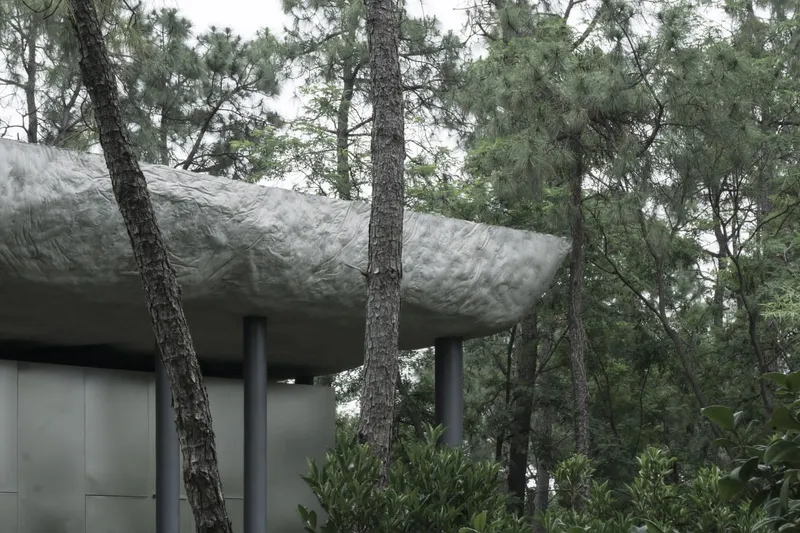
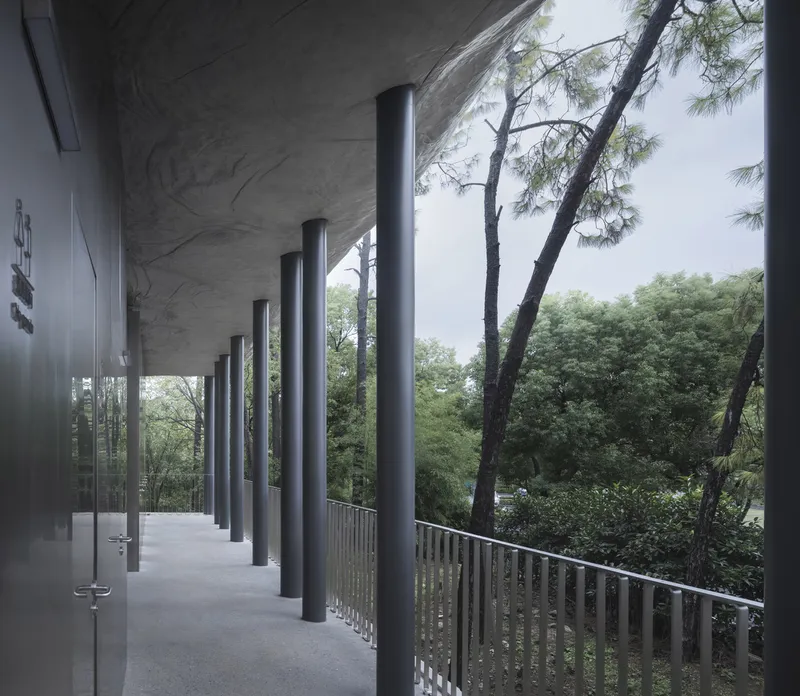
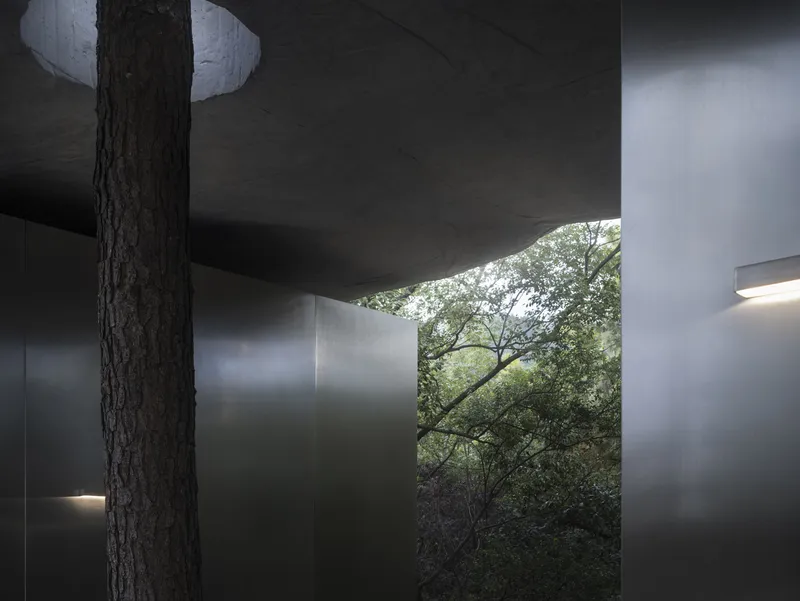
Irregular concrete panels — textured with natural grain and arranged in cloud-like formations — appear to float among the trees. These panels rest on slender columns carefully matched to the diameter of the surrounding pines, enabling the architecture to dissolve into the woodland scenery.
Visitors approach an elevated viewpoint rarely offered in conventional restrooms: a direct visual connection to the treetops, where natural textures, filtered light, and the scent of pine shape the spatial experience.
Interplay Between Architecture and Forest
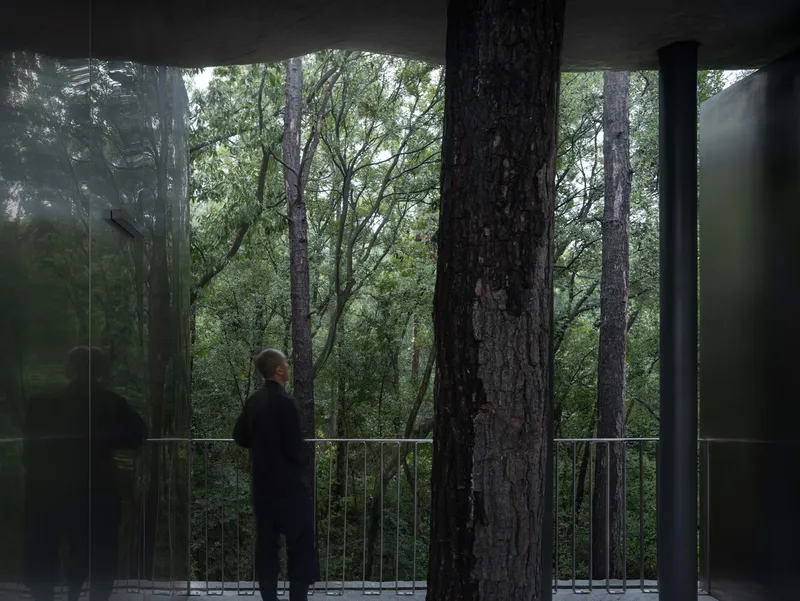
At the heart of the plan lies an open rest space oriented toward the deep forest. This intervention creates a void where nature and architecture face each other in quiet dialogue.
A preserved mature pine pierces the structure, remaining as a living narrative of the site’s memory. Rainwater drips gently from its branches through an opening, reminding visitors of their immediate connection to the natural ecosystem.
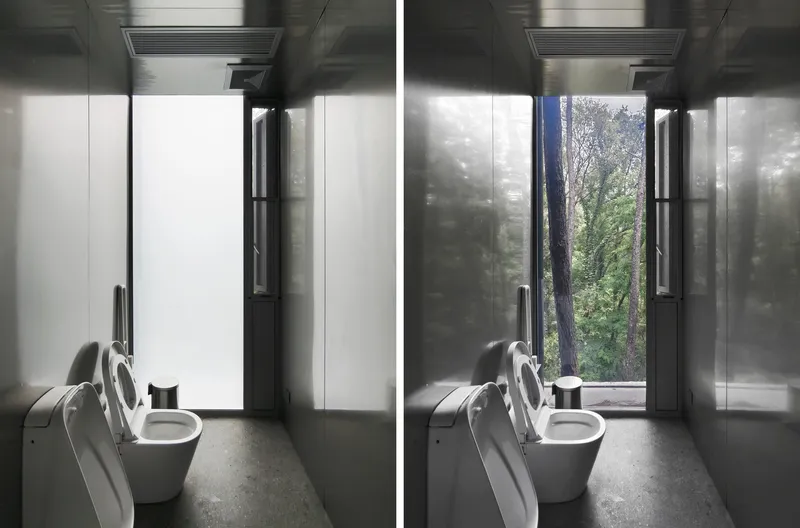
Inside, every restroom stall includes a floor-to-ceiling window framing the forest. Users feel immersed in the woodland, as though stepping into a tranquil clearing. Privacy is ensured through electrically controlled frosted glass, allowing each visitor to decide how much of the landscape to embrace.
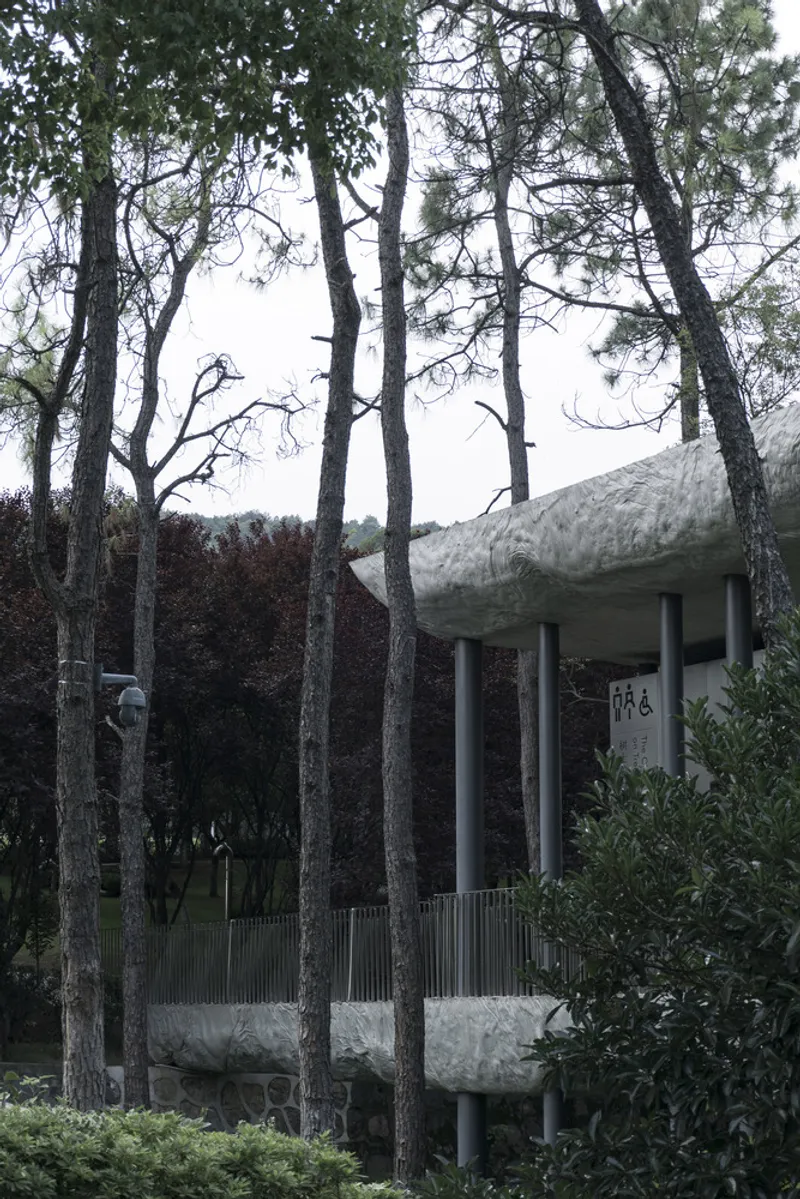
By lifting the building above the sloping terrain, the architects allow plants, insects, and water flows to continue undisturbed beneath — a low-intervention strategy that respects the ecological systems of the site.
Descending Into Landscape: “The Window in Valley”
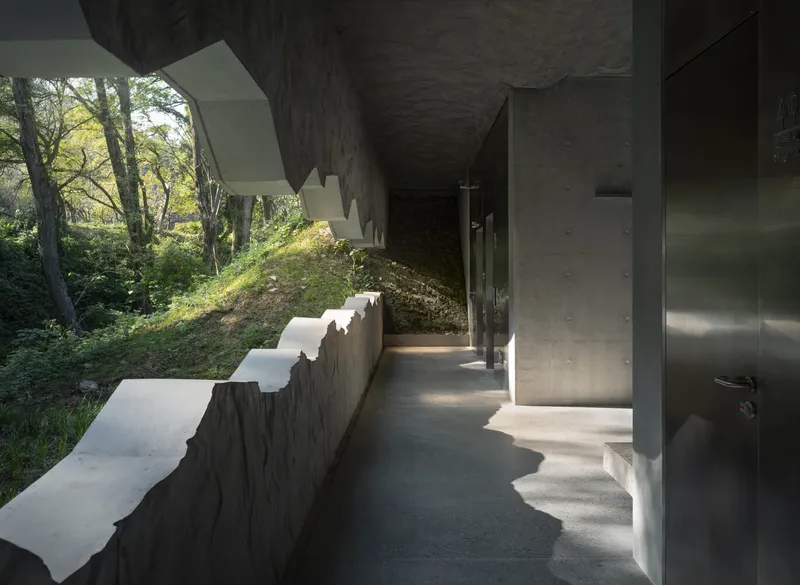
A second volume sits within a valley along the circular road of the park, approximately three meters below road level — the height of a single-story building. From the road, the structure nearly vanishes, revealing only a stair entrance and an accessible rooftop elevator.
The narrow stairway becomes a transitional moment: moving from the open forest into a compressed architectural threshold. This journey prepares visitors for the return to nature framed through a vertical architectural lens.
Once inside, irregular ribbon windows act as slender horizontal eyes, offering carefully composed glimpses of the valley. These controlled viewpoints infuse the space with drama and meditative focus, turning everyday use into a moment of pause and reflection.
Atmosphere, Materiality, and Sensory Drama
The internal surfaces present an unexpected cave-like texture. Randomly patterned concrete walls and ceilings contrast against smooth, minimalist floors, creating tension between natural roughness and human precision. The architects explore dualities — artificial vs. organic, smooth vs. textured — to heighten sensory awareness.
A circular skylight above the restroom introduces a gentle shaft of daylight, transforming the act of using a public facility into an almost ritualistic experience. The opening preserves privacy while delivering a glimpse of the sky, subtly connecting the subterranean room to the world above.
Embedded Architecture in Dialogue With Topography
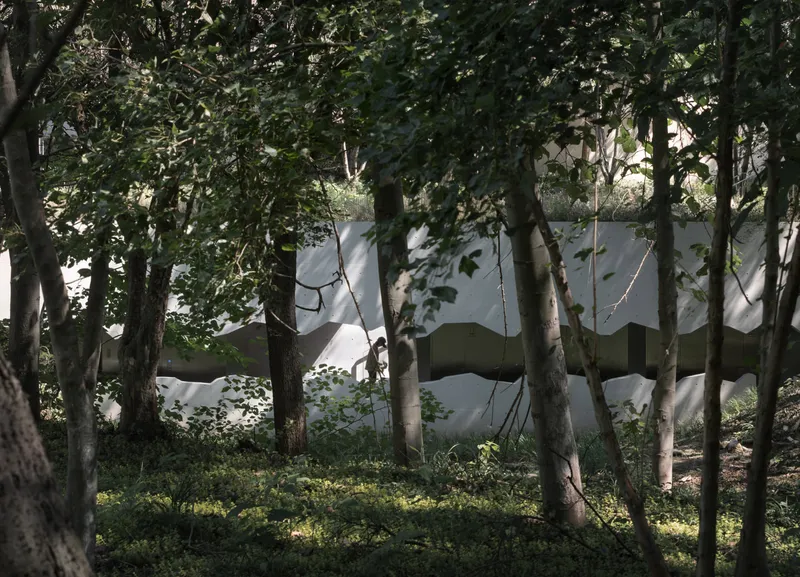
The building sits between two slopes that extend into the interior, visually interlocking the architecture with the earth. From the roadside, the restroom appears intentionally ambiguous — neither fully building nor fully landscape. Only upon moving to the opposite side does its form reveal itself clearly.
A single long window reads like a crack through the landform, framing the dense, lush valley beyond. This gesture reinforces the architectural theme: a hybrid between hiding and revealing, between sheltering and opening.
A New Approach to Public Architecture
WUWU Atelier and ADINJU’s restroom for Nanjing Sifang Art Lake District challenges typical notions of public facility design. Through strategies of site preservation, material expression, and immersive landscape framing, the project becomes:
- An elevated forest pavilion
- A sunken observational chamber
- A low-impact ecological intervention
- A meditative architectural experience for everyday users
All photographs are works of Bowen Hou, Youjian Pan


Popular Articles
Popular articles from the community


Conexión: Biophilic Design Reimagines High-Rise Living in Hong Kong
Conexión reimagines high-rise living in Hong Kong through biophilic design, green facades, shared spaces, daylight, water and nature within.

The Earth Pod: 3D Printed Homes for Resilient Refugee Communities
The Earth Pod reimagines refugee housing through 3D printed homes made from clay, combining resilience, self-sufficiency, and rapid shelter.

Lunar Spiral: Space Architecture Shaped by the Mathematics of the Universe
Lunar Spiral reimagines space architecture through Fibonacci geometry, lunar regolith, levitating habitats, and self-sustaining Moon living.

Hill & Cross Opera: Sculptural Opera House Architecture Shaped by Tallinn’s Landscape and Identity
Hill & Cross Opera reimagines opera house architecture in Tallinn through its sculptural hill, civic plaza, glass wave and a luminous cross.

Similar Reads
You might also enjoy these articles


Hodi-Mandai Geram
Project Function: Preservation and revitalization of the Intangible heritage and socio-spatial identity of the Hodi by Housing, Cultural Memory Center, Sacred Grove, landscape, local tourism economy


Olio Towers: A Mid-Rise for Performers That Fuses Housing, Rehearsal, and Stage
Located blocks from Houston's Theater District, this modular tower stacks living units around a central performance atrium.

Oasis: Modular Green Housing Carved into Dhaka's Urban Fabric
A shortlisted Plugin Housing entry reclaims unauthorized settlements in Dhaka with stepped concrete volumes, green roofs, and ventilation-driven design.

Black Hole: A Floating Megastructure for the Post-Physical Era
Emiliano Mazzarotto envisions a spherical, self-scaling arena where e-sports, digital hotels, and holographic stadiums replace traditional public space.
Explore Architecture Competitions
Discover active competitions in this discipline



Challenge to reimagine the Iron Throne


Photograph architecture without architects


Illustrate the lost glory of Angkor Wat - Render Challenge


Design challenge to reuse E-waste
Comments (0)
Please login or sign up to add comments
No comments yet. Be the first to comment!