
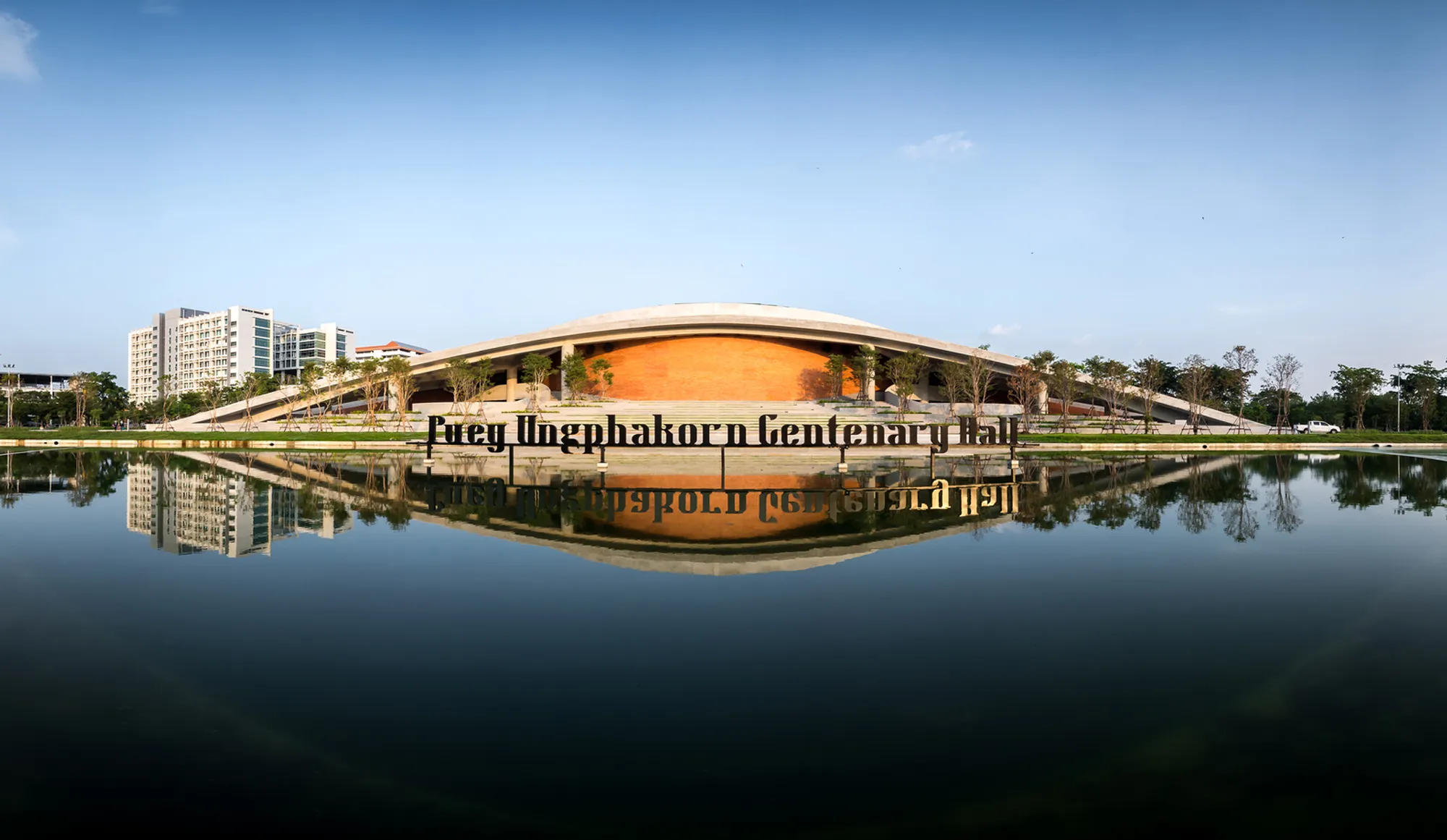
Puey Ungpahakorn Centenary Hall by Arsomsilp: A Landmark of Sustainable Architecture and Learning in Thailand
Sustainable landmark blending green architecture, education, and community at Thammasat University, honoring Dr. Puey Ungphakorn’s legacy and vision.


Located in the heart of Thammasat University, just north of Bangkok, the Puey Ungpahakorn Centenary Hall by Arsomsilp Community and Environmental Architect is a shining example of sustainable architecture that merges deeply rooted cultural values, community engagement, and cutting-edge green building design. Completed in 2019 to honor the 100th birthday of Prof. Dr. Puey Ungphakorn—a revered economist and chancellor known for his unwavering ethics—the hall stands as a symbol of environmental consciousness and educational innovation.
Legacy Meets Architecture
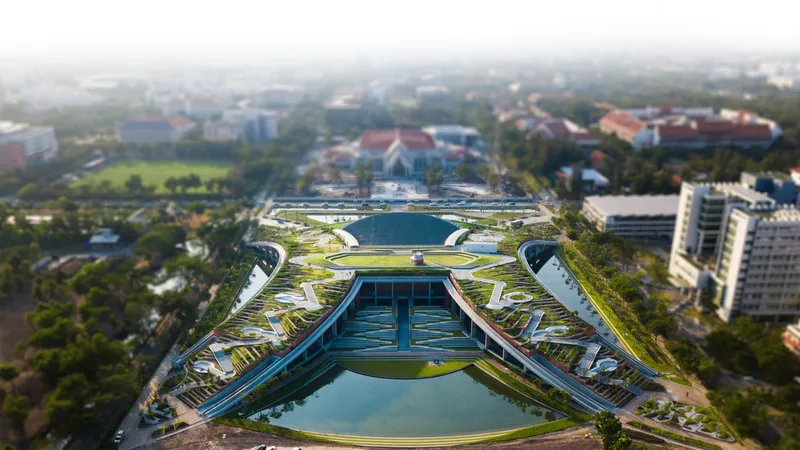
Dr. Puey Ungphakorn was an advocate for freedom of thought, social justice, and sustainable development. UNESCO recognized him as one of the world’s most influential figures for his contributions to society. In alignment with his legacy, the hall was envisioned as a civic landmark and a community green lung, placed strategically along the university's main axis to invite both students and the general public.
The name "Puey" means earth mound, and this concept was used metaphorically to shape the design—nurturing life, fostering growth, and strengthening community. This inspiration is evident in every design detail, blending ecological principles with architectural expression.
Green Roof as Living Classroom
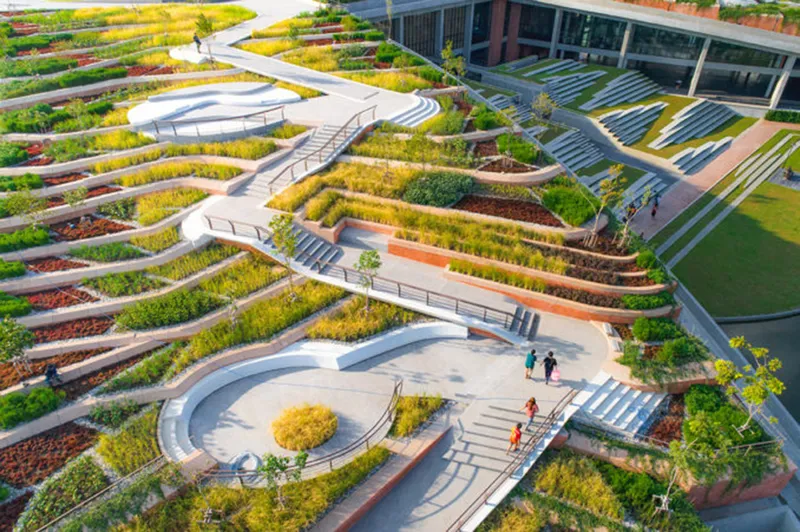
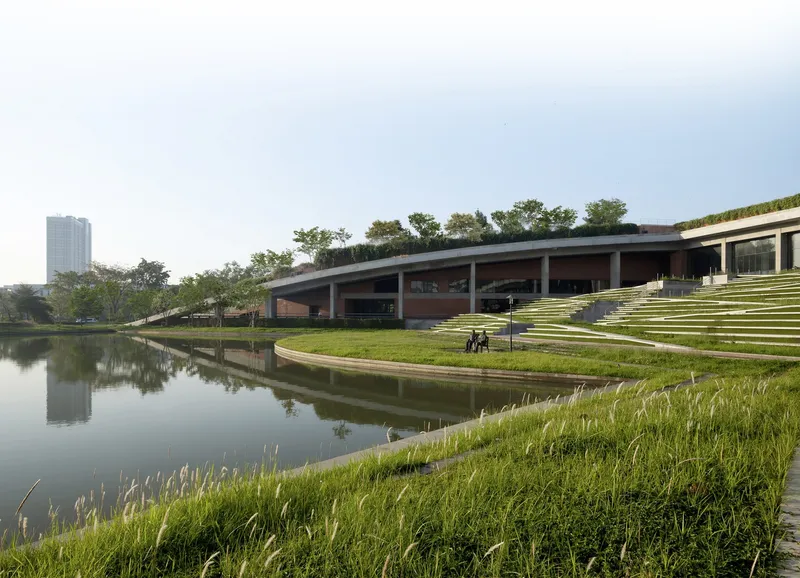
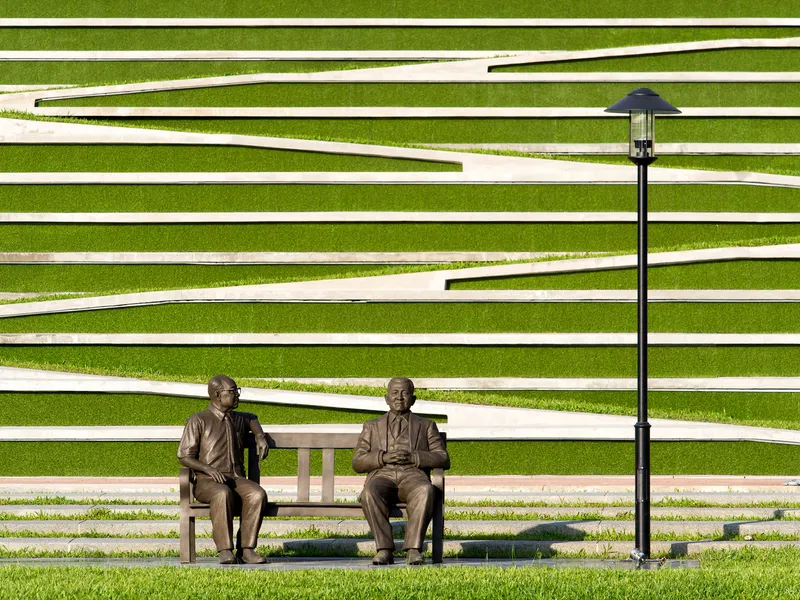
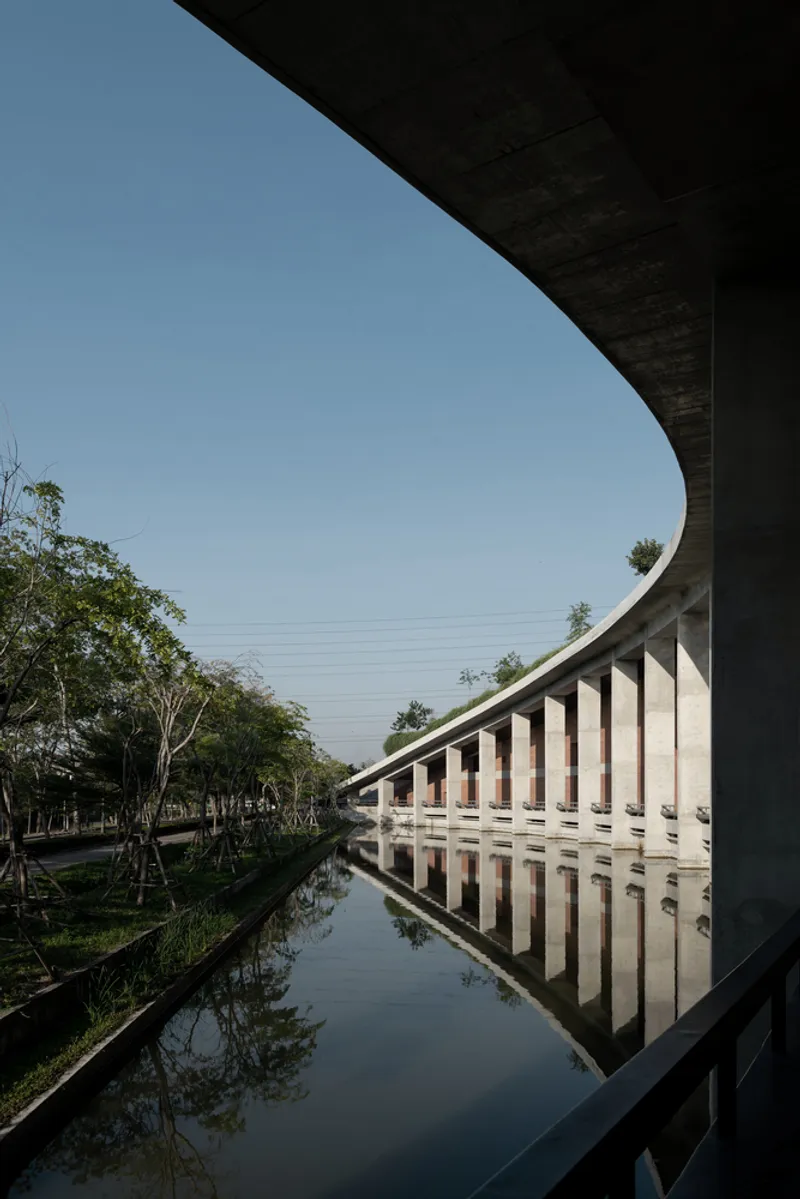
One of the defining features of the project is its extensive vegetated green roof, which not only helps in thermal insulation and reducing energy consumption but also serves an educational purpose. The edible plants cultivated on the roof promote sustainable agriculture and support Thammasat University’s goal of becoming a self-sufficient, food-producing campus.
This functional roof connects the disciplines of landscape design and architecture, integrating seamlessly into surrounding gardens, water retention pools, and outdoor learning spaces. Designed by Landprocess Co., Ltd., these landscaped areas double as public parks and natural drainage systems, reflecting a holistic approach to climate-responsive design.
Eco-Conscious Structural Innovation
Built to withstand Thailand’s tropical climate, the hall’s double-layered roof structure prevents excess heat transfer and protects against humidity from the green roof. A 1.5-meter gap between slabs allows for efficient maintenance and ventilation, significantly improving the building's energy efficiency.
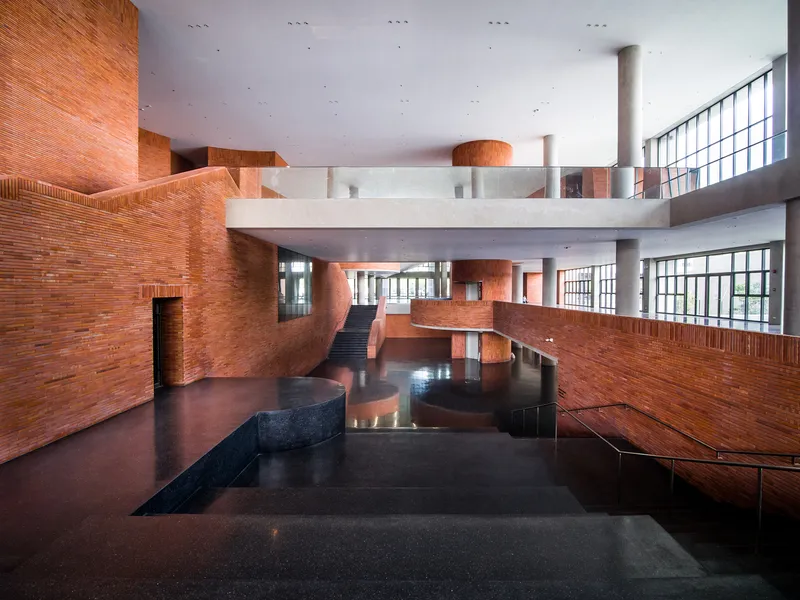
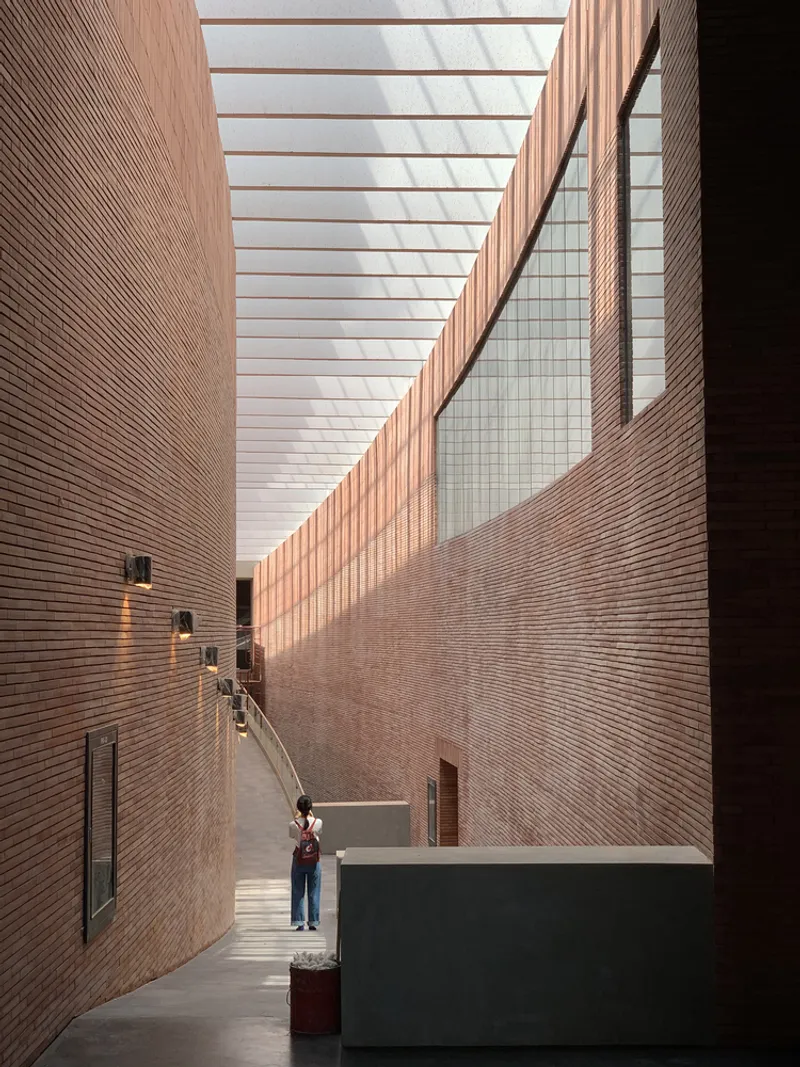
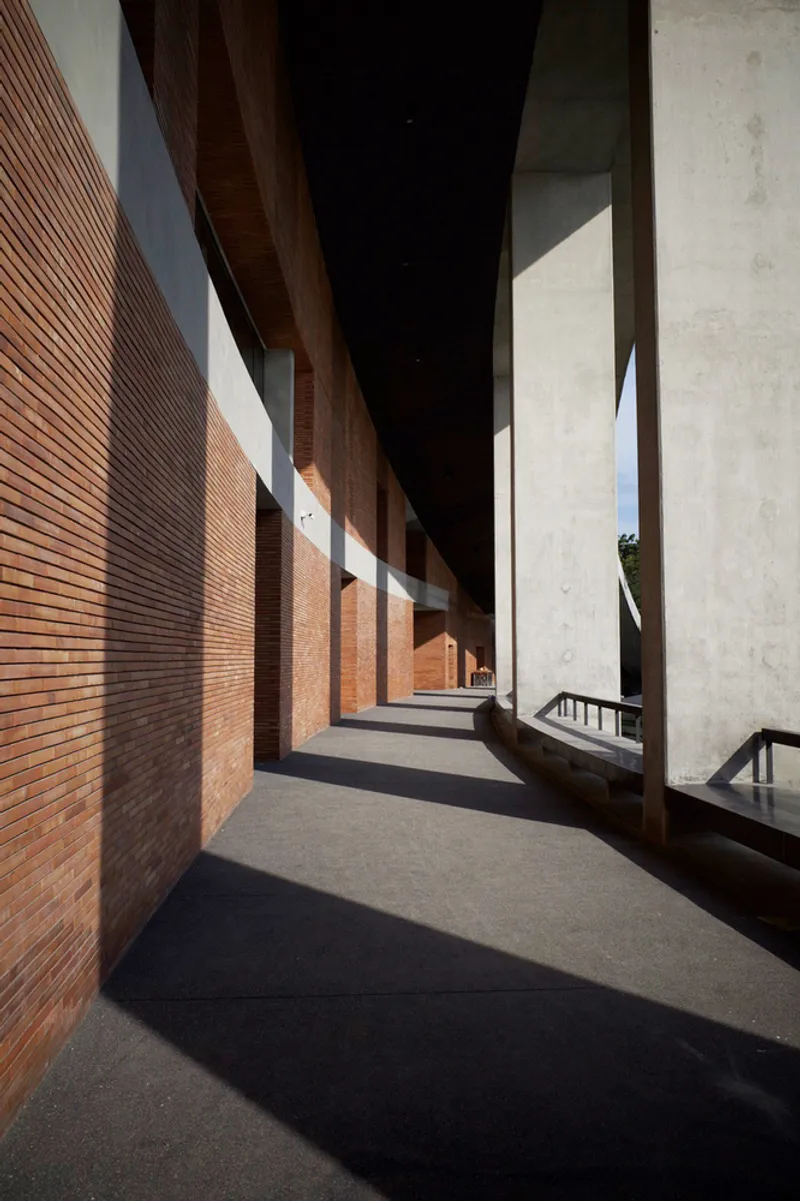
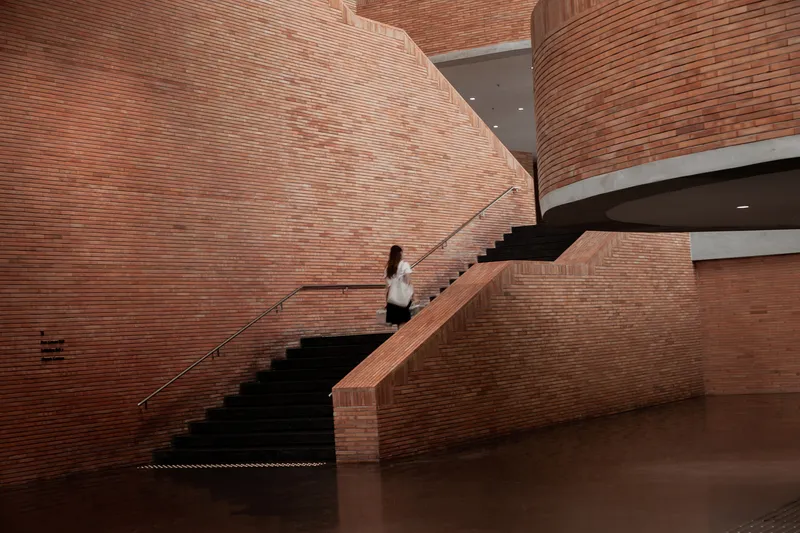
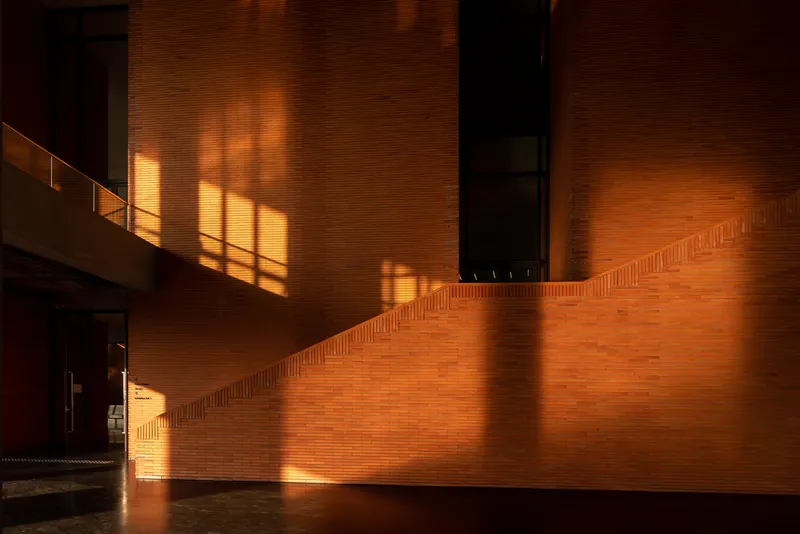
Brickwork—locally sourced and environmentally friendly—adds a tactile warmth to the interiors. The bricks interact with light to create beautiful patterns of shadow, enhancing the sensory experience as visitors move through hallways, lecture spaces, and public zones.
A Flexible Space for Learning and Community
With a total floor area of 59,000 m², the building was designed to accommodate diverse learning environments. From small private study areas and reflection rooms to large open halls and social lounges, the architecture encourages multi-disciplinary collaboration, dialogue, and innovation.
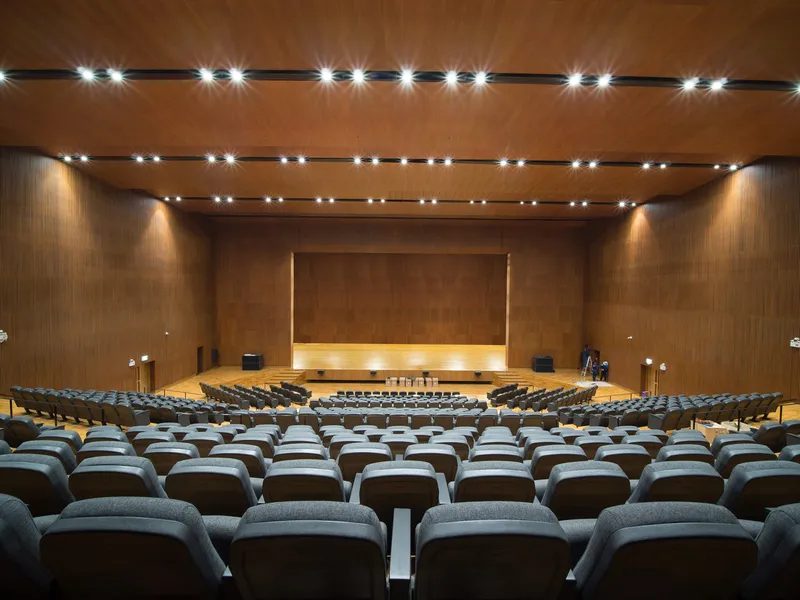
Central to the design is a concert hall that spans three floors, creating a vertical connection through public spaces. The hall features a post-tension structural system, allowing flexibility in how the space is used—ranging from lectures and performances to exhibitions and events.

Architectural Symbolism and Accessibility
The design promotes democratic access, with multiple entrances welcoming students and visitors from all directions. The spatial planning supports both quiet introspection and vibrant social interaction, reflecting the inclusive philosophy that Dr. Puey championed throughout his life.
By intertwining architecture, landscape, education, and sustainability, the Puey Ungpahakorn Centenary Hall is more than just a building—it is a living, breathing ecosystem that educates, inspires, and serves its community.
All the photographs are works of Landprocess Co. Ltd., Pat Phuchamni, Srirath Somsawat




Popular Articles
Popular articles from the community


Hill & Cross Opera: Sculptural Opera House Architecture Shaped by Tallinn’s Landscape and Identity
Hill & Cross Opera reimagines opera house architecture in Tallinn through its sculptural hill, civic plaza, glass wave and a luminous cross.

Play: Fragments of Their World
Familiar architecture becomes modular playground design, creating safe spaces where displaced children can learn, connect, imagine and play.

Co-life: Sustainable Architecture for Age-Friendly Community Living
Co-life reimagines sustainable architecture for seniors through courtyards, rammed earth, shared gardens, and spaces designed for belonging.

The Earth Pod: 3D Printed Homes for Resilient Refugee Communities
The Earth Pod reimagines refugee housing through 3D printed homes made from clay, combining resilience, self-sufficiency, and rapid shelter.


Similar Reads
You might also enjoy these articles


Hodi-Mandai Geram
Project Function: Preservation and revitalization of the Intangible heritage and socio-spatial identity of the Hodi by Housing, Cultural Memory Center, Sacred Grove, landscape, local tourism economy


Olio Towers: A Mid-Rise for Performers That Fuses Housing, Rehearsal, and Stage
Located blocks from Houston's Theater District, this modular tower stacks living units around a central performance atrium.

Oasis: Modular Green Housing Carved into Dhaka's Urban Fabric
A shortlisted Plugin Housing entry reclaims unauthorized settlements in Dhaka with stepped concrete volumes, green roofs, and ventilation-driven design.

Black Hole: A Floating Megastructure for the Post-Physical Era
Emiliano Mazzarotto envisions a spherical, self-scaling arena where e-sports, digital hotels, and holographic stadiums replace traditional public space.

Explore Sustainable Design Competitions
Discover active competitions in this discipline



Challenge to reimagine the Iron Throne


Photograph architecture without architects


Illustrate the lost glory of Angkor Wat - Render Challenge


Design challenge to reuse E-waste
Comments (0)
Please login or sign up to add comments
No comments yet. Be the first to comment!