

Puigpunyent Eco-Passive House: Sustainable Living in the Heart of Mallorca
Eco-passive house in Mallorca combining natural materials, solar orientation, and breathable insulation for sustainable, low-energy living in harmony.


By Miquel Lacomba Architects | Location: Puigpunyent, Mallorca, Spain | Area: 215 m² | Year: 2021
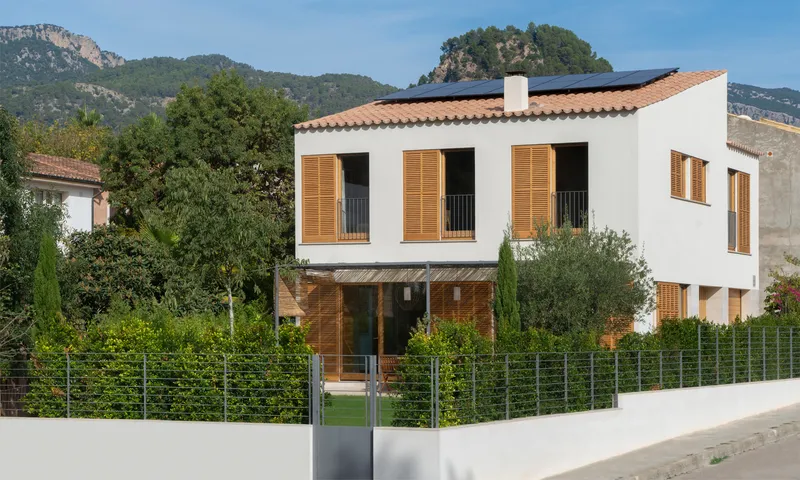
Nestled in the picturesque valley of Puigpunyent, within the UNESCO-listed Sierra de Tramuntana mountain range, the Puigpunyent Eco-Passive House designed by Miquel Lacomba Architects is a compelling example of energy-efficient architecture seamlessly integrated with its natural surroundings. This environmentally conscious residence exemplifies the values of bioclimatic design, local materiality, and passive house standards, making it a benchmark for sustainable architecture in Spain.
Optimized Orientation and Contextual Design
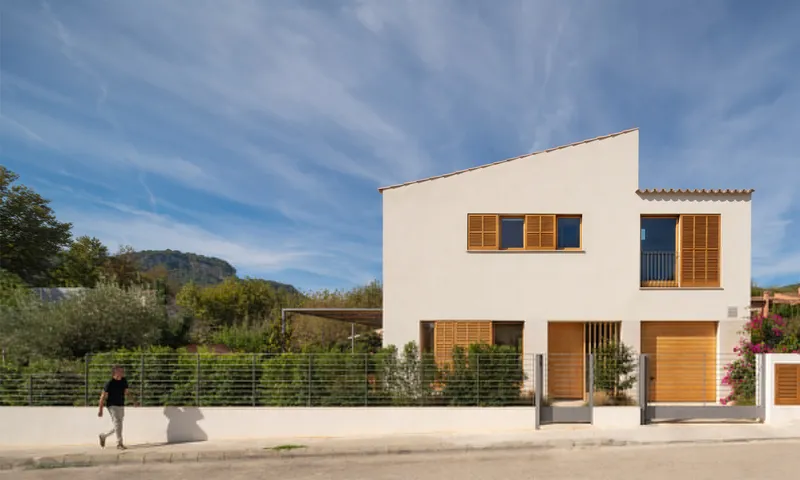
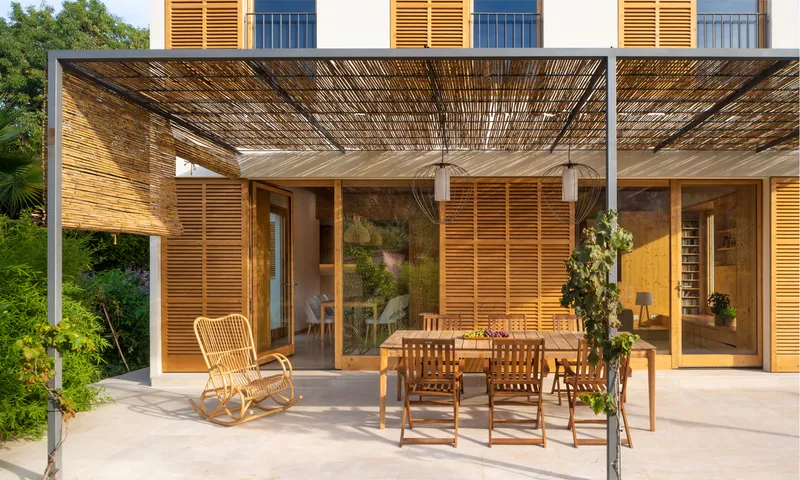
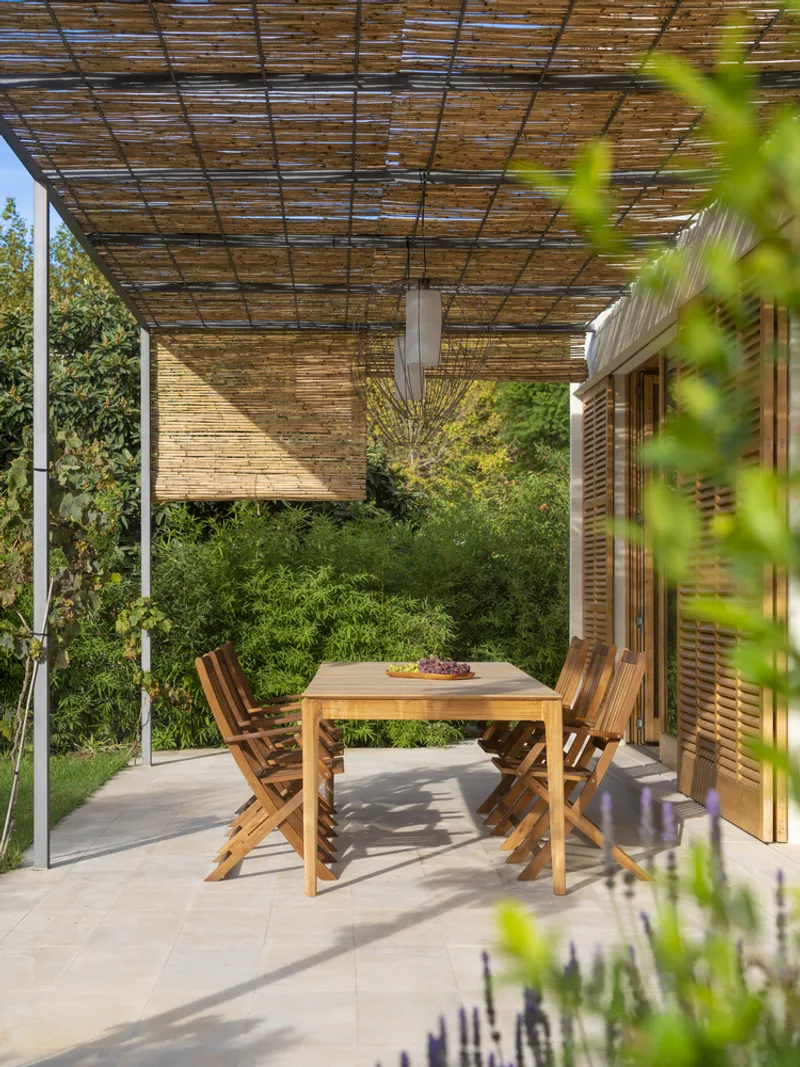
Set on a sloped site with expansive southern views toward the mountains, the house leverages optimal solar orientation to maximize passive heat gain during winter while reducing exposure in summer. The home's south-facing facade features large openings, movable vertical slats, and deep pergolas, offering both solar control and a direct connection to the surrounding landscape. The result is a comfortable indoor climate that minimizes reliance on mechanical systems.
A Warm, Natural Interior Atmosphere
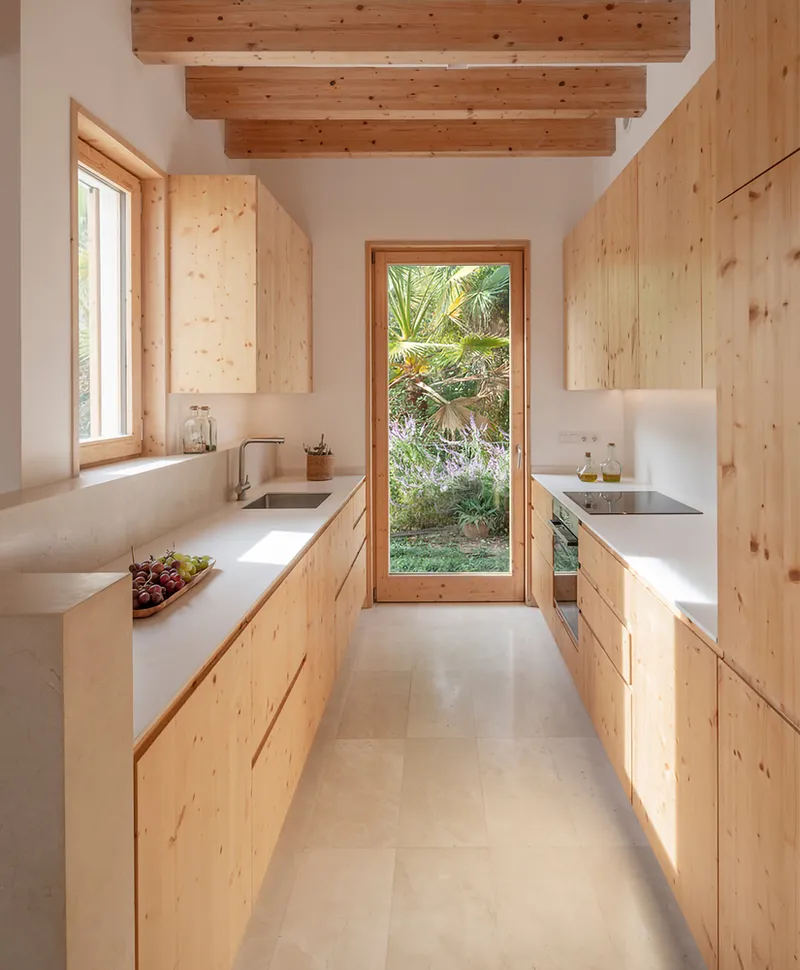
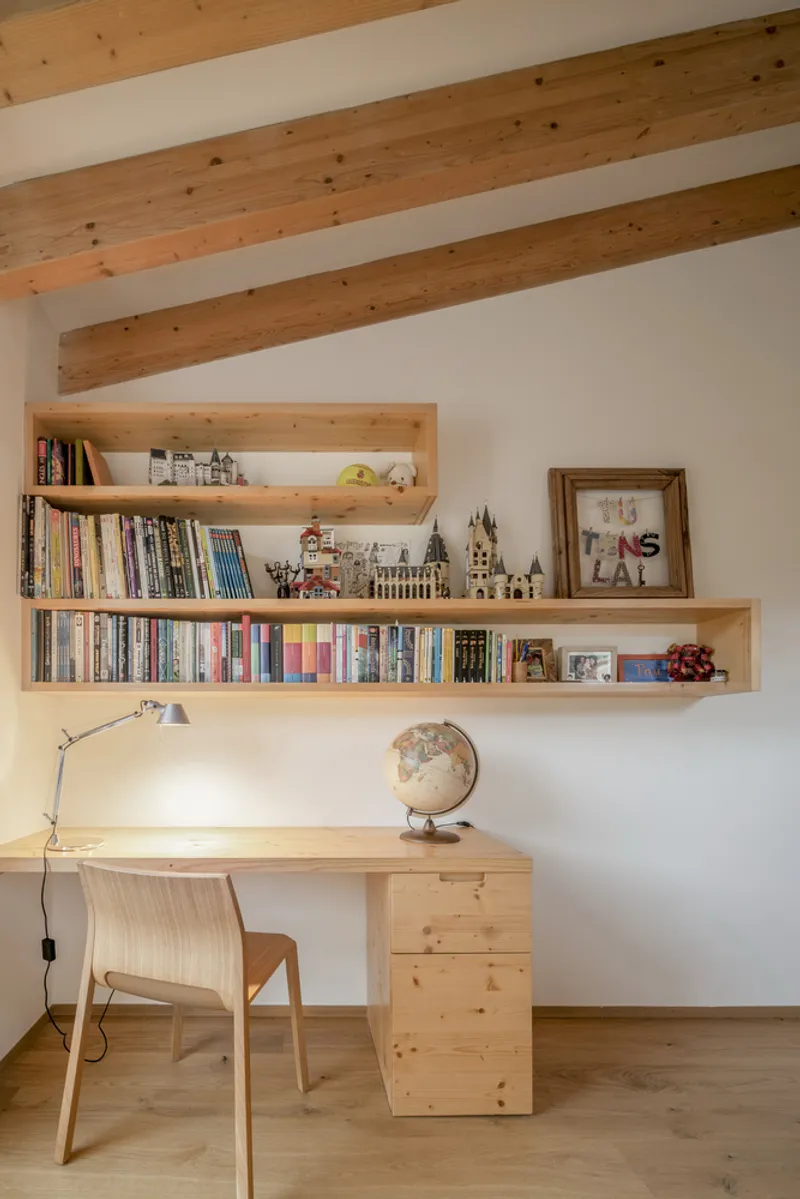
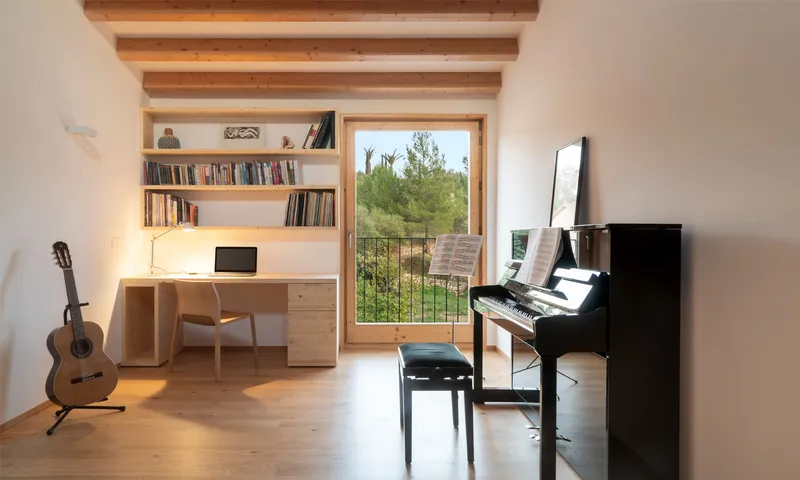
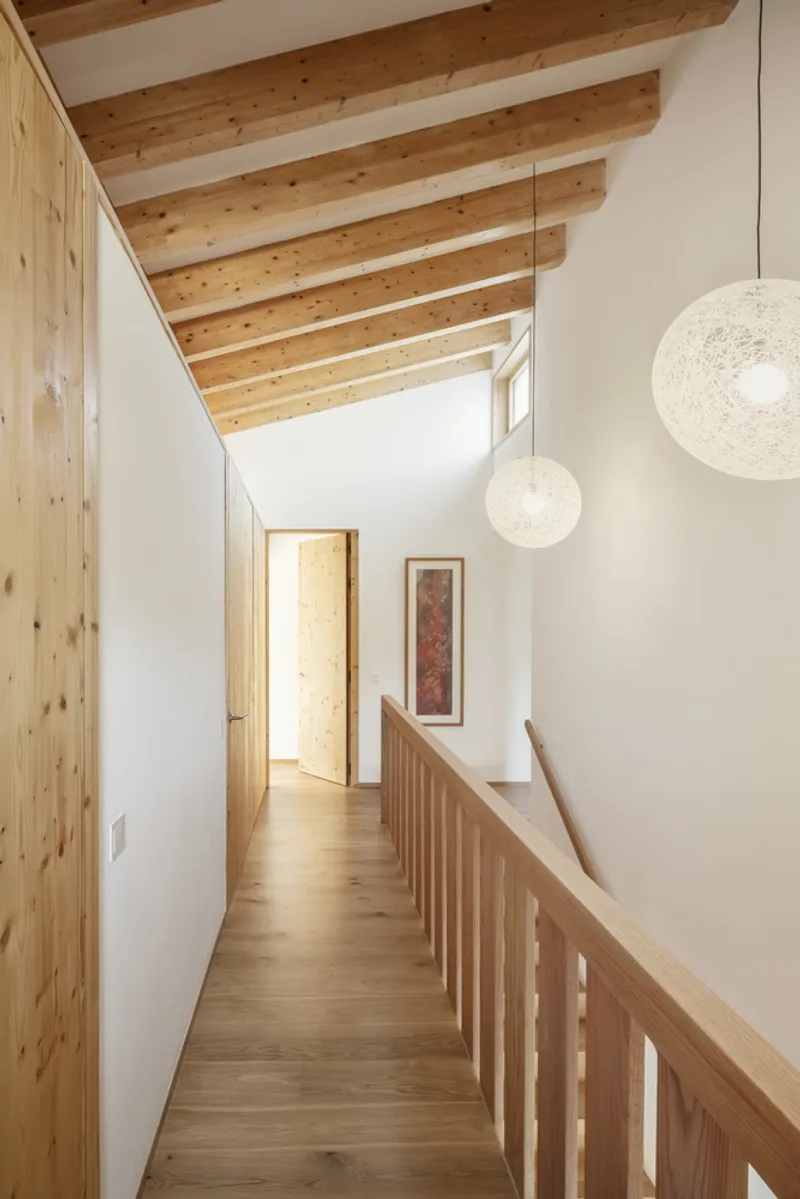
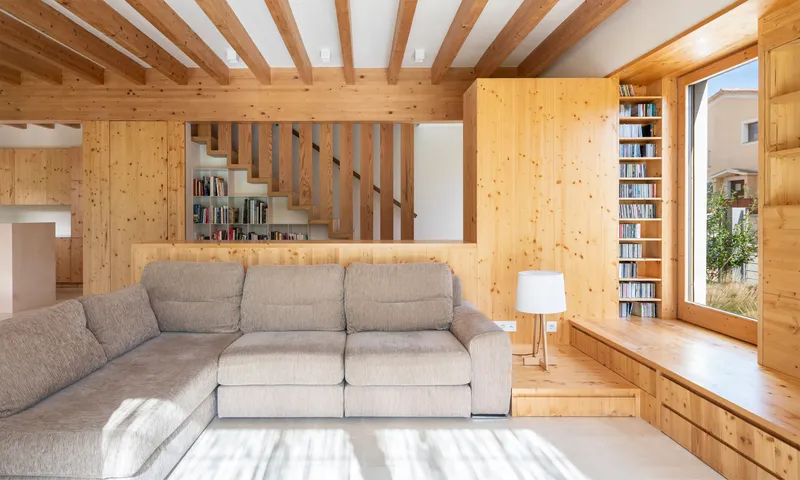
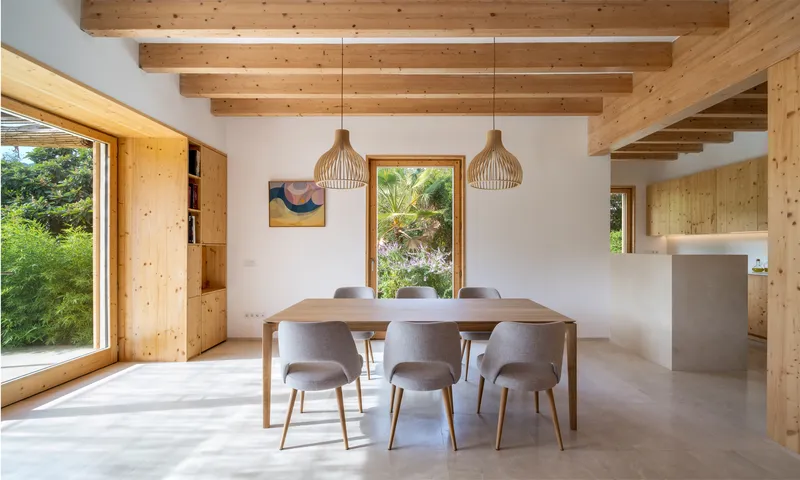
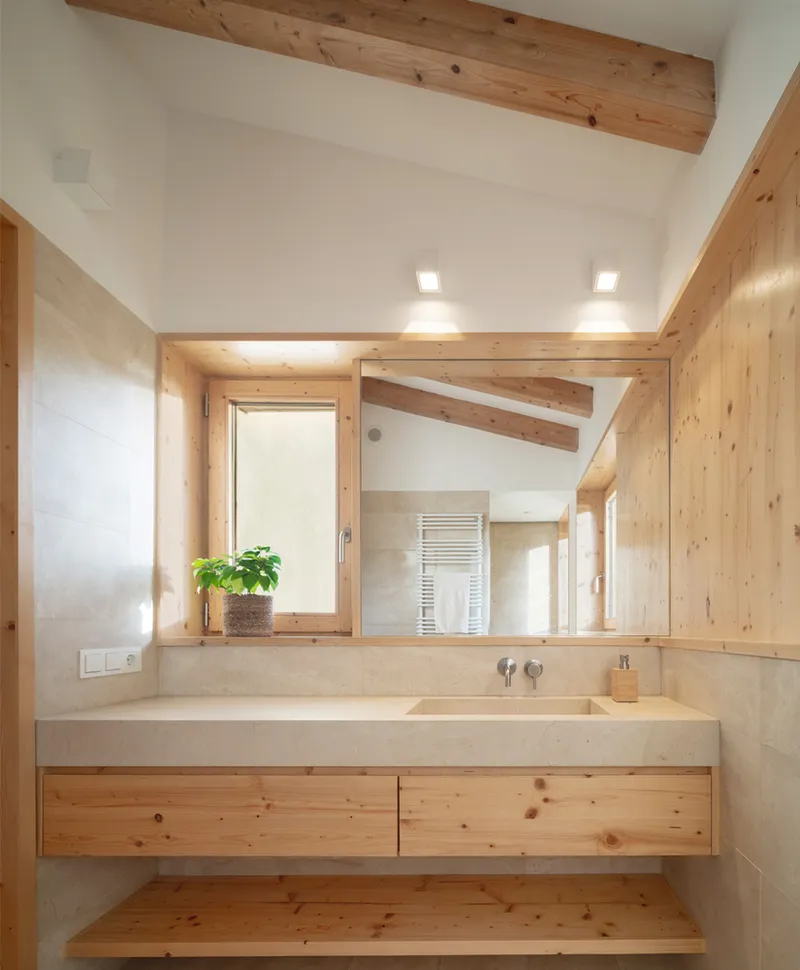
The interior design emphasizes natural materials and warm tones to create a serene, inviting atmosphere. Exposed wooden beams, lime-mortar coated white walls, and natural stone finishes define the interior spaces. The open-plan living-dining area, anchored by a high-efficiency airtight fireplace, opens onto the terrace, creating a fluid relationship between indoor and outdoor living. A sculptural wooden staircase doubles as a bookshelf and acts as a spatial partition, demonstrating the thoughtful integration of furniture and architecture.
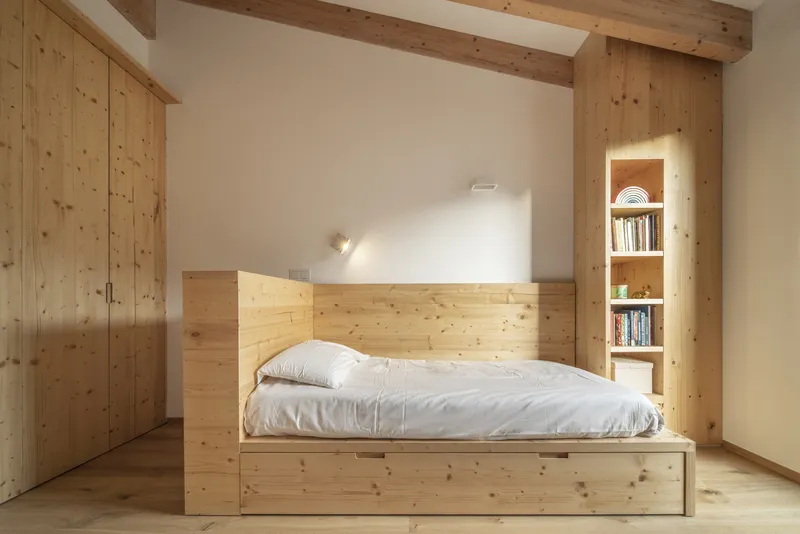
A visually connected yet separate west-facing kitchen features access to the exterior, promoting indoor-outdoor flow. Upstairs, three south-facing bedrooms and a multi-purpose studio reflect the family’s lifestyle and creative pursuits, offering both privacy and inspiration through panoramic views.
Passive House Principles in Practice
This home strictly adheres to passive house principles, including:
- High thermal insulation thickness
- Thermal bridge minimization
- Excellent airtightness
- Mechanical ventilation with heat recovery
- High-performance, airtight windows
- Controlled solar shading
- Cross ventilation for summer cooling
The building envelope acts as a breathable yet protective skin. The house maintains indoor air quality and thermal comfort year-round with minimal energy consumption. Additionally, solar panels installed on-site generate renewable energy, fulfilling the home's remaining power demands.
Sustainable Construction and Ecological Materials
From construction to finishes, the Puigpunyent Eco-Passive House champions eco-conscious building materials and local craftsmanship. The structure uses:
- FSC-certified wood
- Ceramic brick and natural cork insulation
- Hydraulic lime mortar
- Lime-based acrylic facades
- Silicate paints and natural oils for interior finishes
These materials are selected for their low VOC emissions, breathability, and hygroscopic properties, naturally regulating humidity and improving indoor air quality. The design philosophy incorporates the “third skin” concept—enveloping the home in healthy, breathable, and toxin-free layers that enhance longevity and wellness.
Commitment to Local Economy and Low Carbon Footprint
The project also incorporates the “Kilometer Zero” principle, emphasizing local sourcing and regional collaboration. Construction teams, artisans, and materials were primarily sourced from the island or mainland Spain, significantly reducing the project's carbon footprint and promoting the local economy. This conscious approach to building contributes to low operational costs, minimal ecological impact, and long-term environmental resilience.
The Puigpunyent Eco-Passive House is more than just a residence—it’s a manifesto for sustainable living in the Mediterranean climate. Miquel Lacomba Architects have created a home that embodies environmental responsibility, architectural beauty, and user comfort, while staying deeply rooted in the local landscape and culture. It sets a high standard for climate-adaptive architecture, demonstrating how energy efficiency, natural materials, and site-specific design can work together to create a future-ready


Popular Articles
Popular articles from the community


The Amber Palace Opera: A Geological Fiction Surfaces on Tallinn's Baltic Waterfront
Pierre Brillard reimagines a Baltic legend as a public landscape, opera house, and waterfront promenade rooted in Tallinn's coastal identity.

Tsunami Convergenics: Turning Catastrophic Ocean Forces into Underwater Housing Infrastructure
A speculative underwater settlement off the coast of Onagawa, Japan, treats tsunamis and typhoons as energy sources rather than threats.

Manzana Morphosis: Stretching Barcelona's Grid into a Living Landscape for 2050
A radical reworking of the Eixample manzana turns density into a tool for generous public space, vertical ecology, and environmental performance.

Opera on the Sea: Driftwood Logic Shapes a Timber Opera House on Estonia's Coast
Trevor Orgill's opera house translates the entangled drift of floating timber into a civic building where wood, water, and music converge.

Similar Reads
You might also enjoy these articles


Hodi-Mandai Geram
Project Function: Preservation and revitalization of the Intangible heritage and socio-spatial identity of the Hodi by Housing, Cultural Memory Center, Sacred Grove, landscape, local tourism economy


Olio Towers: A Mid-Rise for Performers That Fuses Housing, Rehearsal, and Stage
Located blocks from Houston's Theater District, this modular tower stacks living units around a central performance atrium.

Oasis: Modular Green Housing Carved into Dhaka's Urban Fabric
A shortlisted Plugin Housing entry reclaims unauthorized settlements in Dhaka with stepped concrete volumes, green roofs, and ventilation-driven design.

Black Hole: A Floating Megastructure for the Post-Physical Era
Emiliano Mazzarotto envisions a spherical, self-scaling arena where e-sports, digital hotels, and holographic stadiums replace traditional public space.

Explore Passive Architecture Competitions
Discover active competitions in this discipline

Challenge to reimagine the Iron Throne

Photograph architecture without architects

Illustrate the lost glory of Angkor Wat - Render Challenge

Design challenge to reuse E-waste
Comments (0)
Please login or sign up to add comments
No comments yet. Be the first to comment!