
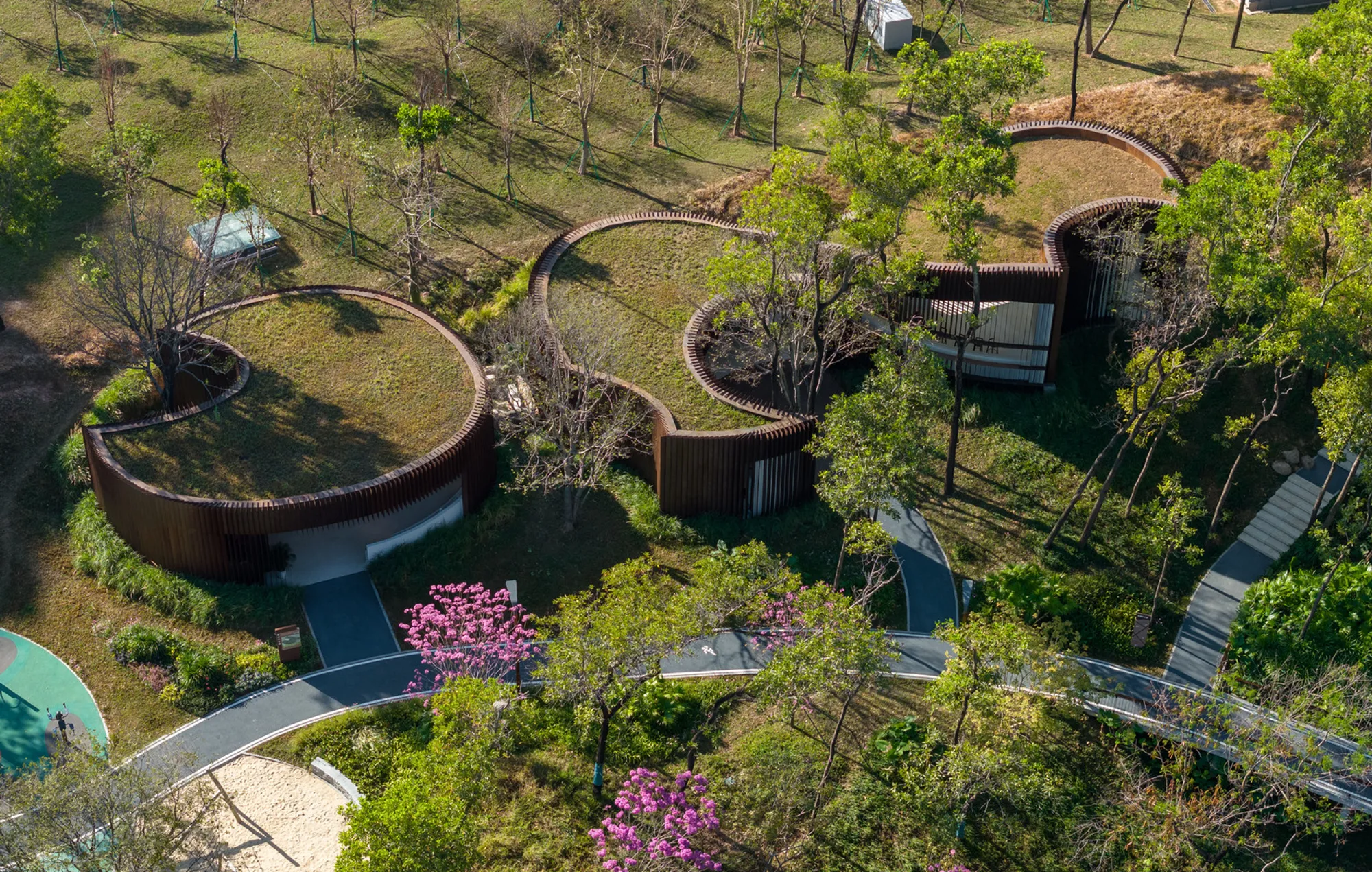
Qiaochengbei Park Visitor Center by Atelier XI
Forest-integrated visitor center in Shenzhen uses weathering steel, curving forms, passive ventilation, and excavation to preserve trees and landscape context.


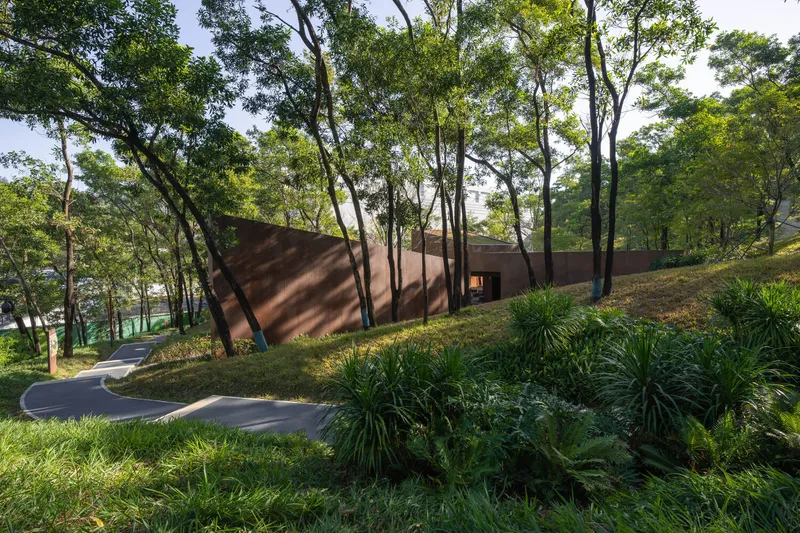
Located on a forested hillside in the dense urban core of Shenzhen, the Qiaochengbei Park Visitor Center by Atelier XIdemonstrates how small-scale public architecture can coexist sensitively with an untouched natural landscape. Surrounded by high-rise developments yet embedded within pristine woodland, the project negotiates a delicate balance between urban service infrastructure and ecological preservation.
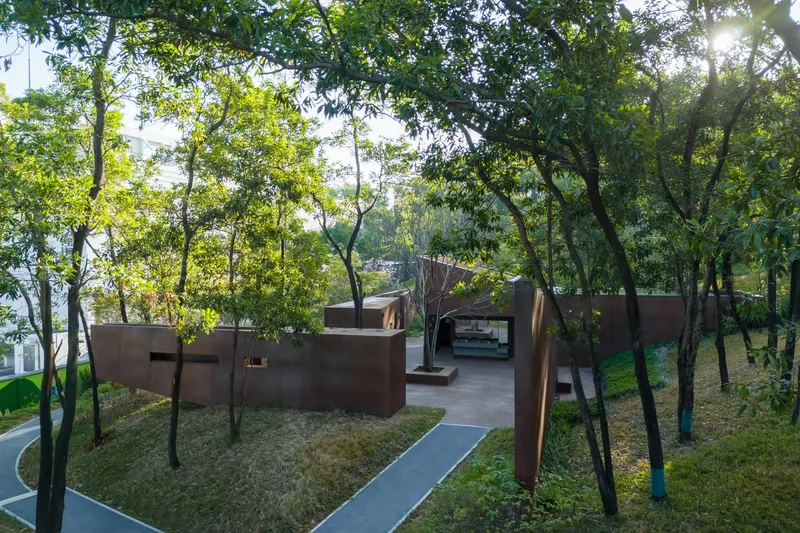
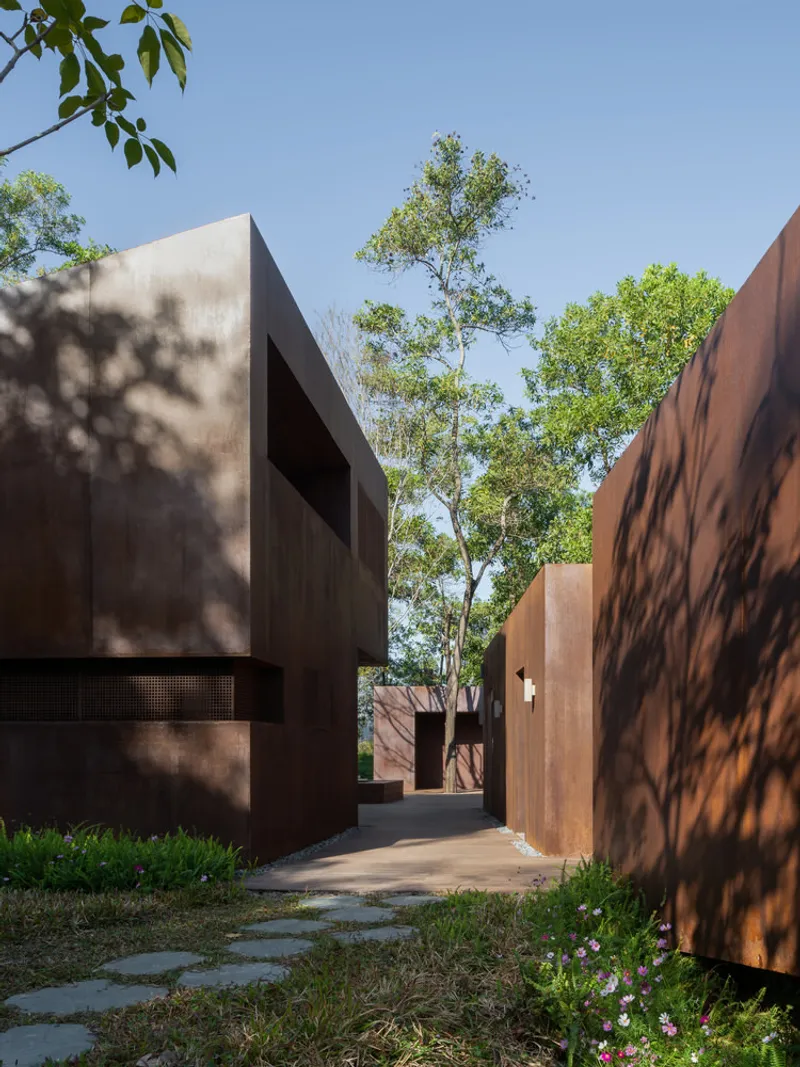
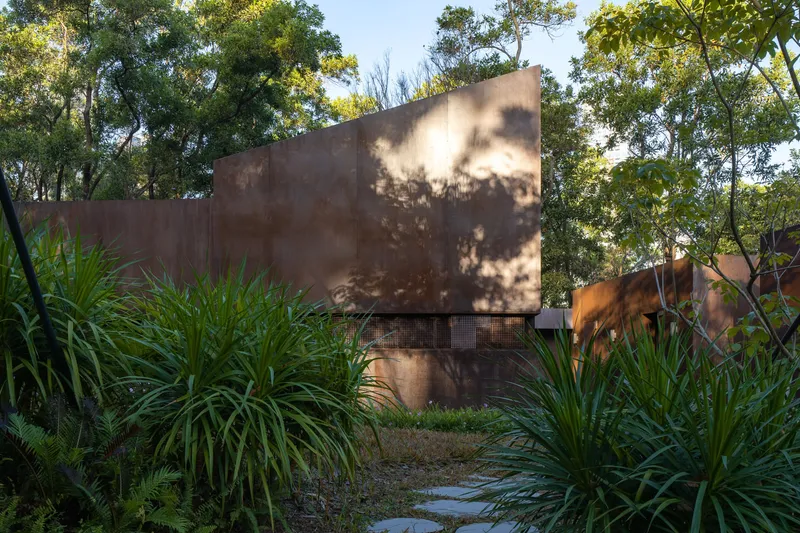
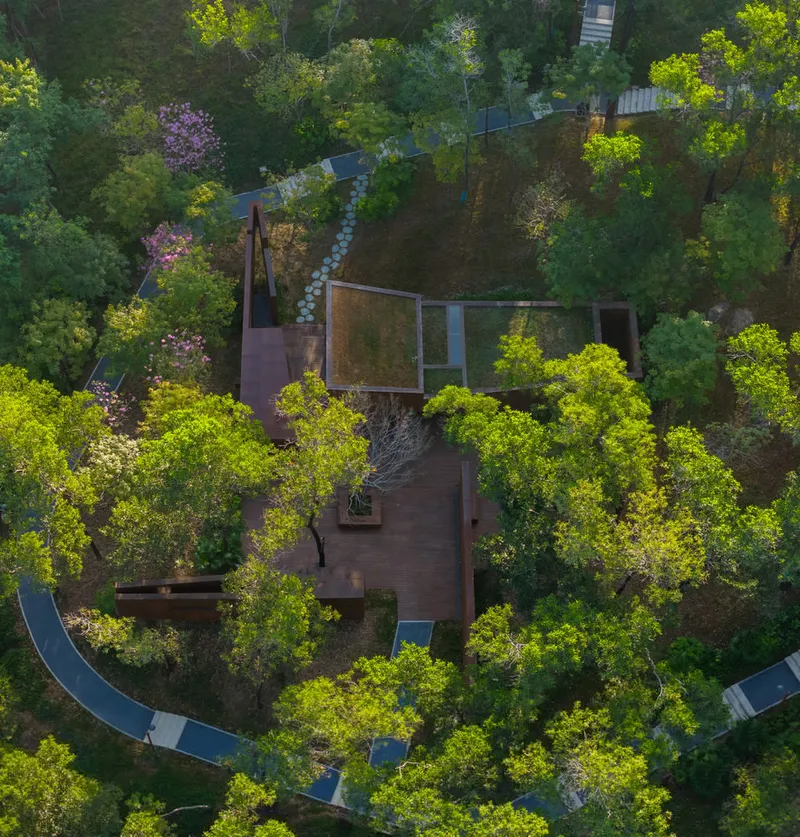
Rather than clearing land or reshaping the terrain, the architects approached the site as a living system to be protected. Every existing tree was retained, becoming a primary generator of architectural form. The visitor center is divided into two independent yet complementary service buildings, carefully woven into the forest with minimal intervention. This strategy allows essential park facilities to function efficiently while maintaining the continuity and integrity of the original environment.
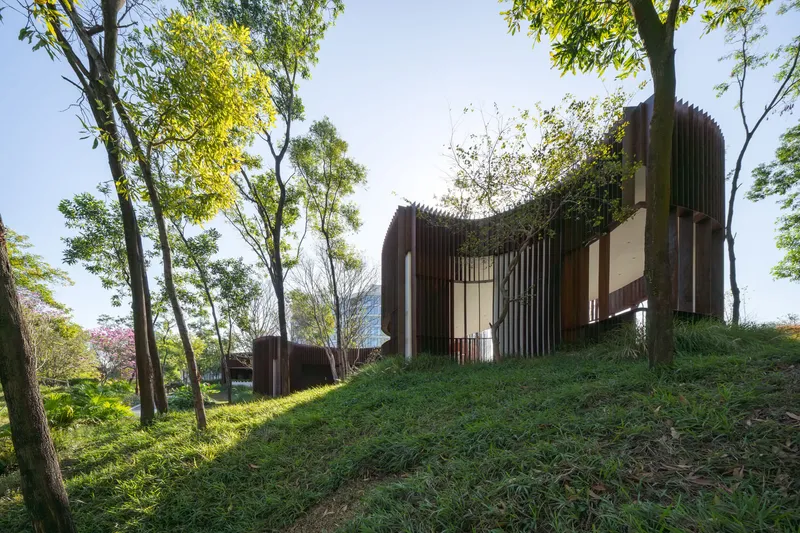

The east building adopts a fluid, curvilinear geometry shaped by invisible arcs centered on surrounding trees. Its winding footprint subtly meanders between trunks and undergrowth, creating an architectural presence that feels guided by nature rather than imposed upon it. In contrast, the west building is composed of a sequence of trapezoidal volumes that are alternately cantilevered, partially embedded, or grounded. These elements act as sculptural markers: described by the architects as “metal henges”: introducing rhythm, orientation, and spatial definition while echoing the vertical cadence of the forest.
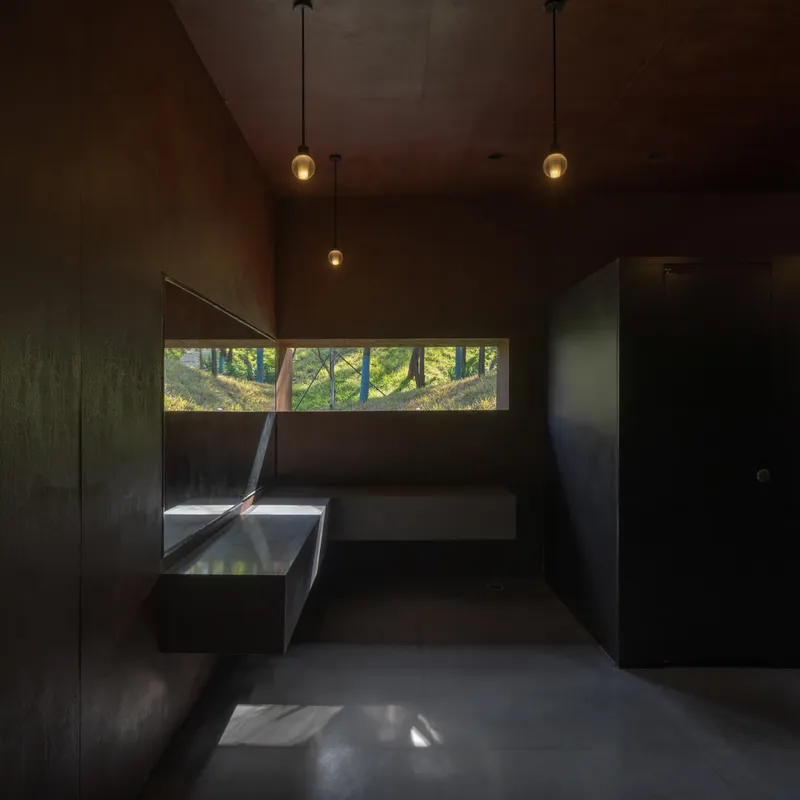

Materiality plays a crucial role in reinforcing this dialogue between architecture and landscape. Weathering steel was selected for its durability, low maintenance, and capacity to age gracefully over time. Initially close in tone to the surrounding tree bark, the steel surfaces gradually oxidize, forming a protective patina that deepens in color and texture. This process allows the buildings to visually merge with their environment while reducing long-term facade maintenance, an important consideration for public park architecture.

Responding to Shenzhen’s hot and humid subtropical climate, the visitor center integrates passive environmental design strategies throughout. Vertical louvers and perforated metal panels provide shade, reduce solar gain, and promote cross-ventilation. Most public spaces rely entirely on natural ventilation, significantly minimizing dependence on mechanical cooling systems. Only a limited number of enclosed functions, such as offices and nursing rooms, are air-conditioned, while restrooms are supported by a deodorizing system to maintain comfort and hygiene.


Topography is leveraged as an asset rather than an obstacle. Both buildings are positioned along gentle slopes and partially embedded into the earth, reducing excavation while benefiting from earth-sheltering effects that improve thermal performance. Green roofs further enhance energy efficiency by lowering summer heat loads, softening the visual impact of the architecture, and reducing surface runoff during heavy rainfall.
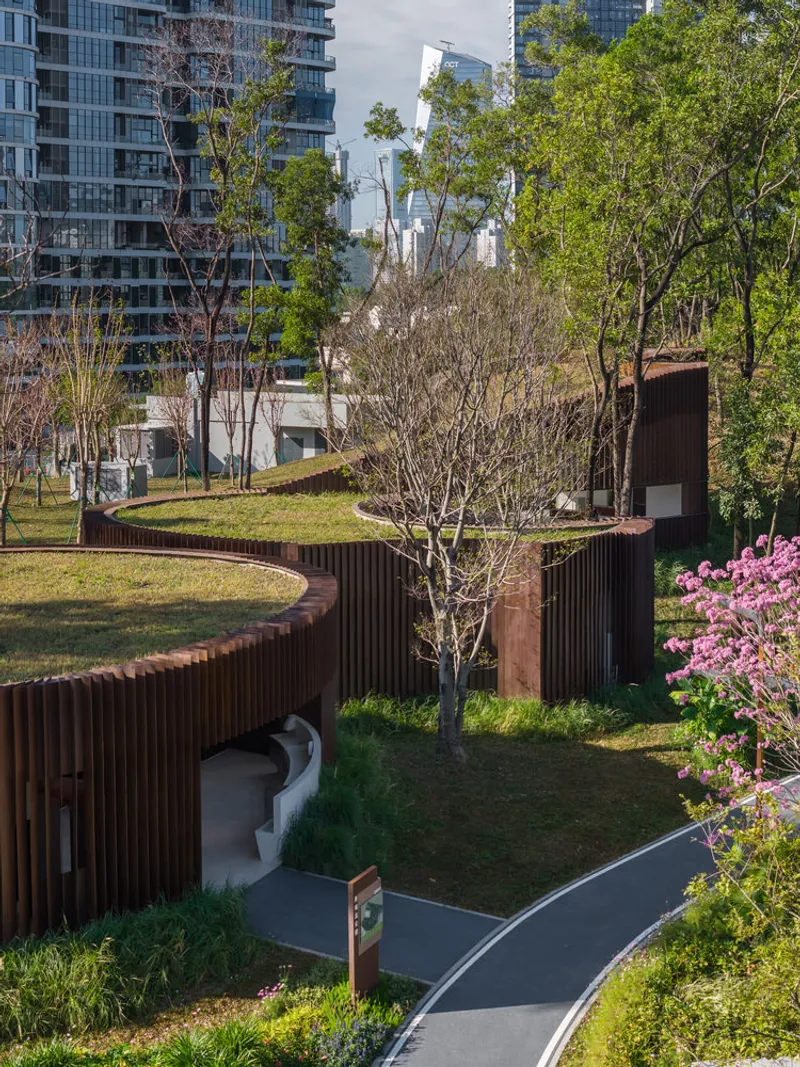

Beyond technical performance, the project reimagines the social role of park infrastructure. Traditionally overlooked “service spaces”: including public toilets, vending areas, drinking water stations, nursing rooms, and staff facilities, are integrated into a cohesive spatial sequence. Together, they form a compact, village-like public environment that supports both functional needs and moments of rest, pause, and informal gathering. In doing so, the Qiaochengbei Park Visitor Center transforms everyday amenities into an inclusive civic landscape that enhances the park’s overall experience.

Through restrained intervention, material sensitivity, and climate-responsive design, Atelier XI offers a compelling model for sustainable public architecture in rapidly urbanizing cities. The project illustrates how even modest buildings can foster meaningful connections between people, place, and nature.


All photographs are works of Zhang Chao




Popular Articles
Popular articles from the community


Play: Fragments of Their World
Familiar architecture becomes modular playground design, creating safe spaces where displaced children can learn, connect, imagine and play.

Conexión: Biophilic Design Reimagines High-Rise Living in Hong Kong
Conexión reimagines high-rise living in Hong Kong through biophilic design, green facades, shared spaces, daylight, water and nature within.

The Musturak Paradise: Senior Living Architecture for a Connected Future in Temara, Morocco
The Musturak Paradise reimagines senior living architecture in Temara via private homes, social spaces, culture, community, and shared care.

Co-Life: Senior Housing Design That Reconnects Older Adults With the City
Co-Life reimagines senior housing design through healing gardens, shared streets, workshops, and a sustainable community across generations.


Similar Reads
You might also enjoy these articles


Hodi-Mandai Geram
Project Function: Preservation and revitalization of the Intangible heritage and socio-spatial identity of the Hodi by Housing, Cultural Memory Center, Sacred Grove, landscape, local tourism economy


Olio Towers: A Mid-Rise for Performers That Fuses Housing, Rehearsal, and Stage
Located blocks from Houston's Theater District, this modular tower stacks living units around a central performance atrium.

Oasis: Modular Green Housing Carved into Dhaka's Urban Fabric
A shortlisted Plugin Housing entry reclaims unauthorized settlements in Dhaka with stepped concrete volumes, green roofs, and ventilation-driven design.

Black Hole: A Floating Megastructure for the Post-Physical Era
Emiliano Mazzarotto envisions a spherical, self-scaling arena where e-sports, digital hotels, and holographic stadiums replace traditional public space.
Explore City Forest Competitions
Discover active competitions in this discipline



Challenge to reimagine the Iron Throne


Photograph architecture without architects


Illustrate the lost glory of Angkor Wat - Render Challenge


Design challenge to reuse E-waste
Comments (0)
Please login or sign up to add comments
No comments yet. Be the first to comment!