

Rainbow International School by Spacefiction Studio: Redefining Sustainable School Architecture in India
Rainbow International School redefines sustainable school architecture in India through nature-integrated design rooted in climate, culture, and collaboration.


Reconnecting Education with Nature Through Sustainable School Design
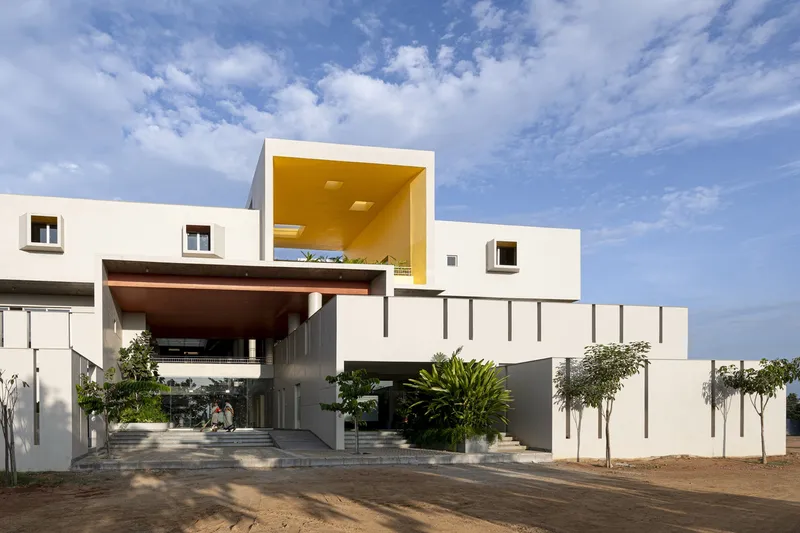
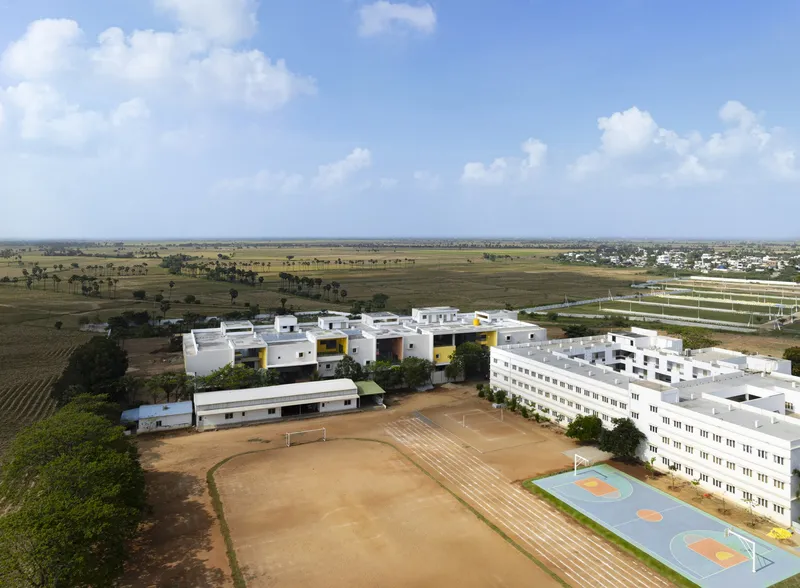
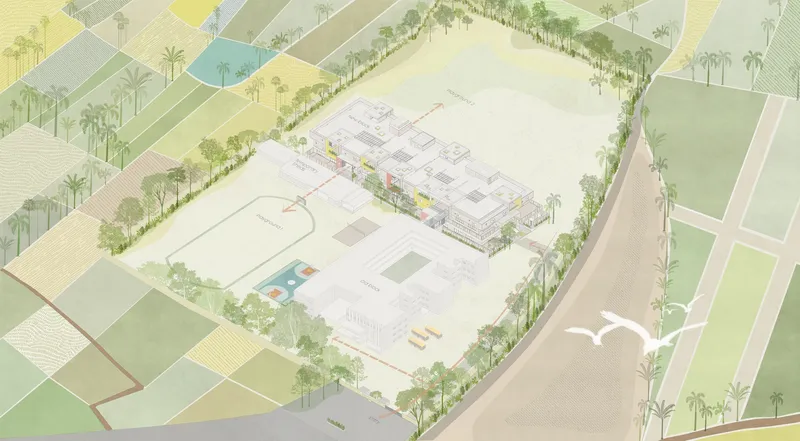
Rainbow International School by Spacefiction Studio in Nellore, India, offers a bold and contextual response to the evolving demands of education through a compelling example of sustainable school architecture in India. This three-story institutional addition to an existing campus draws inspiration from India’s ancient gurukul tradition, where open-air learning under trees symbolized a harmonious relationship between education and the environment. In contrast to today’s pressure-driven schooling models, Rainbow International School is a space of exploration, natural interaction, and architectural fluidity.
Gurukul Reimagined: The Philosophy Behind the Design
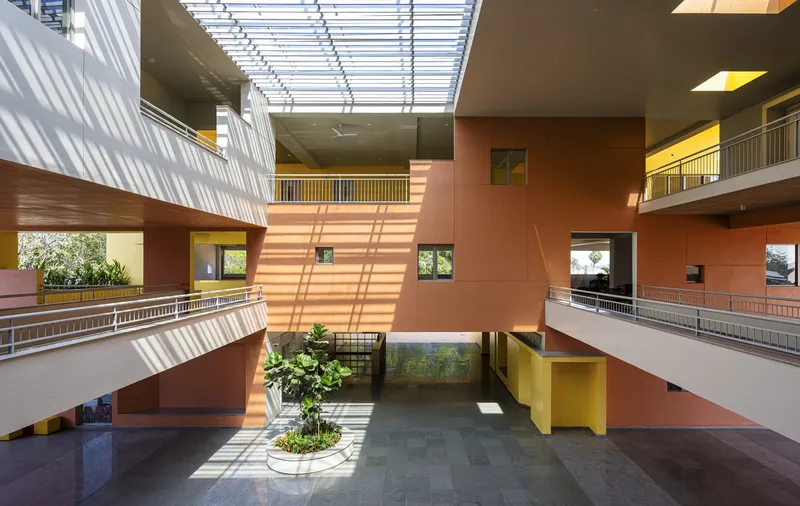
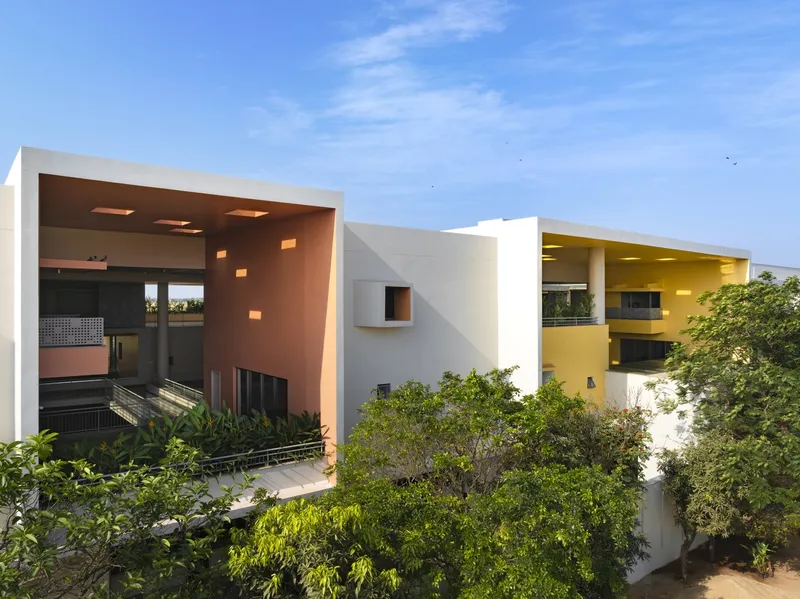
The core design approach stems from the idea that true education transcends the boundaries of classrooms. Instead of replicating the rigid cells-and-bells model, this school brings learning back to its roots—closer to the earth and sky. The architects draw from the philosophy of the gurukul system, where unstructured, curiosity-led exploration and teacher-student interaction happened in natural surroundings. Through courtyards, natural ventilation, and layered spatial experiences, the design serves as a modern-day reimagining of this timeless learning environment.
Passive Design for a Tropical Climate
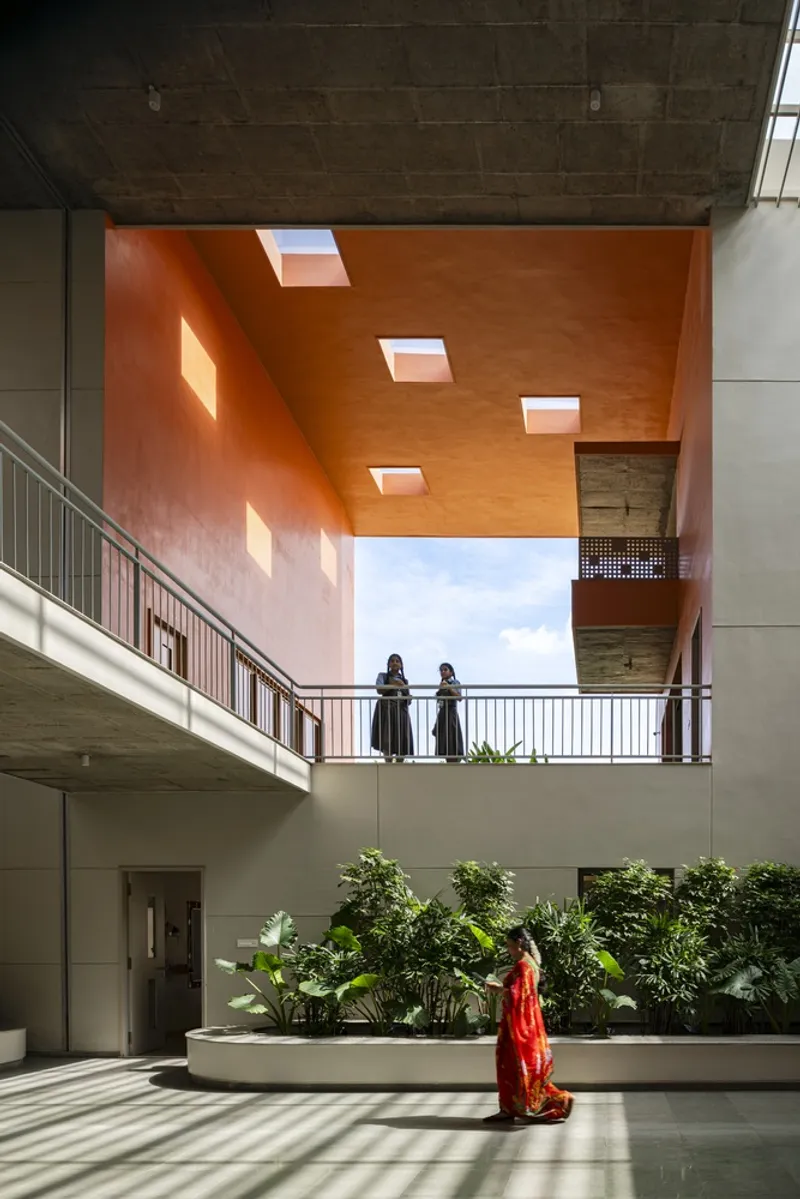
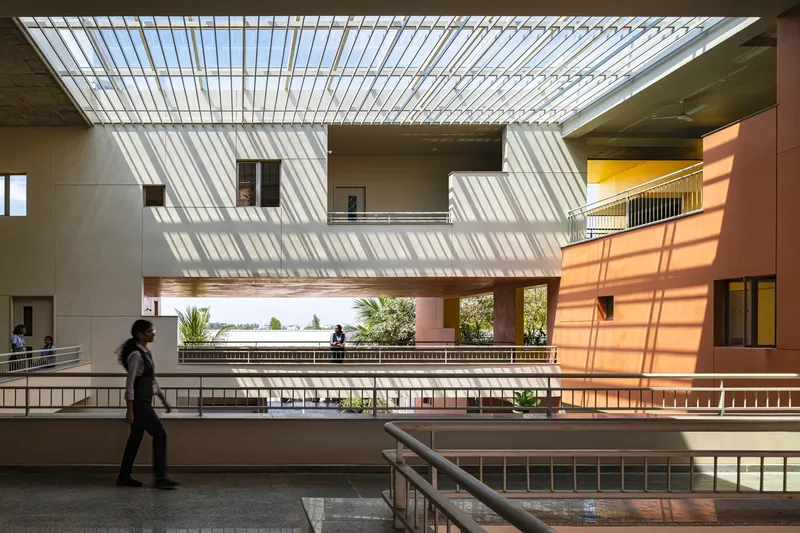
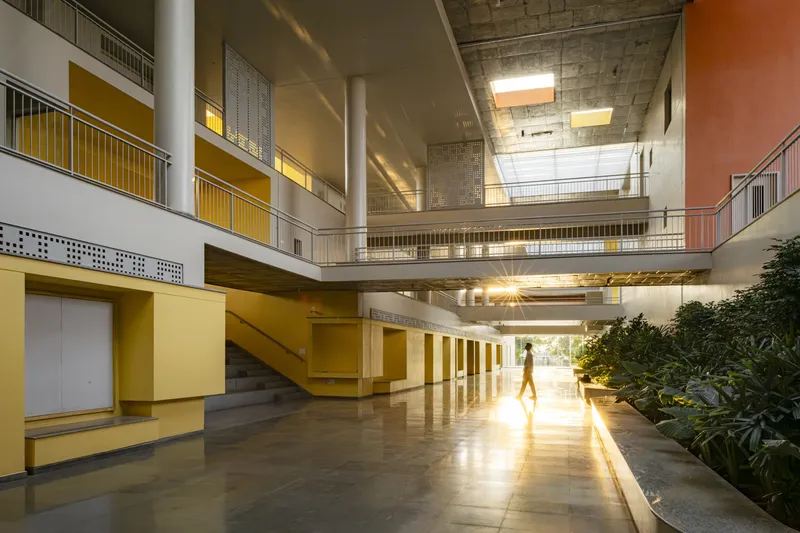
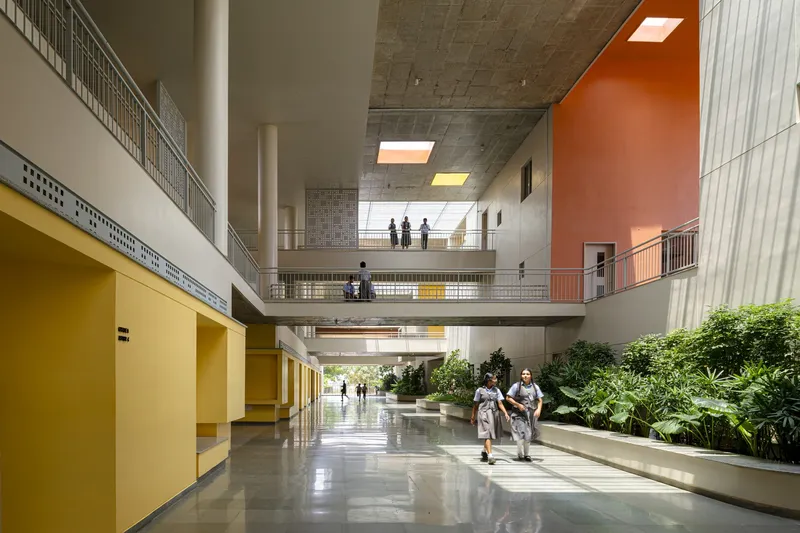
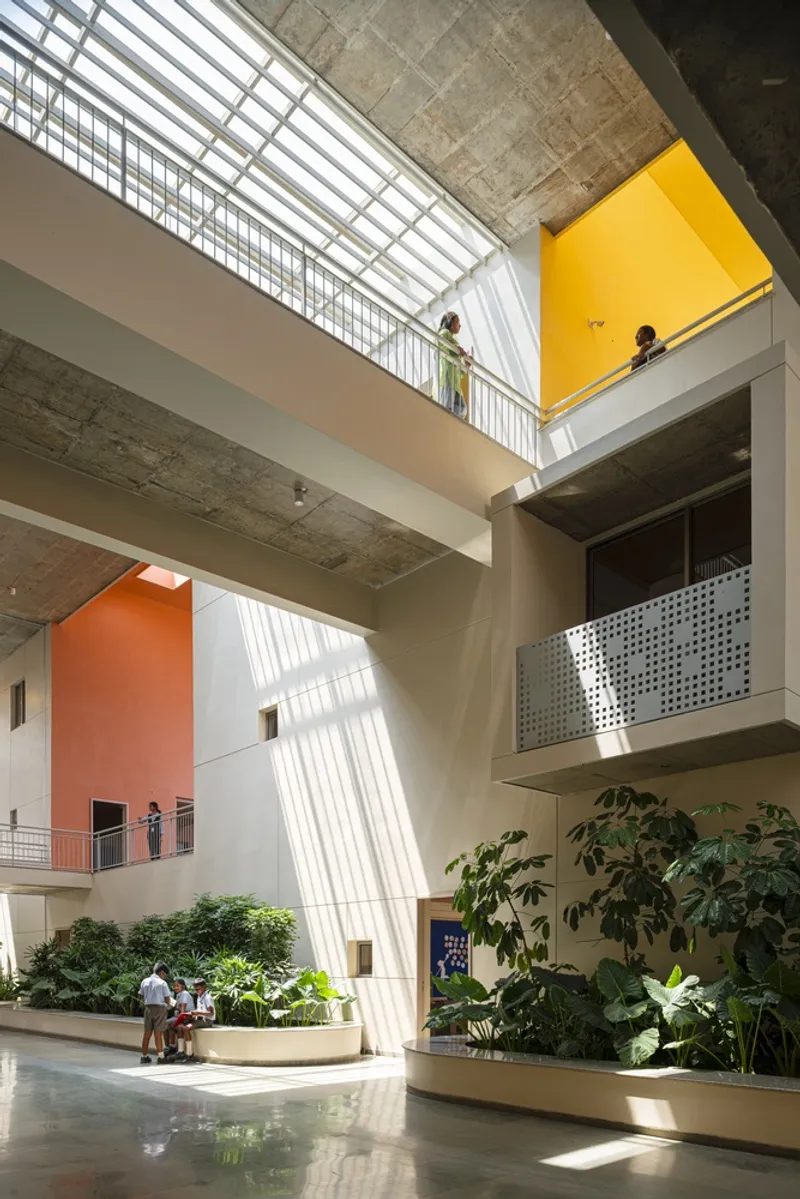
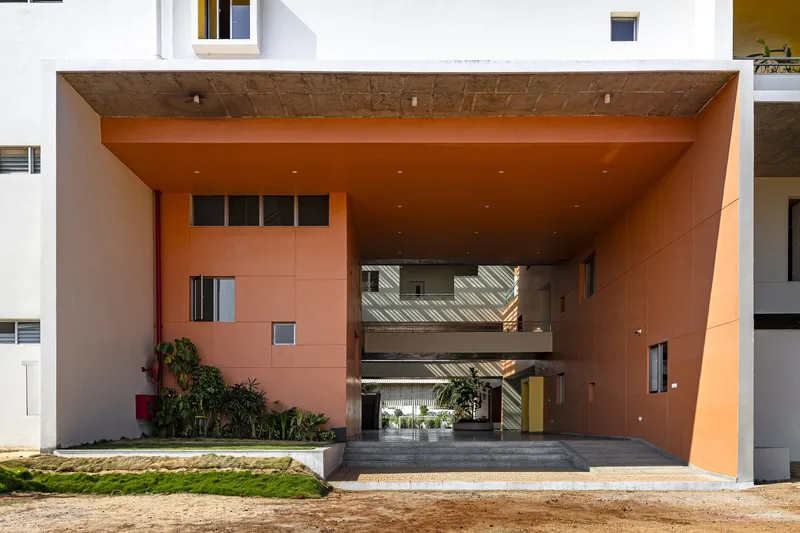
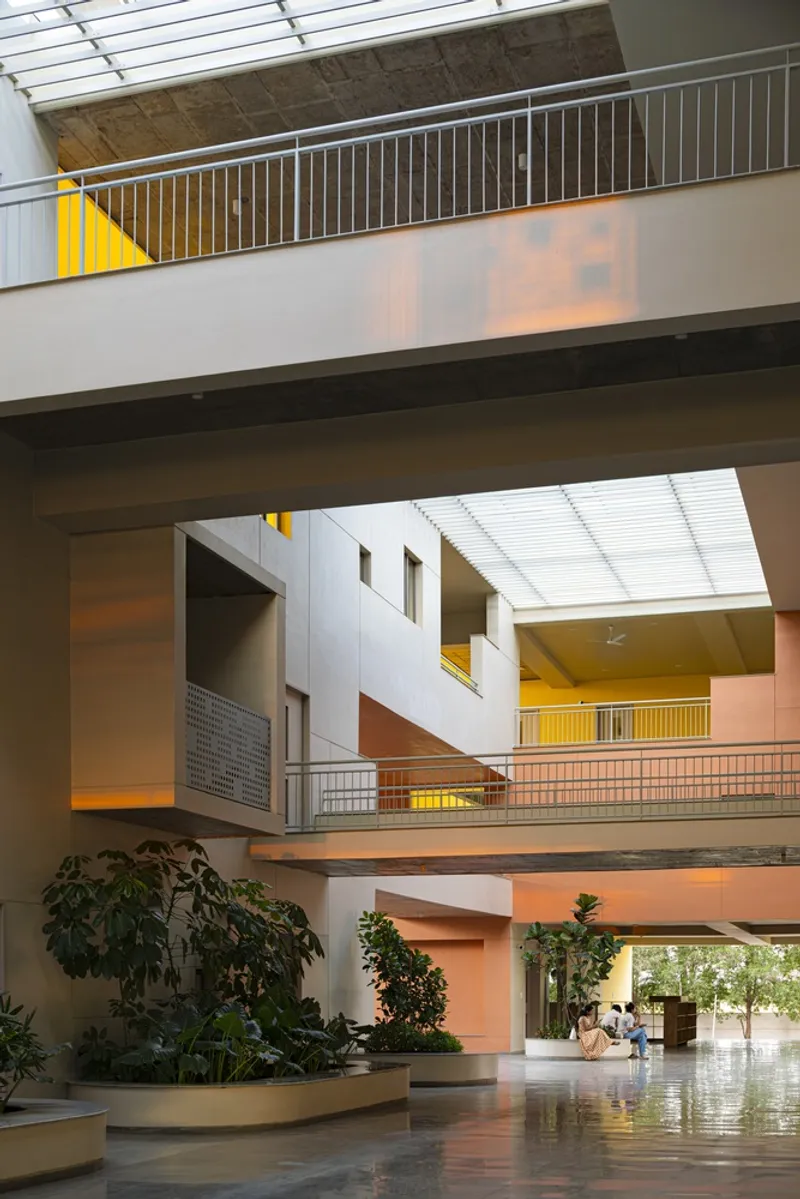
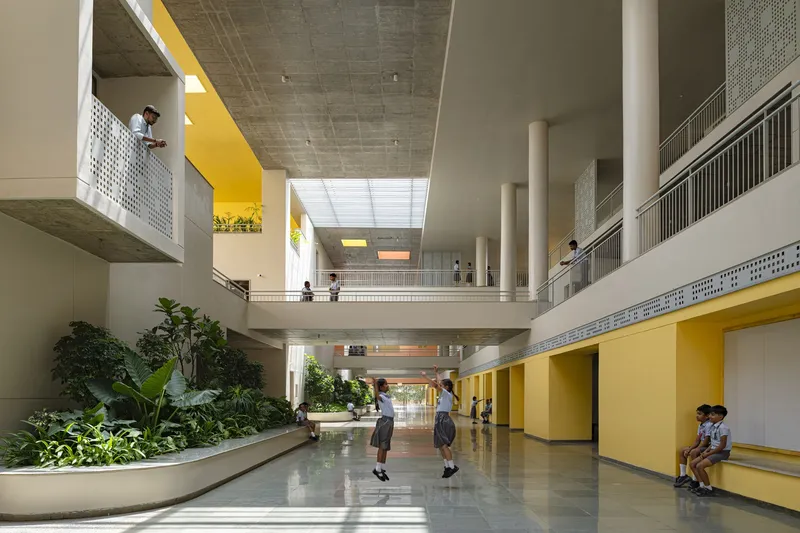
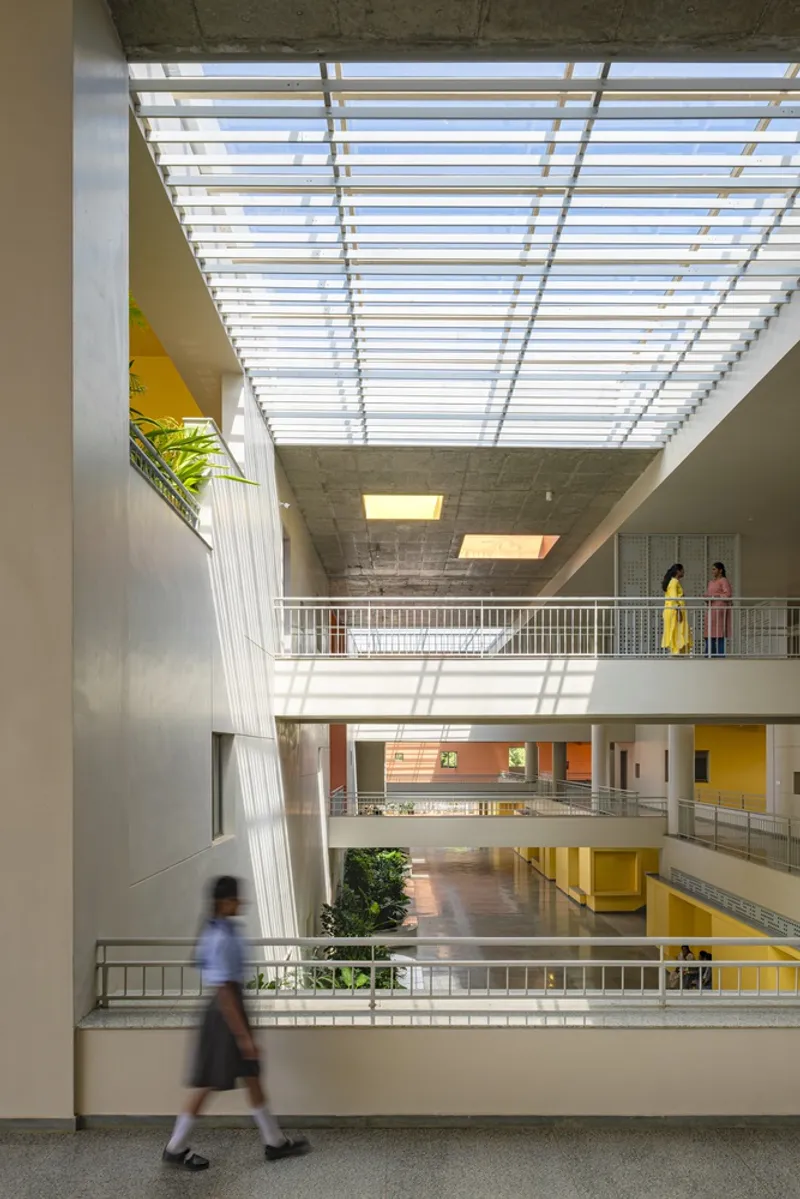
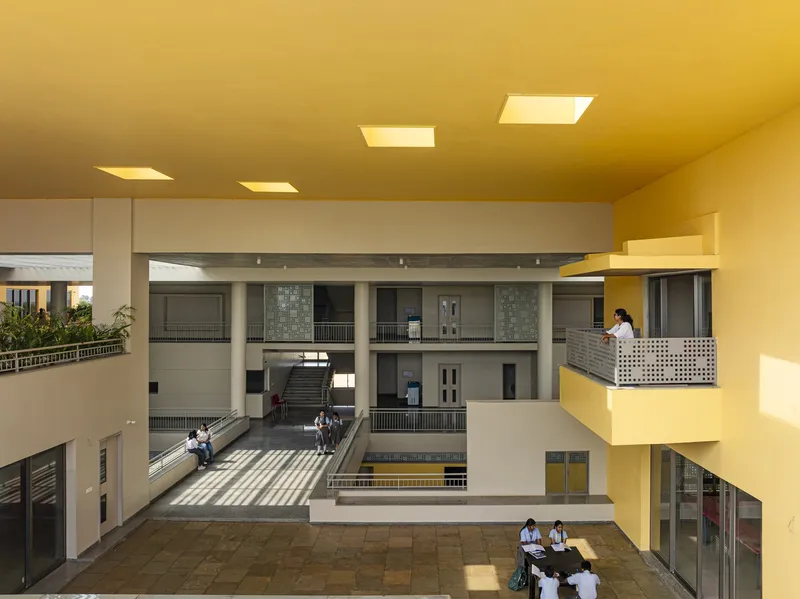
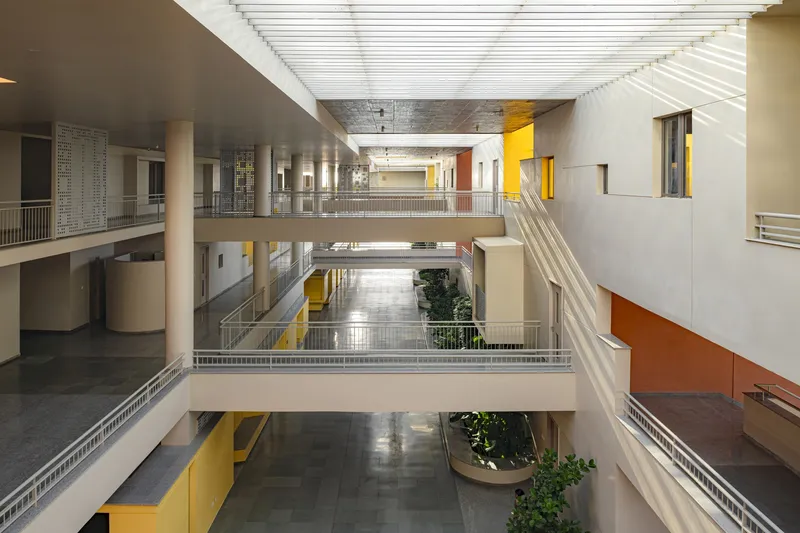
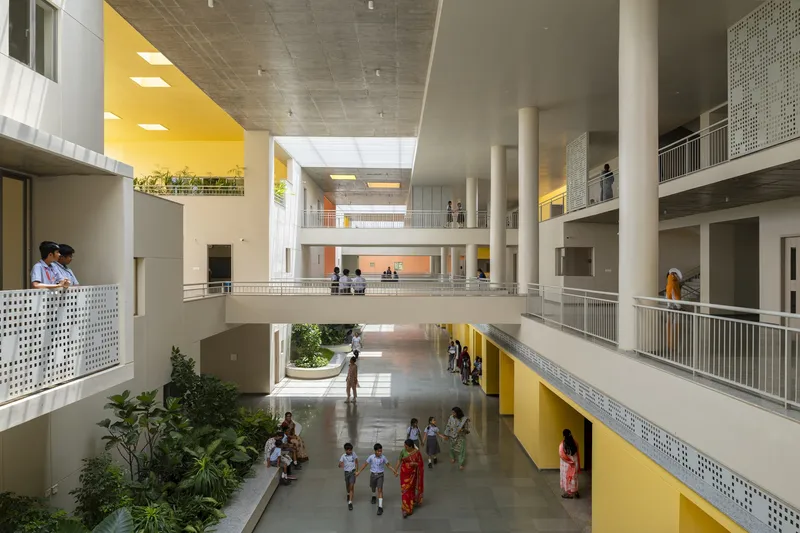
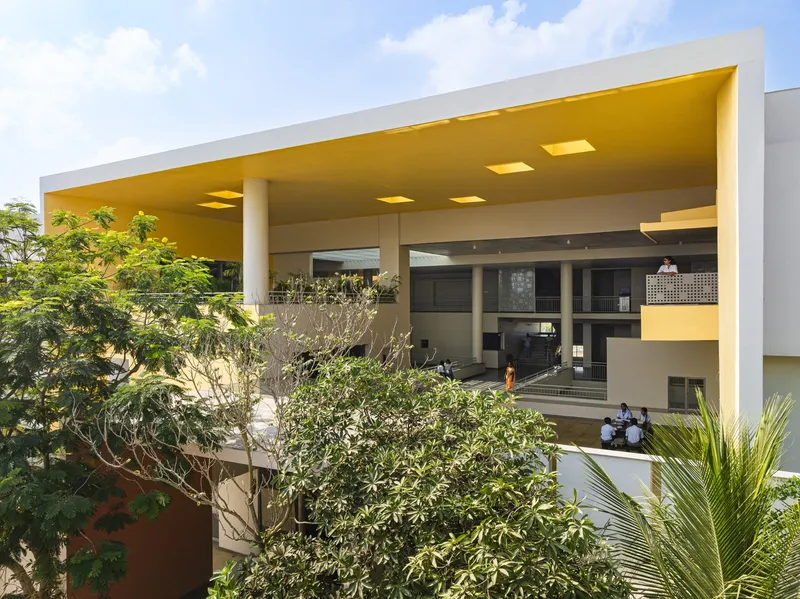
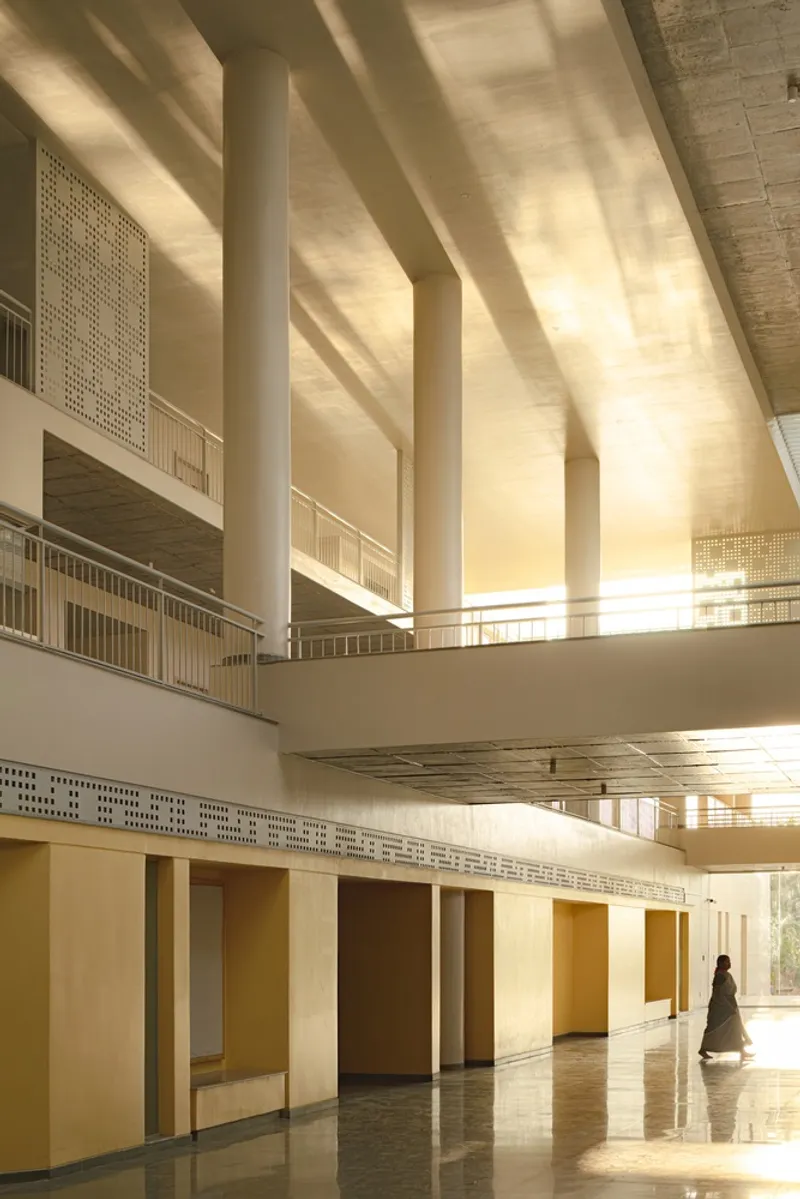
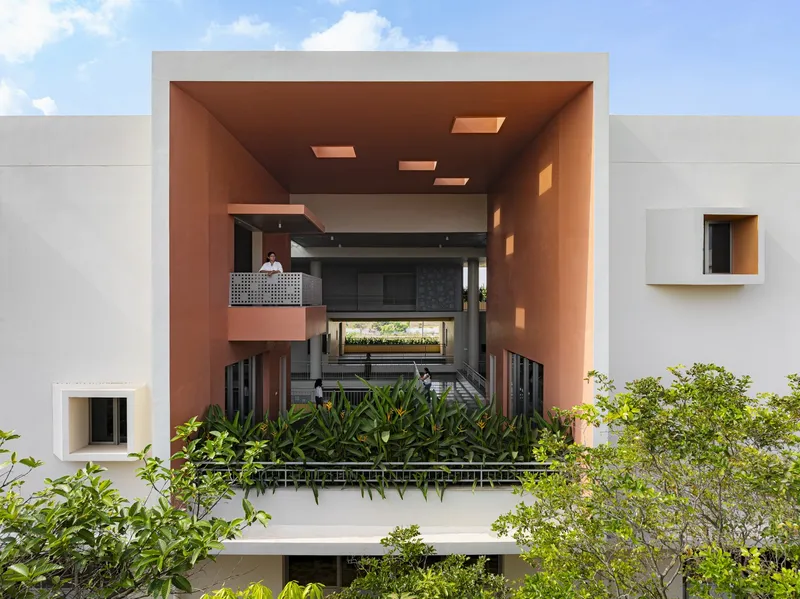
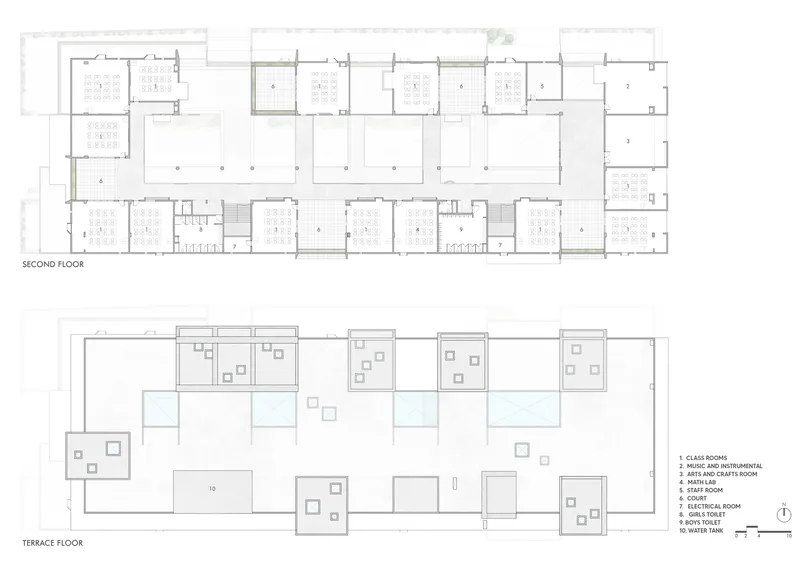
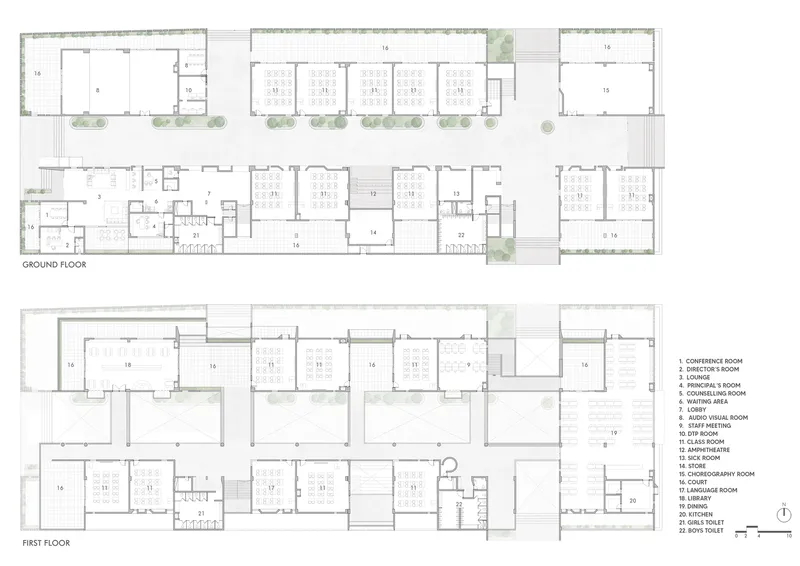
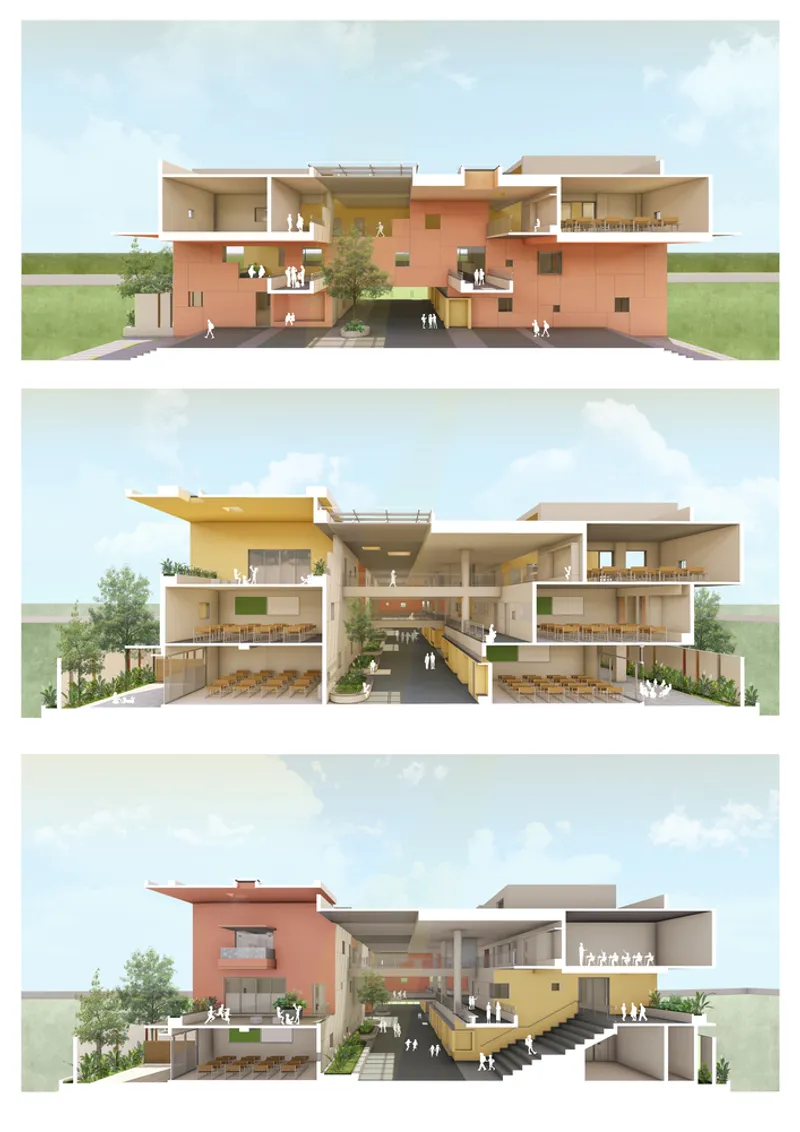
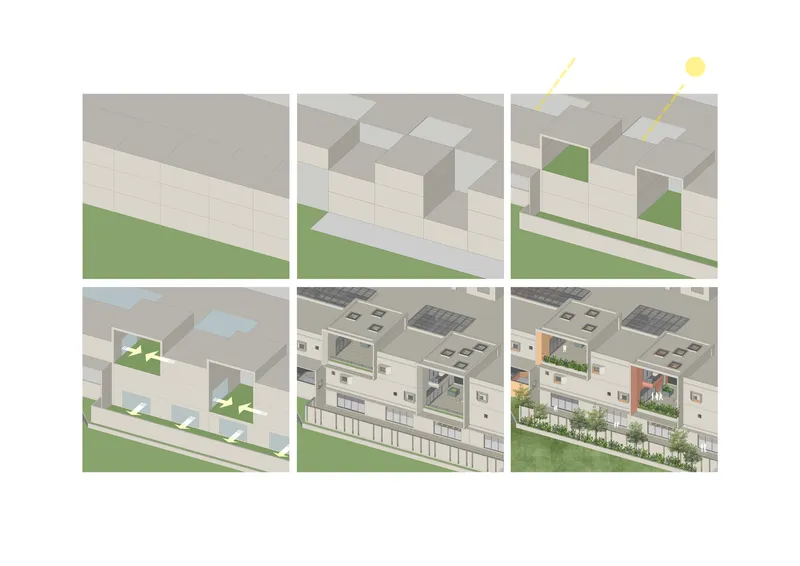
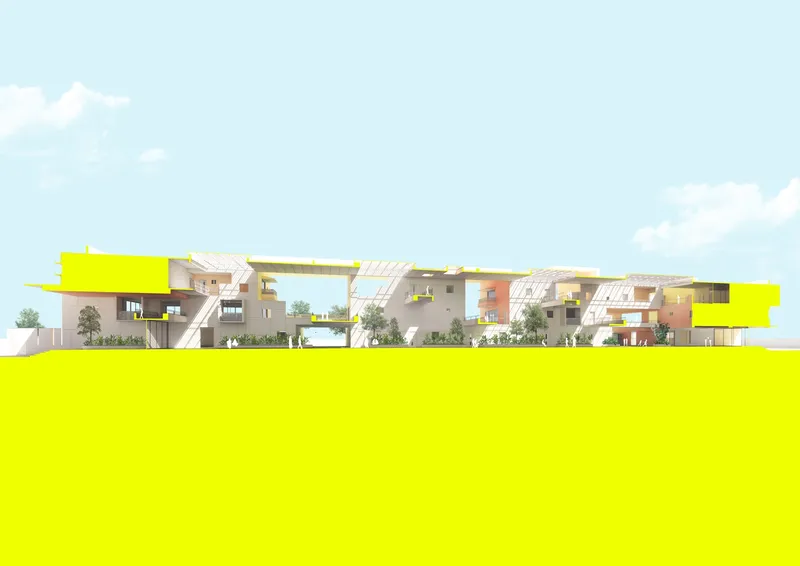
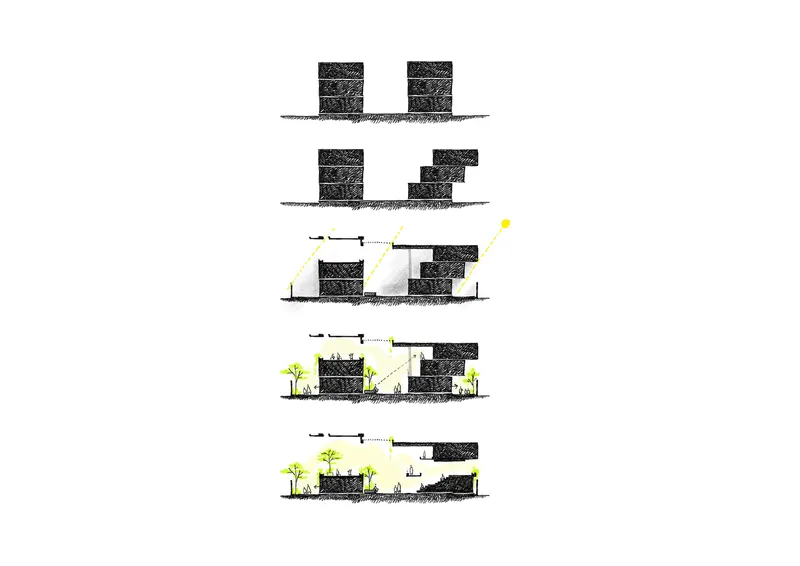
The school’s massing stretches east to west, allowing its longer north-south facades to minimize direct heat gain. A central spine slices through the building, bringing filtered light deep into the interior via skylights. This atrium is lined with planters filled with tropical greens, cooling the space and inviting nature inside. The staggered southern wing blocks harsh solar exposure on the lower floors, enhancing thermal comfort. This thoughtful orientation and passive solar control form the backbone of the school’s environmental responsiveness.
Classrooms Without Borders: A New Typology
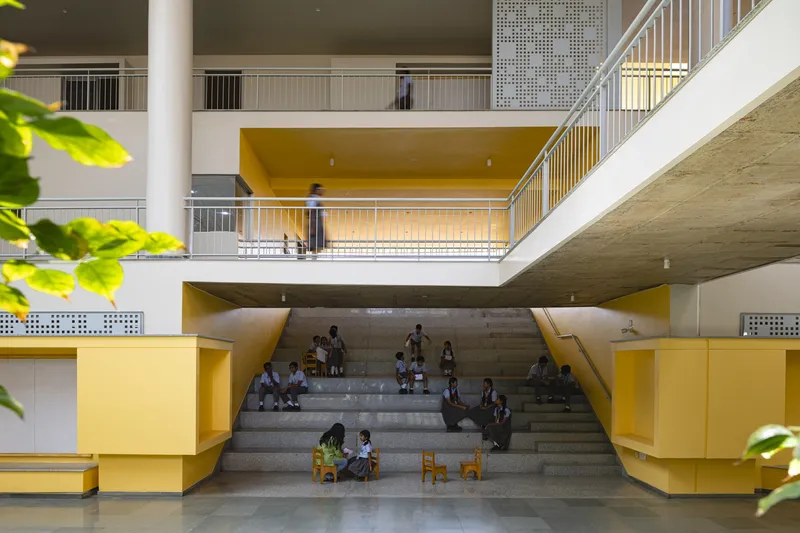
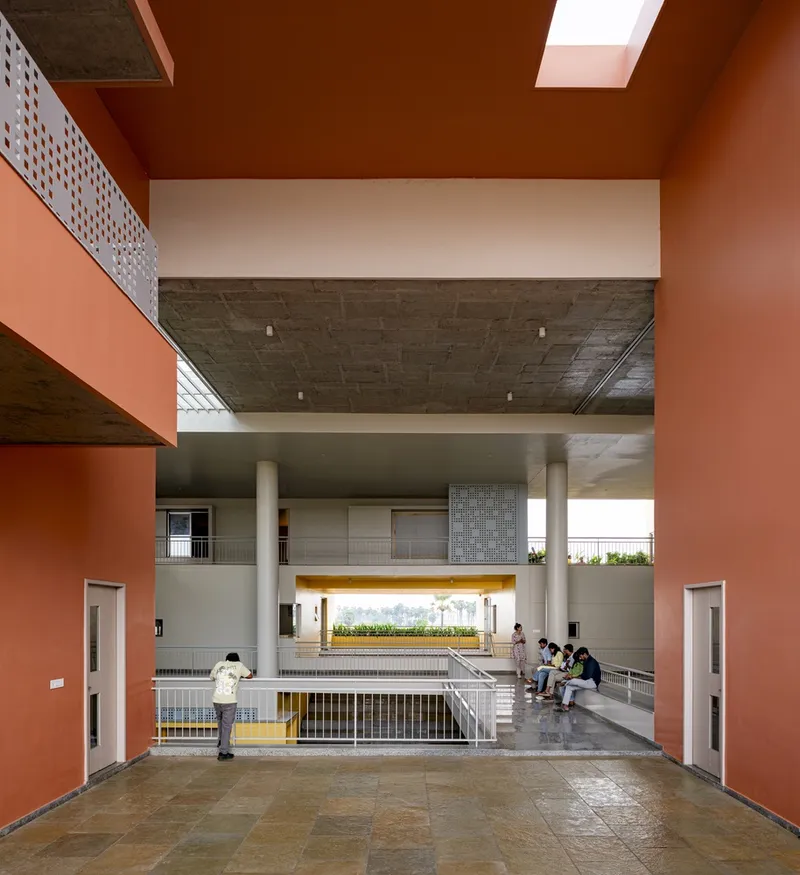
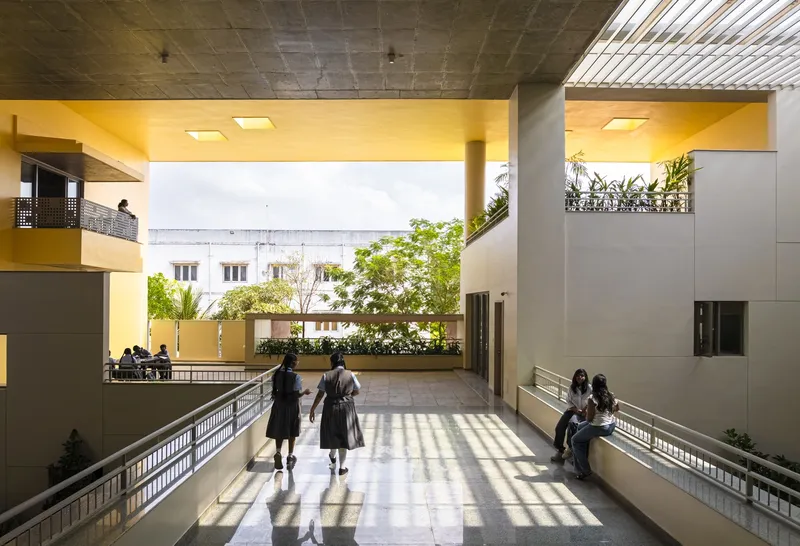
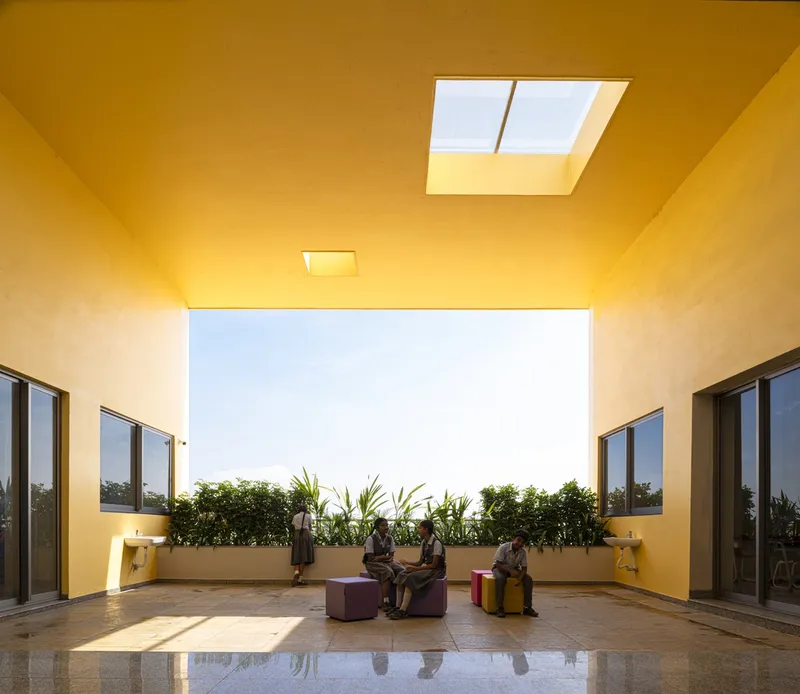
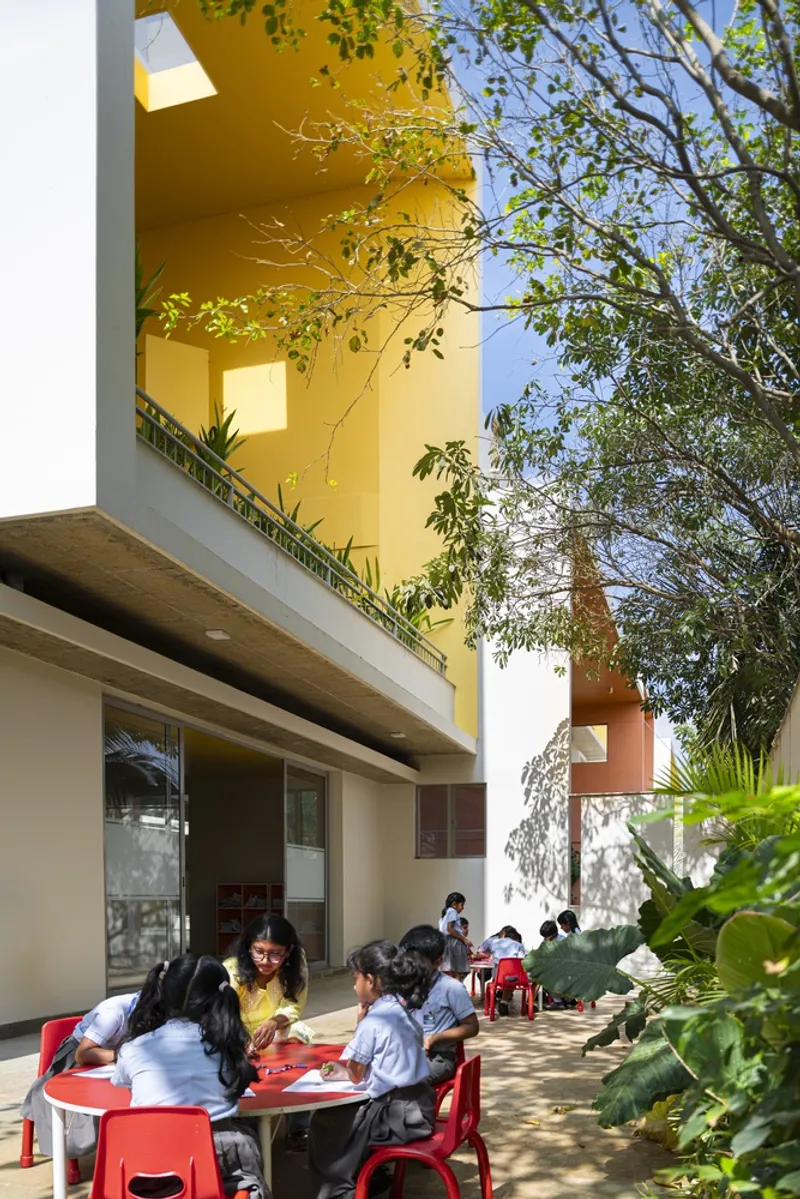
Traditional classrooms are replaced with spaces that breathe. On the ground floor, rooms open into shaded north and south courtyards, while upper-level classrooms share expansive, double-height open courts. These design moves eliminate hard enclosures and create flexibility for constructivist learning—where lecture, group work, presentations, and reflection can occur fluidly. This blurring of the inside and outside promotes a relaxed atmosphere conducive to creativity and collaboration, breaking the stereotype of confined, institutional learning.
Learning in the Leftover Spaces
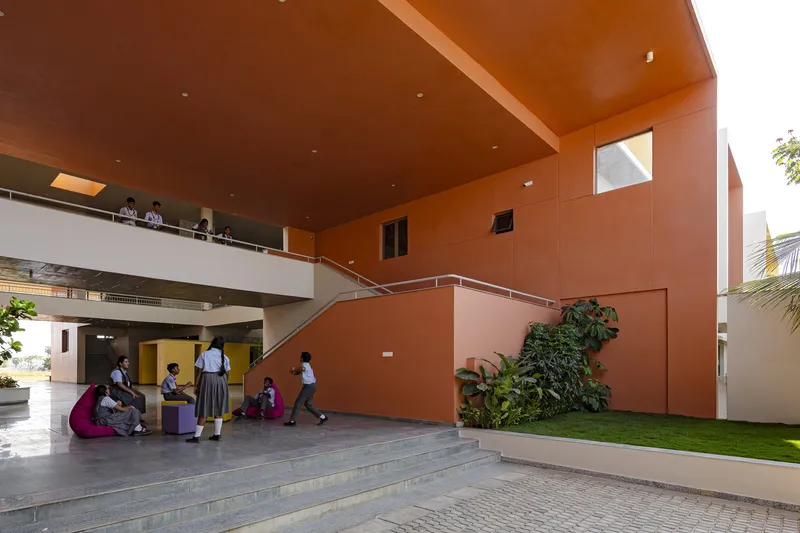
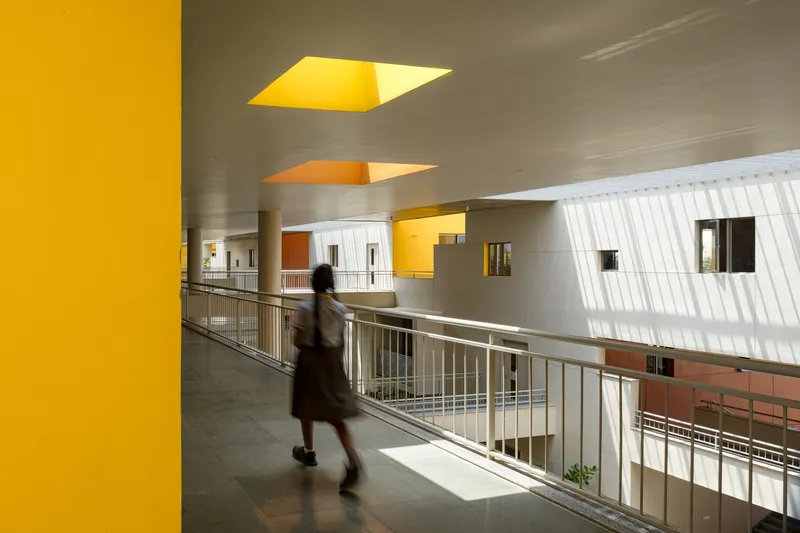
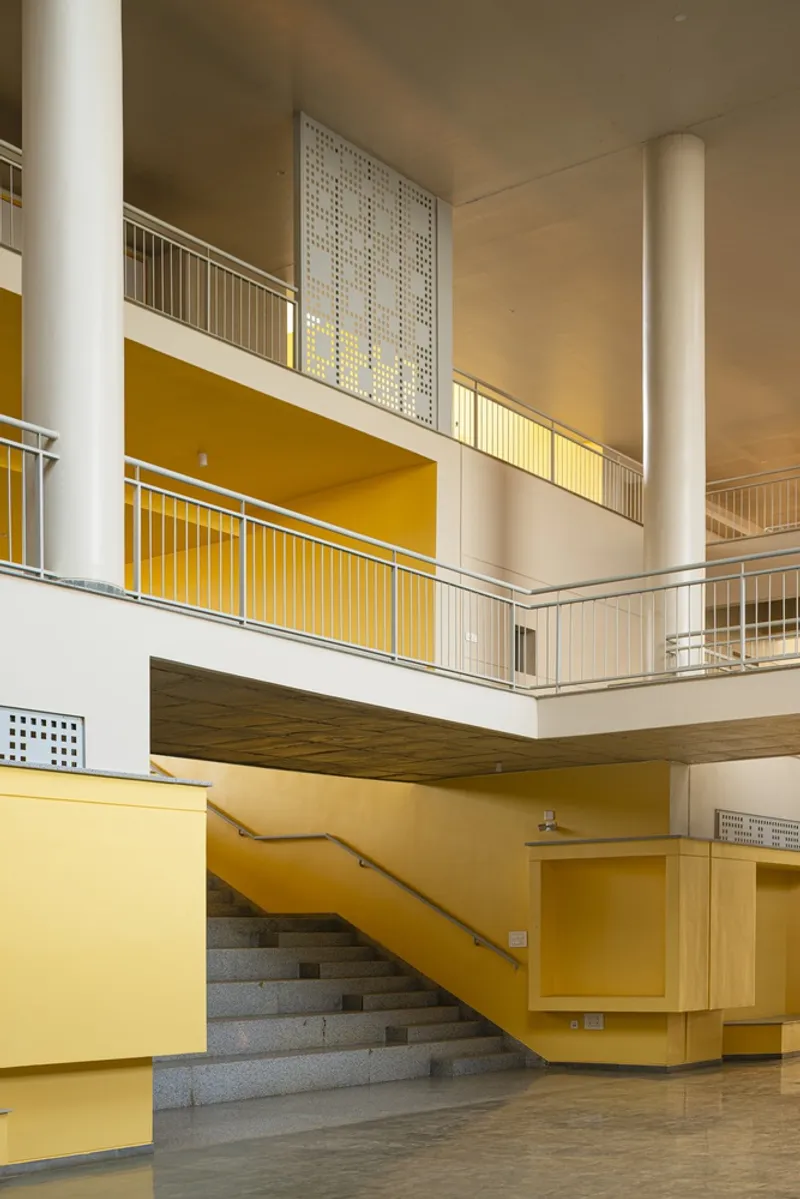
One of the most radical aspects of this sustainable school architecture in India is the celebration of “leftover” or transitional spaces. Instead of being seen as functional voids, these niches and corridors are activated as extensions of the learning environment. From shaded sit-outs to terrace gardens, students move through a continuous flow of spaces that encourage conversation, contemplation, and chance interaction—fostering a strong sense of community and informal learning.
Local Materials, Lasting Impact
Materiality plays a vital role in grounding the school within its regional context. Locally sourced Kota stone and tandoor stone cover the floors and outdoor courts, providing thermal comfort and durability. Aluminum sliding doors between classrooms and courtyards maintain a visual and tactile connection to the outdoors. The understated palette of stone, metal, and glass not only enhances longevity but also minimizes environmental impact through reduced embodied energy.
Towards a Nature-Integrated Pedagogy
By prioritizing elements like wind, light, trees, and layered volumes, Rainbow International School fosters an intrinsic connection to the rhythms of the natural world. The school becomes more than a building—it transforms into an ecosystem for growth. Students are not isolated from nature but immersed within it, learning in tandem with the environment. This nature-integrated design stands in opposition to sterile, artificial learning environments, instead nurturing curiosity and well-being.
A Model for Educational Architecture in India
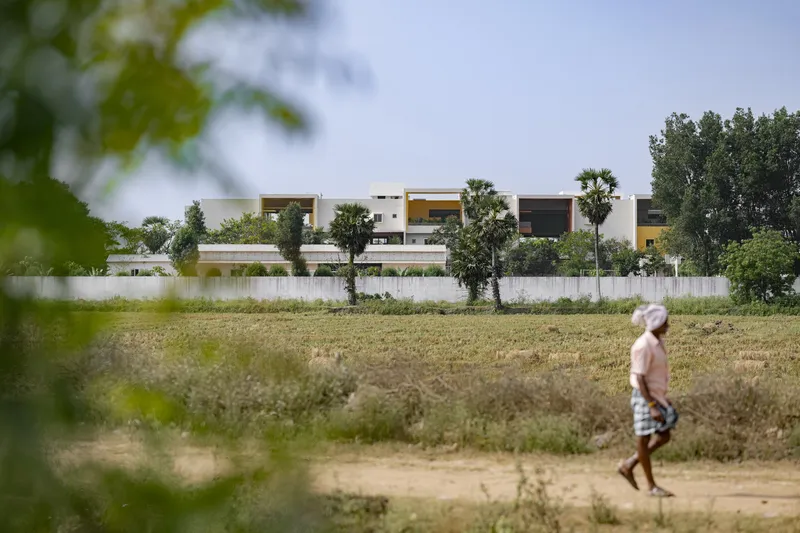
Rainbow International School demonstrates how sustainable school architecture in India can be deeply rooted in culture, climate, and educational reform. Rather than imposing an external design language, the project grows organically from its setting, balancing innovation with humility. Spacefiction Studio has delivered more than an institution; they’ve built a philosophy—a living, breathing school that reclaims learning as a joyful, collaborative, and nature-connected experience.
All photographs are works of Vivek Eadara


Popular Articles
Popular articles from the community


Cube Design Draws an Ecological Corridor Between Two Shenzhen Hills with the Nankai Building
Beside Shenzhen's container docks, the Nankai Building pairs stacked balconies with a climbing green screen to connect two hillsides across its height.

ETEH Reworks the Shared Spaces of São Domingos School in Brazil Around Timber, Color and Hanging Plants
At São Domingos School in Brazil, 436 m² of hall, refectory and library are recast with timber joinery, a yellow and blue code and trailing greenery.


Opera on the Sea: Driftwood Logic Shapes a Timber Opera House on Estonia's Coast
Trevor Orgill's opera house translates the entangled drift of floating timber into a civic building where wood, water, and music converge.

The Amber Palace Opera: A Geological Fiction Surfaces on Tallinn's Baltic Waterfront
Pierre Brillard reimagines a Baltic legend as a public landscape, opera house, and waterfront promenade rooted in Tallinn's coastal identity.

Similar Reads
You might also enjoy these articles
Cube Design Draws an Ecological Corridor Between Two Shenzhen Hills with the Nankai Building
Beside Shenzhen's container docks, the Nankai Building pairs stacked balconies with a climbing green screen to connect two hillsides across its height.

Praksis A and Studio Sted Bend a Red Timber Cabin Across the Granite of Norway's Southern Coast
On the southern Norwegian coast, a 105 m² cabin follows the rock on slender posts, pairing red cladding outside with pine, brick and plywood within.

David Ortega Stacks a Two-Story Mexico City Penthouse Around a Steel Stair and a Pergola-Shaded Roof Terrace
In Colonia Roma, a 300 m² penthouse uses oak joinery, a planted steel stair and a slatted roof pergola to make a new-build apartment feel like a house.

PARALELA and LB2 Thread a Public Walkway Through the Base of a Las Condes Residential Tower
In Las Condes, Santiago, the Hamlet Building gives its fenceless ground floor to a 70-metre wooded passage linking two streets and the metro.

Explore Architecture Competitions
Discover active competitions in this discipline

Challenge to reimagine the Iron Throne

Photograph architecture without architects

Illustrate the lost glory of Angkor Wat - Render Challenge

Design challenge to reuse E-waste
Comments (0)
Please login or sign up to add comments
No comments yet. Be the first to comment!