
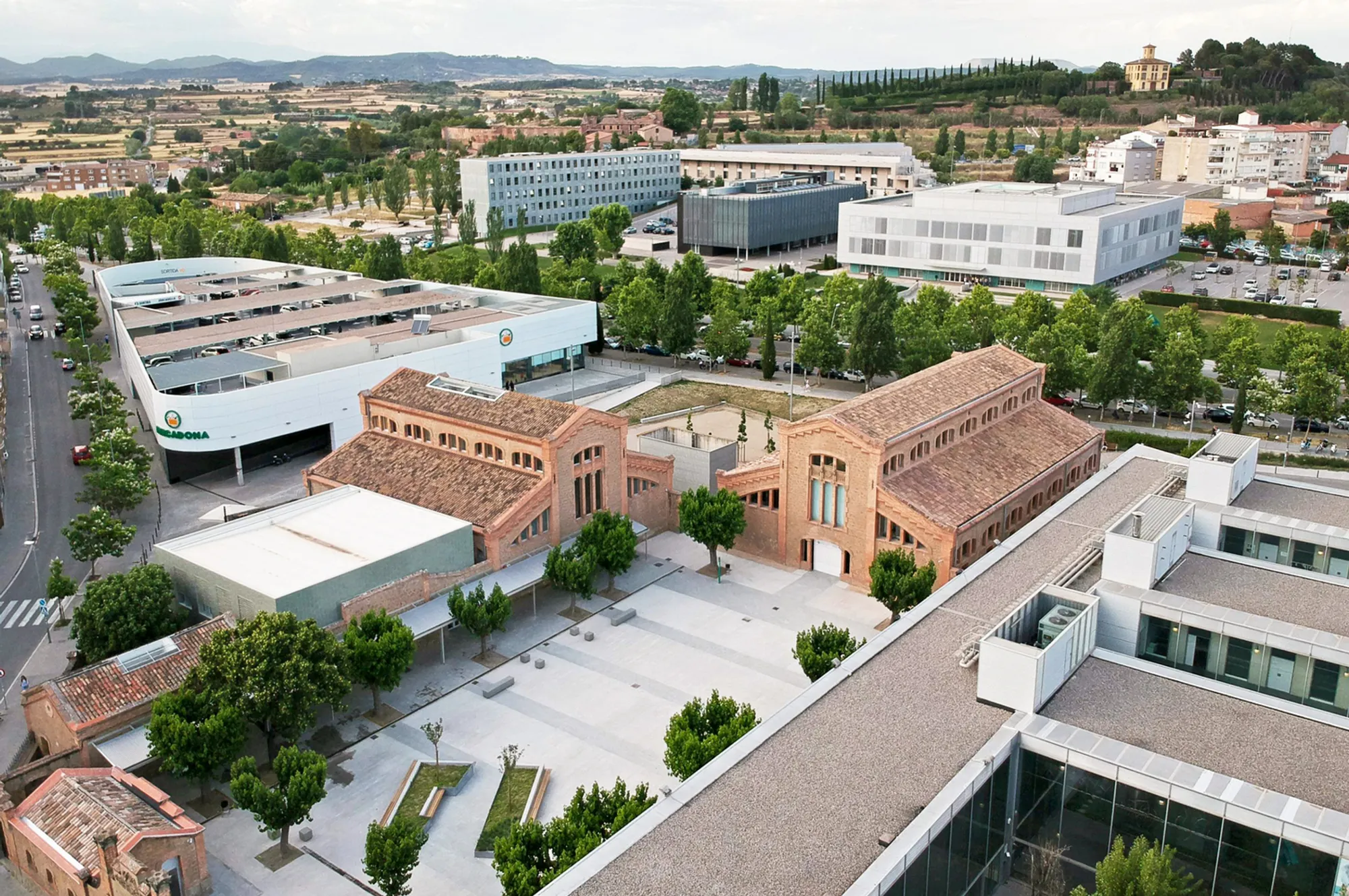
Recovery of the Old Manresa Slaughterhouse FUB3 by Manciñeiras/Parés Arquitectes Associats
Adaptive reuse of Manresa Slaughterhouse creates FUB3 University Complex, blending modern academic functions with historic industrial modernist architecture and heritage preservation.


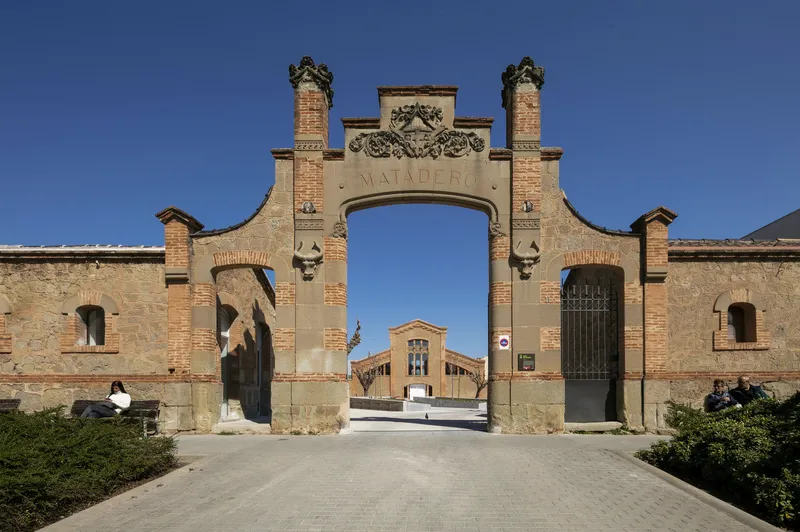
The FUB3 University Complex represents a remarkable example of adaptive reuse and historic preservation within Manresa, Spain. Designed by Manciñeiras/Parés arquitectes associats and completed in 2020, the project transforms the early 20th-century Manresa Slaughterhouse, originally conceived by architect Ignasi Oms i Ponsa, into a dynamic educational hub for the Fundació Universitària del Bages (FUB). Listed as a Cultural Asset of Local Interest (BCIL) in the Catalan Cultural Heritage catalog, the building retains its industrial modernist character while accommodating contemporary academic needs.
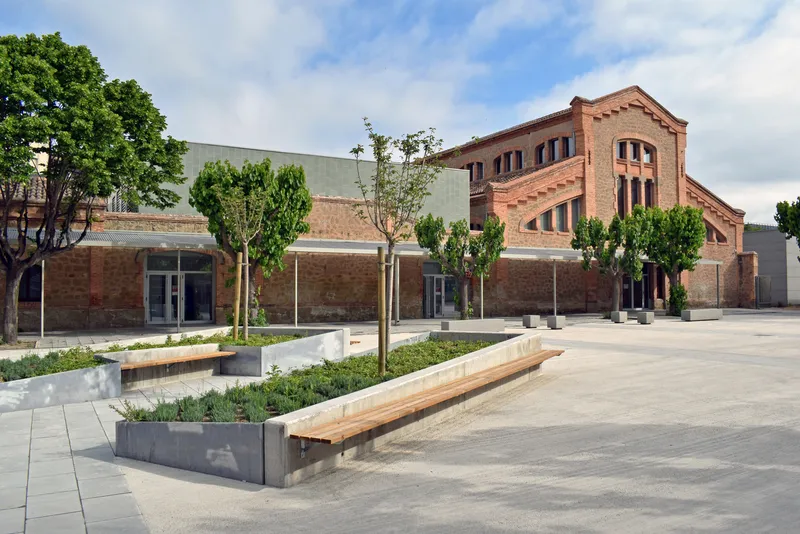
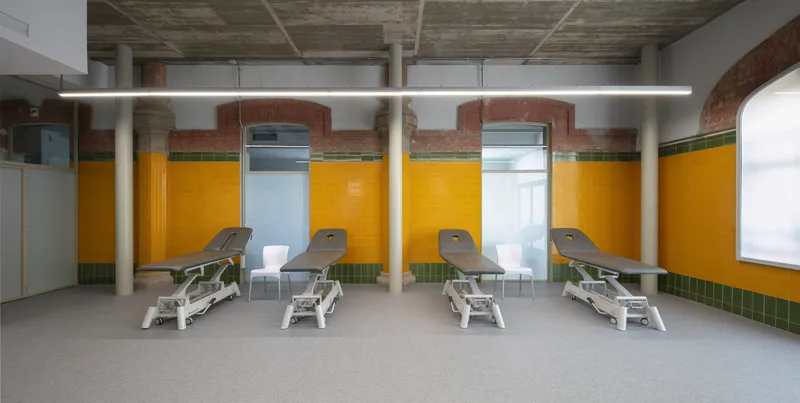
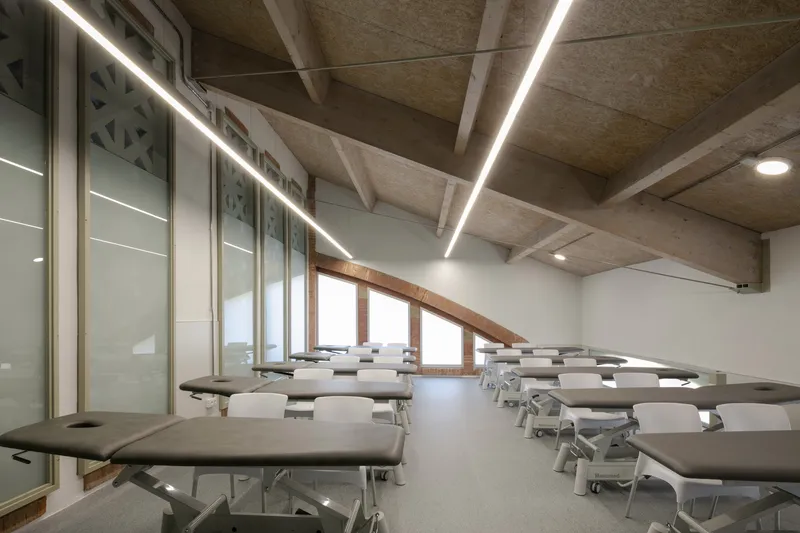
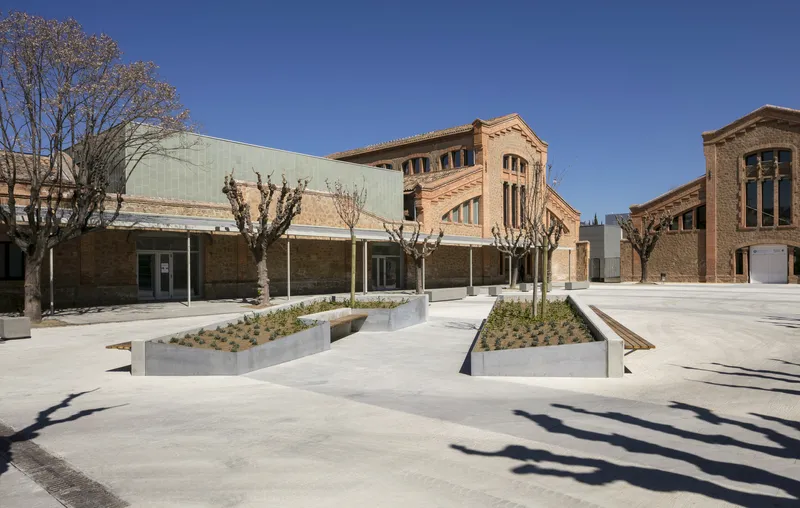
Spanning 19,267 ft², the renovation preserves the distinctive brick façades, ornamental details, and the three symmetrical warehouse layout, key features of the original slaughterhouse. The project refurbishes three of the four original warehouses, introduces a new architectural volume, and restructures the central courtyard to foster connectivity and open public spaces. Eleven classrooms, two meeting rooms, a 100-person gymnasium, changing facilities, and teacher workspaces are now housed within the revitalized structure.
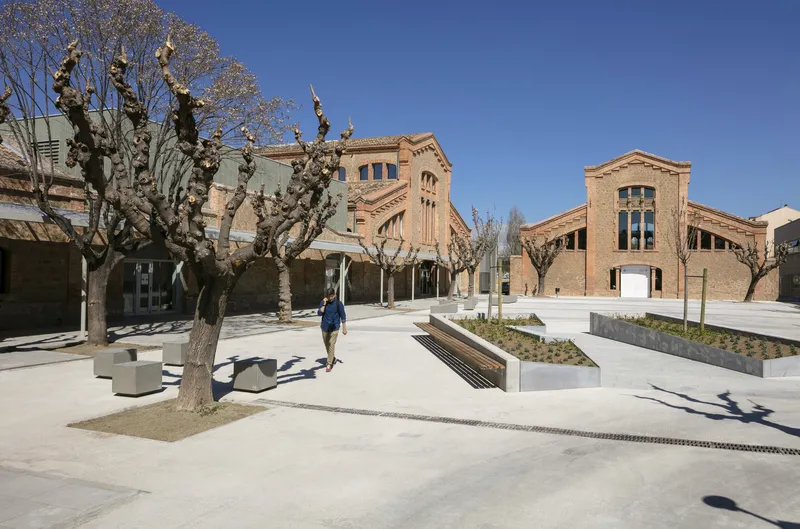
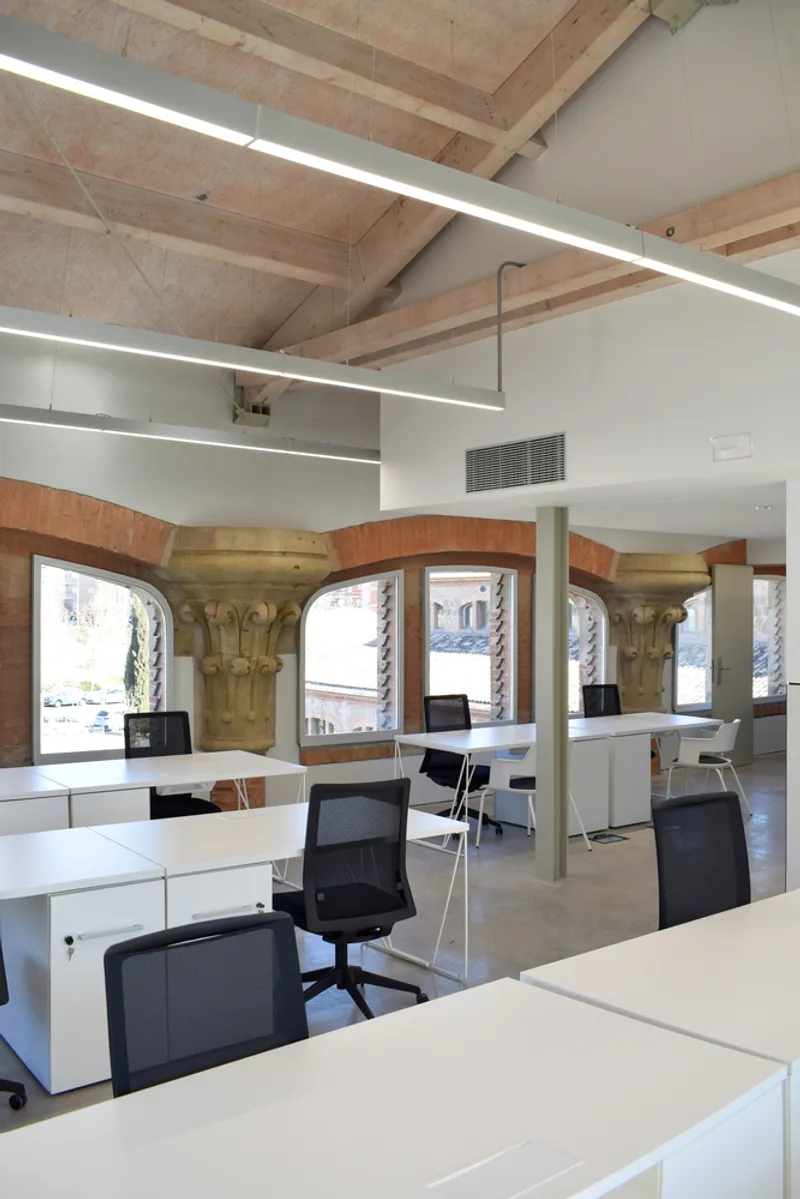
Preserving Heritage and Industrial Character
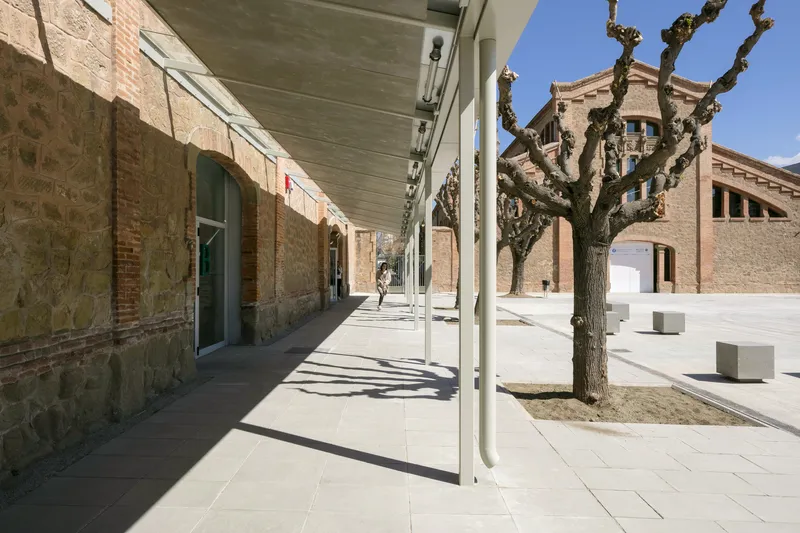
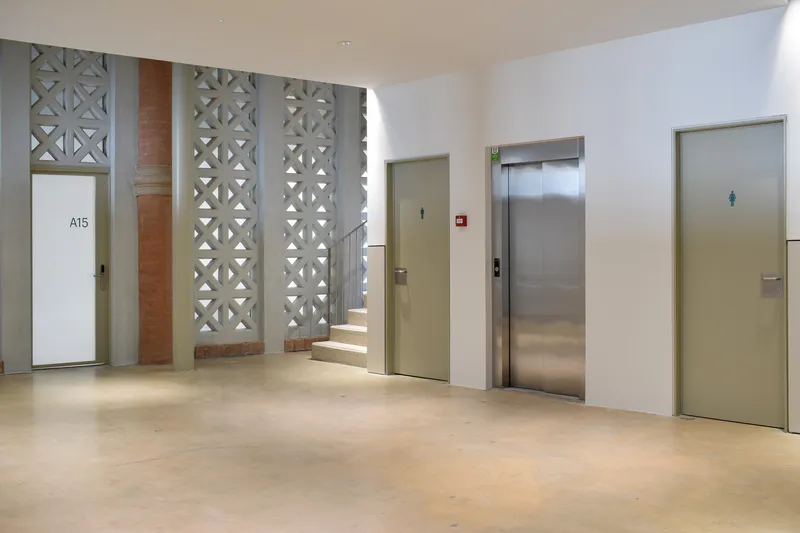
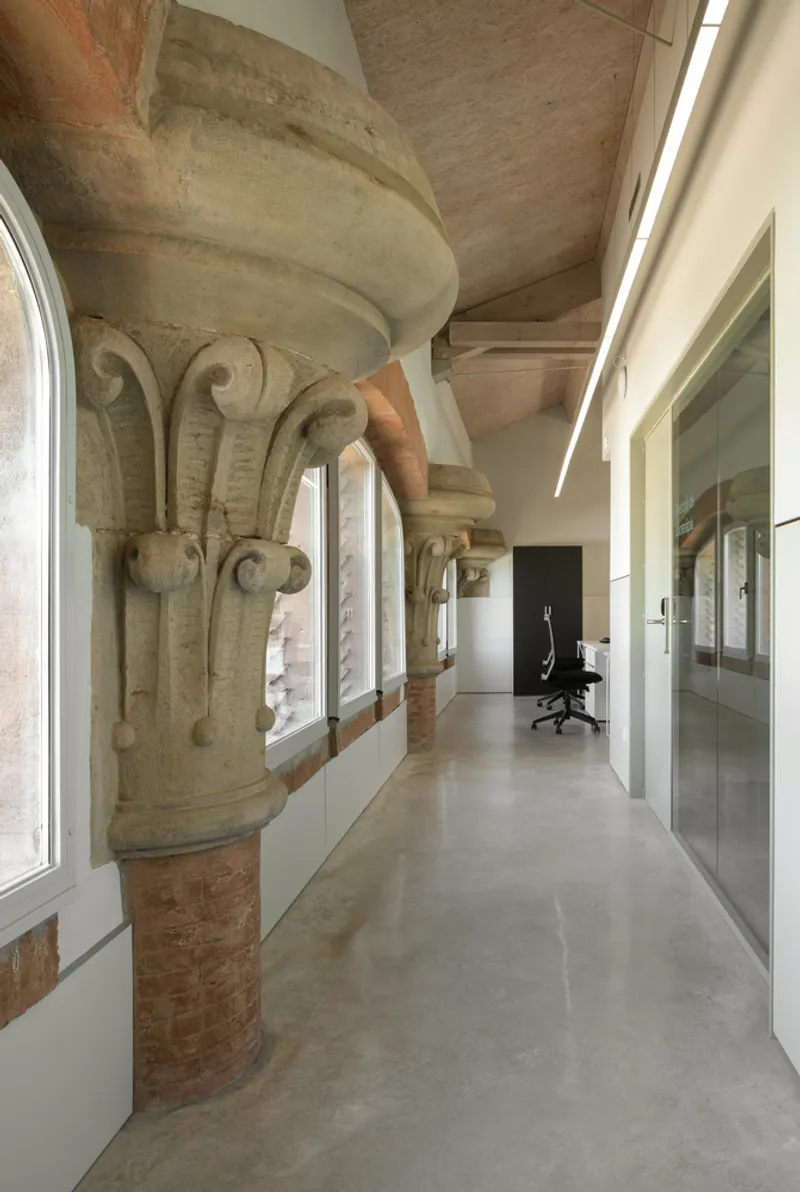
The intervention strategy emphasizes heritage preservation and functional enhancement. The main nave is vertically subdivided into three levels using a mixed steel and concrete substructure, while adjoining naves are linked through a metallic porch, creating seamless spatial connectivity. A triple-height tetragonal access hall highlights the central facade assembly, integrating a sculptural staircase within an irregular polyhedron that bridges historic grandeur with modern functionality.
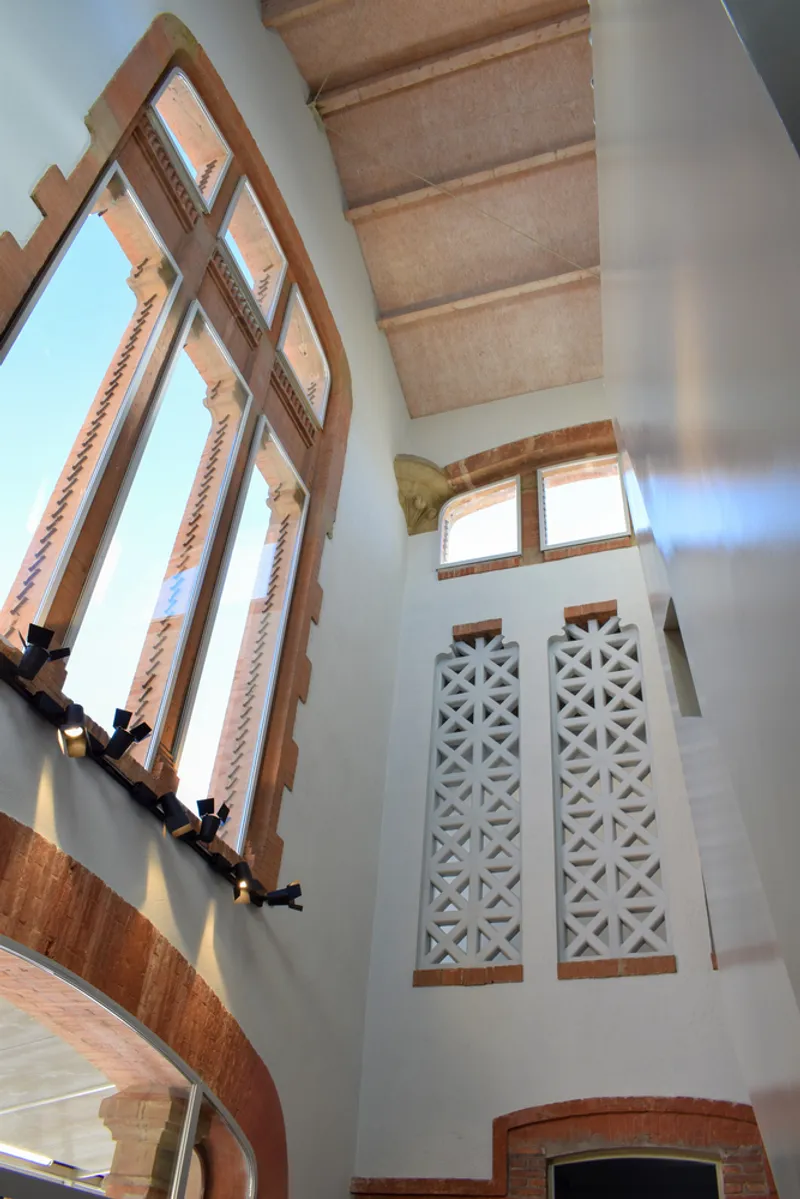
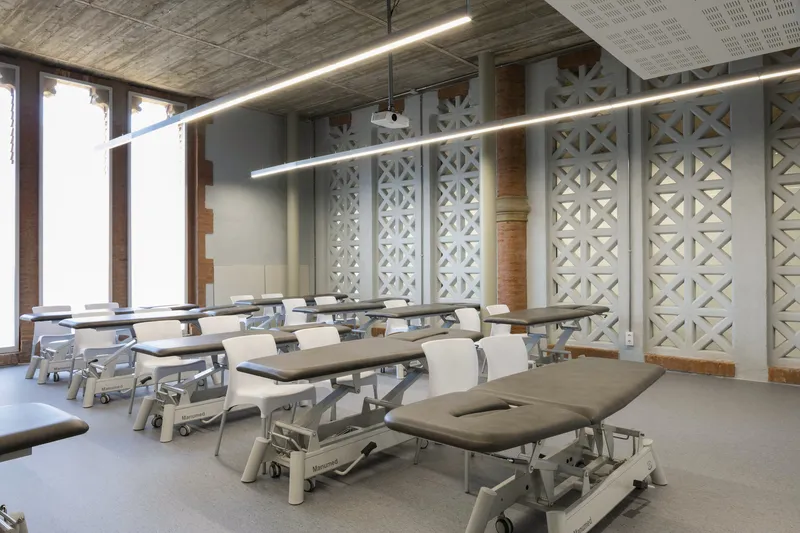
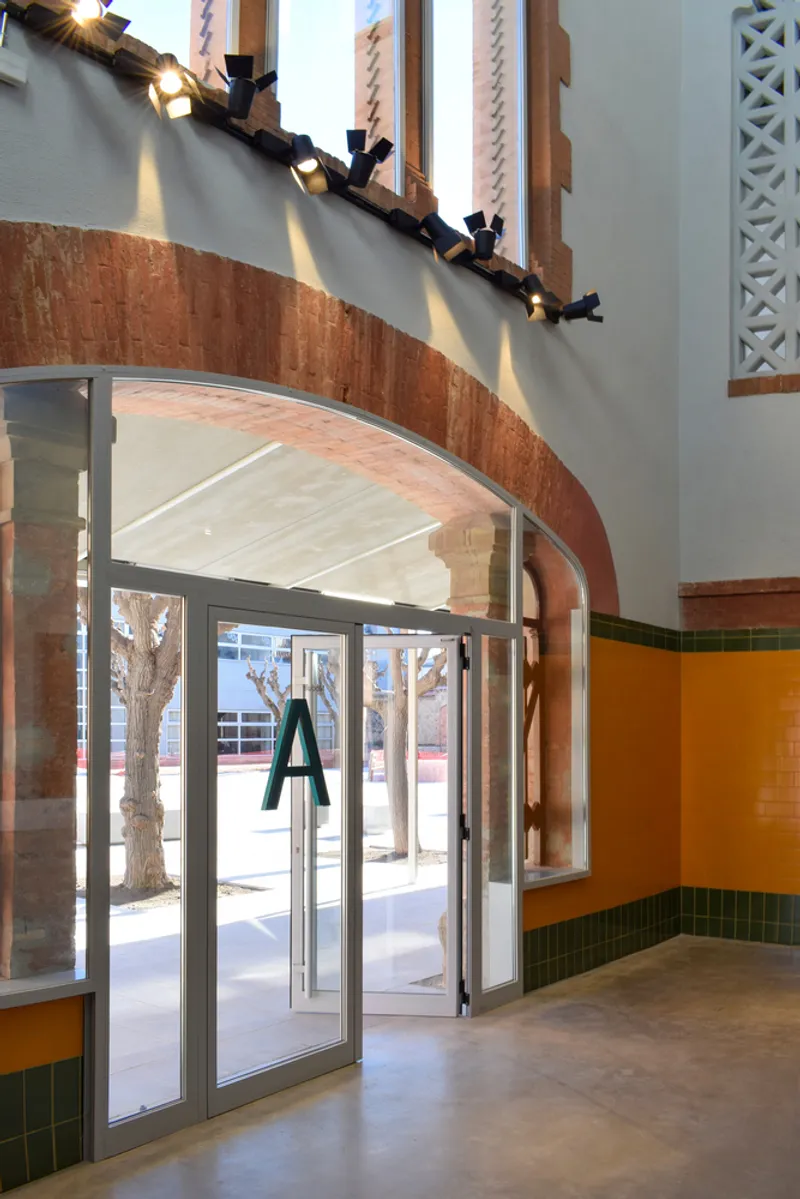
Interior aesthetics are enriched by ceramic plinths in green and orange hydraulic tiles, reproduced by Ceràmica Cumella to match the original modernist palette. Material differentiation between new partitions and existing walls enhances visual clarity, while glazed openings maintain spatial continuity. The exposed concrete floor slabs harmonize with the aged patina of the original structure, creating a balance between historic and contemporary elements.
Integrating Nature and Campus Identity
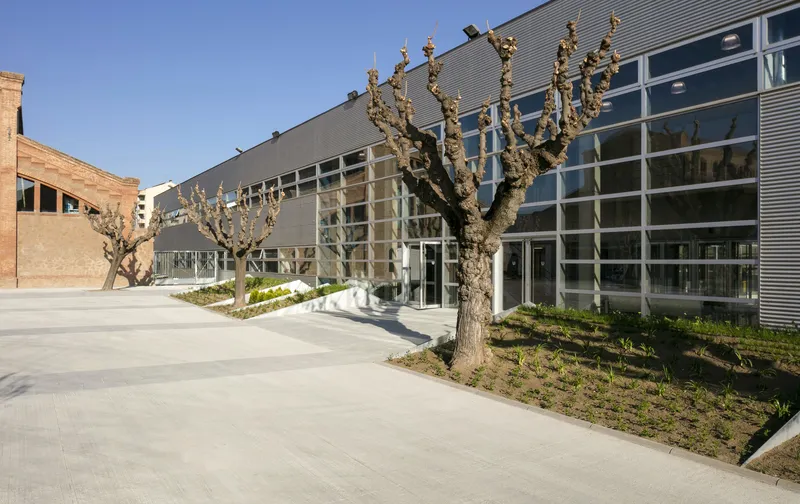
The central courtyard retains its existing trees, with site urbanization complemented by lateral planters and a centerpiece echoing the FUB insignia. The project demonstrates sensitive integration of architecture, landscape, and heritage, offering a functional, sustainable, and visually coherent environment for academic use.
This renovation showcases the potential of historic industrial buildings to accommodate modern educational programs, combining architectural conservation, adaptive reuse, and contemporary design. The FUB3 Complex is an exemplar of how historic preservation can meet modern institutional requirements while maintaining architectural authenticity.
All photographs are works of
Isabel Casanova Cornejo




Popular Articles
Popular articles from the community


The Ocean Hive: Sustainable Architecture for a Self-Sufficient Civilization at Sea
The Ocean Hive imagines sustainable architecture at sea, where modular habitats, algae, wave power and ocean waste sustain a growing colony.

Play: Fragments of Their World
Familiar architecture becomes modular playground design, creating safe spaces where displaced children can learn, connect, imagine and play.

Lunar Spiral: Space Architecture Shaped by the Mathematics of the Universe
Lunar Spiral reimagines space architecture through Fibonacci geometry, lunar regolith, levitating habitats, and self-sustaining Moon living.

Co-life: Sustainable Architecture for Age-Friendly Community Living
Co-life reimagines sustainable architecture for seniors through courtyards, rammed earth, shared gardens, and spaces designed for belonging.


Similar Reads
You might also enjoy these articles

Bamboo Housing Challenge 2026: Design Affordable, Sustainable Homes Using Bamboo
An international design competition by Bamboo U and IBUKU inviting architects and designers to reimagine affordable housing using bamboo — with the winning design built full-scale in Bali.

Computational Design & Education: Beegraphy Design Awards Introduces 7th Category (Featuring Jiyun's Innovative Approach)
Dive into Beegraphy’s 7th Design Awards category, where computational design meets education to create immersive, interactive learning tools, inspired by Jiyun’s work.

From Parametric Lighting to Urban Furniture: Join the 2nd Workshop in Beegraphy’s Computational Design Series
Dive into Cutting-Edge Design Techniques and Practical Applications with Industry Experts

Last Call: Unleash Your Architectural Genius in SHAK's Kindergarten Design Competition
Urgent call for architects to join SHAK's kindergarten design competition before the looming deadline

Explore Architecture Competitions
Discover active competitions in this discipline



Challenge to design public laboratory


Challenge to reimagine the Iron Throne


Photograph architecture without architects


Illustrate the lost glory of Angkor Wat - Render Challenge
Comments (0)
Please login or sign up to add comments
No comments yet. Be the first to comment!