

Requariements for good acoustic
Acoustic Optimization in Music Practice Spaces: Parametric Design and Form-Finding Approaches

One of the most fundamental aspects shaping our perception of sound is reverberation time. It explains why choral singing resonates so well in Gothic cathedrals, while lectures are clearer in auditoriums. Different functions require different acoustic conditions: in churches, long reverberation times allow sounds to blend harmoniously, whereas in lecture halls or recording studios the goal is to minimize reverberation for speech intelligibility. Yet absorption alone does not define acoustic quality. Equally important are the volume and proportions of the room, construction materials, the number of listeners, and the objects present within the space. Achieving good acoustics requires a careful balance of all these parameters.
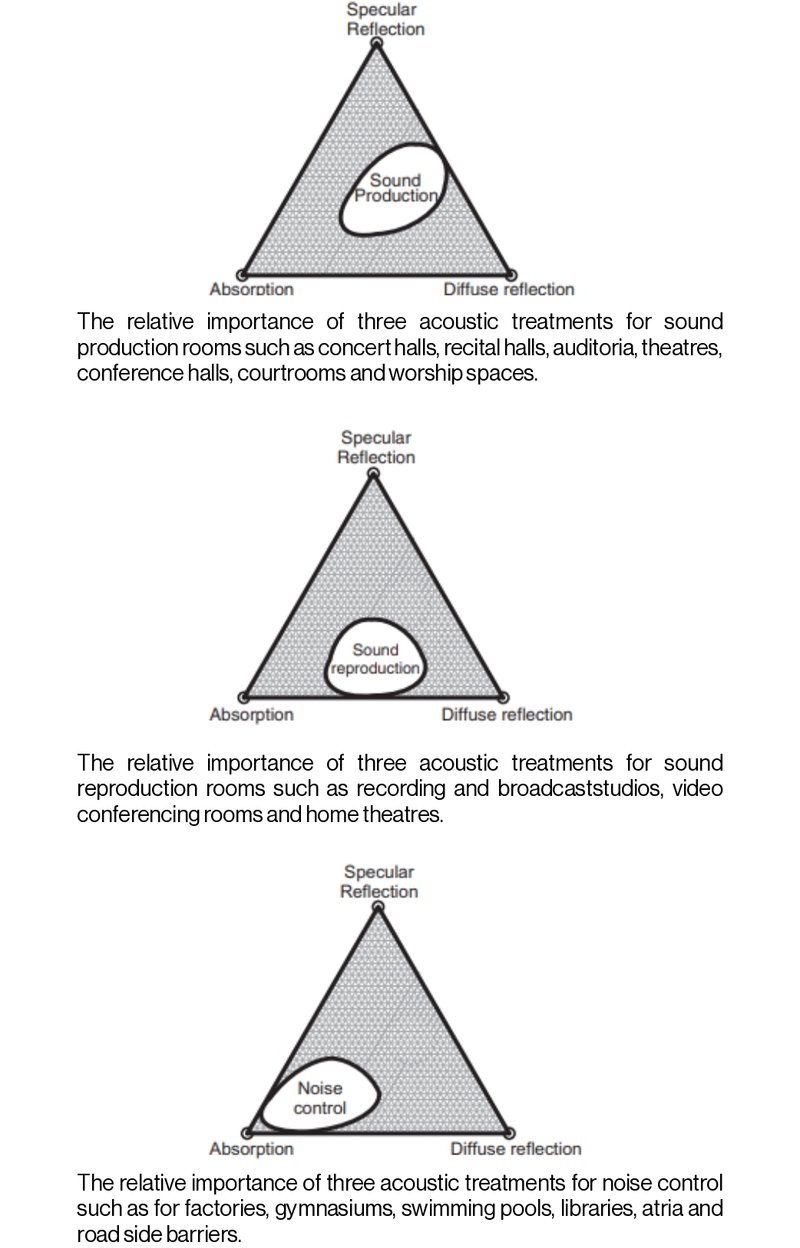
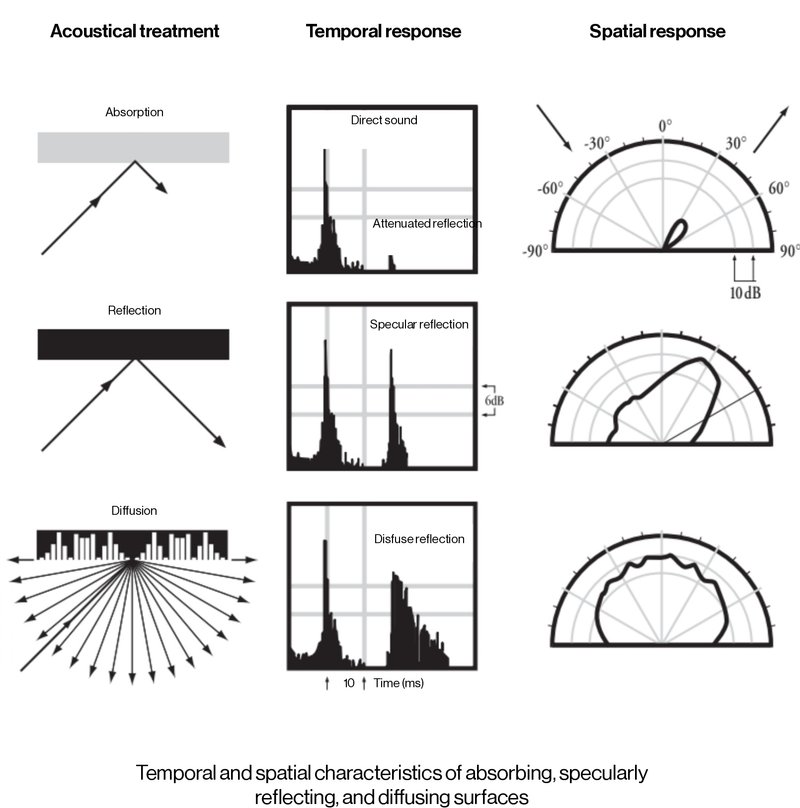
Absorption, reflection, and diffusion form the three primary tools—alongside geometry and spatial volume—through which we can intentionally shape acoustic performance. Absorption indicates how much sound energy is lost within materials; reflection measures the portion of energy returning to the room; diffusion disperses sound evenly, reducing distortions without eliminating acoustic energy. While absorbers, often made of fibrous materials, are efficient in interior applications, they do not tolerate exterior conditions. Diffusers, on the other hand, play a vital role in scattering reflections to maintain clarity and richness of sound.
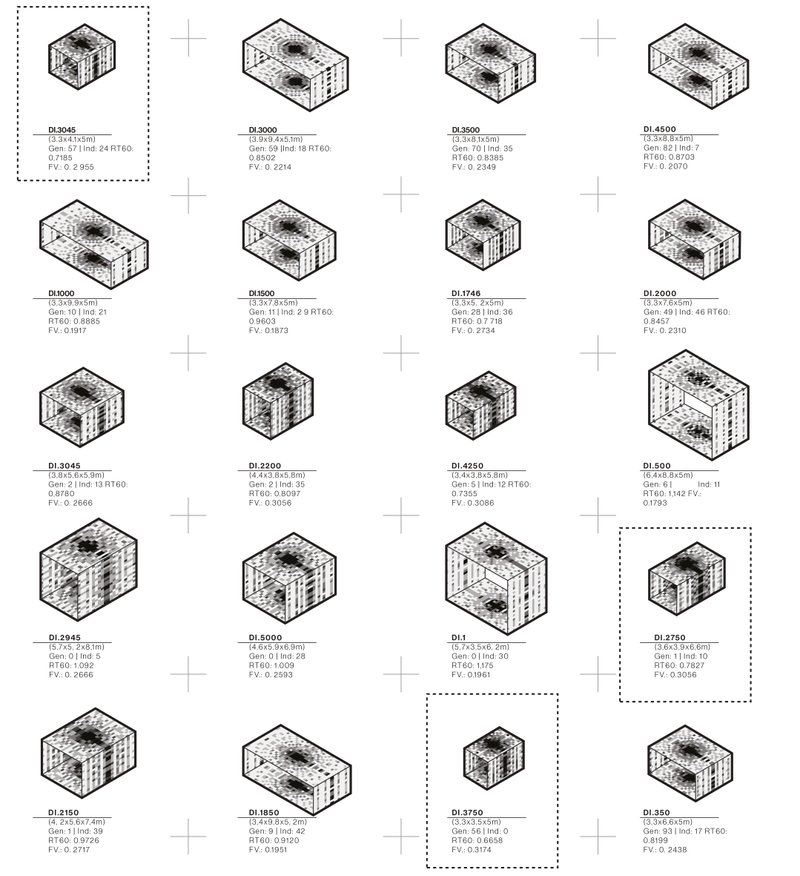
To optimize the acoustic conditions of practice rooms, a parametric form-finding process was implemented. The algorithm was guided by two primary parameters: the desired RT60 reverberation time of approximately 0.7 seconds and the uniformity of reflected energy, expressed by a custom indicator (F.V.). The rehearsal volumes were subdivided into equal surface segments, and acoustic ray vectors were simulated from a central point source. The dispersion patterns revealed the degree of acoustic uniformity: darker areas indicated higher energy concentrations, while uniform coloration suggested balanced reflection.
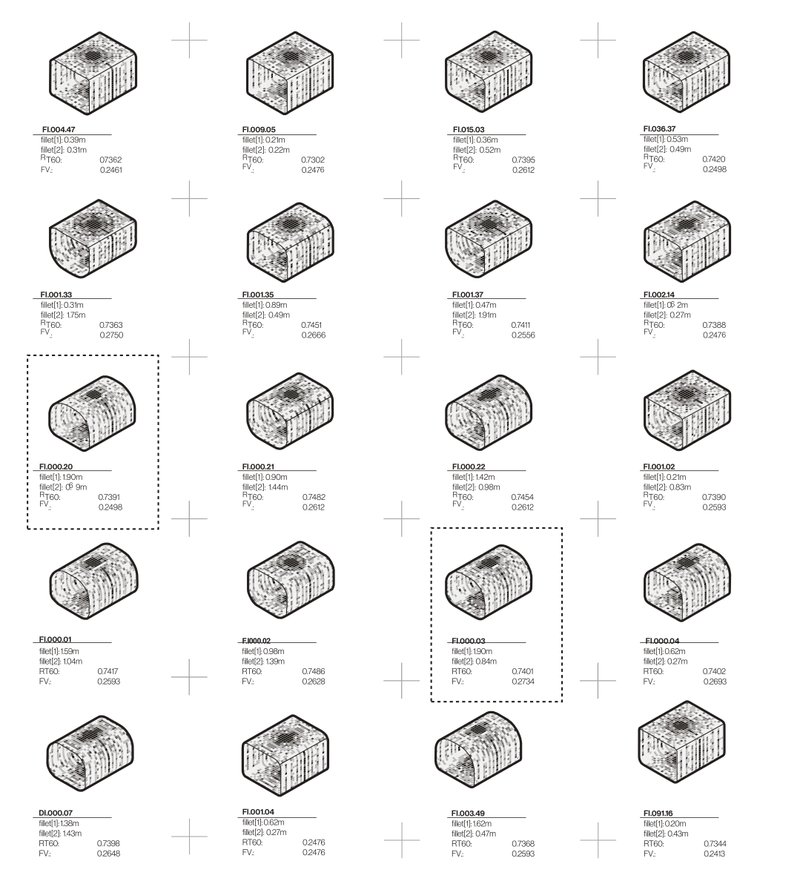
Further exploration investigated whether curved geometries could improve acoustic performance. Standing waves are typically concentrated in corners; therefore, curved or filleted edges were tested to minimize their occurrence, especially at low frequencies. The analyses confirmed that such geometric modifications significantly influence reverberation and diffusion patterns, validating an intuitive assumption through computational testing.
Additionally, the impact of various diffuser geometries on reverberation and sound scattering was examined. Both conventional and experimental diffuser shapes were tested, though the complexity and computational cost of the simulations limited the scope of analysis. Despite this, the results demonstrated clear tendencies and informed subsequent design decisions.
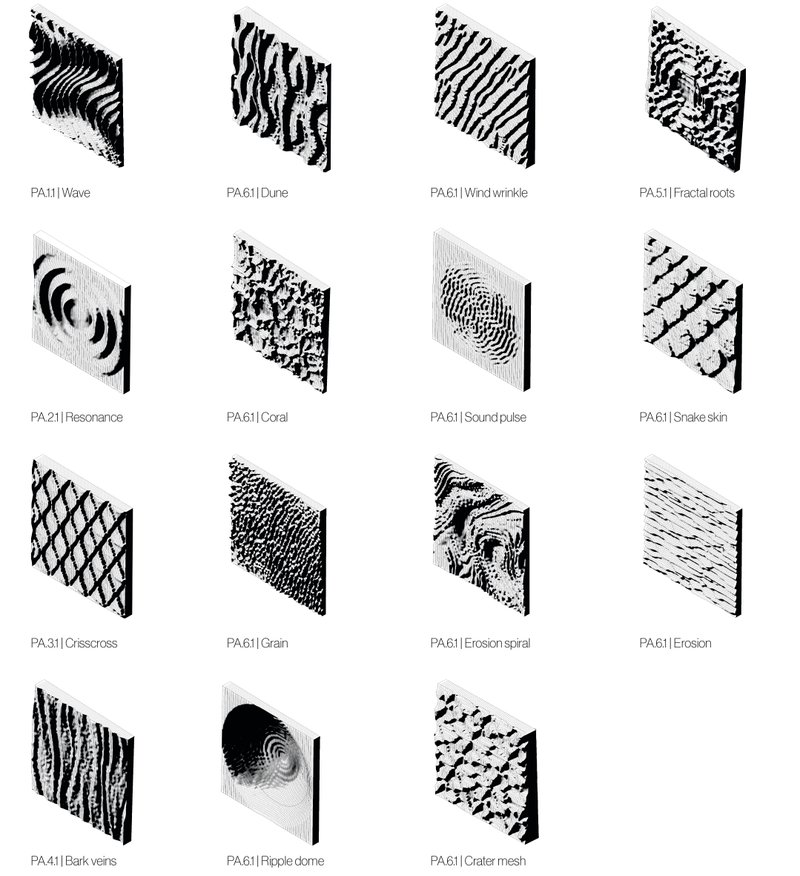
The final outcome of the study was the development of a tubular module with dimensions of 3 × 4.1 × 5 meters and rounded corners of 1.9 m and 0.9 m radii. This prefabricated unit is acoustically and thermally sealed, produced in a specialized facility, and delivered to the construction site as a ready-made element. Its lightweight yet durable construction minimizes structural load while ensuring superior acoustic isolation. By combining parametric simulations, genetic optimization algorithms, and modular prefabrication, the design process bridges computational precision with practical implementation, producing music practice spaces that meet the highest acoustic standards.



Popular Articles
Popular articles from the community

Split House: A Compact Urban Home Blending Privacy, Light, and Flexible Living in Japan
Compact Japanese home featuring DOMA space, flexible café potential, passive lighting, privacy zoning, and sustainable urban living design.
Fifth NRE Jazz Club – De Bever Architecten: Eindhoven’s Revitalized Cultural Hub
Historic gas factory transformed into Fifth NRE Jazz Club blending modern sustainability, jazz culture, dining, and heritage architecture seamlessly.
Inverted Architecture Installation by Studio Link-Arc: Exploring the Intersection of Architecture and Living Organisms
Inverted Architecture Installation by Studio Link-Arc blends mycelium, sustainability, inverted design, ecological cycles, and urban adaptive architecture in Shenzhen.

Alton Cliff House: A Harmonious Retreat by f2a Architecture in Lake Country, Canada
Alton Cliff House blends corten steel, prefabrication, and sustainable design, creating a luxurious, energy-efficient retreat perched on Canadian cliffs.


Similar Reads
You might also enjoy these articles
Alton Cliff House: A Harmonious Retreat by f2a Architecture in Lake Country, Canada
Alton Cliff House blends corten steel, prefabrication, and sustainable design, creating a luxurious, energy-efficient retreat perched on Canadian cliffs.


The Ken Roberts Memorial Delineation Competition (Krob)
As the most senior architectural drawing competition currently in operation anywhere in the world, it draws hundreds of entries each year, awarding the very best submissions in a series of medium-based categories.
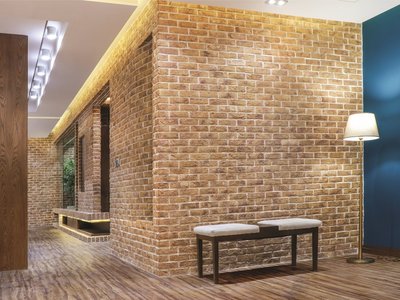
A Contemporary Take on Iranian Residential Architecture
A modern interior design in Mashhad that reinterprets brick, light, and spatial flow to create a warm, contemporary residential architecture.
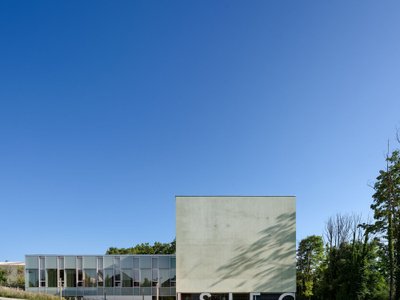
Franche-Comté Advanced School of Engineering by Dominique Coulon & associés, Besançon
A flexible engineering school immersed in woodland, combining concrete minimalism, adaptable spaces, and natural light to support evolving educational environments.


Explore Parametric Design Competitions
Discover active competitions in this discipline




The International Standard for Design Portfolios


The Global Benchmark for Architecture Dissertation Awards


The Global Benchmark for Graduation Excellence


Challenge to reimagine the Iron Throne
Comments (0)
Please login or sign up to add comments
No comments yet. Be the first to comment!