
SAMAM House: A Peri-Urban Bengaluru Home That Redefines Living Through Landscape, Animals, and Spatial Flow
Pet-inclusive peri-urban home in Bengaluru, featuring linear planning, courtyards, indoor-outdoor continuity, and restrained materials enhancing spatial clarity and everyday living.


A Peri-Urban Residence in Bengaluru Designed for Humans, Animals, and Spatial Fluidity
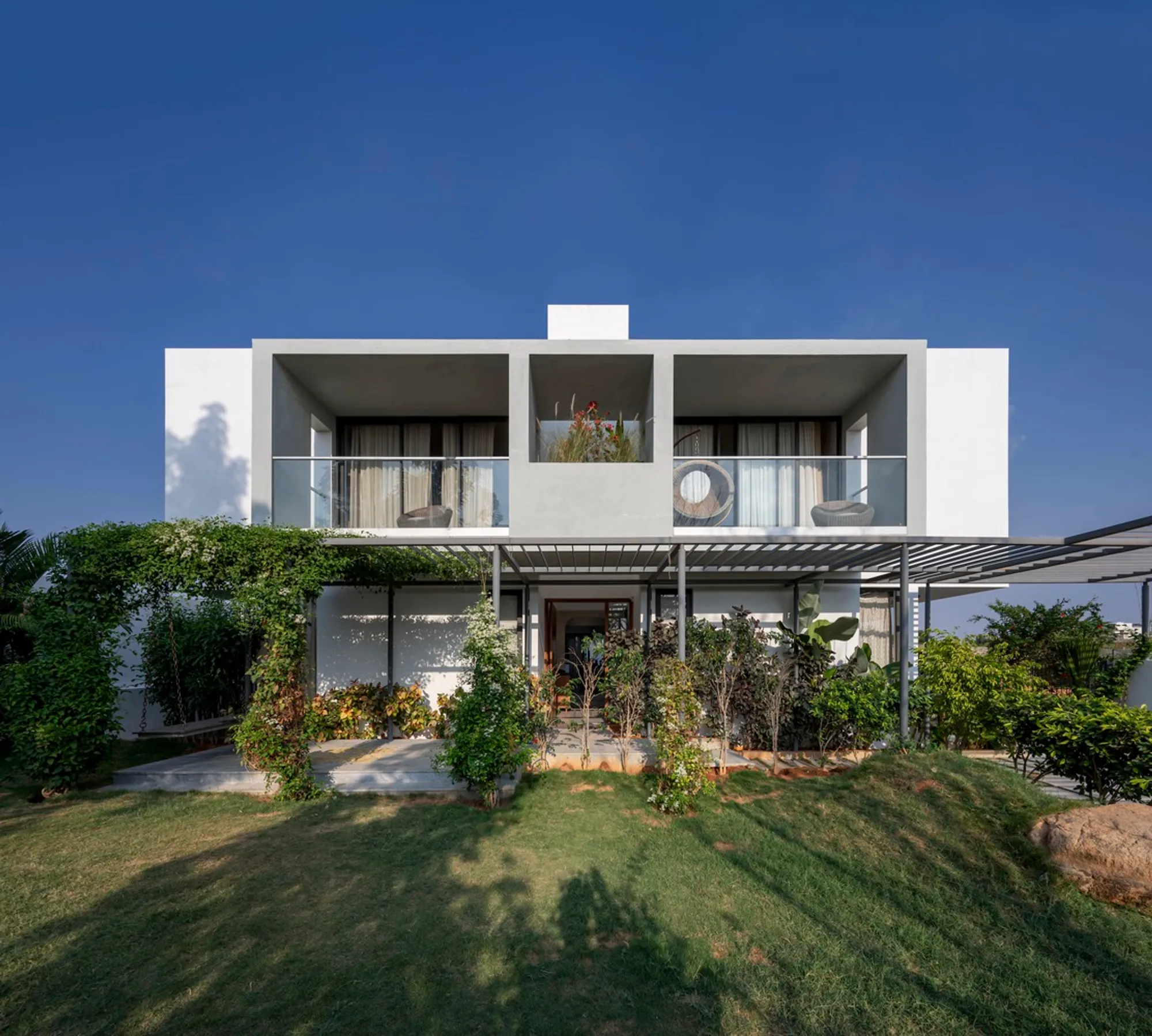
Located in the northern peri-urban edge of Devanahalli, Bengaluru, SAMAM House by ma+rs is a thoughtfully planned private residence that reimagines everyday domestic living through spatial clarity, landscape integration, and budget-conscious design. Designed for a family of four along with their three dogs, the project responds sensitively to both human and non-human inhabitation, creating a home where indoor and outdoor life coexist seamlessly.
Site Context and Design Intent
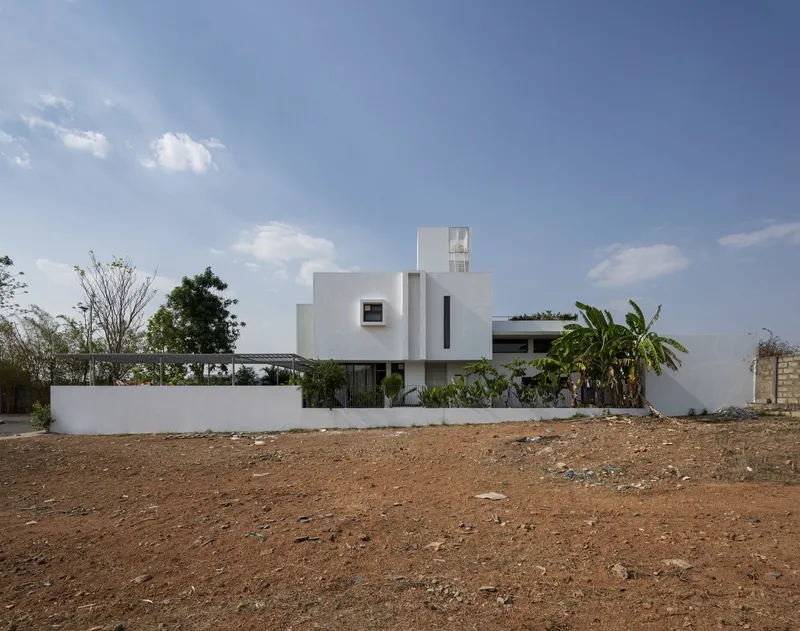
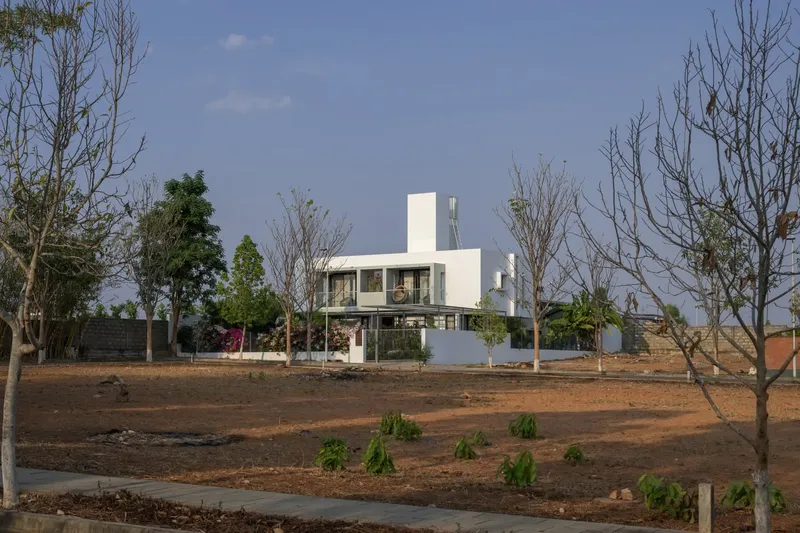
The house is situated on a typical 60’ x 90’ residential plot, a common condition in Bengaluru’s expanding suburban fabric. Rather than maximizing built footprint, the architects strategically retained a significant portion of the site as open landscape. Both the front and rear setbacks are transformed into gardens, offering continuous outdoor zones for the dogs to run freely while also acting as visual and climatic buffers for the interior spaces.
The core design intent was to create shared spaces for humans and animals alike, while maintaining privacy, comfort, and spatial hierarchy. This approach positions SAMAM House as an example of pet-friendly residential architecture that does not treat animals as secondary users but as integral occupants of the home.
Linear Planning and Spatial Organization
The architectural layout divides the built volume into three linear blocks aligned along the north, south axis, separated by open-to-sky and semi-open zones. This linear planning strategy enhances cross-ventilation, daylight penetration, and visual connectivity across the site.
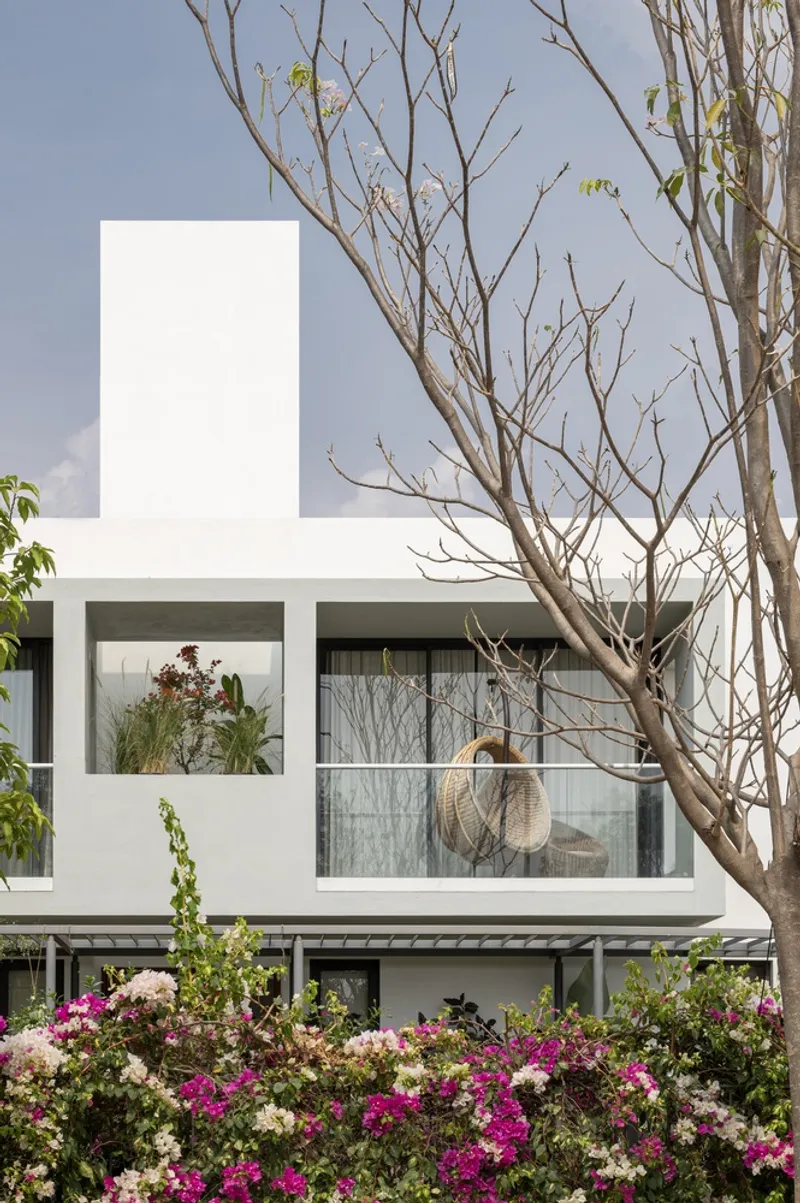
- Private Block The first block accommodates the private functions of the house. Two bedrooms are positioned on either side of a strong east–west central axis, each opening onto private sit-outs on both floors. These transitional spaces allow residents to engage with the outdoors while maintaining intimacy and privacy.
- Green and Circulation Block Acting as the spatial and climatic buffer, the second block houses a central green courtyard, along with the staircase and essential services such as the powder room, utility area, and electrical room. This zone introduces natural light and ventilation deep into the plan, while also reinforcing the house’s connection to landscape.
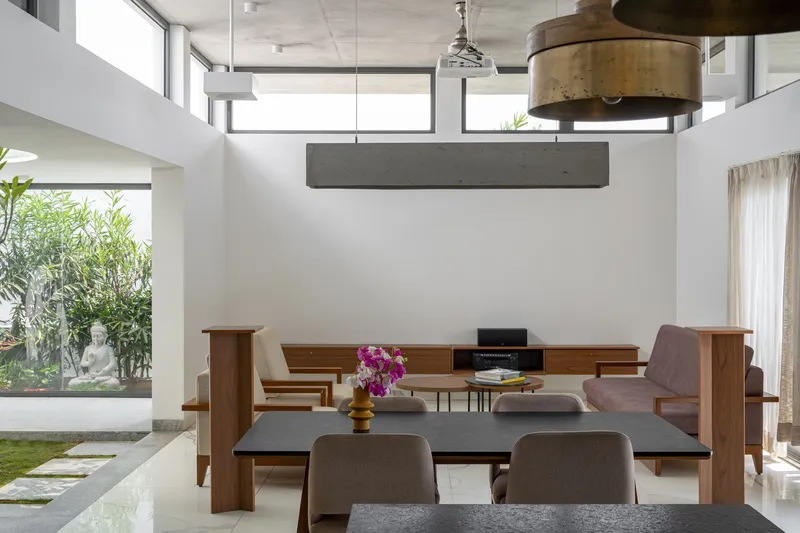
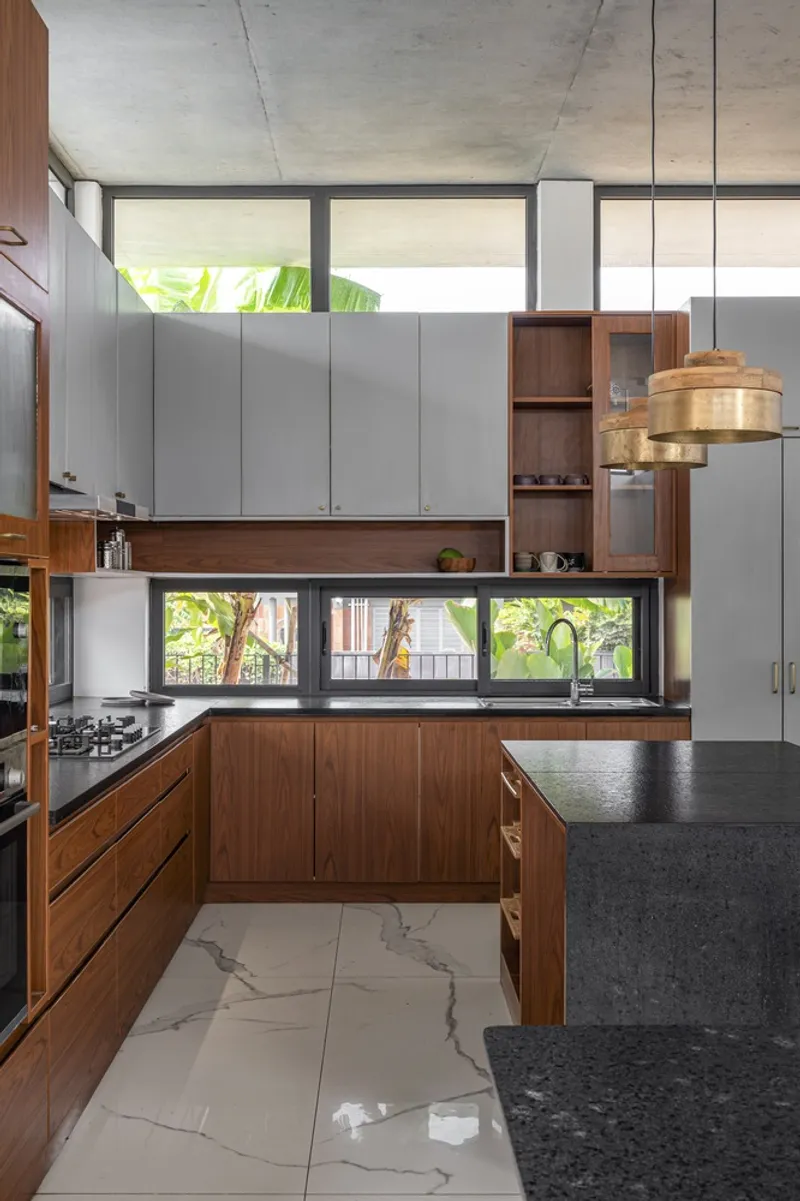
- Public Living Block The third block contains the public and social spaces—living, dining, and kitchen—organized within a large, nearly double-height volume. This expansive space opens directly onto the backyard, dissolving the boundary between interior and exterior and enhancing spatial fluidity. The visual continuity allows daily activities to extend effortlessly into the garden, reinforcing the indoor–outdoor living experience.
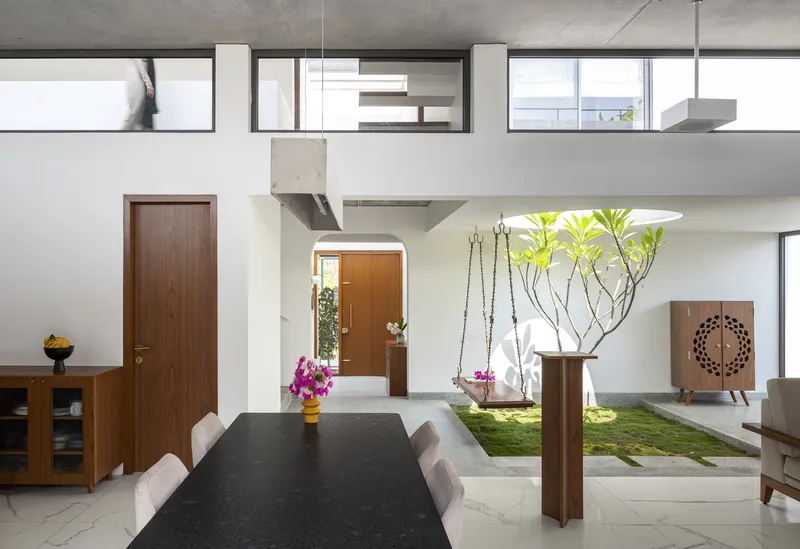
Indoor, Outdoor Continuity and Spatial Experience
A shaded walkway and entrance patio lead into the house, gradually transitioning visitors from the street into a calmer, more private environment. Once inside, the clear axial organization guides movement and sightlines across the house, culminating in expansive views toward the rear garden.
The careful orchestration of open courts, sit-outs, and landscaped zones ensures that nature is always within reach: visible, accessible, and experiential. This strategy not only benefits human occupants but also provides freedom of movement for the dogs, supporting an inclusive and empathetic design philosophy.
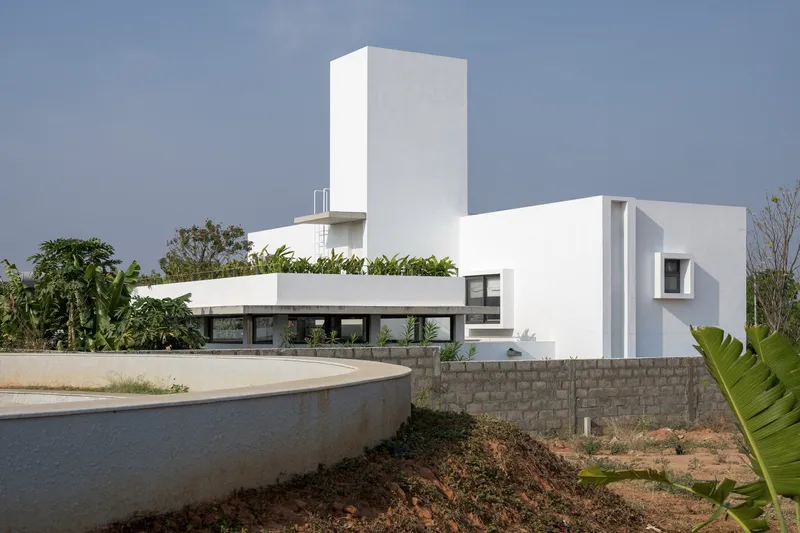
Material Palette and Budget-Conscious Construction
Designed and executed within a tight budget, SAMAM House adopts a restrained and honest material palette. The architects focused on durability, low maintenance, and local availability to ensure long-term sustainability.
- Exposed concrete slabs reduce future maintenance and eliminate the need for false ceilings or frequent repainting.
- Clean white walls enhance daylight and create a neutral backdrop that emphasizes spatial proportions.
- Vitrified tile flooring is used indoors for its durability and cost efficiency.
- Locally sourced Sadarhalli granite defines the outdoor flooring, grounding the house within its regional material context.
This humble palette not only controls construction costs but also allows simple materials to express their inherent textures and qualities. The result is a calm, uncluttered architectural language that prioritizes space, light, and movement over ornamentation.
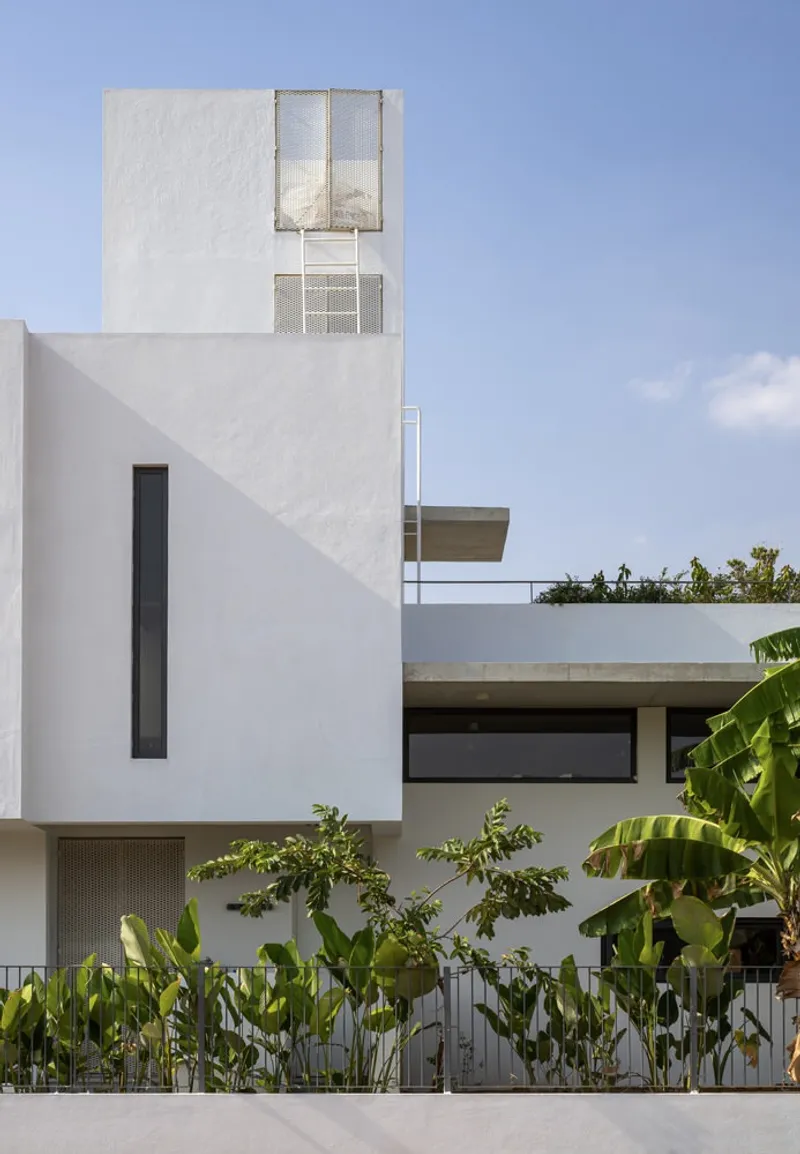
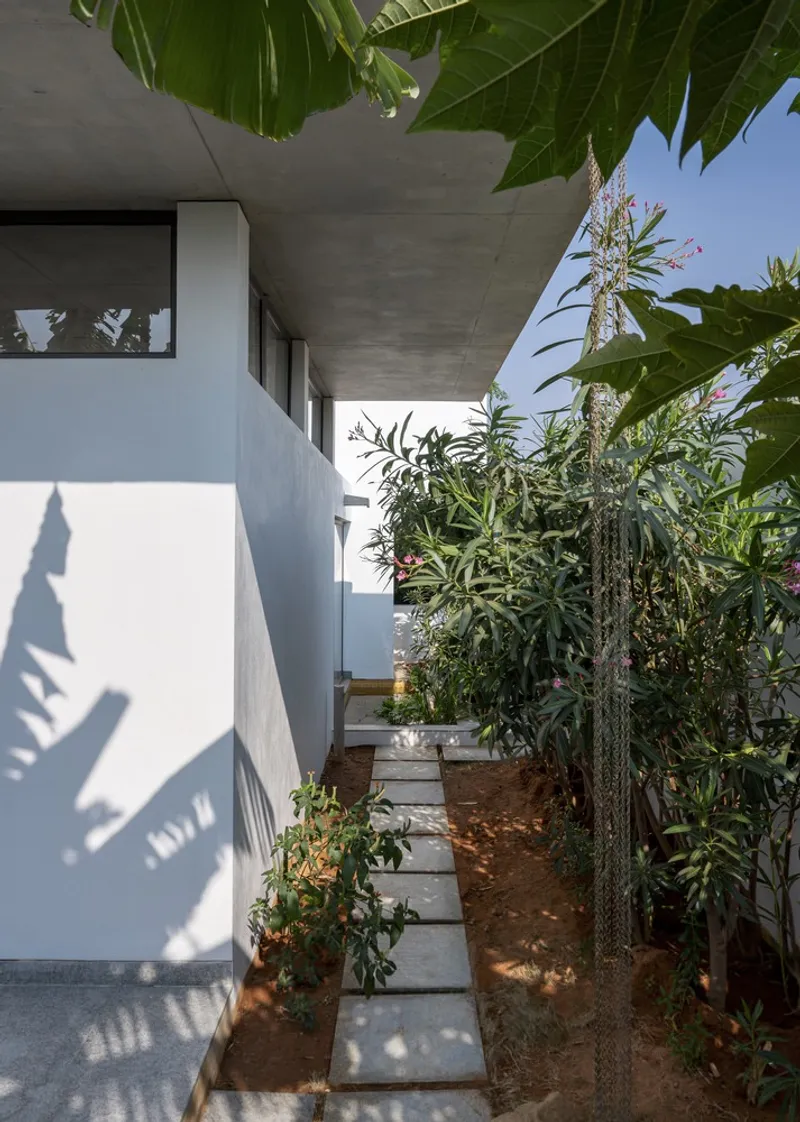
A Contemporary Peri-Urban Home
SAMAM House stands as a compelling example of contemporary residential architecture in Bengaluru’s peri-urban landscape. Through its linear planning, integration of landscape, and inclusive approach to living with animals, the project demonstrates how thoughtful design can elevate everyday domestic spaces, without excess or extravagance.
By balancing function, climate responsiveness, and emotional comfort, ma+rs delivers a home that is both pragmatic and poetic, rooted in context while responsive to evolving lifestyles.
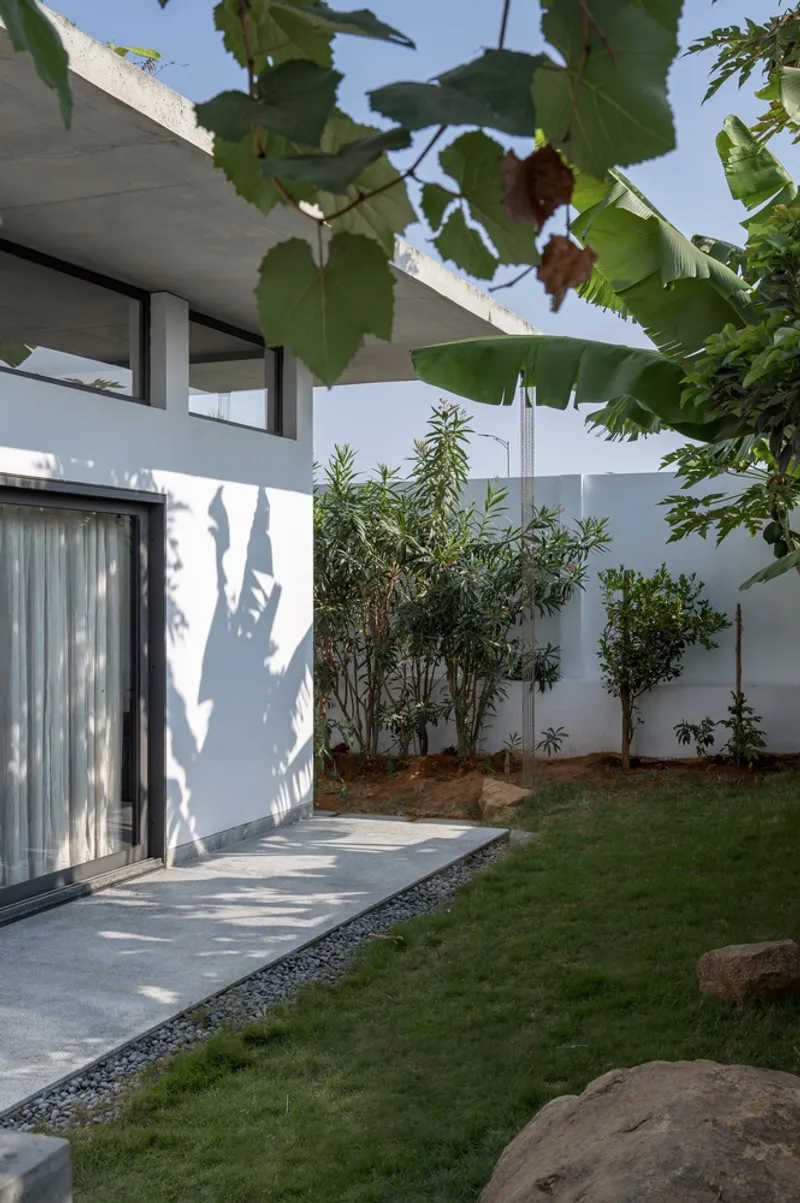
All photographs are works of
Atik Bheda




Popular Articles
Popular articles from the community


Co-Life: Senior Housing Design That Reconnects Older Adults With the City
Co-Life reimagines senior housing design through healing gardens, shared streets, workshops, and a sustainable community across generations.

The Earth Pod: 3D Printed Homes for Resilient Refugee Communities
The Earth Pod reimagines refugee housing through 3D printed homes made from clay, combining resilience, self-sufficiency, and rapid shelter.

Co-life: Sustainable Architecture for Age-Friendly Community Living
Co-life reimagines sustainable architecture for seniors through courtyards, rammed earth, shared gardens, and spaces designed for belonging.

Riyadh For All: Intergenerational Urban Design for Active Aging in Rabat
Riyadh For All reimagines urban design in Rabat with intergenerational co-living, adaptive courtyards, and Moroccan cultural exchange today.


Similar Reads
You might also enjoy these articles


Hodi-Mandai Geram
Project Function: Preservation and revitalization of the Intangible heritage and socio-spatial identity of the Hodi by Housing, Cultural Memory Center, Sacred Grove, landscape, local tourism economy


Olio Towers: A Mid-Rise for Performers That Fuses Housing, Rehearsal, and Stage
Located blocks from Houston's Theater District, this modular tower stacks living units around a central performance atrium.

Oasis: Modular Green Housing Carved into Dhaka's Urban Fabric
A shortlisted Plugin Housing entry reclaims unauthorized settlements in Dhaka with stepped concrete volumes, green roofs, and ventilation-driven design.

Black Hole: A Floating Megastructure for the Post-Physical Era
Emiliano Mazzarotto envisions a spherical, self-scaling arena where e-sports, digital hotels, and holographic stadiums replace traditional public space.
Explore Housing Competitions
Discover active competitions in this discipline



Challenge to reimagine the Iron Throne


Photograph architecture without architects


Illustrate the lost glory of Angkor Wat - Render Challenge


Design challenge to reuse E-waste
Comments (0)
Please login or sign up to add comments
No comments yet. Be the first to comment!