
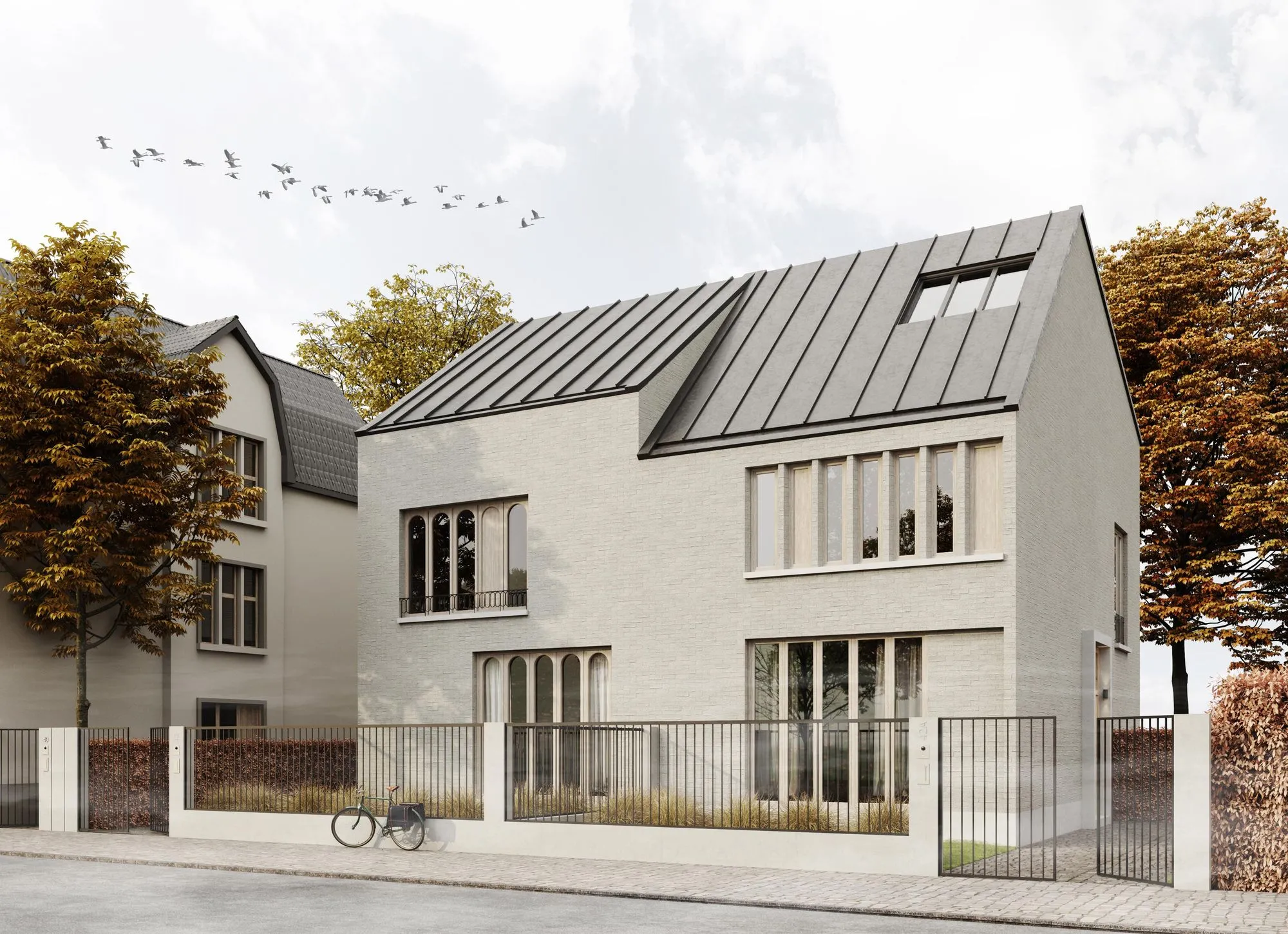
Sankt Göres Townhouses by Nidus: A Contemporary Interpretation of Architectural Heritage in Düsseldorf
Sankt Göres Townhouses blend brick façades, oak arches, and minimalist interiors, merging German tradition with Japanese-inspired spatial clarity and contemporary living.


The Sankt Göres Townhouses, designed by Nidus and located in Düsseldorf’s historic Kaiserswerth district, represent the studio’s first built project—a contemporary architectural statement rooted deeply in local history. Completed in 2023, the 500 m² dual-residence development blends monolithic construction, natural materials, and refined craftsmanship to create a timeless yet modern living environment. Subtle in presence and set slightly back from the street, the pair of townhouses reward close observation, revealing thoughtful detailing and a quiet architectural confidence.
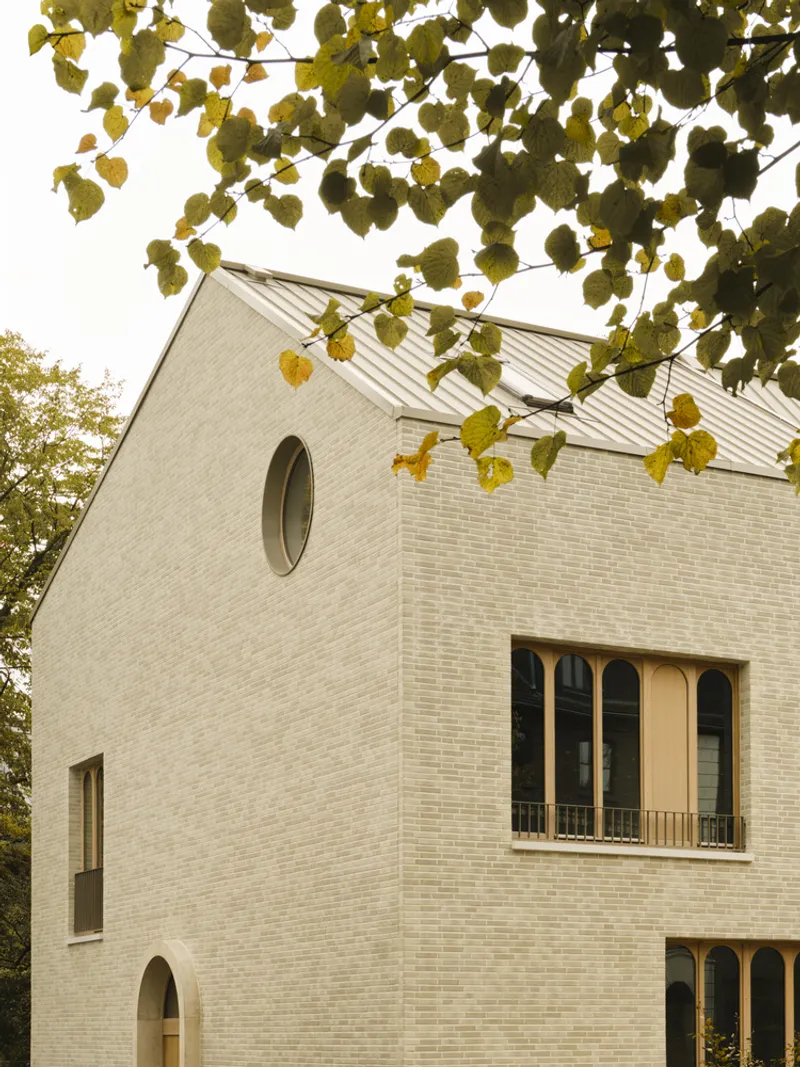

Architectural Concept: Minimalism Shaped by Historical Dialogue
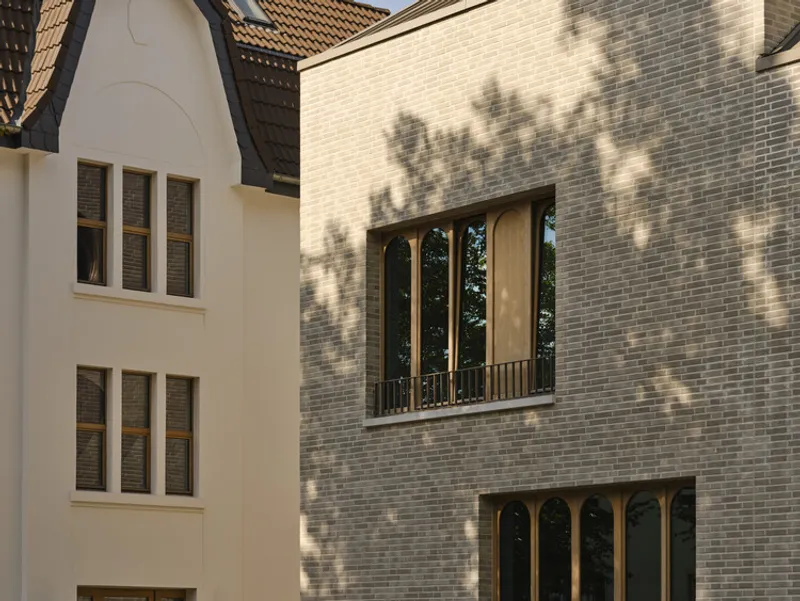
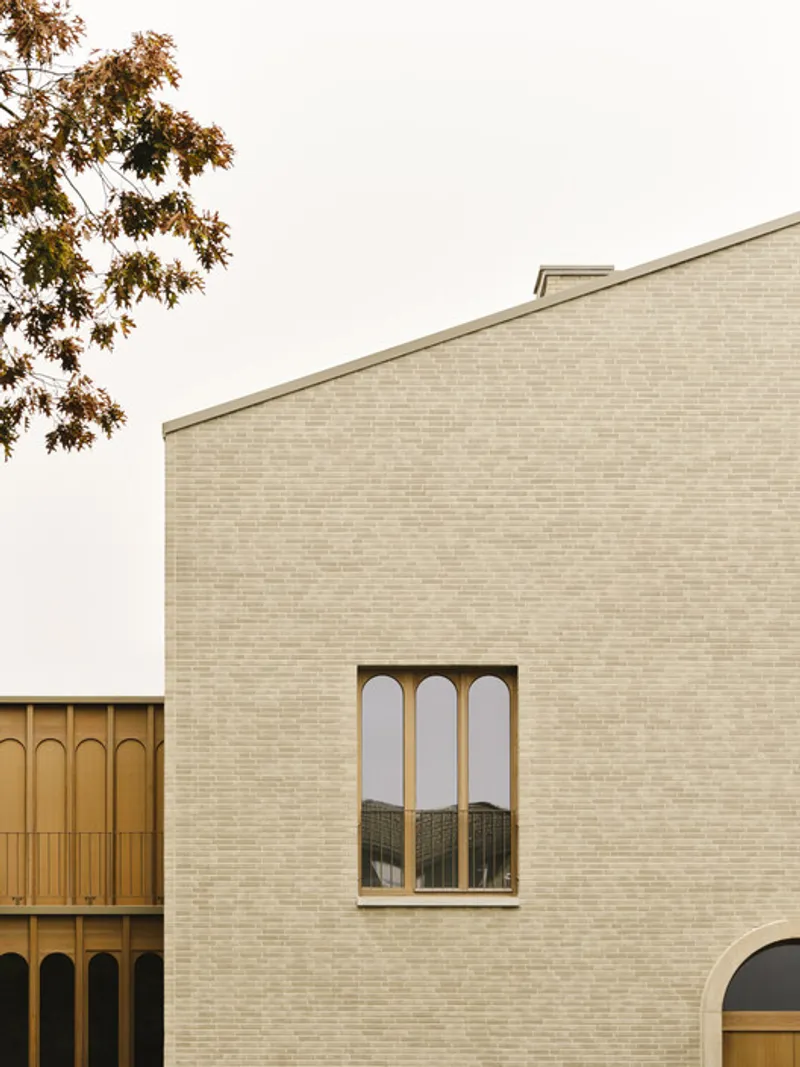
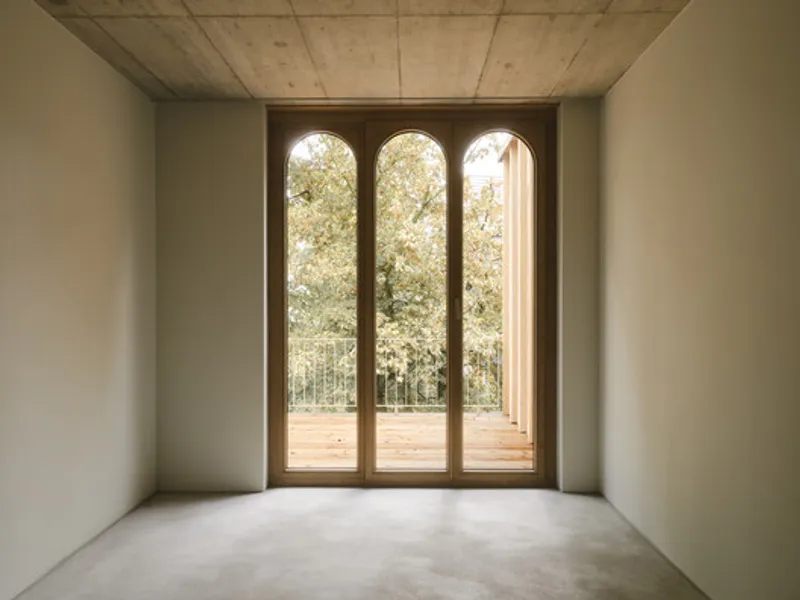
Nidus approaches the design with a clear intention: to create unadorned, essential forms that still engage with the architectural heritage of Kaiserswerth. The façades—constructed in exposed regional brickwork—establish a tactile connection to local building traditions. Classic arched oak windows serve as a deliberate historical reference, grounding the contemporary structure in the familiar language of the neighborhood’s older constructions.
Each façade is composed with painterly precision, playing with symmetry, rhythm, and proportion. These elevations act like curated images, drawing the viewer’s eye to subtle shifts in materiality, shadow, and geometry. The composition reflects Nidus’s interest in creating architecture that feels both recognizable and new, bridging past and future through material honesty.
Entry Sequence and Material Expression
The entrances are located discreetly along the side elevation, reinforcing the project’s understated character. Here, exposed concrete portals contrast with the warmth of solid oak front doors, one framed by a round arch and the other by an angular profile. This juxtaposition expresses Nidus’s commitment to both tradition and modernity, while also giving each townhouse its own identity within a unified architectural ensemble.
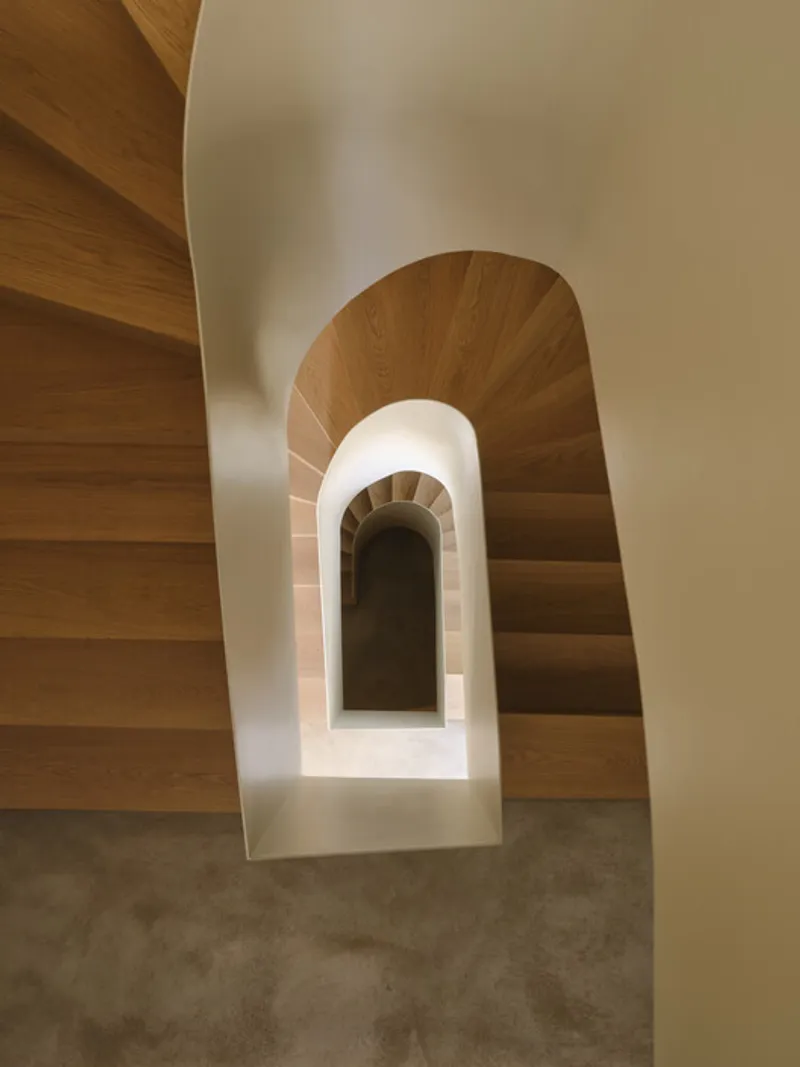
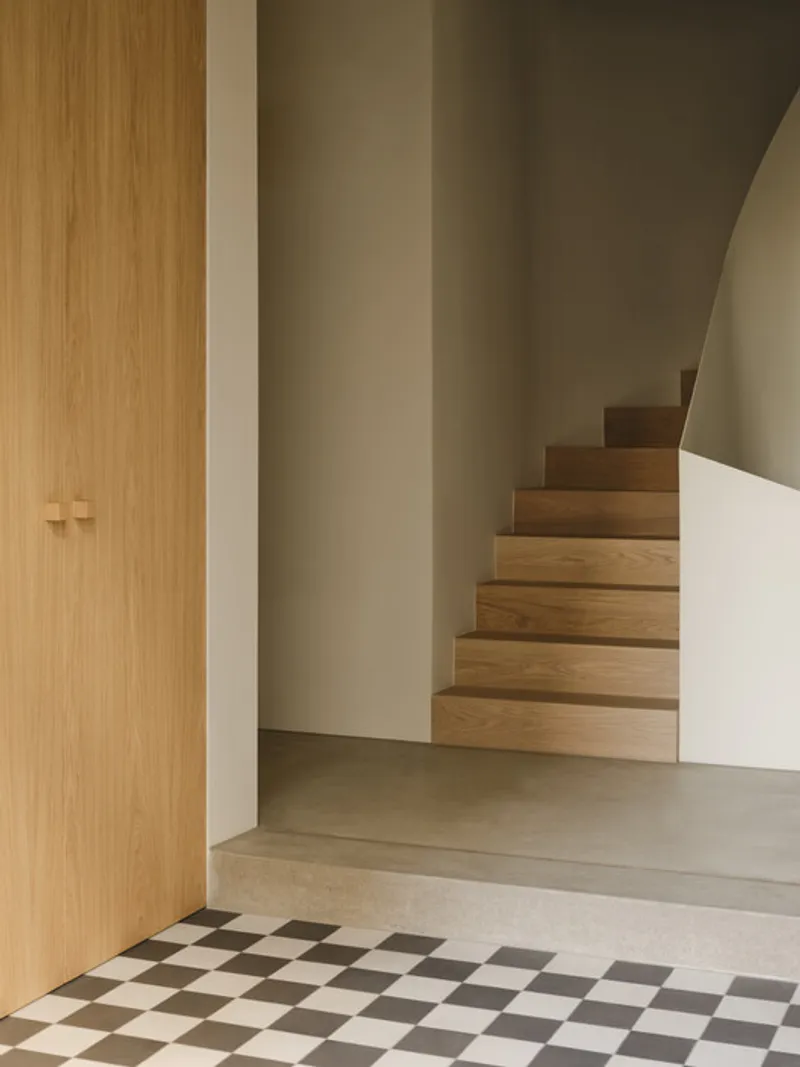
Internally, the material palette continues the reliance on natural and regional materials. Oak, brick, exposed concrete, and carefully selected finishes by manufacturers such as Caparol, FSB, Vallone, Via, VitrA, and Parkett Dietrich emphasize craftsmanship and durability, reinforcing the project’s long-term architectural intent.
Interior Spatial Narrative: A Japanese-German Dialogue
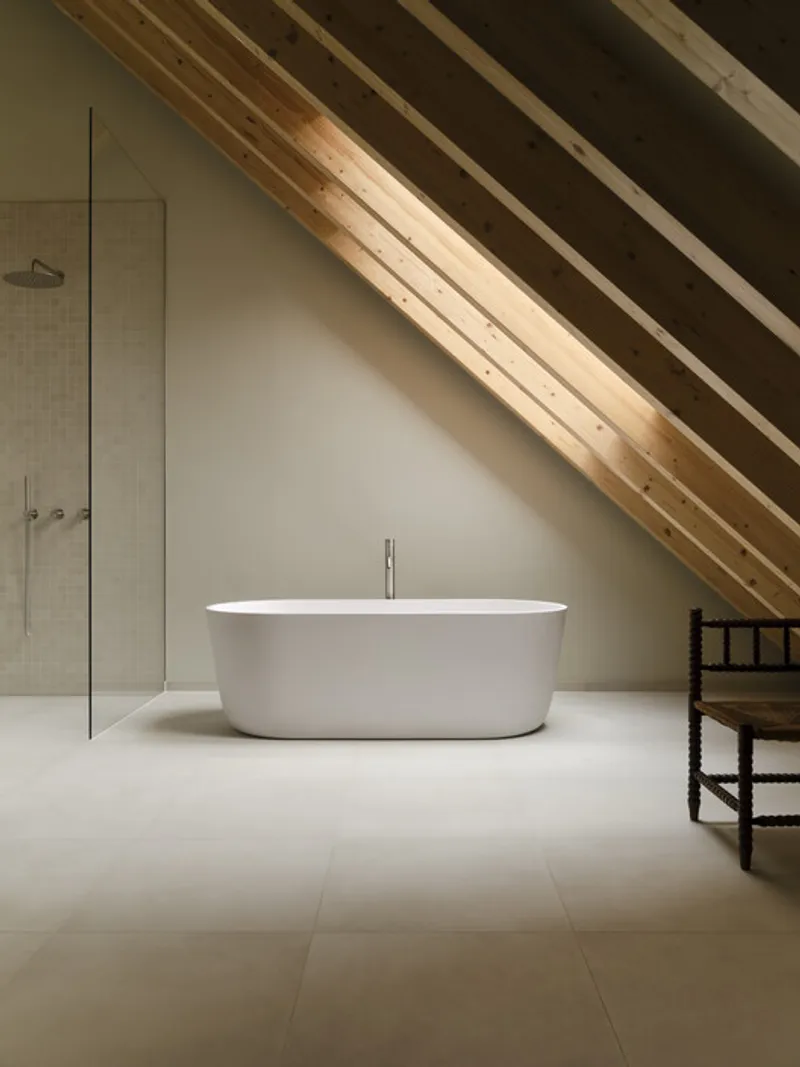
Inside the Sankt Göres Townhouses, the floor plans unfold with a sense of dramaturgy—spaces alternate between moments of intensity and calm. Inspired partly by Japanese living culture, the interiors emphasize balance, rhythm, and textural nuance, blending seamlessly with elements of German architectural design.
The ground floor features an open-plan living area anchored by conservatories that bring natural light deep into the domestic spaces. The kitchen, dining, and living zones maintain visual connection while allowing intuitive separation through subtle shifts in level and material. Upper floors house private rooms arranged to maximize light and spatial efficiency, ensuring privacy without sacrificing openness.
A Harmonious Duality: Unity Without Uniformity
Although the two townhouses are conceived as a pair, Nidus ensures each maintains distinct characteristics. This careful duality—unity in form, individuality in detail—allows the project to integrate elegantly into its urban context. The architecture makes no grand declaration, yet it stands out through the clarity of its design and the richness of its craftsmanship. In a neighborhood shaped by centuries of architectural evolution, the Sankt Göres Townhouses contribute a new layer that feels both contemporary and deeply rooted.
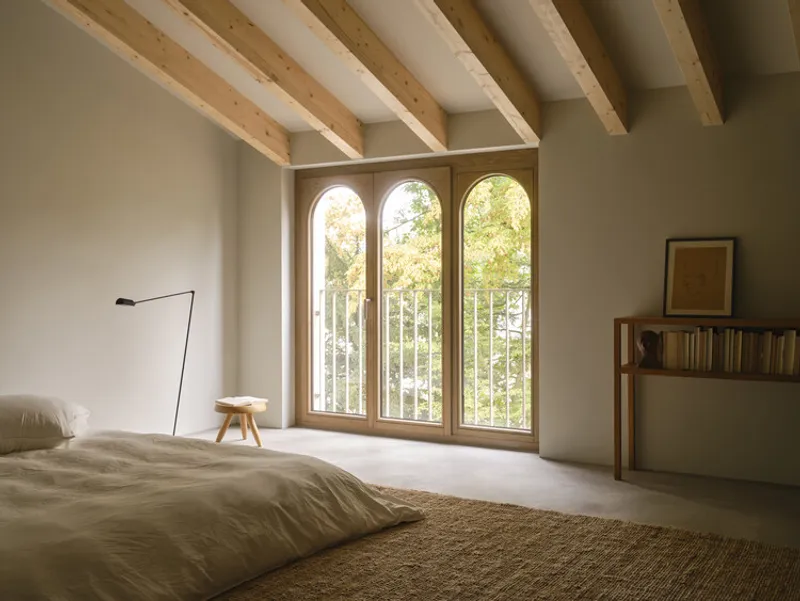
All photographs are works of Volker Conradus




Popular Articles
Popular articles from the community


Lunar Spiral: Space Architecture Shaped by the Mathematics of the Universe
Lunar Spiral reimagines space architecture through Fibonacci geometry, lunar regolith, levitating habitats, and self-sustaining Moon living.

The Ocean Hive: Sustainable Architecture for a Self-Sufficient Civilization at Sea
The Ocean Hive imagines sustainable architecture at sea, where modular habitats, algae, wave power and ocean waste sustain a growing colony.

Riyadh For All: Intergenerational Urban Design for Active Aging in Rabat
Riyadh For All reimagines urban design in Rabat with intergenerational co-living, adaptive courtyards, and Moroccan cultural exchange today.

Co-Life: Senior Housing Design That Reconnects Older Adults With the City
Co-Life reimagines senior housing design through healing gardens, shared streets, workshops, and a sustainable community across generations.
Similar Reads
You might also enjoy these articles


Hodi-Mandai Geram
Project Function: Preservation and revitalization of the Intangible heritage and socio-spatial identity of the Hodi by Housing, Cultural Memory Center, Sacred Grove, landscape, local tourism economy


Olio Towers: A Mid-Rise for Performers That Fuses Housing, Rehearsal, and Stage
Located blocks from Houston's Theater District, this modular tower stacks living units around a central performance atrium.

Oasis: Modular Green Housing Carved into Dhaka's Urban Fabric
A shortlisted Plugin Housing entry reclaims unauthorized settlements in Dhaka with stepped concrete volumes, green roofs, and ventilation-driven design.

Black Hole: A Floating Megastructure for the Post-Physical Era
Emiliano Mazzarotto envisions a spherical, self-scaling arena where e-sports, digital hotels, and holographic stadiums replace traditional public space.


Explore Nio Architects Competitions
Discover active competitions in this discipline


Challenge to design mud housing for contemporary communities


Challenge to reimagine the Iron Throne


Photograph architecture without architects


Illustrate the lost glory of Angkor Wat - Render Challenge
Comments (0)
Please login or sign up to add comments
No comments yet. Be the first to comment!