
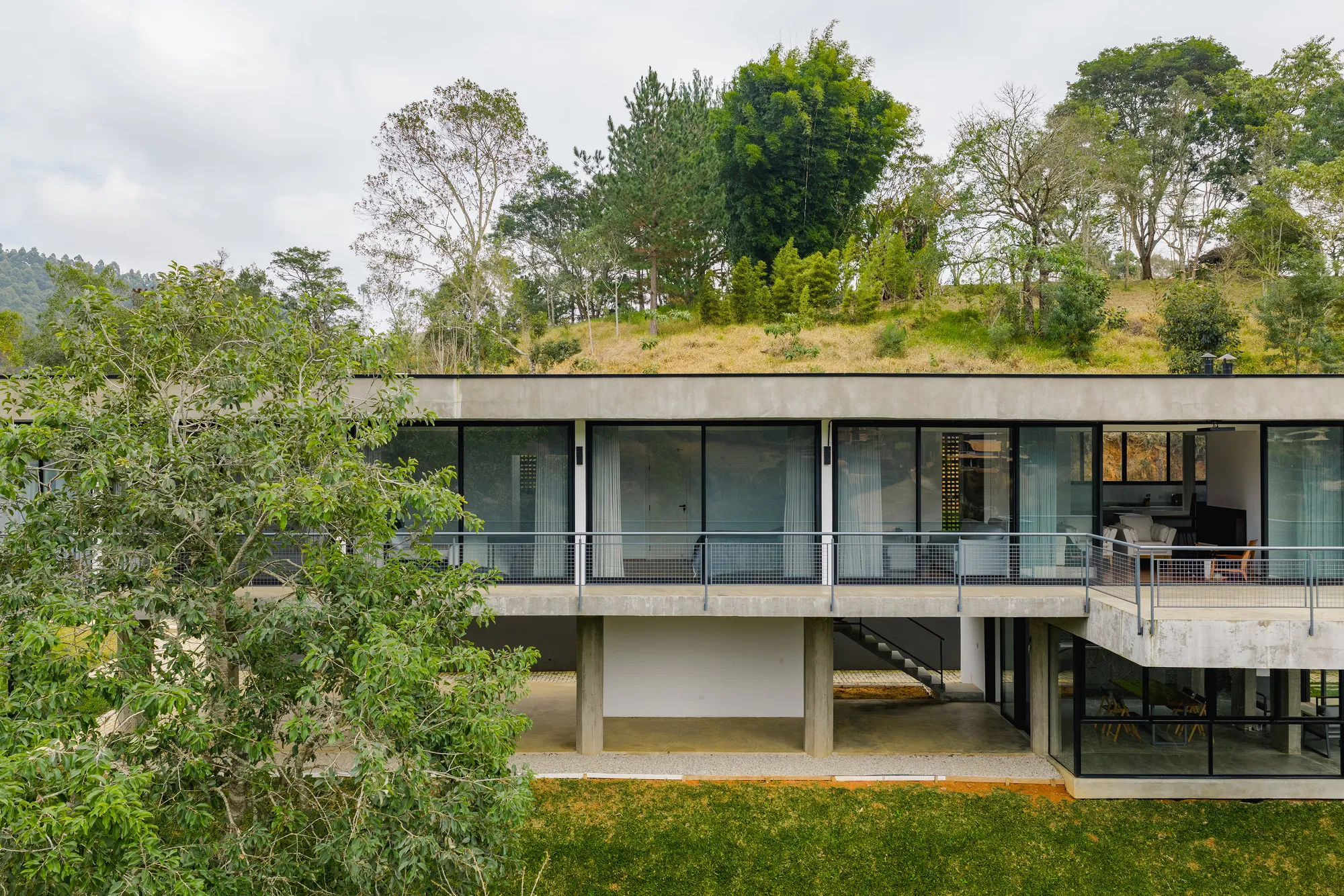
SAP House: A Suspended Mountain Home Embracing Topography in Serra da Mantiqueira
SAP House is a suspended mountain home that embraces the slope, blending glass, concrete, and nature for elevated, landscape-integrated living.


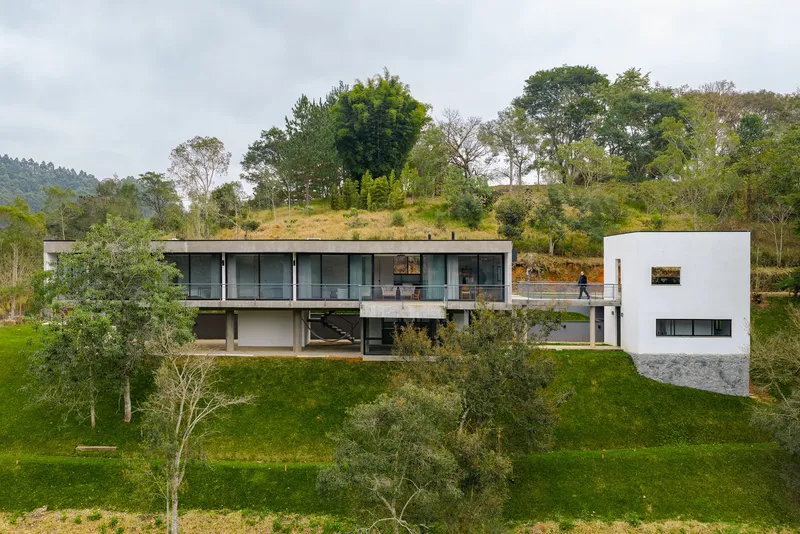
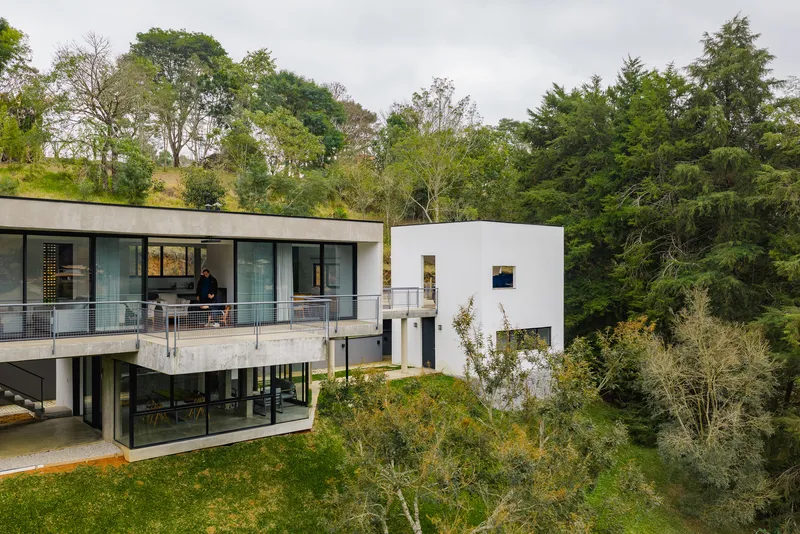
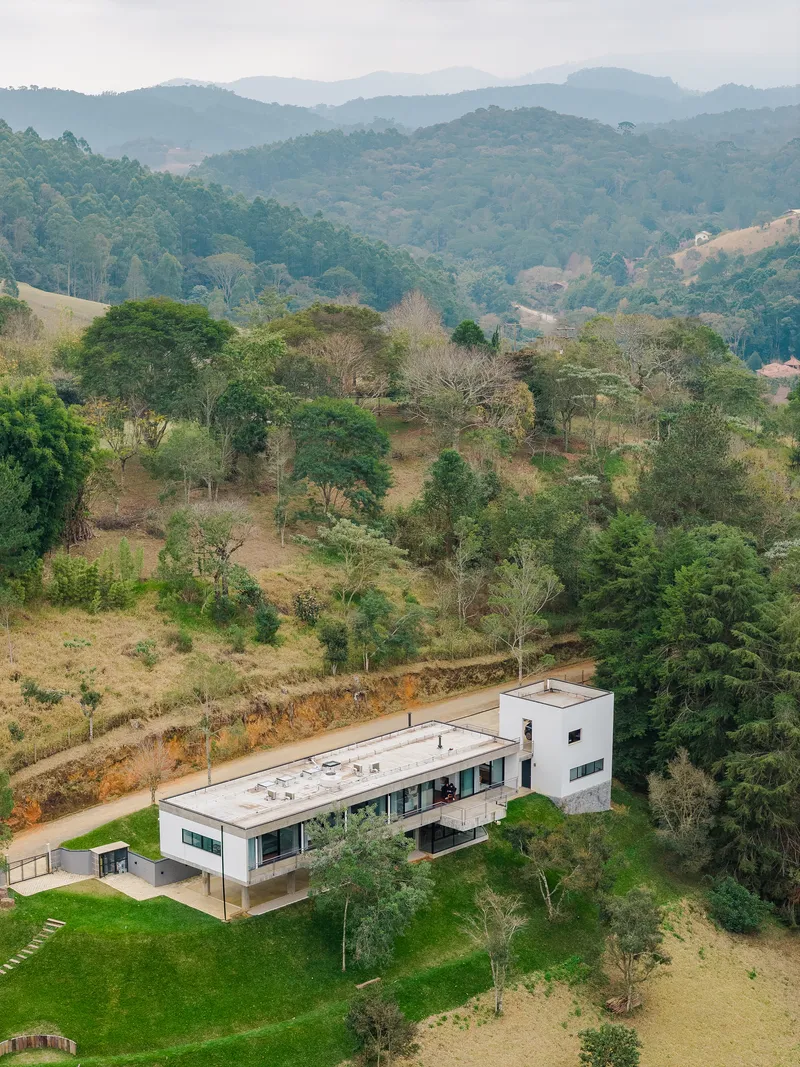
The SAP House, designed by Estúdio Brasileiro de Arquitetura in collaboration with Ateliê AU, is a stunning residential project located in Santo Antônio do Pinhal, Brazil, within the dramatic landscape of the Serra da Mantiqueira mountain range. With 470 m² thoughtfully distributed across two volumes, the house demonstrates a strong architectural commitment to respecting natural contours, climate, and local vegetation. Rather than attempting to dominate the steep terrain, the design embraces it—resulting in a home that appears to float effortlessly over the mountainside.
Architecture That Adapts to the Land
The core concept behind the SAP House is simple yet powerful: let the mountain remain untouched. The structure makes contact with the earth only where essential, allowing the natural slope to continue its course. This approach creates a residence that feels light, respectful, and deeply rooted in its surroundings, despite being partially suspended above them.
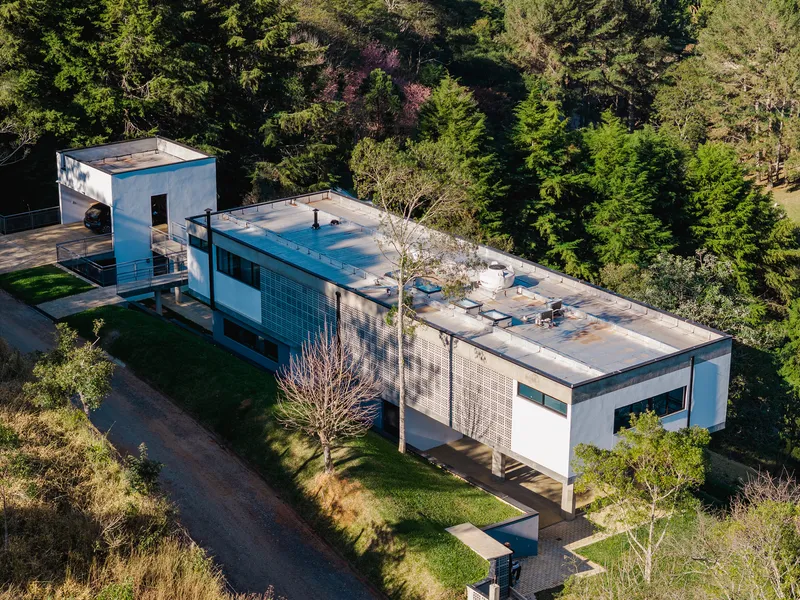
Two Complementary Volumes
The house is organized into two distinct blocks, each serving a specific function:
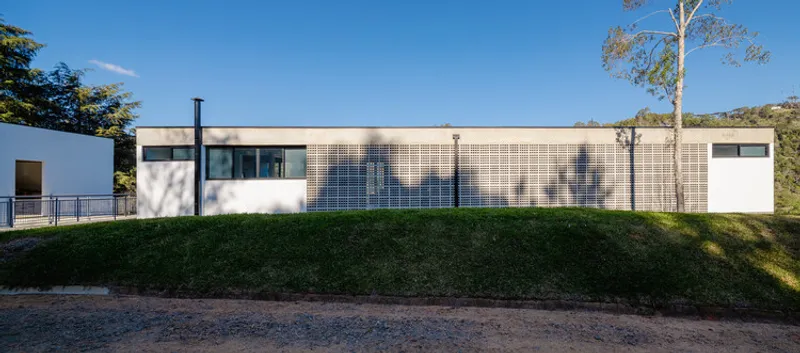
1. Service Block — Solid and Grounded
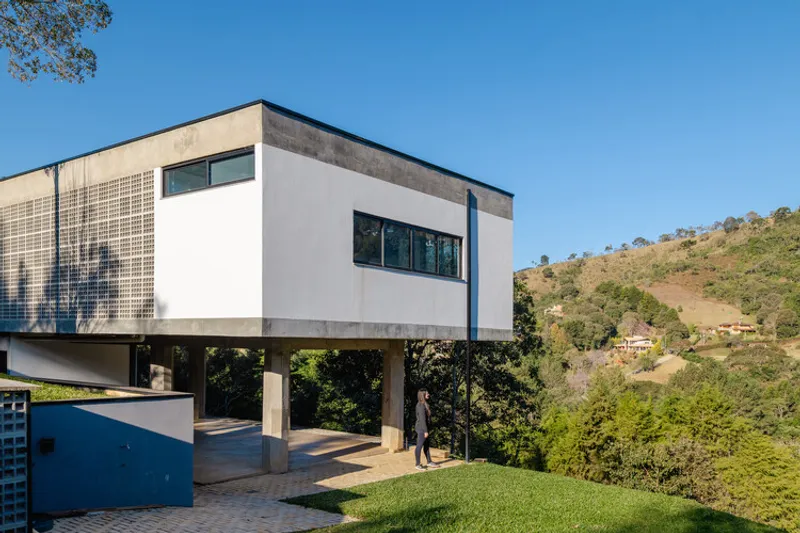
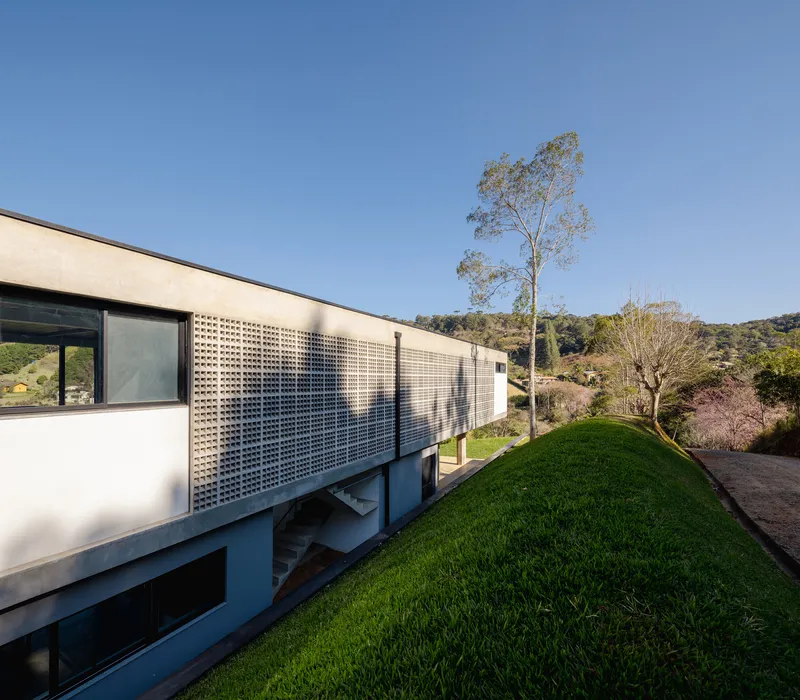
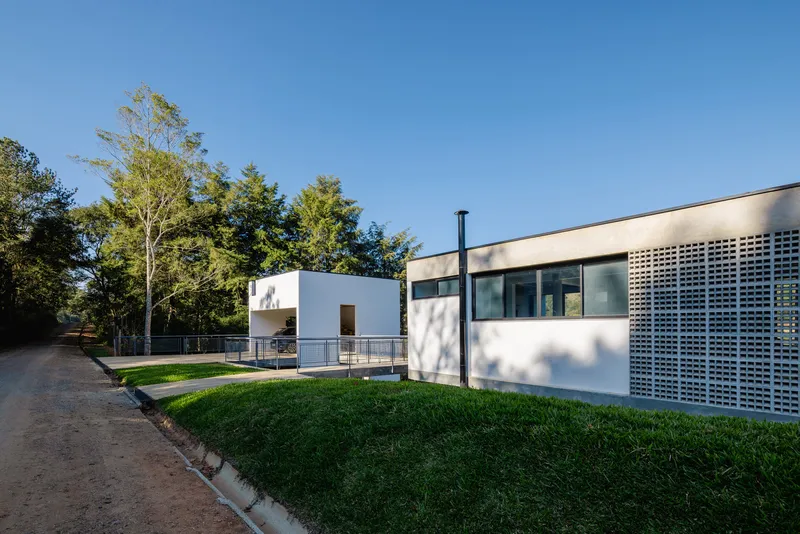
The first block, anchored directly to the land, contains service areas and technical spaces. Supported by a robust stone retaining wall, this grounded volume includes:
- Kitchen
- Closets
- Bathrooms
- Utility spaces
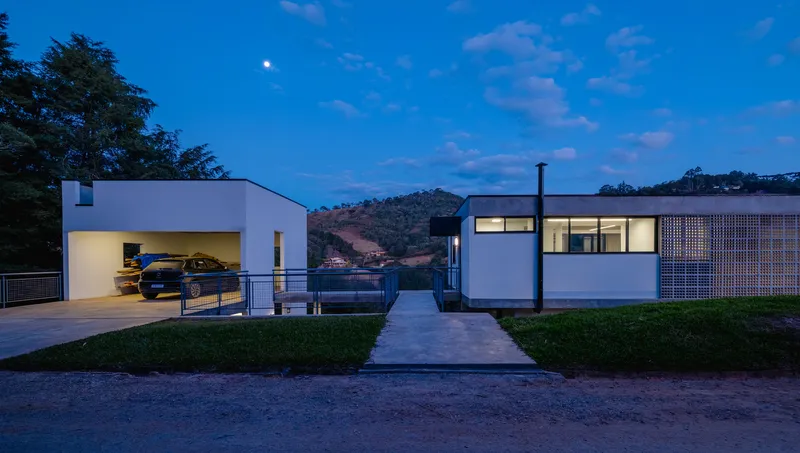
Its façade features a perforated concrete panel, which not only maintains privacy but also allows indirect natural light and ventilation to permeate the interior. This creates a serene, climate-responsive environment that aligns with the sun’s movement throughout the day.
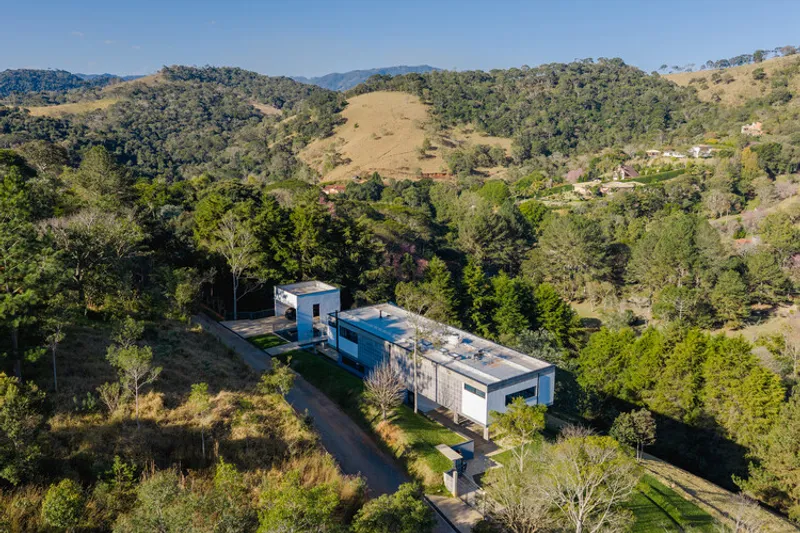
2. Social Block — Light, Horizontal, and Suspended
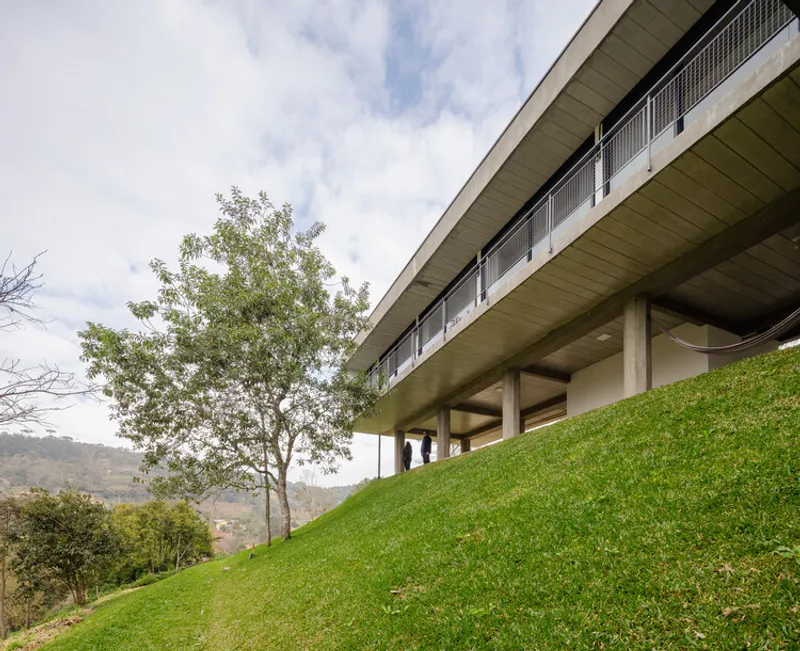
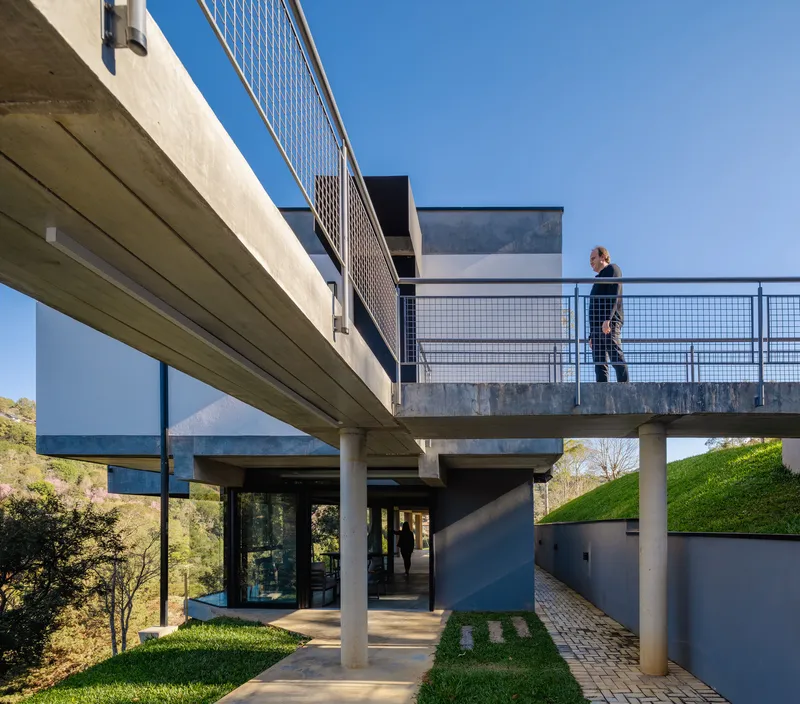
The second block is elevated on pilotis, creating the impression of a structure floating above the mountain. This is where the social life of the house unfolds. Wrapped with large glass surfaces, the elevated volume opens generously to panoramic views of the Mantiqueira landscape. The interiors maintain a seamless indoor–outdoor connection, reinforcing the home’s relationship with nature.

Walkways as Axes and Lookout Points
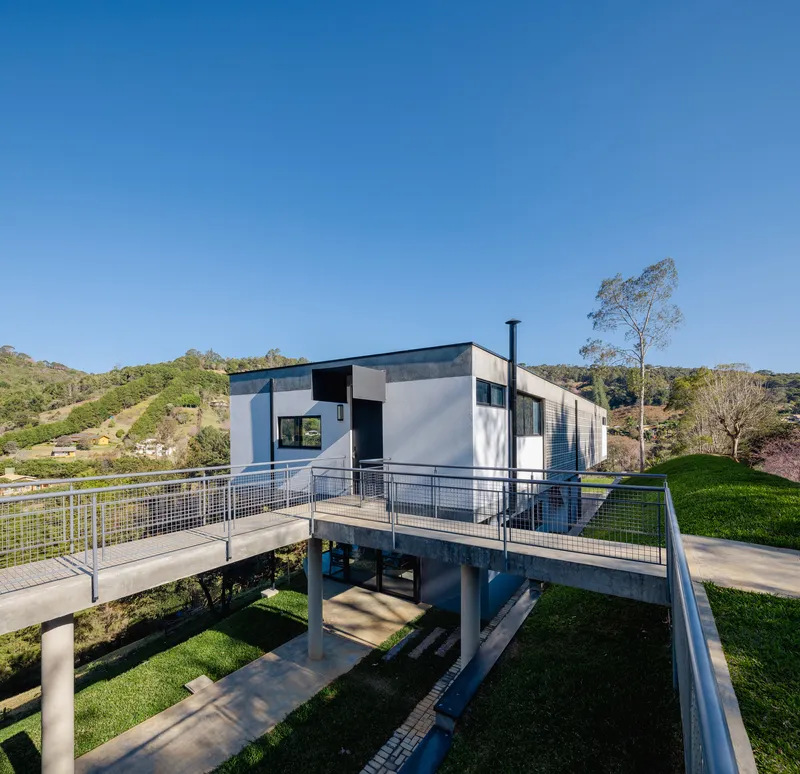
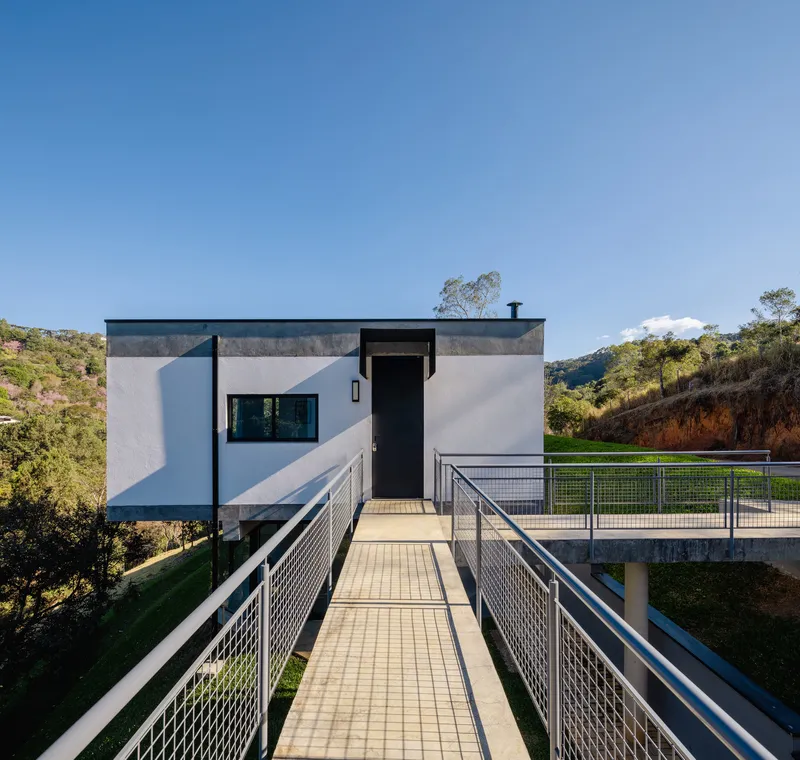
Two elevated walkways connect both blocks to the street, forming the main access route. These pathways serve multiple architectural purposes:
- They establish a central axis dividing technical and social spaces
- They act as transitional lookout points, offering elevated views of the surroundings
- They provide a fluid, non-intrusive connection to the terrain
The design responds to the climate and geography naturally, encouraging movement that is organic and integrated with the environment.
A Leisure Space Protected by Shadow
Beneath the suspended social volume lies a shaded, breezy lower level that serves as a protected outdoor living space. The shadows cast by the elevated block form a natural canopy, creating an ideal area for:
- Relaxation
- Outdoor gatherings
- Connection with the orchard and native vegetation
An expansive orchard slopes down the mountainside, taking advantage of natural light, soil quality, and the protective shelter of the elevated structure.
Architecture in Harmony With Landscape
The SAP House is a celebration of mountain architecture, elevated structures, and sustainable integration with topography. By accepting the slope rather than reshaping it, the architects created a home that feels both grounded and airborne — a balance of solidity and delicacy.
Through thoughtful design, passive ventilation, natural lighting strategies, and structural respect for the environment, the SAP House stands as a model for future architecture in steep or environmentally sensitive landscapes.
All the photographs are works of Manuel Sá




Popular Articles
Popular articles from the community


Co-Life: Senior Housing Design That Reconnects Older Adults With the City
Co-Life reimagines senior housing design through healing gardens, shared streets, workshops, and a sustainable community across generations.

The Musturak Paradise: Senior Living Architecture for a Connected Future in Temara, Morocco
The Musturak Paradise reimagines senior living architecture in Temara via private homes, social spaces, culture, community, and shared care.

AL-JANNAH: Sustainable Architecture and Permaculture for Afghan Widows
AL-JANNAH uses sustainable architecture and permaculture to create resilient oasis of housing, learning, work and renewal for Afghan widows.

The Ocean Hive: Sustainable Architecture for a Self-Sufficient Civilization at Sea
The Ocean Hive imagines sustainable architecture at sea, where modular habitats, algae, wave power and ocean waste sustain a growing colony.


Similar Reads
You might also enjoy these articles


Hodi-Mandai Geram
Project Function: Preservation and revitalization of the Intangible heritage and socio-spatial identity of the Hodi by Housing, Cultural Memory Center, Sacred Grove, landscape, local tourism economy


Olio Towers: A Mid-Rise for Performers That Fuses Housing, Rehearsal, and Stage
Located blocks from Houston's Theater District, this modular tower stacks living units around a central performance atrium.

Oasis: Modular Green Housing Carved into Dhaka's Urban Fabric
A shortlisted Plugin Housing entry reclaims unauthorized settlements in Dhaka with stepped concrete volumes, green roofs, and ventilation-driven design.

Black Hole: A Floating Megastructure for the Post-Physical Era
Emiliano Mazzarotto envisions a spherical, self-scaling arena where e-sports, digital hotels, and holographic stadiums replace traditional public space.

Explore Residential Building Competitions
Discover active competitions in this discipline


Challenge to design mud housing for contemporary communities


Challenge to reimagine the Iron Throne


Photograph architecture without architects


Illustrate the lost glory of Angkor Wat - Render Challenge
Comments (0)
Please login or sign up to add comments
No comments yet. Be the first to comment!