
Sentosa Sensoryscape by Serie Architects and Multiply Architects – A Landmark Multi-Sensory Landscape Experience in Singapore
A multi-sensory ecological walkway with six immersive gardens, sculptural structures, and illuminated experiences connecting Resorts World Sentosa to the island’s beaches.


The Sentosa Sensoryscape is a transformative 350-meter multi-sensory pedestrian experience that redefines how visitors move between Resorts World Sentosa (RWS) and the island’s famed southern beaches. Designed by Serie Architects and Multiply Architects, this landmark project forms the first major phase of a long-term masterplan to reposition Sentosa Island and Pulau Brani as world-class leisure and tourism destinations.
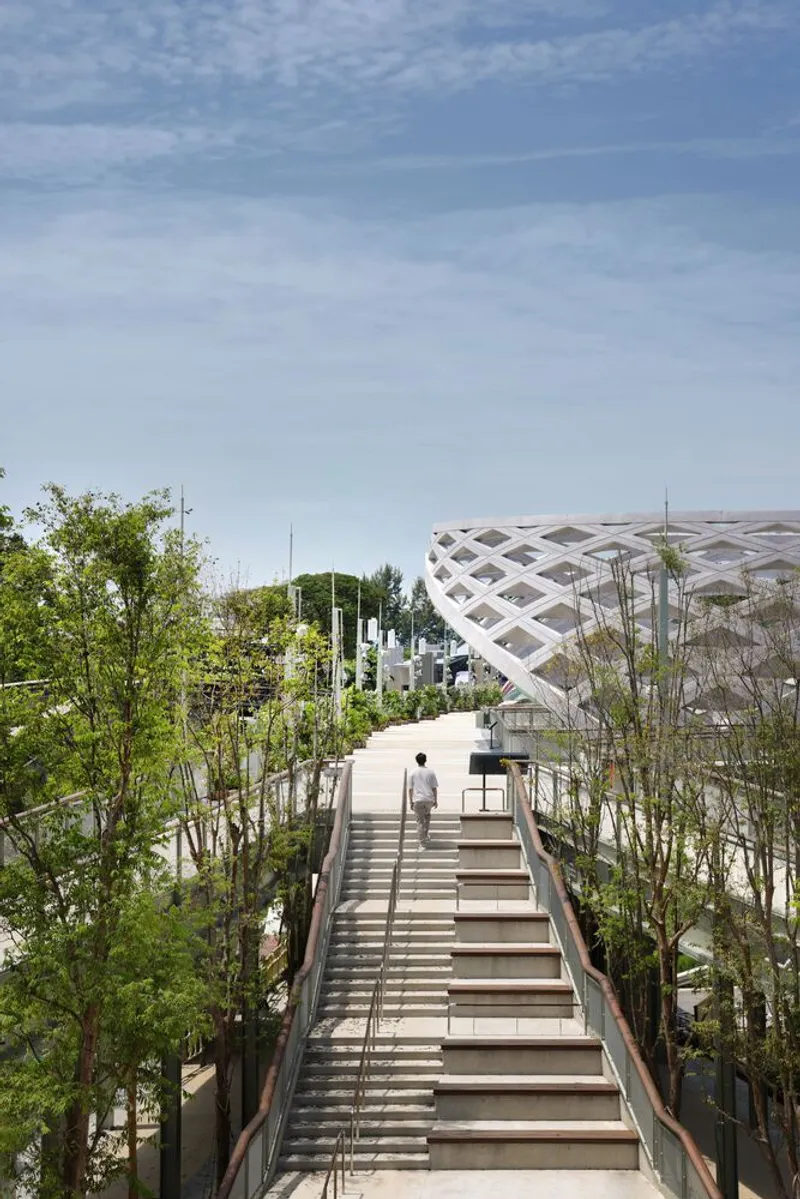
Set along a steep, narrow ridgeline, the Sensoryscape creates a step-free, universally accessible urban landscape, ensuring smooth and comfortable mobility for visitors of all ages and abilities. The result is a new civic spine—an architectural, ecological, and experiential corridor that immerses guests in the island’s natural character.
A Two-Tiered Walkway Merging Ecology, Architecture, and Experience
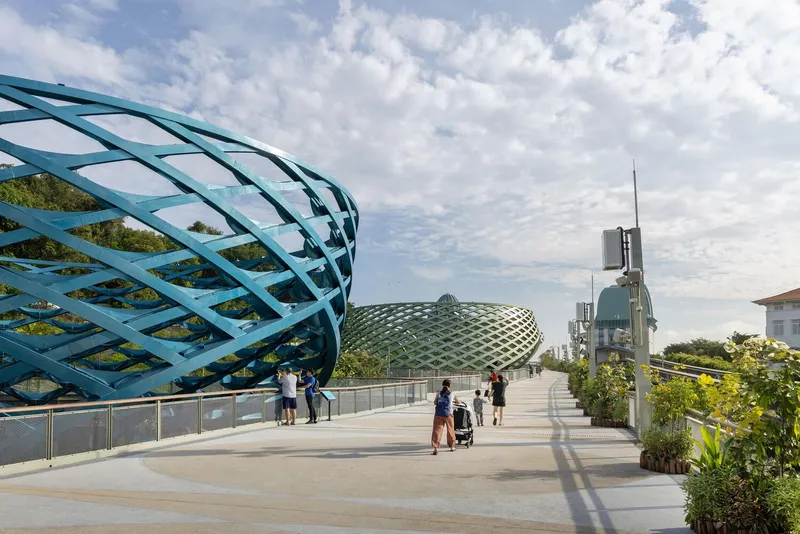
Principal architect Christopher Lee describes the Sensoryscape as “an ecological walk punctuated by six unique sensory gardens.” The design integrates an upper and lower walkway connected through sculptural structures and lush planting, allowing visitors to navigate the landscape at multiple elevations.
The upper walkway is characterized by a series of “hammock” forms—light, rhythmic steel structures that double as seating, enhancing comfort and emphasizing the project's playful design language.
The lower walkway offers direct access to each of the six sensory gardens. From here, visitors experience intimate landscape moments, immersive structures, and ever-changing ecological environments.
Six Sensory Gardens Celebrating Nature, Materiality, and Technology
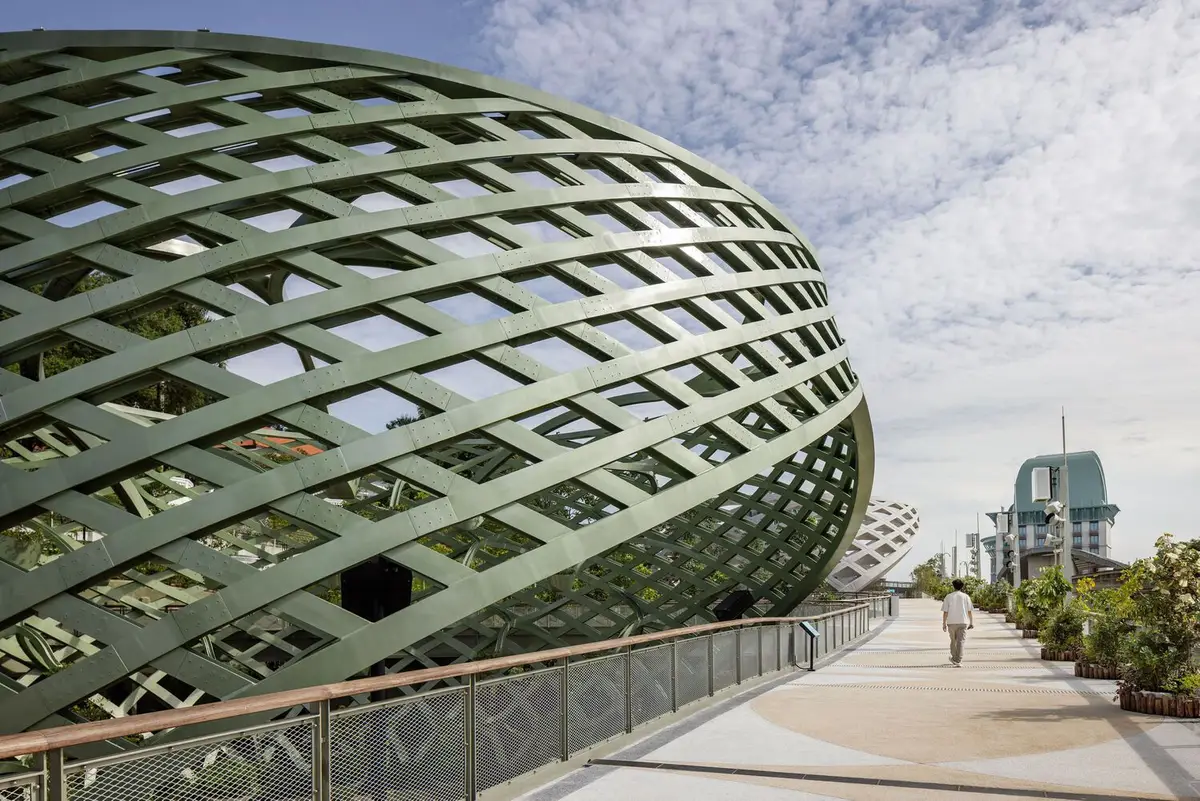
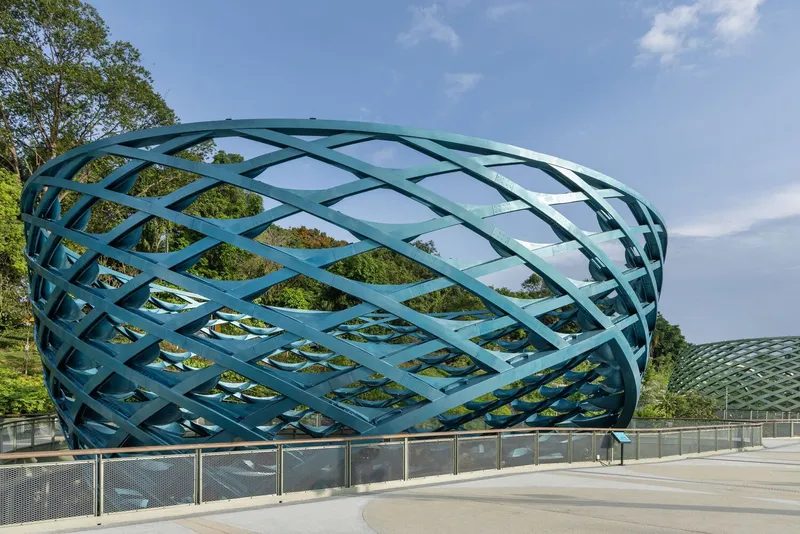
Each of the six gardens expresses a different sensory dimension—touch, scent, sound, sight, and atmosphere—enhancing the island’s biodiversity and visitor engagement. Their basket-like structural forms presented unique engineering challenges, resolved through parametric design and a lightweight diagrid system that allows air, light, and views to flow effortlessly through.
1. Tactile Trellis
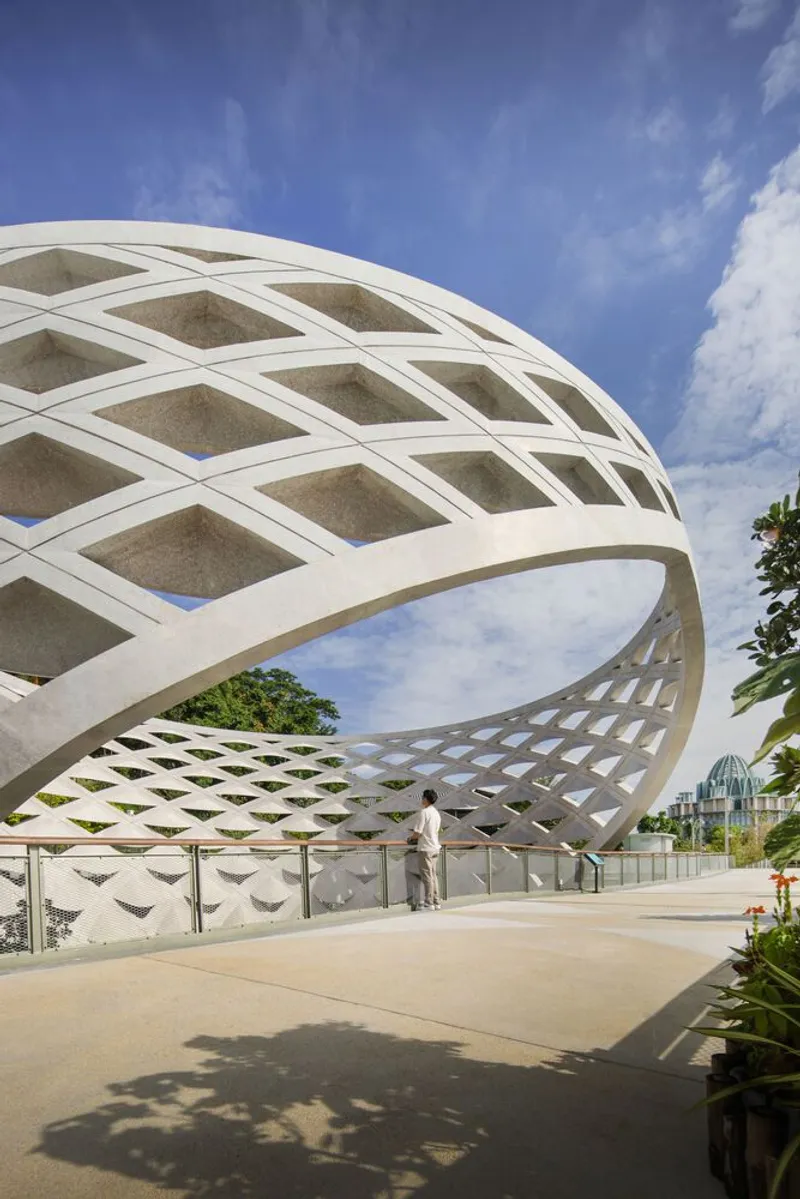
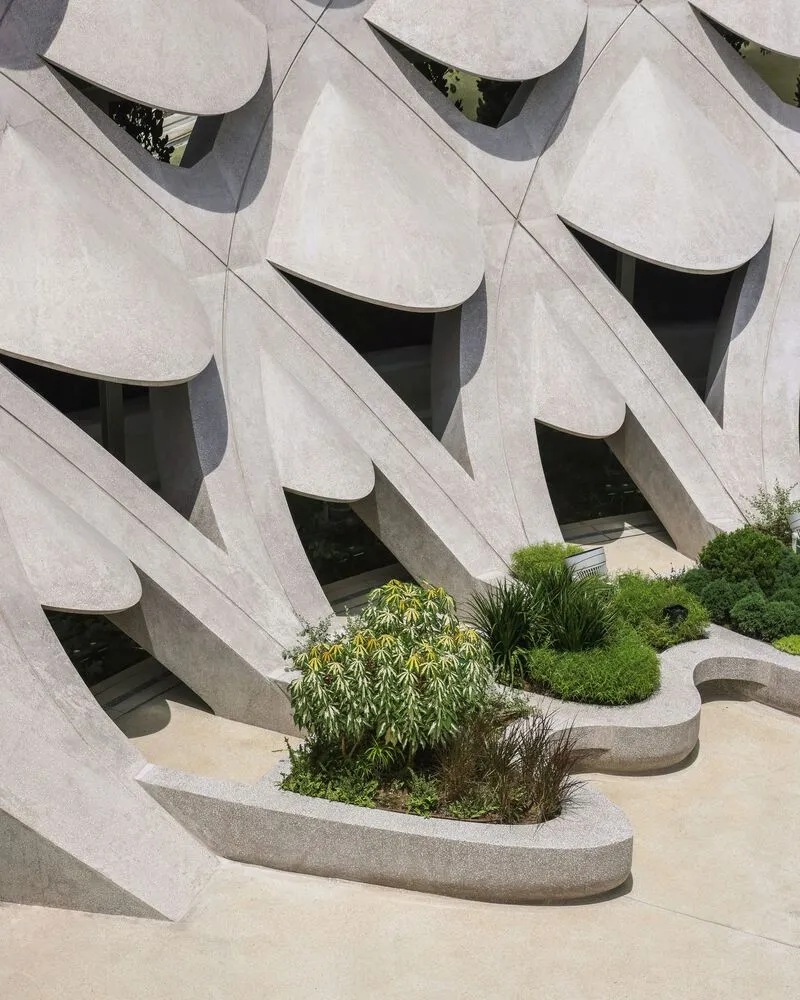
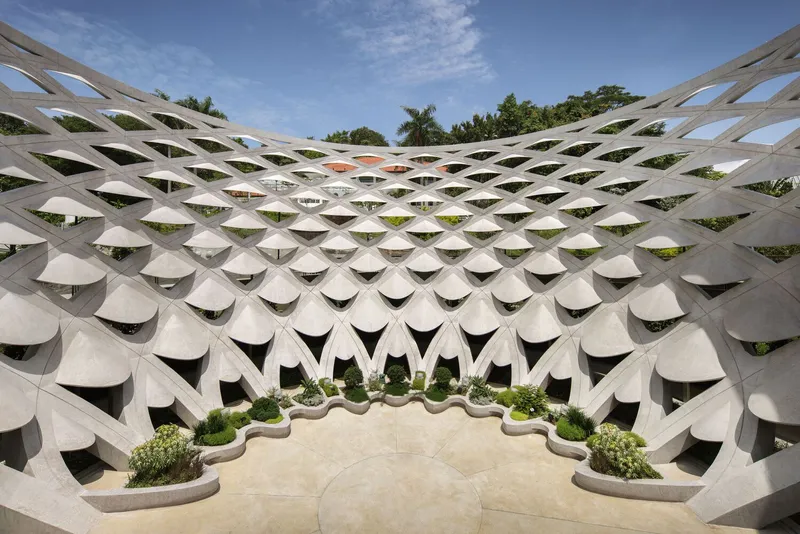
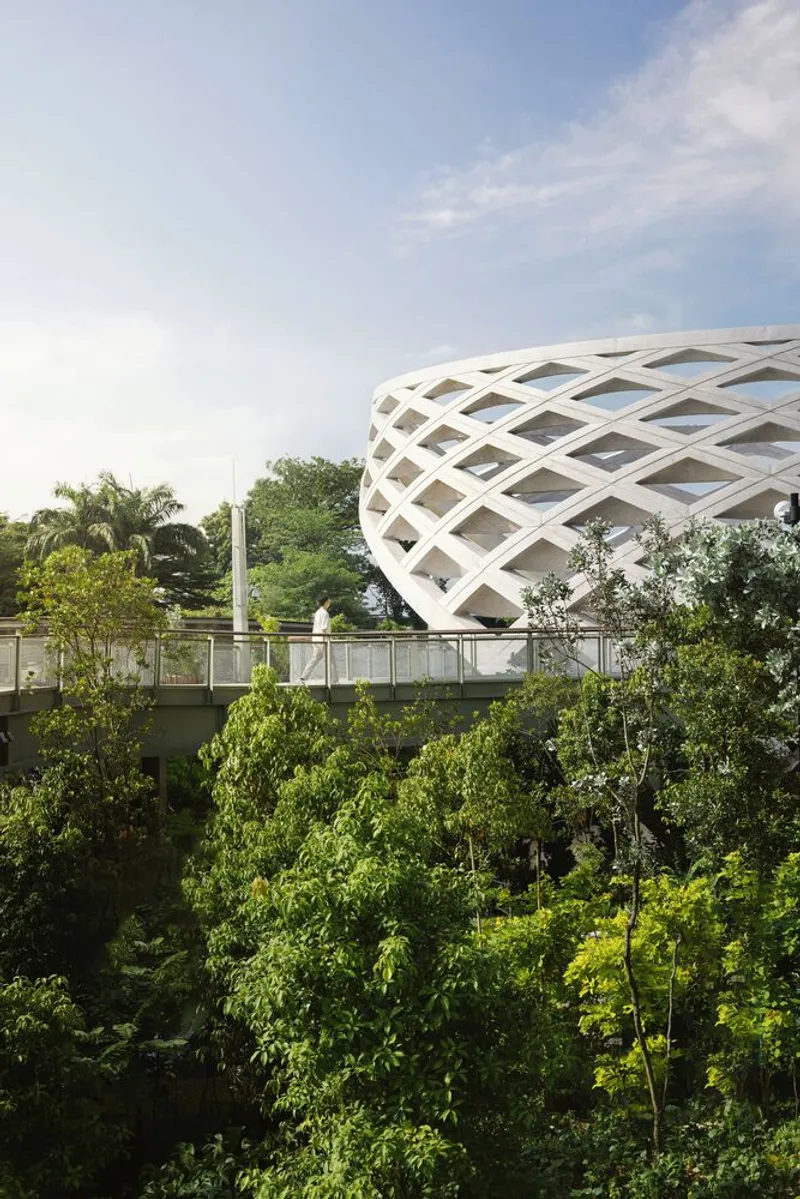
A monumental vessel composed of petal-shaped precast concrete elements celebrates the sense of touch. The subtle materiality—textures, aggregates, and sculpted surfaces—interacts with light throughout the day. Visitors can rest among the planting, while at night the vessel transforms into a digital canvas illuminated by interactive projections.
2. Scented Sphere
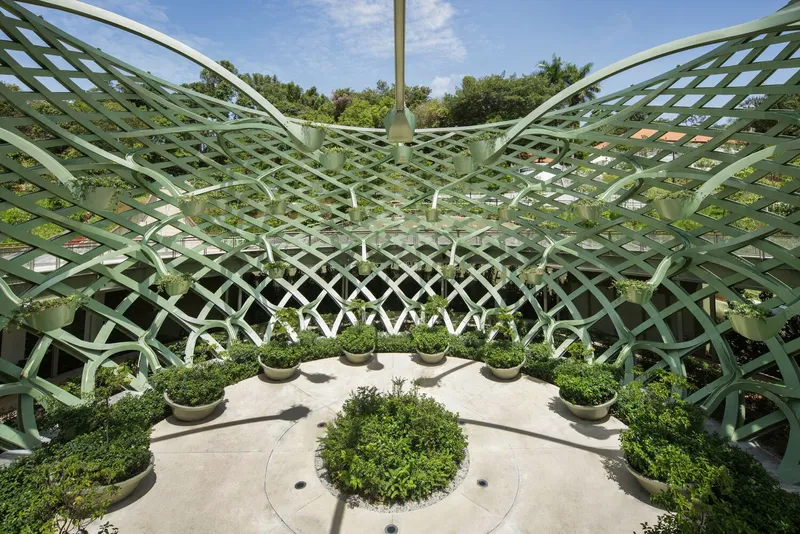
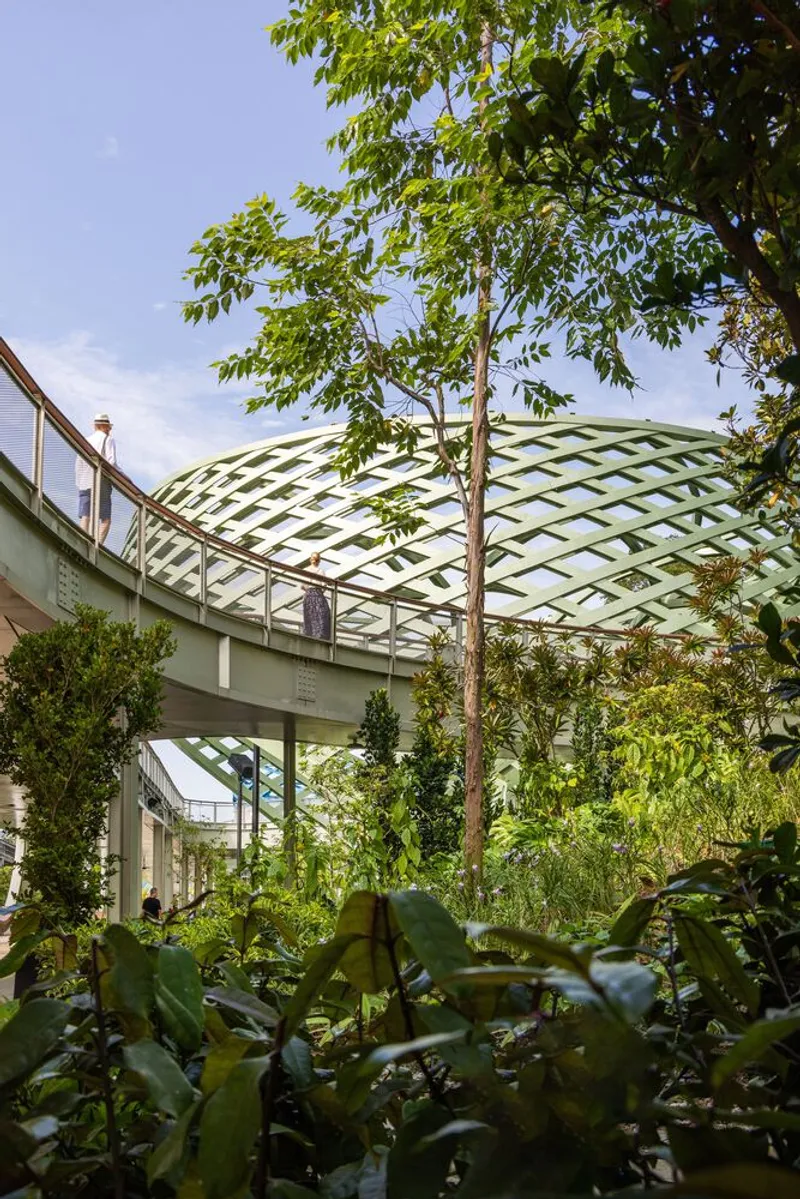
This garden centers around a grid-shell structure formed by four woven steel strips that create a dynamic “stalk and bud” composition. Plants are specifically curated for their aromatic qualities, offering a year-round palette of fragrances suspended at different heights.
3. Symphony Streams
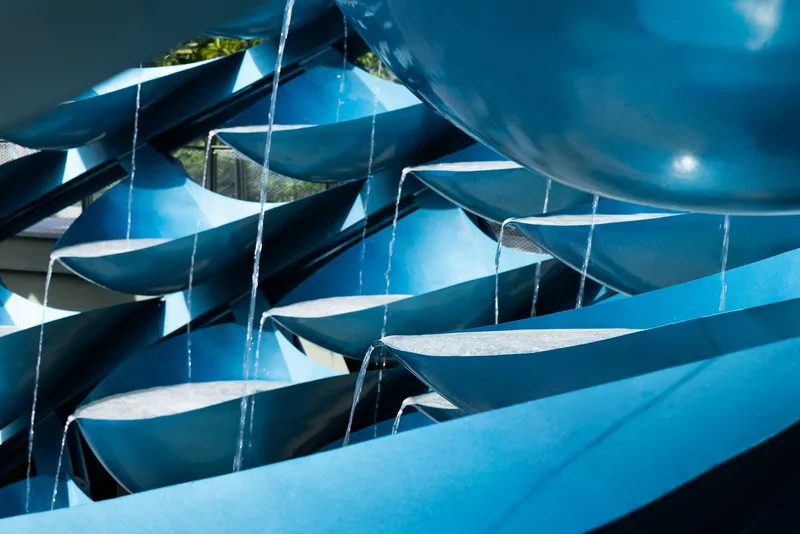
A polyphonic water installation featuring over 200 acoustic water pails produces cascading notes as water flows from vessel to vessel. The layered soundscape mimics the rhythm of a natural waterfall, while a circular reflecting pool invites visitors to interact with the moving water.
4. Glow Garden
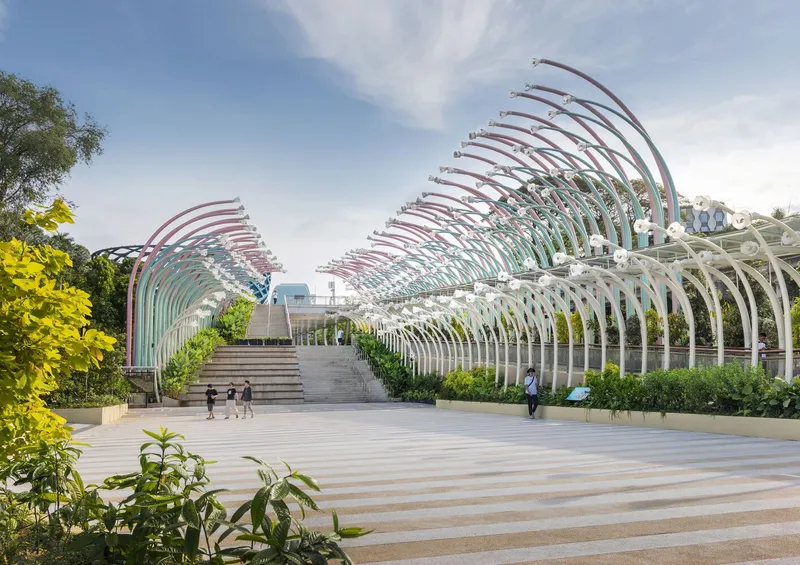
Towering illuminated stalks define this atmospheric garden, each capped with glowing “buds.” At night, these beacons guide pedestrians toward the beach and create a dramatic luminous entry sequence for those approaching from Beach Station.
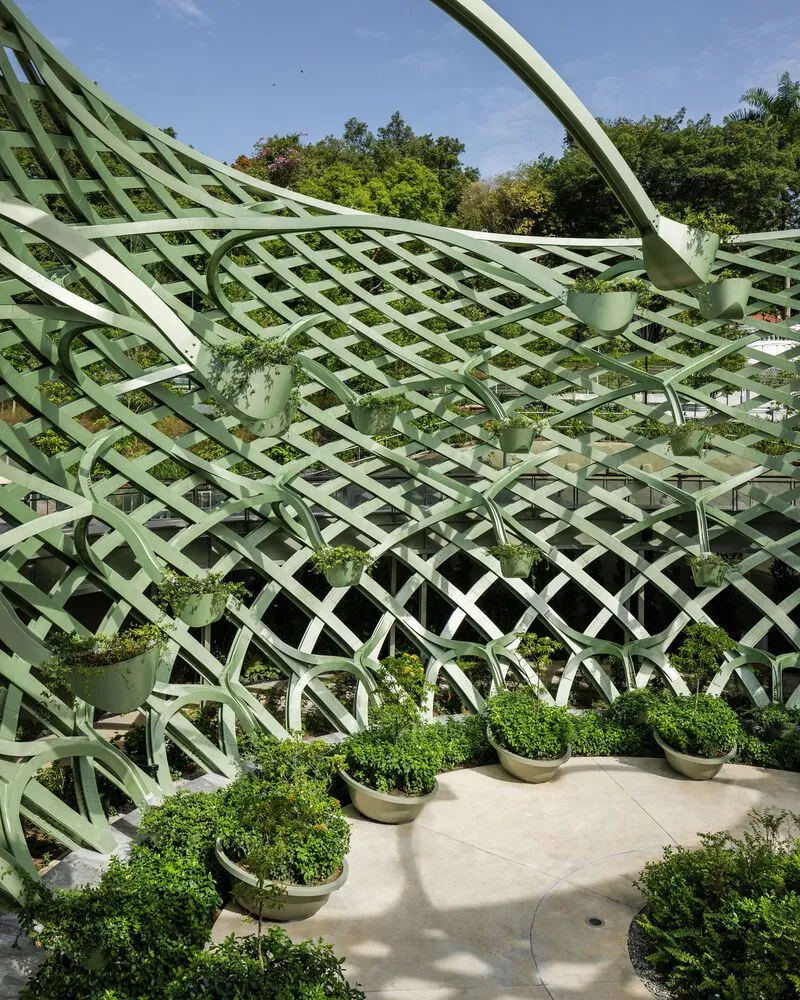
Structural Innovation Through Parametric Design
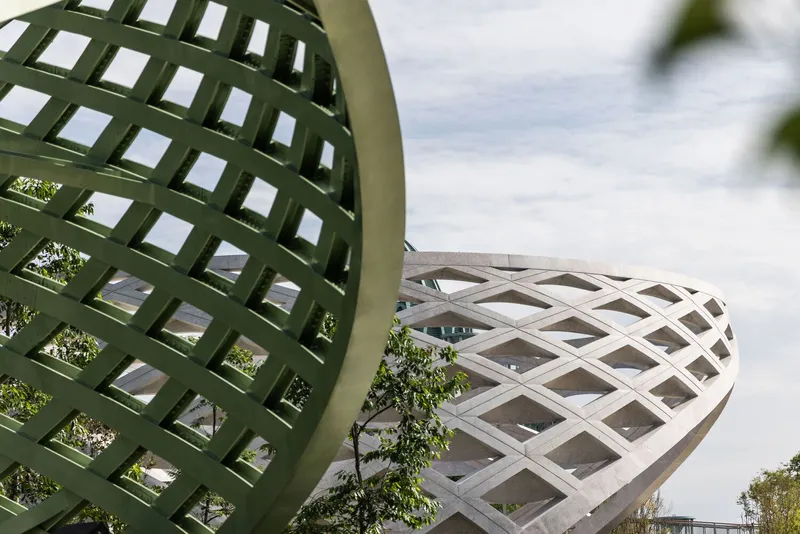
Because all six gardens must be accessible from the lower walkway, the structures needed to be elevated yet visually light. The team responded with a series of interwoven, basket-like forms created from strands that expand and contract with the geometry of the ridgeline. Although self-similar, each element is unique—requiring parametric generation to achieve a seamless architectural identity.
The result is a family of open pavilions that blur the boundaries between architecture and landscape, offering filtered light, framed views, and a strong connection to Sentosa’s natural ecology.
A New Ecological and Cultural Connector for Singapore
By combining landscape design, architectural expression, digital lighting, and augmented reality, the Sentosa Sensoryscape elevates the island’s public realm into a destination in itself. It is both a connector and a landmark attraction—an immersive route that enhances biodiversity, celebrates sensory engagement, and reshapes visitor experience.


Popular Articles
Popular articles from the community


longwave studio Reorganizes a 112 m² Tainan Apartment Around the Daily Routines of a Family and Two Cats
In Tainan, Taiwan, birch plywood, rust-red furniture and a freestanding plaster wall link arrival, storage, work and family life in one apartment.

Jaramillo Van Sluys Arquitectura and Urbanismo Turn a Demolished Registry Lot in Quito into an Orchard Plaza
In Quito's Centro Histórico, a 2,800 m² plaza exposes the San Agustín convent wall and redraws its lost Augustinian orchard in volcanic stone.

U.GA Architects Wraps an Oval Rooftop Pool in Curved Board-Formed Concrete on Busan's Jeollidan-gil
In Busan's Jeonpo-dong, a 454 m² mixed-use block stacks a neighborhood facility, guest rooms and an oval rooftop pool inside spiraling concrete walls.

Cube Design Draws an Ecological Corridor Between Two Shenzhen Hills with the Nankai Building
Beside Shenzhen's container docks, the Nankai Building pairs stacked balconies with a climbing green screen to connect two hillsides across its height.

Similar Reads
You might also enjoy these articles


Hodi-Mandai Geram
Project Function: Preservation and revitalization of the Intangible heritage and socio-spatial identity of the Hodi by Housing, Cultural Memory Center, Sacred Grove, landscape, local tourism economy


Olio Towers: A Mid-Rise for Performers That Fuses Housing, Rehearsal, and Stage
Located blocks from Houston's Theater District, this modular tower stacks living units around a central performance atrium.

Oasis: Modular Green Housing Carved into Dhaka's Urban Fabric
A shortlisted Plugin Housing entry reclaims unauthorized settlements in Dhaka with stepped concrete volumes, green roofs, and ventilation-driven design.

Black Hole: A Floating Megastructure for the Post-Physical Era
Emiliano Mazzarotto envisions a spherical, self-scaling arena where e-sports, digital hotels, and holographic stadiums replace traditional public space.

Explore Multi-Sensory Architecture Competitions
Discover active competitions in this discipline

Challenge to reimagine the Iron Throne

Photograph architecture without architects

Illustrate the lost glory of Angkor Wat - Render Challenge

Design challenge to reuse E-waste
Comments (0)
Please login or sign up to add comments
No comments yet. Be the first to comment!