
Seville Restaurant: A Parametric Architecture Approach to Experiential Dining
Parametric architecture redefines dining at Seville Restaurant, merging fluid forms, nature, and hospitality into an immersive spatial experience

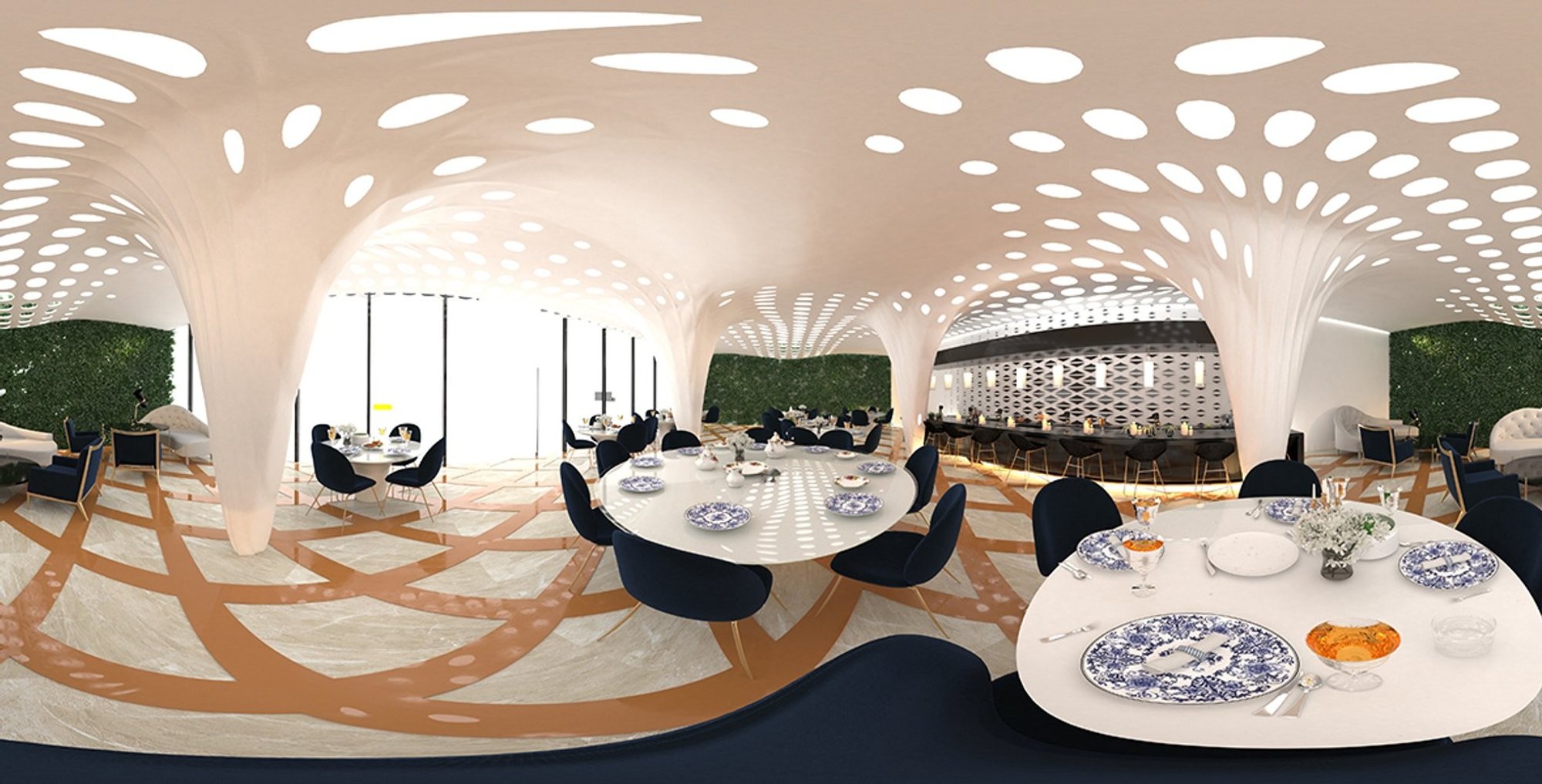
The Seville Restaurant _ Reparametrize Studio , designed by Reparametrize Studio, stands as a compelling exploration of parametric architecture within the realm of hospitality design. As a shortlisted entry in the Refurbishment 2020 competition, the project reimagines the contemporary restaurant not merely as a place to dine, but as a spatial experience where architecture, food, and atmosphere are deeply intertwined.
At its core, the project investigates how computational design strategies can redefine interior environments. The result is a fluid, immersive space where structure and surface dissolve into one another, creating a continuous architectural language that enhances both visual and sensory engagement.
Parametric Architecture as Spatial Narrative
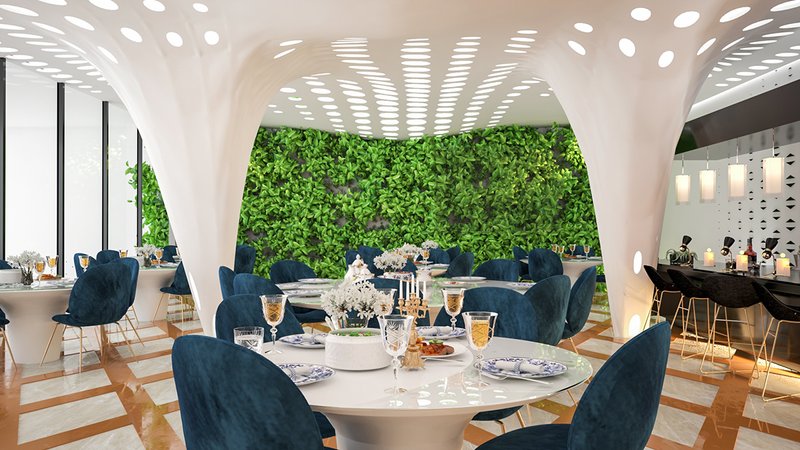
The defining feature of Seville Restaurant lies in its sculptural interior system. The branching column structures extend seamlessly into a perforated ceiling, forming a unified parametric shell. These elements are not arbitrary; they are driven by algorithmic logic, allowing for optimized distribution of loads, light, and spatial rhythm.
The ceiling’s perforations act as both functional and atmospheric devices. They filter light across the interior, generating dynamic patterns that shift throughout the day. This approach introduces a temporal dimension to the space, reinforcing the idea of architecture as an evolving experience rather than a static enclosure.
The structural system, clad with cement over a steel framework, demonstrates how digital design can be translated into buildable solutions. It reflects a growing trend in architecture where computational workflows inform fabrication and material articulation.
Blurring Boundaries Between Nature and Interior
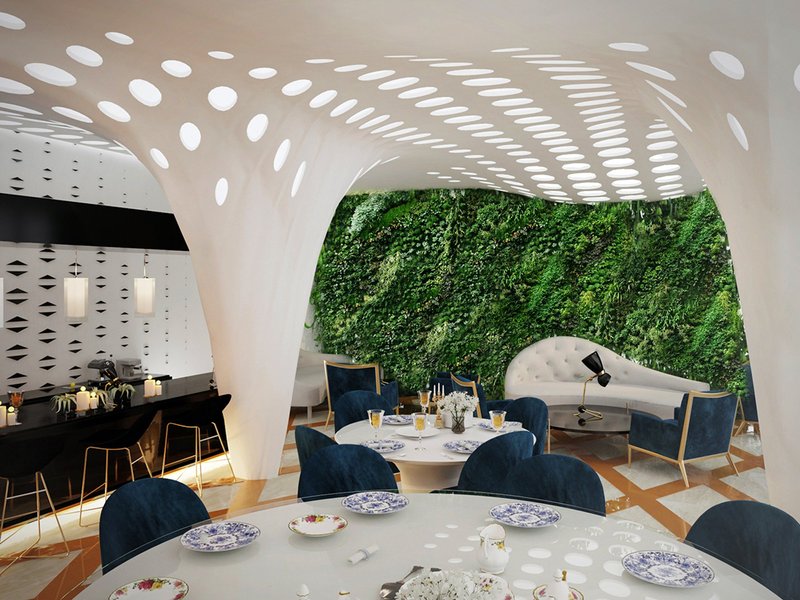
A significant aspect of the project is its integration of biophilic design principles. Lush green vertical walls contrast with the smooth, white parametric surfaces, introducing texture, color, and ecological presence into the interior.
This juxtaposition achieves multiple objectives. Visually, it softens the highly controlled geometry of the parametric forms. Environmentally, it contributes to improved indoor air quality and thermal comfort. Psychologically, it enhances user well-being, aligning with contemporary hospitality trends that prioritize immersive and restorative environments.
The spatial composition ensures that nature is not treated as an afterthought but as an integral component of the architectural system. The greenery anchors the fluid forms, creating focal points that guide movement and perception.
Reimagining the Dining Experience
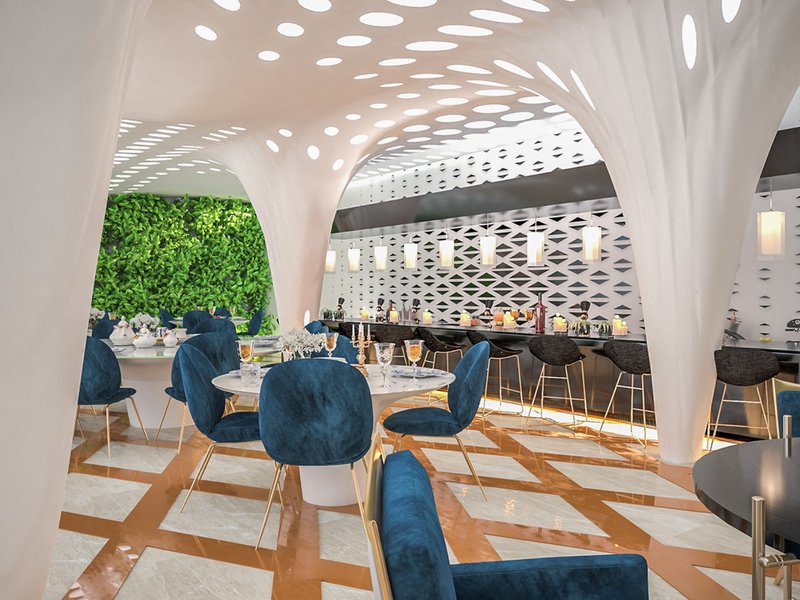
The Seville Restaurant challenges conventional notions of dining layouts. Instead of rigid zoning, the space adopts a more open and fluid organization. Seating clusters are distributed organically beneath the branching columns, allowing for both intimacy and connectivity.
The furniture selection complements the architectural language. Soft, rounded chairs and circular tables echo the curvature of the structural system, reinforcing visual coherence. Meanwhile, the patterned flooring introduces a contrasting geometric order, grounding the otherwise fluid environment.
Lighting design plays a crucial role in shaping the atmosphere. Pendant fixtures and integrated lighting within the bar area provide warmth and focus, while the perforated ceiling diffuses ambient light across the space. This layered lighting strategy enhances depth and creates a balanced sensory experience.
Materiality and Constructability
While the project appears highly expressive, it remains grounded in material logic. The use of a steel structural shell ensures feasibility, while cement cladding provides a smooth, continuous finish that aligns with the parametric geometry.
This combination highlights the importance of bridging digital design with real-world construction techniques. The project demonstrates how complex geometries can be rationalized into manufacturable components without compromising design intent.
A Contemporary Model for Hospitality Design
Seville Restaurant positions itself within a broader discourse on the future of hospitality architecture. As dining spaces evolve, there is an increasing demand for environments that offer more than functionality. They must engage users emotionally, visually, and spatially.
By leveraging parametric architecture, the project achieves this multidimensional engagement. It creates a setting where visitors are not just consumers but participants in an architectural narrative.
The openness of the layout further reinforces accessibility, inviting a diverse range of users to inhabit the space. This aligns with the project’s ambition to create a welcoming yet distinctive environment.
The Seville Restaurant by Reparametrize Studio exemplifies how parametric architecture can redefine interior design in hospitality. Through the integration of computational design, biophilic elements, and material innovation, the project delivers a cohesive and immersive dining experience.
As a shortlisted entry in the Refurbishment 2020 competition, it reflects a forward-thinking approach to adaptive reuse and spatial transformation. More importantly, it sets a precedent for how architecture can shape not just spaces, but experiences that resonate with users on multiple levels.
In an era where design is increasingly driven by experience, Seville Restaurant stands as a benchmark for the fusion of technology, nature, and human-centric thinking.




Popular Articles
Popular articles from the community

The Flow: Coffee Shop Interior Design Where Time, People, and Process Intertwine
The Flow reimagines Viennese coffee culture through arched forms, warm interiors, music, reading, work, and social gathering.

Noue Studio Organizes a Swiss Restaurant Around a Single Concrete Wall
In Granges-Paccot, Switzerland, a 216-square-meter renovation turns raw materials and a central spine into a legible dining experience.
Inside a Timeless Mumbai Residence by Aether Studio
Aether Studio's 2,250 sq ft apartment in Malad, Mumbai uses marble, brass, boucle, and disciplined restraint to build a quiet retreat from the city.
Pablo Senmartin Suspends a Steel-and-Timber Refuge Above a River Forest in Córdoba
An 80-square-meter dwelling on pilotis camouflages itself among the trees of Mayu Sumaj, designed to be dismantled without waste.
Similar Reads
You might also enjoy these articles


Urban Forest: A Vertical Ecosystem for 5,000 Workers in Singapore's Changi Business Park
Radially stacked pods and layered green decks turn a 7-acre plot into 47 acres of ecological workspace projected for 2040.
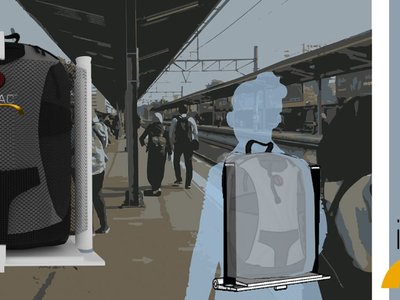
interACT: A Wearable Transit Object That Turns Commuting Into Social Infrastructure
A backpack-mounted foldable device transforms walking, waiting, and riding into moments of shared comfort across Jakarta's transit network.
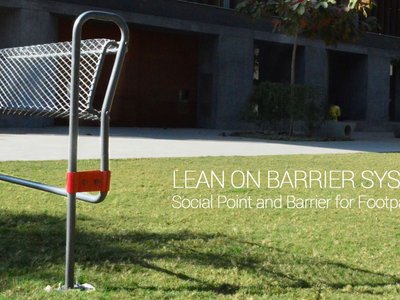
Lean On Barrier System: Where Traffic Safety Meets Chai Culture in Ahmedabad
A modular steel barrier doubles as informal seating and lean-on furniture at one of Ahmedabad's busiest intersections, keeping vendors in place.

The Black Bagh: A Living Monument Built from Water, Light, and Memory
On the banks of the Yamuna, two designers replace the myth of a marble mausoleum with a regenerative landscape of reflection and ritual.

Explore Conceptual Architecture Competitions
Discover active competitions in this discipline




The Global Benchmark for Architecture Dissertation Awards

Challenge to design a portable theatre


Challenge to design a portable music platform

Challenge to design an open learning module for the elderly
Comments (0)
Please login or sign up to add comments
No comments yet. Be the first to comment!