
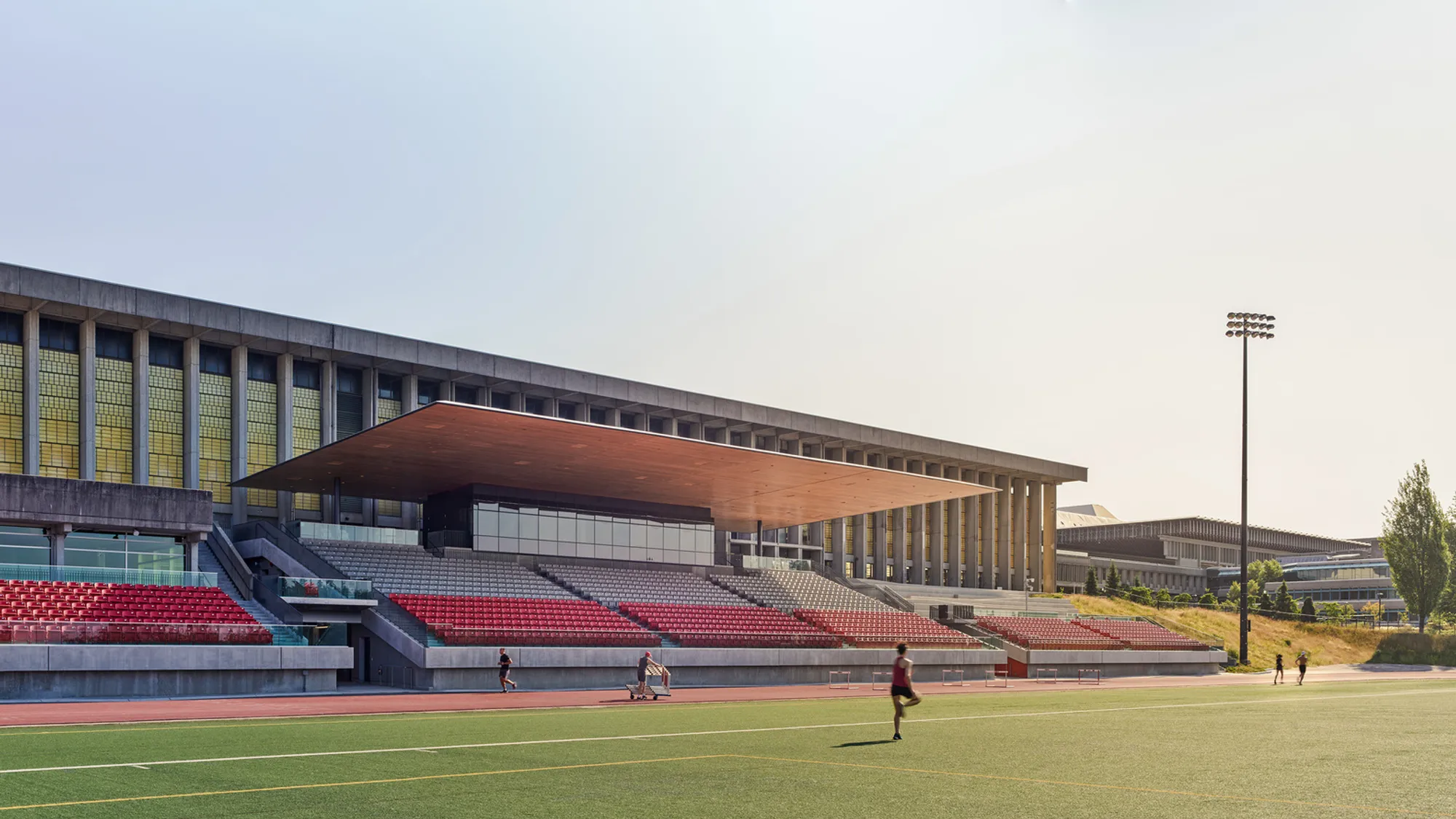
SFU Stadium by Perkins+Will: A Landmark in Cantilever Stadium Architecture
SFU Stadium exemplifies cantilever stadium architecture with a floating roof that transforms athletics into civic and cultural experience.


Redefining Public Space through Cantilever Stadium Architecture
Perched on the edge of Simon Fraser University’s sloping campus in Burnaby, Canada, the SFU Stadium by Perkins+Will represents a powerful fusion of structural ingenuity, community engagement, and architectural clarity. Completed in 2021, this 2,776-square-meter stadium transforms an underutilized site into a vibrant, multifunctional space defined by one of the most iconic examples of cantilever stadium architecture in North America.


The stadium isn’t just a venue for athletic events—it is a campus centerpiece designed to support formal competitions, casual gatherings, and everyday student life. Though it hosts around 20 major events annually, its true impact lies in how it activates public space beyond game day.


From Vision to Reality: A Long-Awaited Stadium for SFU
The SFU campus master plan had long envisioned bleachers integrated into its athletics precinct, but early budget cuts delayed the realization of this goal. Decades later, the vision has come to life not as a basic stadium, but as a thoughtful architectural intervention that enhances both function and campus culture.
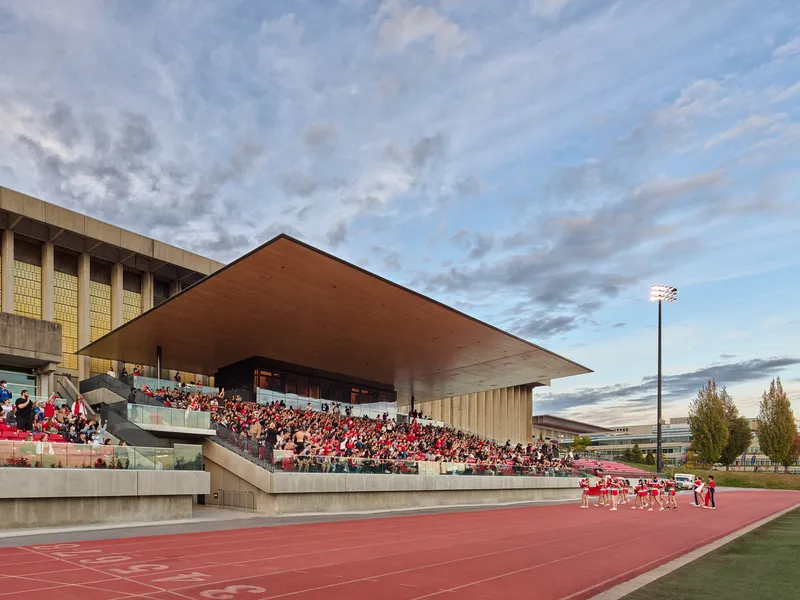
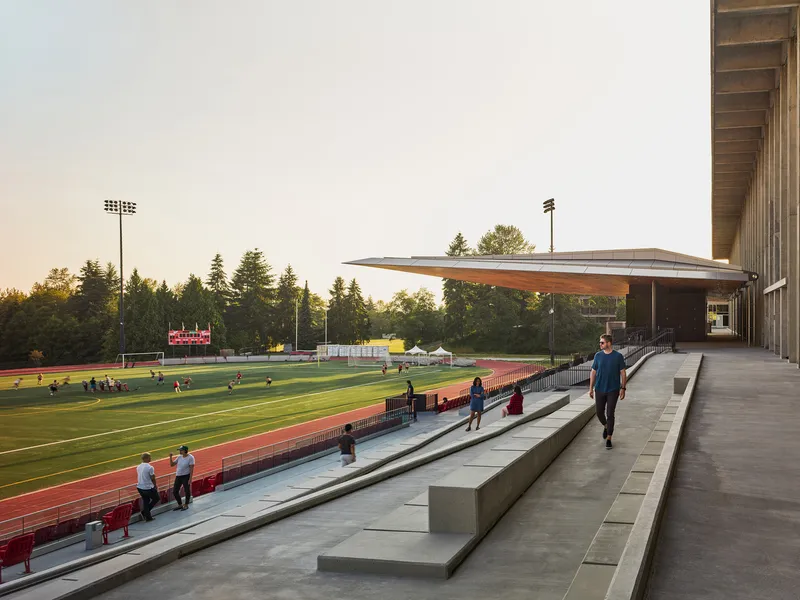
Strategically located between the athletic complex and Terry Fox Field, the stadium nestles into the existing terrain, using the slope to create seamless transitions and natural gathering spaces. The terraced setting offers more than 1,800 formal seats under the roof canopy, with over 300 additional informal seats along grassy embankments and stepped concrete terraces.
The Floating Roof: A Feat of Cantilever Engineering
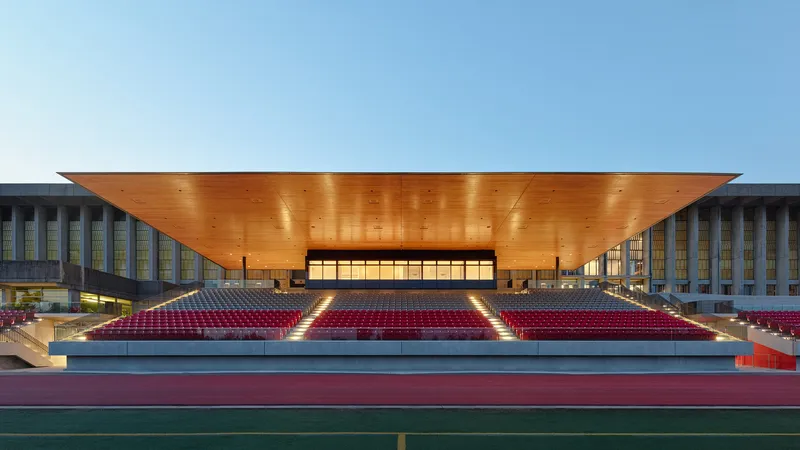
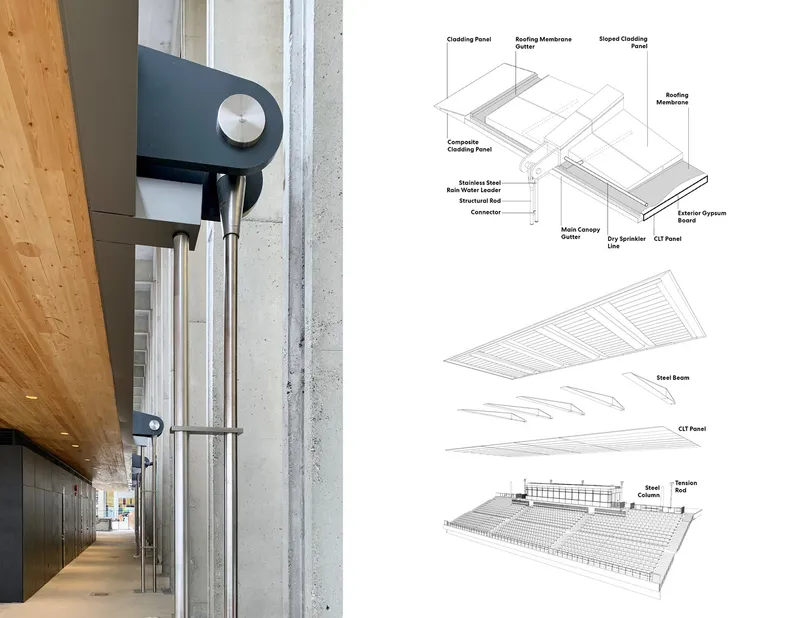
The defining architectural move of the stadium is its dramatic cantilevered canopy, which stretches 16 meters (54 feet) over the stands. Far from being a mere shelter, this roof becomes the visual and symbolic heart of the project. Engineered for snow-heavy conditions, the structure incorporates 22-meter-long box girders, each weighing 13 tonnes, and supported by 228 mm stainless steel pins and 76 mm rods.
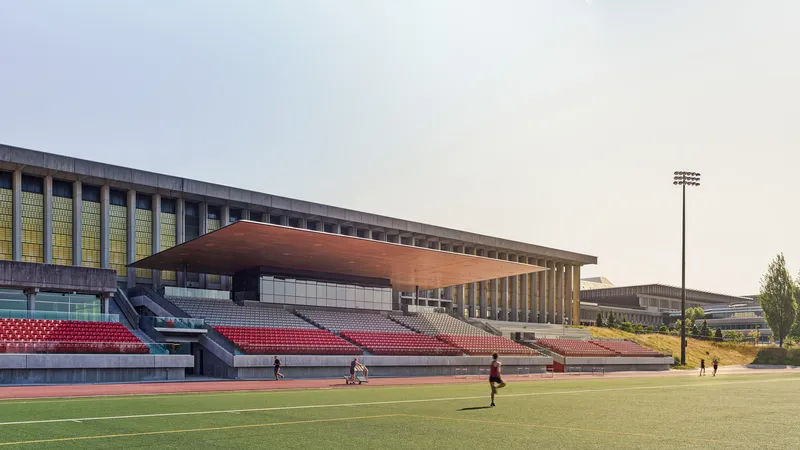
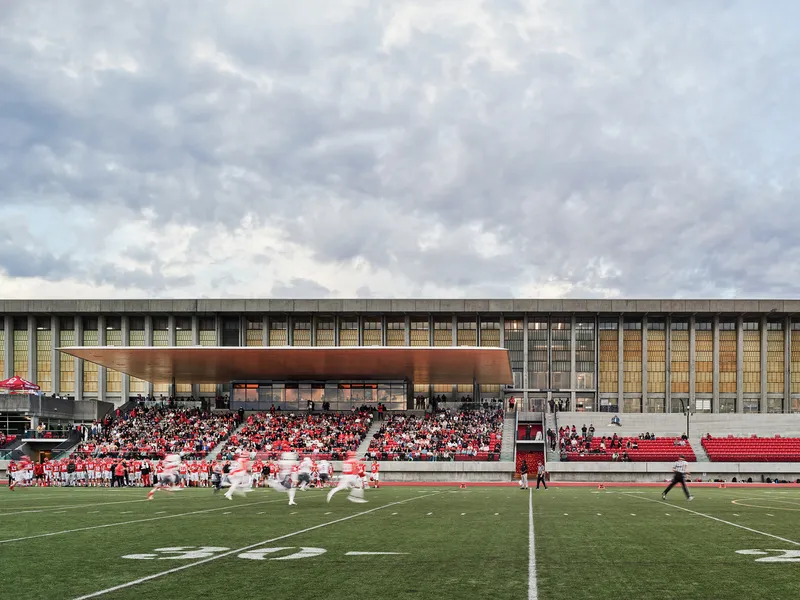
The canopy appears to levitate—its thin, tapered profile disappears from view when seen from the field below, producing the illusion of a floating roof. This architectural illusion is no accident; it required meticulous coordination between architects, structural consultants Fast + Epp, and mechanical integration teams to hide all systems within the roof plane. This commitment to visual minimalism elevates the stadium from a functional venue to a sculptural campus landmark.

A Canopy That Speaks to Place and Purpose
Inspired by the athleticism and cultural energy of Terry Fox Field, the canopy communicates motion, tension, and grace. While its structural mass is enormous, its visual presence is refined and respectful of its context, especially the adjacent Lorne Davies Complex. The canopy’s clean lines and minimal intervention preserve views, light, and openness, reinforcing the connection between spectators and the field.

The architectural language of the canopy reflects not only engineering excellence but a deep understanding of what a stadium should contribute to public life—an expressive, welcoming, and adaptable civic asset.

Designed for Everyday Use, Not Just Game Day
Unlike traditional sports venues that remain dormant between events, the SFU Stadium is an active public realm throughout the year. The terraces and grassy slopes invite students to lounge, study, or socialize in a protected, south-facing space. With multiple seating options—sunlit or shaded, formal or informal—the stadium provides choice and flexibility, embodying a human-centered approach to design.


Even the integration of service spaces such as press rooms, locker rooms, and restrooms is handled discreetly, tucked beneath the terrace level to maintain a clean architectural profile. The result is a stadium that’s both elegant in form and rich in function.

A New Benchmark for Cantilever Stadium Architecture
SFU Stadium sets a new precedent for cantilever stadium architecture in its synthesis of structural clarity, contextual sensitivity, and social activation. It’s not simply an athletic venue—it’s a community platform and a sculptural landmark, one that challenges conventional ideas of what stadiums can be.


By merging structural daring with architectural subtlety, Perkins+Will has created a space that invites participation, fosters belonging, and inspires awe. The floating canopy is not just an engineering marvel—it’s a poetic gesture, elevating the experience of sport, study, and community life alike.
All Photographs are works of Andrew Latreille



Popular Articles
Popular articles from the community


The Musturak Paradise: Senior Living Architecture for a Connected Future in Temara, Morocco
The Musturak Paradise reimagines senior living architecture in Temara via private homes, social spaces, culture, community, and shared care.

Co-Life: Senior Housing Design That Reconnects Older Adults With the City
Co-Life reimagines senior housing design through healing gardens, shared streets, workshops, and a sustainable community across generations.
EW PARK: Sustainable Architecture Reimagines the Future of Urban Parking
EW PARK reimagines city parking as a modular wooden tower combining automation, solar energy, electric mobility, and adaptable urban design.

Conexión: Biophilic Design Reimagines High-Rise Living in Hong Kong
Conexión reimagines high-rise living in Hong Kong through biophilic design, green facades, shared spaces, daylight, water and nature within.
Similar Reads
You might also enjoy these articles

Bamboo Housing Challenge 2026: Design Affordable, Sustainable Homes Using Bamboo
An international design competition by Bamboo U and IBUKU inviting architects and designers to reimagine affordable housing using bamboo — with the winning design built full-scale in Bali.

Computational Design & Education: Beegraphy Design Awards Introduces 7th Category (Featuring Jiyun's Innovative Approach)
Dive into Beegraphy’s 7th Design Awards category, where computational design meets education to create immersive, interactive learning tools, inspired by Jiyun’s work.

From Parametric Lighting to Urban Furniture: Join the 2nd Workshop in Beegraphy’s Computational Design Series
Dive into Cutting-Edge Design Techniques and Practical Applications with Industry Experts

Last Call: Unleash Your Architectural Genius in SHAK's Kindergarten Design Competition
Urgent call for architects to join SHAK's kindergarten design competition before the looming deadline


Explore Stadium Competitions
Discover active competitions in this discipline



Challenge to reimagine the Iron Throne


Photograph architecture without architects


Illustrate the lost glory of Angkor Wat - Render Challenge


Design challenge to reuse E-waste
Comments (0)
Please login or sign up to add comments
No comments yet. Be the first to comment!