
“Shangfeng Library and Gymnasium: Community-Focused Educational Architecture in Taichung”
Innovative Taichung library and gym integrate light, landscape, and community spaces for students and residents, fostering learning and engagement.


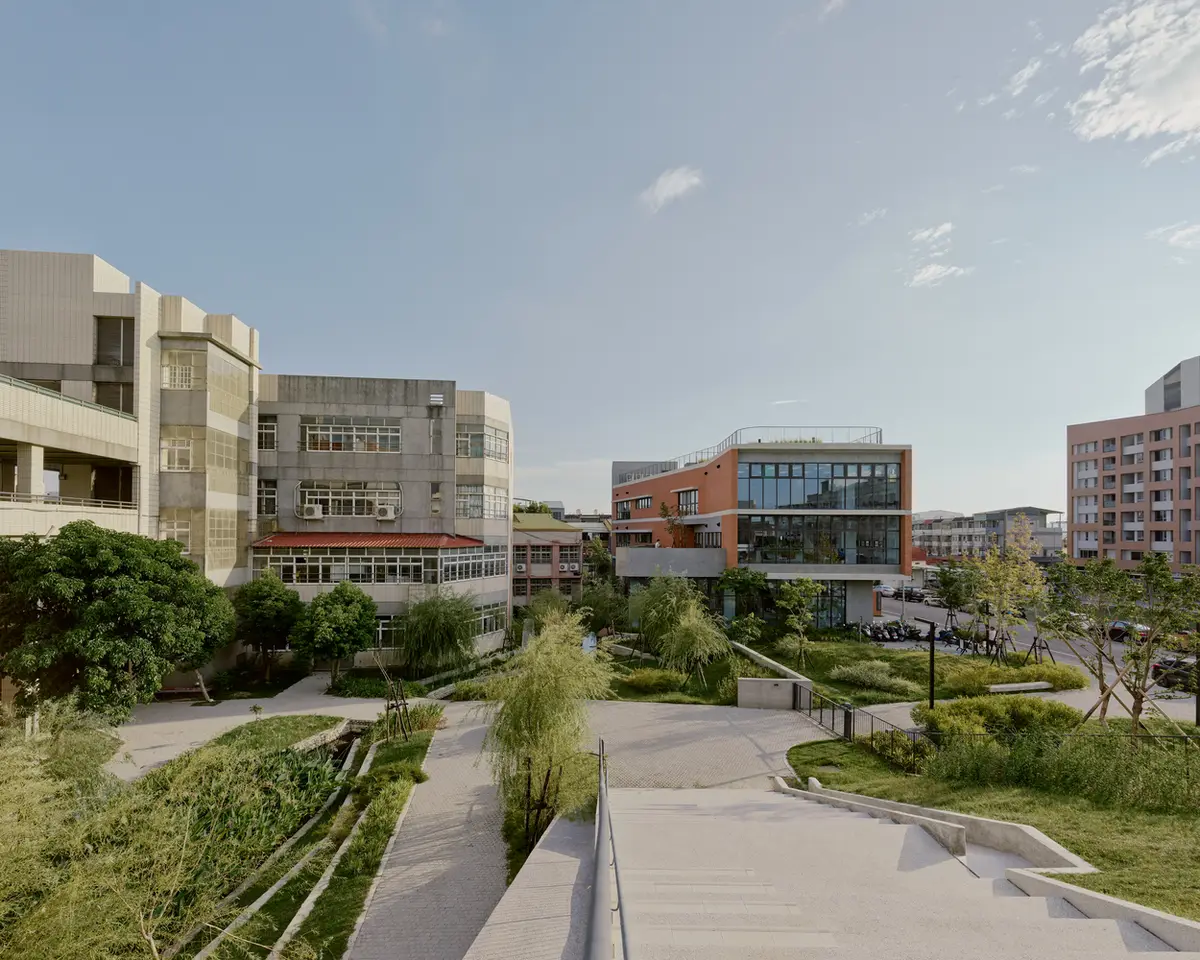
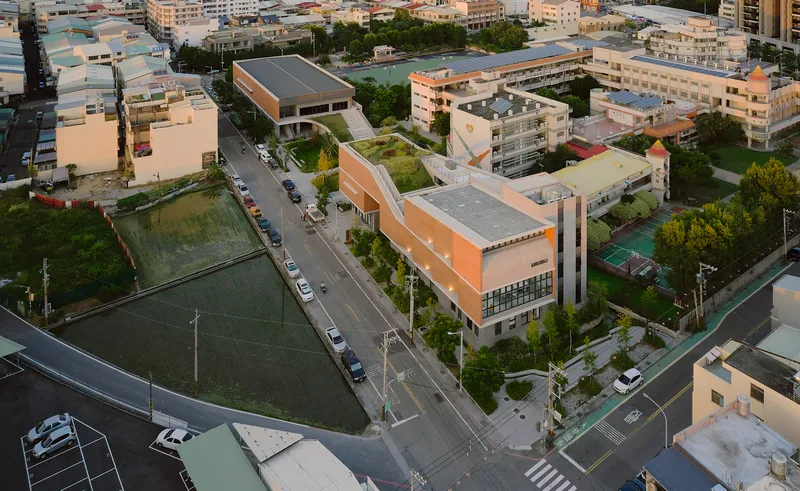
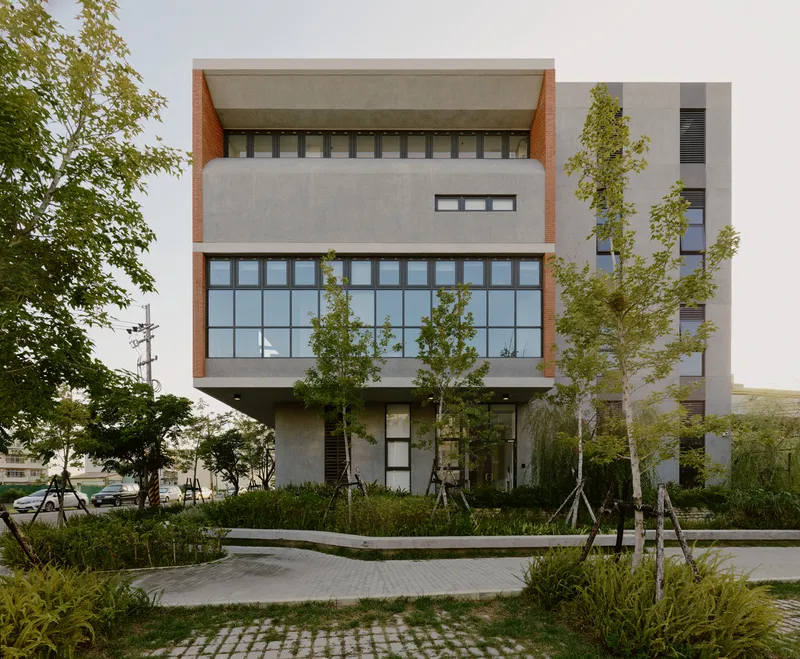
Nestled at the fringe of Taichung City, Taiwan, the Shangfeng Public Library and School Gymnasium by David Hong Architects (2022) emerges as a model for community-integrated educational architecture. Spanning 3500 m², this project combines a public library and a school gymnasium adjacent to an existing primary school, demonstrating how architecture can harmonize with its natural and urban context. The site, characterized by narrow dimensions and a long north-south orientation, posed significant challenges that inspired innovative spatial and environmental solutions.

Context and Site Strategy
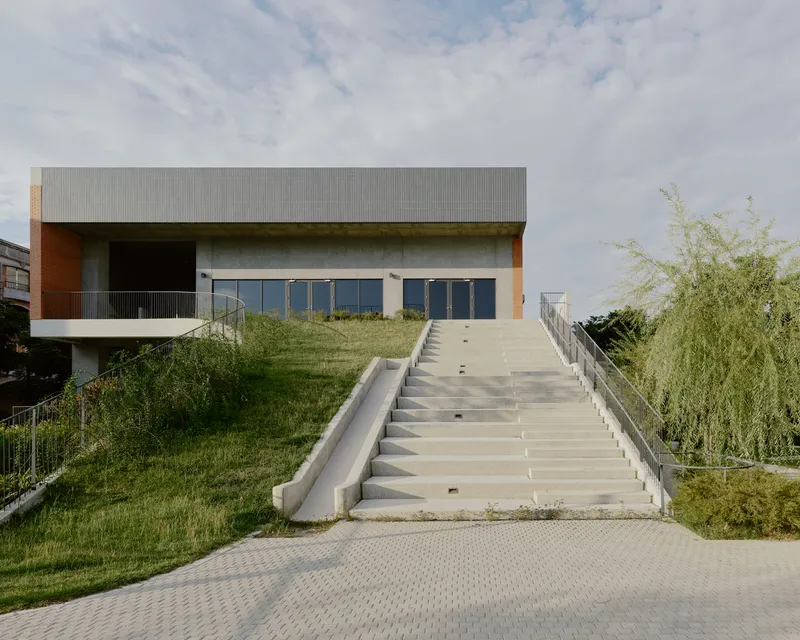
The project occupies a densely populated rural area with low-rise residential buildings and scattered farmland, where public amenities are scarce. The architects transformed this constraint into an opportunity, positioning the library and gymnasium at opposite ends of the elongated site to create a central communal square. This square functions as a new school entry and community gathering space, knitting the educational environment with the surrounding neighborhood. Outdoor terraces, roof gardens, and projecting ramps expand the periphery of this central space, encouraging social interaction and outdoor engagement.
A defining feature of the site is an abandoned irrigation channel, now repurposed as a vibrant ecological corridor filled with native aquatic plants. This water feature inspired the library’s form and landscape design, evolving into a pond that wraps around three sides of the building. The pond serves as a natural boundary for the school while preserving visual continuity with the surrounding landscape, reinforcing the project’s integration with nature.

Architectural Design and Environmental Considerations
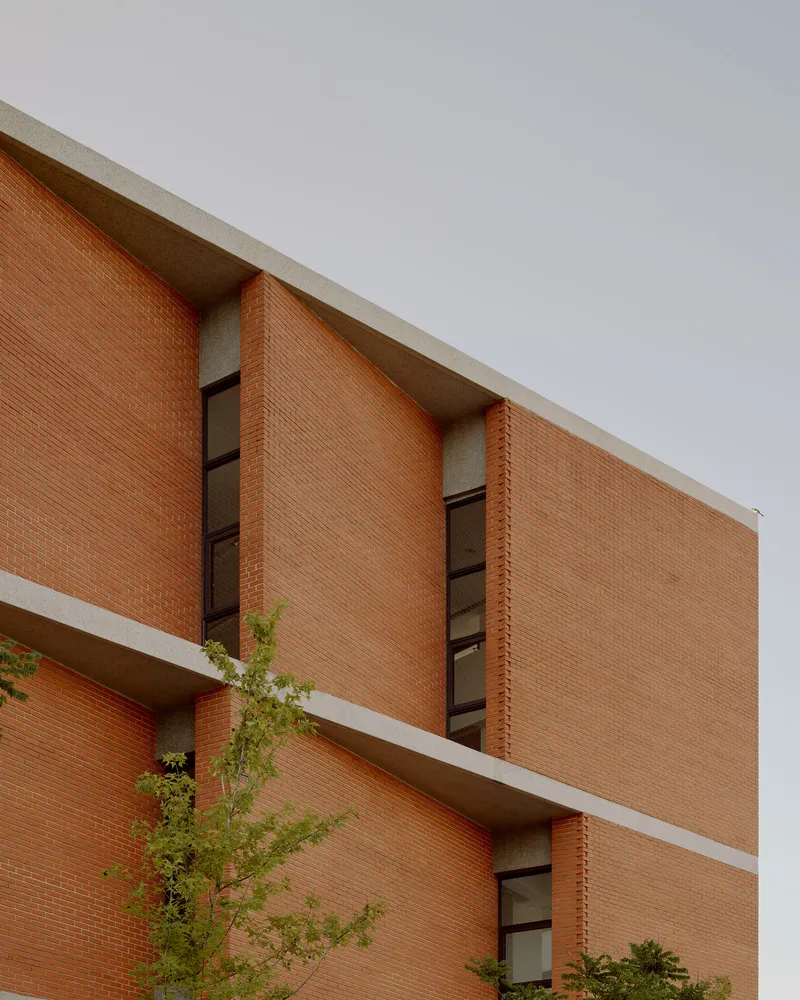
The long north-south orientation exposed the buildings to harsh western sunlight, particularly affecting the library’s book collection. To address this, the western walls are tilted and perforated with slits, allowing indirect northern light to illuminate interior spaces. A double-wall brick construction with air cavities enhances thermal insulation, protecting the interior from excessive heat while creating subtle light effects. As sunlight interacts with the red brick walls during late afternoons, the interior is bathed in a warm pinkish glow, enriching the sensory experience and evoking a dynamic passage of time.
Library: A Neutral, Illuminated Container
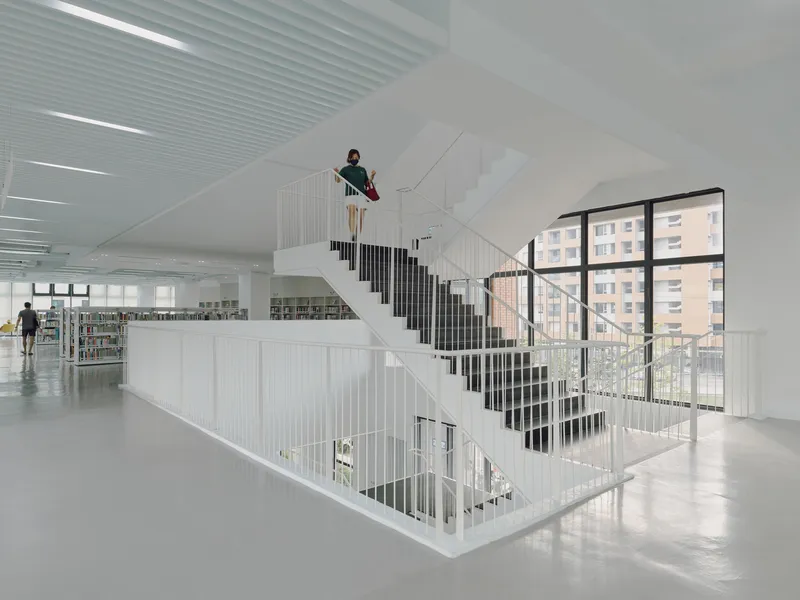
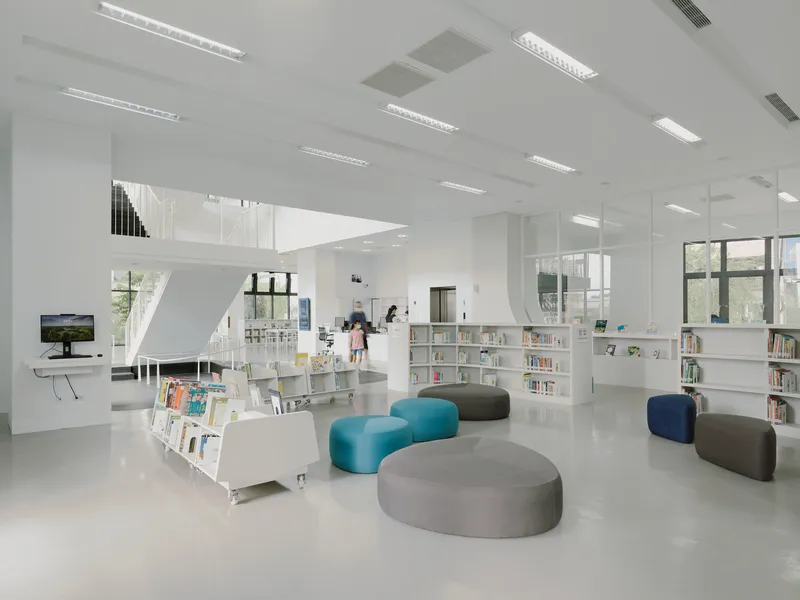
Designed as a neutral container for books and community life, the library prioritizes light, materiality, and spatial fluidity. All interior surfaces are painted white to amplify natural sunlight and reveal subtle textures through shadows, enhancing the sense of depth and richness within the space. Large north-facing windows frame the landscape, while a central atrium with a ribbon-like stair connects three floors, guiding visitors intuitively through the library’s spaces.
The ground floor functions as a community living room and children’s quarter, where large windows overlook the aqueducts, allowing natural light to filter through willow trees and water features. The second floor accommodates general reading areas with open-book shelves maintained below 110cm, preserving unobstructed sightlines and visual connectivity. Varied reading environments, from cozy corners to terrace-adjacent sofas, offer diverse experiences for users.
The third floor houses noisier programs, including multi-purpose classrooms and a young adult section, positioned to avoid disturbing the quiet areas below. The roof garden, accessible from this level, is gently inclined, offering glimpses of the broader landscape while encouraging exploration, symbolizing the pursuit of knowledge beyond the library walls.
Gymnasium: Functional and Communal Integration
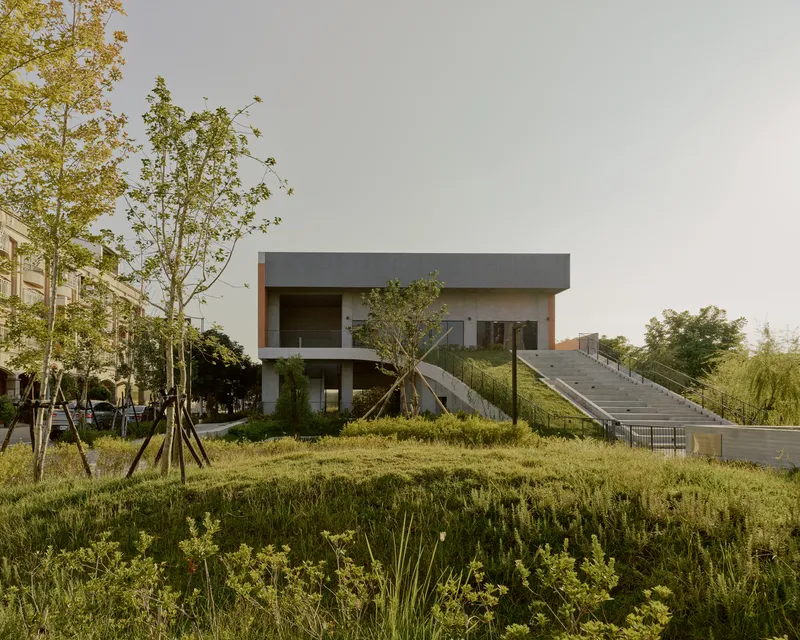
The school gymnasium complements the library by providing active, communal spaces for students and local residents. Positioned at the opposite end of the site, it maintains visual and functional dialogue with the library via the central square. This alignment promotes a balanced distribution of quiet and active zones, reinforcing the overall spatial hierarchy and enhancing the sense of community throughout the site.
Materials and Aesthetic Expression
The project employs red brick, white-painted surfaces, and glass to achieve a balance between warmth, light, and visual clarity. Textures and materials are carefully orchestrated to respond to natural light, creating subtle visual layers and a dynamic interior environment. Outdoor terraces, roof gardens, and the integration of water elements further enhance the biophilic experience, reinforcing the library and gymnasium as welcoming, human-centric spaces.
Landscape and Environmental Design
The surrounding landscape, designed by Studio Xichuan, harmonizes with the architecture to foster learning, play, and environmental awareness. The enlarged aqueducts, outdoor terraces, and roof gardens act as extensions of the library, providing contemplative spaces and recreational opportunities. The project also emphasizes sustainable design, leveraging passive lighting, natural ventilation, and site-specific ecological features to minimize environmental impact.

Community Impact
By redefining the relationship between architecture, education, and community, the Shangfeng Public Library and School Gymnasium demonstrates how small-scale public projects can have a profound social and cultural impact. The design encourages interaction, learning, and engagement, creating a vibrant hub that strengthens connections between students, teachers, and local residents.

The Shangfeng Public Library and School Gymnasium exemplifies thoughtful, context-driven educational architecture. Through careful manipulation of light, materials, and landscape, David Hong Architects have crafted a space that balances quiet contemplation and active community life, demonstrating the power of architecture to shape social and cultural experiences in rural Taiwan.


All photographs are works of
Studio Millspace


Popular Articles
Popular articles from the community


graciastudio Turns a Viewless Tijuana Lot Inward Around a Courtyard of Concrete, Timber and Trees
In Tijuana, Jorge Gracia's GA2 House stacks a timber-clad private floor over exposed concrete and replaces a missing view with a planted interior patio.


Opera on the Sea: Driftwood Logic Shapes a Timber Opera House on Estonia's Coast
Trevor Orgill's opera house translates the entangled drift of floating timber into a civic building where wood, water, and music converge.

Aquadapt: An Underwater Habitat That Rewrites Its Rooms by the Hour
Curved modules ring the seabed while one shell shifts from breakfast room to cinema, farm and football pitch as residents' needs change.

ETEH Reworks the Shared Spaces of São Domingos School in Brazil Around Timber, Color and Hanging Plants
At São Domingos School in Brazil, 436 m² of hall, refectory and library are recast with timber joinery, a yellow and blue code and trailing greenery.

Similar Reads
You might also enjoy these articles

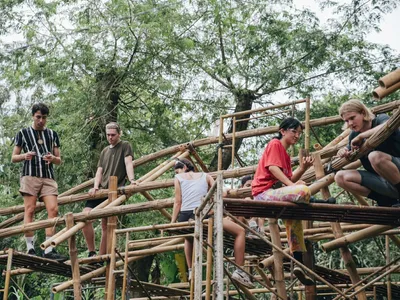
Bamboo Housing Challenge 2026: Design Affordable, Sustainable Homes Using Bamboo
An international design competition by Bamboo U and IBUKU inviting architects and designers to reimagine affordable housing using bamboo — with the winning design built full-scale in Bali.

Computational Design & Education: Beegraphy Design Awards Introduces 7th Category (Featuring Jiyun's Innovative Approach)
Dive into Beegraphy’s 7th Design Awards category, where computational design meets education to create immersive, interactive learning tools, inspired by Jiyun’s work.

From Parametric Lighting to Urban Furniture: Join the 2nd Workshop in Beegraphy’s Computational Design Series
Dive into Cutting-Edge Design Techniques and Practical Applications with Industry Experts

Last Call: Unleash Your Architectural Genius in SHAK's Kindergarten Design Competition
Urgent call for architects to join SHAK's kindergarten design competition before the looming deadline

Explore Blocs Competitions
Discover active competitions in this discipline

Challenge to design public laboratory

Challenge to reimagine the Iron Throne

Photograph architecture without architects

Illustrate the lost glory of Angkor Wat - Render Challenge
Comments (0)
Please login or sign up to add comments
No comments yet. Be the first to comment!