
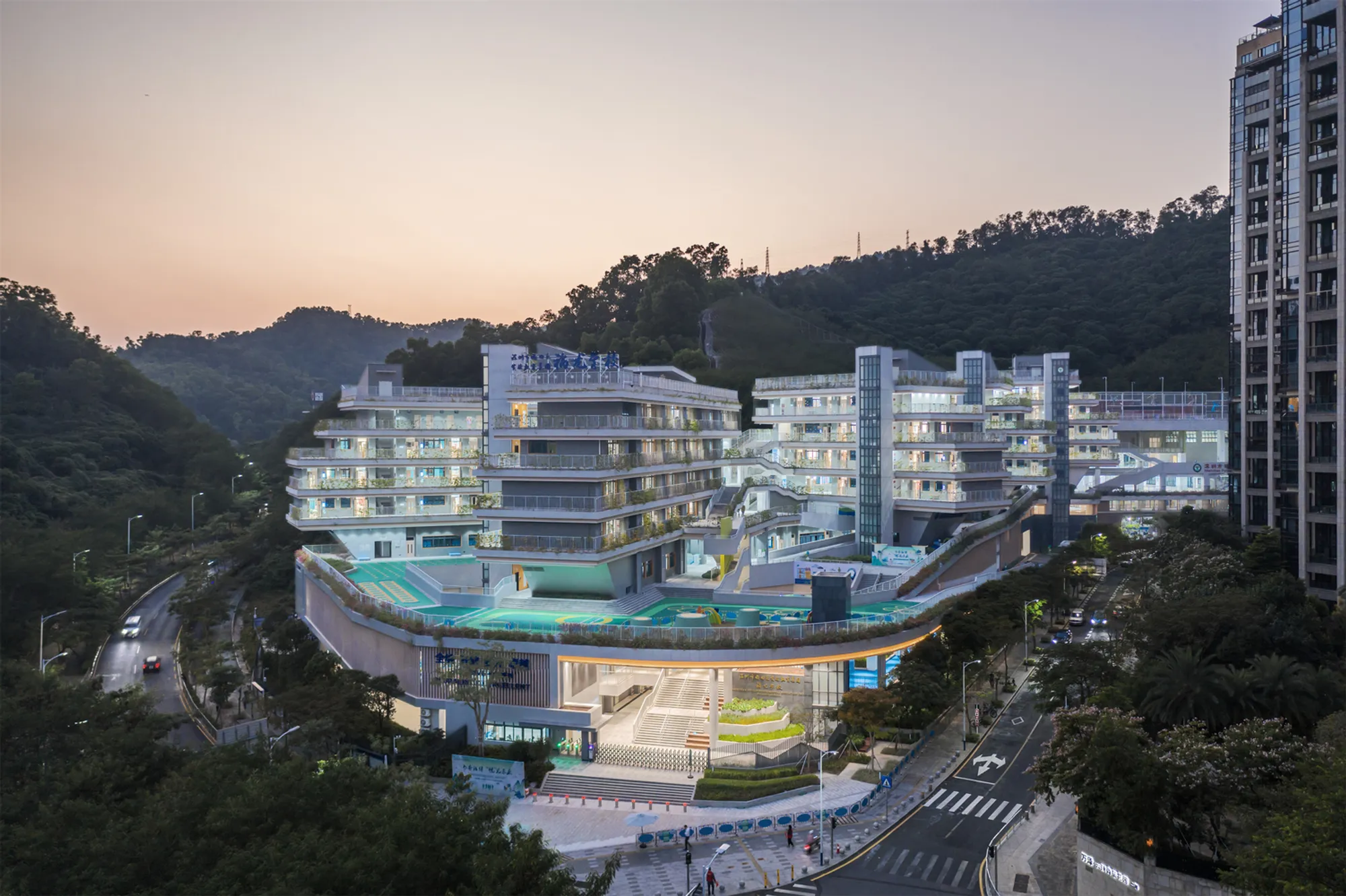
Shenzhen Futian Experimental Education Group Qiaoxiang School (North Campus): Harmonizing Education with Nature
Shenzhen Qiaoxiang School integrates hillside architecture with nature, featuring terraced courtyards, multi-level learning spaces, sustainable design, and immersive educational environments.


Architects:CMAD Design Group
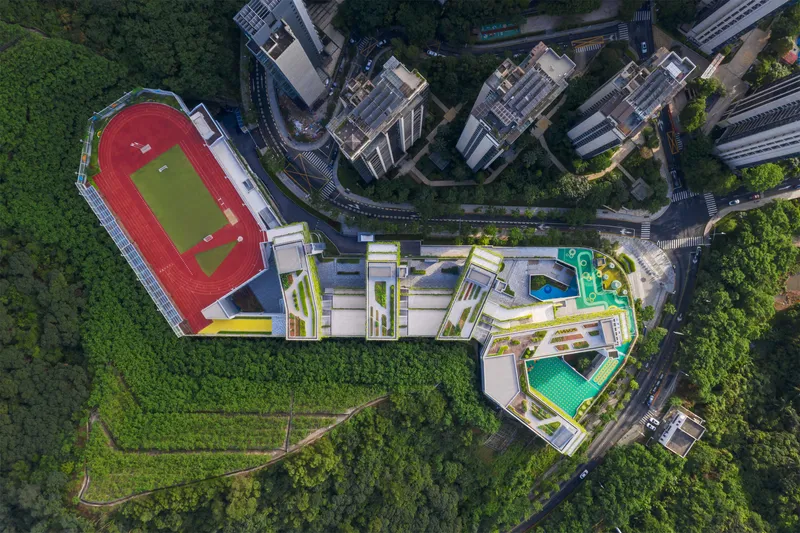
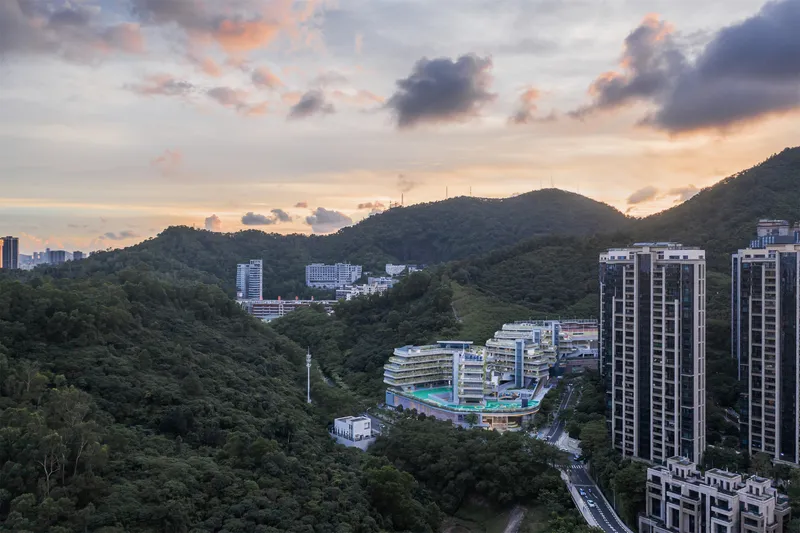
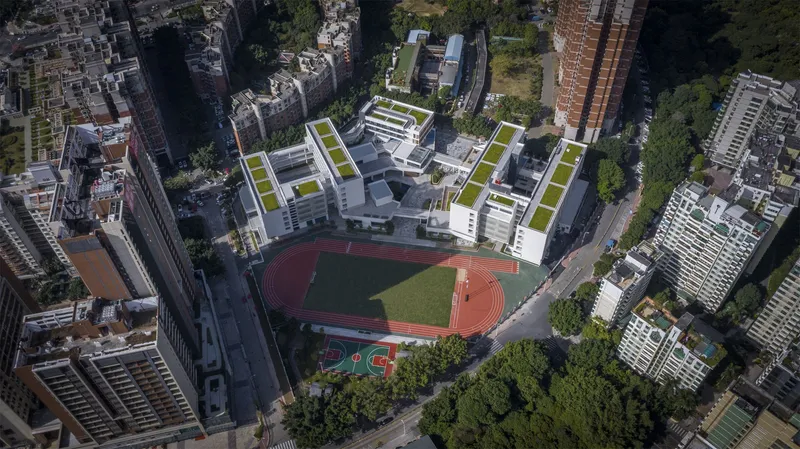
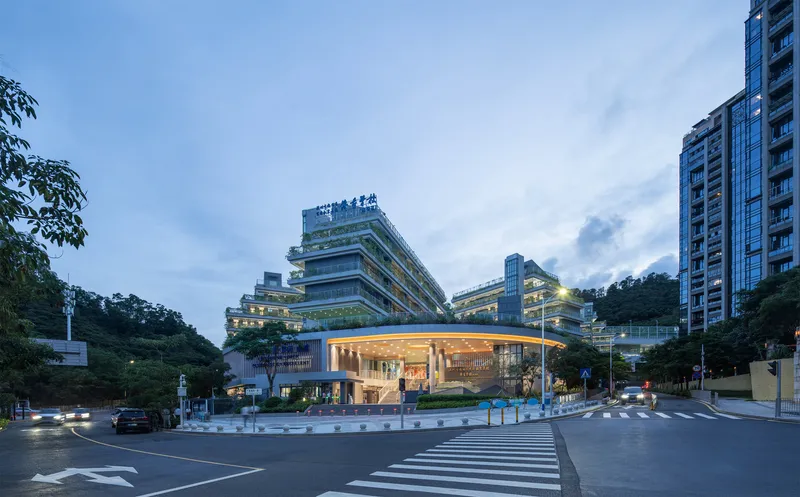
The Shenzhen Futian Experimental Education Group Qiaoxiang School (North Campus), formerly known as Fulong School, stands as a remarkable example of architectural design that blends education, nature, and urban efficiency. Situated at Liantangwei No.1 Road with the scenic Tanglang Mountain as its backdrop, the school occupies 17,617.66 square meters, with a total construction area of 44,249 m². It accommodates 48 classes, providing a nine-year integrated education program, and is strategically designed on a hillside, with a height difference of approximately 40 meters across the campus.
Integrating Architecture with the Natural Landscape
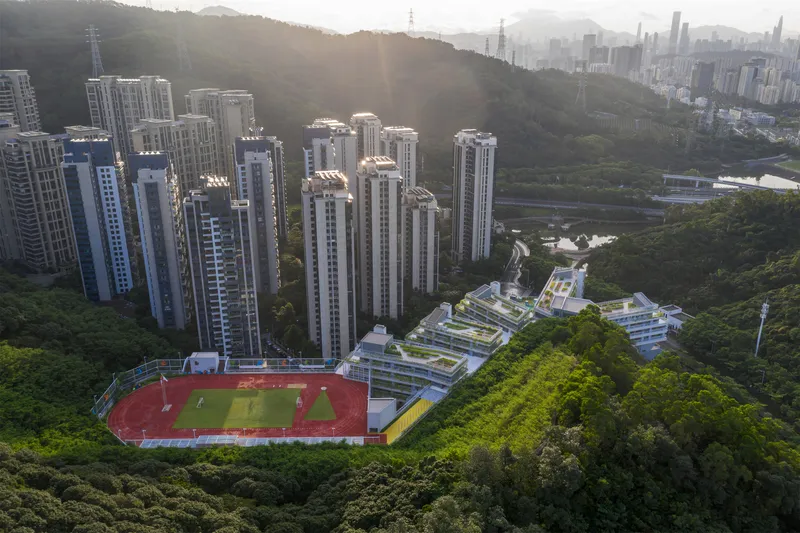
Drawing inspiration from ancient Chinese urban design principles, CMAD Design Group carefully studied soil quality, water regimes, celestial patterns, and feng shui, ensuring a harmonious relationship between human activity and the environment. The buildings emerge organically from the earth, creating a campus where students are continually immersed in nature. By leveraging multi-dimensional spaces and "thickening" the ground, the project optimizes urban land use efficiency, transforming limited space into a vibrant educational environment.

Thoughtful Terracing and Slope Integration
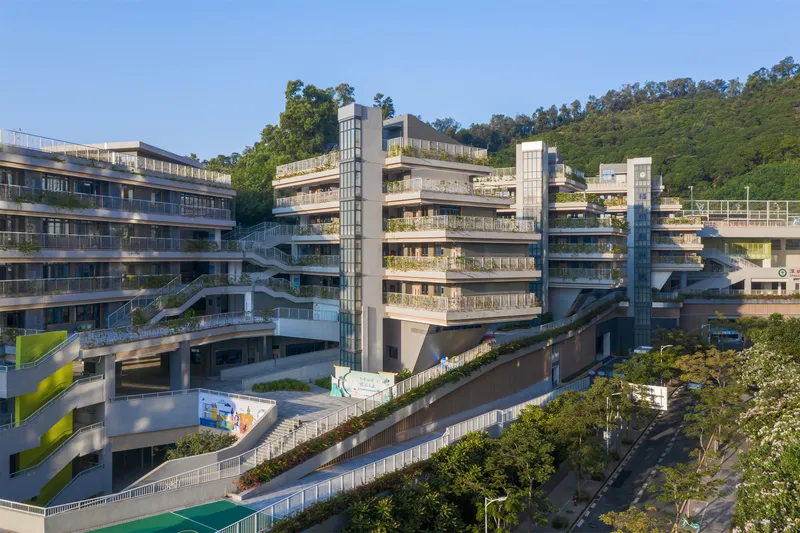
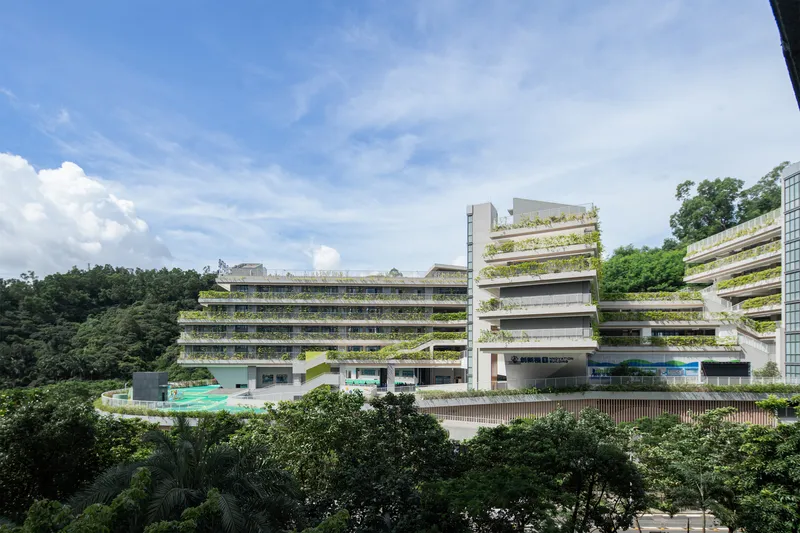
To preserve the natural surroundings and minimize excavation, the campus is terraced into multiple levels. Vertical retaining walls and strategically positioned slopes buffer the impact of construction on the hillside. Teaching buildings follow the terrain, set back in alignment with the contour lines, while retaining walls are overgrown with greenery, blending seamlessly with the mountain environment. The architectural design emphasizes subtlety, using horizontal facade lines, flower beds, and greenery to enhance ecological aesthetics while maintaining a scenic environment.
Dynamic Outdoor Learning and Activity Spaces
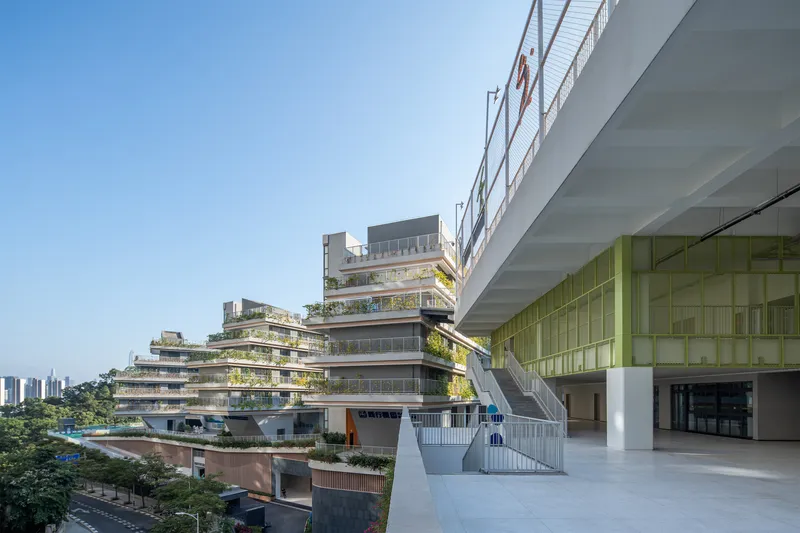
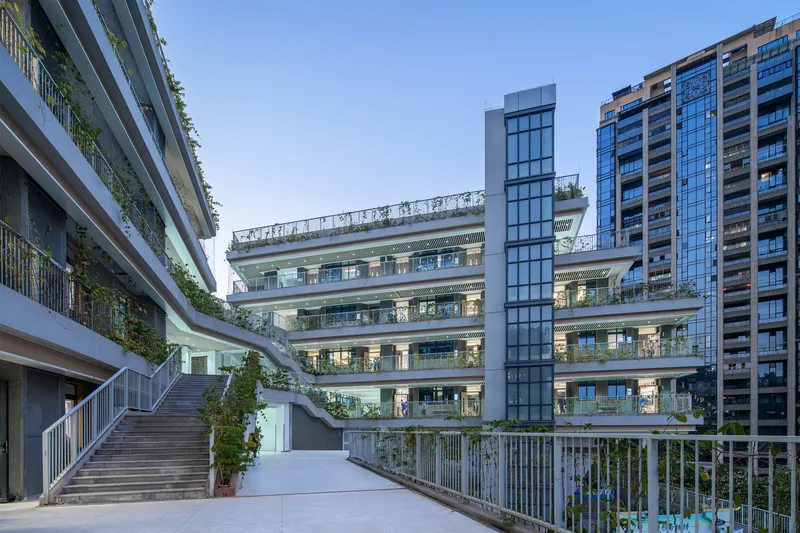
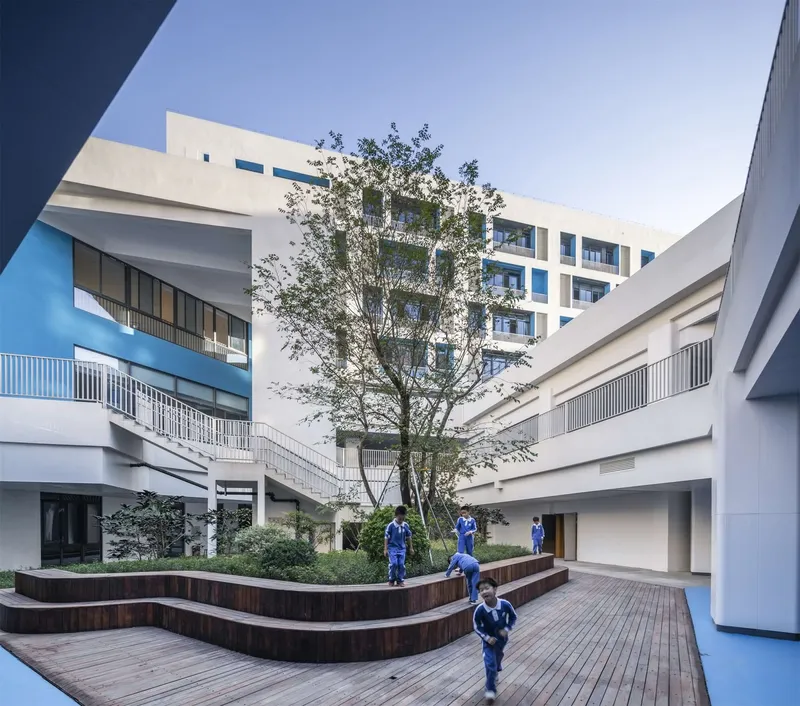
The campus features a pedestrian pathway connecting the main entrance to a central courtyard, resembling a mountain park journey. Along this pathway, seven courtyards at varying heights provide students with diverse spaces for outdoor learning, recreation, and exploration. Each step through the campus offers a new visual and sensory experience, encouraging curiosity and connection with the natural landscape.
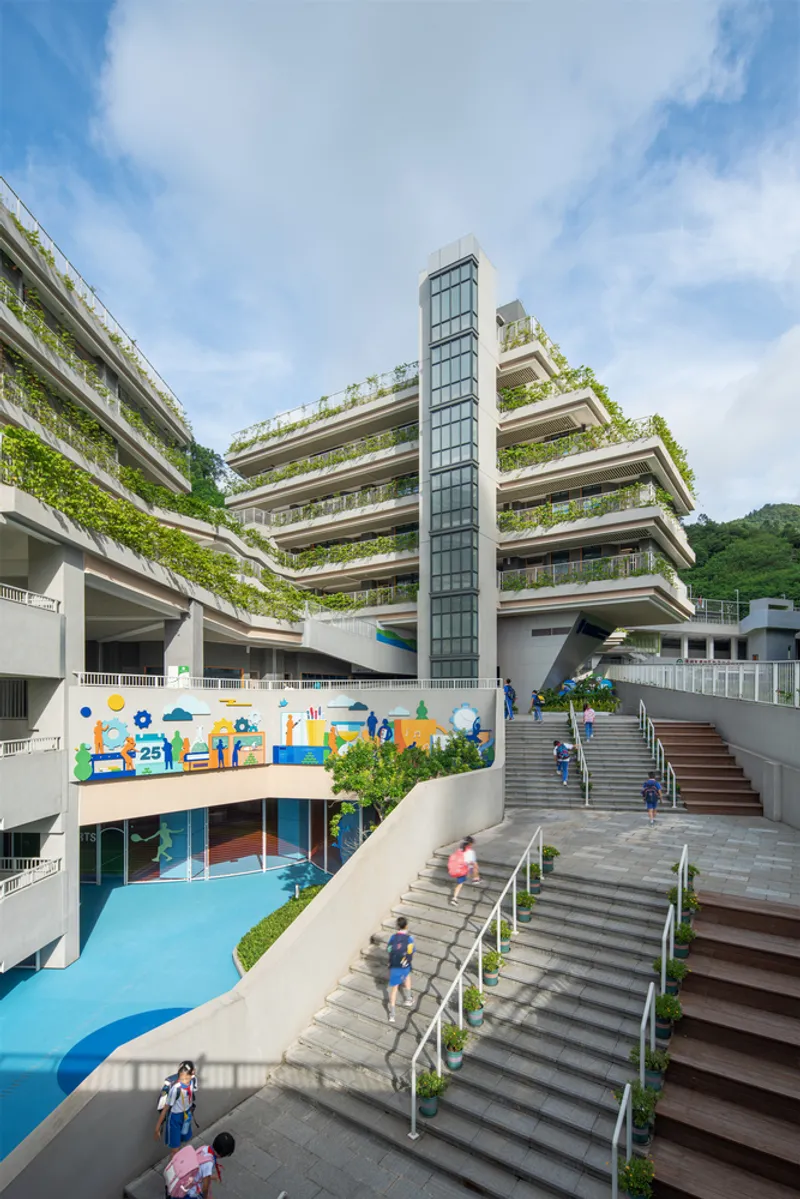
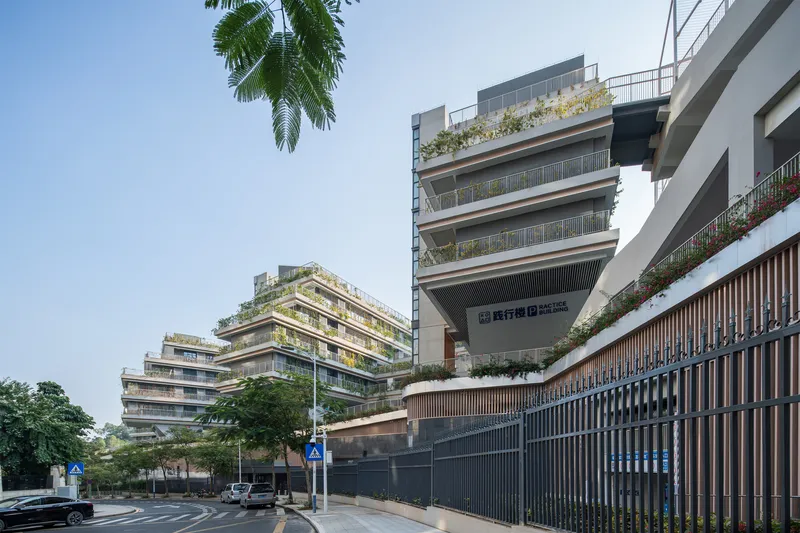
The project prioritizes both educational functionality and interaction with nature. A spacious pick-up and drop-off plaza with sheltered waiting areas welcomes visitors and students. Ascending through landscaped steps, students reach the "Mountain Accompanied Courtyards" and elevated activity areas, which include specialized classrooms and club activity rooms for teaching, extracurricular programs, and student-teacher engagement. Sightseeing elevators and landscaped stairs ensure convenient access to teaching buildings, rooftops, and sports fields, even across significant elevation differences.
Innovative Multi-Level Design for Safety and Functionality
A large slab platform on the ground floor accommodates elevated activity areas, specialized classrooms for music and dance, and parking. Raising the ground by 10 meters, this slab serves as the campus's public activity hub and allows emergency access for firefighting. Five teaching buildings and a comprehensive building unfold across the platform at different elevations, creating a multidimensional and dynamic campus that integrates harmoniously with its mountainous setting.
A Campus Above the Clouds
Through a thoughtful combination of terracing, green integration, and architectural subtlety, Qiaoxiang School emerges from the hillside like a cloud-top paradise, offering students and teachers an inspiring environment. This unique design encourages exploration, creativity, and learning while connecting the campus community with the serenity of nature.
All photographs are works of
Fang Zhou




Popular Articles
Popular articles from the community


Play: Fragments of Their World
Familiar architecture becomes modular playground design, creating safe spaces where displaced children can learn, connect, imagine and play.

Conexión: Biophilic Design Reimagines High-Rise Living in Hong Kong
Conexión reimagines high-rise living in Hong Kong through biophilic design, green facades, shared spaces, daylight, water and nature within.

The Ocean Hive: Sustainable Architecture for a Self-Sufficient Civilization at Sea
The Ocean Hive imagines sustainable architecture at sea, where modular habitats, algae, wave power and ocean waste sustain a growing colony.

The Earth Pod: 3D Printed Homes for Resilient Refugee Communities
The Earth Pod reimagines refugee housing through 3D printed homes made from clay, combining resilience, self-sufficiency, and rapid shelter.


Similar Reads
You might also enjoy these articles

FAMM Arquitectura Organizes Ten Villas Around Courtyards and Jungle in Nosara, Costa Rica
El Molino pairs two elongated volumes with deep overhangs and timber louvers to build a compact coastal community five minutes from the beach.
Oscar Niemeyer's Ibirapuera Park Pavilions Define São Paulo's Cultural Identity in Concrete and Curve
A constellation of modernist volumes set within São Paulo's most important urban park, conceived for the city's 400th anniversary in 1954.
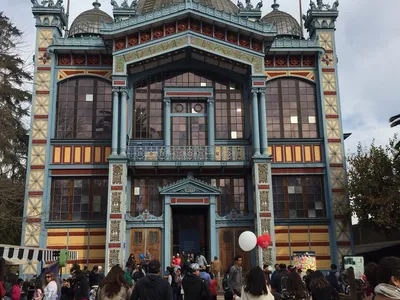
How Henri Picq's 1889 Paris Pavilion Traveled 11,000 Kilometers to Become Santiago's Artequín Museum
A prefabricated iron and glass pavilion built for the Paris Universal Exposition found a second life as a children's art museum in Chile.
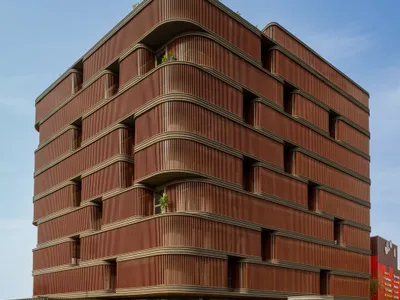
Sanjay Puri Architects Wraps a Jaipur Office Tower in Capsule-Shaped Green Buffers
A nine-level climate-responsive workplace near Jaipur Airport uses stacked planter terraces and aluminium screens to fight 40°C heat.


Explore Educational Building Competitions
Discover active competitions in this discipline



Challenge to design public laboratory


Challenge to reimagine the Iron Throne


Photograph architecture without architects


Illustrate the lost glory of Angkor Wat - Render Challenge
Comments (0)
Please login or sign up to add comments
No comments yet. Be the first to comment!