

Smart Grid: Transforming Public Space through Adaptive Street Furniture in San Francisco
Smart Grid redefines adaptive street furniture with dynamic forms that transform public spaces into hubs for work, rest, and play.

Smart Grid is a modular street furniture concept designed for the dynamic urban landscape of San Francisco. Conceived by One Hat One Hand and shortlisted in the Urbanscape: Symbiosis competition, the project envisions an interactive infrastructure that adapts to public needs in real-time. This innovation in adaptive street furniture enhances public life by responding flexibly to a variety of social, recreational, and transportation functions.
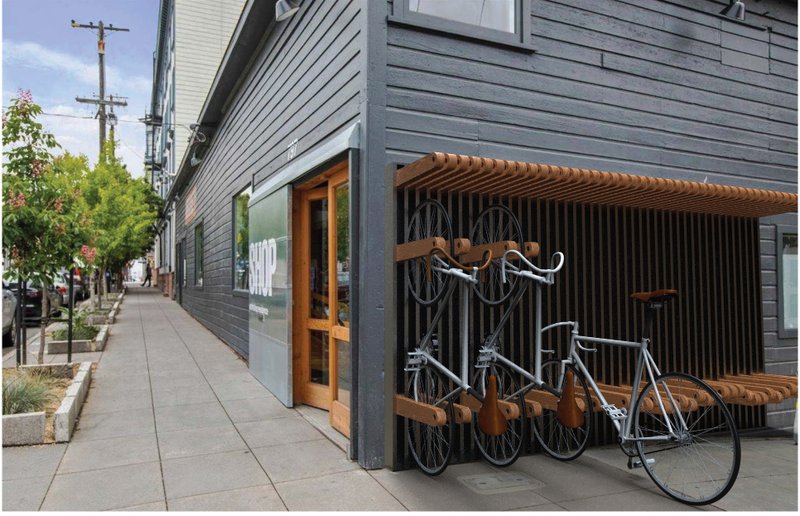
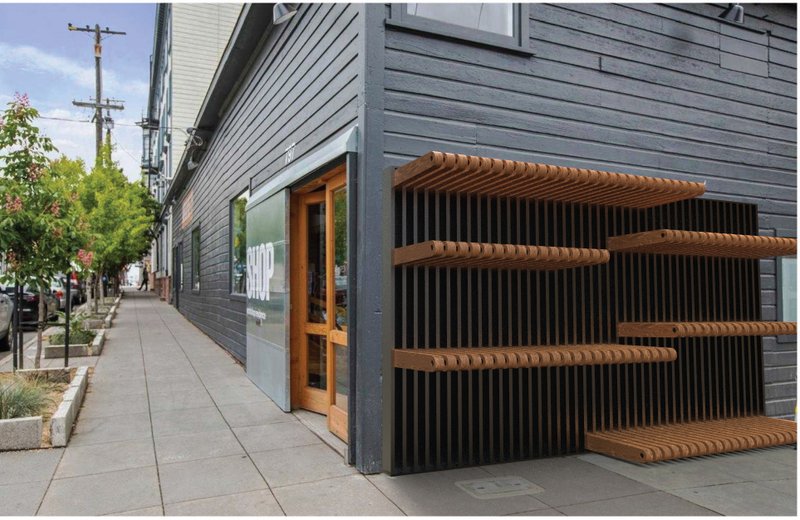
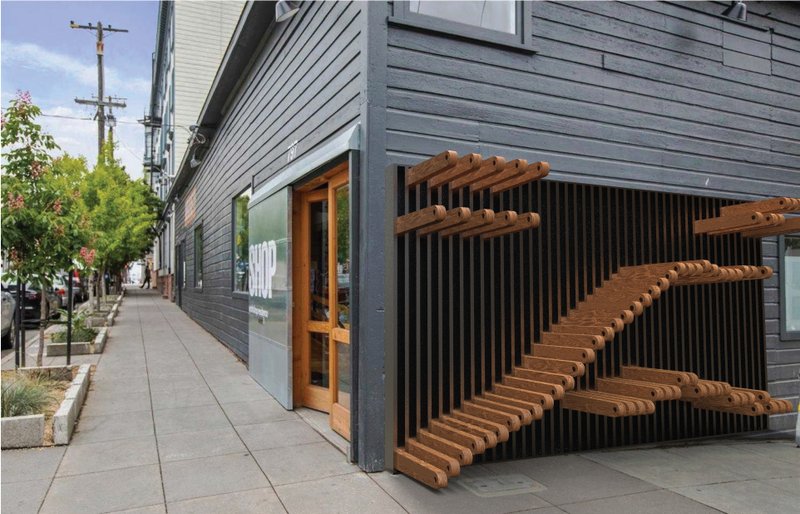
At its core, Smart Grid consists of polished stainless steel grid units paired with movable paddle units. The paddles can rotate and move vertically, allowing users to reconfigure the space according to their immediate needs. Whether it’s a place to rest, work, play, or shelter, this system seamlessly integrates into the city’s fabric.
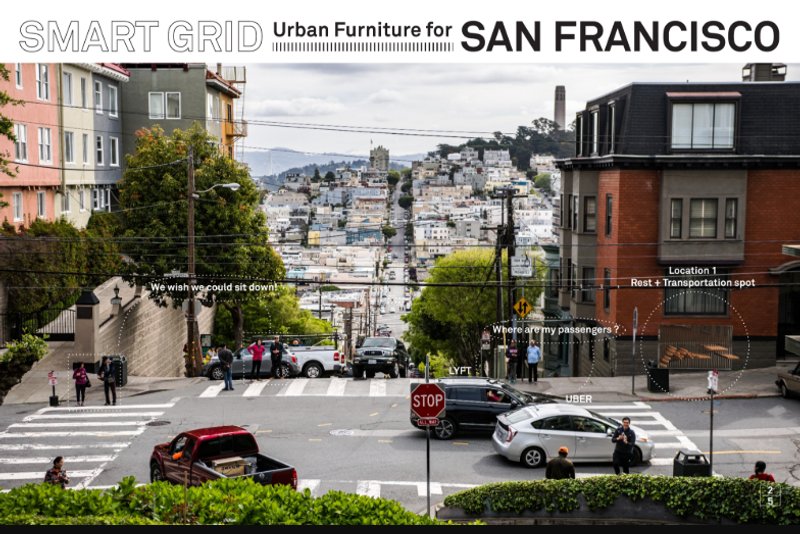
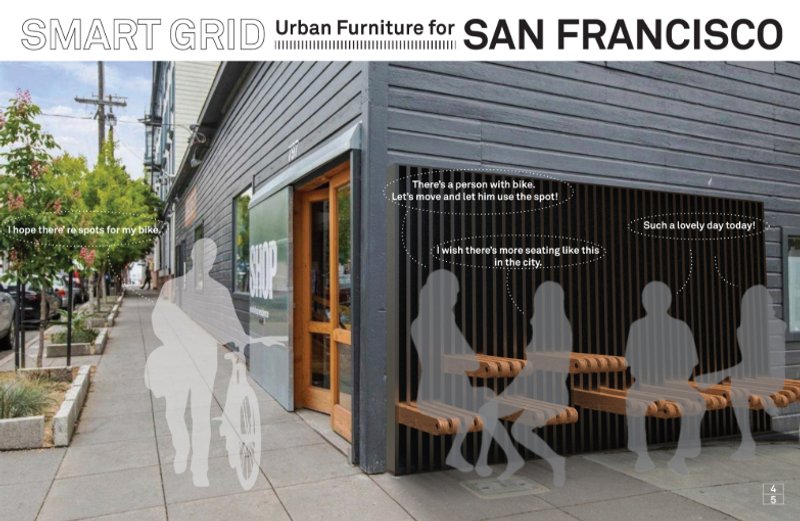
Strategically located at key urban nodes—transport hubs, busy sidewalks, and building frontages—Smart Grid responds to the evolving needs of San Francisco’s diverse population. In one location, it serves as a resting zone and waiting area for Uber and Lyft users. In another, it becomes a playful social hangout spot surrounded by dense commercial activity.
San Francisco’s fast-paced, heterogeneous urban environment is the ideal testbed for such a solution. Smart Grid installations are positioned in locations with high pedestrian traffic, multimodal transit exchange, and vibrant street activity. Each site presents unique behavioral patterns, and Smart Grid accommodates them with a tailored spatial response.
In the steep neighborhoods of the city, Smart Grid acts as a temporary rest station for pedestrians navigating uphill routes or waiting for ride-share pickups. In commercial zones, it becomes a place to pause, meet, or work in a semi-public setting. Around schools, parks, or residential lanes, the system morphs into play structures—encouraging exercise, climbing, and exploration.
The furniture’s versatility lies in its wide range of configurations:
- Transportation: Includes bicycle racks, shaded seating, and waiting benches.
- Life: Transforms into meeting tables, workstations, or casual resting zones.
- Hybrid: Offers solutions like night-time resting areas and overhead protection to counter hostile urban design.
- Play: Becomes a structure for swings, climbing, and circuit training—fostering exercise and interaction.
By embracing adaptability, Smart Grid challenges the rigidity of conventional street furniture. Its presence enhances street life, offers utility without clutter, and invites inclusive interaction. In a city as vibrant and unpredictable as San Francisco, such adaptive urban design holds the potential to shape the next generation of public space architecture.
Project by: One Hat One Hand
Shortlisted Entry: Urbanscape: Symbiosis




Popular Articles
Popular articles from the community


Solar Steam: A Climate-Responsive Architecture That Redefines the Monument
A climate-responsive memorial architecture that transforms heat, decay, and time into a living system reflecting humanity’s ecological impact.
Split House: A Compact Urban Home Blending Privacy, Light, and Flexible Living in Japan
Compact Japanese home featuring DOMA space, flexible café potential, passive lighting, privacy zoning, and sustainable urban living design.


The Ken Roberts Memorial Delineation Competition (Krob)
As the most senior architectural drawing competition currently in operation anywhere in the world, it draws hundreds of entries each year, awarding the very best submissions in a series of medium-based categories.



Similar Reads
You might also enjoy these articles
The Ken Roberts Memorial Delineation Competition (Krob)
As the most senior architectural drawing competition currently in operation anywhere in the world, it draws hundreds of entries each year, awarding the very best submissions in a series of medium-based categories.

Waterfront Redevelopment and Urban Revitalization in Mumbai: Forging a New Dawn for Darukhana
A transformative waterfront redevelopment project reimagining Darukhana’s shipbreaking heritage into an inclusive urban future.

OUT-OF-MAP: A Call for Postcards on Feminist Narratives of Public Space
Rhizoma Design and Research Lab invites artists, designers, architects, researchers, and students to reflect on how feminist perspectives can reshape public space. Selected works will be exhibited in Barcelona, October 2026. Submissions open until 15 April 2026.


Documentation Work on Buddhist Wooden Temple
Architectural syncretism and cultural hybridity: A comparative study of the Buddhist temples in Chattogram Hill tracks


Explore Furniture Design Competitions
Discover active competitions in this discipline




The Global Benchmark for Architecture Dissertation Awards


Challenge to merge furniture with learning


Competition to design a workstation for architects
Comments (0)
Please login or sign up to add comments
No comments yet. Be the first to comment!